
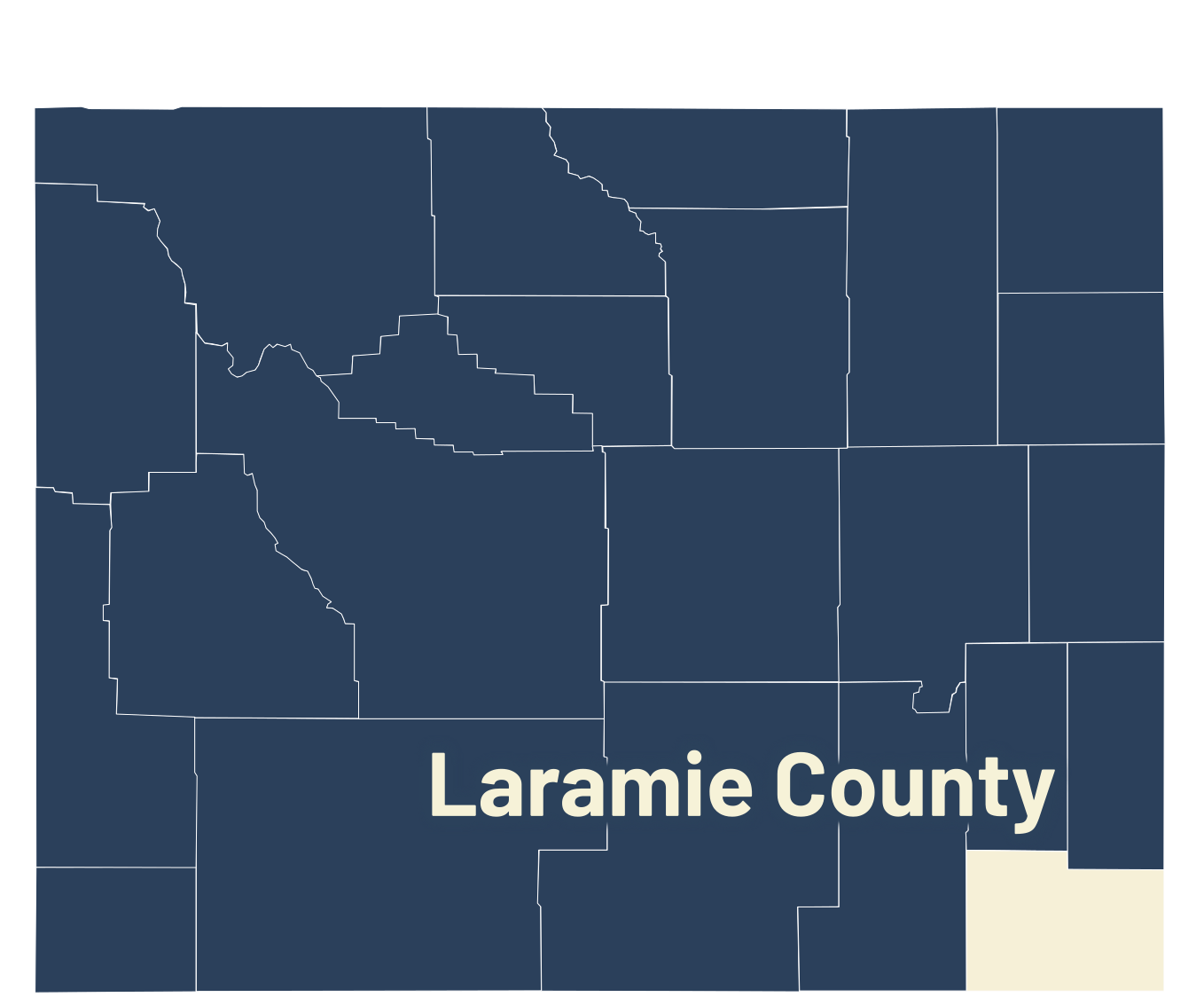
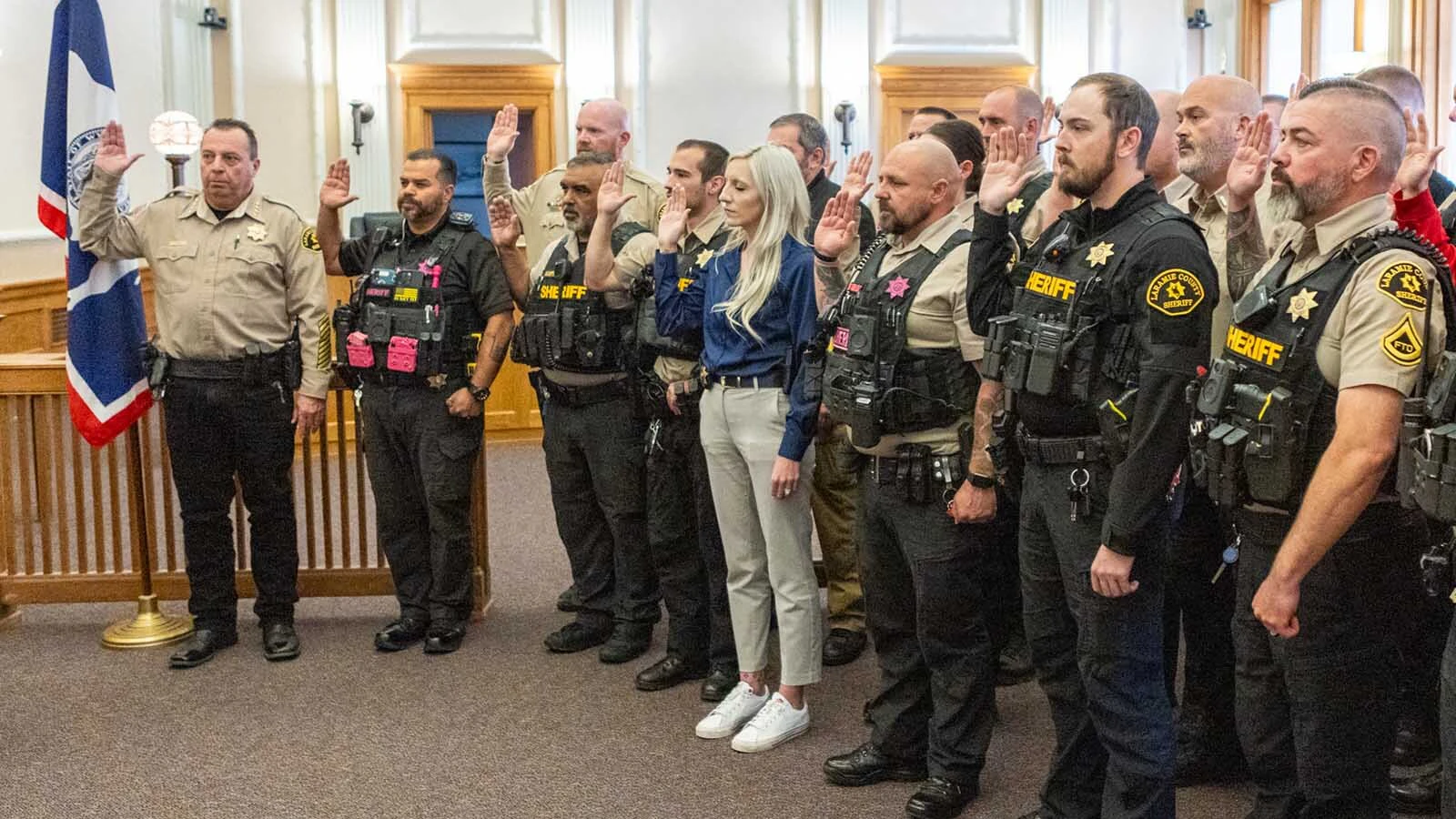
A Cheyenne-based church, barbershop and advocacy group have filed a legal challenge against Laramie County Sheriff Brian Kozak, claiming the sheriff bypassed the public process to enter three agreements, “unilaterally,” with the U.S. Immigration and Customs Enforcement (ICE).
American Civil Liberties Union attorney Andrew Malone filed the challenge Tuesday in the Laramie County District Court for Wyoming, along with local attorney Elizabeth B. Lance, on behalf of Juntos, the Unitarian Universalist Church of Cheyenne, and Drew’s Barbershop.
The complaint asks for “declaratory judgment” against Kozak, meaning the plaintiffs want the court to say that they’re correct under the law and Kozak is wrong.
It also asks the court to hold Kozak’s three agreements with ICE as unlawful and block them permanently, as well as grant “any other relief that the Court deems just and equitable.”
Kozak’s office has three agreements with ICE, which the agencies call 287(g) agreements.
One lets jail officials investigate inmates for potential immigration violations. Another lets the sheriff’s deputies act as immigration task force agents and investigate federal immigration violations while they’re out enforcing laws. And another lets the Laramie County Detention Center house detainees for ICE.
Kozak signed all three agreements last May, the complaint says. His agency has deputized around 30 deputies for immigration work.
Truck Around
The sheriff’s office grabbed headlines in April when it announced it had caught 46 illegal commercial truck drivers in its latest “Truck Around And Find Out” operation.
And in April, the sheriff’s office logged the greatest number of immigration arrests in the country of any local or state law enforcement agency, the complaint relates from a Wyofile report.
The ACLU’s complaint says Kozak didn’t submit these agreements to the Laramie County Clerk or get written permission from the Laramie County Commission to enter them or spend money on them. It says state law requires both.
“The Laramie County Board of Commissioners never debated, voted on, adopted a resolution, passed a resolution, or otherwise officially sanctioned Sheriff Kozak’s decision to enter any of the three 287(g) agreements or to incur the expenses associated with the agreements,” says the complaint, adding that Kozak’s office spent about $75,000 on immigration expenses from Sept. 1, 2025, to Jan. 31, 2026.
It also says Kozak bypassed the Wyoming Administrative Procedures Act, which requires agencies to give the public 45 days’ notice of substantive rules changes, and must afford any group of 25 or more people the opportunity to hold a hearing on those changes.
“Wyoming sheriffs do not have limitless authority,” the complaint says.
Cowboy State Daily left Kozak a voicemail Wednesday and will update this story with his response.
ICE did not immediately respond to a Wednesday morning email inquiry.
Laramie County Clerk Debra Lee confirmed in a Wednesday phone call that, “We have no agreements that have been submitted for 287(g) agreements to our office, or on file with our office.”
The Barber Deported To Nicaragua
Drew’s barbershop lost an employee because Laramie County Sheriff’s Office deputies worked together with ICE to deport the employee to Nicaragua, the lawsuit says.
A “talented barber,” Carlos Montes had been working at Drew’s Barbershop for six months when a Laramie County Sheriff’s deputy pulled him over for an inoperable headlight, the complaint says.
It adds that the deputy then used the authority one of the three ICE agreements reportedly conferred to arrest Montes over his immigration status.
The document says Montes lacked a criminal history, and that his partner was pregnant at the time.
His family and employer navigated “confusing and contradictory information” to find him, the lawsuit alleges, and they eventually learned he’d been deported to Nicaragua.
Juntos
The complaint says Juntos, a nonprofit group that advocates for immigrants and marginalized communities, was cheated of the chance to comment ahead of the three contracts’ adoption, and that it’s had to adjust its activities and budgeting because of them.
“Juntos has begun to host events online rather than in person in response to the community’s fear of being detained under the 287(g) agreements while traveling to or attending these events,” says the complaint. “This prevents the organization from creating the kind of connections and relationships with community members that require face-to-face interactions.”
The Church
The complaint says the Unitarian Universalist Church of Cheyenne has had to redirect $4,000 of its charity money and $6,000 in food and supplies to support people impacted by the sheriff’s agreements.
The church formed the Friends of Immigrants Responding Ethically (FIRE) ministry for this cause, the document says.
All three plaintiffs allege they would have participated in the public process for adopting the agreements, had one unfolded.


