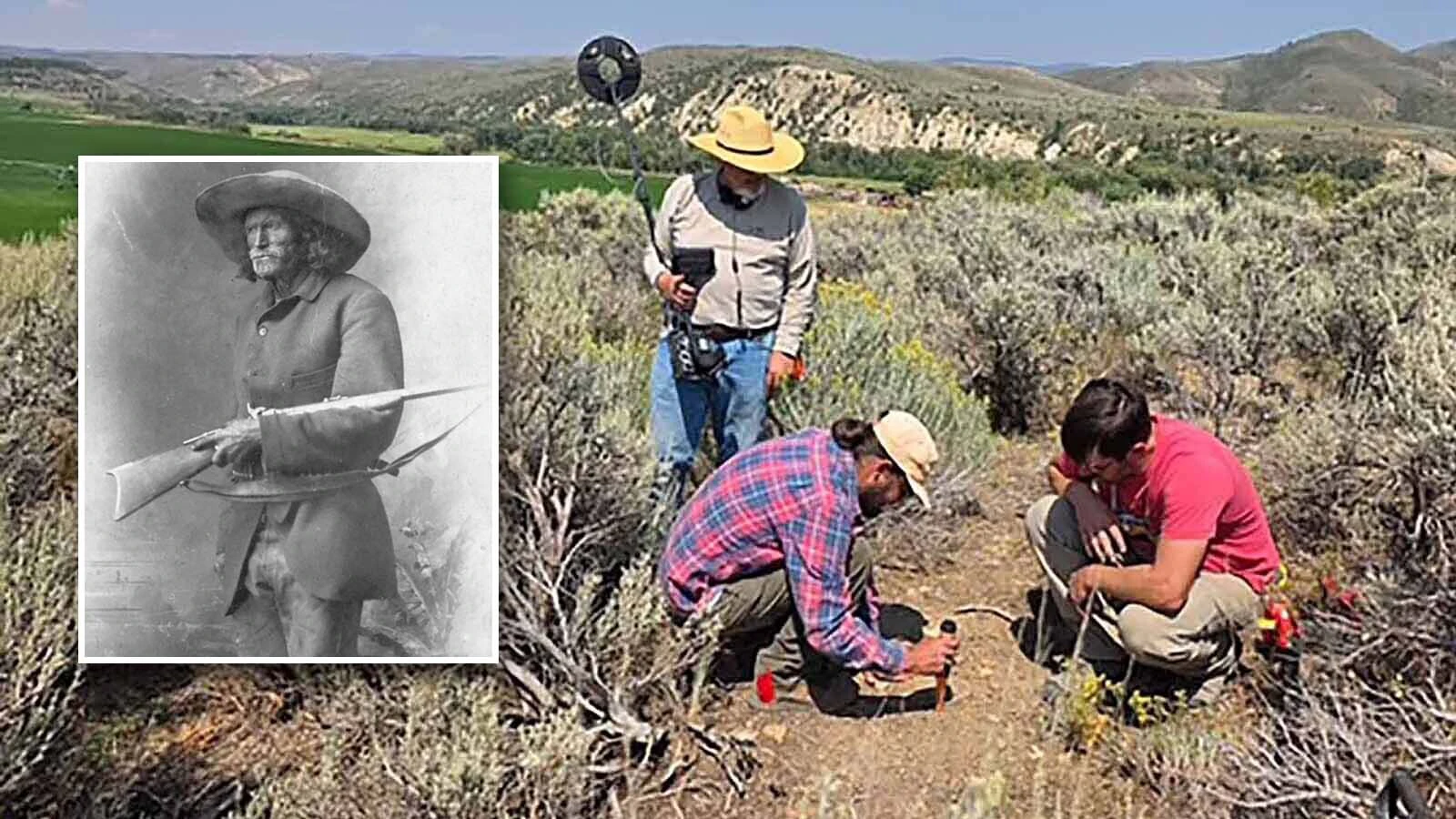
It has been 185 years since the legendary fight where Jim Baker and a couple dozen scouts and trappers held off a much larger force of 500 to 700 Arapaho, Cheyenne, and Sioux warriors near the confluence of Battle Creek and the Little Snake River near Savery.
Although no one has made a movie of this 1841 battle yet, it is among the most intense engagements of the fur-trade era, with the scouts facing Thermopylae-like odds.
Unlike Thermopylae, there was no narrow canyon to funnel the enemy. Instead, the men killed their horses and dragged the bodies into place to serve as their breastworks. Weapons were reloaded in assembly-line fashion so someone always had a gun ready to shoot someone down if the American Indians they faced charged them.
Baker, who was just 21 or 22 years old at the time, led the battle after their leader, Henry Fraeb, died early. Three others died as well, but the remaining fellows credited Baker with saving their lives.
The battle changed the names of several landmarks in the area, from Battle Creek and Battle Mountain to Baker’s Peak.
But the location of the fight has become something of a mystery, one Dennis Faerber hopes to solve.
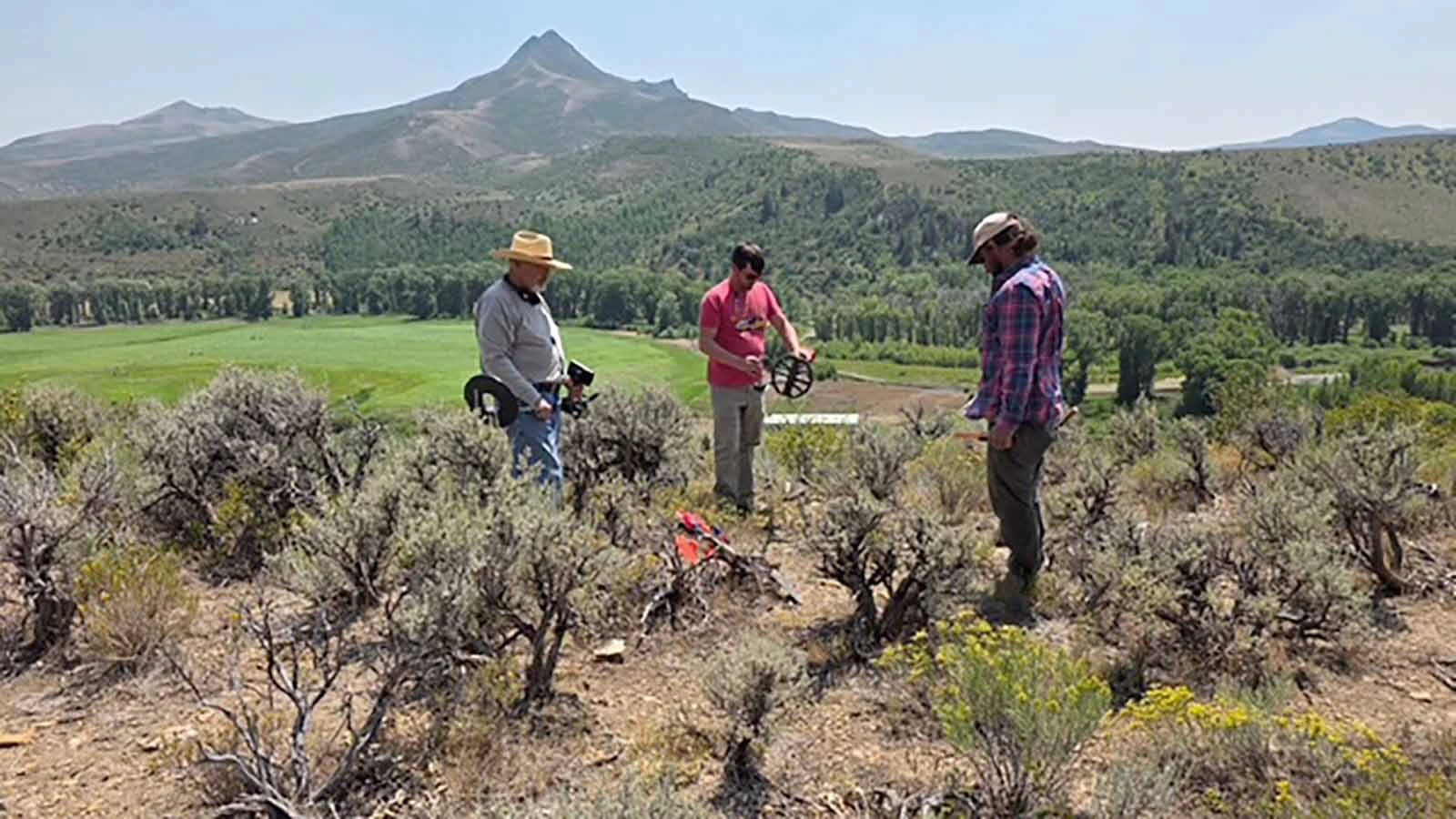
Faerber has been searching for the site for 18 years. He’s worked alongside state archaeologists Mark Miller, and now Spencer Pelton, and spent his own funds to do it.
“This was one of the largest engagements between trappers and Native Americans in the West,” Faerber told Cowboy State Daily. “It should be identified for that reason alone.”
But there’s also a personal element to it for Faerber.
“A lot of people on both sides were injured or killed there,” he said. “To honor them, I think we owe it to them to find the battle site as well, just to pay homage to them.”
Fence Staples, Horseshoes, Pewter Woman
Faerber has been systematically working the pastures from about 2 miles upstream to the confluence on the Ladder Ranch, looking for lead balls or steel arrowheads.
He’s also been looking for is a big pile of buried horse bones.
“There were about 110 horses that were in a corral that were killed during the battle,” Faerber said. “There should be a large concentration of horse bones at the battle site.”
Faerber has found lots of other items he wasn’t looking for during his 18-year search. Fence staples and horseshoes by the boatload, for example. He’s also found chains and vaccination vials.
One find that has given him some hope was a pewter figurine of a woman about 1 1/2 inches ong.
“It’s a classic trade item,” Faerber said. “It could have been an earring or a necklace. It was about 2 feet down in the soil, right where an old homestead was at. It could have been from the homestead or it could have predated the homestead.”
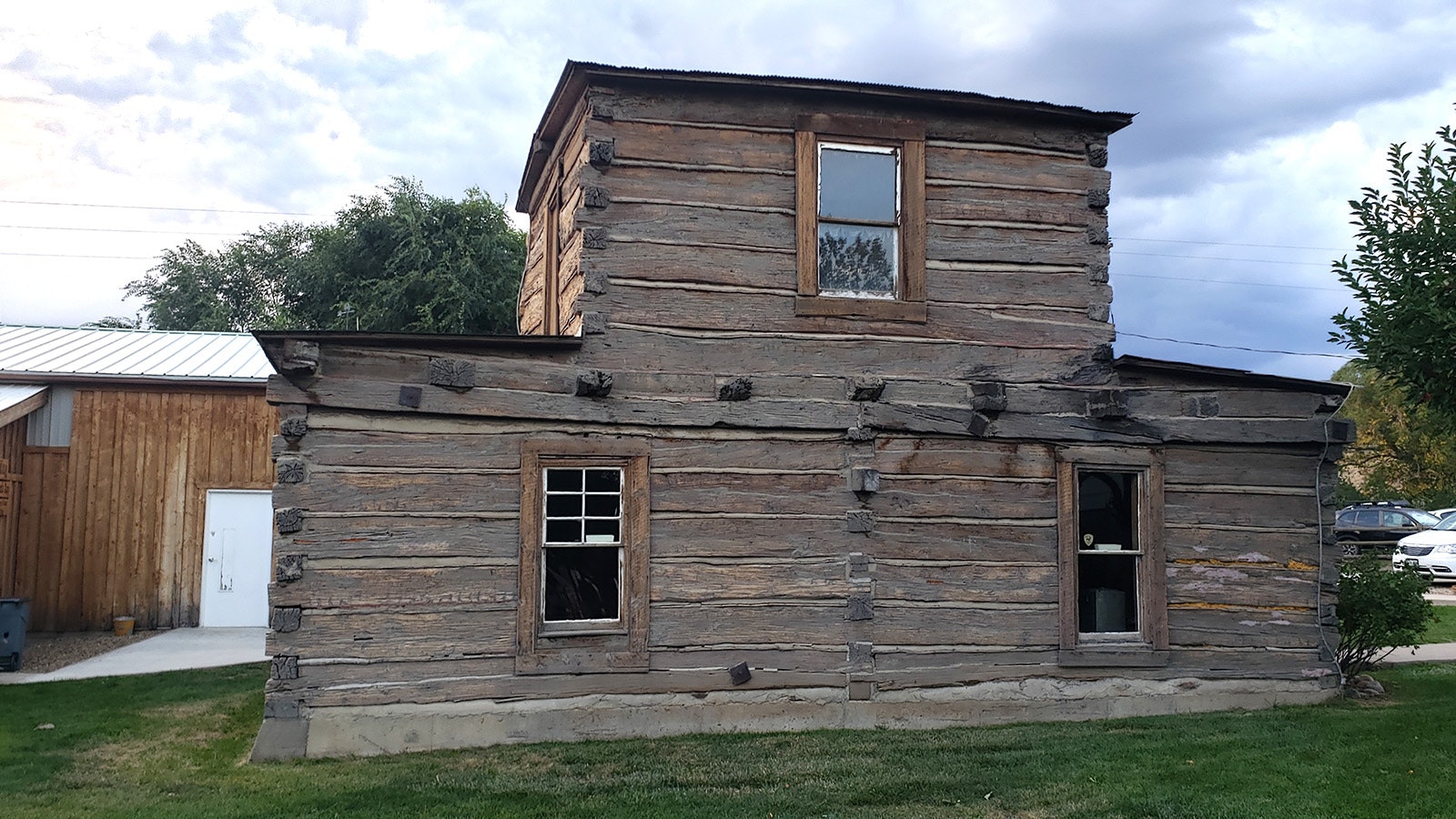
Jim Baker's castle cabin on the plains has been rebuilt a mile or so from its original location at the Little Snake River Museum in Savery. It had a turret for its third story to serve as a watch tower. (Renee Jean, Cowboy State Daily) 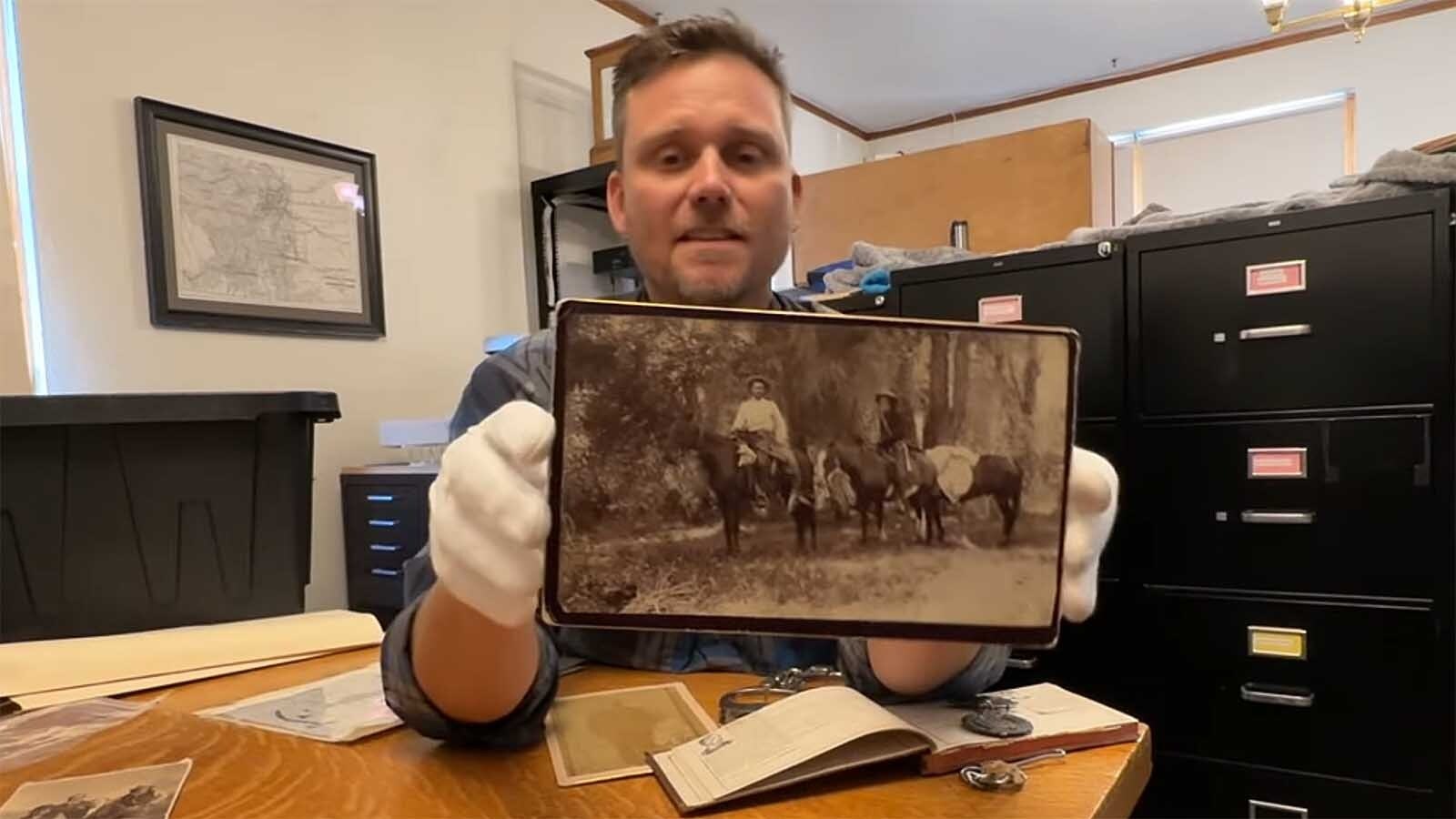
Paul Knowles shows a recently discovered photo of Jim Douglas, left, founder of Dixon, Wyoming, riding with famous mountain man Jim Baker. (Courtesy Steamboat Radio, Museum of Northwest Colorado) 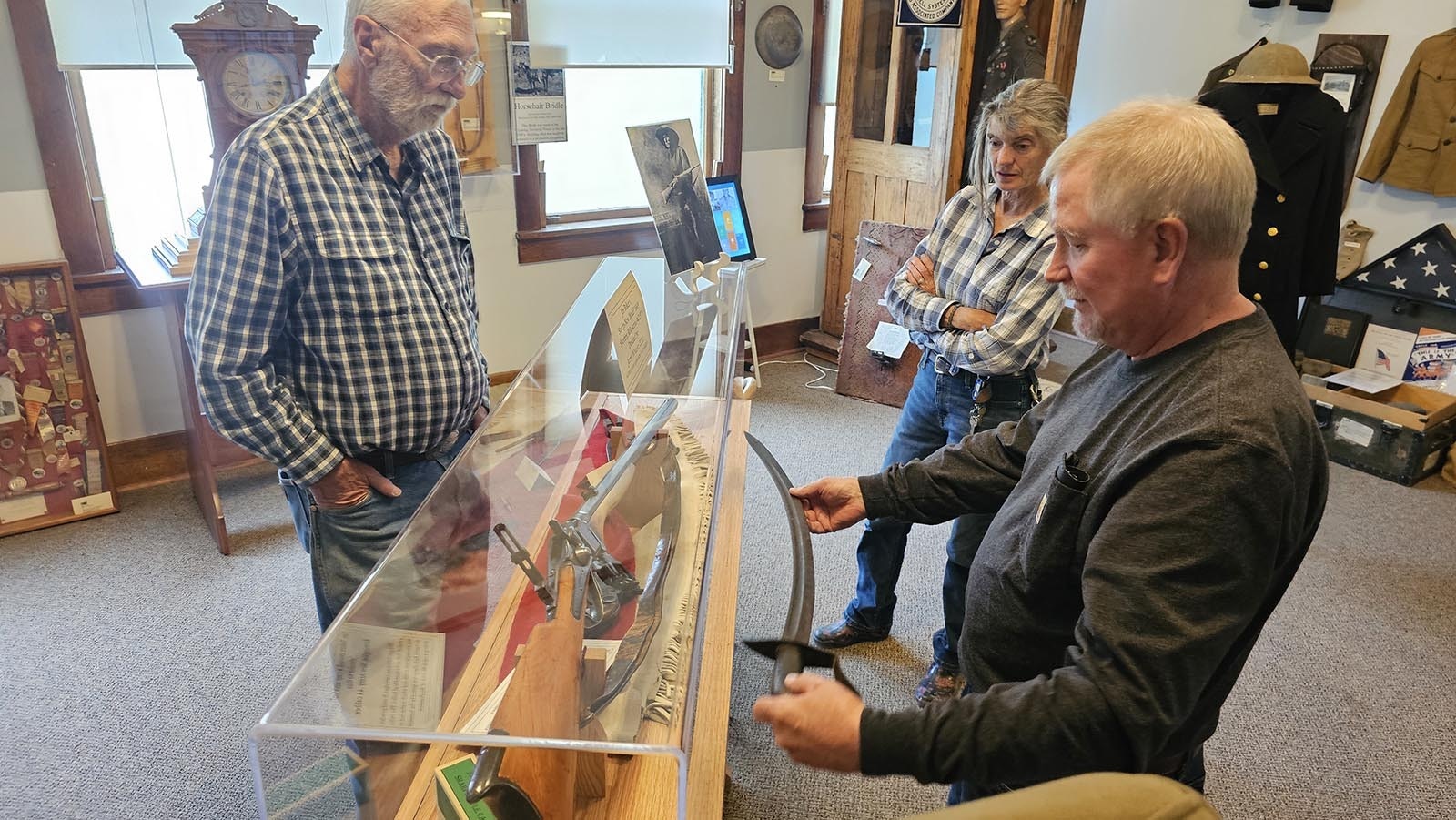
William Stocks, front, holds mountain man Jim Baker's sword up, demonstrating where it might be placed at the Little Snake River Museum, while LSR Museum board member Jim Roberts and LSR Museum Director Lela Emmons look on. Stocks has donated the sword to the museum, where it will join other Baker items on display. (Renee Jean, Cowboy State Daily) 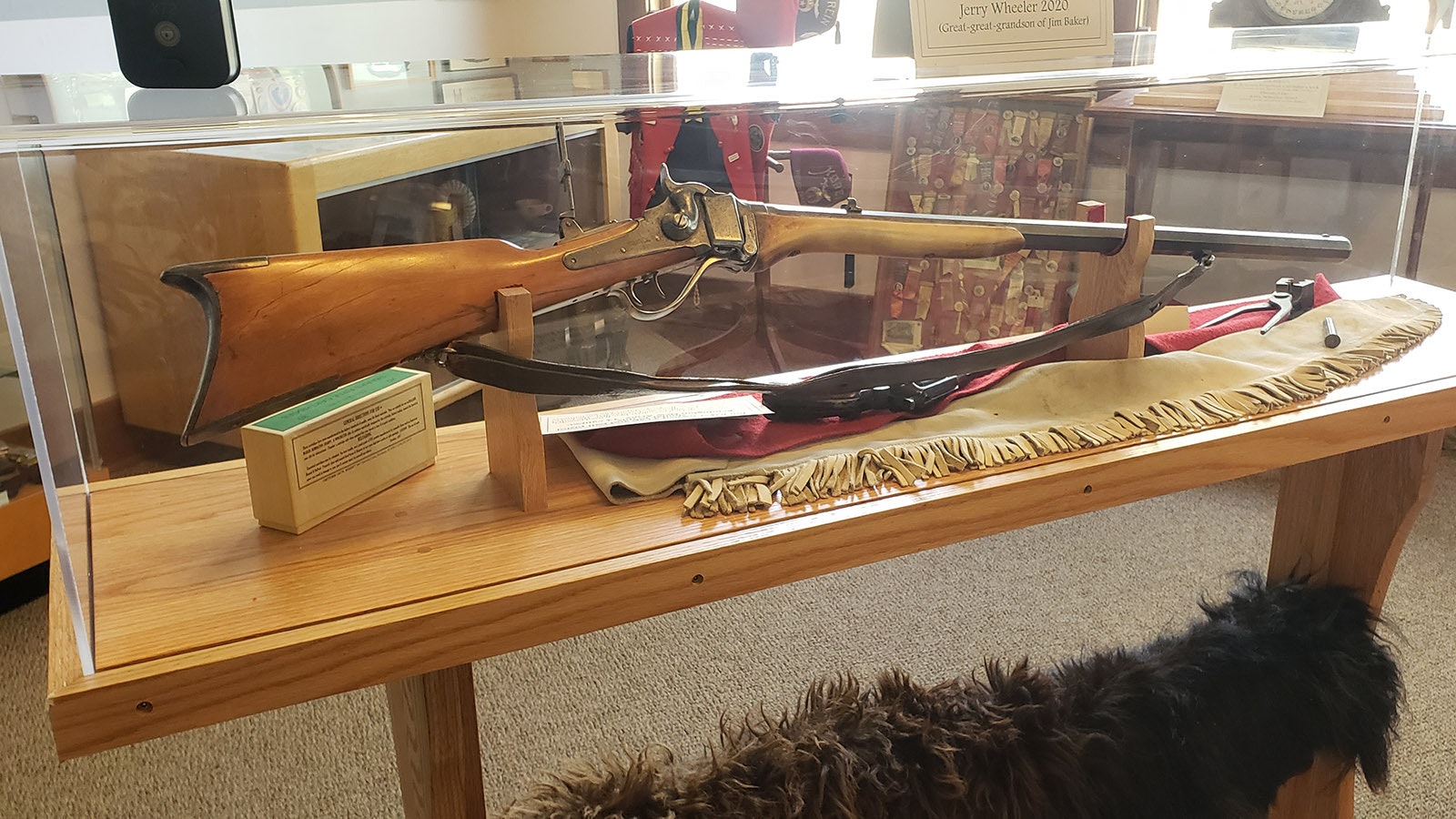
Jim Baker's gun is on display at the Little Snake River Museum in Savery. (Renée Jean, Cowboy State Daily) 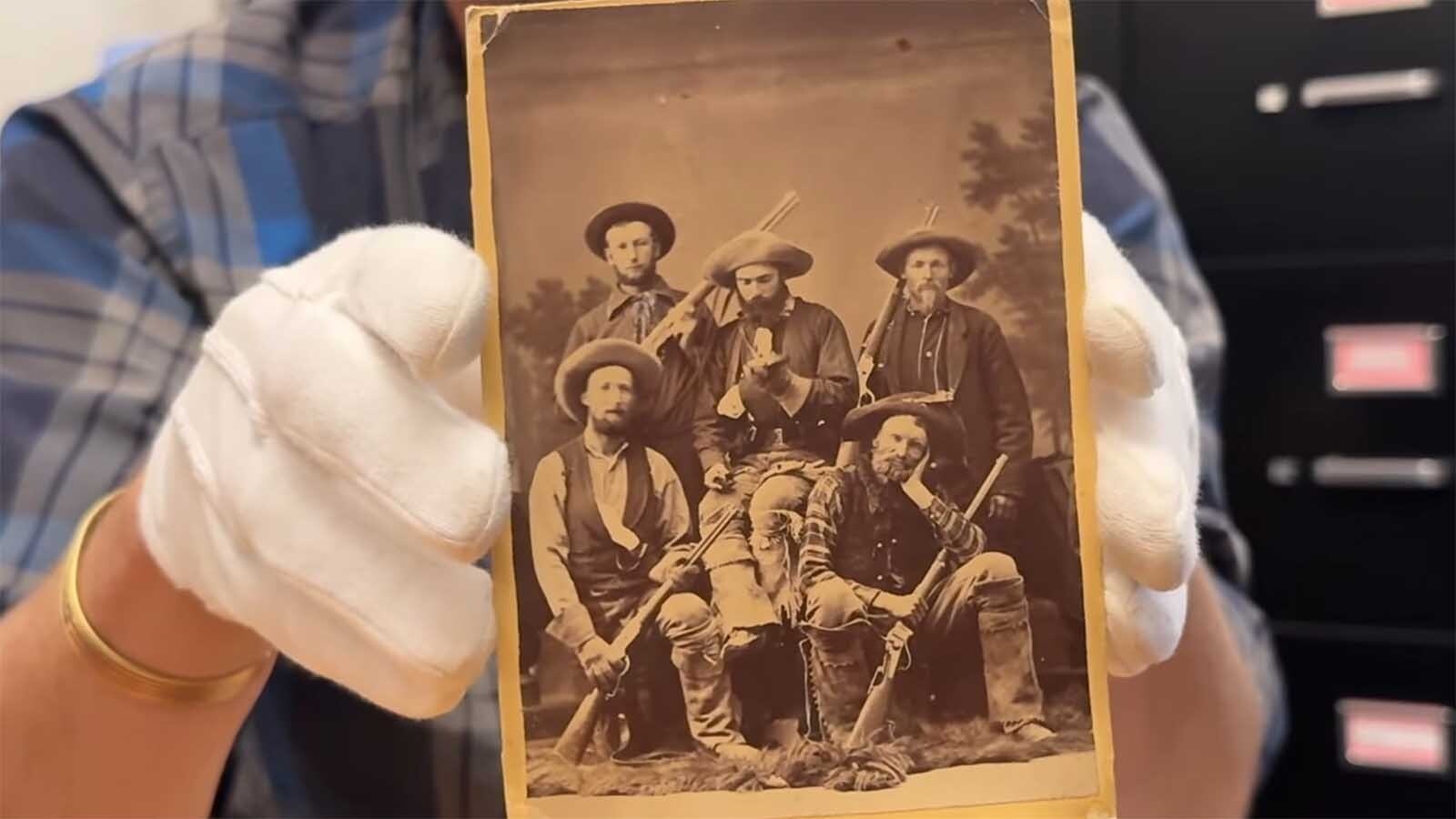
In the lower right corner, a younger Jim Baker rests his head on one hand and holds his rifle with the other. The rifle is displayed at Little Snake River Museum. The identity of the other men is not yet known. (Courtesy Steamboat Radio, Museum of Northwest Colorado) 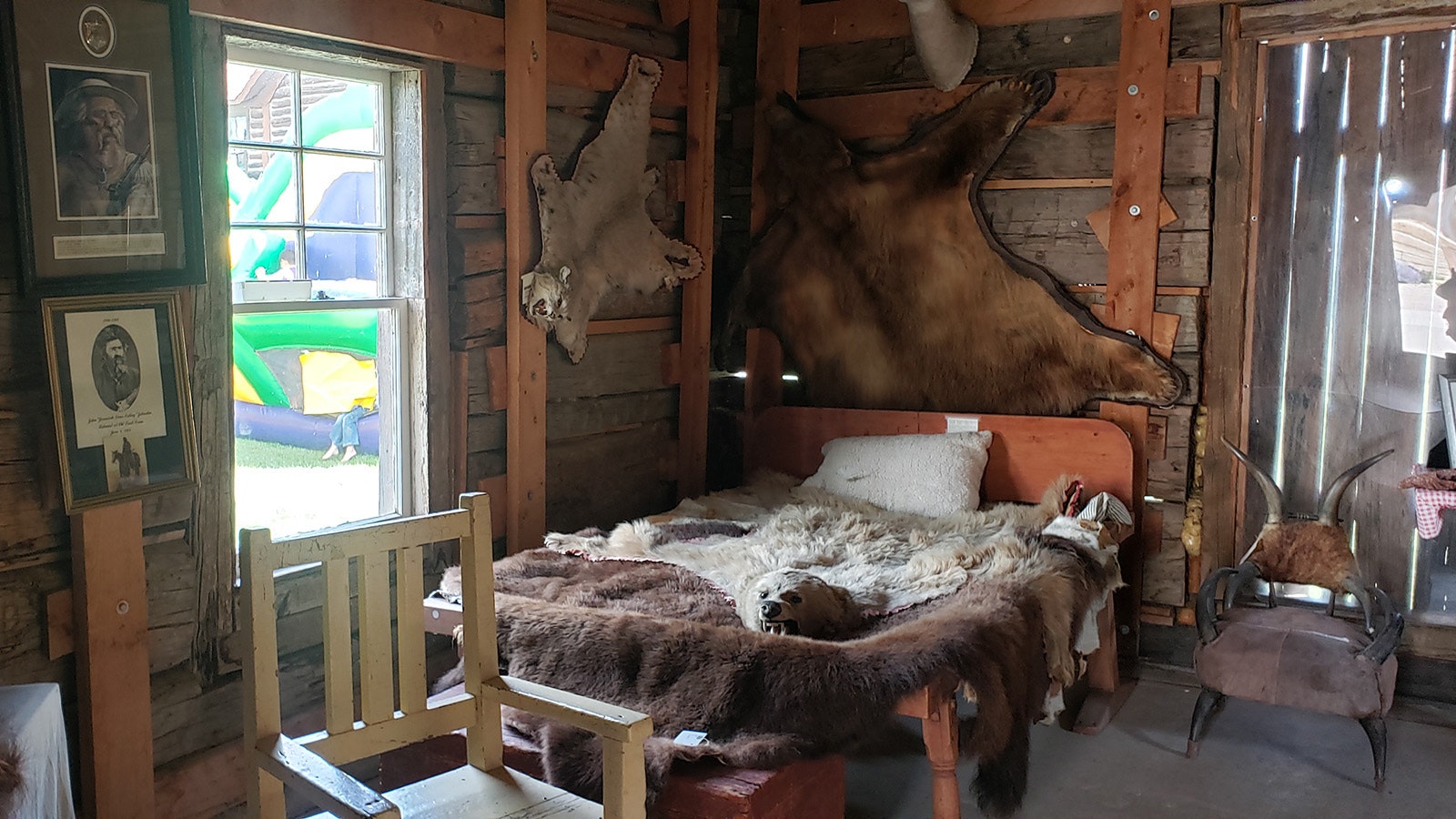
The furs of animals decorate the walls of Jim Baker's fortress cabin built in 1873. (Renée Jean, Cowboy State Daily) 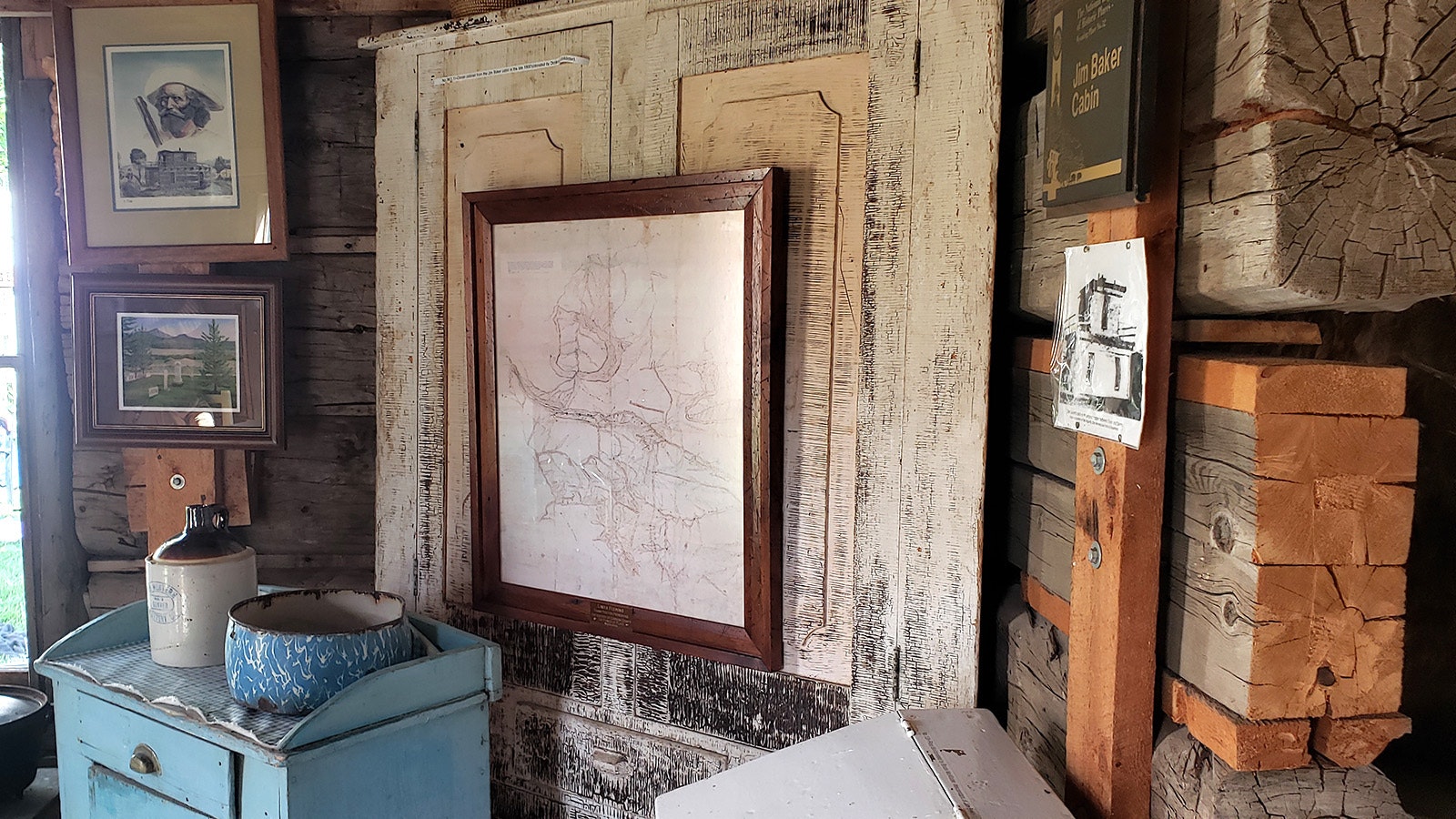
Jim Baker drew many trapping maps during his day of his favorite routes overland. Some of those routes today are paved highways. It's just one of the many ways that Baker's footsteps are interwoven on the Wyoming landscape. (Renée Jean, Cowboy State Daily)
Maybe Site Didn't Wash Away
It’s hard to say just when that pewter object was buried because the field has been leveled and re-leveled and irrigated for better than 150 years, Faerber said. In that lies a clue about what might have happened to make the Jim Baker battle site so hard to find.
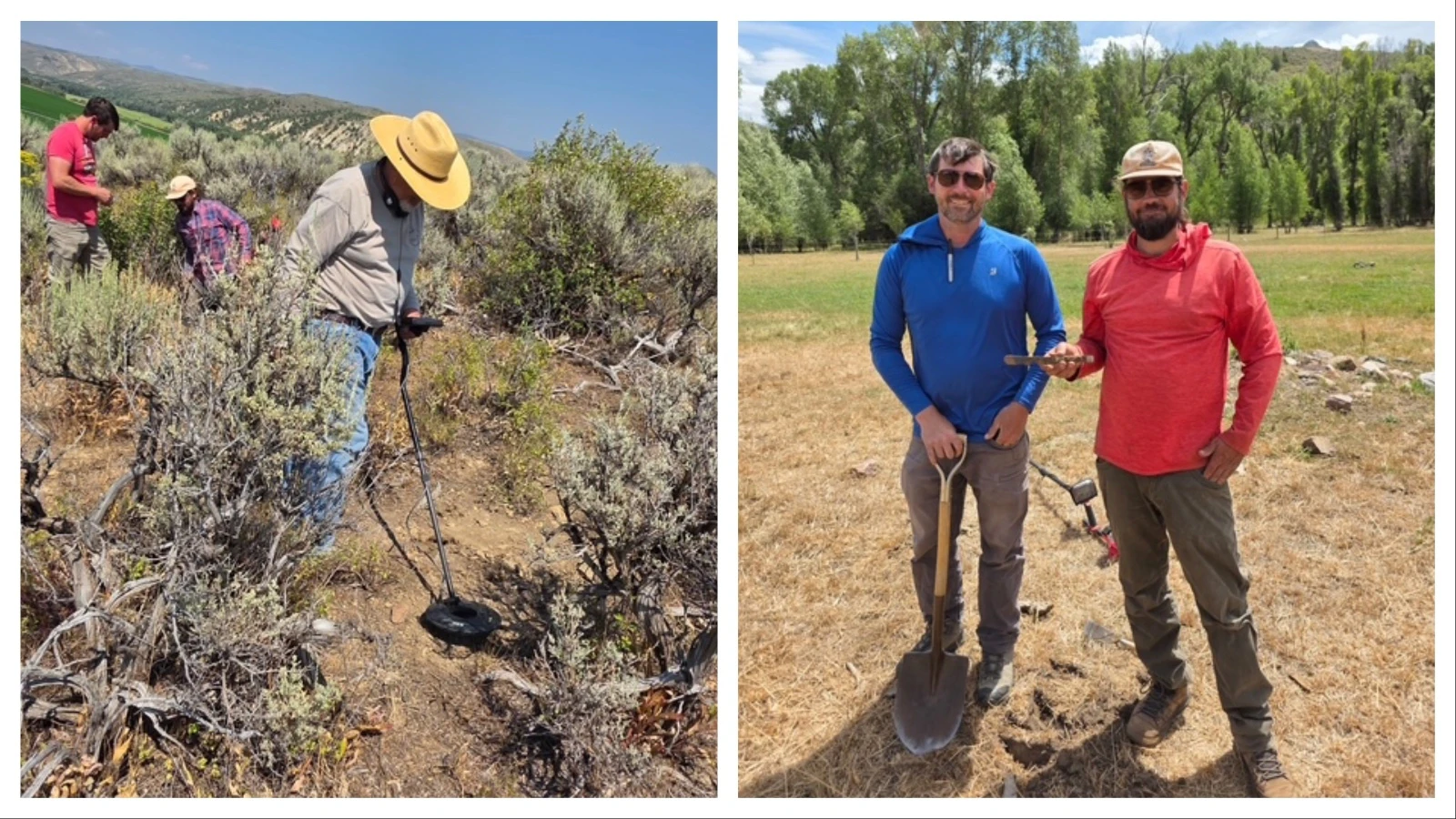
“We really weren’t expecting artifacts like that to be buried so deeply,” Pelton told Cowboy State Daily. “We were metal detecting down by this historic homestead last year and we found a cast-iron cap gun like 2 or 3 feet deep.”
The timeframe for such an artifact would likely be in the 100-year range, Pelton said. That means the battlefield, from 1841, could be almost twice as deep.
“What my gut’s telling me right now is that it might be buried so deeply because the Little Snake River does jump its banks pretty much annually and drops a lot of sediment,” he said. “It might be so deep that you can’t even pick it up with a metal detector.”
Which would explain why so many have tried and failed to find even a trace of the battleground.
Mapping Out A New Strategy
Pelton and Faerber plan to meet this November to review notes on their independent LIDAR observations, as well as map out a systematic strategy to find the battle site.
“My strategy going forward is we can really dial in the metal detection, like ramp up the sensitivity, to notch things out like iron, so we don’t pick up every single nail that’s out there,” Pelton said. “And then do that in combination with some systematic subsurface archaeological testing, probably with an auger probe, a soil probe, that can get us down a couple meters.”
Taking core samples like that in a systematic fashion should allow them to eventually find the pile of horse bones historical records suggest should be buried somewhere near the battle site.

Illuminating Important History
A deeper burial is also the best-case scenario, Pelton said. It means the battle site is likely well-preserved and intact enough to find.
“I don’t think there’s any doubt the battle occurred,” Pelton said. “I think some of the details of where it was and what actually happened have probably been a little muddied.”
Reporters of the time period often relied on second-hand and even third-hand sources. Baker, too, wasn’t keen on publicity.
When Ned Buntline approached Baker about writing a biography of the mountain man, Baker refused. He also gave few interviews in his lifetime, preferring to live a quiet life in the Little Snake River Valley near Savery, where his cabin still stands.
Finding the battle site could help clear up some of the details of a conflict that happened right at a huge inflection point in the history of the West.
“It’s really one of the first conflicts, at least historically documented conflicts, between trappers and the Native Americans in this area,” Pelton said. “It set the stage for a lot of the relationships that would continue on into the 1860s, 1870s, that defined the Plains Indian Wars.”
Answering questions about the nature of the battle, the kinds of weapons used, and clearing up historical discrepancies will help illuminate an important period of history.
“It’s a super important inflection point in the history of Wyoming that really went on to define a lot of history for the next several decades,” Pelton said. “The Rocky Mountain Fur Trade Rendezvous had ended the year before and the emigrant trail era was beginning that year. So that’s really a big transition point in the history of this region.”
Renée Jean can be reached at renee@cowboystatedaily.com.