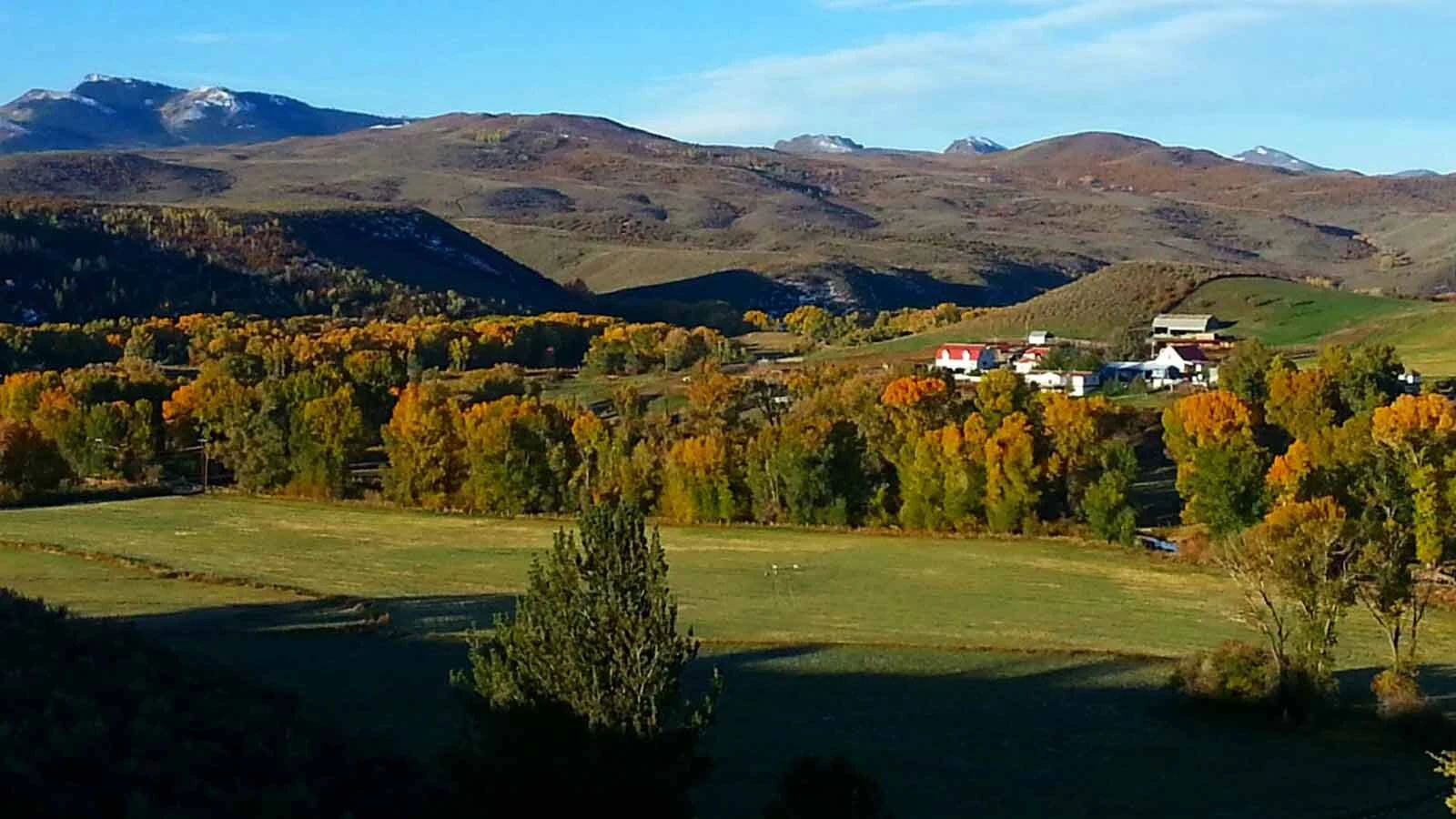
Wildlife still roam the valley where the Little Snake River and Battle Creek come together on the Ladder Ranch, a 145-year-old family operation in the Little Snake River Valley.
Somewhere near that restless confluence in 1841, mountain man Jim Baker and a few dozen fellow trappers dug in and held off a force of American Indian warriors so large they were certain of death.
Historians still argue over the exact numbers, though Baker, in a rare interview toward the end of his life, claimed there were at least 700 warriors from multiple tribes.
Historians have scoffed at the figures and said it must have been closer to a few hundred, but what no one argues about is that the men’s survival was nothing short of a miracle.
The fight left its imprint on the Little Snake River Valley. Battle Creek and nearby Battle Mountain were renamed, along with certain other landmarks.
Four years later, explorer John C. Frémont guided by Kit Carson, Jim Bridger and Baker himself, passed through the same country. Baker showed Fremont the graves where trapper Henry Fraeb and three companions were buried, details that were added to Frémont’s journals.
Frémont also marveled at the valley’s wildlife, writing that the place “appeared more variously stocked with game than any part of the Rocky Mountains” he’d visited. The reason, Frémont believed, was excellent pasturage and the area’s reputation as a dangerous place where rival tribes vied for game.
The conflicts that ensued helped prevent overhunting.
Today, the view at the confluence is still much as Frémont described, even if the rivers twist and wander like a pot of boiling spaghetti, thanks to the shifty Little Snake, a constantly shifting “noodle” on the valley floor.
The restless water is why no one can say for sure exactly where Fraeb’s doomed fort once stood — though for years, ranch owners Sharon O’Toole and her late husband, Pat, have opened the Ladder’s sprawling Wyoming-Colorado pastures to historians and archaeologists trying to find it.
Moved To Wyoming By Wagon
For Sharon O’Toole, the history isn’t just buried under evolving riverbanks. It’s part of her family’s DNA, going back to 1881.
“My great-grandparents A.W. and Anna Louisa Salisbury settled down there on that old ranch by the confluence,” she told Cowboy State Daily. “And then their oldest child was my grandfather, George Salisbury Jr., and he bought the place where I live now. He bought it from the original homesteader who was named Beeler.”
Beeler was the son-in-law of Jim Baker.
“My grandmother was literally a homestead girl,” O’Toole added.
After the Terrill family moved in with two daughters, O'Toole's grandfather married one of them, named Emma Terrill. The Terrills had come to Wyoming by wagon from Missouri in 1900.
“I mean the trains ran then,” O’Toole said. “But that was 1900. If you didn’t have a lot of money, you were moving your whole household, and you still did it by wagon.”
Business Model Changed Early
O’Toole’s grandmother Emma and her Aunt Liza both found work at the Ferris-Haggarty Mine as cooks when they were 18 and 19 years old.
“When they wanted to go into Encampment, they’d ride the (train) cars down,” O’Toole said. “That’s how people got back and forth to Encampment, was riding those copper cars in the mine.”
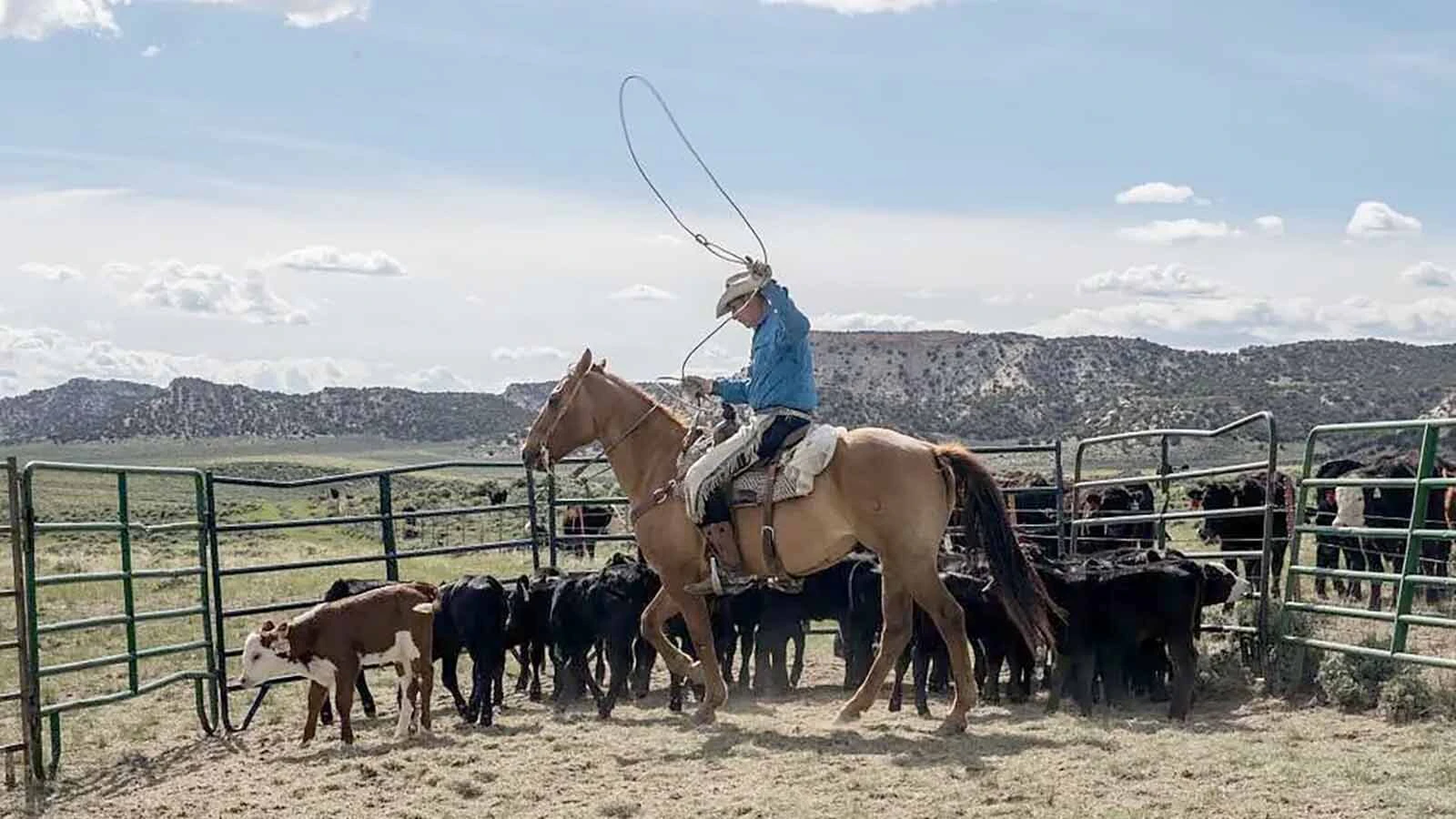
The Salisbury ranch started as a horse farm, with stock trailed from the Texas border with Mexico, then north to Wyoming.
“That’s what people did here then,” O’Toole said. “They raised remount horses during World War I.”
Rapid mechanization killed that industry, alongside a massive postwar surplus of animals and a shift away from traditional cavalry tactics. To survive, the ranch had to make a shift in its business model.
“They got some cattle,” O’Toole said.
Becoming A Sheep-Cattle Ranch
But what really helped save the ranch was sheep.
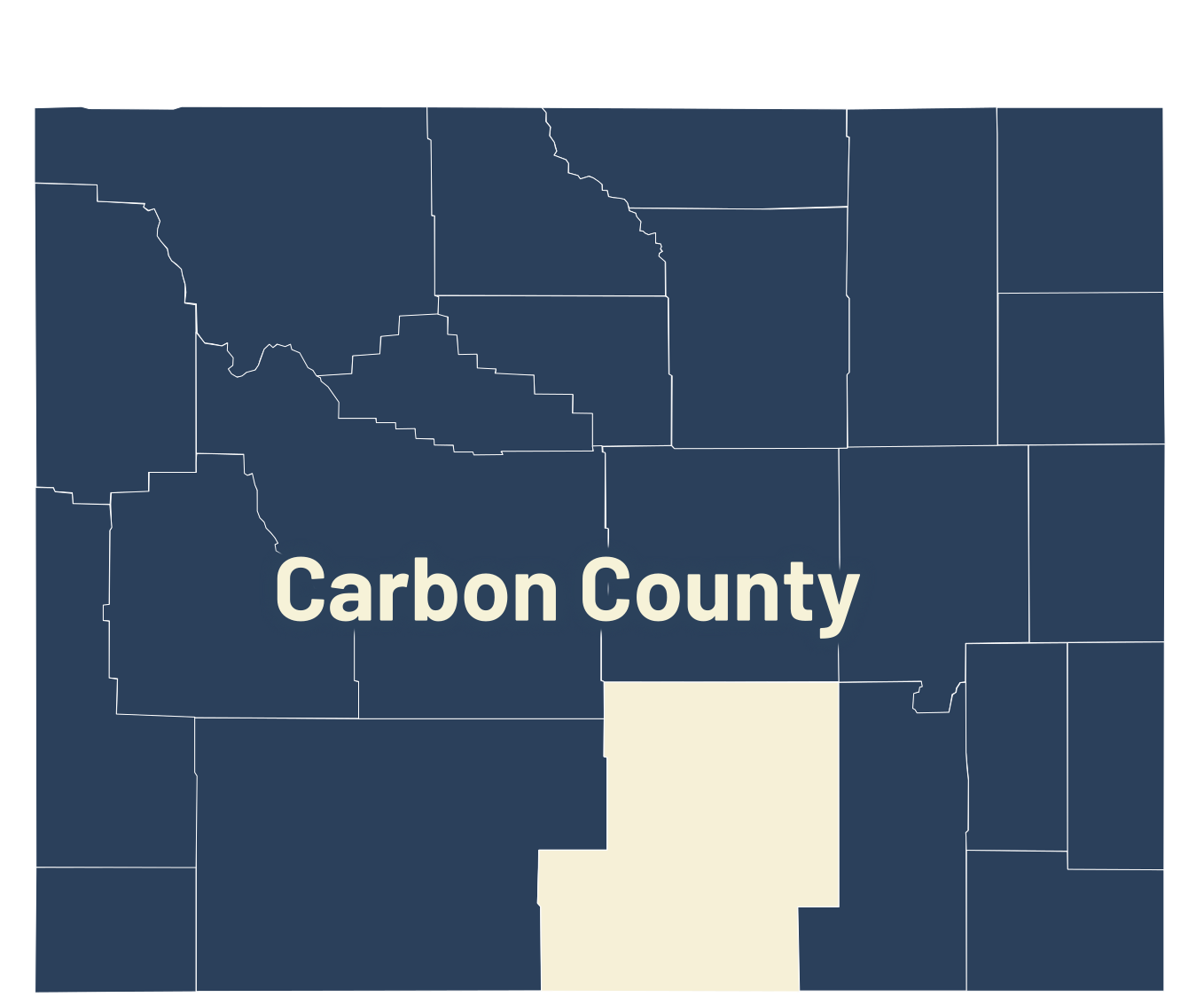
“There were a lot of big sheep outfits in Carbon County, and they’d come down through the Savery Stock Driveway,” O’Toole said. “At that time, there were three bunches a day for probably at least three weeks.”
The drive was set by the Forest Service, and it was rigorous.
“If you missed your slot, you went to the back of the line,” O’Toole said. “So there were all these big trail herds coming through there and my dad and his brother would go up and herders would give them bum lambs that didn’t have a mother or couldn’t keep up.”
That was in the '30s, and the ranch has run both sheep and cattle ever since.
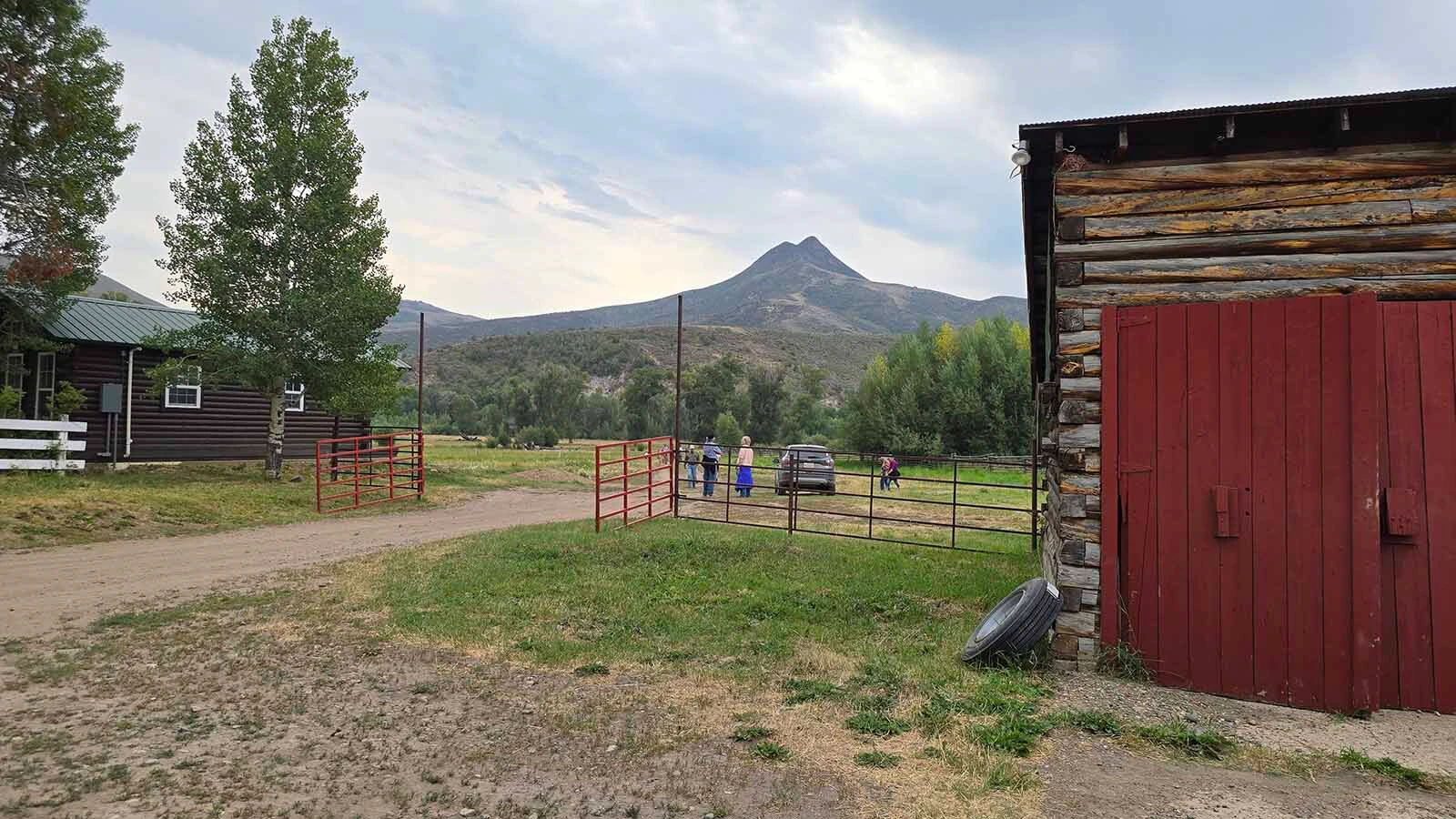
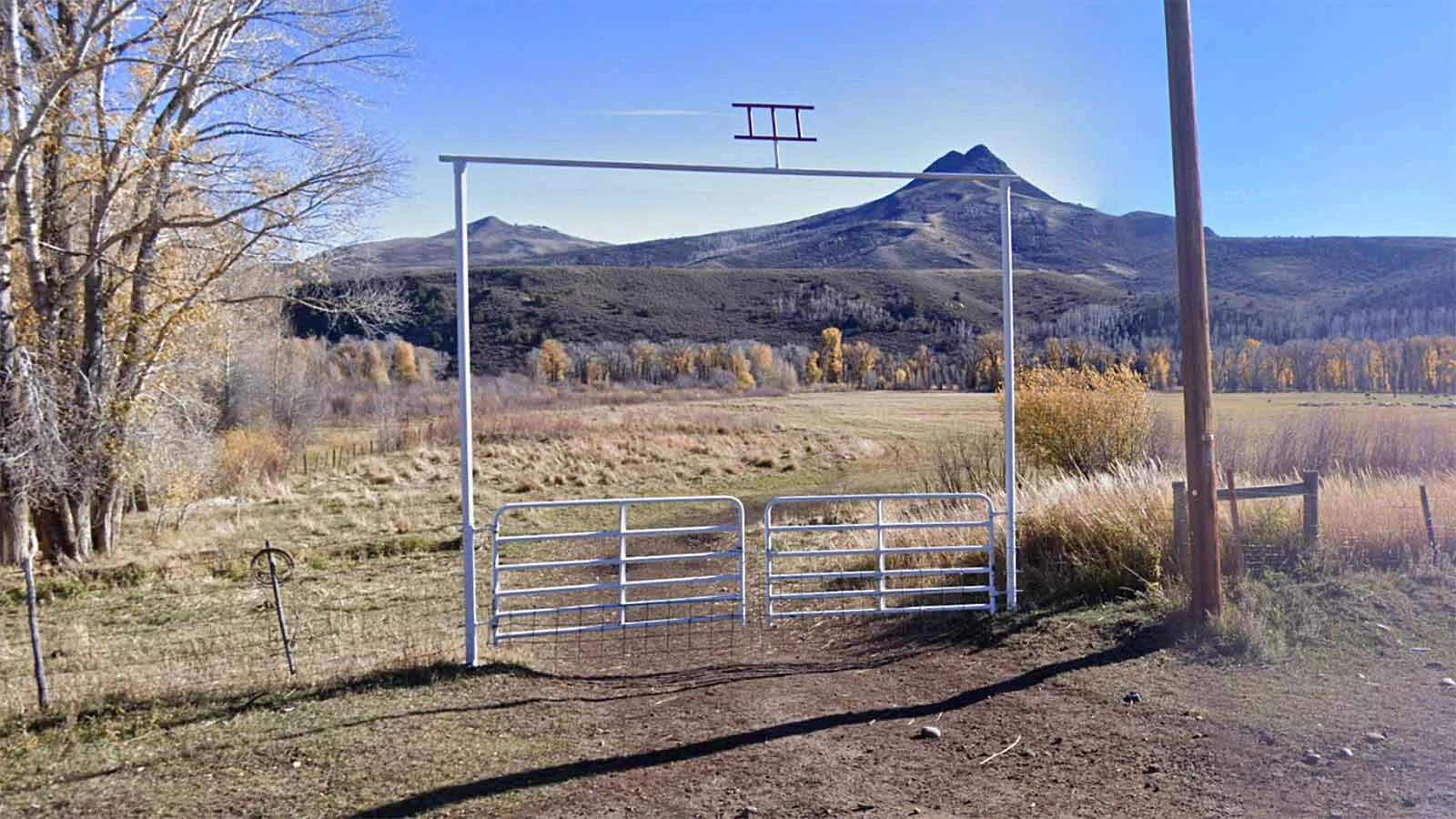
The Petite Tetons sit between homestead and barn on the Ladder Ranch, which is the site of Jim Baker’s battle with three Indian tribes. (Renee Jean, Cowboy State Daily) 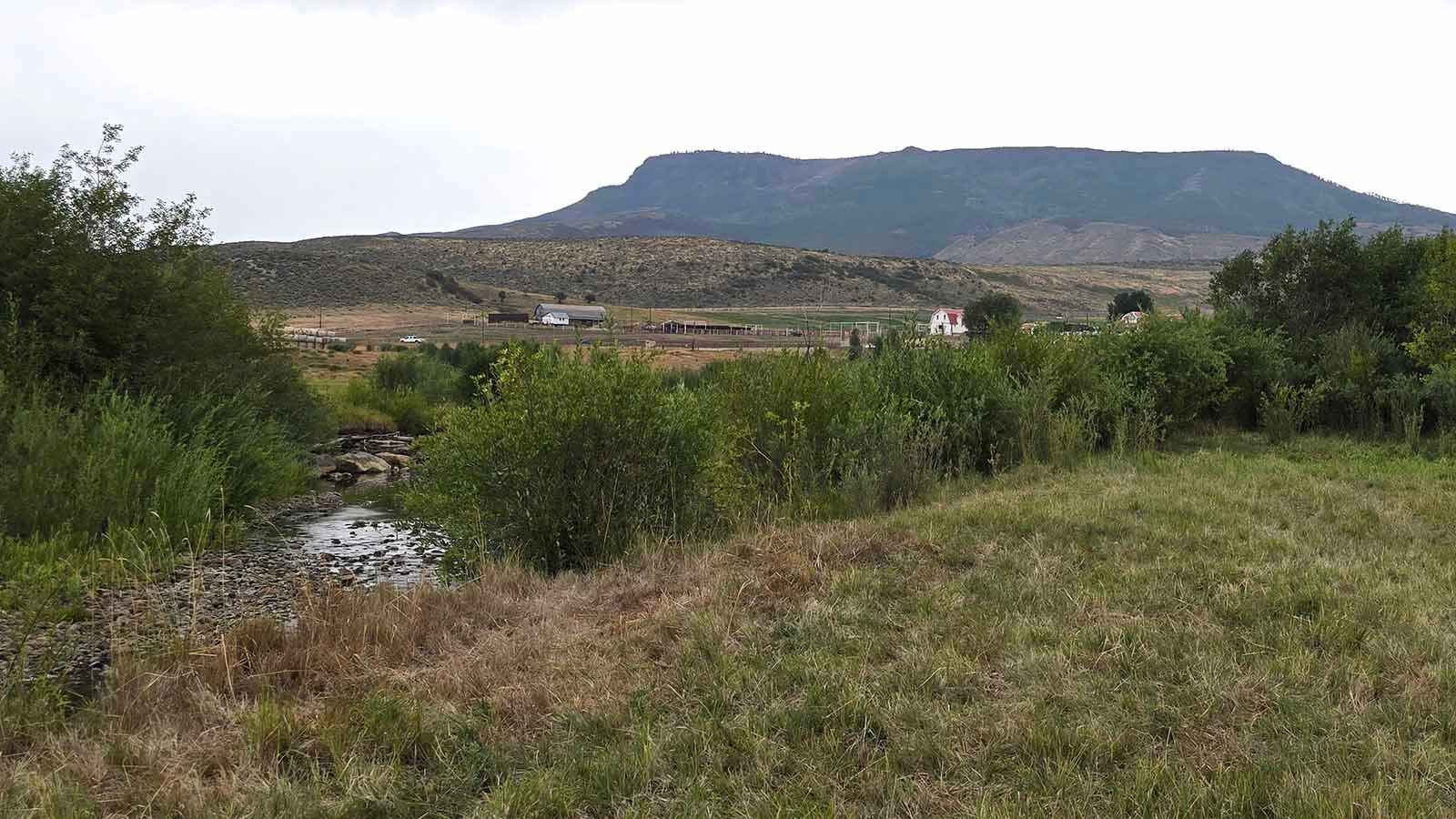
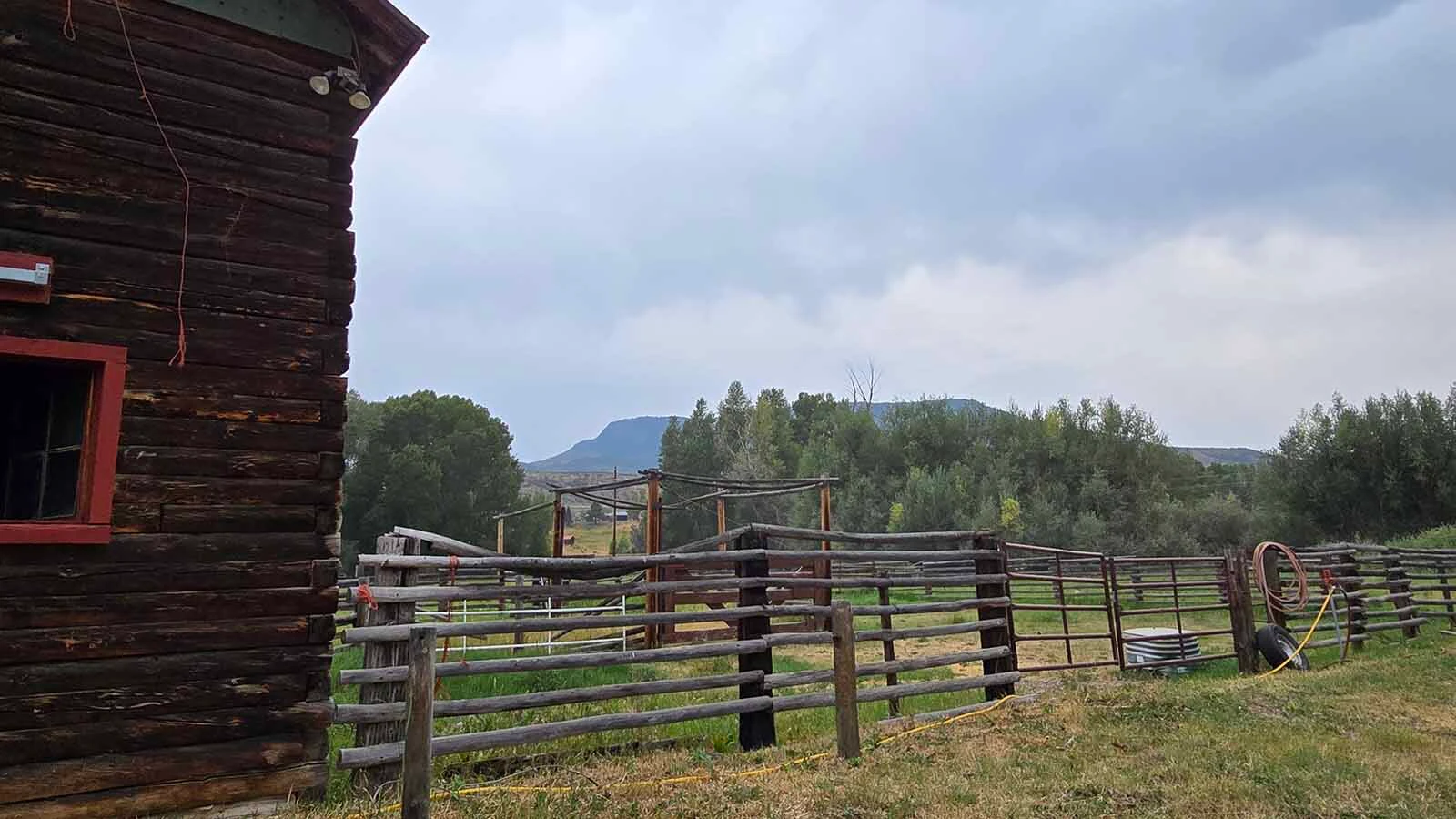
Battle Mountain is visible from the Ladder Ranch. (Renee Jean, Cowboy State Daily) 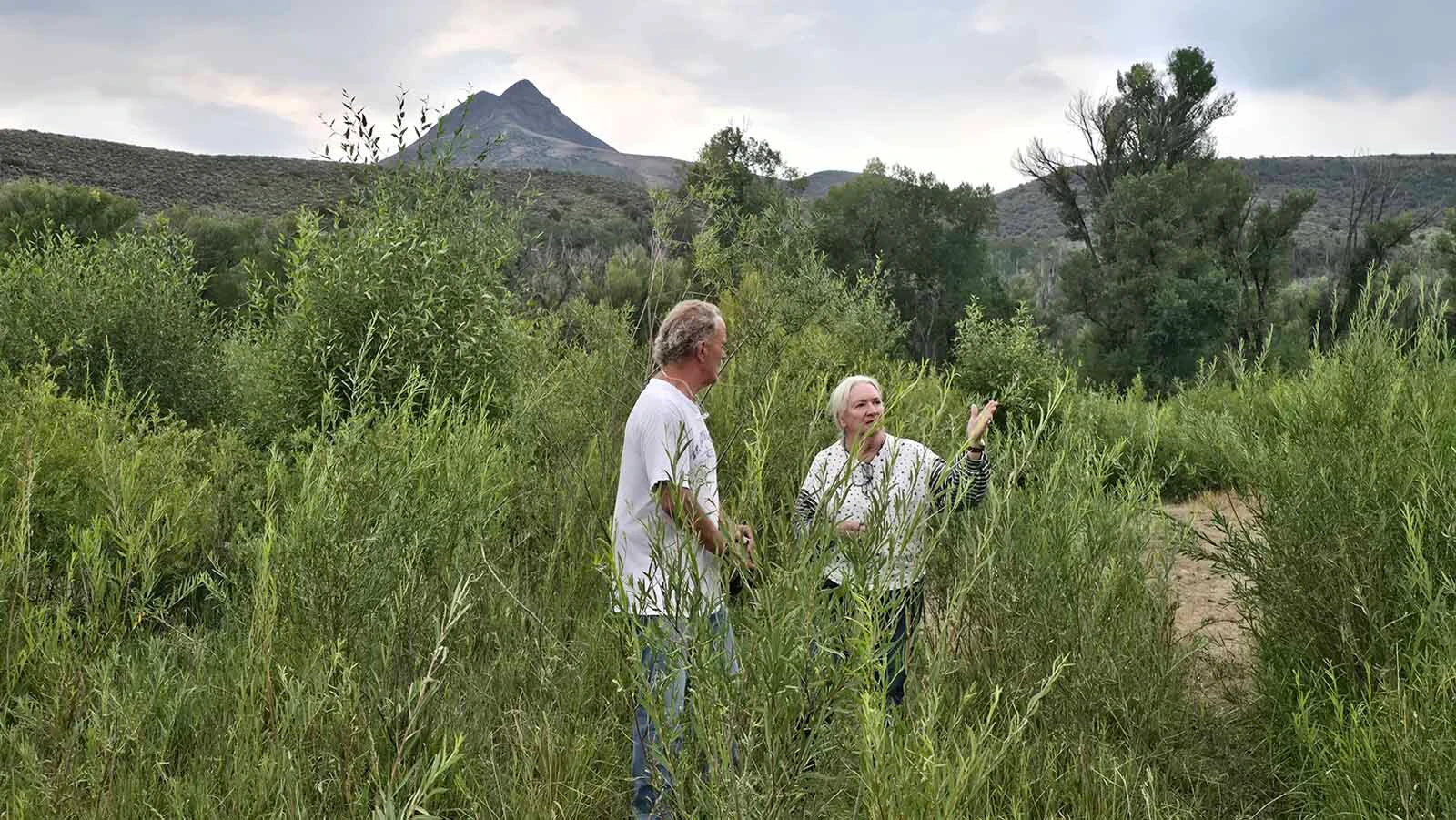
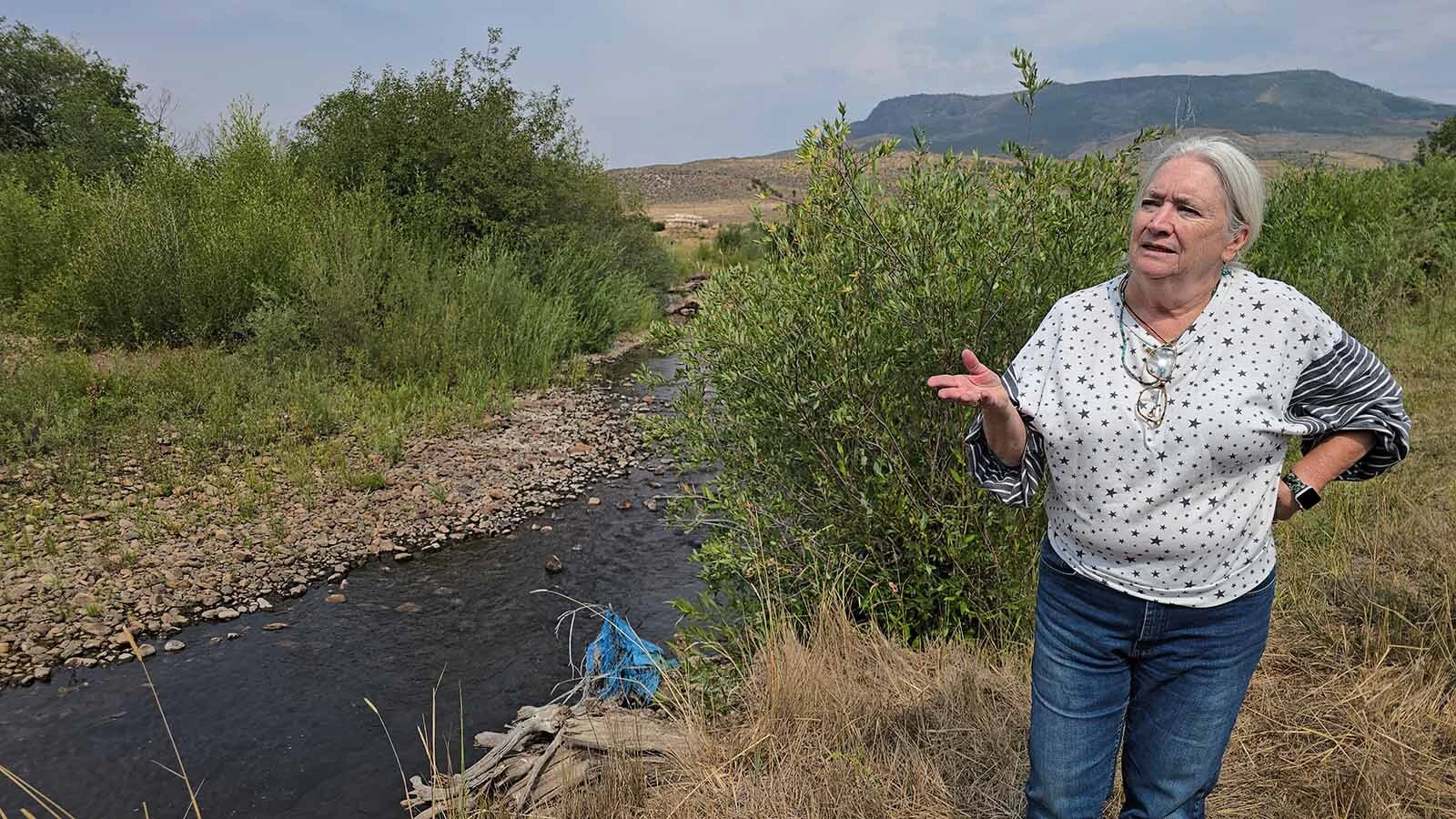
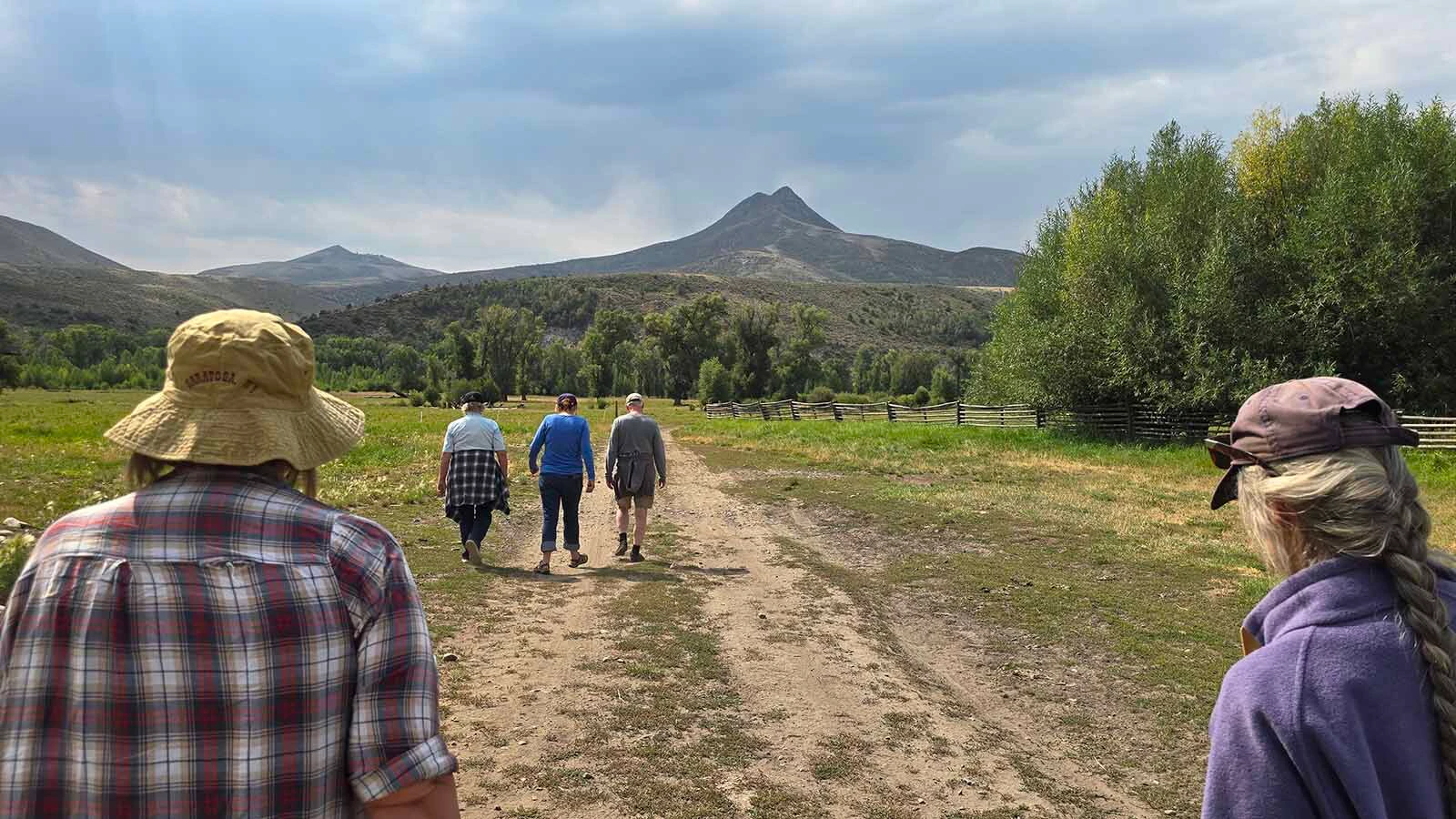
Sharon O’Toole talks about conservation work her family has done on the Ladder Ranch over the years. The Petite Tetons, renamed from Squaw Mountains, are in the background. (Renee Jean, Cowboy State Daily) 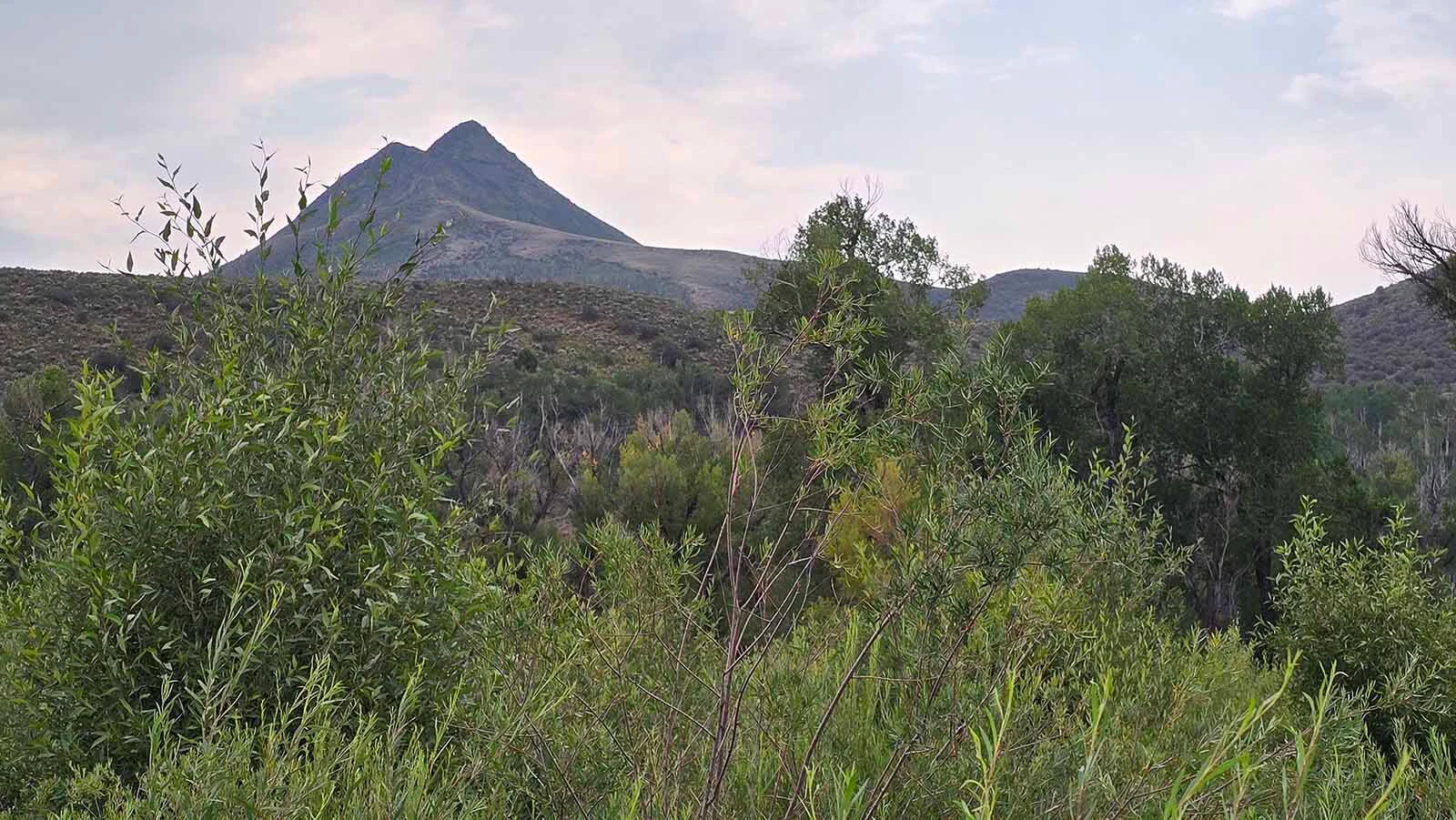
The Petite Tetons used to be known as the Squaw Mountains. The O’Tooles decided to seek a new name amid a wave of renamed landmarks, to try and get a name that would make sense for the area. (Renee Jean, Cowboy State Daily) 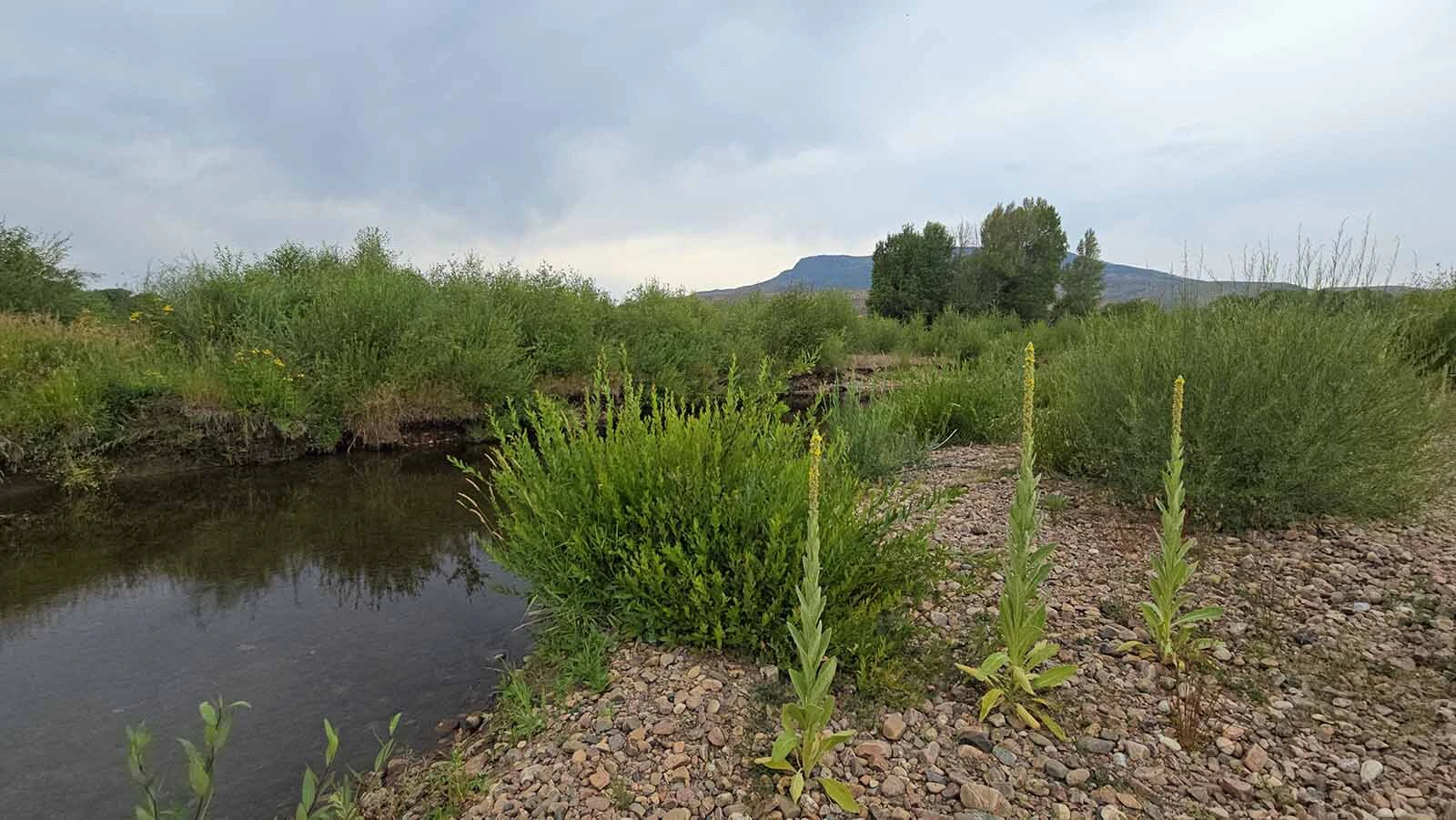
Battle Mountain in the background, as seen from the Ladder Ranch near the confluence of the Little Snake River and Battle Creek. (Renee Jean, Cowboy State Daily) 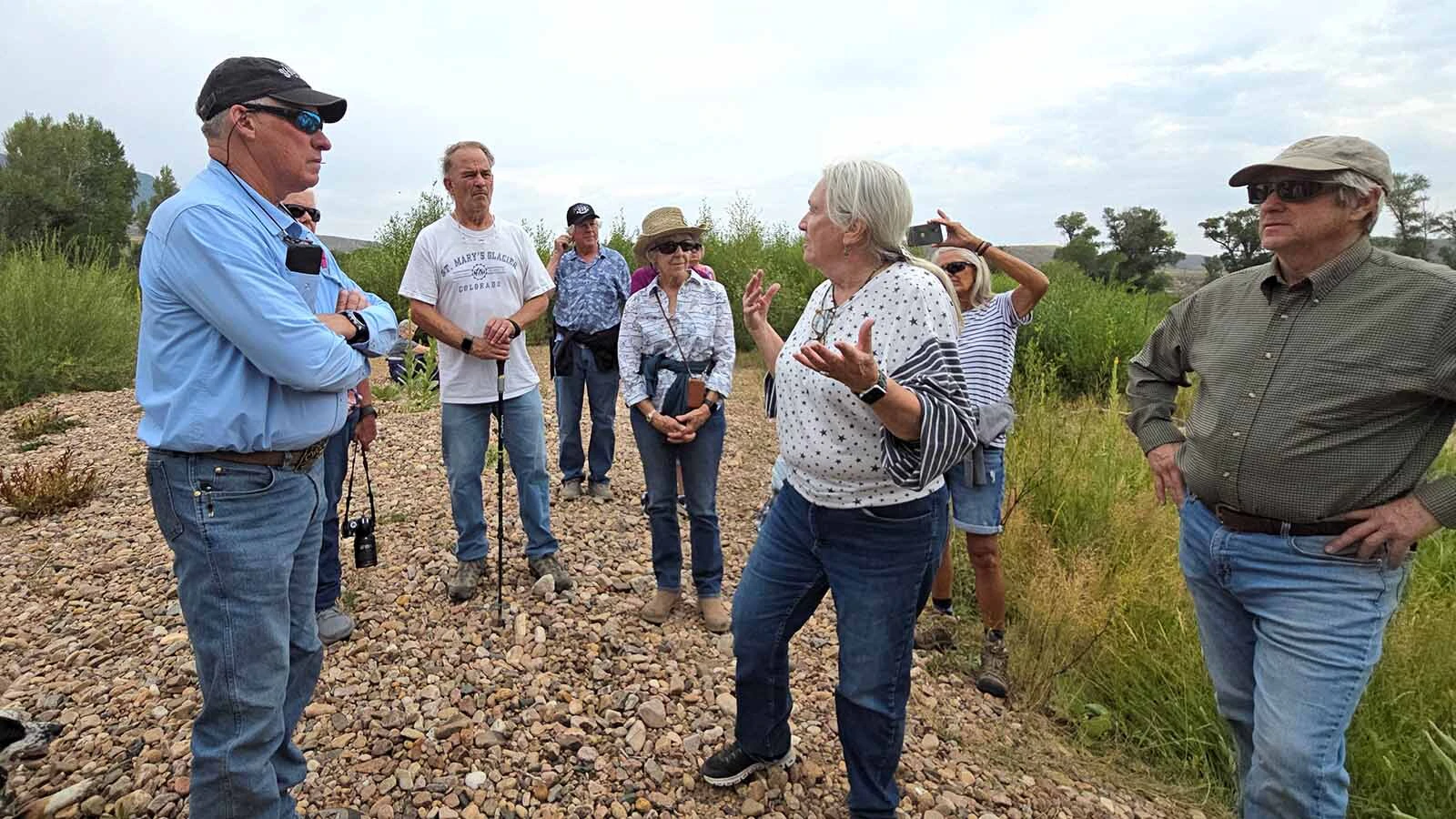
Sharon O’Toole talks about conservation work her family has done on the Ladder Ranch over the years. (Renee Jean, Cowboy State Daily) 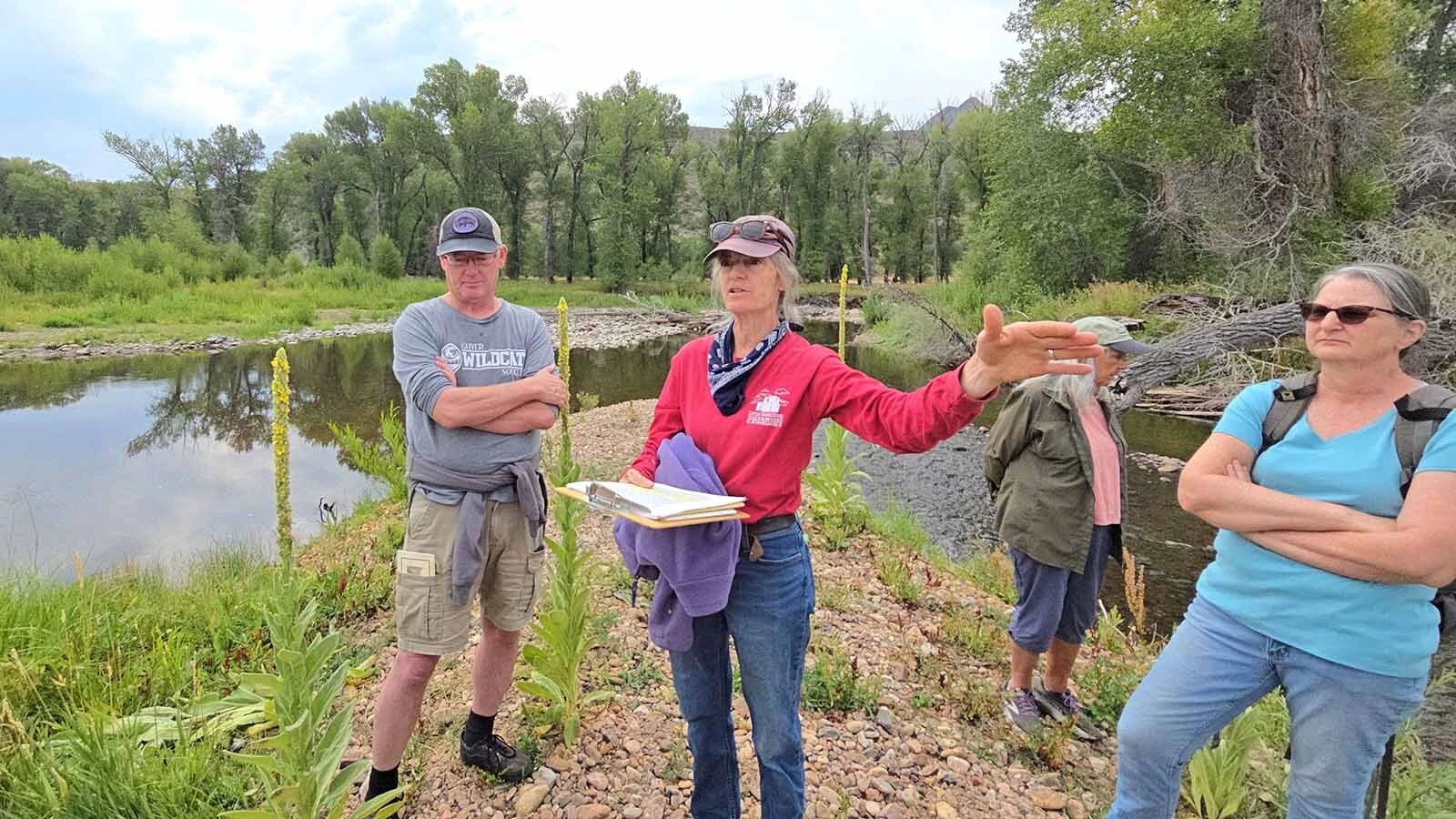
Lela Emmons talks about the battle in 1841 at the confluence of the Little Snake River and Battle Creek on the Ladder Ranch. (Renee Jean, Cowboy State Daily) 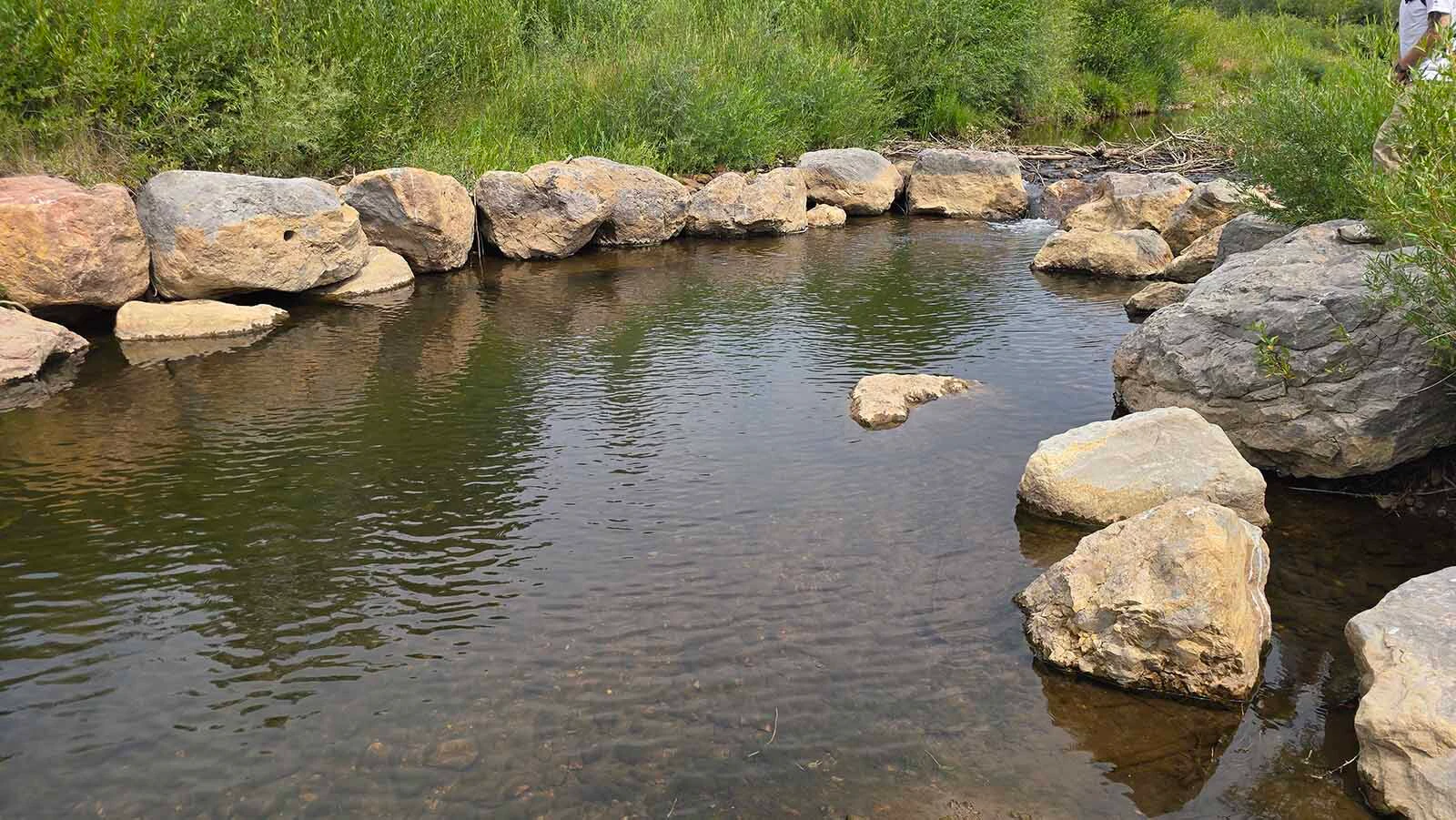
Rocks and logs have been used to line the banks of Battle Creek and the Little Snake River on the Ladder Ranch, to help deepen the fishery and prevent erosion. (Renee Jean, Cowboy State Daily)
What’s Good For The Herd
O’Toole’s father served in World War II while her mom stayed at home on the ranch, teaching at a one-room schoolhouse just down the road.
“We were lucky here,” she said. “We have a really amazing climate for growing high-protein grass and we’re high, so it gets cold, and we don’t have a lot of the disease others have to contend with. Every place has its challenges and different breeds of livestock suited to different climates.”
But the O’Tooles didn’t take that for granted.
“It’s always been in everybody’s mindset to take care of the landscape,” she said. “To raise livestock, you’ve got to be an animal husband and care for them the best you can. But you can’t care for them if you’re not caring for the landscape as well.”
O’Toole remembers hearing more than once that it was important to leave two blades of grass for every one consumed.
“What’s good for the herd is good for the bird,” she said. “And what’s good for the bird is good for the herd.”
She’s heard that one often, too, and has been known to say it herself to all three of her own children, but especially Ea’mon O’Toole and Meghan O’Toole Lally. Both have returned to the Ladder Livestock Company as business partners and are now running the ranch, so their mom can retire. They are already leading its fifth generation, but a sixth generation is also growing up on the ranch as they did.
“My two children who are on the ranch have six children between them,” she said proudly. “They are 13 to 22. I mean, we’ll just have to wait and see who wants to be here. That’s up to the next generation to figure out.”
Succession Success
O’Toole is both wishful and wistful as she talks about her impending retirement. The topic touches so many emotions.
It also brings to the surface a sensitive topic, one she believes is the most difficult part of keeping a ranch together past the third generation.
It’s tough for ranches to keep going past that point. So tough, that many refer to it as the third-generation curse.
Ranches have to contend with the accumulation of high estate taxes, as well as complex sibling inheritance splits and delayed management hand-offs. That strains many families to the breaking point.
“I think probably more family ranches, and even many small family businesses, have failed due to lack of succession planning than any other single cause,” she said. “Sometimes you have to make hard decisions, but if it’s in your value system to care for the landscape and keep it in your family, you have to do that planning.”
O’Toole said she knows ranching families who are dithering about what to do, or wondering if they should do anything at all. Shouldn’t they just let the next generation sort it all out?
“I tell them, ‘Do something,’” she said, adding, “You can always change it. It’s not carved in stone. But if you don’t have a will, the state of Wyoming has got one for you.”
And that will won’t necessarily value what you would.
Family Affairs
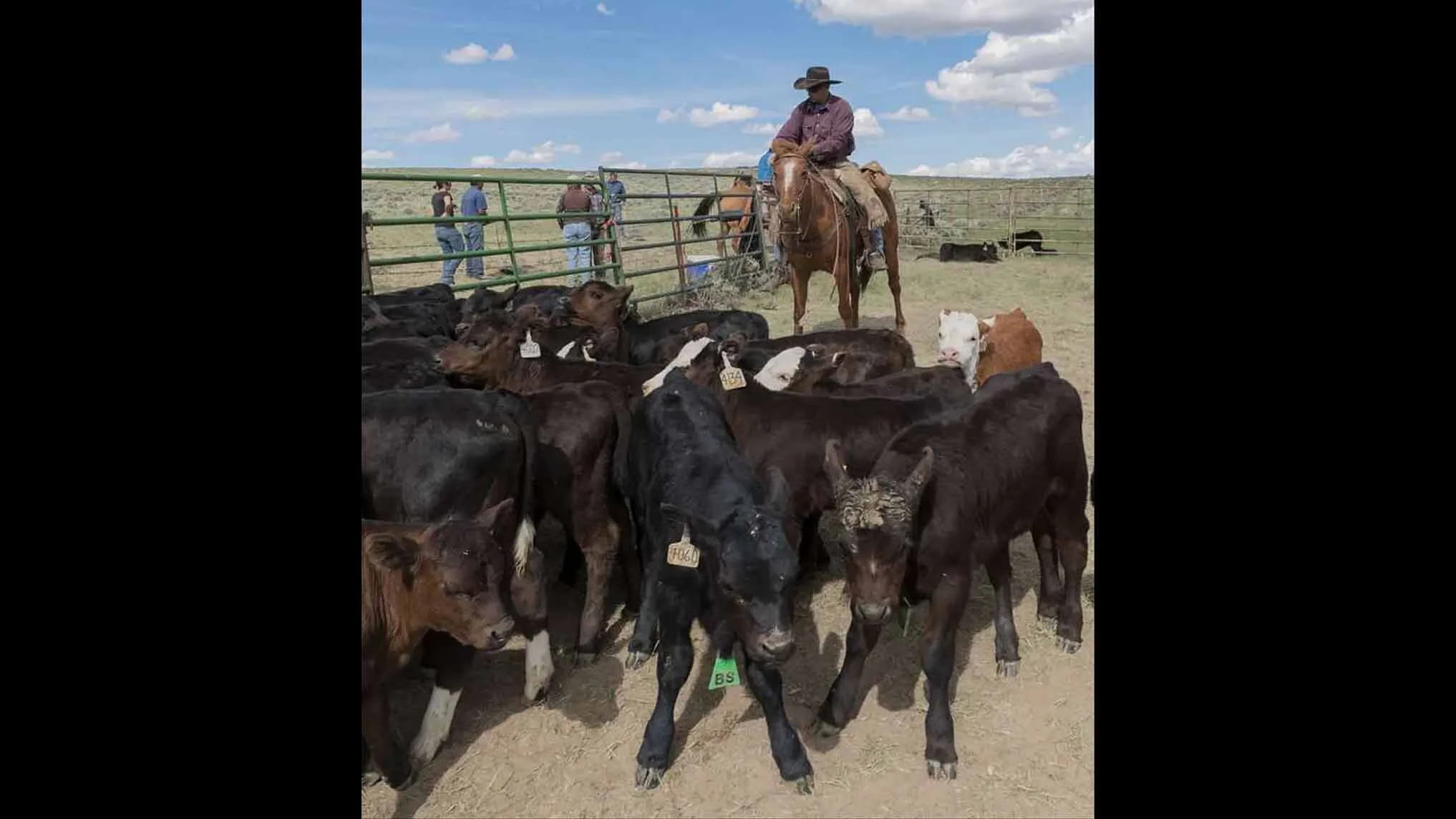
On the O’Toole’s ranch, some details have already been worked out between siblings. Ea’mon oversees the cattle herd and grueling multi-state livestock movements.
The O’Toole sheep herds trail 150 miles from the Medicine Bow-Routt National Forest at 9,500 elevation to Wyoming’s Red Desert, at 6,000. O’Toole said it’s one of the longest livestock trails in America.
The cattle trail a shorter distance, from the same national forest area back to the ranch’s headquarters.
Ea’mon is aided by cutting-edge conservation technology, like virtual fencing, which allows ranchers to draw up new rotational grazing fields by basically drawing them out on their smartphones.
Lally handles the historic sheep operation and also runs Ladder’s diversified ecotourism and guest business, which hosts fly fishermen, hunters, and travelers who want to experience the untamed beauty of the Little Snake River Valley.
By actively integrating the two children who want to return to manage the ranch this way, O’Toole hopes to shield it from the most common reasons countless historic family operations have folded. By talking things out and handing the reins over now, there will be much less stress later.
It’s something O’Toole doesn’t take for granted, though. Across Wyoming, a number of legacy ranches are on the market, with many families deciding it’s time to sell out.
Eyes On The Prize
People are still visiting the Ladder Ranch in the Little Snake River Valley looking for Jim Baker’s battle site.
“Years ago, I went to the State Museum, and there’s some contemporary accounts,” O'Toole said. “From either people who were in it or heard about it at the time.”
Her research included Frémont’s account.
“He came through a few years later,” she said. “My dad said that he and his cousins used to go digging around trying to find a bunch of horse bones at least.”
Because nothing has ever been found, O’Toole and other family members have come to the conclusion that the shifting Little Snake River probably washed everything away.
“The trappers must have buried their dead,” she said. “I don’t know what happened to the Indians who were killed.”
But O’Toole isn’t looking for the site of the battlefield anymore. Her eyes are on a different prize now.
Her children, and the grandchildren who she hopes will carry the torch for the Ladder Ranch into the next five generations.
Renée Jean can be reached at renee@cowboystatedaily.com.