Growing up, Texan James Neeley had never heard of mountain man Jim Baker, who was a frontier scout, trapper and early non-Native settler with ties to both Colorado and Wyoming when the West was young.
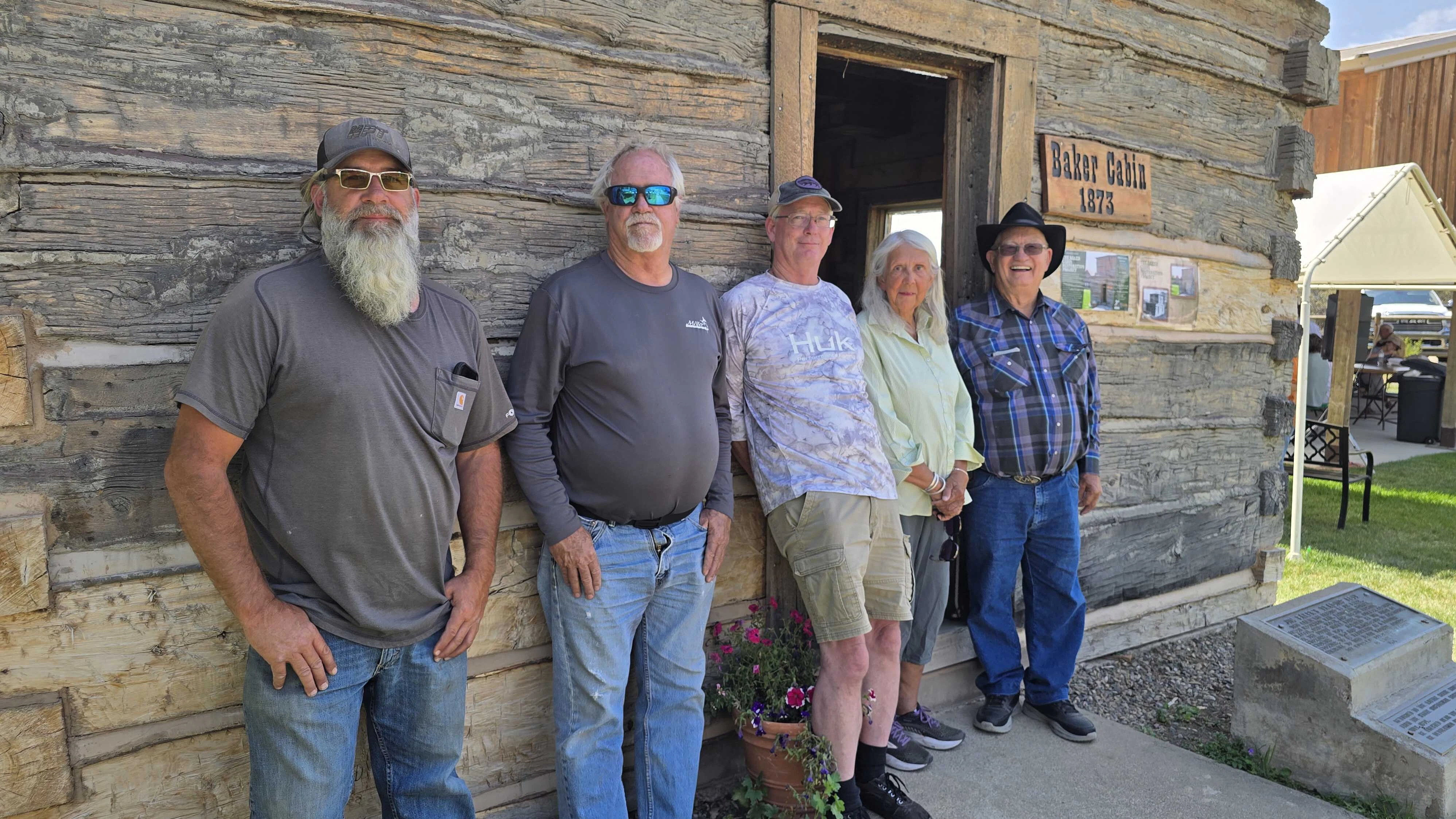
A sister’s genealogy search changed all that a couple decades ago. On Saturday, he was among a handful of Baker descendants who gathered for a photo commemorating the Little Snake River Museum’s work to preserve the cabin Baker built when he settled in present-day Savery in 1873.
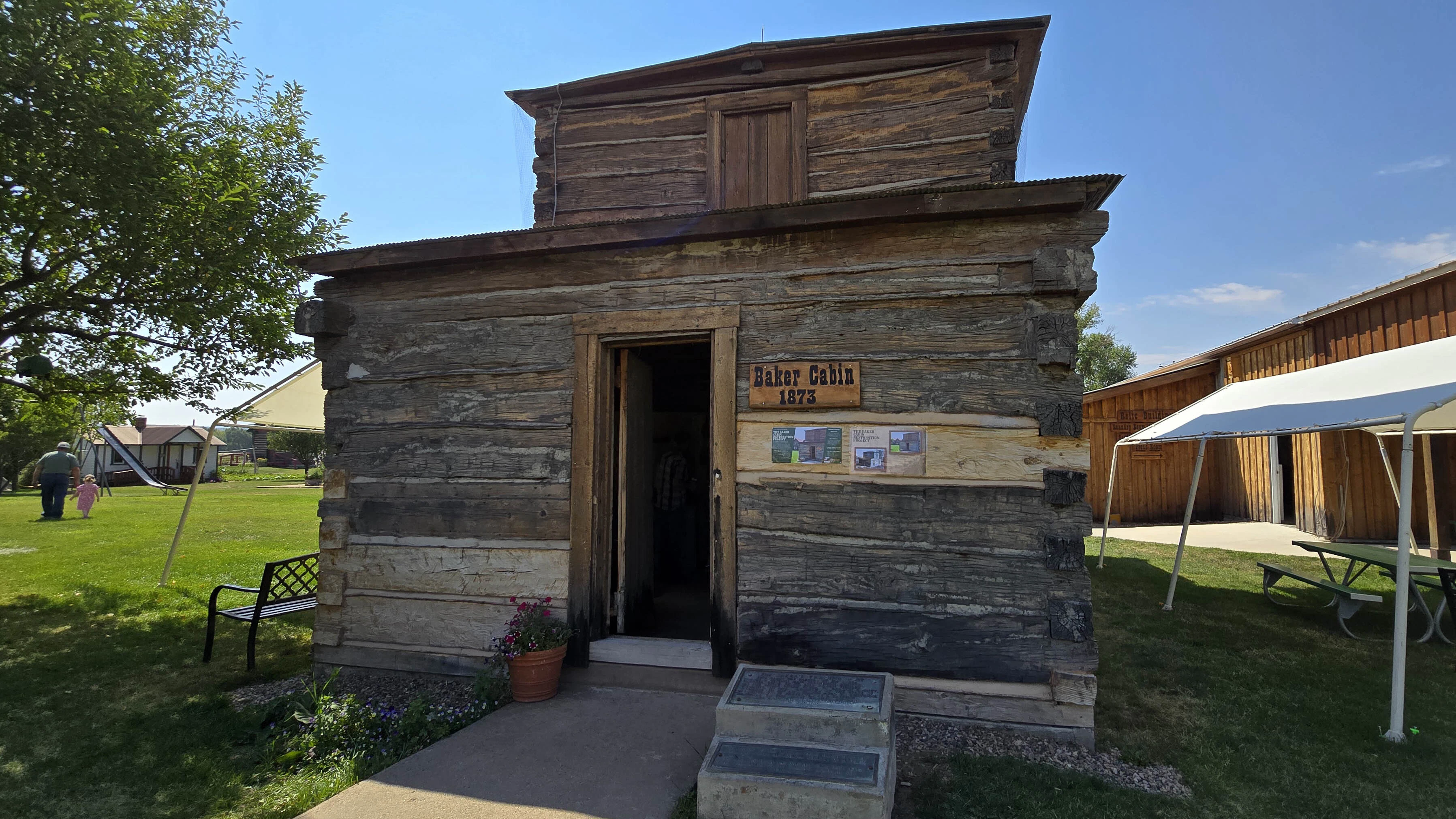
Members of HistoriCorps and other volunteers in the Savery area spent last summer hand-hewing cottonwood logs to replace water-damaged logs at the cabin. The work is not finished, Little Snake River Museum Director Lela Emmons told Cowboy State Daily.
Efforts are already underway to raise additional funds to keep the restoration going, and to source more of the huge cottonwood logs tneeded.
“There’s still another 10 or 12 logs we need to replace,” she said. “Getting those logs is the hardest part of the whole thing.”
Large cottonwood logs aren’t simply available at Home Depot or some other lumberyard.
“We have to find the right cottonwoods, get them milled,” she said. “And they’re so heavy, you can’t just lift them up. You have to hire a guy with a big backhoe or something who can lift them.”
It’s a fuel-intensive process, Emmons added, which means the logs must be sourced as near to the museum as possible.
Once they have the right logs, they’ll also need to bring HistoriCorps back to do the work, which will cost around $40,000 for another two-week stint.
Emmons said she hopes to identify grant funding to help with that.
Best Shot In The West
Neeley drove from Texas with his wife, Sandra, just to learn more about his ancestor and see the cabin where Baker once lived.
“I would be a first cousin, three times removed,” Neeley told Cowboy State Daily. “So, there’s a lot of people here who know more about him than I do.”
The work done on the cabin, which is a rare surviving structure from the mountain man era, is “wonderful,” he said.
“It’s an important part of history and, of course, if it deteriorates, nobody can enjoy it,” Neeley said. “So it’s really nice that they have done this. A lot of people, at least in our part of the world, are not familiar with Jim Baker. They’ve heard of Jim Bridger, people like that … but (Baker) was an important character, too.”
Kit Carson, in fact, has been quoted in newspaper articles of the time saying Baker was the “best shot in the West,” next to himself, of course. When Carson sent invitations to 18 mountain men for what would be their last trapping event together in 1851, Baker was on that list.
Bridger, when he was looking for an elite scout to help him at Fort Phil Kearney, hired Baker. Baker was also one of the scouts for Gen. John Charles Fremont’s third expedition to explore and map the American West alongside Carson, and he was part of the 1841 Bartleson-Bidwell Party, among the earliest wagon parties bound for California.
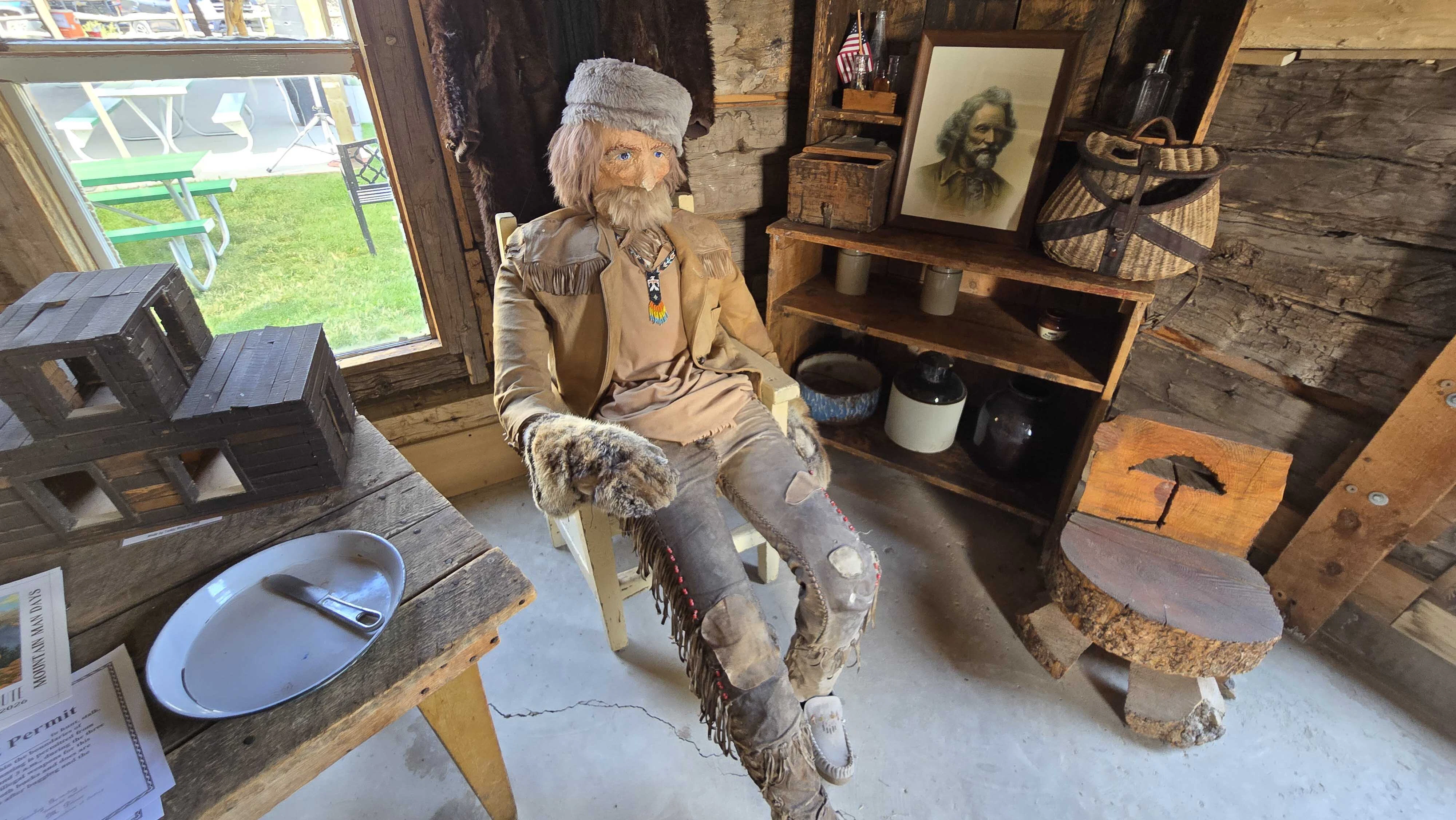
Baker’s contemporaries certainly thought he was important. But unlike them, Baker was not interested in publicity, biographer Leighton Baker wrote in his book, “The Red-Headed Shoshoni.”
Baker loved the mountains and hated the spotlight. So, when Ned Buntline suggested writing a biography about him, Baker flat out refused.
He did not care if the world forgot who he was.
Too Many People
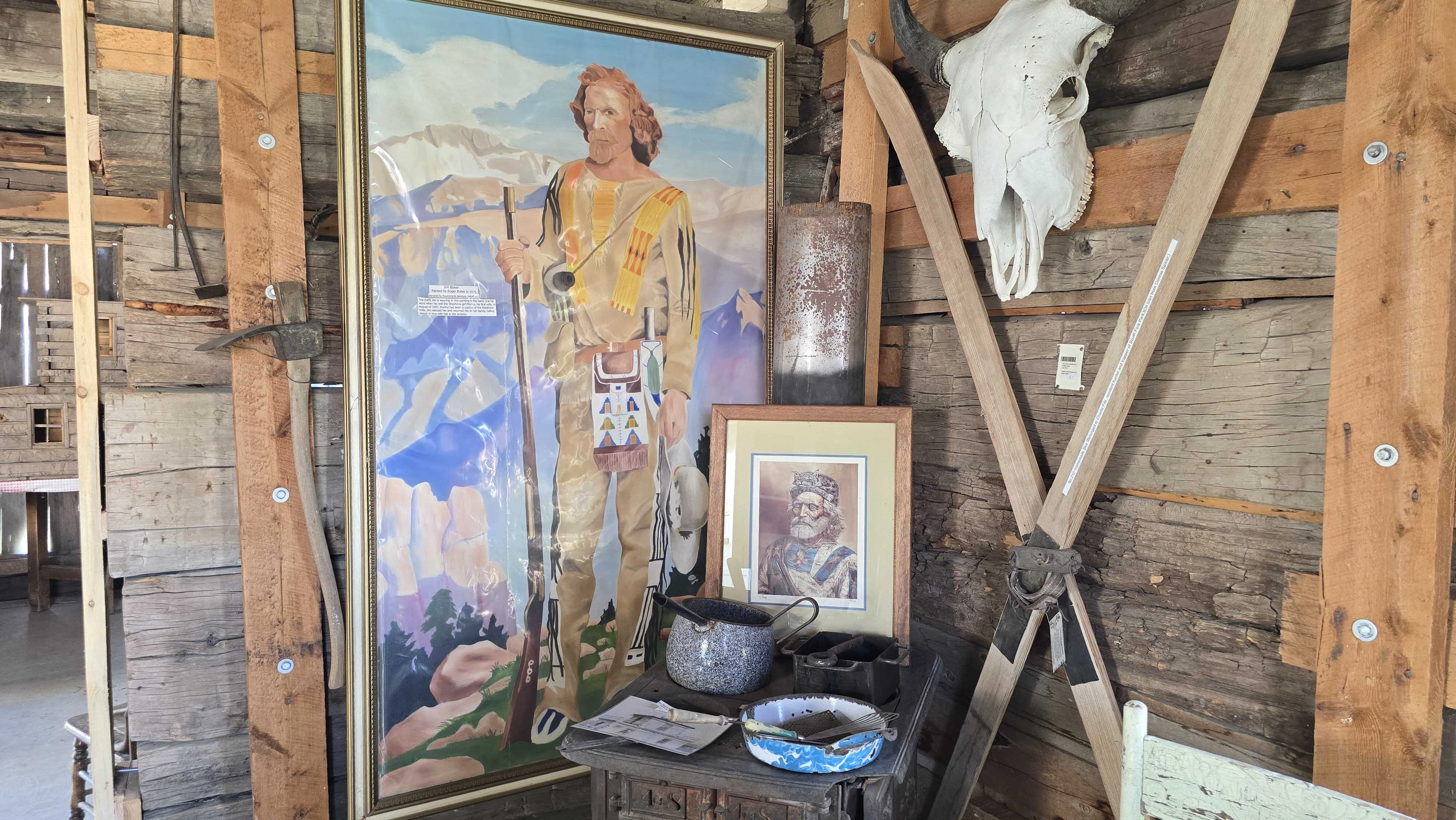
In fact, when Denver became too populous for his tastes, he packed up and in 1873 moved to Savery, where he built a two-story cabin with a third-story tower as his home. The tower, dismantled in 1881, was so he could climb high and see far — just in case any of the American Indian tribes who disliked him decided to come to call.
Baker is thought to be one of the first non-Native settlers in Denver. He was later honored with a stained-glass likeness at the state Capitol, and he became one of the first settlers of the Little Snake River Valley.
The cabin itself has lived several lives.
Baker first built it from massive cottonwood logs felled by himself and some of his children along the Little Snake River. They squared the timbers by hand with broad axes and not much else.
After Baker’s death in 1898, there was a tussle between Wyoming, Colorado, and Savery over who would keep the cabin.
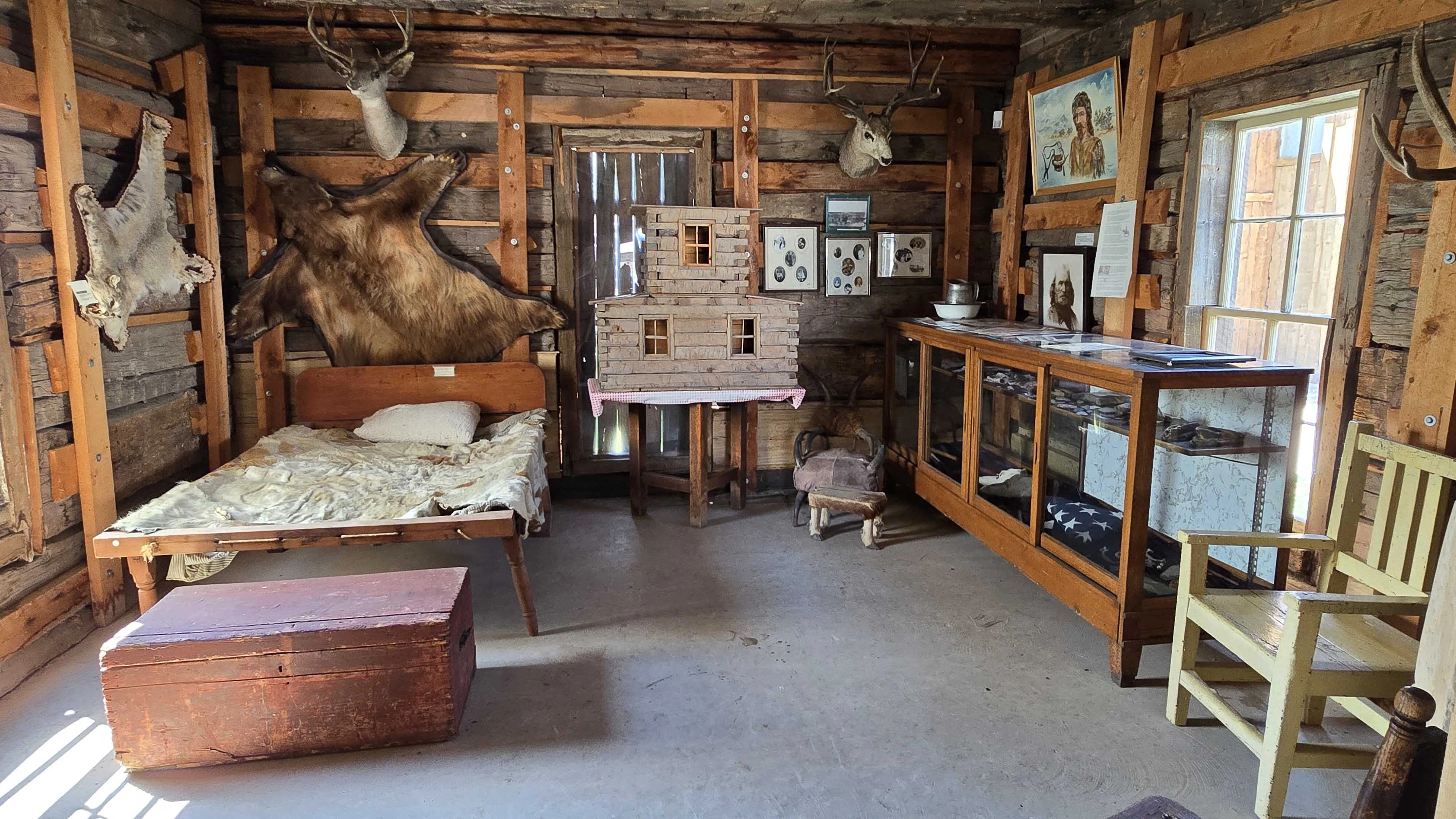
Wyoming won the first round of that battle, and Baker’s cabin was displayed in Frontier Park in Cheyenne for 60-some years starting in 1917. Then, one year, the cabin was disassembled and stored, never to return as a display at Frontier Park.
Savery still wanted Baker’s cabin though, and was eventually successful in convincing the state to send it back home to the Little Snake River Valley in 1976.
When it arrived, it was like a giant pile of scattered Lincoln logs, with few numbers explaining how the cabin had been put together.
Original photos of the cabin and miniature models of the logs were used to figure out just how to reassemble the cabin in its present location, a mile from where Baker had originally built it.
The Fight Is On
Three decades before Baker built his fortified cottonwood cabin near Savery, he’d already helped make the surrounding landscape part of Wyoming history.
In 1841, near the Little Snake River Valley, Baker was among trappers who survived the fight that gave Battle Mountain its name.
The conflict also became associated with Battle Creek, Battle Pass, and Battle Highway — place names that still mark the country where Baker later chose to make his home.
The battle is one of the most stunning tales of the mountain man era.
That summer, Baker had been trapping in the Green River country. Bridger decided to send the young scout to warn French-Canadian trader Henry Fraeb, who was building a trading post somewhere near the confluence of Battle Creek and the Little Snake River, that large war parties of Sioux, Cheyenne and Arapaho were gathering in the region.
Bridger wanted Fraeb to abandon his exposed trading post and come back to Bridger’s camp along Henry’s Fork of the Green River, where he and his men would be much safer.
But Fraeb wasn’t keen to abandon his post.
One day, while Baker and a few companions were hunting bison and cleaning their kills in the vicinity of Fraeb’s outpost, they saw huge puffs of dust suddenly appear over the southwest flank of the peak now known as Battle Mountain, which was then called Bastion Mountain. A large allied war party of Arapaho, Cheyenne, and Sioux — what Baker relative Chilly Rollingson calls the “Platte River Indians” — then came riding down the southwest side of Battle Mountain.
They were making a beeline for Fraeb’s trading post — exactly the scenario Bridger had feared.
Surviving Against Impossible Odds
Baker and his companions raced back to the outpost to help defend it and their lives. In the ensuing battle, Fraeb was among the first killed.
Baker, just 21 or so at the time, stepped up to take command, and his fellow scouts would later credit him with saving their lives.
Baker, in an account decades later in a Denver newspaper, said the Indians numbered 700 or more. Other accounts have put the numbers anywhere from 200 to thousands.
Baker told the newspaper he and the men hid behind stumps and positioned dead horses as breastworks to withstand what was about to happen.
With their manpower limited to about 24 scouts, and scarce quantities of ammunition, Baker told the men they had to make every shot count. That meant waiting until their attackers were close enough to ensure each bullet was going to hit someone or a horse.
Baker and the men with him believed they were going to die. All they could do was make their own lives as costly as possible.
Baker’s strategy worked better than they could have imagined. Each time one of their fellow warriors fell, the Indians would stop their charge and draw back. Eventually, with only five horses left to fight over, the Indians decided to take their dead and wounded away and leave the trappers alone.
It was a stunning reversal of fate for the surviving trappers.
Carson, who told a Denver reporter he heard the story later from Indian points of view, said the warriors believed a supernatural force had turned the fight against them. They could not otherwise see how a battle where they held such overwhelming odds went so poorly.
Bastion Mountain was renamed Battle Mountain after the fight, and a different mountain was renamed Baker’s Peak.
Keeping History Alive
In later times, some of Baker’s favorite trails, drawn out on his trapper maps, have become paved highways today.
Many people travel these routes who do not realize how these roads came to be.
The preservation of Baker’s cabin, as the mountain man who helped settle this area of the West, is a “big responsibility,” Cynthia Reschke Collyard told Cowboy State Daily.
She now lives in Colorado and is a direct descendant of Baker. Her great-grandmother was Baker’s daughter, Jenny, making him her great-great grandfather.
“This is rightly where it belonged, because this is where it was originally built,” she said. “But it’s a big thing for a little museum to take on the care of something like this, outside in the elements.”
She hopes to see the restoration work continue, knowing some logs on the cabin have rotted and need to be replaced.
The restoration so far is good, she added.
“It’s been done in the nick of time,” she said. “And I think a lot more work needs to be done. I don’t think it’s finished by any means.”
Collyard has been actively working through tribal records to learn more about Baker, trying to separate facts from “barstool” storytelling through the years, which have muddied the historical waters.
What she hopes for, more than anything, is for Baker and his role in history to be remembered accurately.
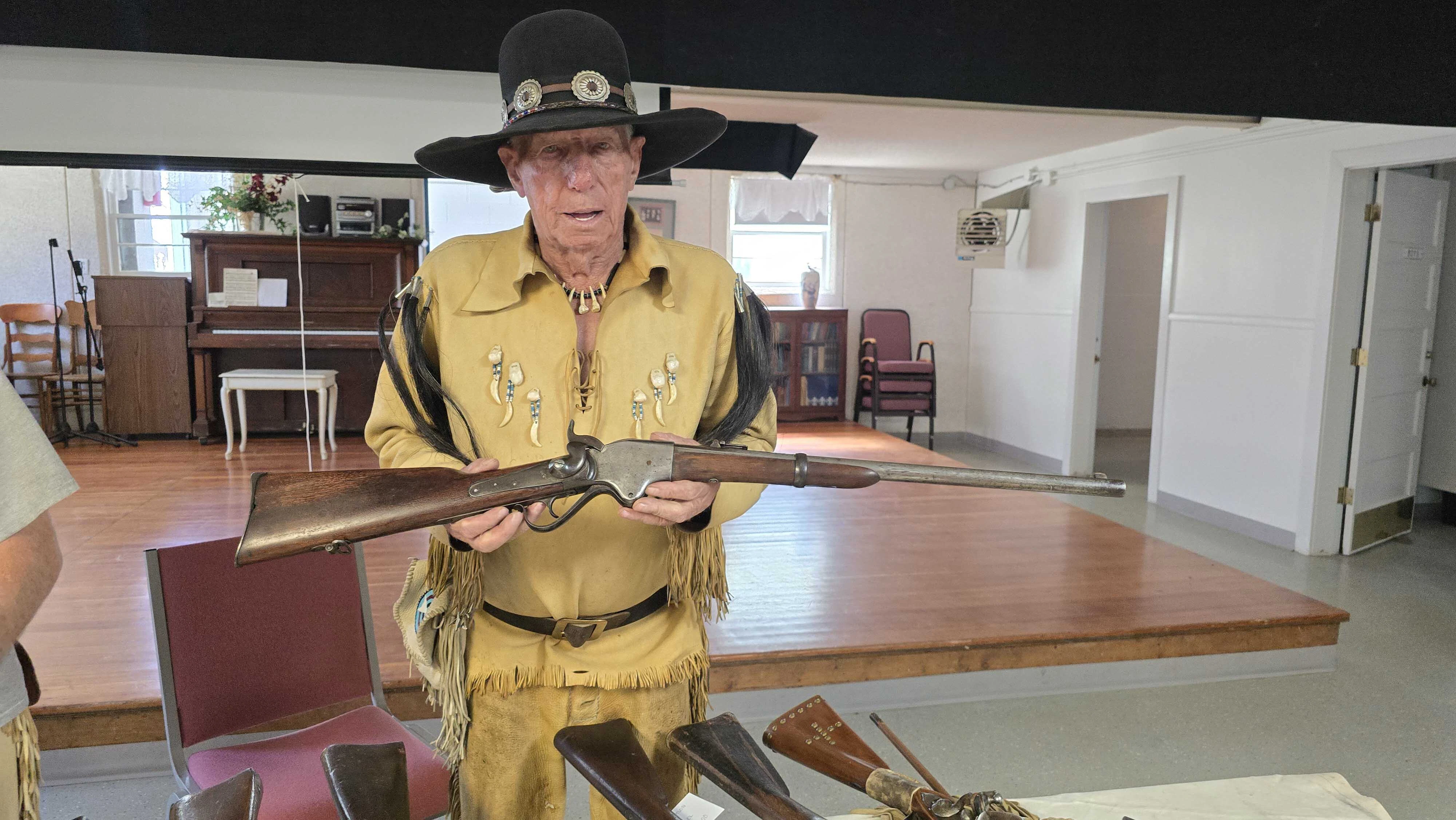
That’s a goal important as well to other Baker relatives such as Rollingson and Paul and Michael McAllister.
The McAllisters have donated rare Baker photos and artifacts to museums in Craig and Savery, as well as donated time to helping preserve Baker’s cabin.
“History is important,” Michael said, noting that he and his brother both helped mill and square many of the new cottonwood logs for the restoration. “Anytime you can keep history alive, it’s all for the good.”
Renée Jean can be reached at renee@cowboystatedaily.com.