
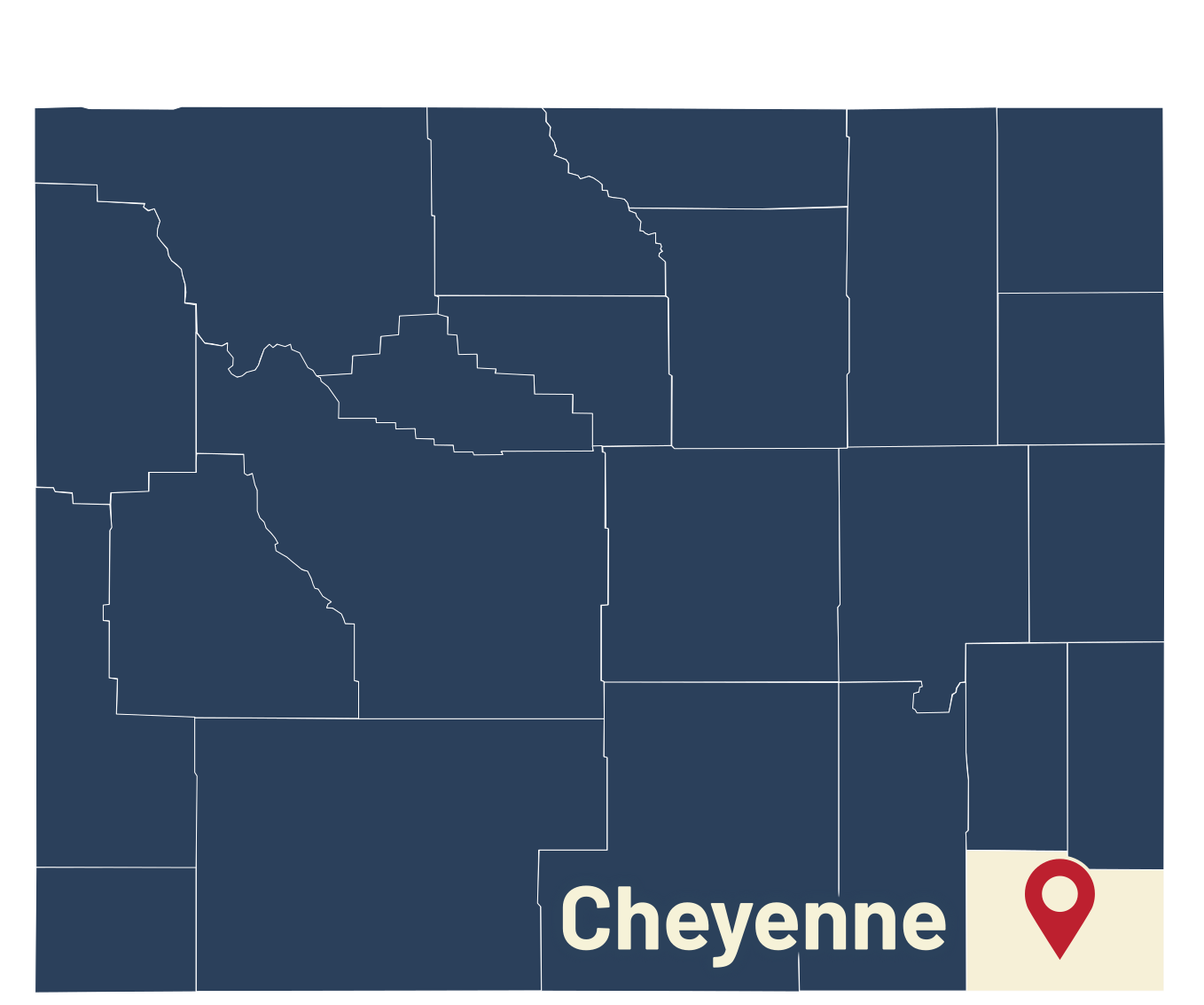
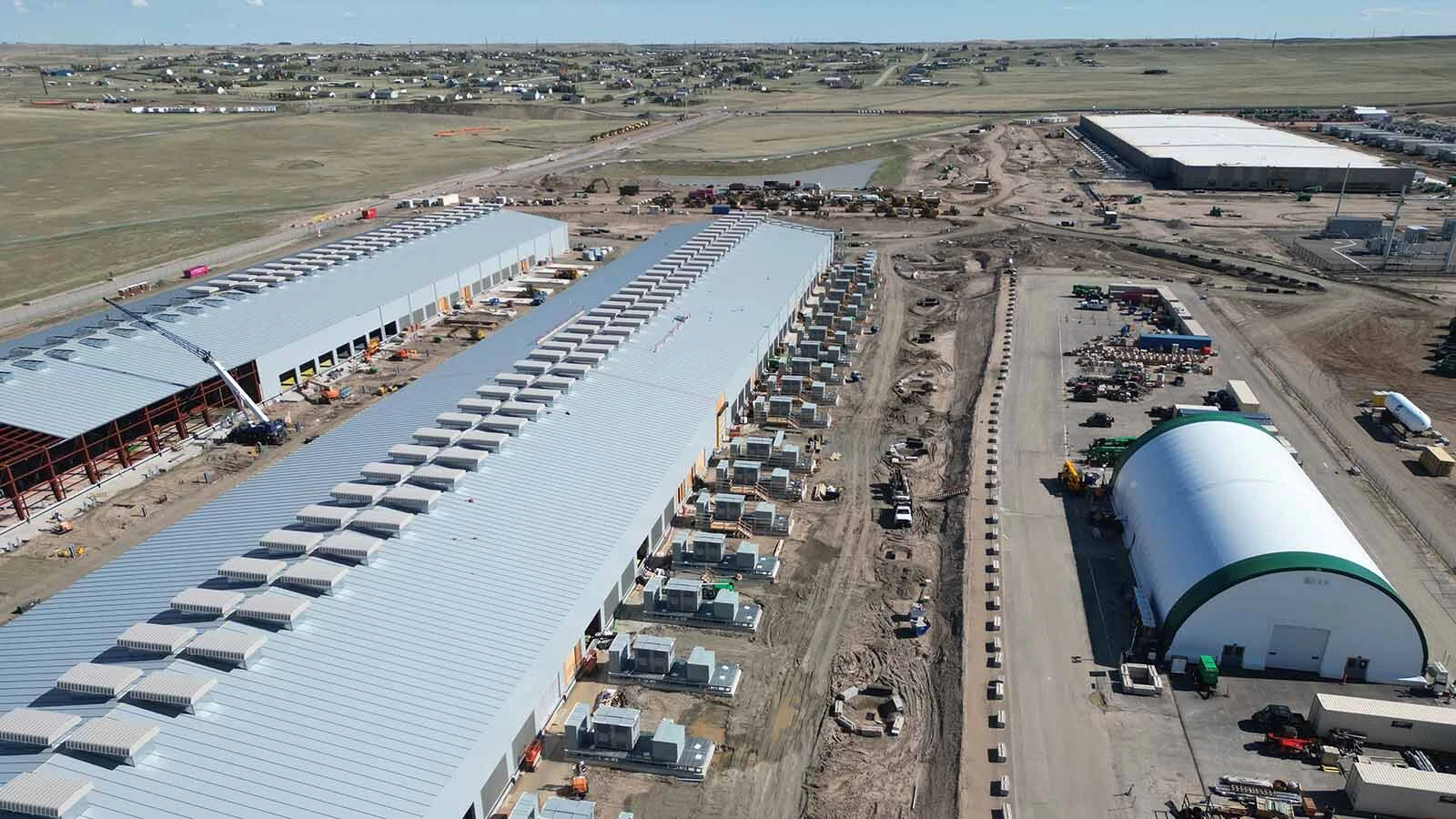
CHEYENNE — That something may be wrong with wastewater discharged from the closed-loop cooling system of a huge Meta data center being built in south Cheyenne first hit the radar of the city’s Board of Public Utilities in mid-January.
The public was first made aware of the contamination on June 25.
In a 13-page timeline of events leading up to the Board of Public Utilities (BOPU) issuing a notice of violation against a Meta contractor released Monday, the agency says it first observed “an unknown bacteria” — later identified as Cupriavidus gilardii — on Jan. 15.
It also details the multiple steps the agency took with Meta contractors Goat Systems LLC and Fortis over about five months to fix the situation.
The timeline, along with a lengthy question and answer sheet also put out Monday, addresses why the public was kept in the dark about the contamination for months.
The agency has been scrutinized by some residents and city officials about why people weren’t told earlier of the contamination of the waste reuse system — which isn’t the city’s drinking water.
The answer is simple, the BOPU reports in the Q&A.
“BOPU determined there was a low risk to public health, which did not justify a public notification that could result in public panic,” the Q&A says.
“As a public agency, BOPU must weigh public safety, impacted area, and level of risk when determining the appropriate nature and extent of public notifications,” the document continues.
Who Knew What And When?
While Cheyenne Mayor Patrick Collins and the city’s chief of staff were made aware of the situation via email on March 25, it wasn’t until June 26 that the BOPU issued a statement making the public aware of the contamination and that it had been rectified, according to the timeline.
In the meantime, City Councilman Pete Laybourn told Cowboy State Daily after that initial public statement that he was disappointed to learn about the contamination that way.
"It's a very, very unpleasant surprise," Laybourn said.
Laybourn said he had already expressed concerns about some of the arrangements the city has made with data center operators, adding that he expects the disclosure will prompt additional discussion.
"It's about the last thing we need right now," he said. "But it's a reality we're going to have to work through.”
After the BOPU’s first press release, Collins called the contamination “regrettable,” and also praised the agency for catching the contamination and cleaning up the city’s sewage reuse system.
Among those demanding answers over a perceived lack of transparency was Wyoming Republican U.S. Rep. Harriet Hageman, who dispatched a letter to Meta CEO Mark Zuckerberg.
“Many are rightfully concerned about high water consumption rates by data centers in our communities where every drop of water is accounted for and needed,” wrote Hageman, “so I am even more concerned that this contamination seemingly came from your facility’s closed-loop cooling system, a technology that is marketed as being a solution to high data center water consumption rates.”
Hageman added that, “Many Wyomingites are also rightfully concerned that they learned about this contamination on June 26 and that the Meta Cheyenne facility was identified as the culprit on July 2nd, when the discharge privileges for Goat Systems were revoked on March 24th.”
Meta Appeals
The BOPU documents released Monday also give more detail about the situation, including that it involved a little more than 800,000 gallons of wastewater discharged during January, February and March.
Goat Systems was hit with a $10,000 administrative fine, along with the promise of “a surcharge to cover costs incurred in the investigation and treatment of the bacteria,” according to the Q&A.
That cost hasn’t yet been determined.
Meta is appealing the notice of violation, arguing that the BOPU hasn’t provided evidence that it was the company’s construction that contaminated the water reuse system.
The appeal was filed last week by Goat Systems, 11 days after the BOPU publicly identified it as the industrial user responsible for introducing the bacteria into the system.
In a statement to Cowboy State Daily last week, Meta claims the BOPU has not shared all of its testing data or supporting documentation with Meta, its contractor Fortis Construction or the public.
"It is important that the community has all the information about what happened," the statement says.
Meta said it is seeking review "so the facts and cause can be fully and accurately evaluated through the appropriate process."
In a statement responding to the BOPU's Monday releases, Meta pointed out what it feels are examples of inconsistencies in the agency's reports, including:
• The BOPU made its determination based on a single March 18 sample, while a follow-up resampling of the site on April 28 did not detect the badterium.
• There are issues with the BOPU's laboratory quality controls, "which raise questions about the reliability of earlier positive results."
• That the bacterium is "naturally occurring in the environment," as the BOPU says in its Monday releases.
• According to the agency's own Q&A, it "does not know how (the bacterium) entered the data center's discharge wastewater."
• The temporary OK to discharge was given to Fortis Construction, not Goat Systems.
• That the contamination didn't come from the closed-loop cooling system, as reported.
"Meta is committed to being a good neighbor in Cheyenne, which includes helping protect local water resources," Meta says in a statement sent to Cowboy State Daily on Tuesday morning. "We appreciate the Board of Public Utilities' detailed release of information, which confirms the Board found no impct to the public or environment.
"The Board's investigation also demonstrated false positives due to cross-contamination in its own laboratory, raising questions about the validity of the tests that led to this enforcement action in the first place."
Greg Johnson can be reached at greg@cowboystatedaily.com.


