
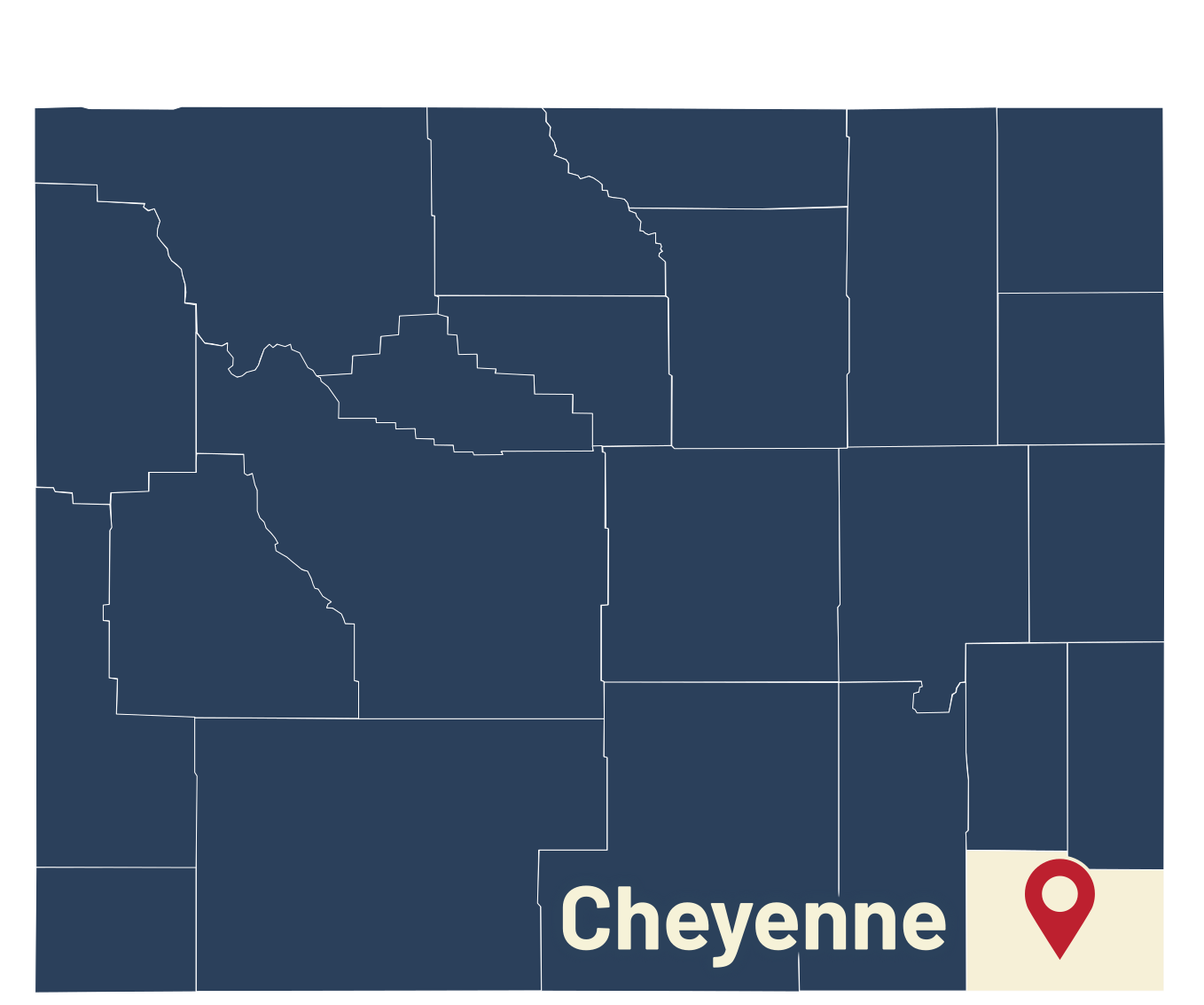
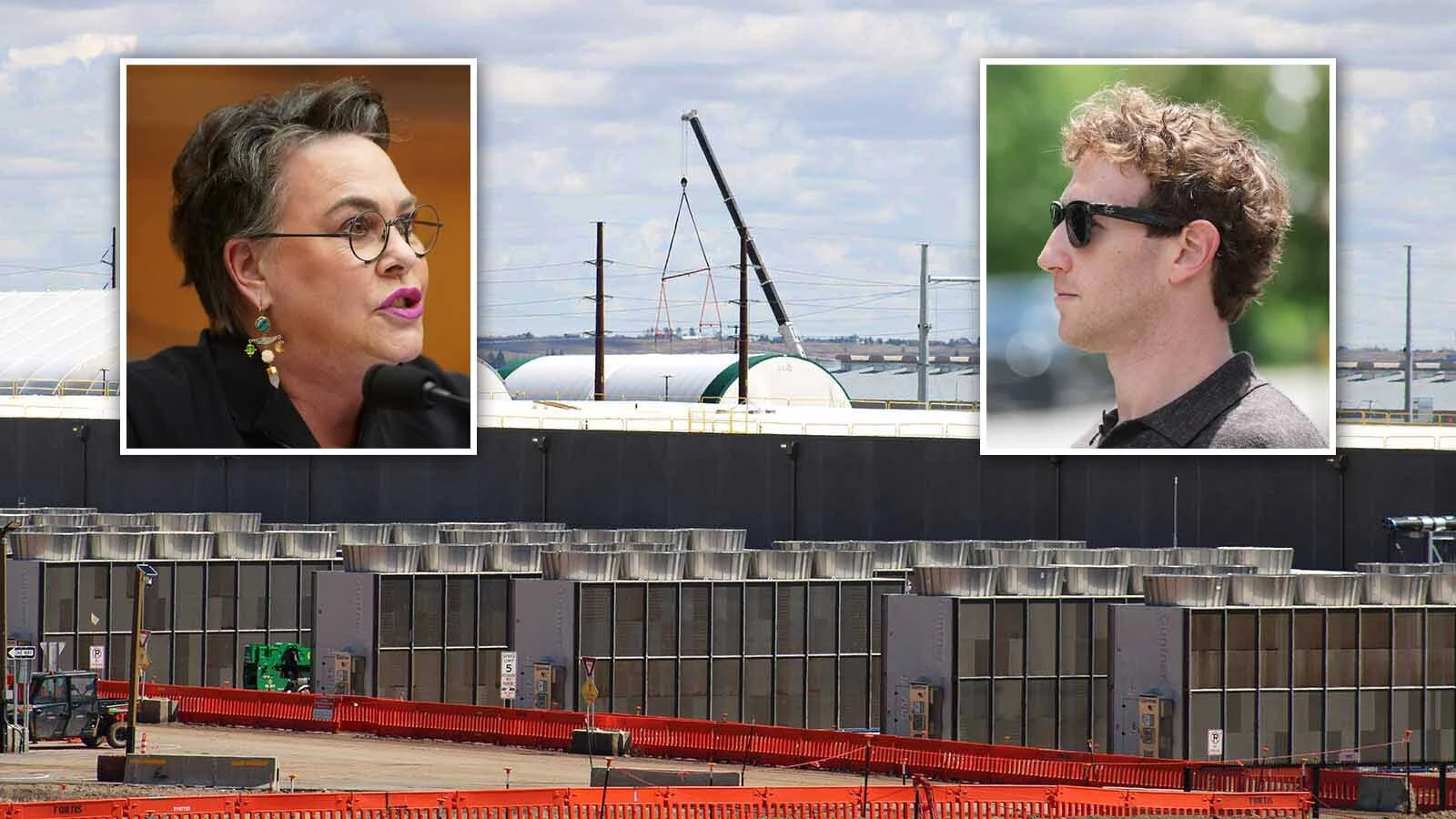
Wyoming’s lone U.S. House representative is demanding answers from Mark Zuckerberg on a Cheyenne-area data center wastewater contamination incident that caused the city’s reuse system to shut down for months.
The Cheyenne Board of Public Utilities (BOPU) issued a public notice June 26 that laboratory staff identified a bacterium, Cupriavaidus gilardii, in a wastewater sampling.
The board on July 2 identified the source of the initial contamination as Goat System LLC — a Meta data center company in the development known as Project Cosmo.
That public announcement about the contamination came more than four months after the Meta contractor — which is building an $800 million data center in south Cheyenne — disrupted the city’s reclaimed wastewater system with the rare bacterial contaminant.
The board had revoked Goat Systems’ industrial discharge privileges for fill-and-flush operations, and Cheyenne’s reuse water system was taken offline.
U.S. House Rep. Harriet Hageman demanded answers in a Thursday letter to Meta CEO Mark Zuckerberg.
“Many are rightfully concerned about high water consumption rates by data centers in our communities where every drop of water is accounted for and needed,” wrote Hageman, “so I am even more concerned that this contamination seemingly came from your facility’s closed-loop cooling system, a technology that is marketed as being a solution to high data center water consumption rates.”
Hageman added that, “Many Wyomingites are also rightfully concerned that they learned about this contamination on June 26 and that the Meta Cheyenne facility was identified as the culprit on July 2nd, when the discharge privileges for Goat Systems was revoked on March 24th.”
New industries seeking to enter small-community Wyoming life can only do so with support from local communities, wrote Hageman, “which is earned built on trust, collaboration and communication with our citizens.
“I am deeply concerned that Meta did not follow this model in this instance.”
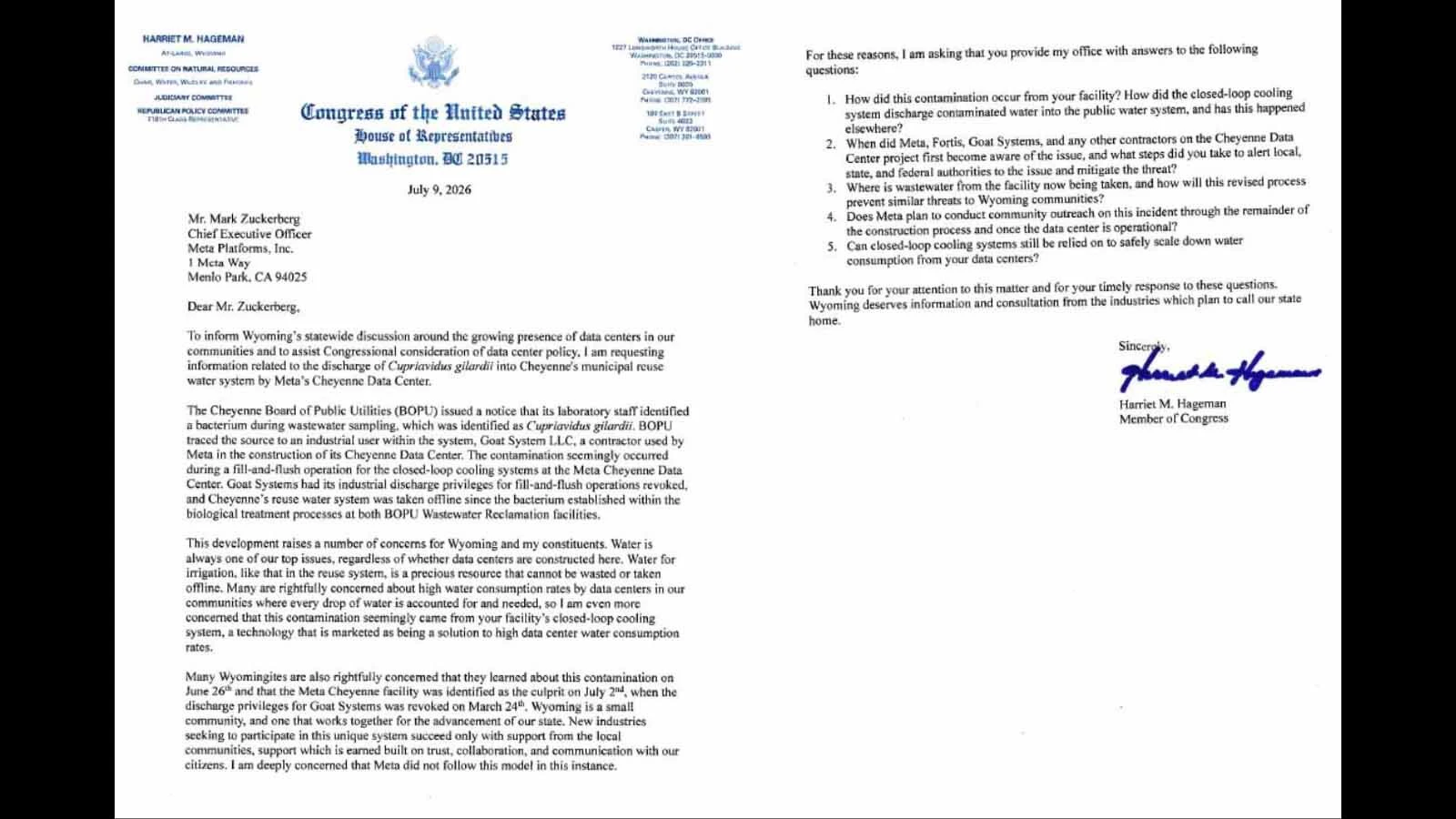
What She’s Asking Zuckerberg
She poses five questions to Zuckerberg:
• How did the contamination happen, including from the closed-loop cooling system — and had that happened elsewhere?
• When did the project companies and contractors learn of the issue and what steps did they take to alert the local, state and federal authorities and mitigate the threat?
• Where is the facility taking its wastewater now, and how will that prevent threats to Wyoming communities?
• Does Meta plan community outreach on this incident?
• Can closed-loop cooling systems scale down water consumption safely?
Hageman concluded, “Wyoming deserves information and consultation from the industries which plan to call our state home.”
A Meta spokesperson in a Thursday email reiterated the company's earlier statement on the contamination.
"Meta is supporting the efforts of our general contractor, Fortis, to resolve this issue with the City of Cheyenne Board of Public Utilities," the statement says. "When the board shared that it found a substance in the city's wastewater — not public drinking water — Fortis immediately stopped discharging industrial wastewater and began hauling it offsite. Fortis also began its own water testing with an independent environmental specialist which has found no trace of the substance."
The statement concludes, "Meta is committed to being a good neighbor in Cheyenne, including through the protection of local water resources, and will continue encouraging collaboration between Fortis and the board until this situation is resolved.”
‘Unpleasant Surprise'
The delay between the contamination and making it public also concerned some Cheyenne city officials.
Cheyenne City Councilman Pete Laybourn told Cowboy State Daily last week that learning the contamination originated from Meta's data center was unwelcome news.
"It's a very, very unpleasant surprise," Laybourn said. "I have a lot yet to learn. It definitely complicates matters."
Laybourn said he has already expressed concerns about some of the arrangements the city has made with data center operators, adding that he expects the disclosure will prompt additional discussion.
"It's about the last thing we need right now," he said. "But it's a reality we're going to have to work through.”
Mayor Patrick Collins likewise expressed disappointment after the BOPU announcement.
"I think it's a disappointment to everyone involved," he told Cowboy State Daily.
Collins also praised the BOPU for catching the contamination and getting the city's sewage reuse system cleaned up.
Clair McFarland can be reached at clair@cowboystatedaily.com.


