
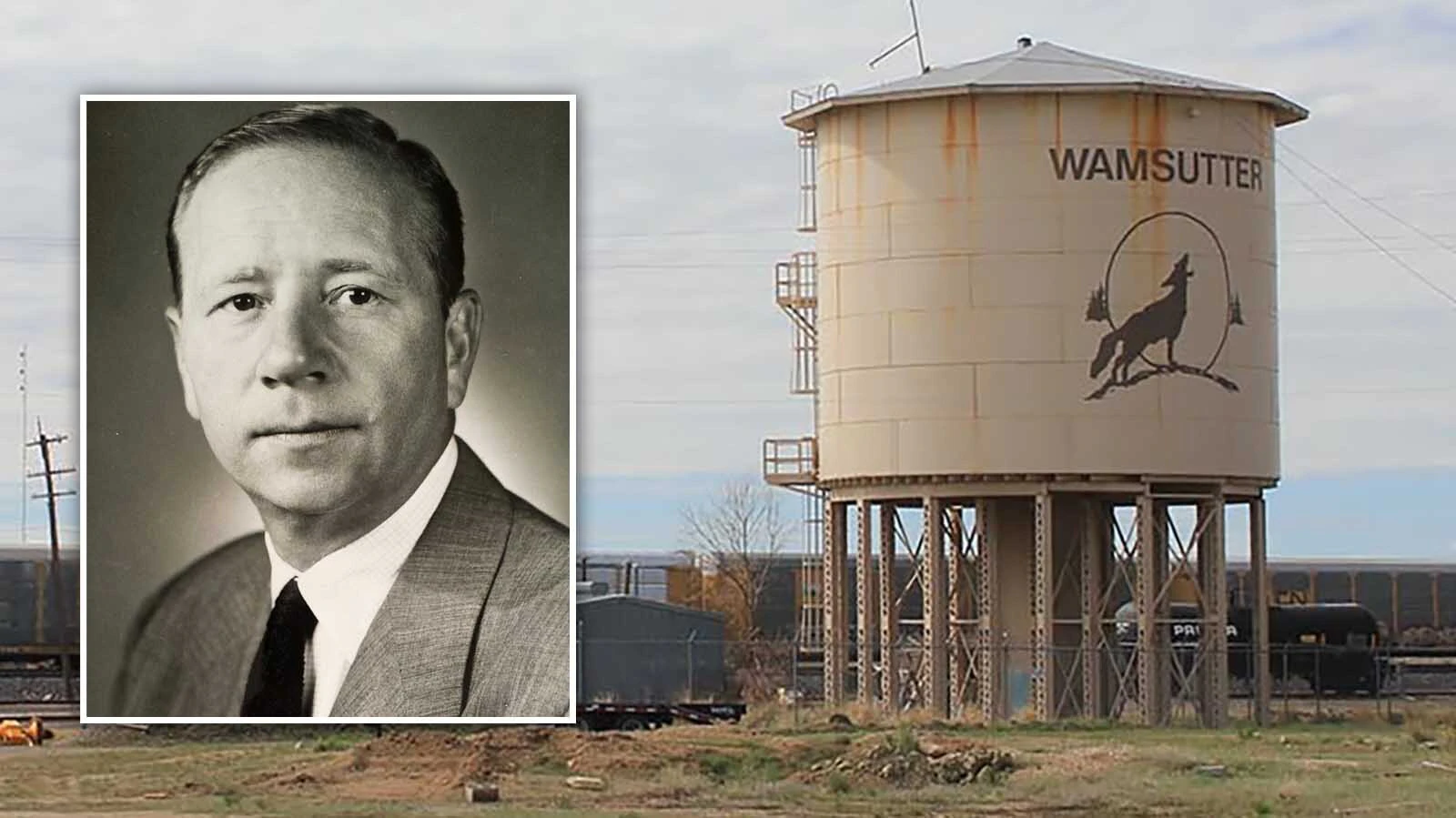
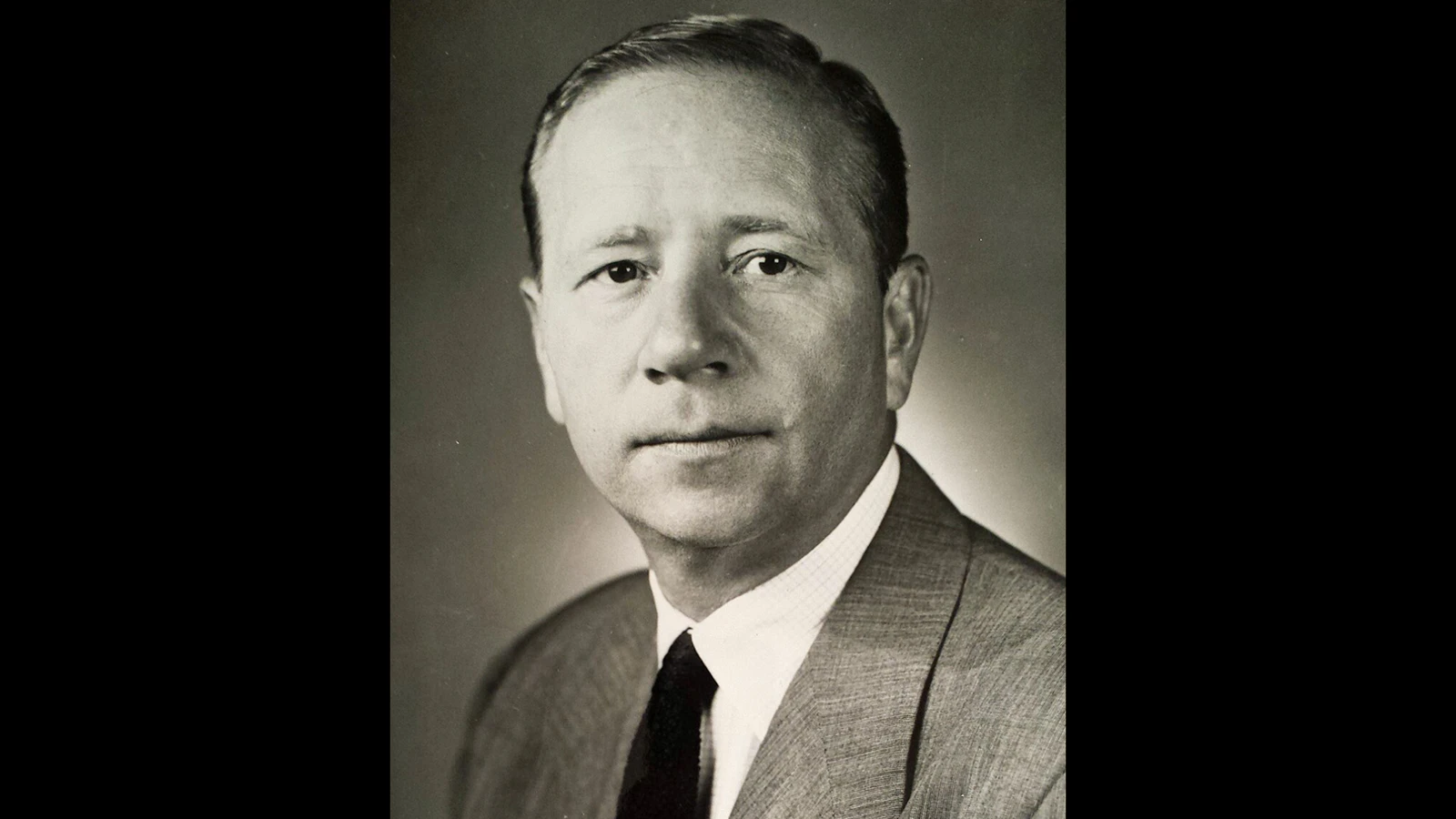
He was a “G-Man” who arrested the FBI’s most-wanted man in 1936 and later served as the special agent in charge in Detroit helping take down a Nazi spy ring and communicating with J. Edgar Hoover about Charles Lindbergh and Henry Ford.
John Bugas would go on to be recruited by Henry Ford in 1944 and help oust the man Ford hired to be the corporation’s thug-like enforcer in what he later in life told a reporter was an encounter with an angry armed man.
“I didn’t know if whether I was going to get something between the shoulders or not,” he said.
Bugas retired as a vice president and consultant to the company in 1978.
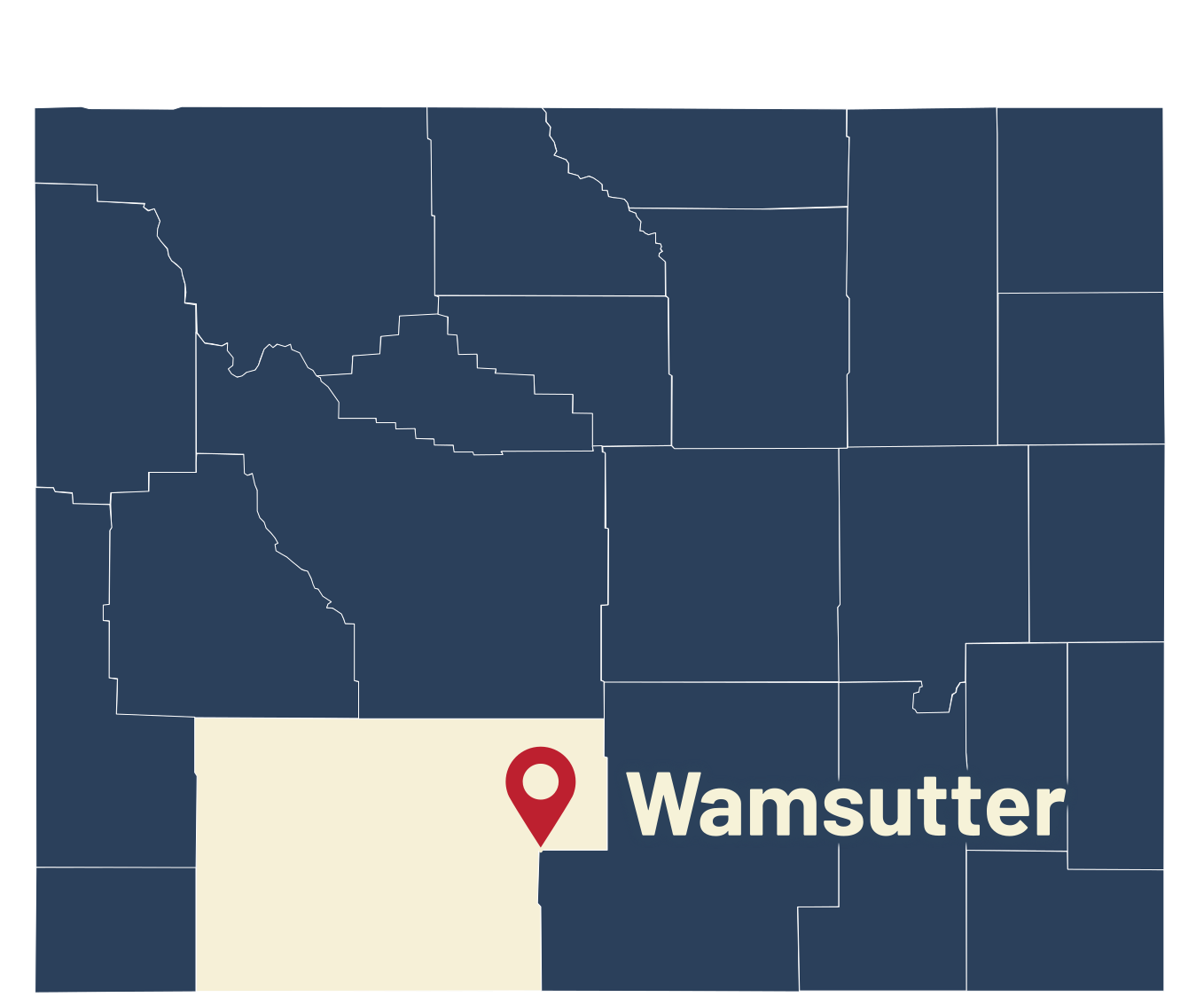
But before any of that, Bugas was a Wamsutter ranch kid who played basketball for the University of Wyoming, starred on its stage in dramatic productions, and worked at Yellowstone National Park during his some of his collegiate summers.
He also was noted for his stories about ranch life. Bugas spun a favorite tale to a Detroit Free Press reporter for a June 30, 1940, profile on him as he led the FBI office in the Motor City.
“When I was a kid, I never wore shoes or ate candy until I was 14," he told the reporter. "Finally, my dad told me he would get me some on his trip to town. So, 10 days later, I ran out a mile from the ranch house to meet him and he tossed me a couple of packages.
"When he found me under the bed at the house, I had chewed halfway through one of the hob-nailed boots because I thought it was candy.”
Bugas was born in 1908 to Andrew and Helena Bugas in Rock Springs. A year later, the family moved to Wamsutter, where his father started a ranch and operated businesses, including a road construction company.
He attended the University of Wyoming’s preparatory high school graduating at 16 and obtained a scholarship to the university but because of his dad’s needs, took two years off before college to run a road construction crew.
Once in college, Bugas’ name appeared in the Casper Tribune-Herald on April 19, 1931, as a member of The University of Wyoming Players, a traveling theater troupe putting on a play, “The Poor Nut.”
On the university’s basketball team he was a forward. He also played baseball and ran track.
Park Ranger
The school newspaper on April 20, 1933, wrote that Bugas was the law scholarship winner for 1933. He was in the Casper Tribune Herald’s July 27, 1933, edition as a Yellowstone Park ranger investigating a robbery that occurred where thieves took off with $1,000 from a store safe.
After graduation from the university’s law school, he passed the state’s bar exam, worked for a short time for a law firm and then joined the FBI.
Before his role leading the Detroit office in May 1938, he served in assignments in Los Angeles, Omaha, Washington, Alaska, and Birmingham, Alabama.
It was in Los Angeles that he made a name for himself when he and another agent interviewed a woman who said she knew where Thomas H. Robinson Jr. was living. Robinson topped the bureau’s “Most Wanted” list after the arrest of noted mobster Alvin Karpis in 1936.
Robinson had evaded capture since the Oct. 10, 1934, national headline kidnapping of Alice Speed Stoll, a Louisville, Kentucky, socialite and wife of an oil executive.
Robinson, who had served time in an insane asylum, successfully made off with a $50,000 ransom after the kidnapping, though his wife and father were arrested in the plot.
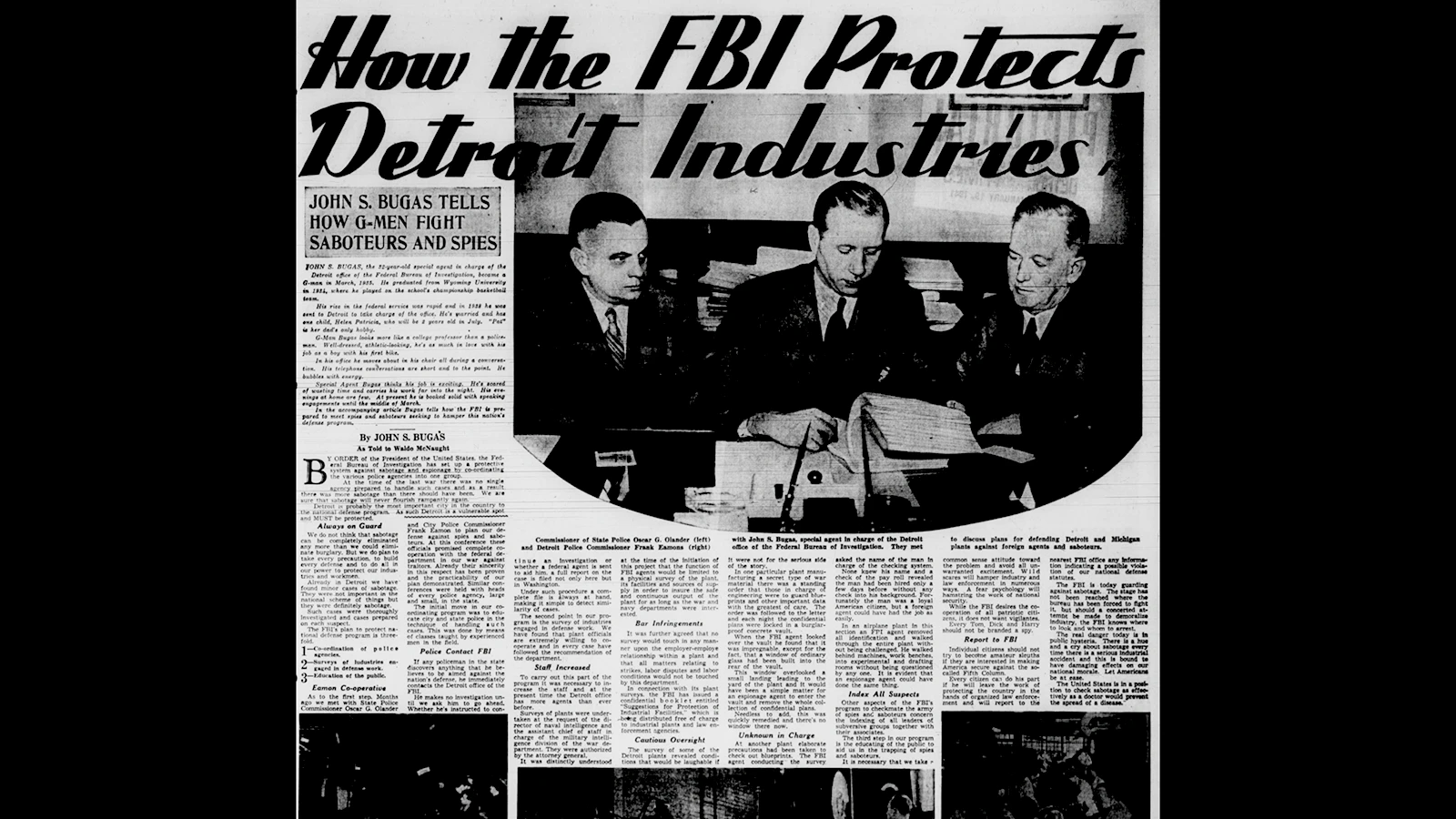
The Detroit Evening Times on Jan 19, 1941 did a profile on the FBI’s work in Detroit to protect FBI industries. John Bugas is in center of photo. (Newspapers.org) 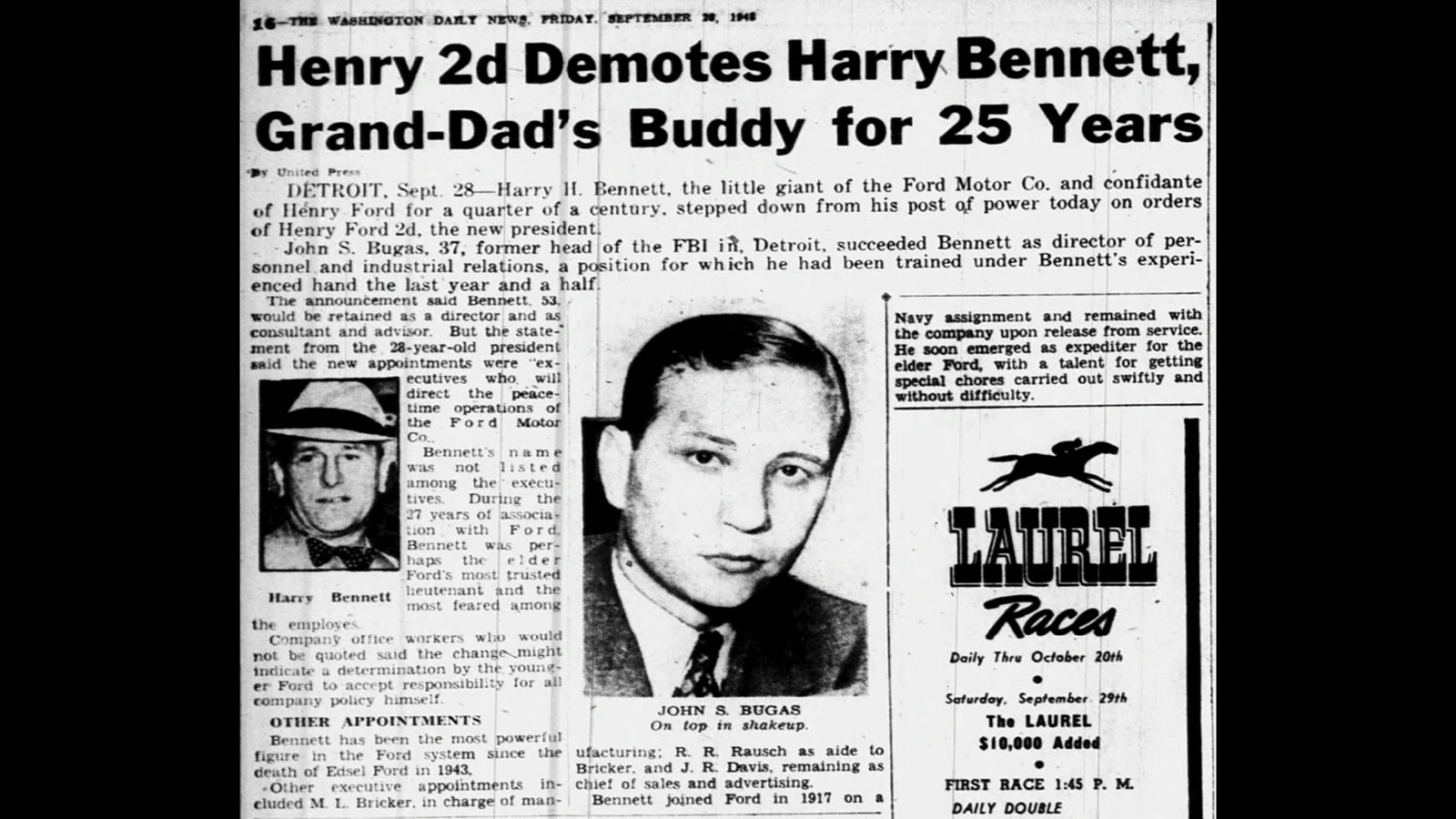
The Washington Daily News was among the newspapers across the country that reported Harry Bennett’s ouster from Ford and John Bugas replacing him. (Newspapers.org) 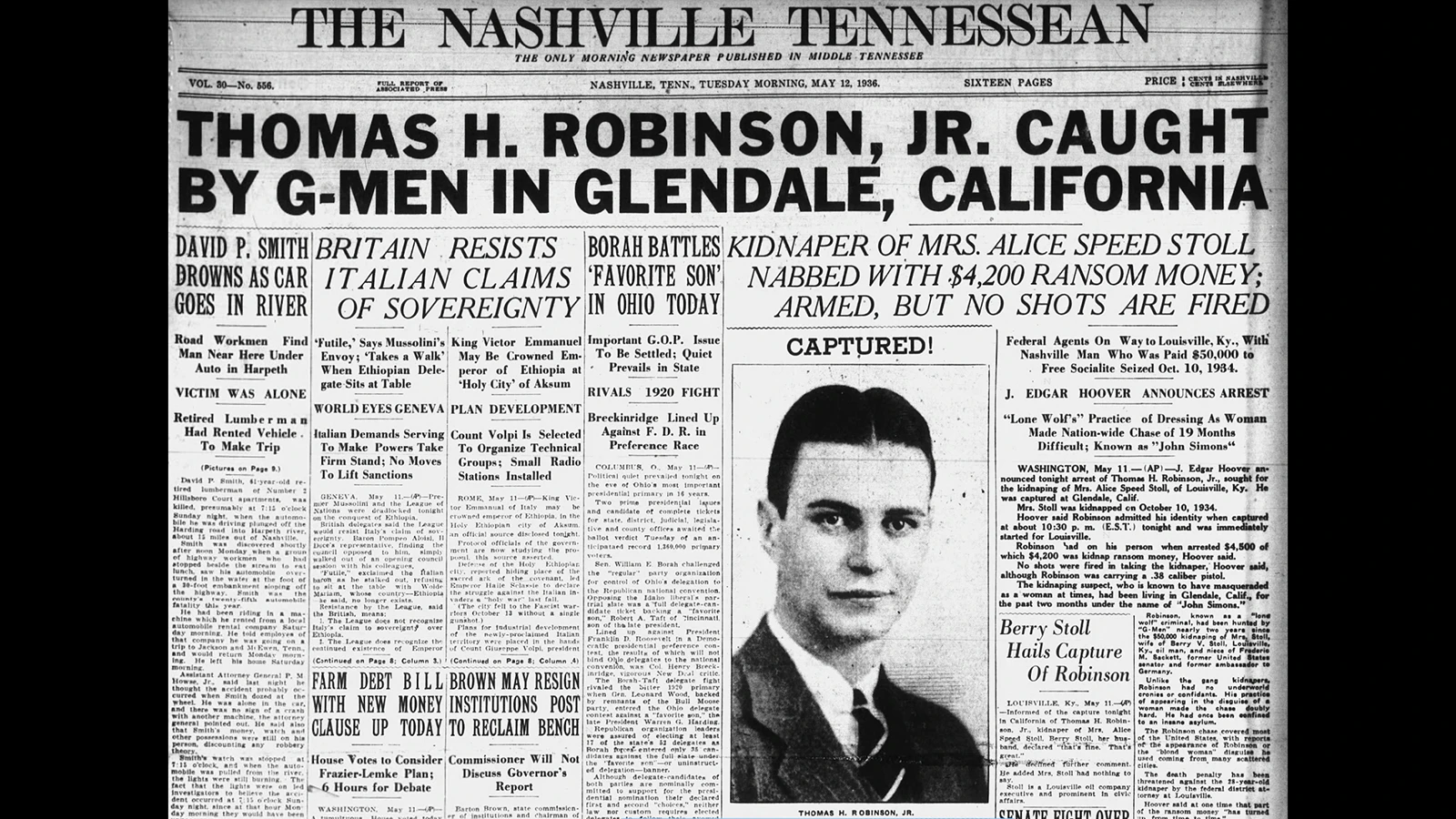
The capture of Thomas Robinson in Los Angeles was a big lift for the FBI career of John Bugas. (Newspapers.com) 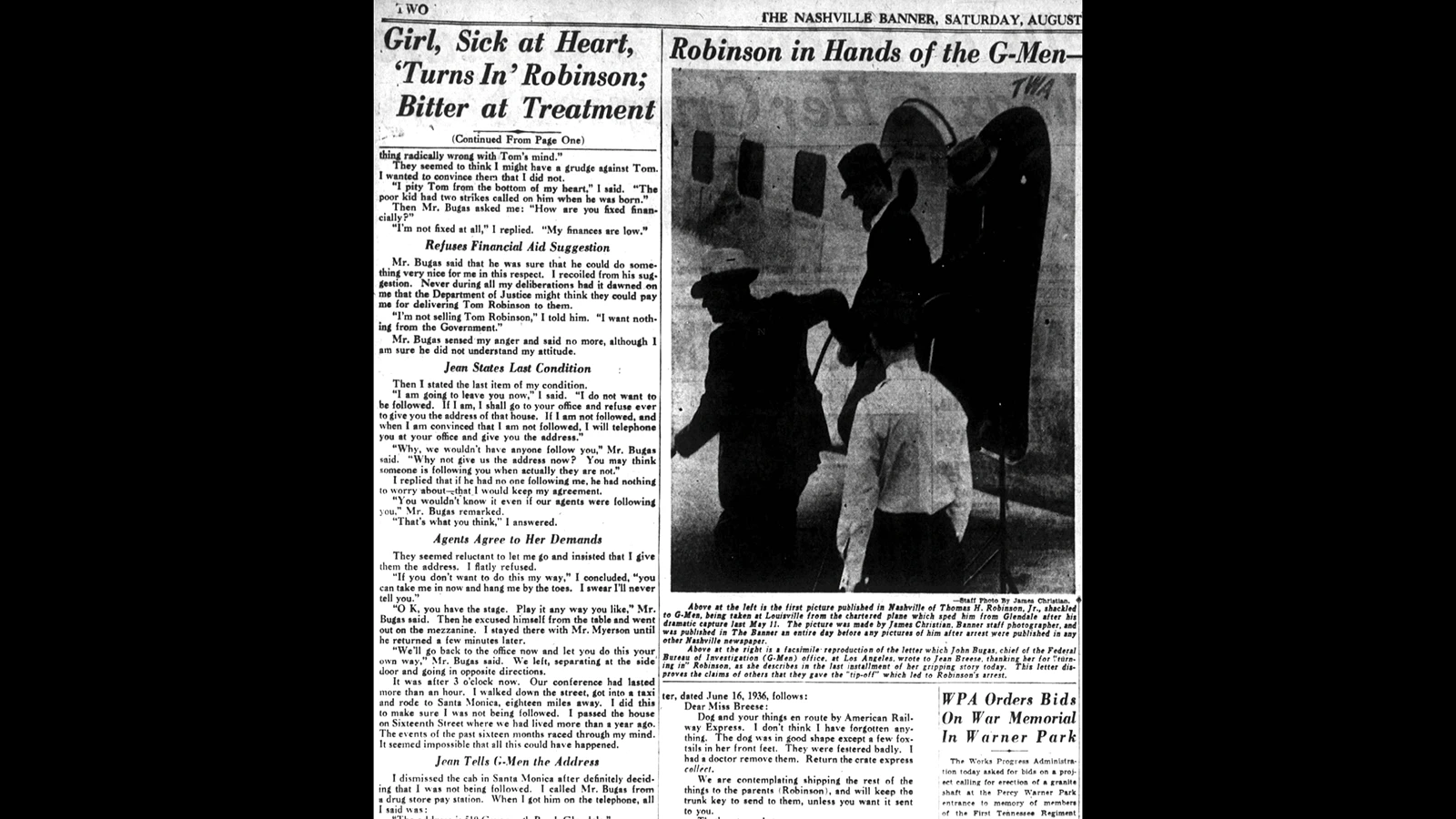
A serialized story of the lover of Thomas Robinson helped bring recognition to John Bugas’ name across the country. (Newspapers.com) 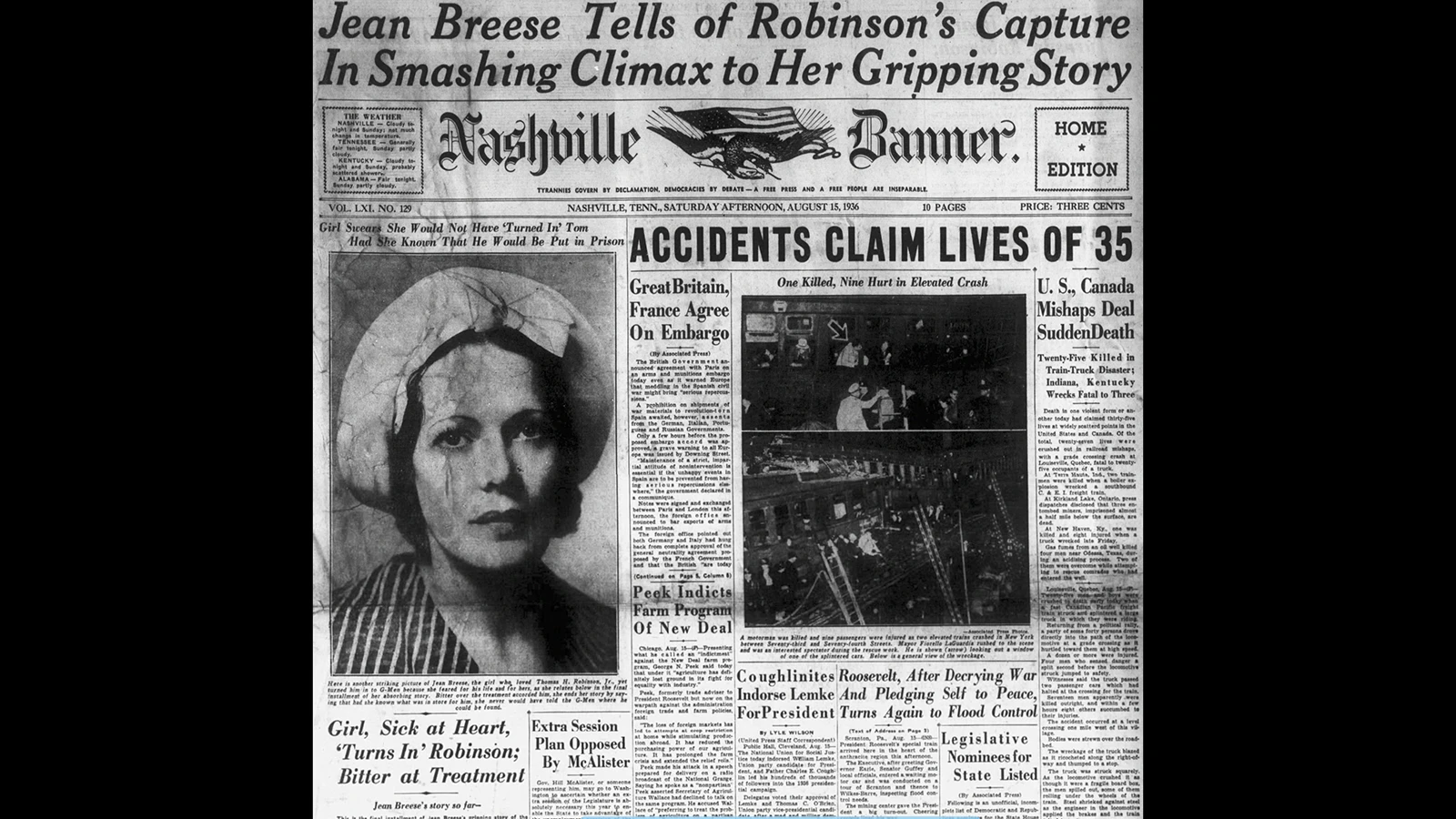
A serialized story of the lover of Thomas Robinson helped bring recognition to John Bugas’ name across the country. (Newspapers.com) 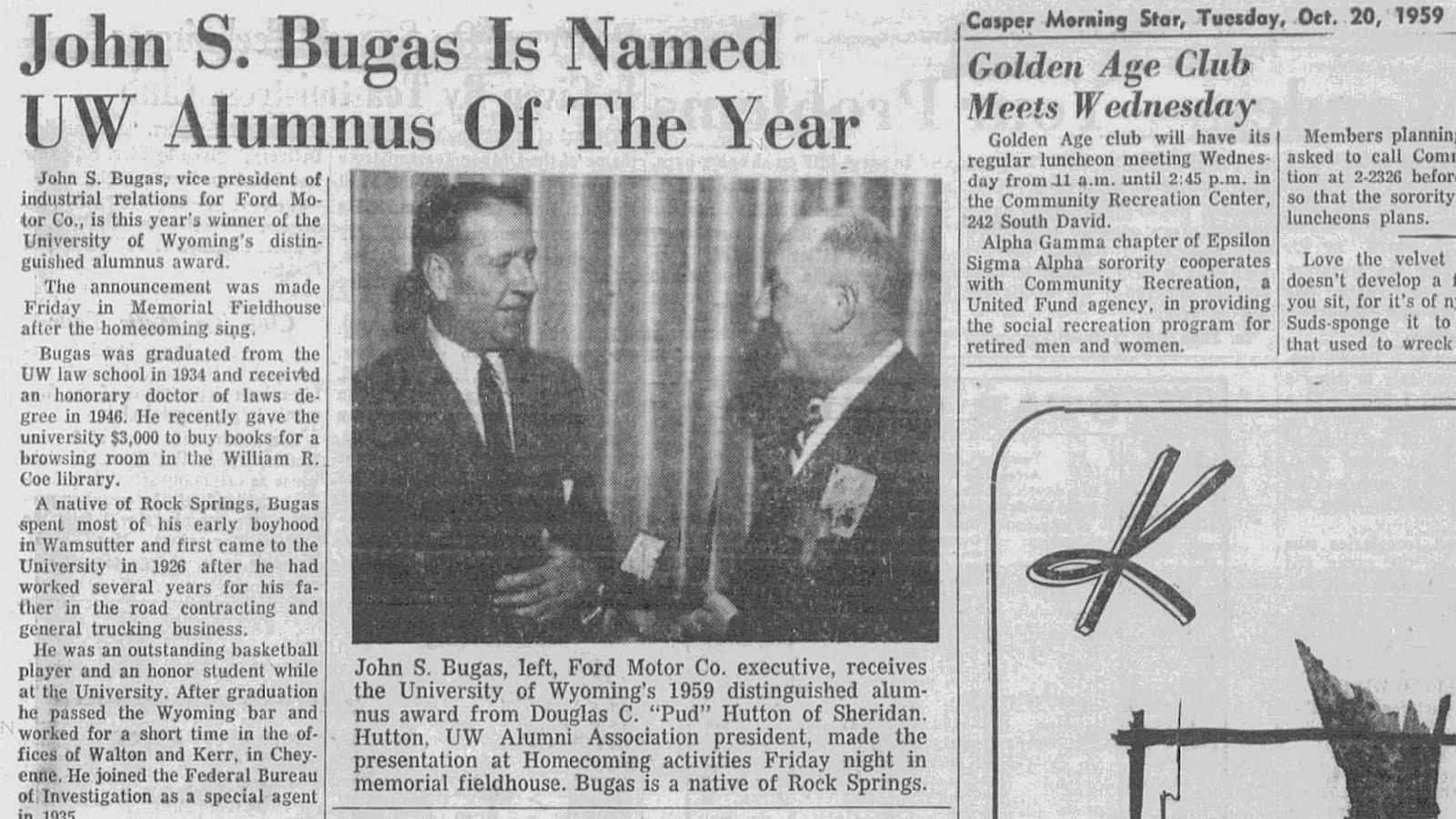
John Bugas gave generously to the University of Wyoming where he starred on the basketball team. (Newspapers.com)
Arresting The Most Wanted
As a young agent in Los Angeles, Bugas met with a woman who contacted the FBI office and claimed to be Robinson’s lover and who wanted to turn him in.
That led to Bugas and other agents going to Robinson’s home and taking him at gunpoint.
“The arrest was made with the same speed and silence that has characterized more of the G-men raids,” The Los Angeles Daily News reported on May 12, 1936. “It was learned that Robinson was taken in Glendale around 8:30 p.m. and that the government chartered a transport plane at Grand Central Terminal shortly after 9 p.m.”
Robinson was sent to Louisville immediately.
A serialized story reprinted across the country by his lover and her description of her conversation with Bugas at a Los Angeles restaurant and the conduct of the FBI in the case put Bugas’ name on front pages across the nation.
Once in Detroit, Bugas was involved in several more high-profile cases. FBI files from the Bureau’s “The Vault” — that contains the documents released to the public — have several with Bugas as the author.
The FBI had an extensive file on aviator Charles Lindbergh during World War II as a Nazi sympathizer.
Bugas sent J. Edgar Hoover a memo on Oct. 20, 1941, and a copy of a handwritten letter from Lindbergh to Henry Ford. In it Lindbergh deplored the “misinformation and propaganda that fills our press, our radio, and our motion picture theaters each day.”
The document blacked out the name of the person who provided the letter to Bugas.
“He gave me a photo static copy of a letter that Mr. Henry Ford, Sr. had received from Charles A. Lindbergh in which Lindbergh in the latter part mentions his sentiments in connection with the international policy of the United States Government,” Bugas wrote. “For your information, as of possible interest, I am transmitting herewith a photostatic copy of this letter.”
A memo from Bugas to a New York FBI official in June 1939 outlined the status of the city as it related to organized crime, the conduct of the Detroit Police Department, and part of the history of the Purple Gang in Detroit and how the gang was no longer functioning but two members had allegedly murdered another former member.
Another memo Bugas wrote on Oct. 13, 1942, related to Henry Ford.
At that point in the U.S. due to the war, rationing of rubber and tires was in place. Bugas informed Hoover that an informant provided information that Ford told someone that he had enough tires to last his employees 18 years.
Bugas also led efforts to protect Detroit industries from espionage during the start of the war and in August 1943 announced the arrest of five persons, including a female spy dubbed “The Countess” who were all tied to Hitler’s regime.
But before the war was over, Bugas was recruited by Ford himself in 1944 to protect his grandchildren and other family members from kidnapping. Bugas initially worked in the office of Harry Bennett, the man hired by Ford years earlier to be a union buster and his personal fixer.
Bennett was known to hire thugs, allegedly kept his pistol in his office, and in the 1940s had, because of his influence with the senior Ford, become a power at the automaker.
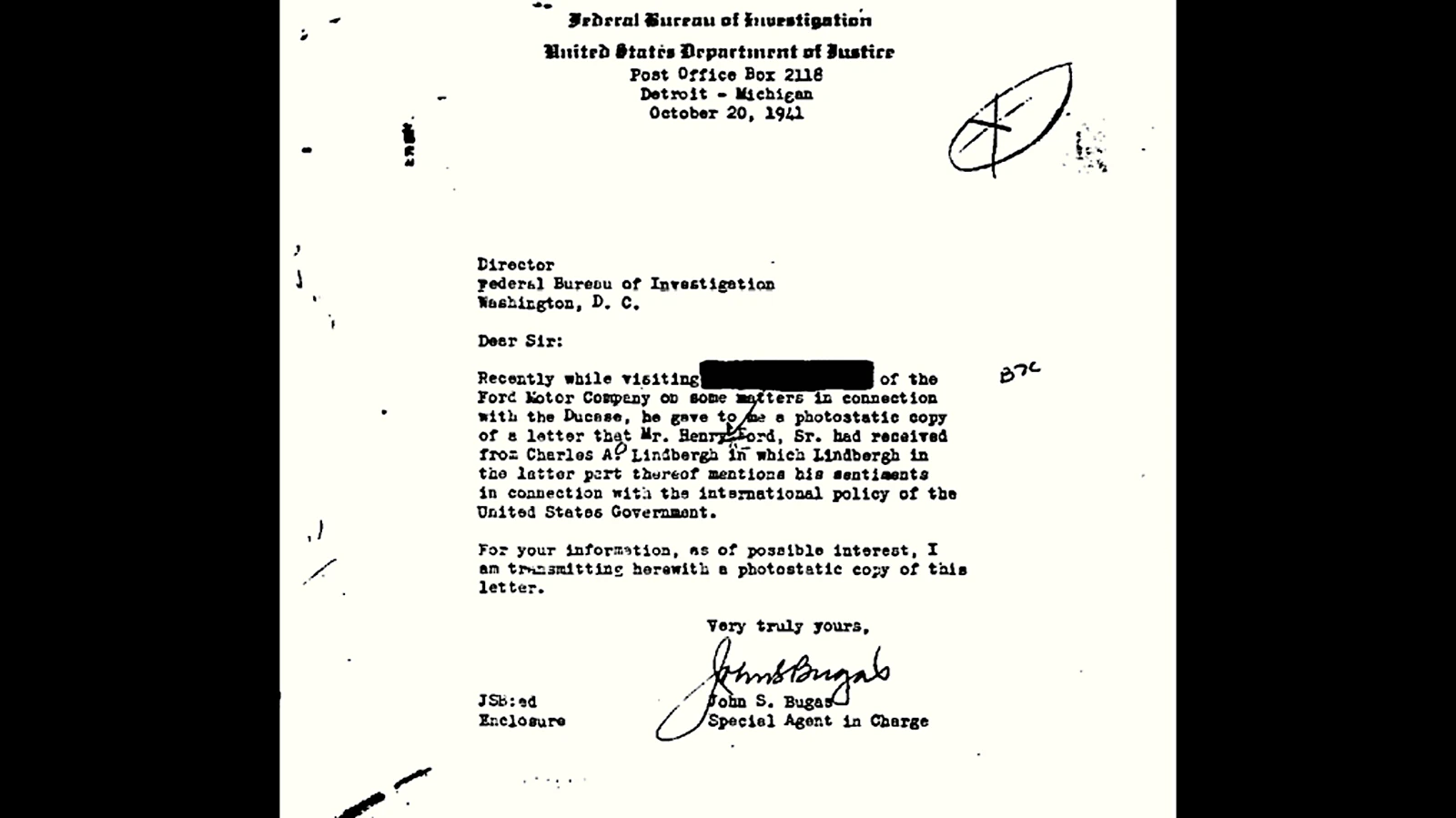
A letter from John Bugas, the special agent in charge in Detroit, to FBI Director J. Edgar Hoover about a Charles Lindbergh letter to Henry Ford. (The Vault) 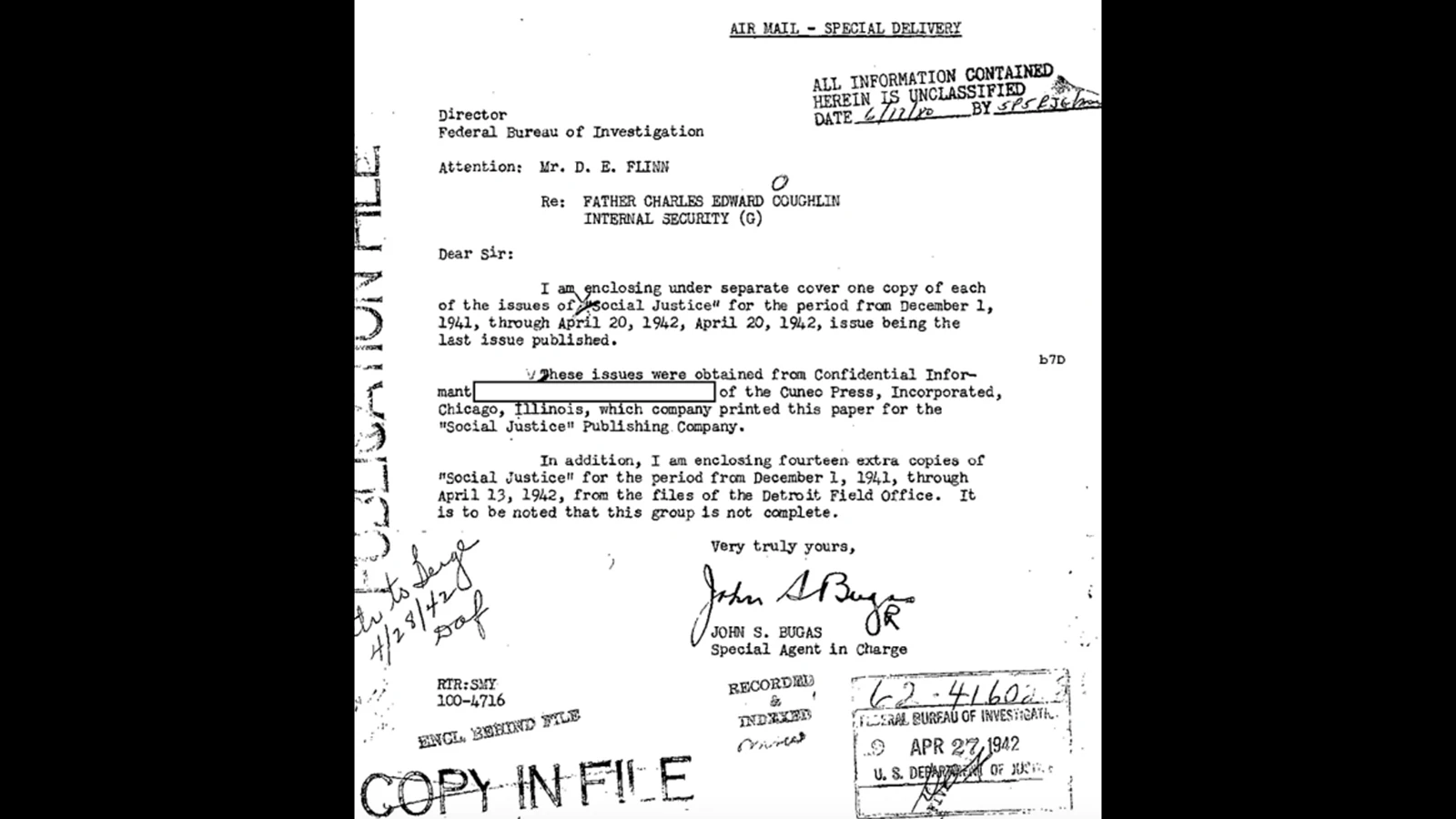
A letter from John Bugas to his FBI superiors reporting on Father Charles Coughlin, who started preaching antisemitic messages during his broadcasts and was suspected of being a Nazi sympathizer in World War II. (The Vault) 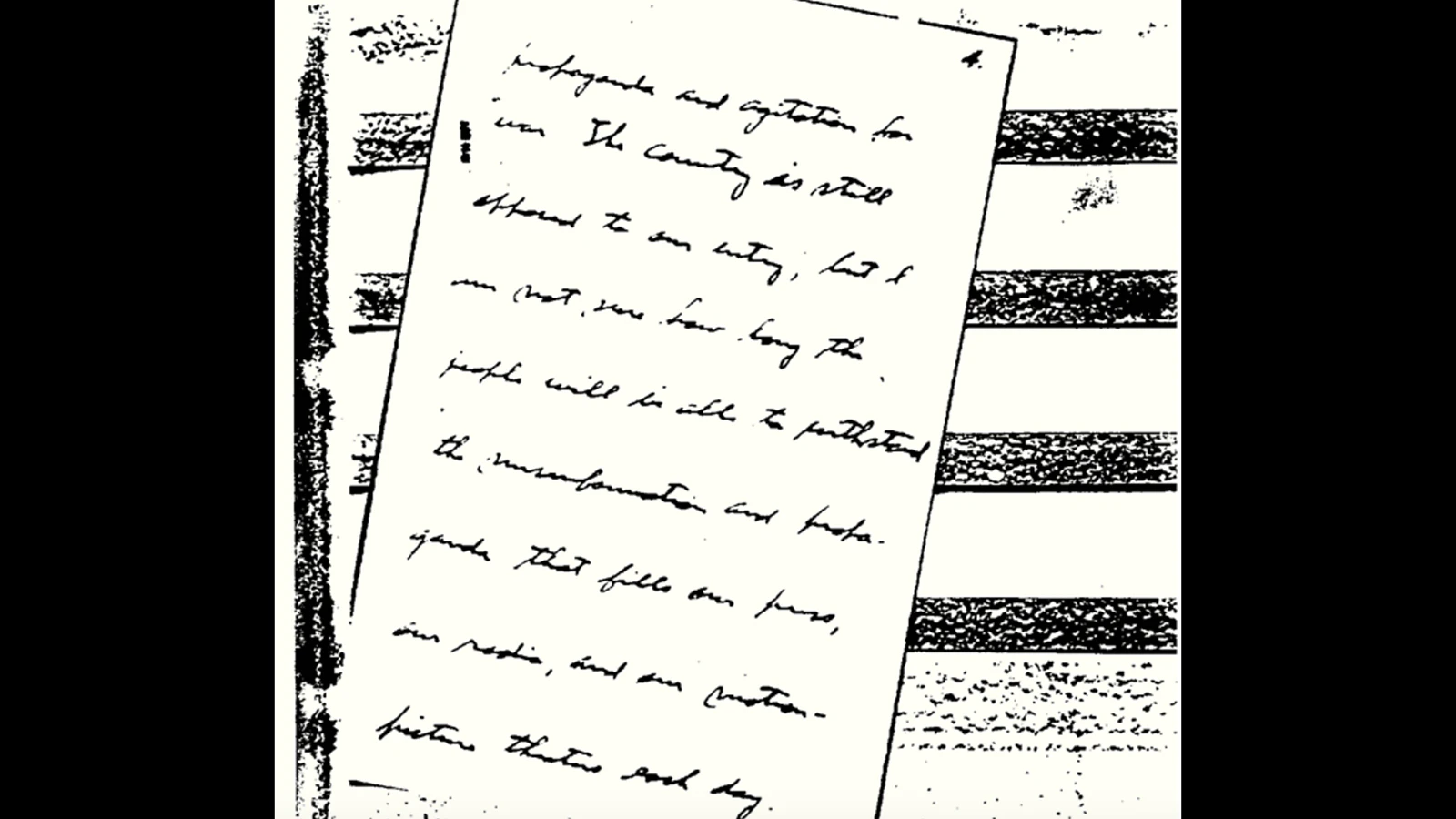
A portion of a Charles Lindbergh letter to Henry Ford complaining about the propaganda he was seeing and hearing in U.S. media in 1941 prior to Pearl Harbor. (The Vault)
The Showdown
When Henry Ford II convinced his family to be given the lead role at the automaker in 1945 after his return from the U.S. Navy in 1943 due to the death of his father, he wanted Bennett gone and Bugas to replace him. Bugas was given the assignment to tell Bennett the news.
Bugas retold the story of his encounter with Bennett in a newspaper series on Henry Ford II published in 1978. The San Antonio Express-News carried the account in its March 18, 1978, edition.
Bugas told the reporter that Bennett had taken himself and Henry Ford II for a ride around the River Rouge plant after Ford told Bennett he “ought to retire.” Ford then returned to his office.
“I’m sitting over to the right of Bennett and from the desk, the drawer, he pulls out a gun,” Bugas said. “He slams it down on on the desk … jumps up and comes over to where I am sitting.”
Bugas said that he had a snub-nosed pistol in his belt. He told the reporter Bennett had probably been drinking whiskey heavily the previous night. Bennett then accused him of being behind the plot to oust him.
“He cursed me and he was very, very threatening. And I figured, ‘Oh my God, something is going to happen,” Bugas said. “It didn’t. He finally backed over to his chair and sat down completely exhausted.”
Bugas said he sat down in a chair beside Bennett and tried to convince him that it would be in his best interest to leave the organization. He said after about 20 minutes of conversation, Bennett calmed down.
“I didn’t want to get beat up, number one. I didn’t want to get shot, number two, and I didn’t want to shoot anybody, number three,” Bugas said. “So, I got up and walked out of that … room, never knowing whether I was going to get something between the shoulders or not.”
Henry Ford II initially made Bugas his main negotiator with unions, and he was elevated to a vice president role. Before leaving the company in 1968, Bugas helped the company grow internationally and he had become a known and respected player in the auto world.
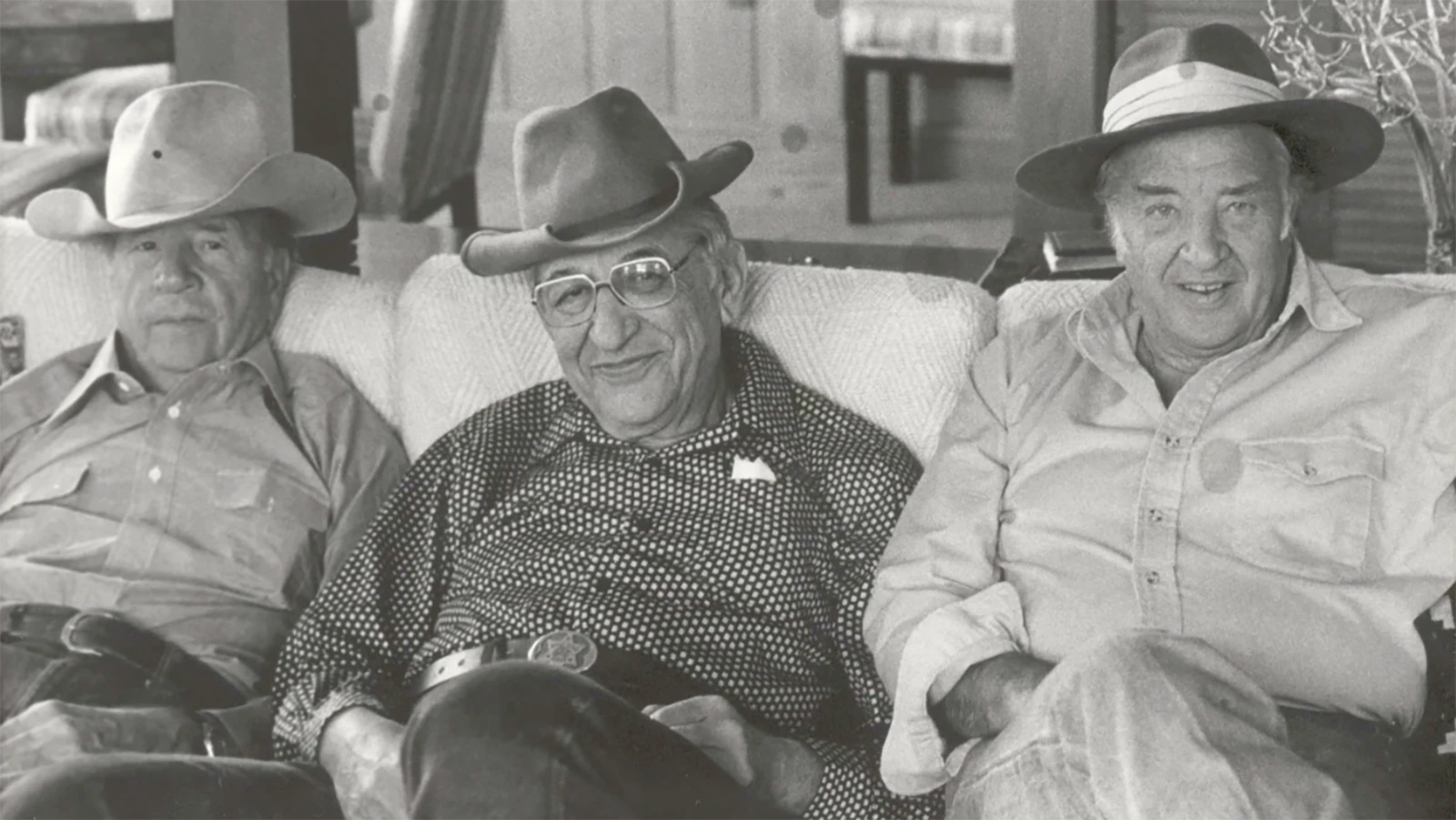
Bugas became a wealthy man at Ford and had purchased a working Wyoming ranch near Cody. There is a photo of him on his ranch with Henry Ford II and industrialist Max Fischer to join him experiencing the West.
University Benefactor
He used his wealth to benefit the University of Wyoming by giving the university stock valued at $823,449 during a 10-year period, the Casper Star-Tribune reported on Jan. 9, 1973. Bugas said his donations reflected his “great affection for and deep interest in the state of Wyoming and its people and in a real sense, my gratitude for what the university and the state have done for me and my family.”
After his Ford career, Bugas became a director for several companies, including Standard Oil of Indiana and One Williams Street Fund and Lehman Brothers Kuhn Loeb. He joined the Buffalo Bill Historical Center’s board in 1962 and was credited with raising funds to build the Plains Indian Museum.
Bugas died Dec. 2, 1982, in Ypsilanti, Michigan, of complications after heart bypass surgery. He and his first wife, Margaret Stowe McCarty, who died in 1972, had three daughters and a son. He was remarried in 1975 to Joan Murphy.
His obituary in the Casper Star-Tribune on Dec. 4, 1982, stated his cremated remains were to be brought back to Wyoming for burial.
Henry Ford II was quoted in several newspapers about the loss of his friend.
“John Bugas was one of my closest and dearest friends,” he said. “His death is a tremendous loss to me personally. I will miss him very much.”
Dale Killingbeck can be reached at dale@cowboystatedaily.com.


