A rancher in central Montana told Cowboy State Daily she suspects a grizzly inflicted ghastly wounds on one of her horses last month, although wildlife officials have yet to confirm it.
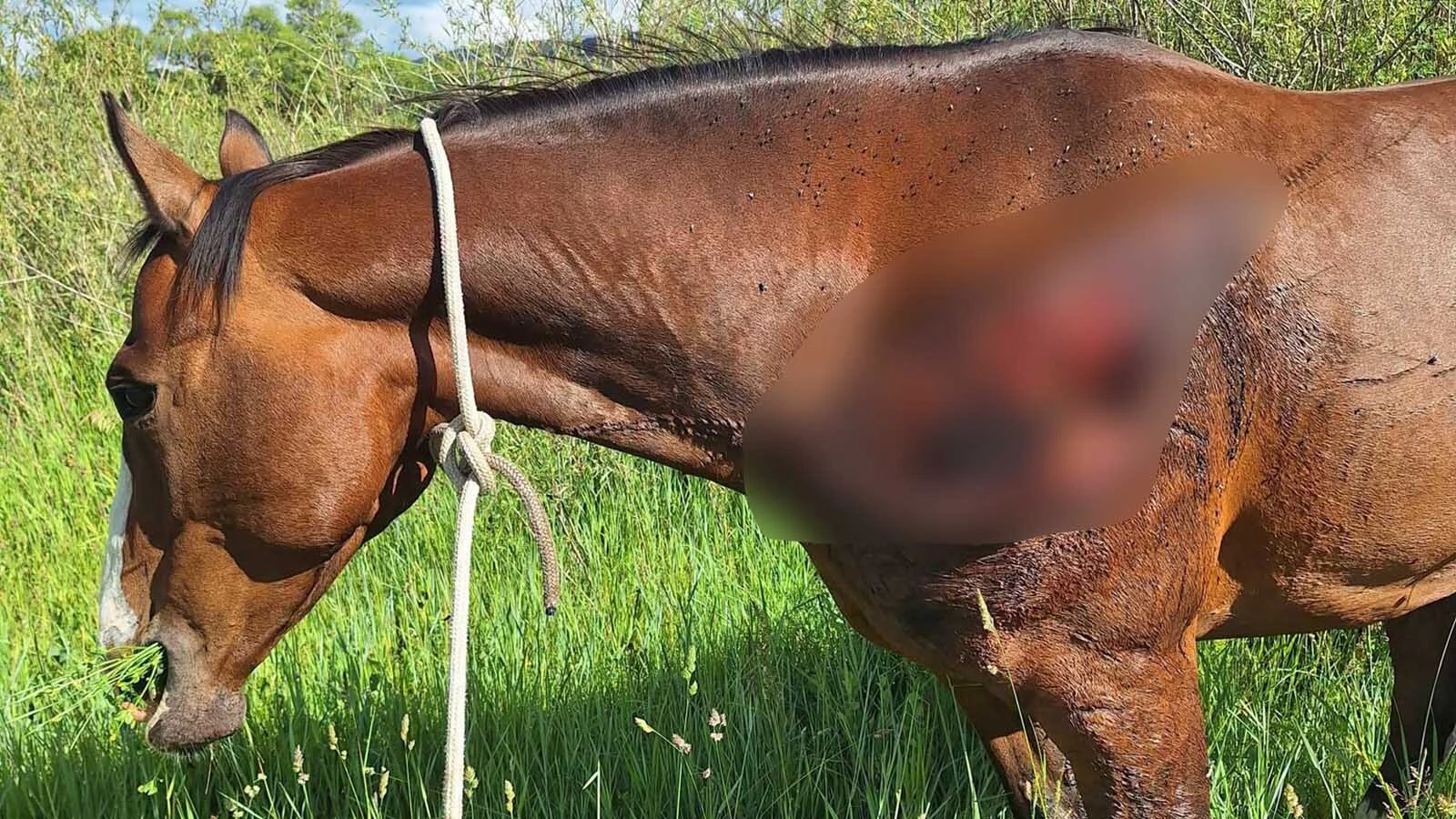
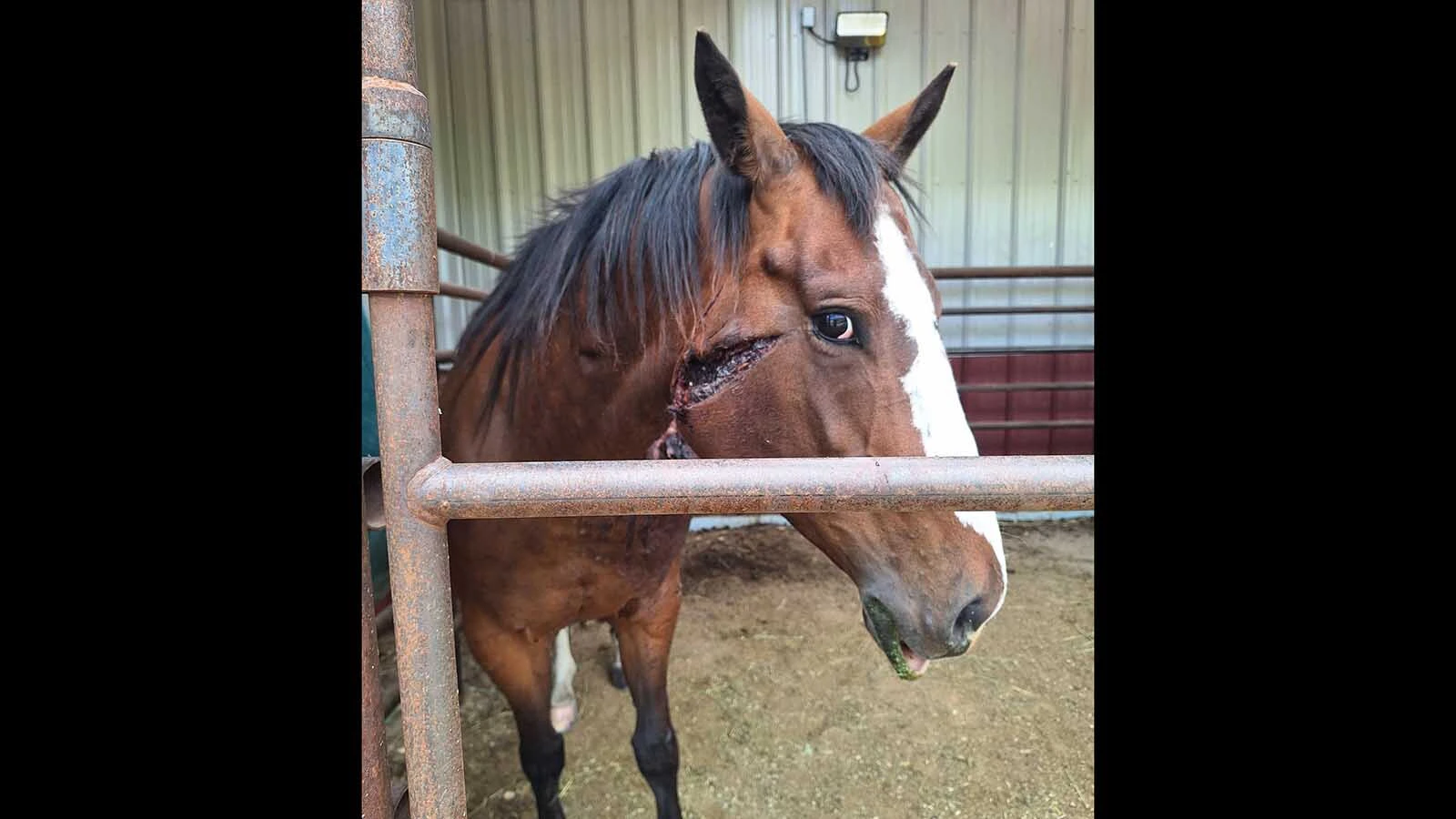
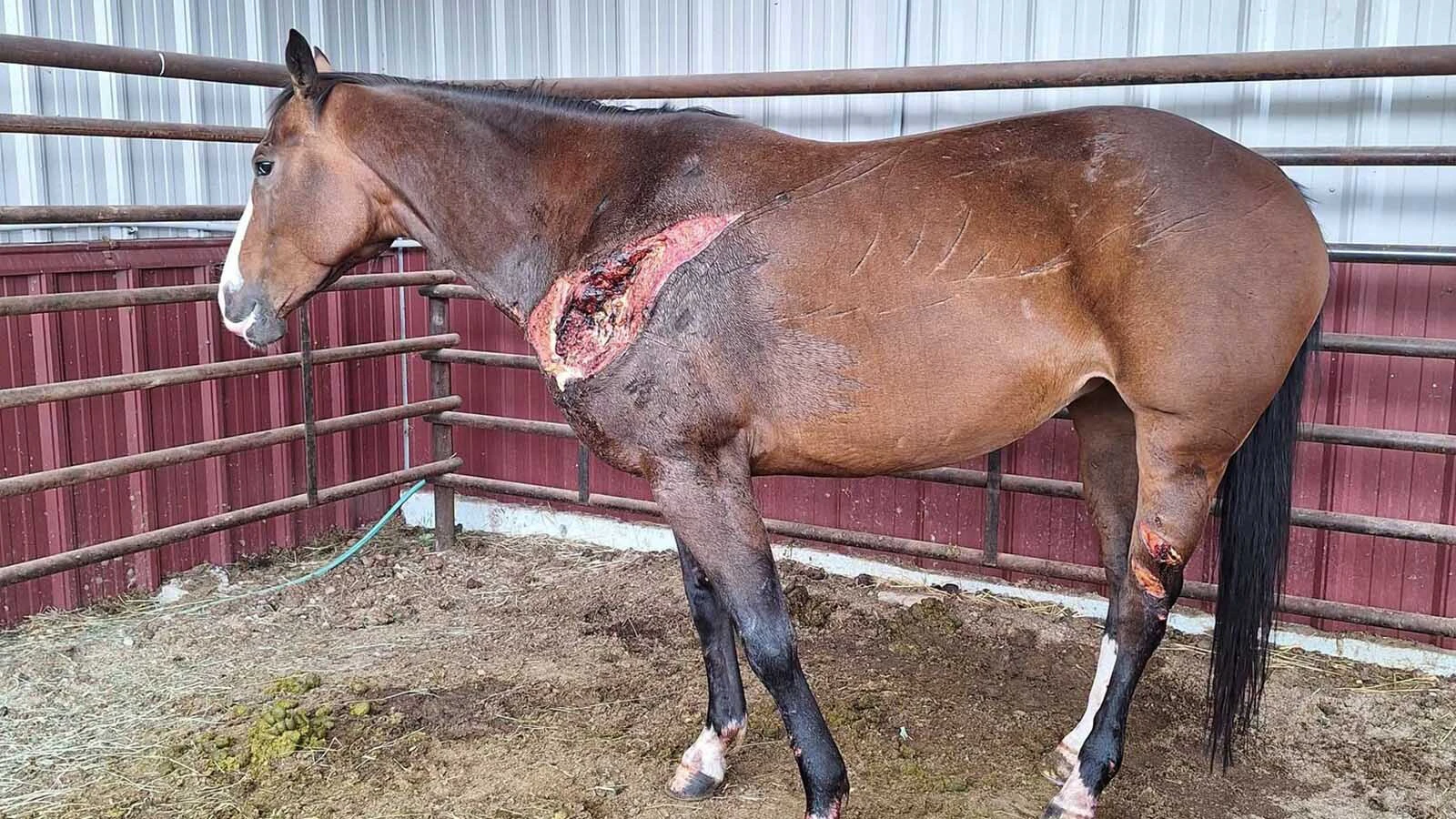
Leah LaTray posted photos of the horse and its severe injuries on social media, showing a large gash on its face, a massive open wound on its flank, and other injuries.
LaTray and her family run a cow/calf ranch near Lewistown, Montana, and she’s also a professional horse trainer.
‘Maggots In Her Wounds’
LaTray said the horse apparently attacked by a grizzly is an 8-year-old quarter horse mare (female), and one of the ranch’s working horses.
She suspects the mare was attacked while in a pasture with four other horses on June 16 or 17.
The pasture is in a “wooded area” and also has a creek running through it, with willows along the bank.
LaTray said she didn’t find the mare until the following Tuesday.
“She was standing alone in the willows, with maggots in her wounds,” LaTray said.
The horse was examined by a veterinarian and is expected to live, she said. She added that her veterinarian, and another veterinarian who saw the horse, told her they think its injuries were suffered in a bear attack.
The horse is recovering well, LaTray said.
The veterinarians could not be reached for comment by publication time.
LaTray said a federal wildlife agent responded to the scene, but disputed the claim the horse’s injuries resulted from a bear attack.
LaTray said somebody reported seeing a “young grizzly bear” crossing the highway onto her property June 12.
She added that if her horse was, in fact, maimed by a bear, there’s no way of knowing if it was that same grizzly.
Was It A Bear Attack?
LaTray said her bear-attack claim was investigated by Kraig Glazier, the USDA Wildlife Services West District supervisor, based in Helena, Montana.
She said Glazier visited her ranch, inspected the horse, and disputed her claim.
Glazier’s assessment was that the horse might have run into or become entangled in something sharp, she said.
Glazier could not be reached for comment by publication time.
LaTray said Glazier told her that by his reckoning, the horse would have had “bite wounds on her withers if it had been a bear attack."
“Withers” refers to the prominent bony ridge just at the base of a horse’s neck, between the shoulder blades.
That would have tracked with bears’ usual method of attacking a prey animal. They to get atop the animal while biting its back. The bear uses its immense strength and weight to drag down the animal.
LaTray said her response to that point is that “horses are more athletic than sheep or cows,” and her horse “could have managed to wheel around and kick the bear in the face before he managed to get on top of her.”
She said Glazier also noted bears don’t typically claw their prey. So, grizzly claws might not account for the gashes on the horse’s face.
LaTray said she wonders if the bear’s attack was actually predatory. But rather, if “the bear and the horse had a surprise encounter at very close range in the willows.”
If that was the case, the bear might have responded by lashing out with its claws, she said.
Increased Bear Activity
The ranch sits between the North and South Moccasin mountain ranges, along Montana Highway 81, she said.
Grizzly activity has been increasing there in recent years, LaTray said, even though the area more than 100 miles from the Rocky Mountains, where most of the state’s grizzly population lives.
Grizzlies are naturally a Great Plains species, but they’re not being deliberately introduced to prairie country in northern and central Montana.
Instead, they’re moving back into those areas on their own.
The LaTray ranch is also near property owned by the American Prairie conservation group.
American Prairie welcomes the return of grizzlies to the area, and hopes the bears start settling in on their property.
LaTray doesn’t like that idea.
She said that along with the suspected attack on her horse, neighboring ranches have been reporting trouble with bears. And there’s concern grizzlies could take heavy toll on cattle and threaten human safety.
‘I wouldn’t Wish That On Anybody’
Danny Kinka, senior wildlife restoration manager for American Prairie, told Cowboy State Daily there are ways to balance ranchers’ concerns with bear conservation.
He said he didn’t know specifics about what might have happened to LaTray’s horse, but agreed it must have been devastating to find the animal so terribly wounded.
“I saw the pictures (posted online), and man, I would be upset if that were my horse. I wouldn’t wish that on anybody,” he said.
When it comes to living alongside grizzlies, “the first order of business is keeping you and your family safe,” he said.
He added that American Prairie has programs to help ranchers mitigate the risk of attacks on their cattle, sheep and horses.
One effective way is to “put a human presence on the landscape,” with working cowboys and range riders staying near cattle, he said.
“The goal is to convince predators that livestock isn’t worth messing with,” he said.
Mark Heinz can be reached at mark@cowboystatedaily.com.