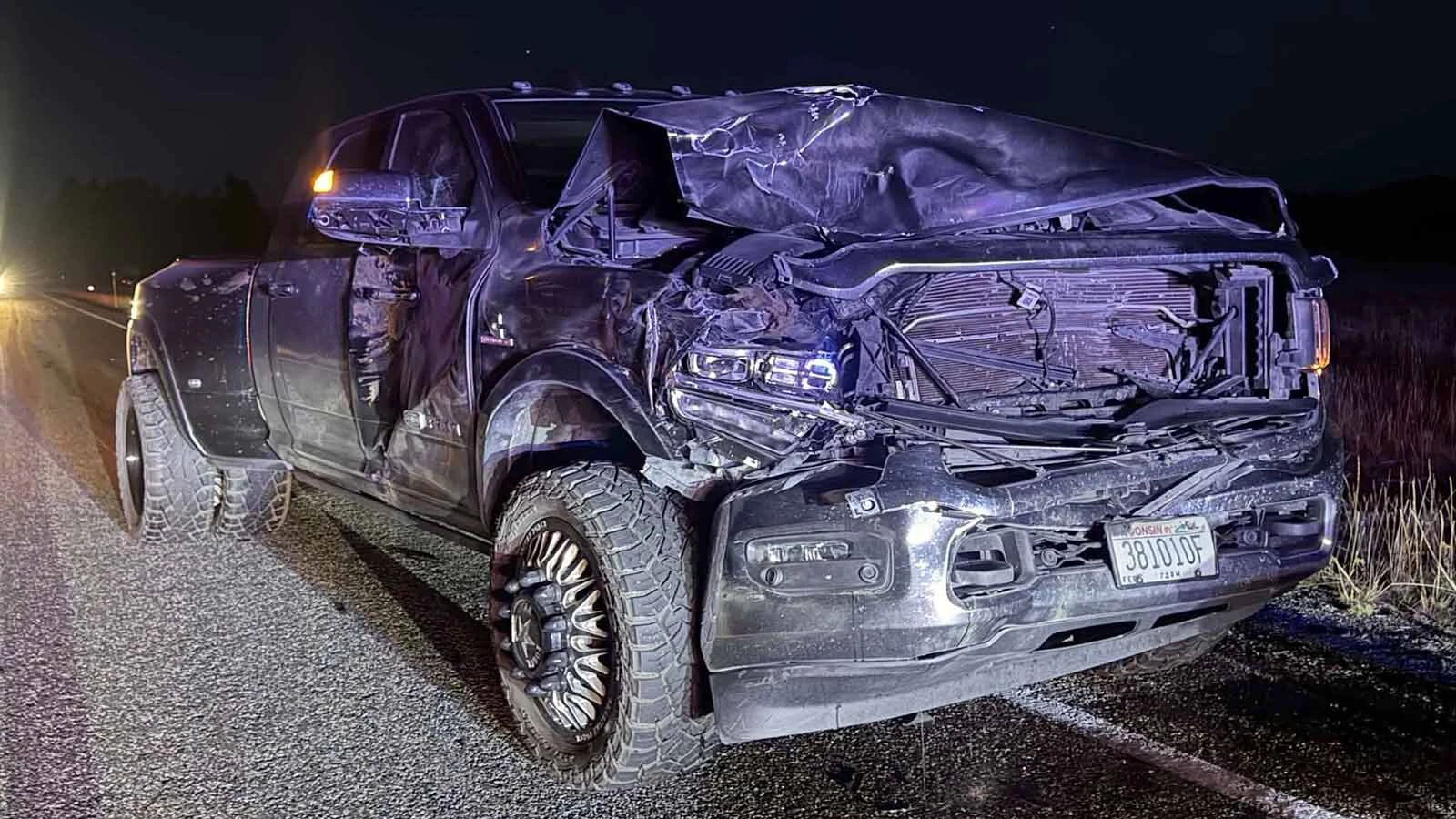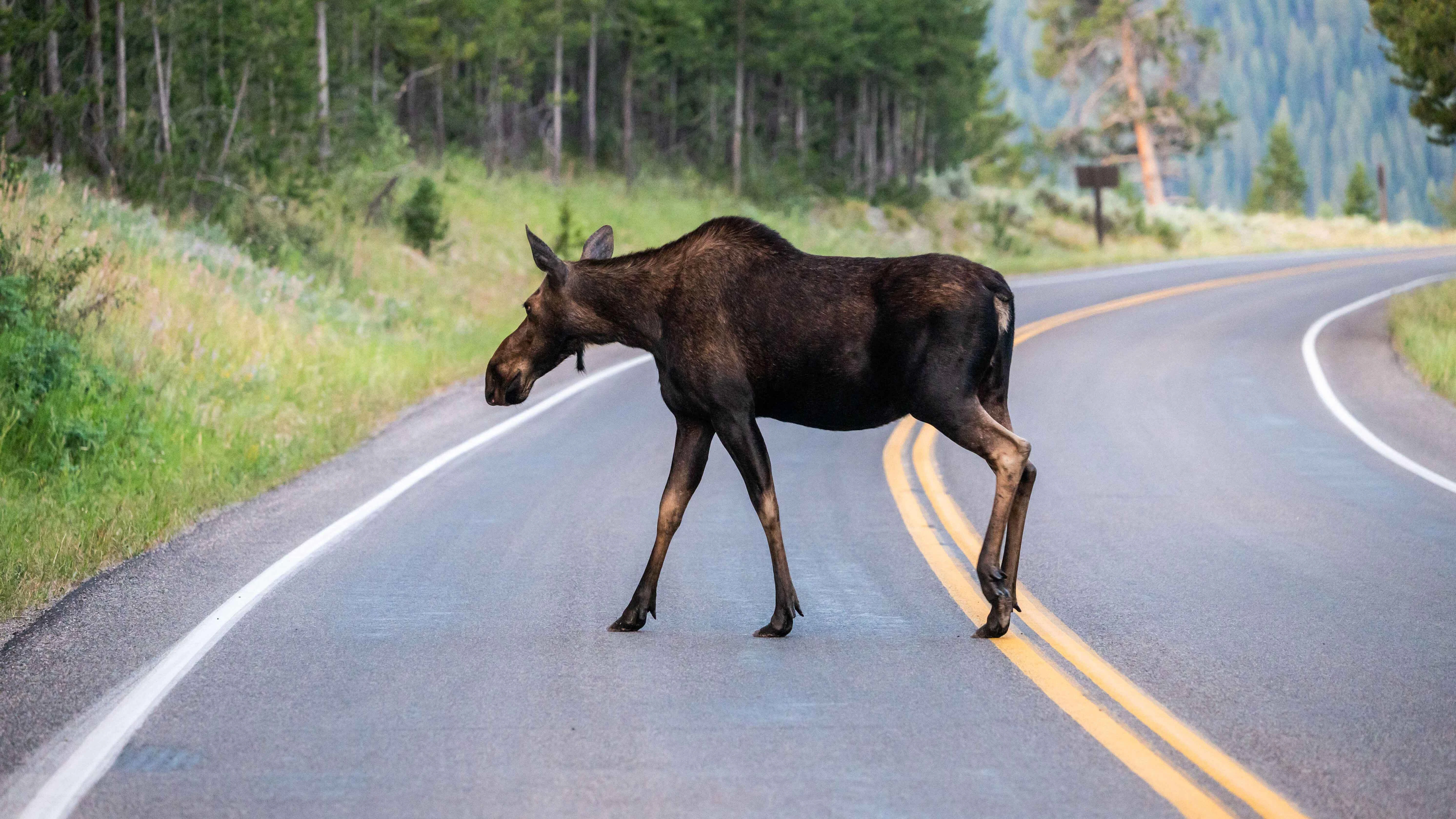
Wyoming’s persistent hot, dry weather could be to blame for a spike in roadkill as wildlife is drawn to greenery and water alongside highways.
“Wildlife biologists are reporting a surge in big game animals clustering along highways and rights-of-way, driven by a search for food and water,” the Wyoming Game and Fish Department says.
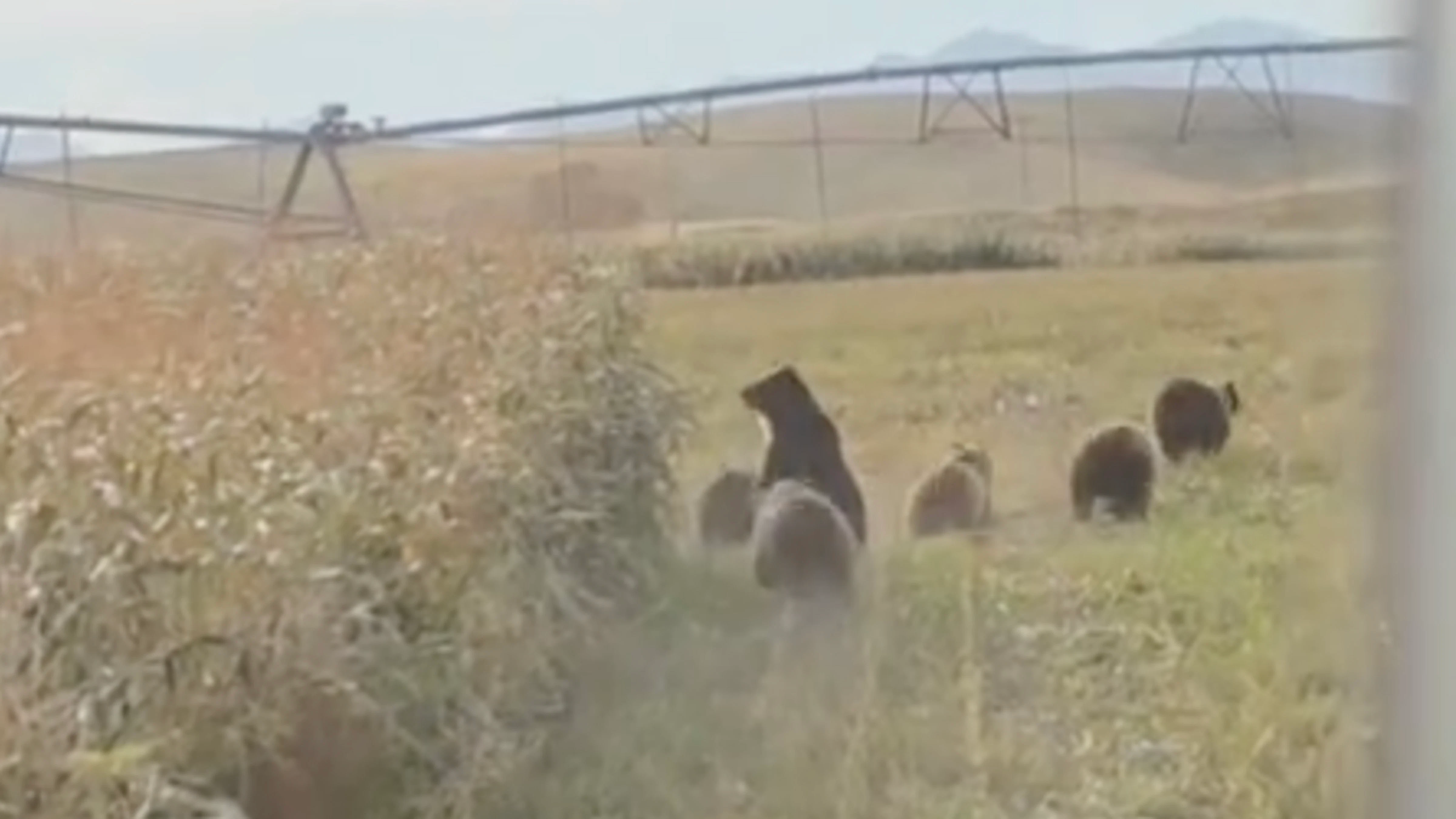
Lacelynn Seibel, who leaves near Wilson, in Teton County, told Cowboy State Daily she’s been seeing an abundance of bears near roadways.
“I’ve had five or six different black bears on my property, in places where we haven’t seen them before,” she said.
The bears are frequently crossing the road to get to and from lush areas along the river bottom.
Seibel’s property isn’t far from where Wyoming’s most famous bear, Grizzly 399, was struck and killed by a vehicle in October 2024.
'I’ve Never Had This Much Activity’
Northeast Wyoming resident Owen Miller told Cowboy State Daily he’s seen plenty of wildlife along roadsides lately.
"The road going by the house here is loaded with deer. They feed and bed right by the road, because I guess it’s the greenest grass around,” he said. "There have been three fawns and several turkeys killed lately. They aren’t afraid of traffic.”
Miller has an oasis on his property, a water hole he built about eight years ago.
It’s been drawing deer, skunks, songbirds, wild turkeys, and other wildlife, he said.
“I don’t think there’s any available water anywhere besides water troughs on the ranch a few miles away. I have a camera set up, and I’m getting photos all day from critters drinking water here. I've never had this much activity like I have now,” Miller said.
Peak Crash Times
There were 149 wildlife collisions reported in July, compared to 181 in July 2025, according to the Wyoming Department of Transportation (WYDOT).
“Note that these are only the ones investigated by Patrol (Wyoming Highway Patrol), so these numbers are likely underreported,” WYDOT spokeswoman Jordan Young wrote in an email to Cowboy State Daily. “According to WYDOT crash data for last year, nearly half (47.5%) of wildlife collisions occurred between the hours of 5 p.m. and 11 p.m., and a second spike occurred between the hours of 5 a.m. and 8 a.m. (20.9%).”
“Considering the recent heat waves we've been having, I wouldn't be surprised if more wildlife are active at night than usual this summer,” she added.
Roadways have become strips of green, according to Game and Fish.
“Roadsides and borrow pits are engineered to drain water away from highways, making them hold onto critical moisture much longer than the surrounding arid landscape,” according to a Game and Fish news release. “In addition, the roadway edges require mowing, which stimulates the regrowth of grasses and the emergence of other plants, such as sweet clover, that are sought by wildlife.”
During the summer, WYDOT crews mow when they have time, trimming vegetation that can make it difficult for drivers and wildlife to see each other, Young added.
Mowing also helps prevent snow drifting during the winter, she added.
“Due to limited manpower and budget, crews will try to prioritize areas with the tallest vegetation first, with the goal of mowing each area at least once a season,” Young stated.
Migration Season Is The Worst
There’s no specific data on how much more wildlife that usual is congregating along highways this year, Kevin Monteith, a biologist with the Haub School of Environment and Natural Resources at the University of Wyoming, told Cowboy State Daily.
However, “anecdotally, I think that’s what everybody’s seeing,” he said.
While that might mean an increase in roadkill over what remains of the summer, it could get busier once big-game migration season starts, he added.
Spring and summer migration seasons are typically the worst times of year for wildlife collisions, he said.
Big-game herds typically move from high-elevation summer range to winter range at lower elevations sometime in October or November, Monteith said.
That can vary, according to weather.
As hot and dry as it’s been, “animals are probably going to hold tight on the summer range as long as they can,” he said.
That’s a plus, because a lack of precipitation at lower elevations likely means a shortage of forage on winter range, he said.
A large winter storm toward the end of November could create a “big push” of animals migrating to winter range, Monteith said.
Mark Heinz can be reached at mark@cowboystatedaily.com.