
Wildlife researchers seemed poised to settle once and for all the debate over whether Wyoming pronghorn are actually faster than cheetahs in Africa.
But the pronghorn, commonly called antelope, apparently weren’t interested in doing their part.
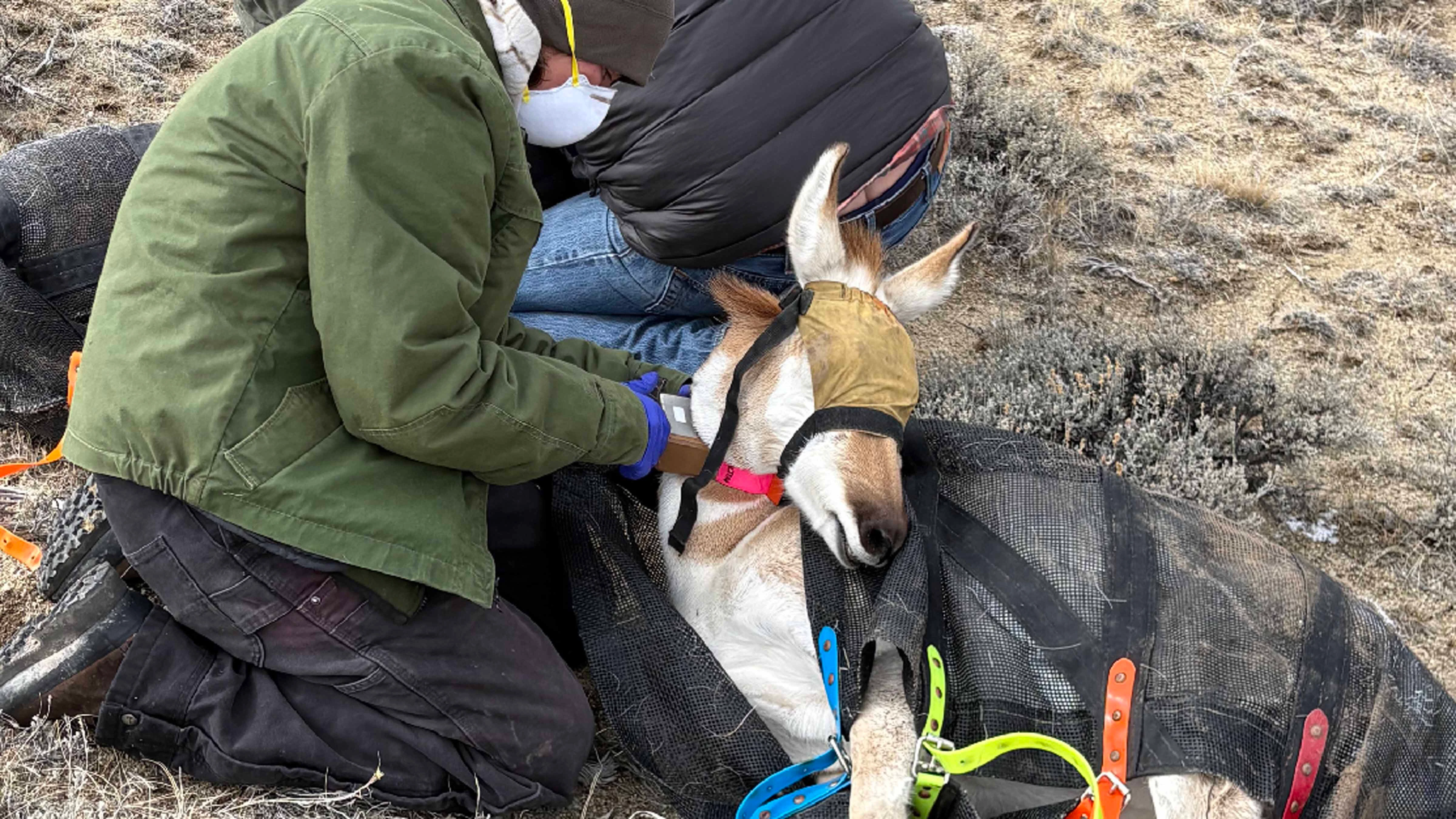
A buck and a doe antelope were captured this spring near Pinedale by Wyoming Game and Fish researchers. The animals were outfitted with high-tech speed tracking collars and set loose.
Instead of kicking it into high gear and wowing researchers with documented speeds that could put cheetahs to shame, the antelope more or less just ambled about.
During the test period, the buck hit a top speed of 27 mph, and the doe topped out at 19 mph.
The pronghorn speed tests are the brainchild of Uinta County Lance Neeff. And despite the pronghorns’ lackadaisical response, he and Game and Fish aren’t ready to give up.
It’s hoped that another test can be conducted this winter.
The rub will be figuring out how to nudge the pronghorn into an all-out sprint, without unnecessarily harassing or stressing them.
Do Cheetahs Deserve Speed Crown?
It’s long been accepted that cheetahs are the world’s fastest land animal, purported to reach speeds of nearly 70 mph in short bursts.
Pronghorn are said to top out at somewhere around 55 mph.
The “speed goats,” as Wyomingites sometimes affectionately call pronghorn), could claim only the endurance title, as they can hold their top speed over several miles, while cheetahs burn out quickly.
It’s also thought that pronghorn developed their speed capabilities long ago, trying to flee from a now-extinct North American cheetah-like big cat species.
Neeff disagrees that the speed contest between cheetahs and pronghorn has been adequately decided in the cheetahs’ favor.
He said there is at least some anecdotal evidence of pronghorn holding steady at 65 mph while paralleling vehicles on Wyoming roads – and he’s convinced that they can go even faster.
And the speed tests on cheetahs date back to the 1960s, using rather crude methods, such as dangling bait meat out of the back of a speeding Range Rover and letting a cheetah chase it, he said.
He has hoped for years to get pronghorn scientifically speed-tested using modern technology.
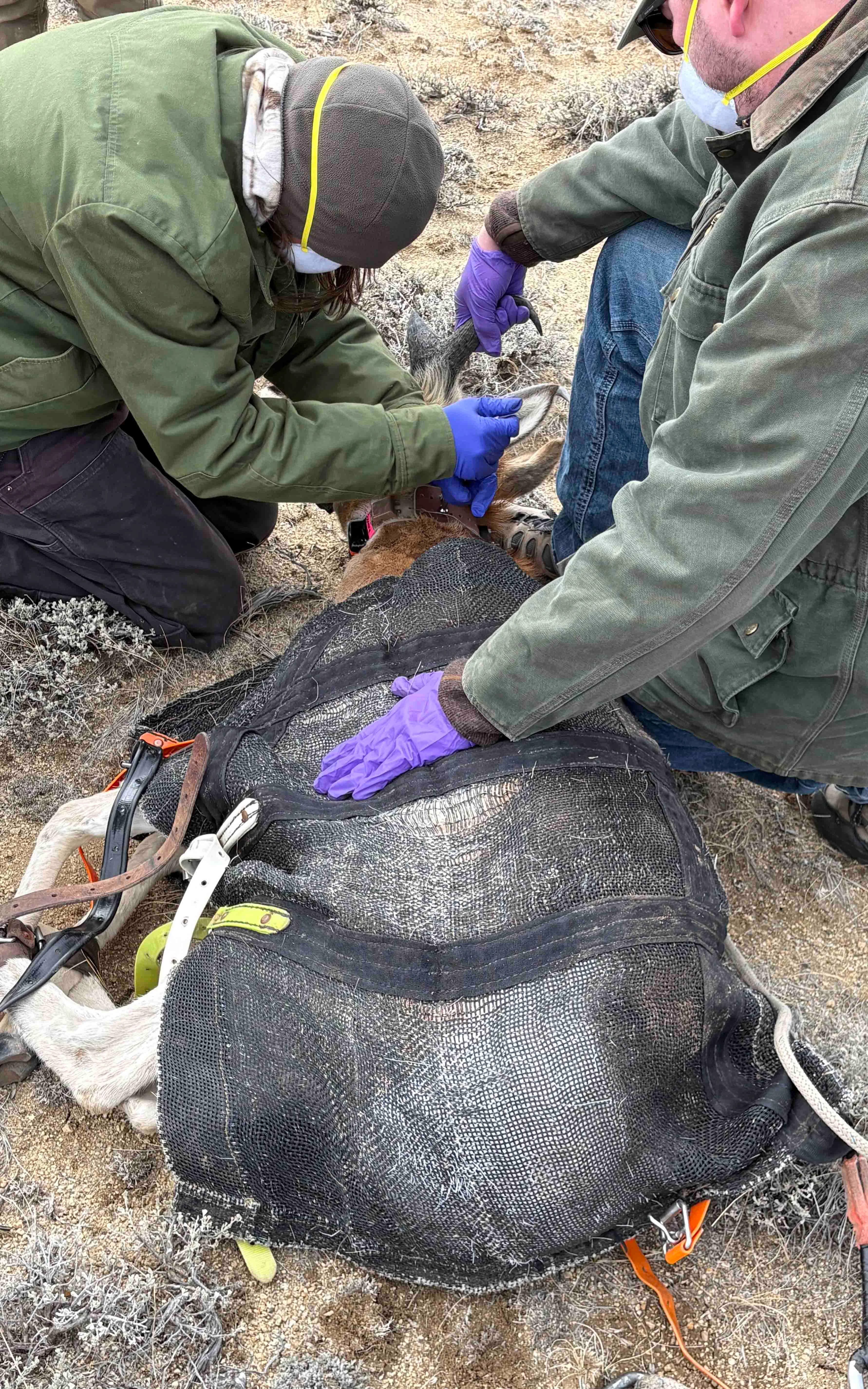
Wyoming Game and Fish wildlife researchers Dalton Brauer, left, and Devin Gearhart outfit a pronghorn buck with a specialized speed-testing collar in the Pinedale area. (Wyoming Game and Fish Department)
Testing Day
Neeff first approached Game and Fish about speed testing pronghorn in 2024, Devin Gearhart, the agency’s fence ecologist, stated in an email to Cowboy State Daily.
There weren’t any pronghorn research captures planned that year. The test was postponed until March 7, when Game and Fish had planned to capture and collar 40 pronghorn for general research purposes.
The speed tests were performed in the Pinedale Anticline Project Area, a natural gas field south of Pinedale.
Gearhart and Game and Fish wildlife technician Dalton Brauer agreed to also put speed-testing collars, provided by Neeff, on two of the pronghorn.
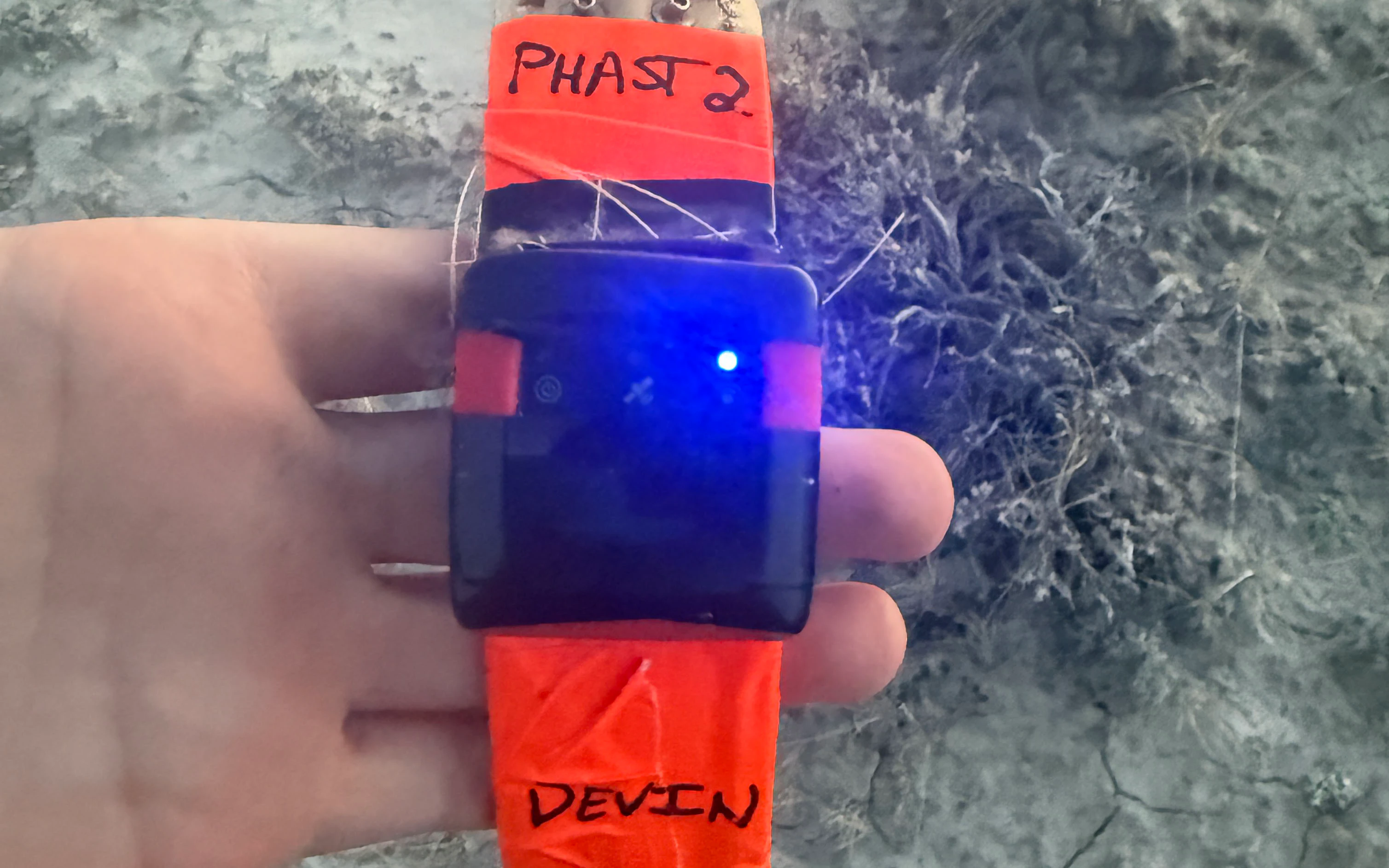
The collars feature “Spektrum GNSS wireless GPS speed meters, typically used for RC motorsports,” Gearhart said.
The speed-detecting collars were programmed to drop off the test subjects within 2 to 3 hours.
It was hoped that the pronghorn would at least go into a high-speed burst immediately upon their release, but that didn’t happen.
“Since we know pronghorn can reach top speeds much greater than what was recorded, we believe this would only occur under more stressful conditions, such as predation or prolonged human/vehicle presence,” Gearhart said.
Neeff said that on the day of the tests, the captured pronghorn were slung under a helicopter for transport to the collaring site.
So, he’s suggested that next time, researchers should try chasing pronghorn with the helicopter, to push the animals to their top speeds.
He doesn’t think that would be too stressful or create too much risk for injury in a species designed to flee danger at high speed.
Let’s Keep Trying
Neeff and Game and Fish are staking their hopes on further testing.
During a telephone interview, Game and Fish Director Angi Bruce told Cowboy State Daily that she likes the idea of speed-testing pronghorn, to see if they really are faster than Cheetahs.
It could put one of Wyoming’s most “overlooked” species in the spotlight, she said.
Bringing more attention to pronghorn could also help boost conservation efforts, such as protecting the species vital migration routes, Bruce said.
Neeff said providing the data that could get pronghorn crowned as the fastest land animal alive could also give Wyoming tourism a huge boost.
Wyoming has more pronghorn than any other state. And officially naming them the world’s fastest animal would boost the state’s prestige, he said.
Toward that end, he’s calling for donations to help fund more pronghorn speed tests.
Though the matter of whether cheetahs or pronghorn are the fastest remains unsettled, “we intend to refine our methods and continue our efforts,” Gearhart said.
“We’ve already discovered new technology that would allow us to collect more data over a longer period of time,” he added.
That’s a device called the “Lotek Activity Logger,” he said.
It can collect “small-scale movement data, including acceleration, and it can have an expected life of many months to years," Gearhart added.
The activity loggers might provide top-speed data. And they can also track pronghorns’ movements across great time and distance, providing better information about how they respond to human structures and activity, he said.
Mark Heinz can be reached at mark@cowboystatedaily.com.


