
The pronghorn is the fastest land mammal in the Americas. At top speed, they can barrel over sagebrush prairies, under fences, and across Interstate 80 at 55 mph.
But what are pronghorn running from? In their DNA, they may still be trying to survive Miracinonyx, “the American cheetah.”
It’s been more than 10,000 years since a pronghorn had to outrun an American cheetah, but the long-held hypothesis is that their speed evolved as a direct result of trying to avoid the clutches of this now-extinct big cat.
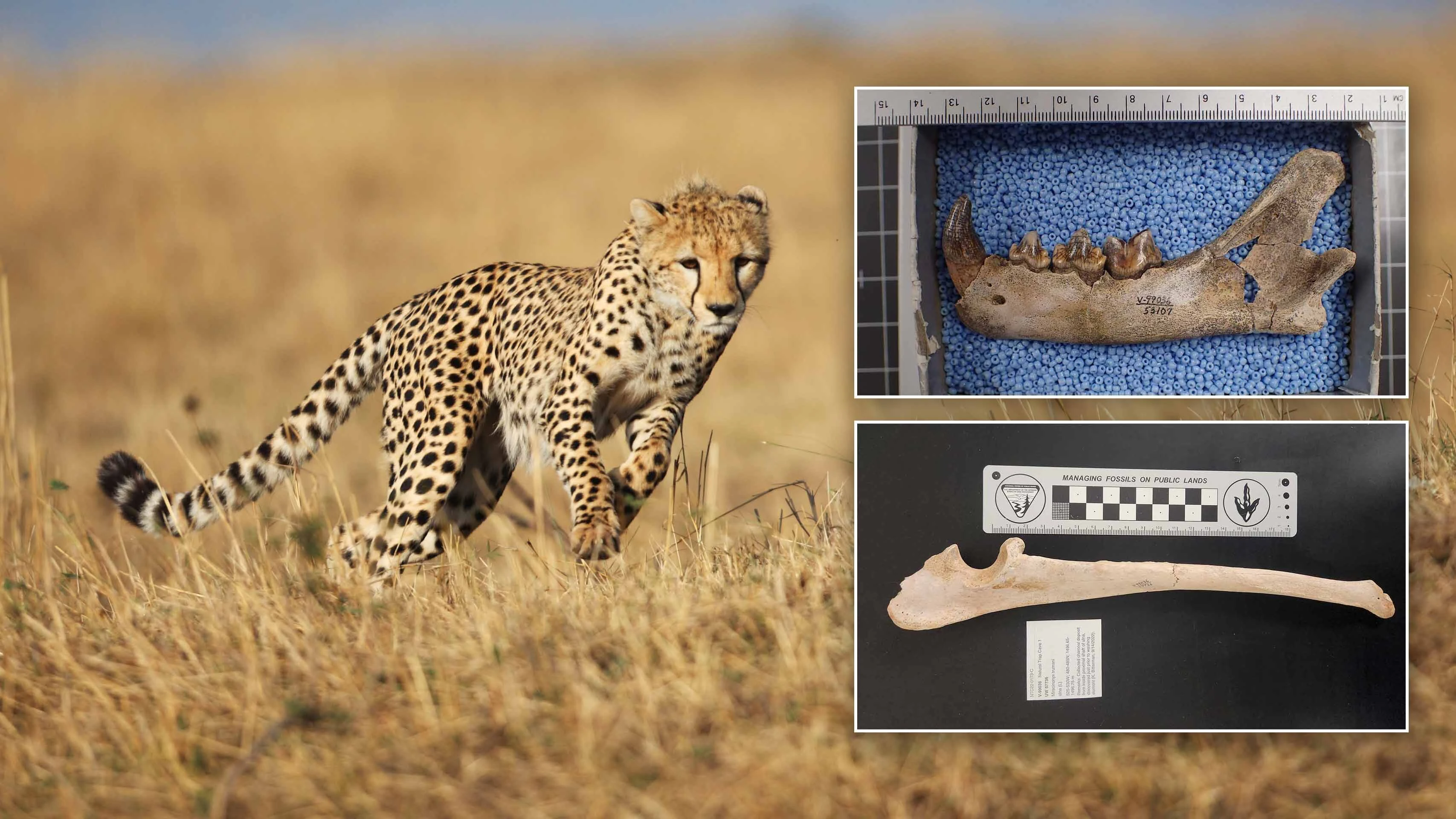
The best and most numerous fossils of Miracinonyx have been excavated from Wyoming, particularly Natural Trap Cave in the Bighorn Mountains.
There are a lot that paleontologists who know about this surprisingly elusive big cat, and much more they hope to learn.
“I'd love to know exactly what it was doing,” said Julie Meachen, a mammalian biologist at Des Moines University in Iowa. “I'd love to see it in action, how it caught its prey, and how it's the same and different than the modern cheetah.
"We'll never know for sure, but we have really good guesses.”
Cheetah-Like Cat
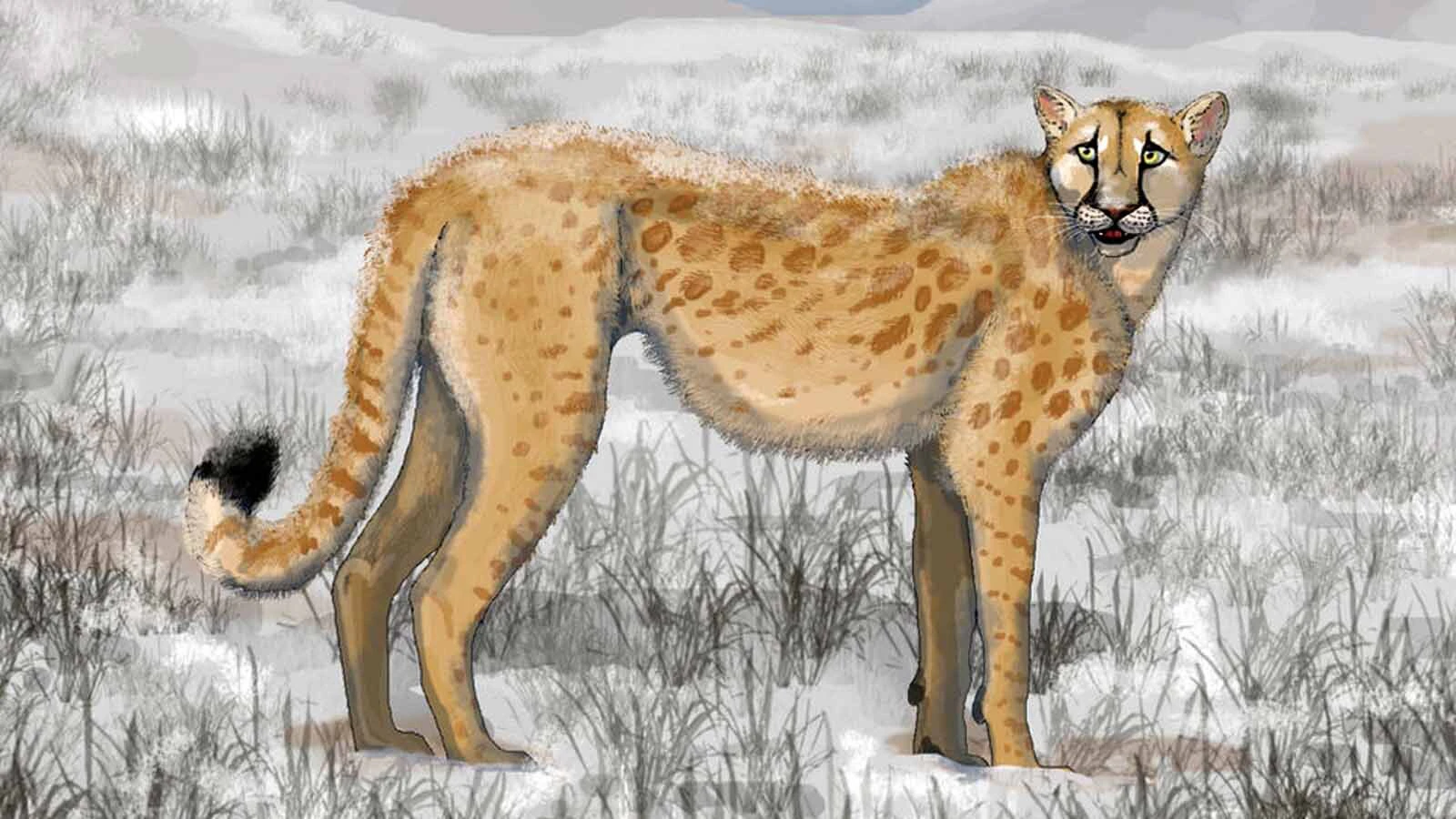
Just like the pronghorn isn’t really an antelope, Miracinonyx isn’t really a cheetah.
Meachen said the most accurate way to describe it is as “a cheetah-like cat.”
“It’s actually most closely related to the living mountain lion,” she said. “They’re sister species that are most closely related to the jaguar, and the three of them are distantly related to the cheetah in Africa.”
It’s been known as the American cheetah because of its skeletal similarities to the extant African cheetah.
Miracinonyx had long, slender legs, a shorter skull, and retractable claws like a modern cheetah.
It also wasn’t as robust as a mountain lion or its prehistoric cat contemporaries, the American lion and the saber-toothed Smilodon.
Meachen said a fully grown Miracinonyx would probably be as big as today's largest mountain lion but would outwardly resemble a cheetah, with its elongated legs and body.
While it's superficially similar to cheetahs, the skeleton of Miracinonyx has significant differences that would have impacted its mobility and behavior, particularly how it hunted.
“African cheetahs are so specialized for running that they have functionally given up the use of their forelimbs as a prey-killing tool,” Meachen said. “They use a dewclaw to trip their prey and then go for a bite to the throat.
"They usually don’t touch their prey with their paws at all.”
Miracinonyx’s bones indicate it would have been able to use its forelimbs for subduing its prey, the hunting style of most big cats.
Even so, Meachen said Miracinonyx was undoubtedly a cursorial animal, adapted for running.
That means, like the modern cheetah, it was a specialized pursuit predator.
“It was running to chase its prey, more so than a leopard or a jaguar,” she said. “It would have eaten animals that were going to run away, so it would have done quite a bit of chasing.”
A Catholic Diet
Meachen is currently working on several studies on the biology and paleoecology of Miracinonyx.
One of those studies deals directly with its diet, so she could only give “a teaser” of what the American cheetah-like cat would have been chasing and consuming.
“I do know what they're eating, but I can't give away everything,” she said. “What I will say is that it wasn’t eating the same thing in every environment.”
Previous research from specimens recovered in Natural Trap Cave indicates that prehistoric pronghorn was on Miracinonyx’s menu, but not exclusively.
Meachen said the extinct cat had “a Catholic diet” of prehistoric hoofed mammals.
“Our published isotope data (from the teeth of Miracinonyx) shows it was eating pronghorn, sheep, and other ungulates,” she said. “Those are the animals you’d expect them to eat at Natural Trap Cave.”
In terms of diet, there’s another possible similarity between Miracinonyx and the modern cheetah. The prehistoric cheetah-like cat might have been an easy mark for theft.
Kleptoparasitism is when one animal steals food from another. In modern-day Africa, cheetahs are frequently bullied off kills by lions, hyenas, and other carnivores because they’re not strong enough to defend or compete for carcasses.
Meachen said there’s no direct evidence of kleptoparasitism in the Pleistocene, but it’s entirely possible that it occurred.
One clue comes from similar isotope studies of American lion teeth, also recovered from Natural Trap Cave.
“There is a large overlap in what those two species were eating,” she said. “We don't have any data to support or refute the idea, but it’s possible the American lion was kleptoparasitizing kills from the American cheetah-like cat.”
There might have been plenty of kills to steal.
Cheetahs have a higher success rate than nearly all African cats, so Miracinonyx might have been just as successful.
Mountain Mass Mortality
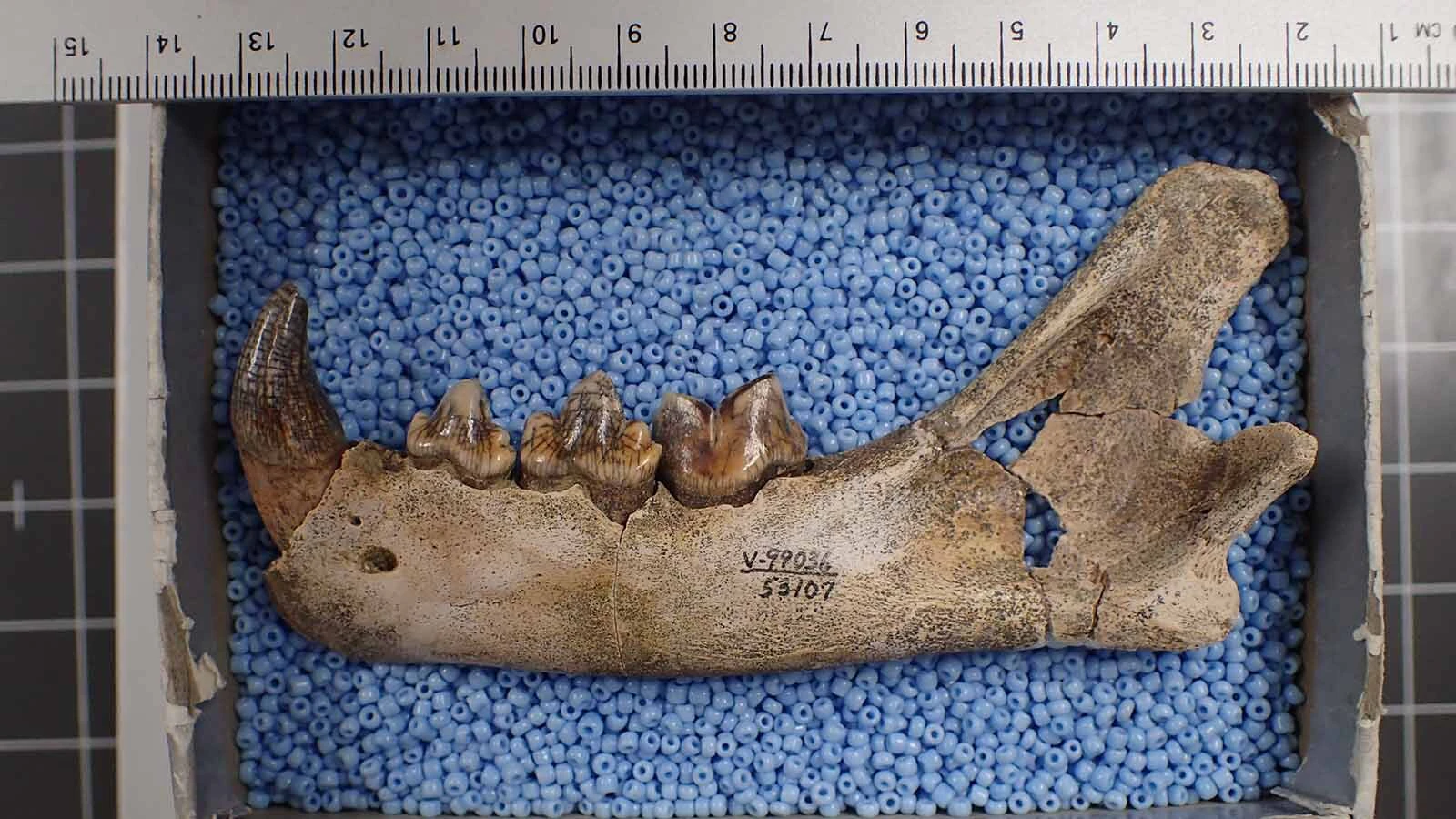
The first Miracinonyx fossils, a handful of teeth, were found in a limestone cave near Valley Forge National Historic Park in Pennsylvania in 1869.
While its fossils have been found across North America, from the Yukon to Mexico, it’s still a relatively rare find.
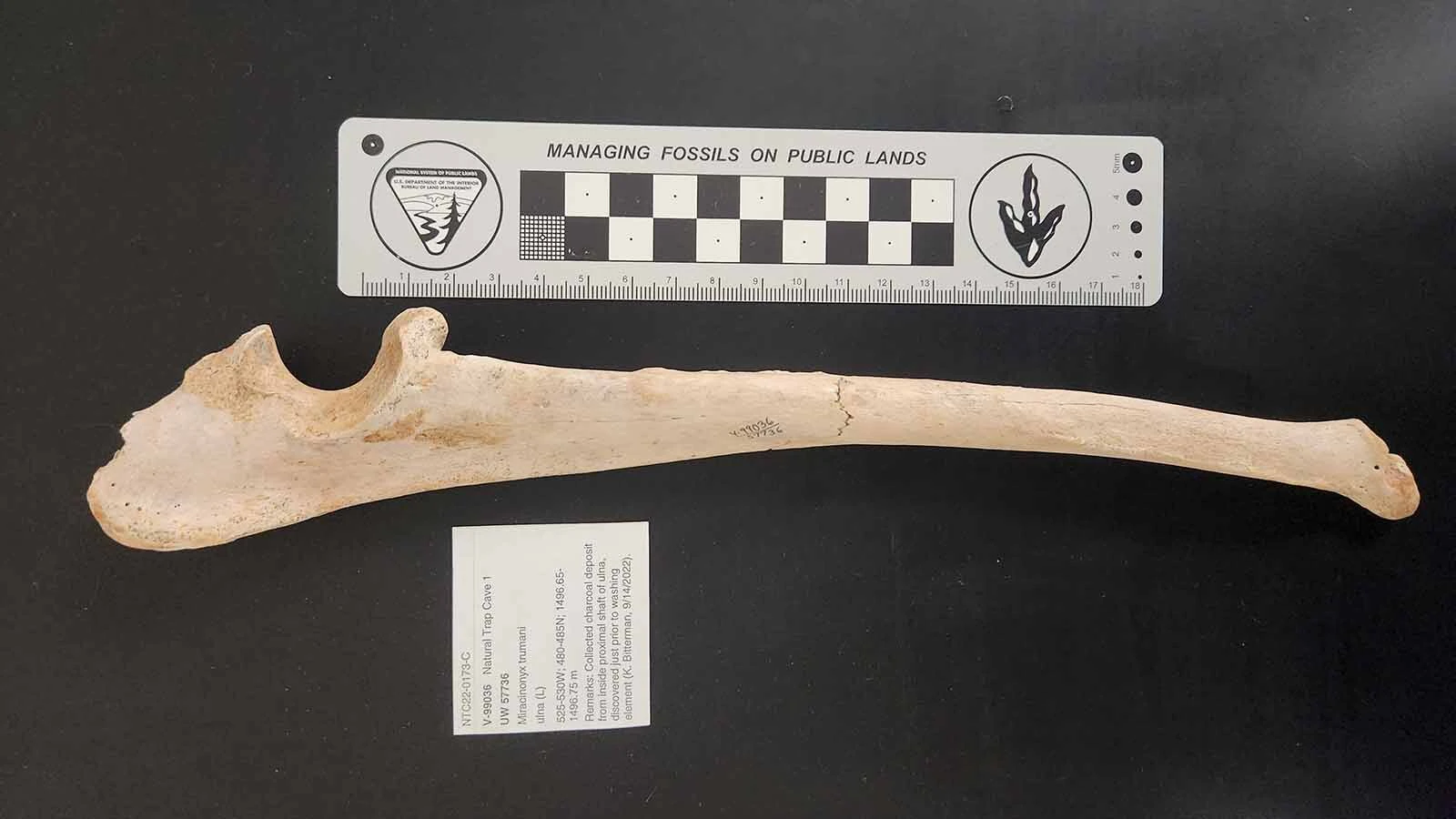
The best specimens, including partially articulated skeletons, have come from Wyoming’s Natural Trap Cave.
The 85-foot-deep pit cave is regarded as one of the best Late Pleistocene sites in the world.
Much of Meachen’s Miracinonyx research has focused on specimens excavated in the sandy bottom of the perpetually cold cave in the Bighorn Mountains.
According to her research, the density of fossils in Natural Trap Cave gives more insight into the biology and behavior of Miracinonyx.
For one thing, it reveals another major difference between this cheetah-like cat and the modern cheetah.
“The African cheetah runs mostly on a flatter, savannah ecosystem,” she said. “The American cheetah-like cat was adapted to many kinds of heterogeneous ecosystems. They are much better adapted for running over many different types of terrain.”
The Bighorn Mountains haven’t changed much in the last 20,000 years. That’s enough to conclusively say Miracinonyx lived and hunted in mountainous, high desert terrain.
In fact, that’s why so many Miracinonyx fossils have been found in Natural Trap Cave. It’s where many of these predators met a grisly end.
“Natural Trap Cave is an open habitat,” Meachen said. “It basically caught running animals, carnivores and herbivores, that fell into the cave. We have quite a few carnivores down there, more than you would get by chance in that environment.”
That means the fossils in Natural Trap Cave came from animals that died after plummeting into its depths, possibly while fleeing from predators or pursuing prey.
The sandy sediment, constant temperatures below 50 degrees, and 98% humidity ensured their bones were immaculately preserved at the bottom, often still fresh enough for intact collagen and mitochondrial DNA to be retained and sampled.
A Fast Exit
Around 10,000 years ago, most of North and South America’s large mammals went extinct within the same short period of time.
Every population of mammoths, lions, horses, giant armadillos, and ground sloths quickly and fatally collapsed as the world warmed up, humans arrived, and the Pleistocene ended.
Miracinonyx might have been gone long before that. To date, the youngest specimens have been dated to around 16,000 years old.
There are many theories explaining why and how these extinctions occurred, but the most widely accepted explanation is climate change.
As the Ice Age ended, the habitats these large animals needed disappeared.
Meachen has been studying the decline of these Ice Age animals.
One of the many papers she’s working on specifically deals with an important factor that might have contributed to the extinction of Miracinonyx.
“We know that it went extinct with all the other big carnivores at the end of the Ice Age, but I’ll hint that we now have some idea of Miracinonyx’s population size,” she said. “If it had a low population density to begin with, any kind of extinction pressure, whether it's loss of habitat or loss of prey, would have affected it greatly.”
That might be an eerie analogy to the plight of modern-day cheetahs. The two biggest factors cited for their declining numbers are habitat loss and fragmented, low-density populations.
Its Own Cat
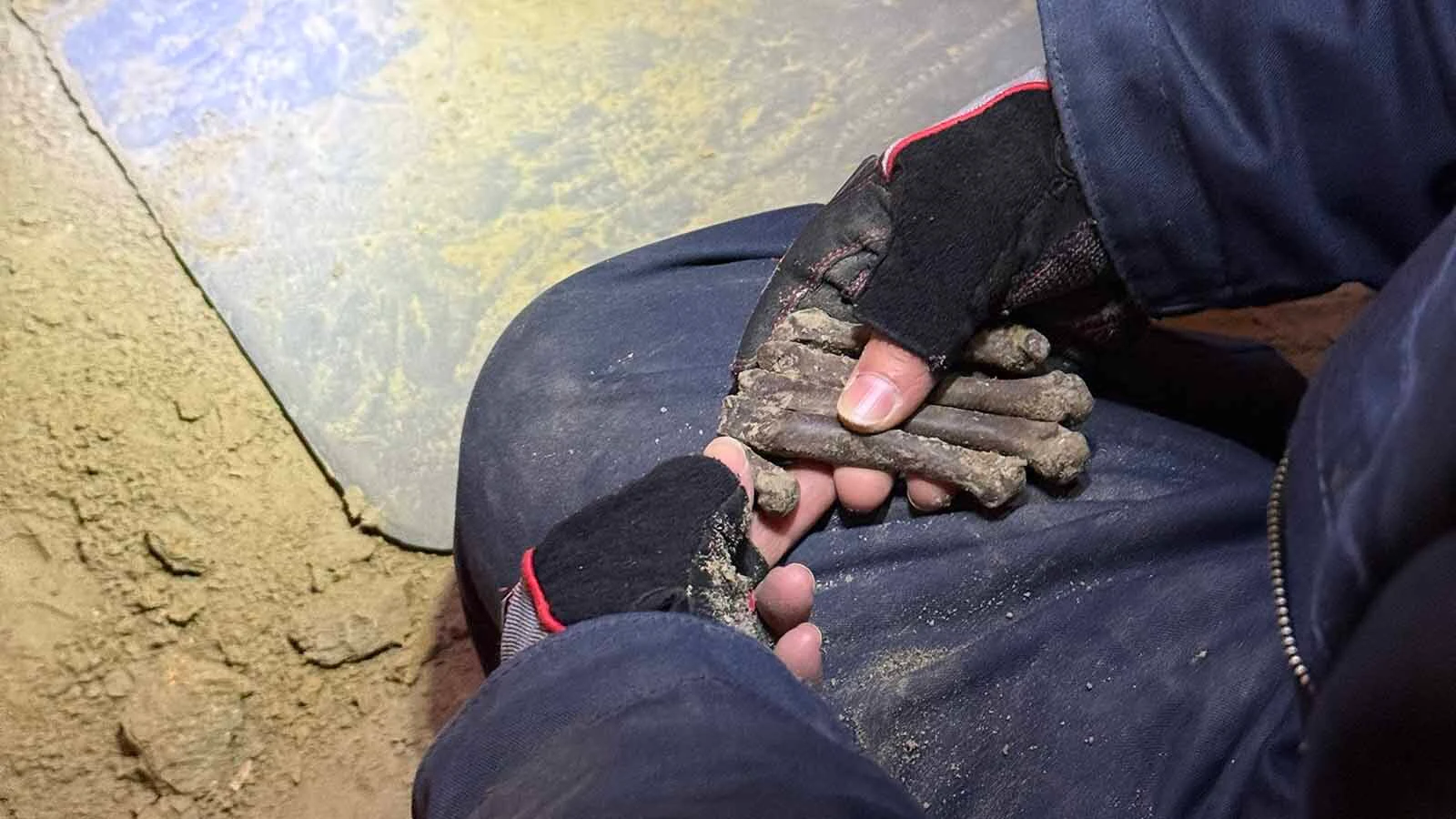
Last summer, Meachen led a team of students and other scientists into the depths of Natural Trap Cave to excavate fossils.
Among of the best prizes of that excavation, which included a partial mammoth, was a fully articulated Miracinonyx “hand,” consisting of all five finger bones but no claws.
Meachen’s research has focused on understanding the twilight days of the Late Pleistocene in North America.
Understanding the anatomy, biology, and behavior of Miracinonyx adds to that 20,00-year-old picture and what we can take away from it in the 21st Century.
“Previous publications made it seem like it was just a cheetah in North America,” she said.
“Through a bunch of different research venues and studies, some by my students, we've basically figured out that it's not just a different cheetah. It's its own cat,” she added.
Meachen is looking forward to several studies on America’s cheetah-like cat, including her own, that should be published within the next year.
“My only spoiler is that they’re all super exciting,” she said. “They’re going to get a lot of publicity.”
But How Fast Was It?
That leaves only one big question: how fast was an American cheetah?
A pronghorn’s top speed is around 55 mph. The African cheetah has been observed reaching speeds of 60 mph, making it fully capable of overtaking a pronghorn in a deadly footrace.
Was Miracinonyx that fast or faster?
Ironically, that obvious question doesn’t have an obvious answer, or any answer at the moment.
Despite being known as the "American cheetah” for more than a century, Meachen wasn’t aware of any study that attempted to determine Miracinonyx's speed.
“I wouldn’t be surprised if there is an estimate out there somewhere, but I can’t speak to its level of reliability,” she said.
From what Meachen knows about its fossils and diet, Miracinonyx was perfectly capable of chasing down and killing Pleistocene pronghorn.
Even though this specialized big cat has been out of the race for millennia, the pronghorn will never stop trying to outrun it.
Andrew Rossi can be reached at arossi@cowboystatedaily.com.


