
Lt. Doug Fisher had been about a week away from flying to Wisconsin to arrest Roger Durkee when he got the news: Durkee was dead.
The cat-and-mouse game Durkee had been playing with Elko County Sheriff’s Office (ECSO) detectives for the past few years was officially over.
Fisher called the news bittersweet.
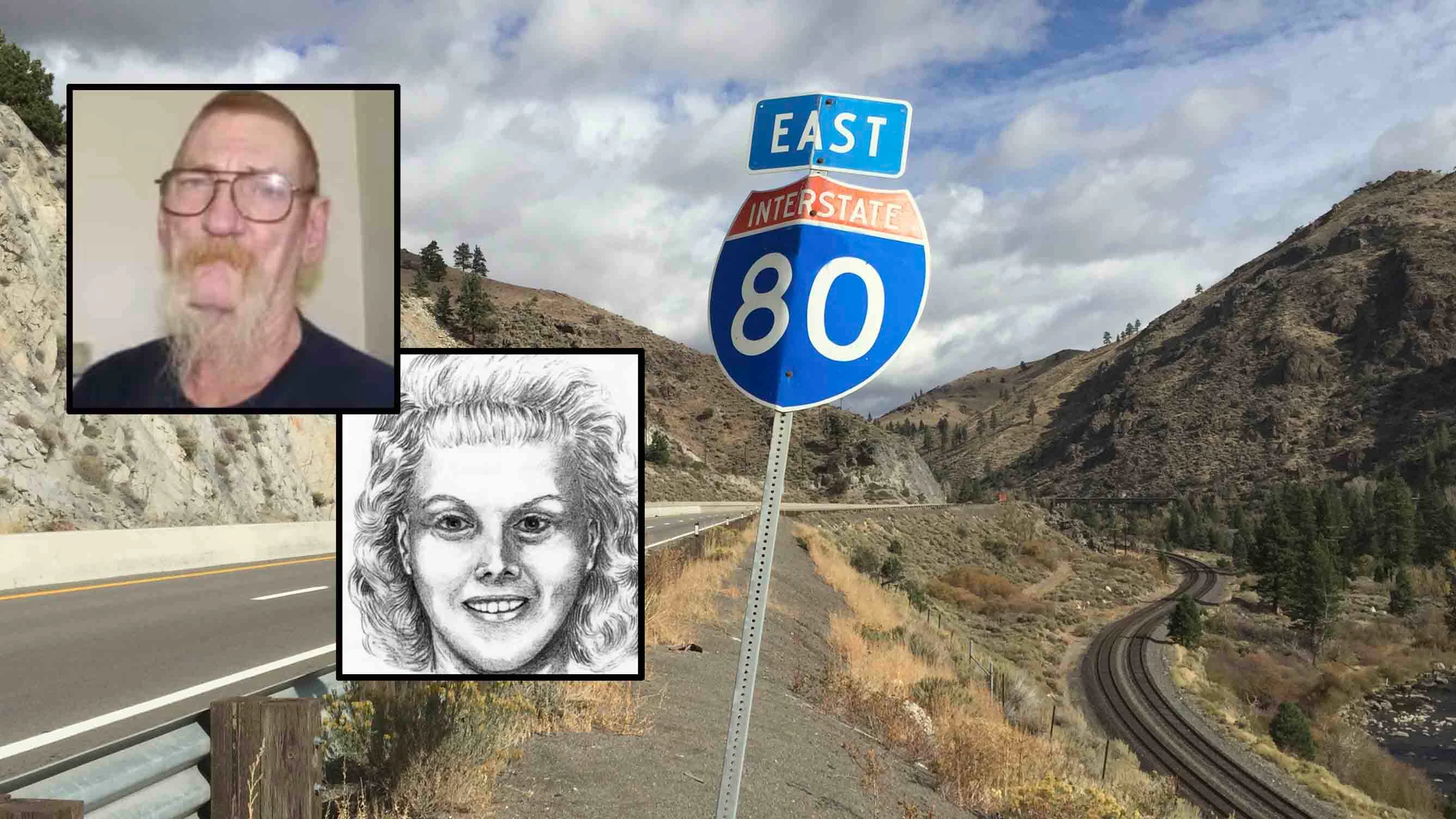
He and ECSO Det. Alex Cox had been looking forward to finally putting the cuffs on Durkee, who had spent 32 years eluding authorities after allegedly murdering an unidentified woman and dumping her nude body at a remote desert exit off Interstate 80 in Nevada.
They didn’t get their arrest, but both officers agree that identifying Durkee’s victim was a huge win.
For decades, she was known only as “Shafter Jane Doe,” named for the highway exit where she was found in November 1993.
Earlier this month, detectives finally identified her as Marion Hertha Alexander, a 25-year-old German immigrant who had been living in Salt Lake City, Utah, when she crossed paths with Durkee.
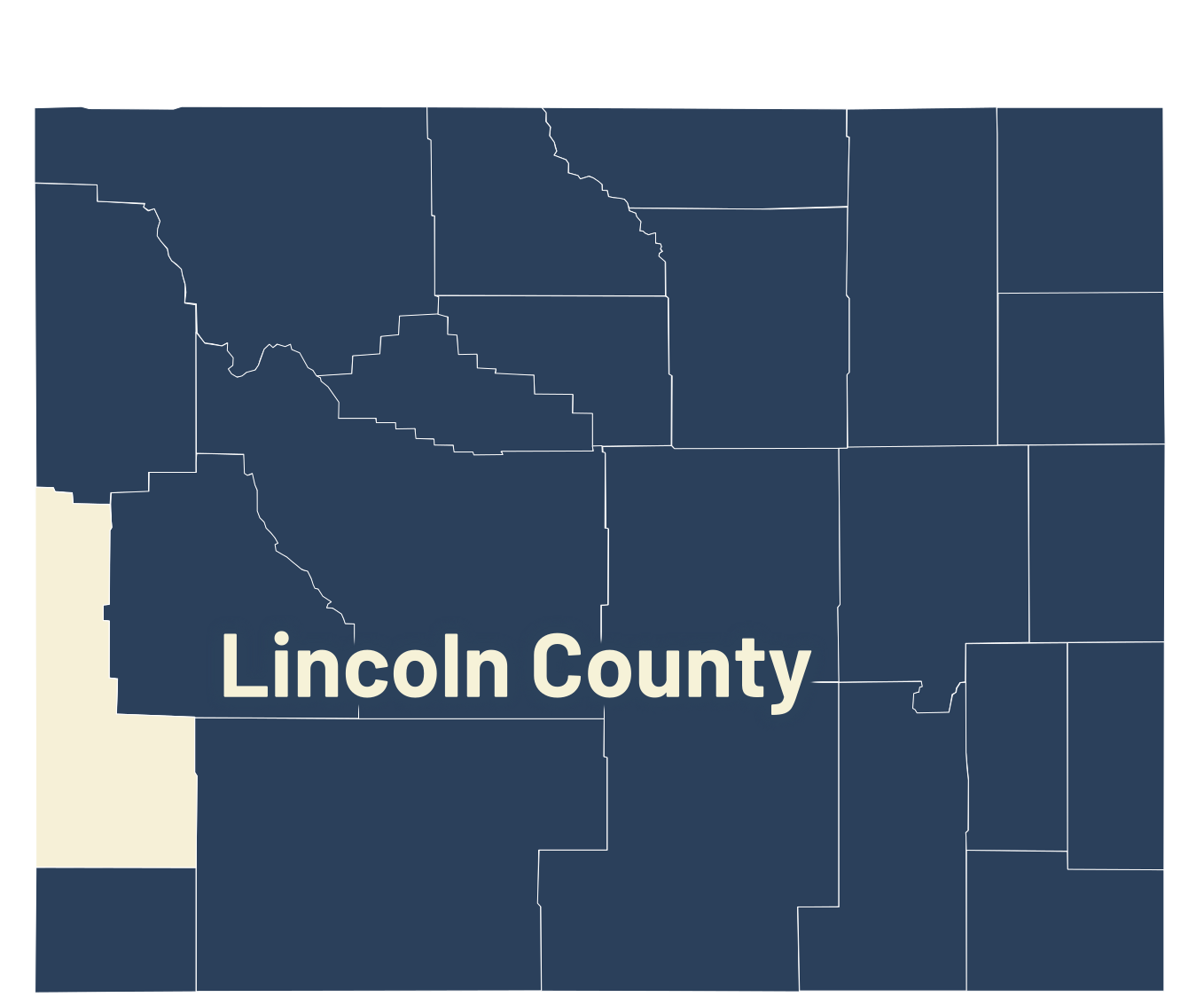
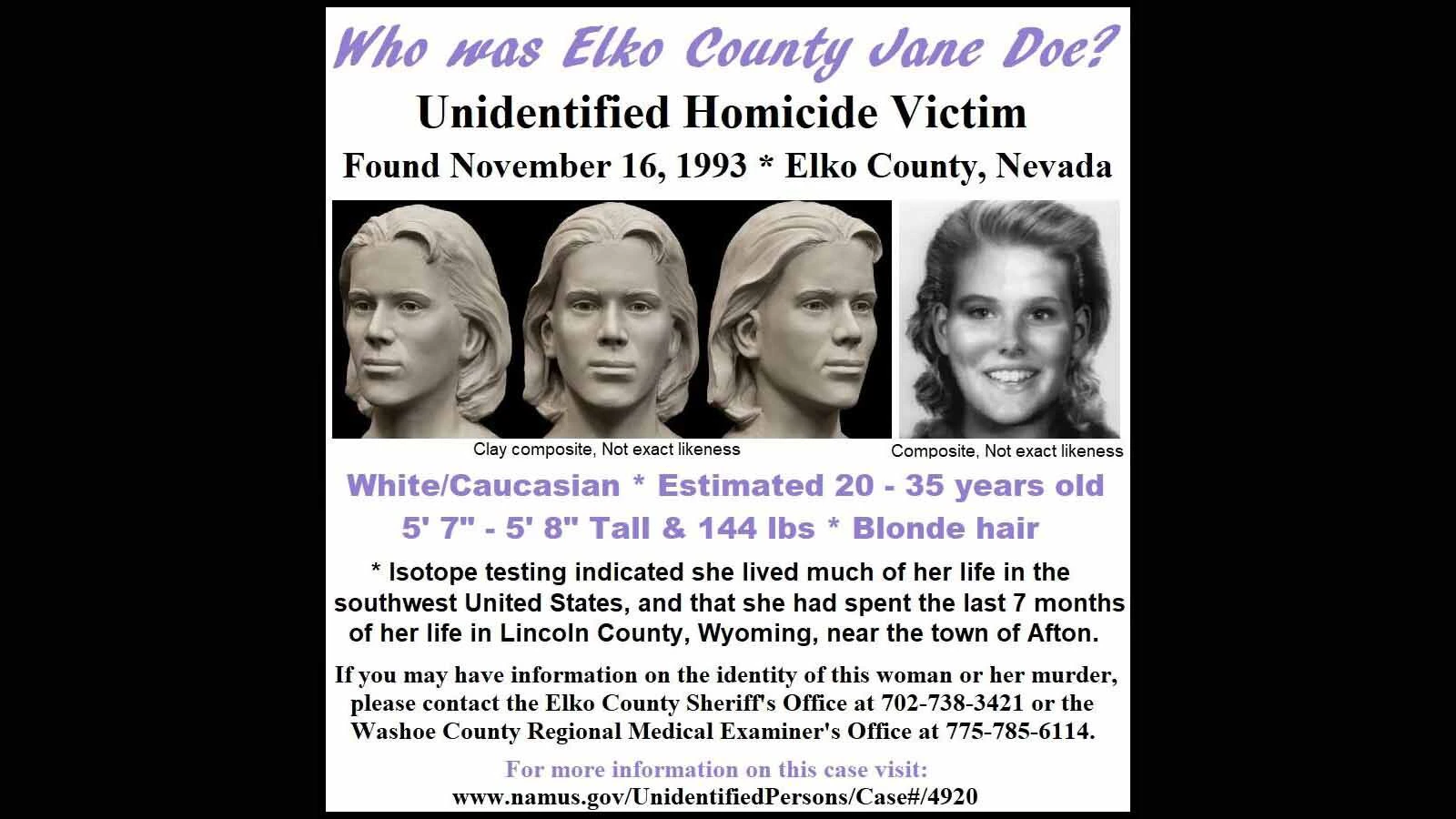
The woman also had spent seven months in Afton, Wyoming, shortly before she was killed, which was determined in 2010 via a breakthrough isotope testing procedure.

Family Devastated
Alexander’s mother was devastated, Fisher said.
He and Cox had driven to her California home in January to tell her in person. She had met her husband, a U.S. serviceman stationed in Germany.
She married him and returned to California with him and her children in 1972.
Alexander left home in her late teens — a free spirit, her mother told detectives, who drifted and grew distant from the family.
They had not known she was missing and were devastated to finally learn that she’d been murdered, Fisher said.
Her mother is now working with the sheriff’s office to finalize the inscription on a new headstone for Alexander, paid for by the Elko County Commissioners.
It will replace the one now marking Alexander’s grave that simply reads “Who Am I?”
After more than three decades, they finally has the answer.
“We want to make sure we finally get Mary laid to rest,” Fisher said.
Little To Go On At First
Many detectives have worked on Alexander’s case over the years. It was not their only cold case, Fisher said.
Along with Alexander, there are five other unidentified people in Elko County dating back to 1972, according to the National Missing and Unidentified Persons System (NamUs).
At first, they had little to go on.
When Alexander’s body was discovered about a week after she was killed, it was already badly decomposed.
She’d been shot in the chest and the back with a small-caliber firearm and had been severely beaten in the face.
There was little to no evidence left at the scene, leaving authorities to believe she’d been killed elsewhere and dumped afterward.
Apart from a partial right thumbprint that had no match in federal databases, detectives had little to go on. The only other identifiers were a tooth that was in the process of getting a root canal and a 2-by-4-inch burn scar or birthmark on her right calf.
To draw attention to the case, detectives reached out to the national media and also held a funeral for her.
Her story initially gained traction after it was picked up by the television news program “Hard Copy.” but it ultimately yielded no results.
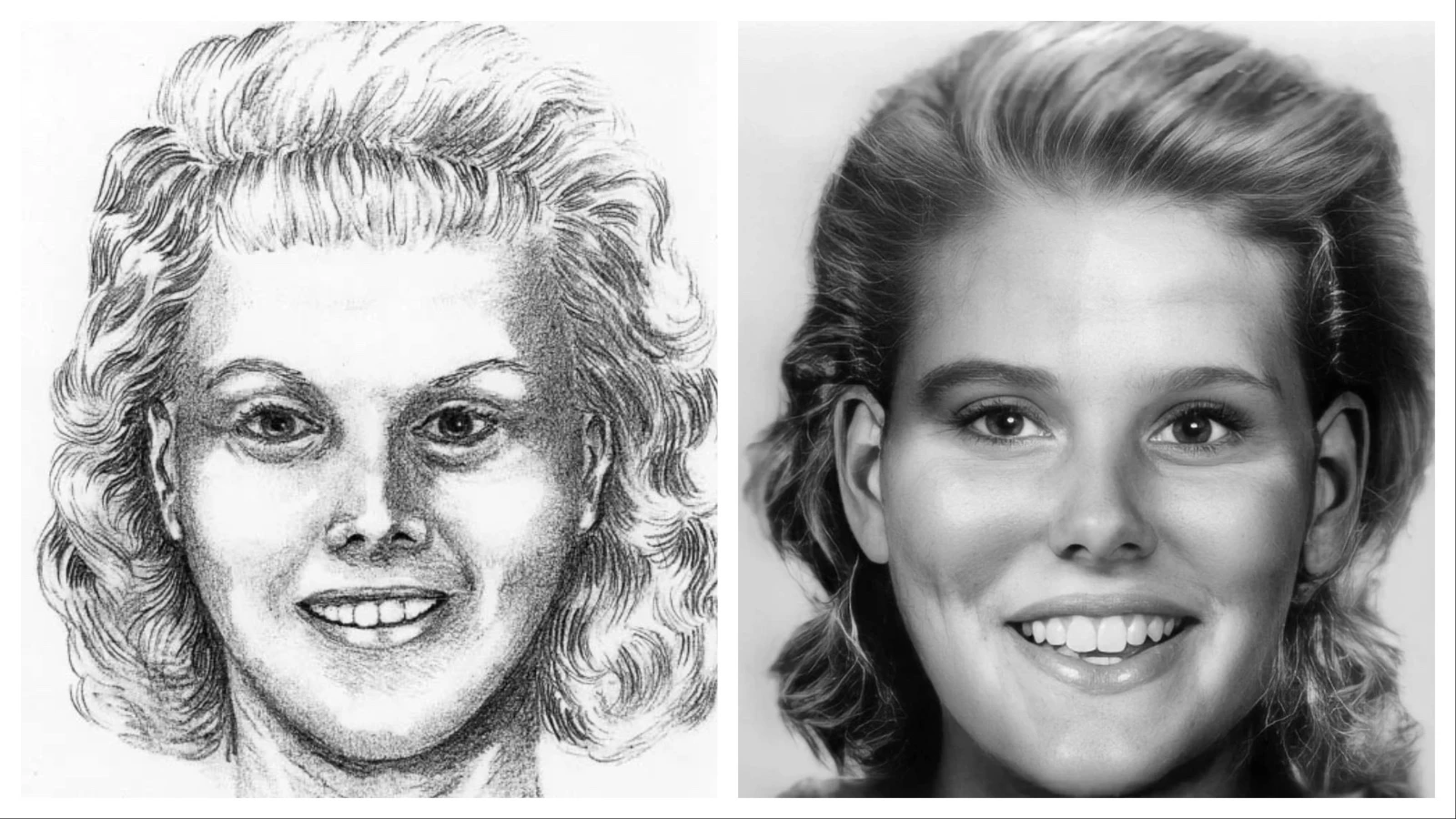
The sheriff’s office took advantage of technological advancements over the years, including having a forensic facial reconstruction done as well as stable isotope ratio analysis of a hair follicle that linked her to Afton, Wyoming, where it was suspected she’d spent the last seven months of her life.
Oddly, this was one detail that the detectives couldn’t track down upon finally learning her identity.
They found addresses for her in California, Oregon, Utah and southern Nevada, but nothing in Wyoming.
In fact, at the time of her murder, she had been living in downtown Salt Lake City near Durkee, Fisher said.
Overlooked Evidence
The biggest break in the case happened in April 2019 when detectives took a new look at existing evidence and realized they had DNA on a vaginal swab for both the victim and perpetrator.
It’s not clear how this evidence went overlooked for so long, Fisher said, but it appears to have been the result of a miscommunication between detectives and the crime lab.
This gave them DNA profiles, but investigators still needed to figure out to whom they belonged.
Neither was found in the Combined DNA Index System (CODIS) or on genetic DNA databases, still leaving them with no answers, so they kept pulling threads, Fisher said.
In January 2022, the Elko County Commission approved a $10,000 expenditure that allowed the sheriff’s office to contract with Identifiers International for a forensic genetic genealogical analysis of both profiles.
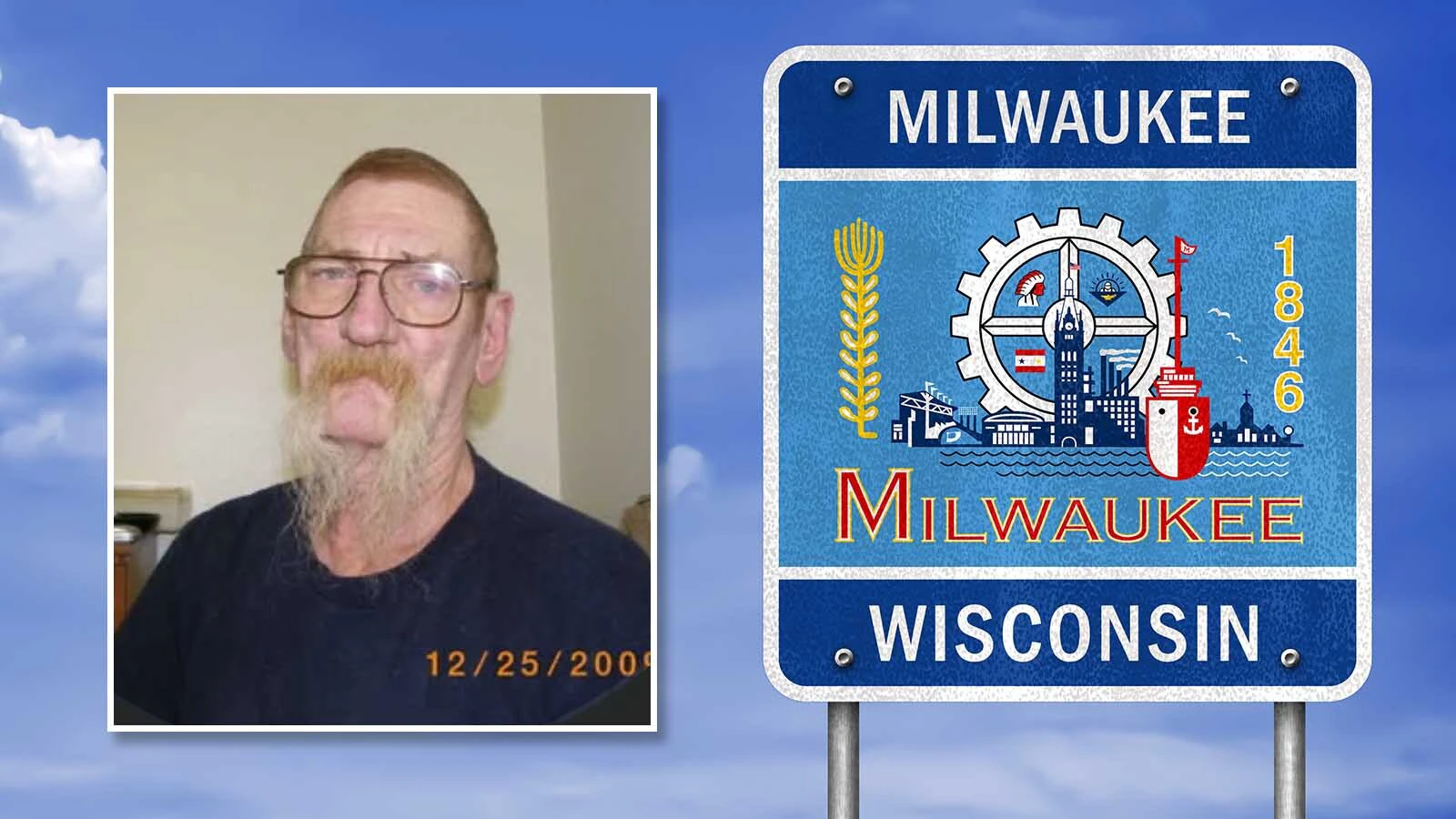
This led investigators to Durkee in Milwaukee, Wisconsin, who reached out to the FBI for help identifying him.
The FBI agents procured some items from Durkee’s trash and determined that profile could not be excluded from the one taken from the swab.
“Not being excluded” is as close as law enforcement and science can legally get to saying it’s a likely match.
“That was a good indication that this is our guy,” Fisher said.
Still, Alexander’s identity remained a mystery at that point.
Closing In On A Killer
Even with Durkee’s identity as Alexander’s killer likely confirmed, it was not enough to collar him for the murder.
All it proved, Cox noted, is that the two had been intimate, but not that he killed her.
So they kept digging, Fisher said.
In doing so, they learned Durkee moved quite a bit during the 1990s and early 2000s while working in the construction industry. This included stints in Nevada, Idaho and Colorado and Salt Lake City.
They also learned he’d been arrested for third-degree sexual assault in Wisconsin in 1978.
Along with moving frequently during this period, Durkee also changed his name, assuming aliases of James W. Kenedy and Carrol T. Hiel.
When questioned about why he changed his name, he told detectives it was during a time in which he’d made bad decisions in his life and didn’t care to be known by his real name.
Then Fisher and Cox flew out to Wisconsin for the first of three interviews with Durkee in Milwaukee beginning in August 2024.
Pulling Out Teeth
A couple things struck the detectives about Durkee during that first meeting. For starters, he was toothless.
This is because he’d pulled out all of his teeth over the years by himself, Durkee told them. With pliers.
“That was a first for me,” Cox said.
Fisher agreed.
“We’ve done thousands of interviews, and I can tell you that is the first time I ever heard anybody tell me they pulled out their own teeth,” Fisher said, wondering if it would have been 27 or 28 total teeth.
Another thing that struck the detectives as odd is that Durkee had a collection of Faraday bags and cages, which are used to block electromagnetic fields and wireless signals.
“They’re used by law enforcement primarily when we take a suspect’s phone, so it can be protected for forensic analysis, but you don’t normally see these types of things in someone’s home,” Fisher said. “It was shocking.”
More Conversations With Durkee
During this initial conversation, when asked about his potential connection to the still unknown Jane Doe who’d been murdered and dumped in Elko, Durkee shared that he remembered giving a .380 pistol to a woman named “Mary.”
This information matched the caliber of the pistol used to kill her.
During his second meeting with detectives and when asked about the pistol, Durkee recalled having “intimate relations” with a woman named “Mary Alexander” or “Mary Washington” on Halloween.
Later, when detectives learned Alexander’s name, they’d wondered if that was guilt talking or if Durkee was trying to give them a clue.
He didn’t kill “Mary” that night, however, Durkee told detectives, claiming to have instead dropped her off at a blue house in Salt Lake City and never saw her again.
“He sure knew a lot of obscure details about the case, though,” Cox said.
Durkee knew both about Alexander’s tooth that had been in the process of having a root canal as well as the isotopes in her hair that had traced her to Wyoming.
He claimed this was because he was a true crime buff, Fisher said, which forensic evidence would prove turned out not to be true.

Catching A Killer
It was their third conversation with Durkee that convinced both detectives they had the right guy.
Prior to their trip out, they wanted to stir Durkee up and asked local Milwaukee detectives to pay him a visit under the ruse of questioning him about a local missing woman.
Durkee knew about the woman and also knew that she had already been found. He found that odd, he later told the Elko detectives, and wondered why the local cops weren’t better at their jobs.
“He always had to be the smartest guy in the room,” Fisher said.
But the ruse worked in that it clearly worried Durkee that investigators were closing in on him, prompting him to do 90 internet searches of some derivative of “Shafter Jane Doe” over the course of two days as they later discovered when they procured warrants for his digital devices.
For Fisher, that was the final piece of the puzzle in a rapidly growing pile of evidence all pointing to Durkee.
He figured they had enough — along with the DNA — to make an arrest that would hold up in court.
“I don’t think you would be able to explain 90 spontaneous searches after two detectives are asking about a completely unrelated missing woman,” Fisher said.
Too Late
However, as Fisher, Cox and Det. Sgt. Crystal Cox made their travel plans to go to Wisconsin to arrest Durkee, they learned he was already dead.
Durkee died at age 77 after having multiple strokes over a period of days that led to cardiac arrest.
Due to some glitch in the Wisconsin Vital Statistics Department, Durkee’s death was not immediately reported, so it took months for the news to make it to Elko County.
This shocked investigators because every indication in their databases showed he was still alive.
And though their seven-year investigation did not ultimately lead to an arrest, the detectives were happy to finally identify both Alexander and her probable killer.
“That was our first goal to finally answer the question ‘Who Am I?,’” Fisher said.
Identifying Alexander
It took about a month to track down Alexander’s family after learning her name.
She was initially identified through enhanced FBI latent fingerprint comparisons that led the detectives to her birth certificate that listed her as a "white American."
Fisher had never seen that distinction and learned it was because Alexander had been born in Germany.
Her mother married a serviceman who adopted Alexander before moving them to the United States in the early 1970s.
Alexander had been issued a Consular Report of Birth Abroad, which a person receives when one of their parents is a U.S. citizen.
With the help of a genealogist, Fisher and Cox were able to track down Alexander’s mother in California, who learned that her daughter was dead.
“She was devastated,” Fisher said.
Alexander had been estranged from her family, who had no idea she’d been unidentified for all these decades. A DNA test confirmed Alexander was indeed her daughter.
There was a lot of emotion, Fisher recalled, when they were finally able to give her a name and finally put her to rest.
Did Durkee Know?
Later, Fisher would learn that at some point before Durkee died someone at NamUs had changed “Shafter Jane Doe” status to identified.
Whether Durkee saw this before he died is anyone’s guess, Fisher said, but given how closely he was paying attention, there’s a good chance he did.
They’re also no indication at this time that Durkee may have been responsible for other murders in the area, including a Jane Doe found posed in a similar fashion as Alexander who was found in Elko County in 1972.
Investigators initially thought there might be a connection, but so far haven’t been able to find a link to Durkee, Fisher said.
And though the sheriff’s office would have preferred to hold the perpetrator accountable, the stars didn’t align.
“Our first goal was to name her, and we got that done,” Fisher said.
Jen Kocher can be reached at jen@cowboystatedaily.com.


