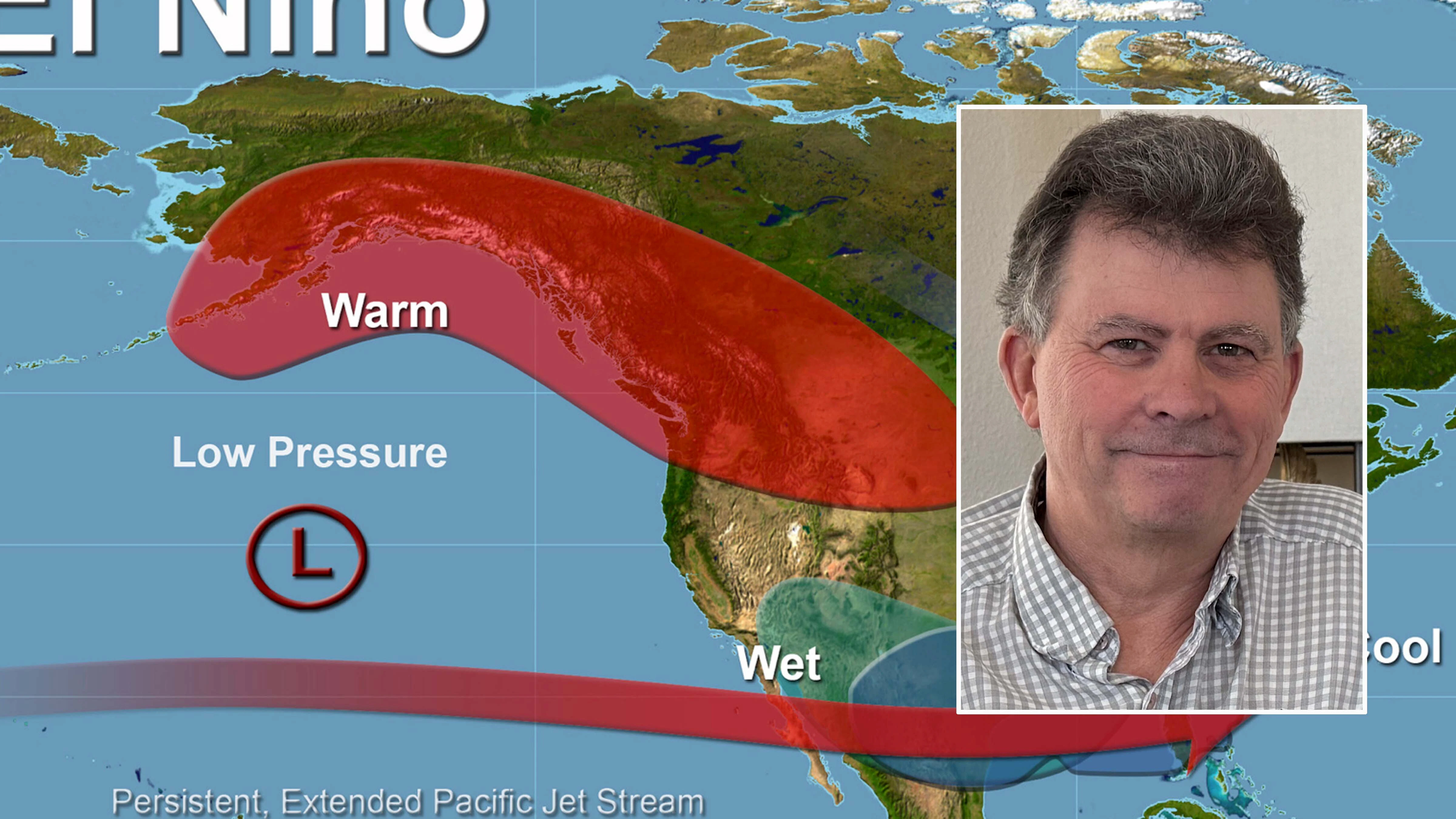
The National Oceanic and Atmospheric Administration (NOAA) and the National Weather Service’s Climate Prediction Center issued an El Niño Advisory on Thursday, which could bring more of what Wyoming doesn’t need — warmer, drier conditions.
After monitoring above-average temperatures in the Pacific Ocean for the last month, the NWS believes that, “El Niño conditions are present and expected to strengthen into the Northern Hemisphere winter 2026-27,” according to the advisory.
“There is a 63% chance of a very strong El Niño during November-January … that would rank among the largest El Niño events in the historical record going back to 1950,” the advisory reads. “Even very strong El Niño events do not lead to the expected impact everywhere, but stronger events can more significantly tilt the odds in favor of expected outcomes.”
Weather watchers around the world noticed the NOAA predictions.
• CNN discussed how El Niño can “supercharge” hurricanes in the Pacific and worsen drought from the Caribbean and southern Africa to Australia.
• Live Science referenced studies that concluded El Niño has a history of leading to European food insecurity, severe forest fires, and civil wars in the tropics.
• In a video statement, U.N. Secretary-General António Guterres described El Niño as an "urgent climate warning" and said that the anticipated impacts “will pour fuel on the fire of a warming world."
Yet even with high certainty of a strong El Niño, there’s still a lot of uncertainty about what that means for Wyoming and the world over the next year.
Cowboy State Daily meteorologist Don Day is calling for patience as this system develops.
“We're going to have an El Niño,” he said. “It's going to be a strong one, and it's going to impact global weather patterns, but what does it exactly mean for Mister Joe in DuBois, Wyoming? We’re going to have to wait and see how the pattern unfolds.”
Advised Vs Favored
The El Niño advisory is NOAA’s most direct acknowledgment that a strong El Niño has been developing. However, that doesn’t mean extrapolating predictions and long-range forecasts has become any easier.
“The advisory means that El Niño conditions are present and expected to strengthen into the winter,” said meteorologist Noah Myers with the NWS office in Riverton. “It's really hard to draw conclusions from that.”
Myers said the best thing meteorologists can do right now is compare current El Niño patterns with those of previous El Niño years. Then, they can determine what’s “favorable” in the months ahead in terms of temperatures and precipitation.
However, determining what’s favorable is not the same as a guarantee.
“Whatever’s favored doesn’t mean we're going to absolutely be warmer, drier, colder, or wetter depending on where you are,” Myers said. “It’s what has happened, on average, in the past in these conditions.”
Day said he and his fellow meteorologists tend to be “our own worst enemies” in this respect.
He’s particularly perturbed by the runaway narrative of the “super El Niño” that’s been circulating for months but kicked into overdrive with NOAA’s advisory.
“If you're going to tell people it's going to be the strongest El Niño of all time, it would be really good to also say something that's going to be six months from now is subject to change,” he said. “It's really hard to glob on to one particular outcome, especially this far in advance.”
Day said he could show people maps of the last 20 documented El Niños, and none of them would be exactly the same. Trying to pinpoint which of those years is most similar to what will manifest later this year would be an effort in futility.
“There are trends and similarities, but they're never exactly the same every time,” he said. “People need to be aware of that.”
Wyoming’s Lack Of Favor
Even with all the uncertainty, NOAA’s El Niño advisory is significant. Nobody’s denying that or its determination that it could be one of the strongest in the last 50 years.
“The safest bet is that there’s an El Niño coming, and it's going to be strong,” Day said. “How the impacts unfold really depends on what could happen five or six months from now.”
But what is the most likely outcome?
Myers had some insight on what tends to be favorable in Wyoming during El Niño years.
For one thing, El Niño tends to be more of a winter pattern than a summer one. NOAA might have issued its advisory this month, but the significant impacts won’t be felt until later this year.
“Winter is when these impacts are most pronounced,” Myers said. “We don't usually see as strong an impact during the summer.”
As tends to happen with all weather systems, El Niño won’t have an equitable impact on Wyoming. According to Myers, there are consistent trends that pop up from studying years past.
“Going into the winter, we usually see slightly warmer temperatures across northern and western Wyoming, and normal or slightly cooler temperatures across central and southern Wyoming,” he said.
When it comes to precipitation, Myers said El Niño tends to make Wyoming dry “across the board,” but that’s been especially true in northwest Wyoming.
“The Absarokas, Tetons, and Yellowstone National Park is where we’d see the driest conditions, but it’s drier pretty much everywhere in Wyoming,” he said.
That’s not a great El Niño outlook. It’s also very far from a guarantee of what Wyomingites should expect.
“We’ve observed El Niños when it’s been the exact opposite of what I just described,” Myers said. “There are clues that can tell us what might happen, but that doesn’t mean it’s going to happen.”
Months To Go
Day is unmoved by most articles and forecasts about El Niño, Super El Niño, and “the strongest El Niño in half a century.” For him, those are bold statements to make this early.
“We're several months removed from when the biggest El Niño impacts happen in this part of the country, and here we are in June talking about a Super El Niño,” he said. “Every El Niño has its own personality and different sets of results. That’s why I'm a lot more cautious.”
Day’s caution stems from several months of long-range models collapsing in their seasonal predictions.
Everyone was calling for a colder, snowier winter in Wyoming until it turned out to be one of the warmest, driest winters in recorded history.
With that track record, one can see why Day’s reluctant to offer any predictions on what’ll happen when El Niño reaches Wyoming, let alone what its strongest impacts will be this winter.
For Day, “nothing’s changed” with NOAA’s El Niño advisory. He’s acknowledged that El Niño is coming, and the odds favor a strong El Niño, but that’s as far as he’s willing to go.
“NOAA’s going for it,” he said. “We've got El Niño, but we're not in an El Niño yet.”
Myers agreed that it’s best to stay cautious, even with the certainty of a coming El Niño.
“The conditions are present, and El Niño is favored,” he said. “El Niño does have a tendency for cooler-than-normal summers during El Niño years, so we might see that as we transition into it, but we don’t know what’s going to happen at this point.”
All the discussion on what is or isn’t favorable or likely as a strong El Niño develops can be frustrating for Wyomingites.
With an ongoing drought following an extremely disappointing winter, the prospect of another long-term weather pattern favoring warmer, drier conditions for another full season isn’t encouraging.
Day understands that frustration, which is why he’s not buying into or promoting the deluge of what he calls El Niño “clickbait” that’s emerged since NOAA issued its advisory.
“People read these things, and they want to know what's that going to mean for them,” he said. “That's a perfectly reasonable question, and the perfectly reasonable scientific answer is we need to see how it develops.”
One thing Day and Myers reiterated is that Wyoming won’t experience El Niño’s strongest impacts until winter. For the sake of sanity, it’s best not to anticipate what might or might not happen once those impacts arrive.
“There’s plenty of time between now and then,” Day said. “There will probably be a strong El Niño, but we need to see how it develops. Let’s see how things come together.”
Andrew Rossi can be reached at arossi@cowboystatedaily.com.