Wyoming businessman Matt Micheli is worried about the future of University of Wyoming athletics.
With paid deals for NCAA student athletes — often referred to as name, image and likeness (NIL) — becoming a dominating force in college sports, schools with smaller athletic program budgets and alumni bases like UW have found themselves struggling to compete for athletes.
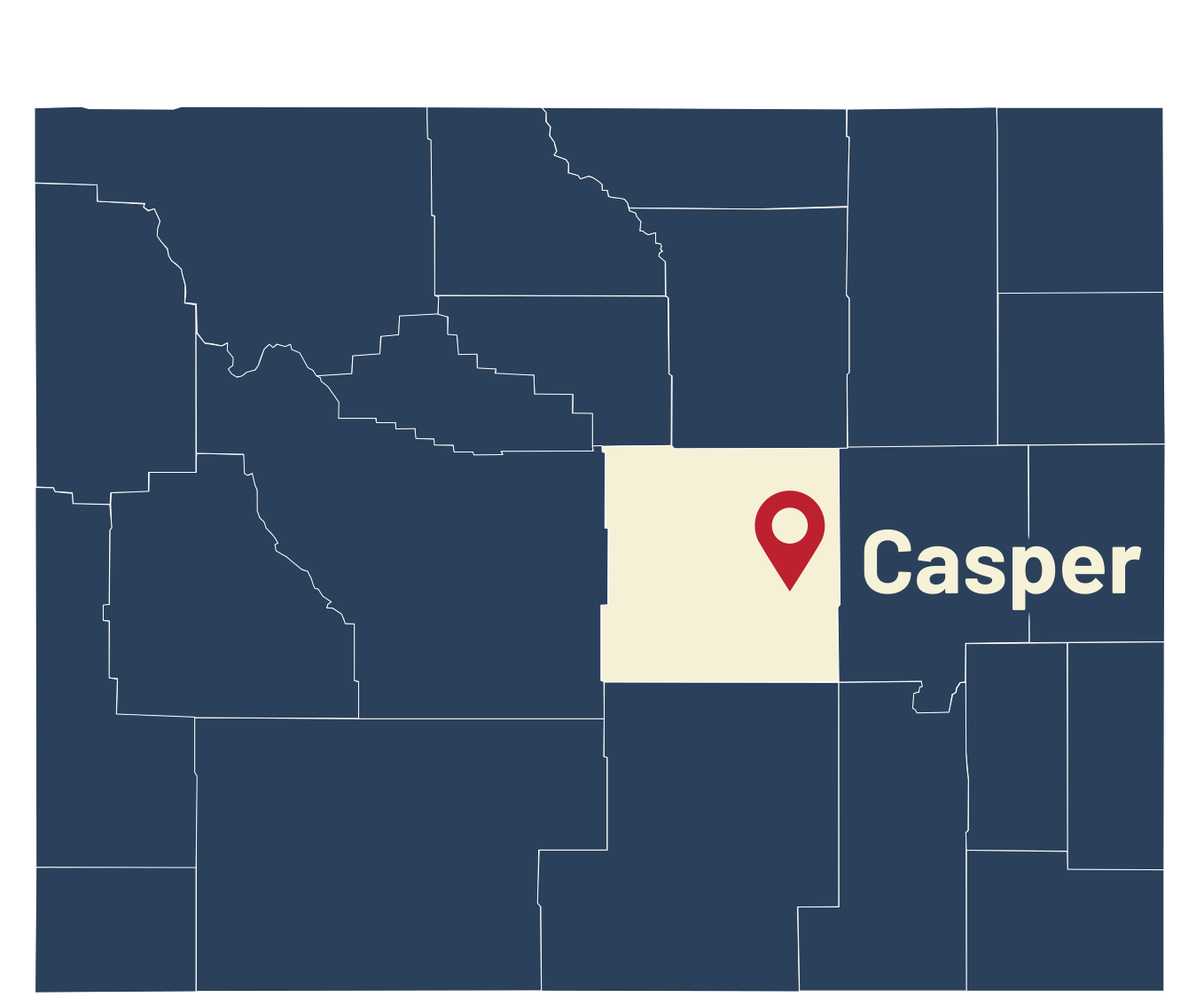
Micheli decided to take matters into his own hands by setting up an NIL partnership with his Casper-based fly-fishing guiding company Cowboy Drifters and two premier UW athletes: football player Tote Harris and basketball player Gavin Gores.
Like everything Wyoming does to compete at a national level, Micheli said the state must play to its strengths and make moves like these to compete in the world of NIL.
“There’s some really cool things in Wyoming,” he said. “There’s world-class tourist opportunities. It makes sense to try and combine our great university, great athletic program, and great things about the state.
"If we lean into our strengths we can make this something positive.”
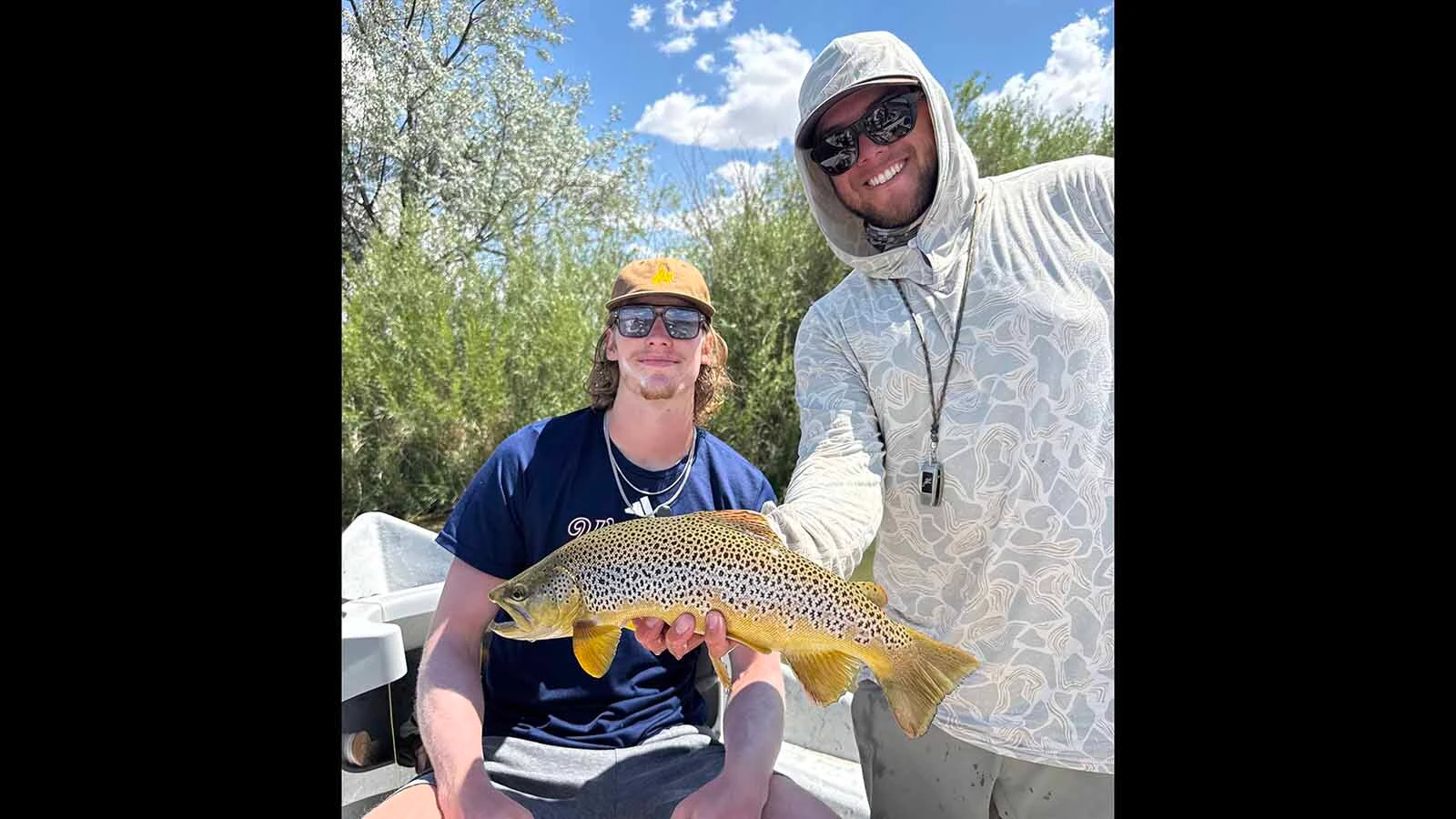
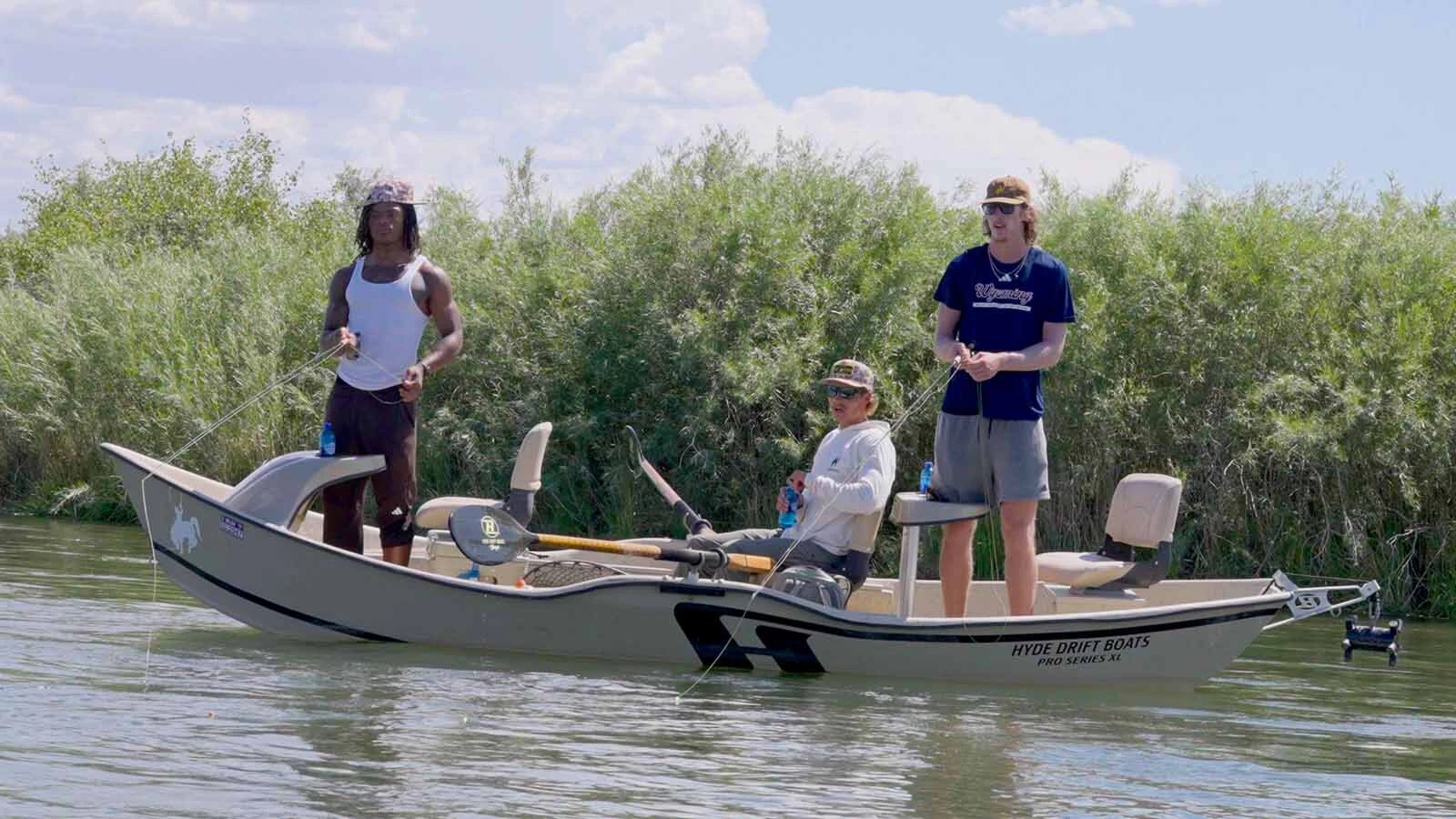
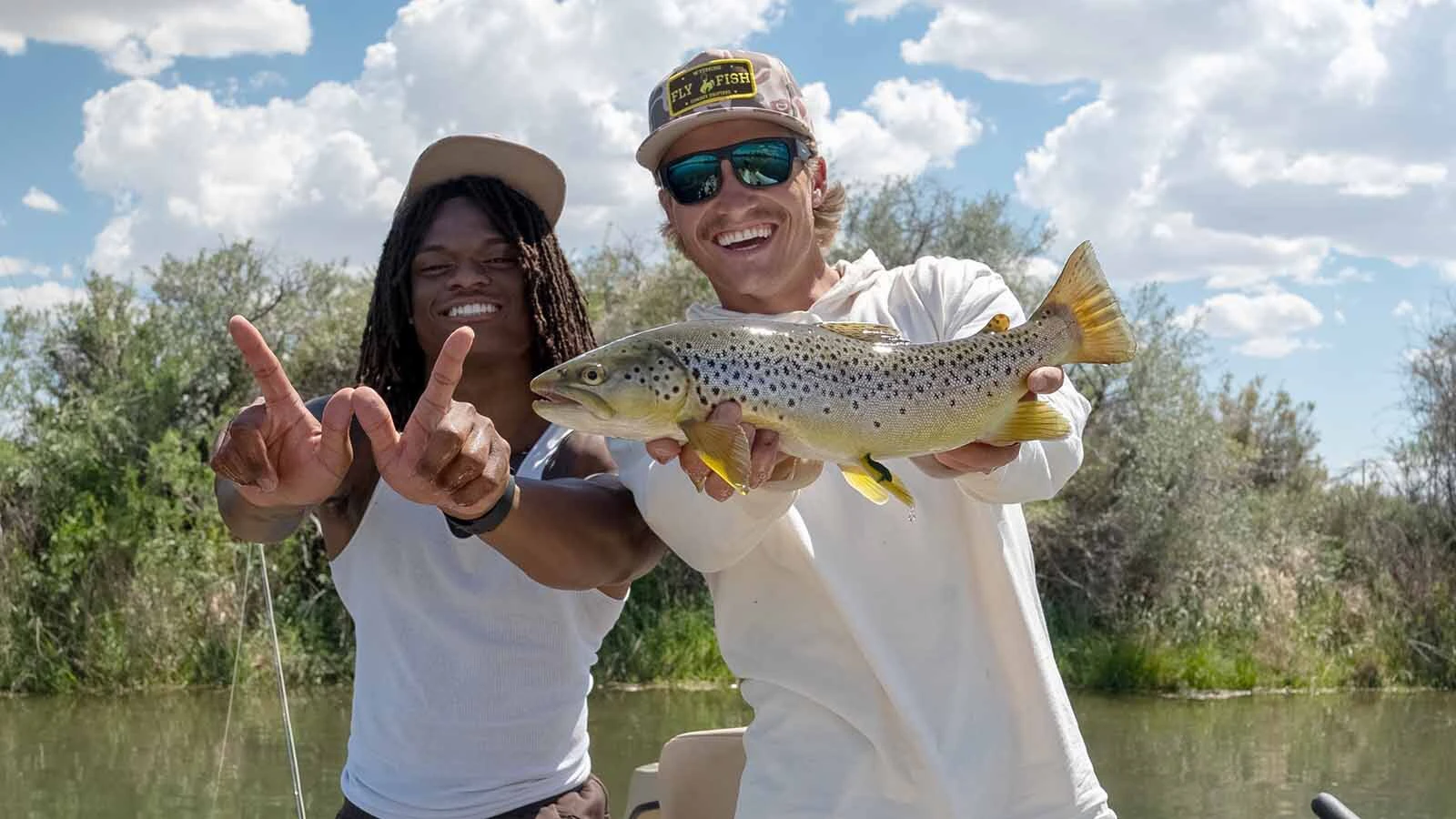
Cowboy Drifters took Harris and Gores on a fly-fishing trip on the famous Miracle Mile of the Platte River about 50 miles outside Casper this summer.
In addition to showing them the joys of fly-fishing, highlights from the trip will be featured in a media campaign played at UW football and basketball games and on social media this year.
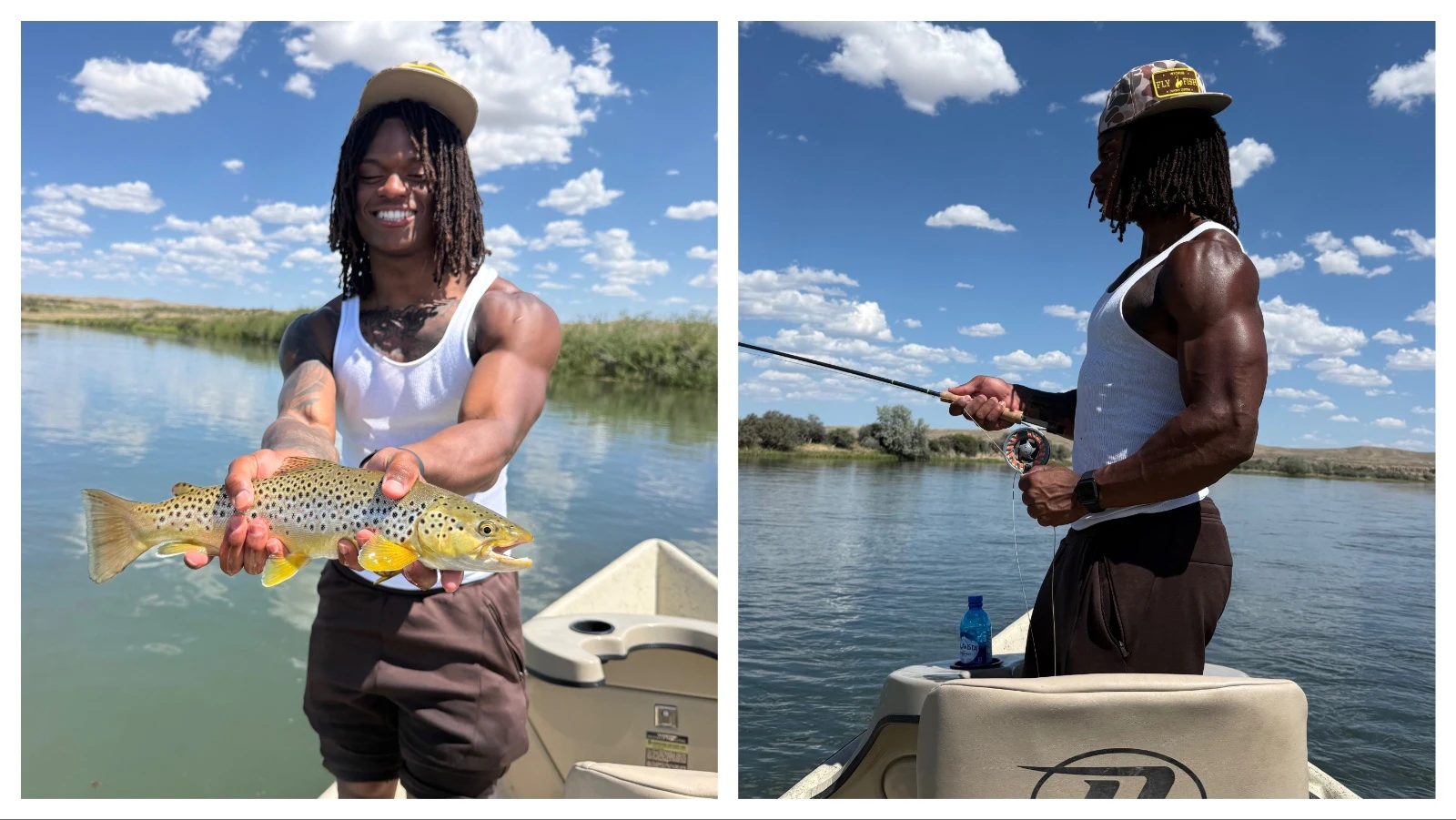
The pair had quite the day, both catching brown and rainbow trout.
“Mostly, it’s for people to see Wyoming athletes out having a great time catching really great fish in the Wyoming nature that we all love,” Micheli said.
First Time Fly-Fishing
Cowboy Drifters took Harris and Gores on the Miracle Mile section of the Platte, a remote section chock full of fish, and a bucket-list destination for anglers around Wyoming and the United States.
It was a hot and beautiful sunny day on the river, the type of day many dream about all winter long. Harris said that after spending a few hours with the guides, it felt like he had known them for years.
“Good conversations, good connections, good teachers — it was nice,” he said.
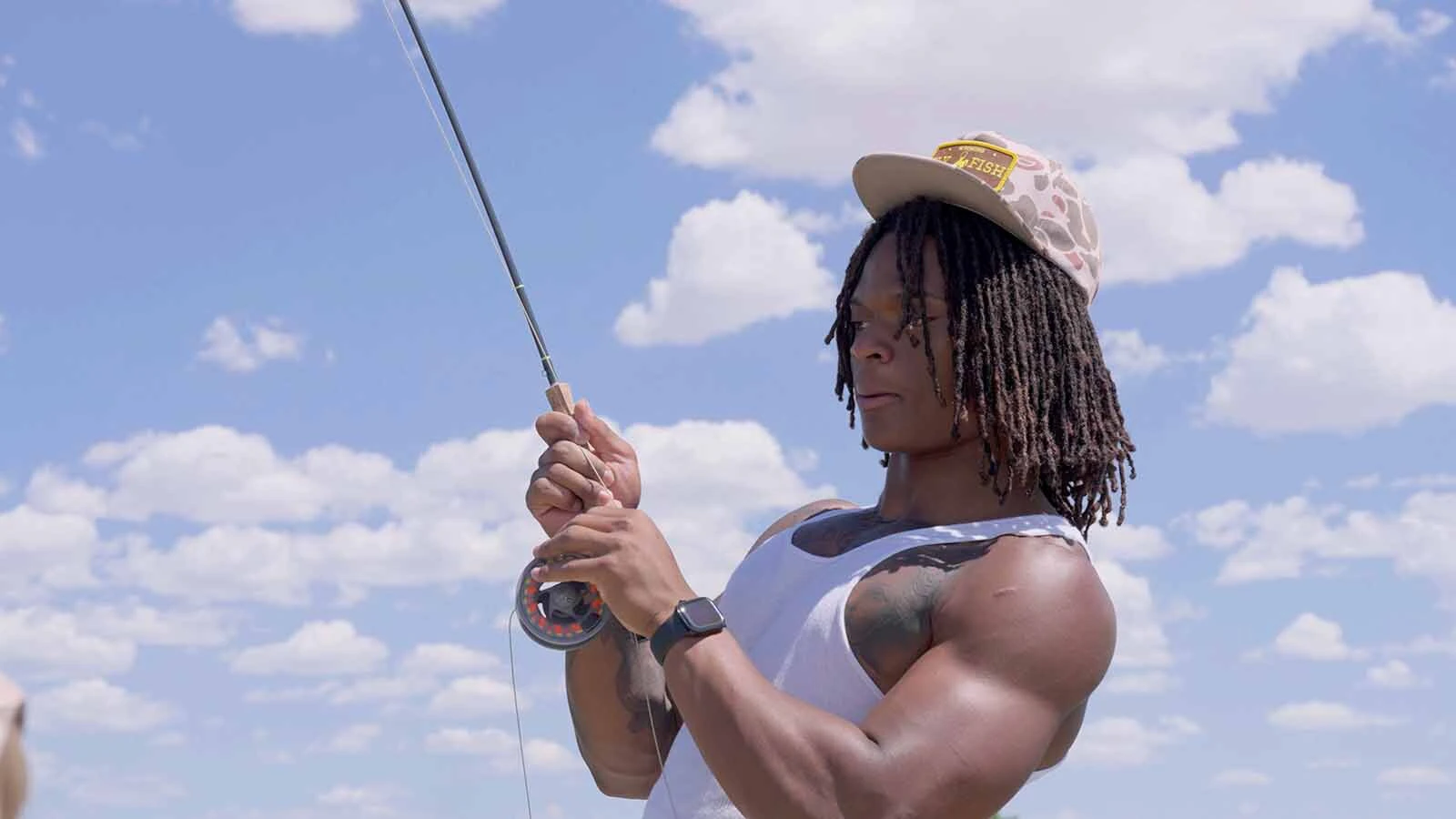
Although the pair of Pokes may be highly skilled in their respective sports, it was not only the first time that either of them had held a fly rod, but for Harris it was also the first time he’d ever fished.
He caught 16 passes for 184 yards last season on the gridiron, but Harris described catching his first fish as “mind-blowing.”
“I felt a tug and they told me to pull like I was doing a bicep curl,” he said.
The fish broke from the line and flew straight into the boat, leaving Harris with a smile and a memory he’ll likely never forget.
It took the Cibolo, Texas, native a little time to figure out how to properly reel in a fish, but once Harris did, he was sold on the sport, vowing to bring his dad back to the scenic location.
“It shows you don’t have to be some kind of professional fly-fisherman to go out and have just an absolutely tremendous day,” Micheli said.
Gores, a native of Cumberland, Wisconsin, had fished lake walleye before, but had never tried fly-fishing.
Standing 6-foot-10, the hooper used his large frame to easily reel in his fish, while Harris said he had to tilt the reel over his shoulder to get his catch out of the water.
Wyoming Style
Establishing paid partnerships like these with college athletes will be critical for businesses across the country if they hope to see competitive teams at their local universities, said Micheli, who’s also a well-known Wyoming politico and former chairman of the state Republican Party.
Micheli believes the state is ripe with opportunities to support a healthy NIL program given the “One Wyoming” mantra UW promotes as the Cowboy State’s lone university.
“For us to be successful as a state and a university, we all need to come together,” he said. “We all need to help each other out.
"It’s such a great way to help the university, help our athletes and to promote your business. I just think it’s a win-win for everybody.”
The college athletic landscape has been significantly altered by the presence of NIL.
In most circumstances so far, it has widened the gap between the have’s and have-nots of college sports, with well-endowed programs becoming even more dominant and less wealthy programs less competitive since NIL was legalized.
“Anybody who’s watched college sports and watched what’s happened definitely has some concerns,” Micheli said. “We’re in Wyoming, and we’re the smallest state in the country. You worry about our ability to continue to compete.”
To fight these trends, UW Athletics earlier this year launched a Step Forward campaign to generate $500,000 for football revenue. The men’s basketball program soon followed with its own fundraising venture with a goal of $250,000.
The university also announced in April that it landed a record $4 million athletics deal, a five-year jersey patch partnership with Tallgrass, a Colorado-based energy infrastructure company that operates thousands of miles of pipelines across Wyoming.
The deal was a huge infusion for UW’s ability to expand its NIL purse by putting the Tallgrass logo on football and basketball jerseys.
At the time the deal was announced, UW Athletics Director Tom Burman said the university needs at least double that, $8 million, to be able to compete with other Division I schools.
Has To Start Somewhere
Retaining incoming sophomores Harris and Gores was critical for UW as both athletes will among the most important members on their teams for the upcoming seasons.
Gores, a forward, averaged 7.3 points and 3.4 rebounds on the hardwood. Harris, a running back, rushed for 558 yards on 100 carries last season.
Beyond on-the-field exploits, Micheli said he picked the pair because they have a genuine love and excitement for Wyoming, seeing them both as great ambassadors for the university and his fly-fishing company.
This passion is matched by Micheli and his siblings, who also co-own Cowboy Drifters, and are lifelong Pokes fans.
“I thought this was a good opportunity for a partnership to help us support the university and help to support our athletes and help us get some word out on our new business that we just bought,” he said.
Conversely, Harris said teaming up with Cowboy Drifters was a logical move to expand his horizons and potentially build connections with more outdoor brands in the future.
The scenic beauty and recreational opportunities Wyoming offers, he said, is what makes this state special and where he believes the most NIL opportunities will be available to tap into.