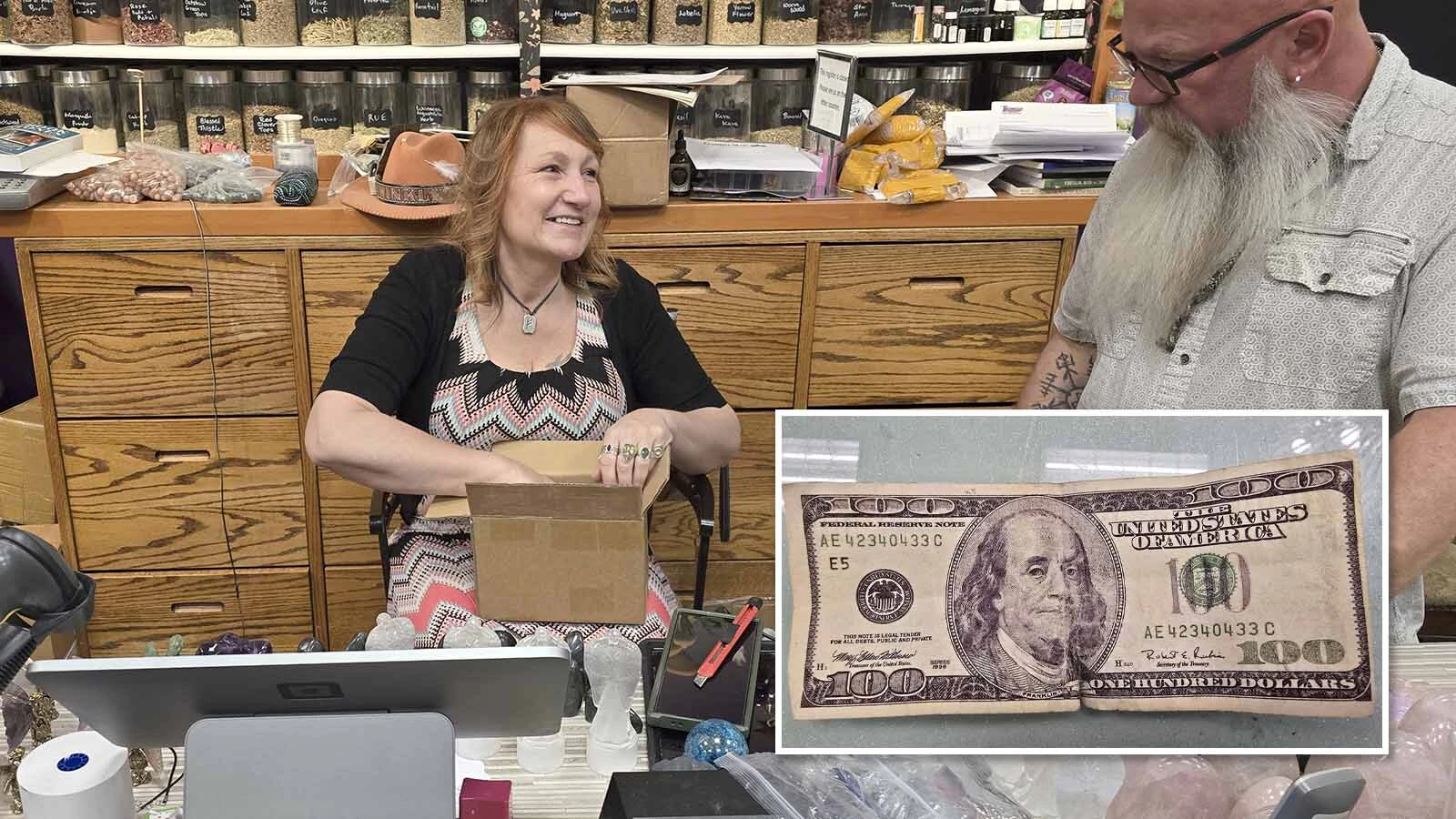
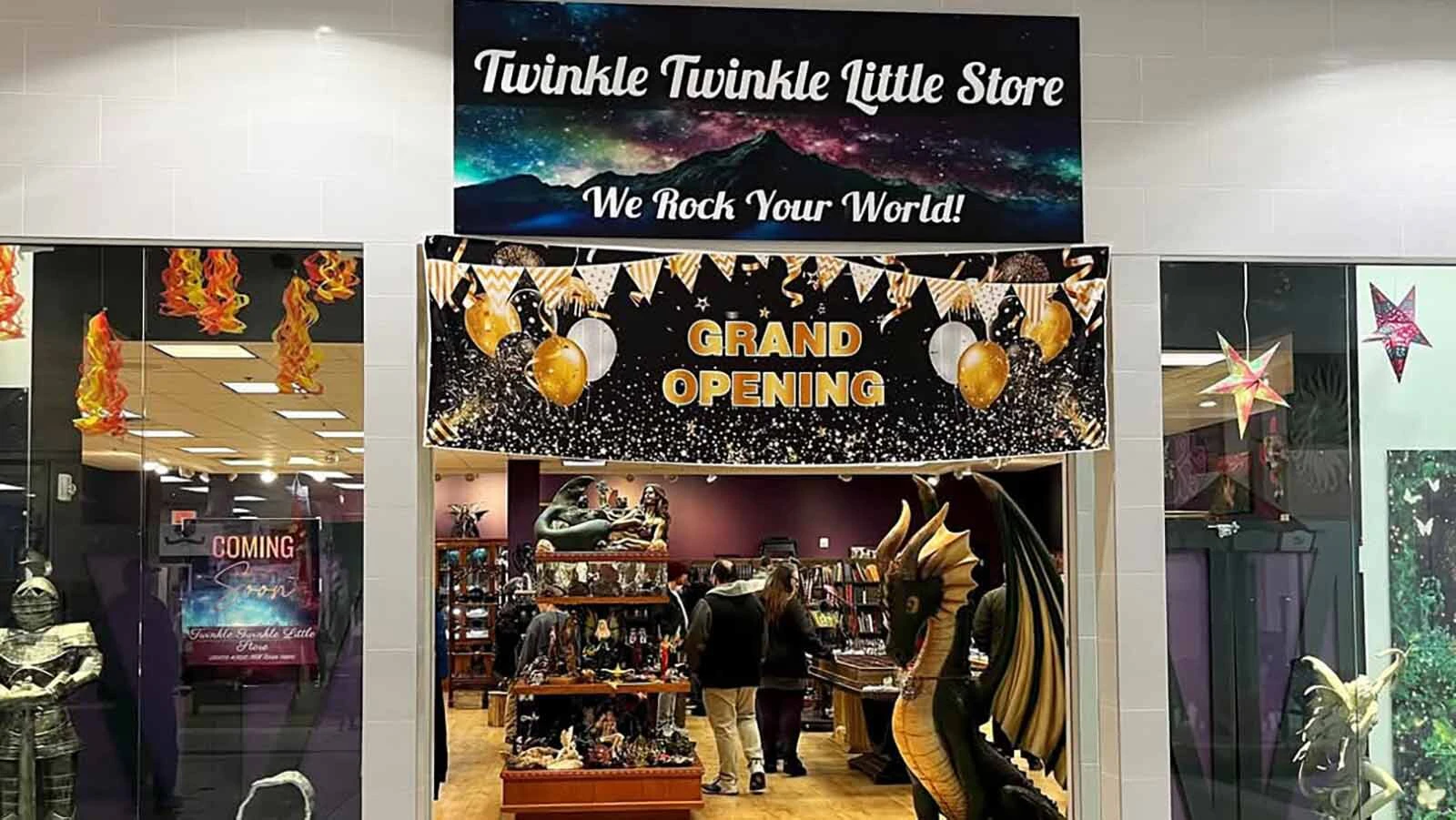
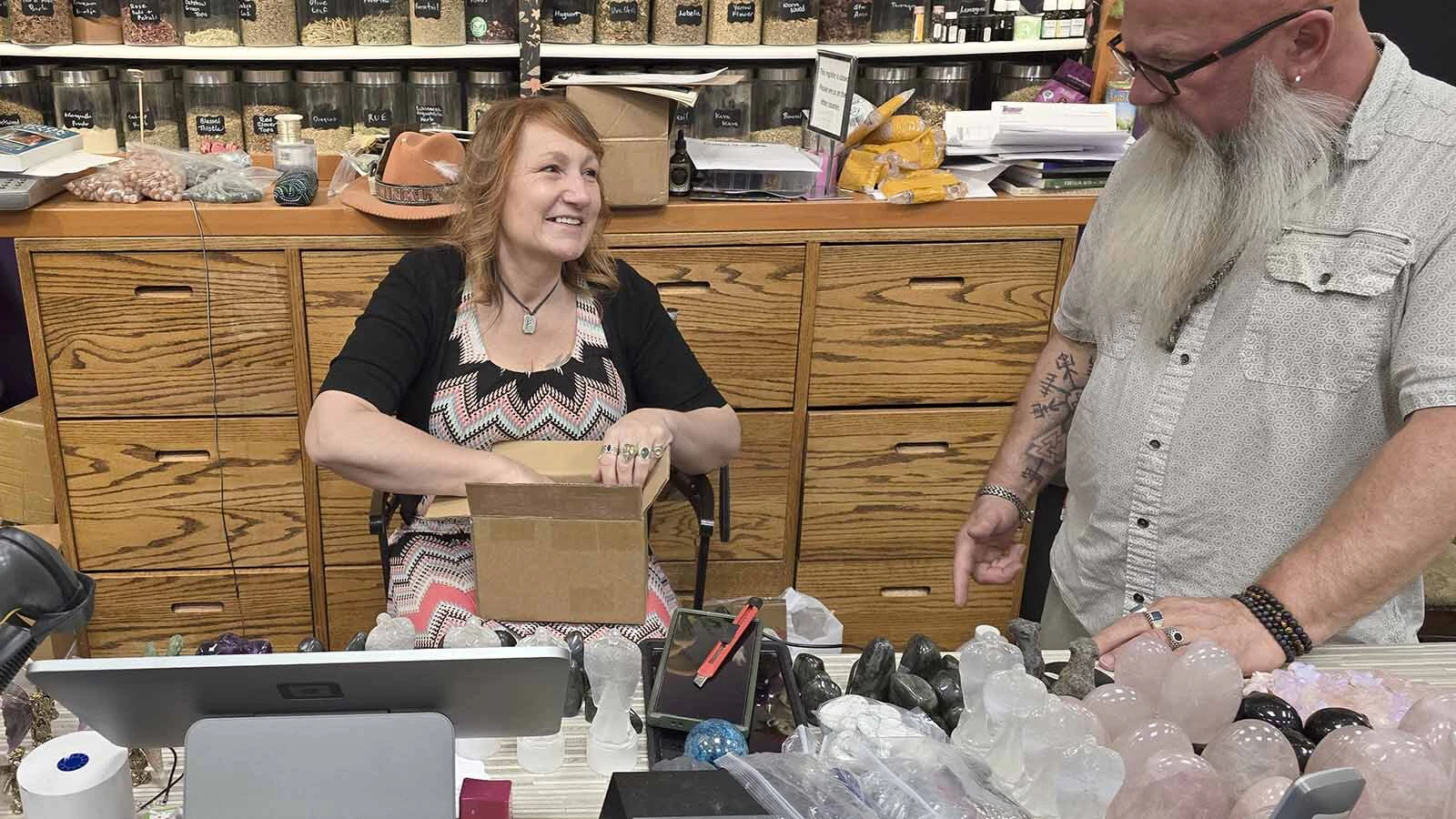
CHEYENNE — Patricia Miller was helping another customer when a smooth-talking gentleman came in and quickly grabbed some crystals that he said were a gift for his mom.
“He was trying to small talk with me about how wonderful of a person he was, because he’s getting them for her,” Miller told Cowboy State Daily. “And he’s going to print out information about each one of them, and all this other stuff.”
Miller thought that was sweet and said so, but what happened next was anything but sweet.
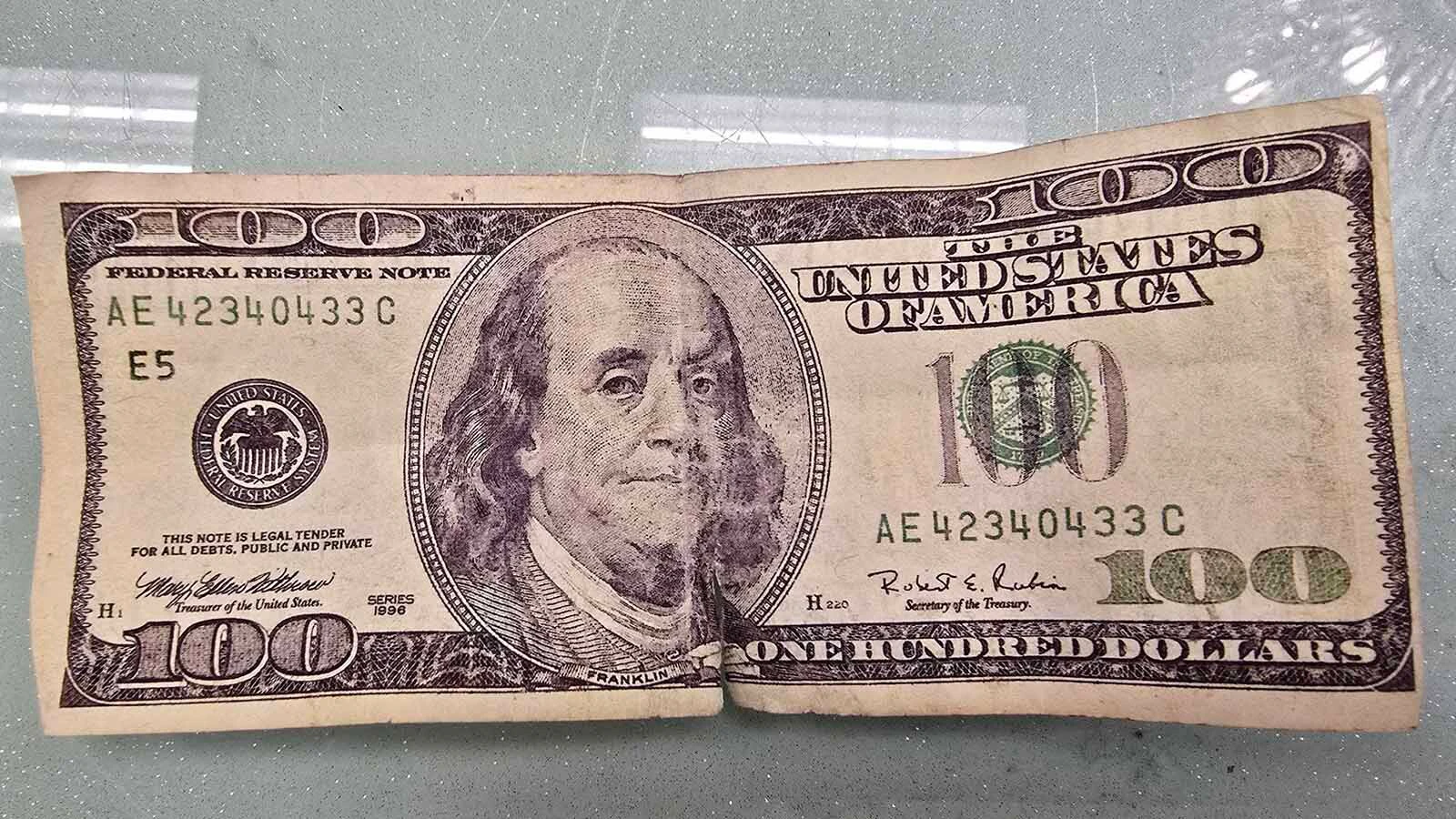
“He handed me this $100 bill, and I could feel that something was different,” she said. “And I was looking at it, and I’m like, ‘Well, maybe it’s old?'”
That prompted the man to helpfully add that the bill was from 1996.
That’s when things clicked for Miller.
“Like, who knows what year the bill is that you’re handing a cashier?” she said. “So that’s what really triggered my mind to be like, ‘Oh my gosh, this is counterfeit.’”
Not wanting to falsely accuse the man — or ignite a confrontation — Miller took a different tack.
“I said to him, ‘I”m sorry, but I don’t have change for this. You’re going to have to maybe get change and come back. Do you have anything smaller?’" Miller said. “And he said, ‘No, I’ll go to Bomgaars and get change.’”
The man never returned for his items.
Later, looking at the store’s video surveillance, Miller saw the man had several recognizable bags with him. When she visited those other stores, it confirmed her suspicion that the $100 bill had been fake.
The same man with the same story and multiple copies of the same $100 bill, all sharing the same serial number, had hit all of the stores.
Same Serial Number All Over Town
Miller’s social media post about the experience drew jeers from some skeptical online commenters who accused her of overreacting.
She posted the bill so others would know what was happening, to prevent anyone from getting duped.
A manager at a discount store on South Greeley Highway in Cheyenne, who asked that her store not be named for corporate reasons, confirmed she’d encountered both the same man and the same $100 bill as Miller.
The man came to the store on South Greeley between the hours of 3:30 and 4 p.m., she said, trying to buy some baby wipes and a gallon jug of water with the $100 — a classic, small-purchase, big-change tactic.
The cashier felt something was off with the bill, but couldn’t identify what. She used a traditional counterfeit detector pen. If the iodine ink, which reacts with starches in standard, wood-pulp paper, remains black, that’s supposed to indicate that a bill is real.
But the manager has learned a different trick to identify counterfeits lately.
“I swabbed it with rubbing alcohol, and the ink smudged,” she said. “So I told him it was fake and we were not going to accept it.”
When the cashier told the man the bill was fake, he said, “Keep it,” and walked out, by then visibly trying to hide his face from the camera.
“That confirms to me that it was fake,” the manager said.
The bill has been turned over to Laramie County Sheriff’s Office for further investigation.
Bleached Bills Fool Counterfeit Pens
The discount store manager said counterfeiters have come up with a smart strategy to fool the traditional iodine counterfeit detector pens.
What they do is bleach a $1 bill, and then print a $100 bill over the top of it. Because it’s genuine currency paper, the iodine pens won’t catch that the bill is fake.
“The counterfeit pens are garbage,” the manager said. “You can write on that and it won’t catch it because it is in fact money paper, just not the right denomination.”
She prefers that her employees use rubbing alcohol to test the ink. If it smudges, that’s a huge red flag.
She also has them hold the bill up to the light, to look for water marks and other security features that $100 bills have that $1 bills do not.
The last check is the texture of the bill itself, which is slightly changed by the bleaching process.
“When we held it up, it did not have a water mark in it,” she said. “It did not have a face in it, and I felt no texture on the bill itself.”
A Prop Money In Riverton
In Riverton, meanwhile, funny money has taken a slightly different tack, with Hollywood-style prop bills circulating around town.
At Blossoms and Boba Cafe, owner Jesica Fritz told Cowboy State Daily a group of children roughly ages 10-13 came in for a shopping spree with what they thought was a genuine $100 bill, given to them by a friendly stranger who had encouraged them to spend all of the money in one place.
“One of the girls who works for us thought it was real at first,” Fritz said. “It did look very realistic, unless you read it and looked closely at it.
"The other girl, my daughter, was like, ‘No, absolutely this is not real. Look, it doesn’t even say, ‘In God we trust.”
Instead the bill said, “In Prop we Trust,” and elsewhere, in tiny fine print, it identified the money as a film prop, not for legal tender.
Fritz said her cafe does use counterfeit detection pens and also trains staff to hold bills up to make sure the paper shimmers correctly, and to look closely at fine print and seals.
“If you’re slammed and super busy and someone just hands one of these to you, I can totally understand why some people would take it as regular money,” she said. “It looks very realistic.”
The children had already paid for their Boba teas before trying to use the fake $100 for extra items. When told the bill wasn’t real, they were crestfallen, but cooperative.
“The kids legitimately believed they had real money, and were super stoked about it,” Fritz said.
Staying Ahead Of Funny Money
Fritz turned the bill over to the Riverton Police Department.
The department did not return Cowboy State Daily’s request for comment, but Fritz said they told her that several other businesses in town had also seen prop money circulating.
Cheyenne police, meanwhile, said it has seven reports of counterfeit bills being passed around at local businesses so far this year.
“The counterfeit bills we encounter the most are $20 and $100 denominations,” said department spokeswoman Alexandra Farkas. “Many of the fake $100 bills are novelty bills intended for film production and are marked with the phrase, ‘For Motion Picture Purposes.’”
That can be easy to overlook during a busy transaction, Farkas acknowledged.
“If counterfeit currency is seized and is not associated with an active local investigation, our Property and Evidence Division will send it to the U.S. Secret Service for further investigation,” she said. “For more information about identifying counterfeit bills, the Secret Service offers educational resources online at www.secretservice.gov.”
By policy, businesses are supposed to try to retain suspicious bills and turn them over to police. But both Miller and the discount store manager admitted they considered their own personal safety first and foremost.
Renée Jean can be reached at renee@cowboystatedaily.com.