As a high school student, Mason Stillman never had a doubt that he wanted to become a physician. The only question was whether his white coat would land in Wyoming or somewhere else.
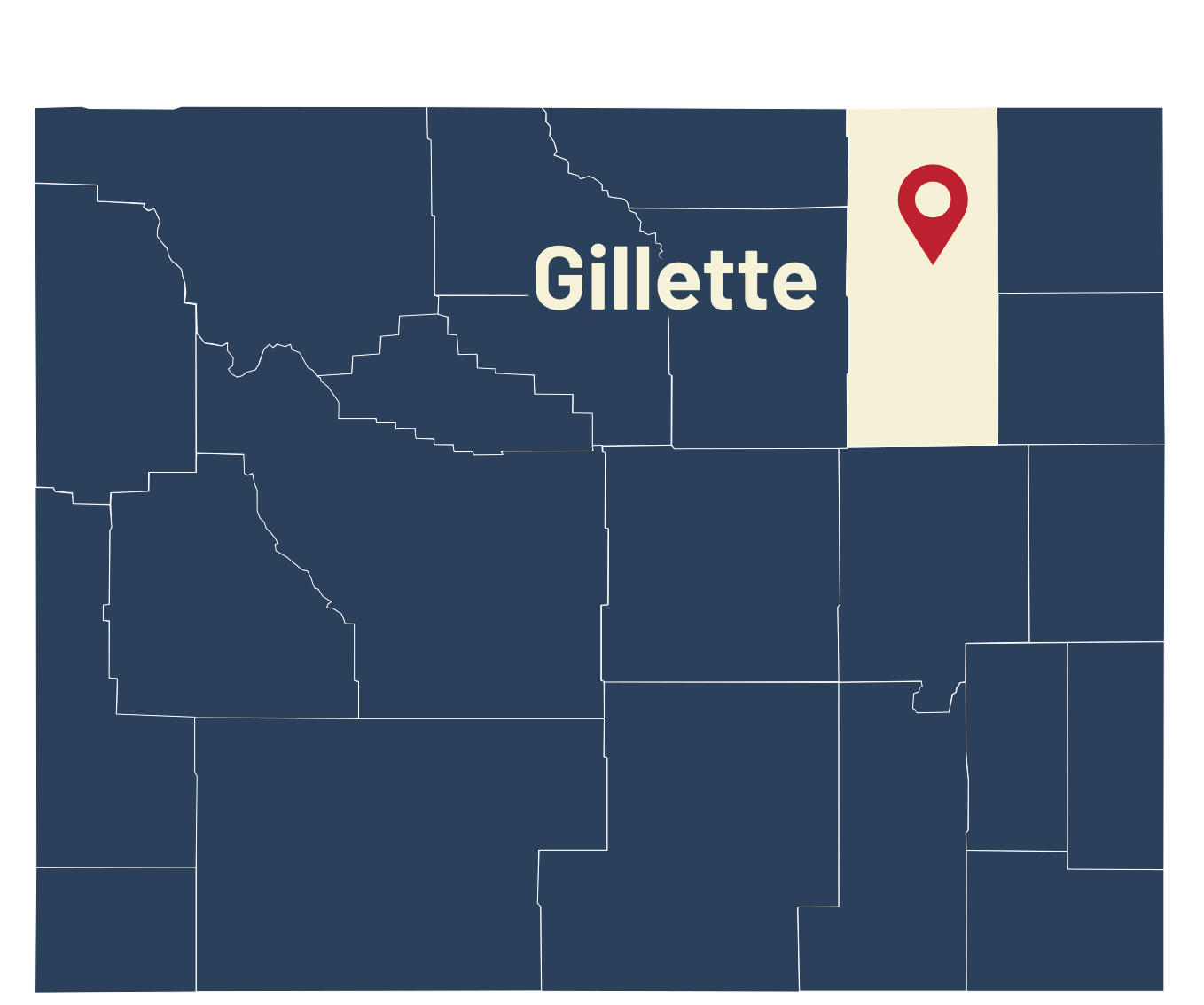
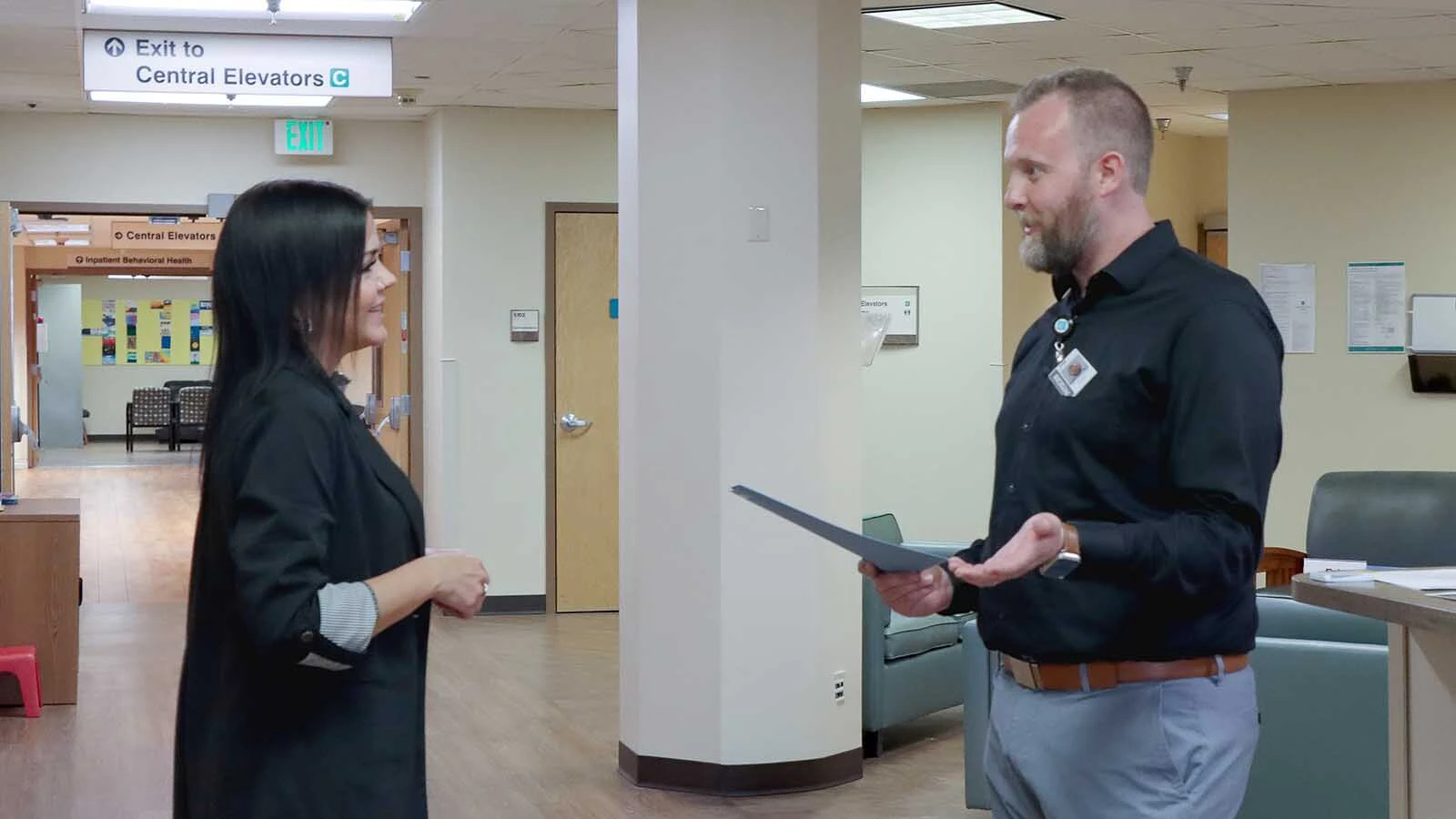
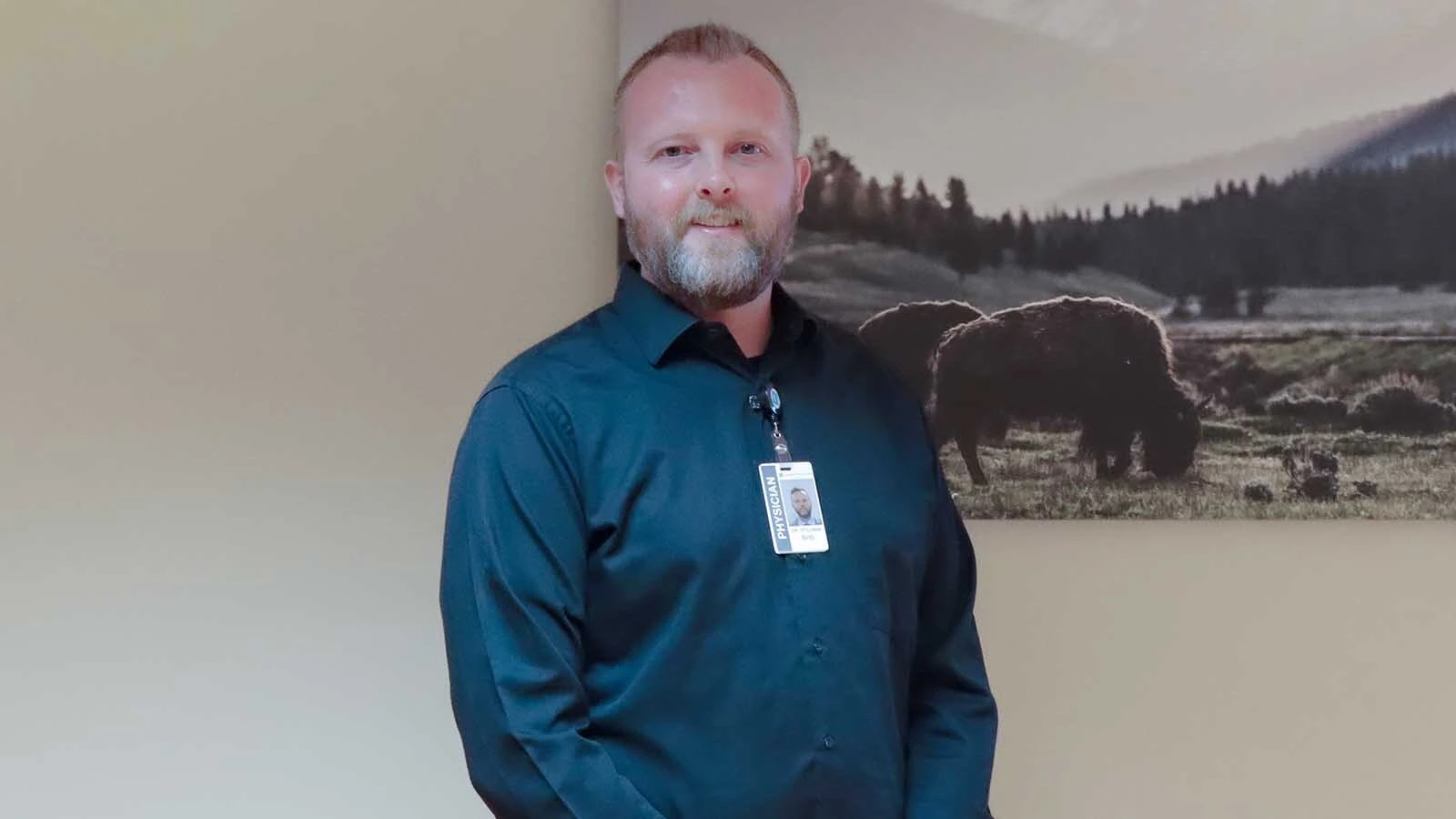
Today, Stillman is back in his hometown of Gillette, practicing psychiatry at Campbell County Health.
He knows that he’s filling a critical role, one that the state struggles to staff.
Wyoming consistently ranks among the lowest in the nation for physicians per capita — a reality recruiters emphasized when Stillman was interviewing.
It feels good to Stillman that he wound up in Wyoming filling such an important role in the northeast corner of the state.
But he could just as easily have ended up in some other state if it wasn’t for a program that has quietly become a pipeline for new doctors and specialists in the Cowboy State.
Stillman is a recent graduate of the Washington, Wyoming, Alaska, Montana and Idaho (WWAMI) program, a five-state medical-education partnership.
The program has become a key pipeline for the state, with about two-thirds of graduates returning to Wyoming after residency, and roughly 80% of those staying long-term.
The WWAMI states share resources and send young graduates to medical school in the state of Washington.
Best Of Both Worlds
In Wyoming, graduates agree to practice for at least three continuous years in the Cowboy State in exchange for repayment of about 75% of their tuition.
After that, Wyoming’s WWAMI graduates are free to relocate, though many choose to stay.
Stillman credits the program with keeping him in Wyoming.
When he was graduating from high school, he remembers being on the fence about where he would practice once he finished medical training.
Part of him hoped to stay home, close to family and friends in Wyoming. But another part had a strong urge to explore the wider world.
WWAMI ultimately allowed him to do both.
He got to explore other places during his training at medical school in Washington and other WWAMI states, and then he got to return home for a practice where he knows he’s doing vitally important work.
Stillman is pretty sure if he’d done his residency somewhere besides Wyoming, as many medical students wind up doing, the pull to stay there instead of returning home would have been too strong.
“I think that’s true for a lot of us going through medical training,” he said. “We grow relationships with people who we view as good resources, good help, good places you can go if you have a question or want to talk about things.”
A 30-Year Pipeline
WWAMI isn’t a new program, though it’s definitely flown under the radar as far as the general public is concerned.
The program will turn 30 next year, WWAMI Clinical Dean Robert Monger told Cowboy State Daily. It began because of the special difficulties rural Western states have when it comes to recruiting doctors.
“Wyoming is such a small, rural state, we’re really not big enough to have our own medical school. We don’t have a children’s hospital, or those kinds of things,” Monger said. “So, for a long time, the state had contracts with other medical schools to provide seats for Wyoming students.”
The problem was many of those students often ended up staying there once their training was complete instead of returning home.
WWAMI is structured to maximize exposure to Wyoming, while still providing a top-tier education. Students spend 18 months doing foundational coursework at the University of Wyoming in Laramie.
They also train in Washington, but return to Wyoming for hands-on hospital and clinical rotations.
“We’re really just trying to help them build a lot of connections in the state,” Monger said. “So when they’re ready to come back, they have some opportunities.”
A nonprofit recruiting firm, the Wyoming Health Resources Network, also stays in touch with the students throughout medical school and residency to recruit them to come back.
Built To Bring Doctors Back
All that mentorship and clinical exposure at the end of the medical pipeline is vital to improve the chances Wyoming will keep its medical graduates, but the beginning of the pipeline is equally important.
“You have to be a Wyoming resident to get into WWAMI,” Monger said.
After that, admissions committees place a heavy emphasis on how likely a candidate is to practice in Wyoming long-term.
Interviews are conducted by Wyoming doctors, who ask a variety of questions, such as where applicants see themselves in a decade, what communities they prefer, and what kind of medicine they want to practice.
“It’s not a perfect science, trying to pick out which ones are most likely going to come back to Wyoming,” Monger said. “But if they say, ‘I grew up in Sheridan, I’m fourth generation, and I can’t wait to go back there and practice,’ that’s a good answer for WWAMI.”
On the other hand, if they say they “can’t wait to get out of Wyoming” and move somewhere else, WWAMI is probably not the right program for them.”
So far, the track record has been good. Roughly two-thirds of WWAMI students do stay in Wyoming after residency to fulfill their three-year service obligation and 80% of those stay well past those three years.
Huge Impact On Communities
The impact is huge for communities like Gillette, Stillman said.
He counted about 10 WWAMI-trained physicians practicing in Gillette. That includes not only himself, but the pediatrician who treats his children.
Statewide, there are 123 WWAMI graduates practicing medicine.
“It really does help bring people back,” Stillman said.
As a WWAMI alumnus, Stillman has also joined the alumni network of doctors who are training new students who are moving through the same pipeline.
That dynamic helps grow the state’s training capacity by creating more sites for clinical rotations.
Hospitals, meanwhile, are generally eager to recruit WWAMI graduates because they already have roots in Wyoming.
By contrast, doctors recruited from distant states may sign up after a sunny, summer visit, only to quickly rethink their choice after a couple of High Plains winters.
“A winter or two goes by, and they want to move back to Georgia,” Monger said.
Some Specialty Care Gaps Still Widening
Despite WWAMI’s progress, Wyoming still faces serious shortfalls, particularly when it comes to specialty care.
Several communities, including Rawlins, Evanston, Wheatland and Kemmerer, for example, have lost obstetric services within the last five years.
That’s creating OB deserts where pregnant women have to drive long distances — sometimes in winter conditions — to deliver their babies.
Behavioral-health needs, meanwhile, are also climbing, while doctors like Stillman are in increasingly short supply.
Whether WWAMI is the right size is something that’s constantly being evaluated, Monger said.
“It’s a hard question to answer,” he said. “Because things in medicine are just changing so quickly between telemedicine and AI, and nurse practitioners and physician assistants.”
There’s probably some potential to grow the program from 20 slots to 25 — but that would take willingness on the legislature’s part to increase funding.
Ideally, though, Monger would like to see new residencies for specific areas where there are shortages.
“Wouldn’t it be great if we also had a psychiatry residency or internal medicine or surgery or something like that?" Monger said. “So I think WWAMI is part of the answer, but we need more than that.”
The Way Home
For Stillman, the program has been vital to his own path back to Wyoming, and he believes he likely will stay here well beyond his commitment.
He wasn’t the kind of teenager who swore he’d leave Wyoming forever, but he wasn’t fixed on staying either.
WWAMI gave him a taste of the wider world big enough to satisfy his curiosity, while at the same time providing him chances to strengthen his Wyoming ties.
The training he received, meanwhile, was among the best in the nation.
“University of Washington is just an incredible machine when it comes to turning out new information,” he said. “They’re on the cutting edge of care … and then your rotations are really kind of whatever you want to make of them.”
Stillman had opportunities to experience all five WWAMI states, as well as other exciting opportunities.
“I got to join a research team at Seattle Children’s Hospital while I was there,” he said. “I got to deliver babies in Yakima, Washington, and an OB rotation. I can’t think of many other places like that, where you can just do so many different things.
"You get kind of the best of both worlds. A rural program, and then an outstanding academic center.”
Knowing that he’s filling a vital role in the community where he was born and raised and where he hopes to raise his own children has been especially satisfying as well, Stillman said.
“That’s the whole point of the WWAMI program, I think,” he said. “And it’s great being able to get this training which I otherwise wouldn’t have had access to, and then being able to come back to the community that I grew up in, that raised me.
“It’s great to be able to try to fill part of that need,” he continued. “I won’t pretend that I’m fixing everything, but I can at least be a part of helping.”
Renée Jean can be reached at renee@cowboystatedaily.com.