
In a move indicating that concerns over the dwindling Colorado River have reached a new level, Wyoming Gov. Mark Gordon and U.S. Sens. John Barrasso and Cynthia Lummis joined other Western elected officials met for discussion and negotiations in Washington, D.C.
Gordon, Barrasso and Lummis met Tuesday with Utah Gov. Spencer Cox Chairman of the Senate Energy and Natural Resources Committee Mike Lee, R-Utah, Sen. John Curtis R-Utah.
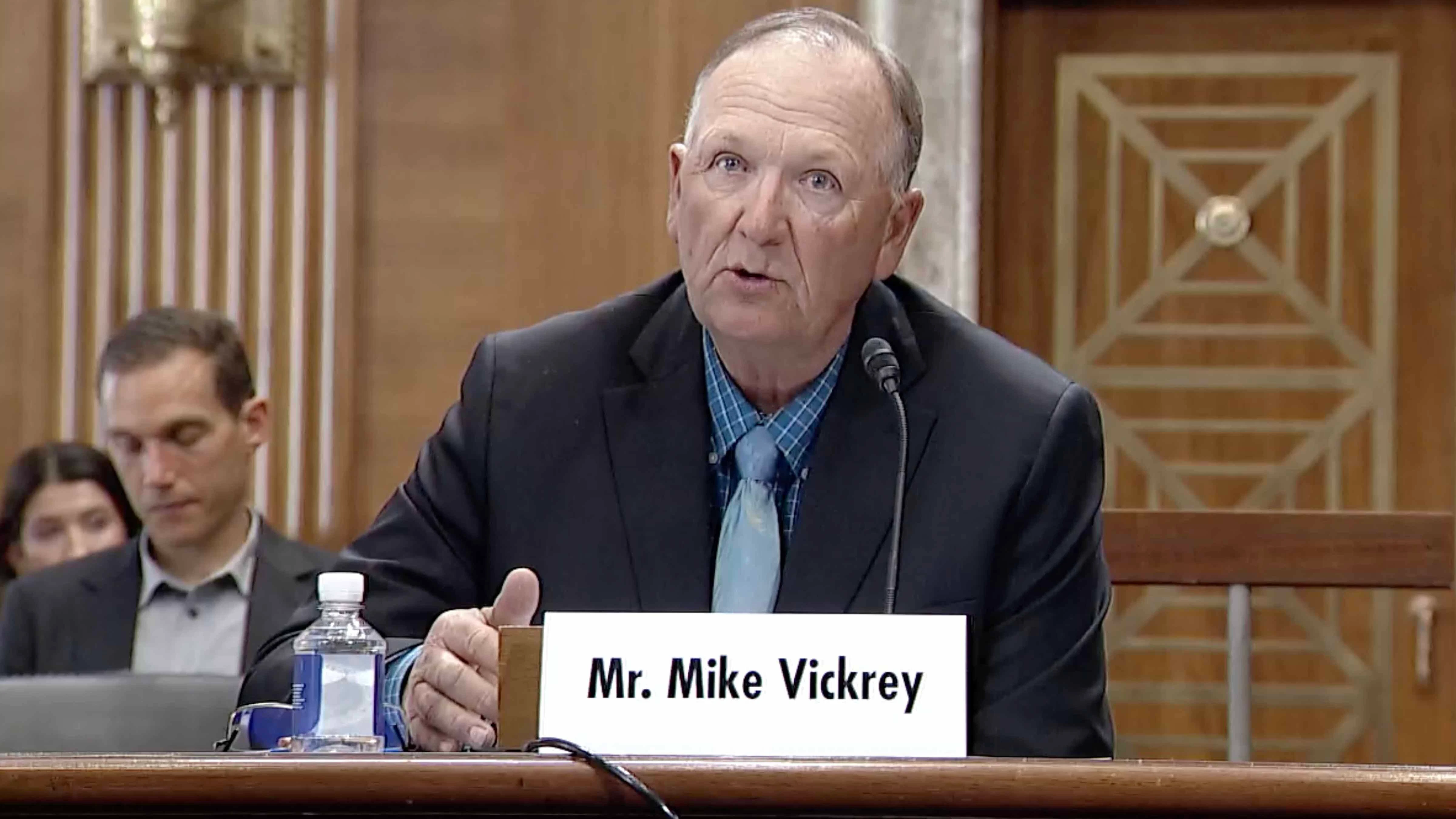
On Wednesday, Barrasso invited Pinedale rancher Mike Vickrey to testify about the Colorado River negotiations before the Senate Energy and Natural Resources Committee.
Vickrey said that in Wyoming and other Upper Colorado River Basin states, “our expectations of how much water we will have to irrigate with are based on Mother Nature,” according to a statement from Barrasso’s office.
Vickrey told the Senate committee that as he sees it, he and other Upper Basin farmers and ranchers have gone above and beyond to conserve water.
Meanwhile, downstream states benefit from greater “security” offered by large reservoirs at Lake Powell and Lake Mead, Vickrey told the committee.
Parts of two of Wyoming’s reservoirs along the Green River, a major tributary of the Colorado River, are in Sweetwater County. Those include Fontenelle Reservoir and Flaming Gorge Reservoir.
That means the area has a huge stake in what happens along the Colorado River, Sweetwater County Commissioner Taylor Jones told Cowboy State Daily on Wednesday.
“I think our concerns are the water levels, and our lack of say,” in Colorado River policy, he said.
Barrasso Takes Lead
Officials offered few details of what the D.C. meetings might mean going forward for Wyoming and the other Upper Basin states of Colorado, Utah and New Mexico.
Barrasso is “taking the lead” in the matter, according to a text message from Gordon’s office to Cowboy State Daily.
“Any management plan must address shortages from emergency withdrawals and drought, especially from Wyoming’s Flaming Gorge Reservoir,” Barrasso said in a statement following Tuesday’s meeting. "Wyoming and Utah will continue to fight for a seven-basin-state solution that treats our Upper Basin fairly,”
More details should be forthcoming, Barrasso’s Communications Director Laura Mengelkamp told Cowboy State Daily on Wednesday.
“This week’s meeting was a great first step in developing an agreement that will treat the upper basin states fairly. The governors and senators did discuss several possible solutions and we will have more to say on that in the future,” she stated.
Wyoming State Engineer Brandon Gebhart represents Wyoming on the Upper Colorado River Commission.
In an email response to questions from Cowboy State Daily on Wednesday, he said that he had no comments beyond what Gordon had already stated.
In a Tuesday statement, Gordon said the discussion between the Upper Basin elected officials had been “productive.”
“Wyoming is committed to bringing forward ideas, and leading the search for practical solutions that recognize both the realities of drought and the needs of the West,” Gordon stated.
Stark Outlook
Tension has been brewing between the Upper Basin states and those in the Lower Basin, namely Nevada, California and Arizona.
All seven Colorado pact states, as well as numerous Native American tribes and Mexico, were allocated water rights from the Colorado River and its major tributaries under the 1922 Colorado River Compact, which remains binding.
Many experts say there’s far less water in the river now than there was in 1922, but demand has grown with the population.
The Upper Basin states say that most of the population growth has been in the Lower Basin, which continues to demand more water.
Water from the Upper Basin, including the Green River in Wyoming, feeds the Lower Basin’s two primary reservoirs, Lake Powell and Lake Mead.
It was announced this spring that roughly 1 million acre feet of water would be drawn from Flaming Gorge Reservoir to make up for a shortfall in Lake Powell.
Tony Valdez, owner of the Buckboard Marina on the Wyoming side of Flaming Gorge, previously told Cowboy State Daily that the drawdown could be “like a holocaust for nature.”
Upper Basin Doing Its Part
Jones said the reservoirs and marinas are vitally important for Sweetwater County.
“When they’re going draw the water down, it’s going to affect fishing, it’s going to affect tourism,” he said. "It’s going to affect the marinas, on both the Wyoming and Utah sides of Flaming Gorge.”
“The marinas, they’re even talking about going out of business,” he added.
The county commission hopes to meet soon with Gordon and other state officials. So far, there have been few details coming from state offices, Jones said.
“It’s been pretty quiet, which is a little frustrating,” he said.
Vickrey also said policy should be based upon how much water is actually available.
“The only way going forward is a shared pain as hydrology worsens,” Vickrey said. "From my Upper Basin perspective, a supply-driven model of the river is imperative.
"As conditions continue to change, we must adapt to the actual amount of available water and continue to search for new sources of usable water."
The future hinges on continued negotiations, Jen Lamb, Wyoming representative for the Nature Conservancy, told Cowboy State Daily.
“I think Wyoming remains focused on trying to stay solution oriented, and the fact that the states are still at the table is really critical,” she said.
Mark Heinz can be reached at mark@cowboystatedaily.com.


