
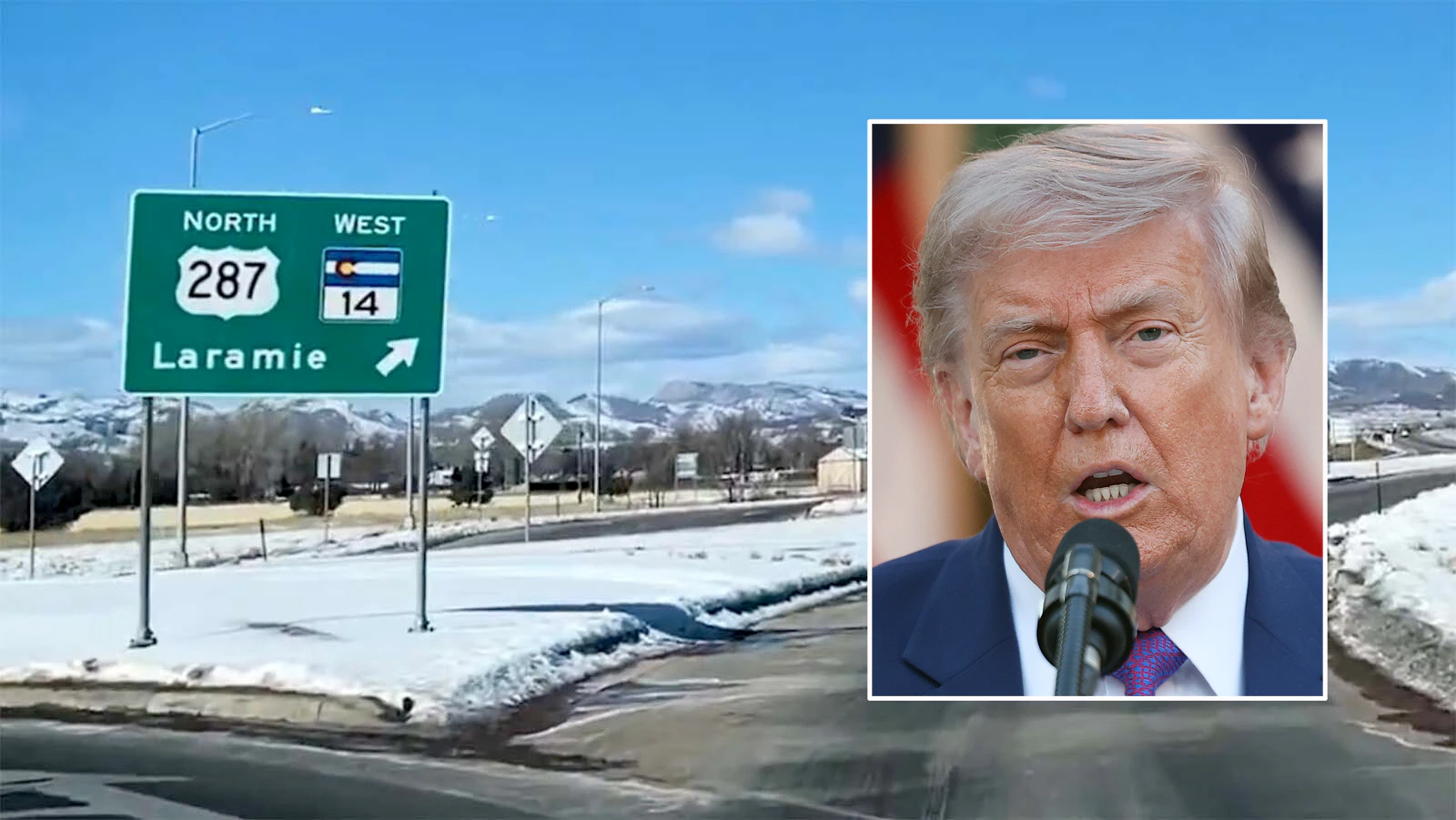
A proposal to transform U.S. Highway 287 into a future interstate bearing President Donald Trump's name faces fresh questions after the Texas senator behind the idea suggested it may no longer be among his top legislative priorities.
Just weeks after introducing the I-47 Future Interstate Act, U.S. Sen. John Cornyn, R-Texas, told the Yellowstonian that the proposal is unlikely to remain among his priorities following his loss in a Republican primary race against Texas Attorney General Ken Paxton.
Paxton had been endorsed by Trump in his primary victory, and Cornyn told a Hearst Newspapers reporter that in the wake of his defeat, the bill “may not make (it) into my priorities the next seven months,” the Yellowstonian reported.
But Wyoming Sen. Cynthia Lummis, the bill’s co-sponsor, continues to support the effort to make Highway 287 into Interstate 47. The bill hasn’t been withdrawn or abandoned, her office said.
"Senator Lummis has led and cosponsored hundreds of bills in the 119th Congress," spokesperson Joe Jackson told Cowboy State Daily on Wednesday. "Senator Cornyn's bill remains before the Senate Committee on Environment and Public Works, and Senator Lummis continues to back it."
Cornyn's comments have renewed debate about the future of a plan that sparked spirited discussion across Wyoming, where Highway 287 serves as one of the state's most important north-south transportation corridors.
When the legislation was unveiled in May, supporters said interstate designation could eventually improve transportation infrastructure and freight movement along the corridor.
Critics questioned whether the proposal was largely symbolic and noted that converting thousands of miles of highway into interstate-standard roadway could take decades and cost billions of dollars.
Future Unclear
The I-47 Future Interstate Act proposed designating the roughly 1,800-mile U.S. 287 corridor from the Gulf Coast of Texas to Montana as a future interstate route.
The designation was intended to honor Trump as the nation's 47th president.
The route runs through Wyoming communities including Laramie, Rawlins, Jeffrey City, Lander, Dubois and Moran before continuing north into Montana.
When the bill was introduced, Cornyn described the corridor as an important transportation link connecting rural America to major freight networks.
The proposal quickly attracted national attention because of its connection to Trump, but transportation experts noted that designation as a future interstate is far different from actually building one.
Converting Highway 287 into a true interstate corridor would require extensive upgrades across multiple states, including new interchanges, access controls, lane expansions and other infrastructure improvements. Such projects typically take decades and cost billions of dollars.
Even supporters acknowledged that any actual interstate construction would likely be a long-term endeavor stretching far beyond the current Congress.
Cornyn's recent comments suggest the political momentum behind the idea may be slowing after a bruising primary campaign that ended in defeat for the longtime senator.
Wyoming Reaction
The proposal generated considerable interest in Wyoming when it was first announced.
State Rep. John Bear, R-Gillette, said at the time that he would support the effort.
"I think honoring this president is a great idea," he told Cowboy State Daily. "I think we had the highest percentage of support for him … so it should be right here."
Fremont County Commissioner Michael Jones said interstate designation could eventually attract federal transportation investment and improve a corridor already heavily used by commercial traffic, tourists and energy industry workers.
"Call it your Uncle Bob, I don't care," he told Cowboy State Daily at the time Cornyn proposed his bill. "If something like this happened, I think the benefit would be good."
At the time, Lummis signed on as a co-sponsor of the legislation and argued the route serves as a critical economic artery for Wyoming and the broader Rocky Mountain region.
Others were far less enthusiastic.
Laramie Mayor Sharon Cumbie told Cowboy State Daily in May that the proposal looked like "a political stunt" and expressed concern that interstate designation could encourage heavier traffic through communities that value their rural character and slower pace of life.
The differing reactions reflected a broader debate over whether the proposal represented a meaningful transportation vision or primarily a symbolic political gesture.
Still Alive
At the moment, the legislation remains alive in Congress, though major transportation initiatives typically require sustained political support, particularly when they span multiple states and involve potentially massive infrastructure costs.
The bill remains pending before the Senate Committee on Environment and Public Works, where it has been since being introduced in May.
Only weeks ago, the prospect of a future Interstate 47 generated headlines from Texas to Montana and prompted discussions about transportation planning, economic development and presidential politics.
Cornyn's comments may have raised questions about the proposal's momentum, but neither he nor any of the bill's co-sponsors have announced plans to withdraw it.
For now, Interstate 47 remains parked in committee, with at least one of its sponsors in Lummis insisting it still has a path forward.
Kolby Fedore can be reached at kolby@cowboystatedaily.com.


