
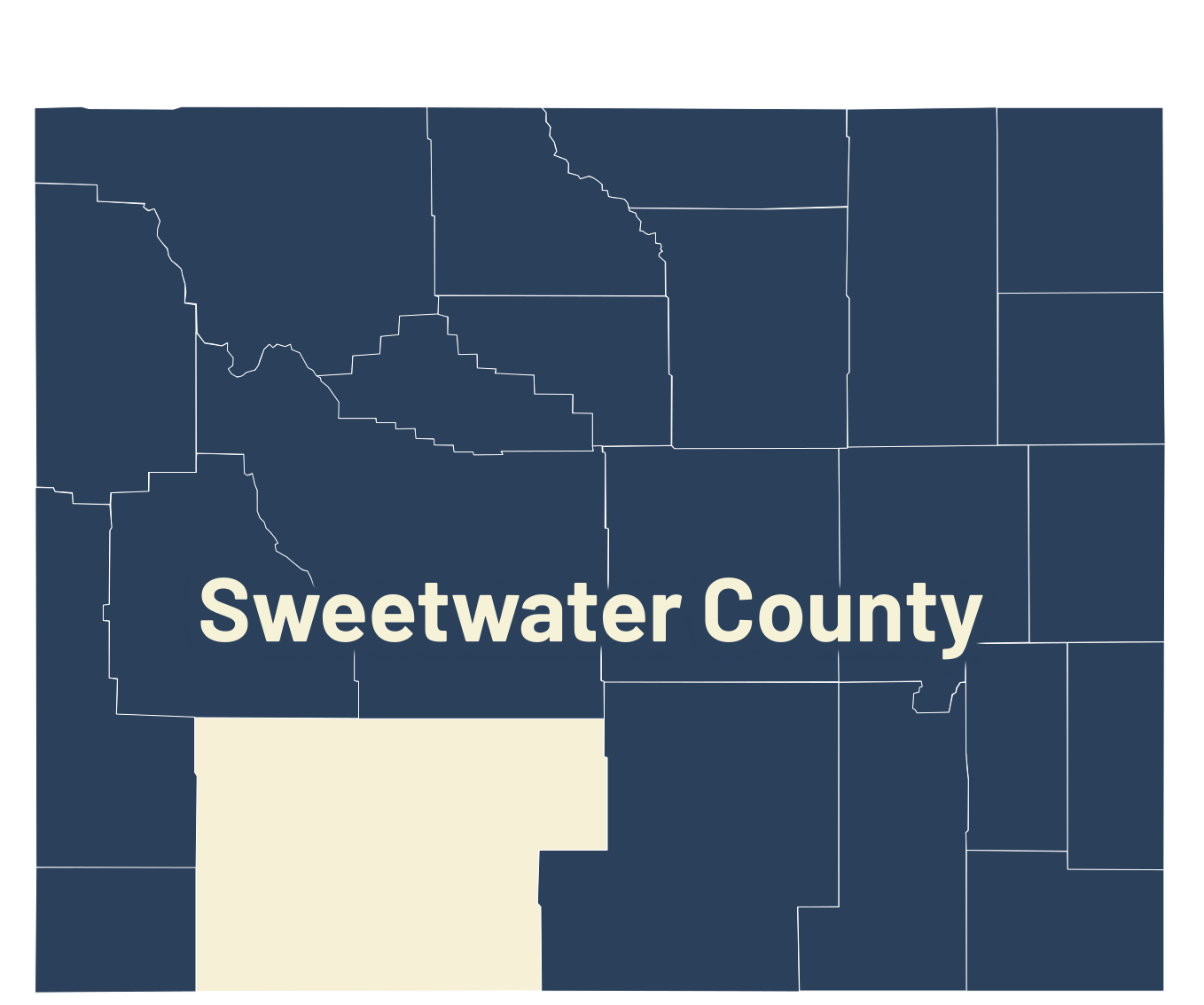

A state investigation into Sweetwater County School District No. 1's special education program found it out of compliance in four of five major areas reviewed.
The probe uncovered problems that ranged from staffing shortages and unlicensed personnel to failures in implementing student education plans and involving parents in key decisions.
"This wasn't a failure by just one person. This is a systemic failure," said former Sweetwater County School District No. 1 board member Cole Seppie.
A 29-page report released this week by the Wyoming Department of Education (WDE) found the district violated requirements to:
• Provide special education and related services through properly credentialed professionals.
• Deliver services in accordance with students' Individualized Education Programs (IEPs).
• Educate students in the least restrictive environment possible alongside their nondisabled peers.
• Give parents meaningful opportunities to participate in the IEP process.
The district was found compliant only in the area of student confidentiality.
Cowboy State Daily reached out to district Superintendent Dr. Joseph Libby and school board Chairman Cole Wright for comment.
Wright said in a text message that Libby is on vacation.
"Consequently, I can tell you that we have received the WDE report," Wright said.
He added that the district is reviewing the findings and recommendations and will consider options upon Libby's return.
What Was Found
The WDE conducted a five-day special monitoring review in February after receiving complaints and reports of possible noncompliance from parents, current and former staff members, and media accounts.
Investigators examined records, visited schools, interviewed staff and met with community members.
Investigation Revealed Deep Concerns
The review focused on five areas:
• Employment and supervision of qualified special education staff.
• Delivery of services outlined in student IEPs.
• Compliance with least restrictive environment requirements.
• Meaningful parental participation.
• Protection of confidential student information.
Investigators reviewed records from students across all grade levels, schools and disability categories.
Of 145 records selected, 19 could not be accessed through the district's online IEP system, reducing the sample size to 126.
WDE staff visited 15 schools and interviewed 47 employees, including Special Education Director Kayci Arnoldi.
The report describes a culture of mistrust between staff and district administration.
"Staff are terrified of backlash or forced transfers if they speak in opposition of an administrative decision," the report states.
Community listening sessions also revealed widespread concerns.
Of at least 45 community members who participated, 18 raised issues related to staffing, qualifications, turnover, reliance on substitute teachers and insufficient training.
Another 17 concerns centered on IEP compliance and what the report described as administrative overreach in special education decisions.
Staffing Shortages And Unlicensed Personnel
As of June 8, the district's website listed 27 open special education teaching and provider positions.
“I’m completely appalled at how many openings we’ve had,” said Rachel Seppie, Cole Seppie’s wife.
Cowboy State Daily reported on the Seppies’ experience with the school district in February.
During the monitoring review, investigators reported that Arnoldi was unable to identify how many special education vacancies existed at any given time.
"The director considered adequate staffing to be the responsibility of the Human Resources Department rather than special education leadership," the report states.
“When you have the special education director calling for HR, that poses questions, when you don’t know how many positions are open in your staff,” said Kari Cochran, a parent in the district.
The WDE also found what it described as a districtwide practice of allowing unlicensed personnel to provide special education services without adequate supervision.
Investigators identified 30 unlicensed teachers or providers working in special education roles.
More than one-quarter of the student files reviewed showed services being delivered by individuals who lacked the credentials required to provide specialized instruction or related services.
As of the report date, 18 long-term substitute teachers remained in positions serving students with disabilities.
According to the report, many teachers told investigators that long-term substitutes and educators working under exception authorizations were planning lessons, delivering instruction, assigning grades and monitoring student progress without appropriate supervision.
"In many IEPs, the unlicensed teacher or provider reported progress towards IEP goals," the report states.
Students Not Receiving Required Services
The report found that 60% of reviewed student records showed services were not being delivered in accordance with students' IEPs.
Investigators learned that the amount of special education time students received was often determined by class schedules rather than the service levels specified in their individualized plans.
In some cases, that practice limited students' opportunities to learn alongside nondisabled peers.
The WDE cited staffing shortages, insufficient understanding of federal special education requirements and a lack of oversight as contributing factors.
The district was also found to be out of compliance with the federal requirement that students with disabilities be educated alongside nondisabled students whenever appropriate.
According to the report, those findings point to a misunderstanding of least restrictive environment requirements and a lack of district oversight.
Parents Left Out Of The Process
Nearly half — 47% — of the student records reviewed contained evidence that parents were denied meaningful participation in the IEP process.
The report found little evidence that meetings were scheduled at mutually agreed-upon times. In many cases, records showed no documented contact with parents before meeting notices were sent.
Investigators also found that students were receiving services from unlicensed personnel without the credentials or supervision required under federal law, an issue that appeared in roughly 54% of the noncompliant records examined in this category.
As a result, the WDE concluded the district violated requirements guaranteeing parents meaningful opportunities to participate in decisions about their children's education.
One Year To Correct Problems
The district has 30 days from the report date to challenge any findings by submitting additional evidence.
Once the report becomes final, the district will have one year to correct all identified areas of noncompliance. A corrective action plan is expected to be finalized within 30 days after the report is finalized.
For Cochran, the report confirms concerns that many families have raised for years.
"We do have issues, but our leadership refuses to acknowledge them," Cochran said, describing what she sees as one of the district's biggest challenges.
Rachel Seppie agreed.
"Seeing it in writing affirms that there are facts," she said.
For the Seppies, whose son receives special education services, the findings were disappointing but not entirely unexpected.
"We had seen some of these problems with our child when I was a board member," Cole Seppie said. "To realize this is a more systemic problem makes me incredibly disappointed."
He said he believes most teachers and service providers are working hard under difficult circumstances.
"A vast majority of the teachers and providers are generally trying to do a good job," he said. "But when the administration and supervisors are not living up to the standards that they should, you're stuck in a bad system."
Rachel Seppie said the report validates concerns parents have repeatedly raised with district leaders.
"All these things have been identified multiple times," she said. "No one's been listening to the parents."
Seeing the state's findings laid out in writing was both frustrating and affirming, she added.
Kate Meadows can be reached at kate@cowboystatedaily.com.


