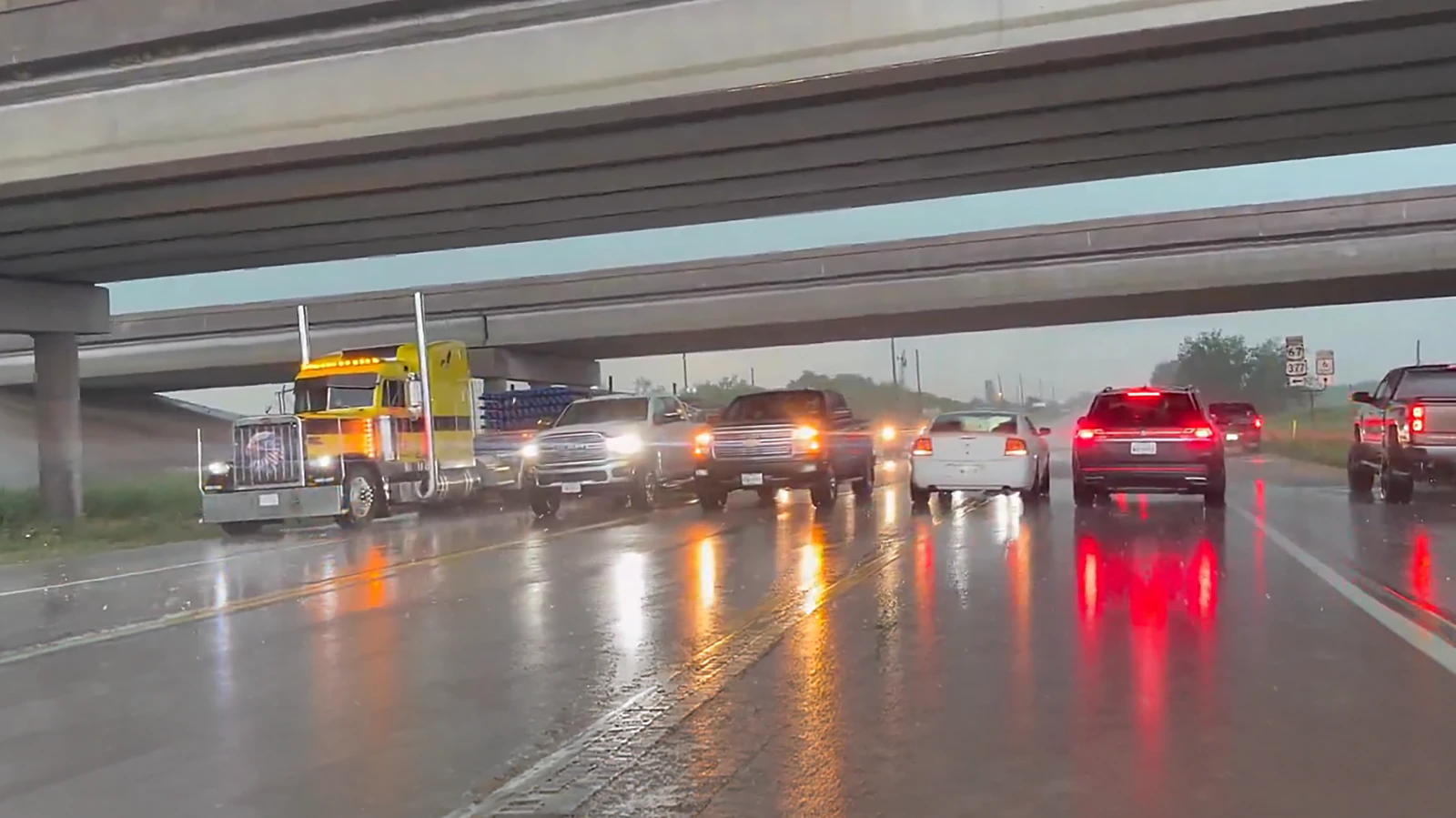
Texas storm chaser Chad Casey was infuriated to see what he called “Dublin drivers doing their thing” during an evening hailstorm in Dublin, Texas, last weekend.
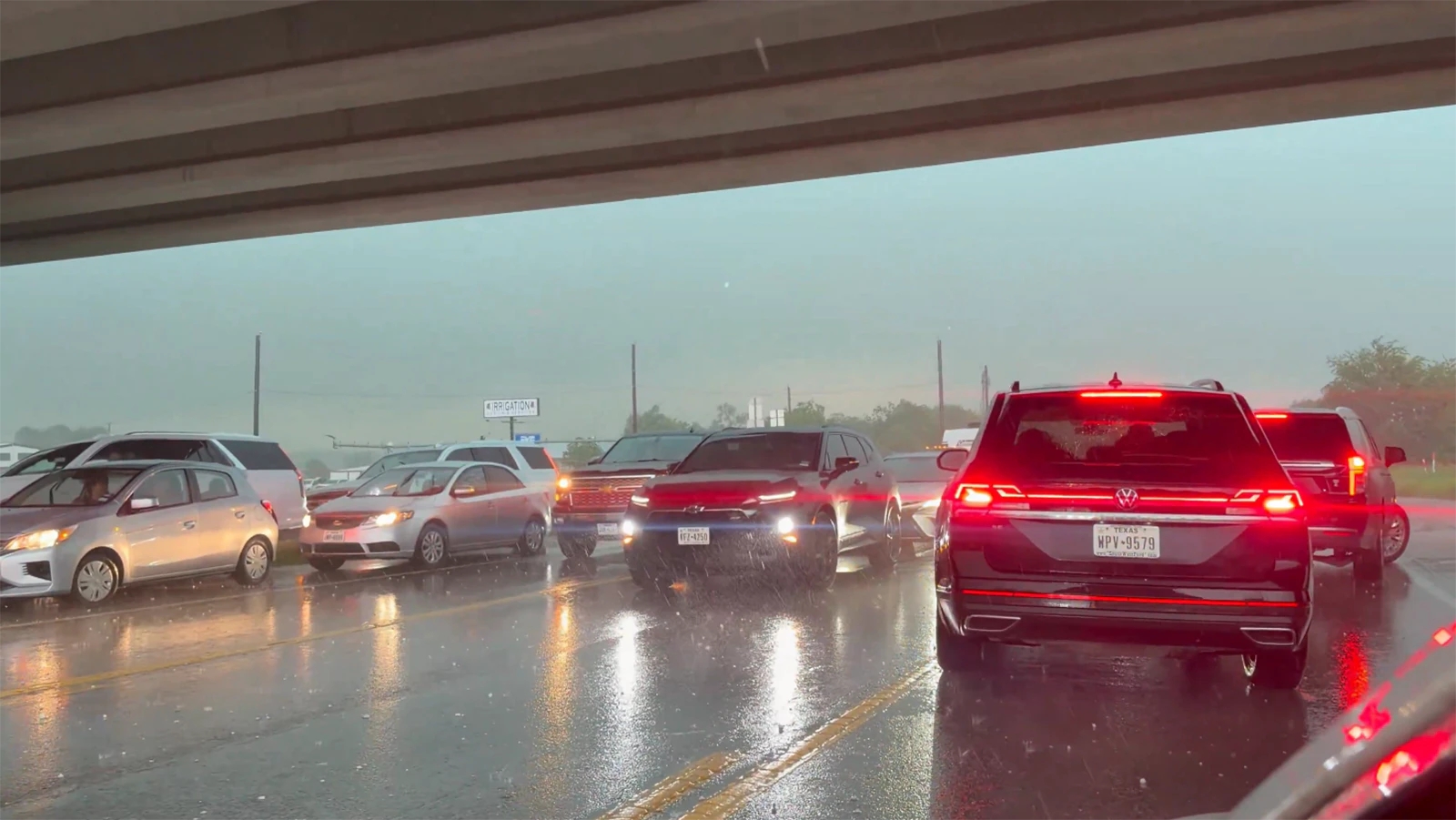
Traffic was at a standstill as drivers sought to shelter their vehicles under two overpasses, causing a total traffic jam.
Every lane of highway in both directions was blocked by drivers trying to avoid dents and windshield chips.
Nobody was moving, despite the honks and the growing number of vehicles behind those selfishly putting self-preservation ahead of other drivers.
Casey honked and shouted at the drivers to go, but to no avail. And he wasn’t alone, as the anger of others boiled over as well.
Most Wyomingites wouldn't cower like that when driving through a hailstorm, but even the faint-of-heart can’t legally find shelter under a bridge or overpass — even on the shoulders of highways.
“It is illegal to park under a bridge or overpass in Wyoming,” said Aaron Brown, spokesman for the Wyoming Highway Patrol. “It’s allowed in an emergency situation like a mechanical breakdown, but hailstorms aren’t emergencies.”
Don’t Seek Shelter
When traveling on a Wyoming highway during a severe weather event, it’s usually a good idea for drivers to pull over and stop for their own safety.
The Wyoming Department of Transportation and WHP might even encourage it under extreme circumstances.
However, that doesn’t apply to bridges and overpasses. It might seem like a great way to stay safe and save the hassle of an insurance claim, but it isn’t, Brown said.
“We want people to pull over into the safest spot they can, ideally a turnout or a spot with a wide shoulder,” Brown said. “It might be common for people to park under an overpass or a bridge, but it's technically illegal and extremely dangerous.”
The specific Wyoming statute prohibiting this is Title 31, Chapter 5, Article 5. It regulates traffic on highways and at specific locations where stopping, standing, and parking are prohibited.
That includes “upon any bridge or other elevated structure upon a highway or within a highway tunnel.” In this instance, a road going under a bridge would technically qualify as a tunnel.
Brown said the reasons for prohibiting stopping under bridges and overpasses are simple. In such a narrow space, it's inherently dangerous.
“Not every bridge has a big shoulder for parking,” he said. “Pulling over on the shoulder outside a bridge is fine, but being under the bridge isn’t a good idea.”
There are exceptions, of course. Someone can stop under a bridge if they have a mechanical emergency with their vehicle, but even then, it’s better to stop outside than inside.
“Unless you are experiencing a legitimate mechanical emergency, you should probably avoid parking under overpasses,” Brown said. “If you have a breakdown under a bridge, our troopers will understand, but it’s all situational.”
This holds true even during severe weather events, even when the highway is closed due to whiteout conditions or some other extreme weather that inhibits visibility. That’s especially true for hailstorms.
Controlled-Access Highways
The laws prohibiting parking and stopping under Wyoming’s bridges and overpasses are in place because these areas are usually infrastructure on controlled-access highways.
Brown said that’s a critical distinction for many aspects of travel.
“A controlled-access highway is defined by how you enter and exit it, rather than just how fast you can drive,” he said. “It has very specific entry and exit points designed for traffic flow. Interstates are perfect examples, because the only way you can get off or on is at an exit or a ramp.”
Controlled-access highways are designed for high-speed traffic. Traffic flow is integral, so preventing any unnecessary stopping is critical.
That’s why it’s prohibited to stop under bridges and overpasses. They usually don’t have shoulders wide enough for a vehicle to pull over and get completely out of traffic.
“Pulling over onto a shoulder is fine,” Brown said. “In most cases, that’s not going to be considered illegal, but it’s best to pull over at a rest stop or an exit.
"If you have to pull over right away, but being under a bridge is probably not a good idea.”
Circumstantial Citations
Brown couldn’t comment on how the drivers of Dublin, Texas, would be cited for coming to a full stop under a bridge during a hailstorm, but he could make a comparable claim of how WHP troopers would handle that situation.
“Stopping or parking on a highway is a misdemeanor traffic violation, so that’s a $200 fine right there,” he said. “It's also worth noting that, once in a while, doing something unsafe during bad weather can also incur things like impeding traffic or reckless driving.”
That’s assuming nothing else goes wrong, and it very easily could.
The drivers of Dublin blocked all lanes of traffic under the bridges, which could have caused a cascade of multi-vehicle crashes behind them.
That’s where citations become “circumstantial,” Brown said.
If there’s reason to believe the cause of a vehicle accident wasn’t entirely accidental, a WHP investigation could lead to more severe citations — or criminal prosecution if people are hurt or killed.
“Whether it's a small on-site investigation or a multi-day or weeks-long deal, we’re going to be investigating it,” he said.
Brown emphasized that hailstorms are not considered an emergency situation that would merit stopping in an active lane of traffic on a highway, let alone under an overpass.
If those Texas drivers had pulled a similar stunt in Wyoming, they wouldn’t have driven away without a lot of tickets.
"Not everyone wants to stop, and if you block the roadway under the bridge, they might not,” Brown said. "A mechanical breakdown is a real emergency. A hailstorm isn’t.”
Andrew Rossi can be reached at arossi@cowboystatedaily.com.