A man was apparently mauled to death by a grizzly bear in Glacier National Park, possibly on the same day that two brothers were severely injured in a grizzly attack in Yellowstone National Park.
Searchers found the remains of 33-year-old Anthony Pollio on the Mount Brown Trail in Glacier park on Wednesday, the National Park Service (NPS) reported.
Pollio, of Fort Lauderdale, Florida, was reported missing on Monday after planning a solo hike toward the Mount Brown Fire Lookout. Searchers found the remains about 2.5 miles up the Mount Brown Trail, roughly 50 feet off the trail amid dense woods and downed timber, the NPS reported.
On Monday in Yellowstone, two brothers ages 14 and 28 were severely injured in a grizzly attack on the Mystic Falls Trail near Old Faithful.
Outdoor adventurer Michael Hodges told Cowboy State Daily that he was in Glacier park on the day Pollio’s remains were found.
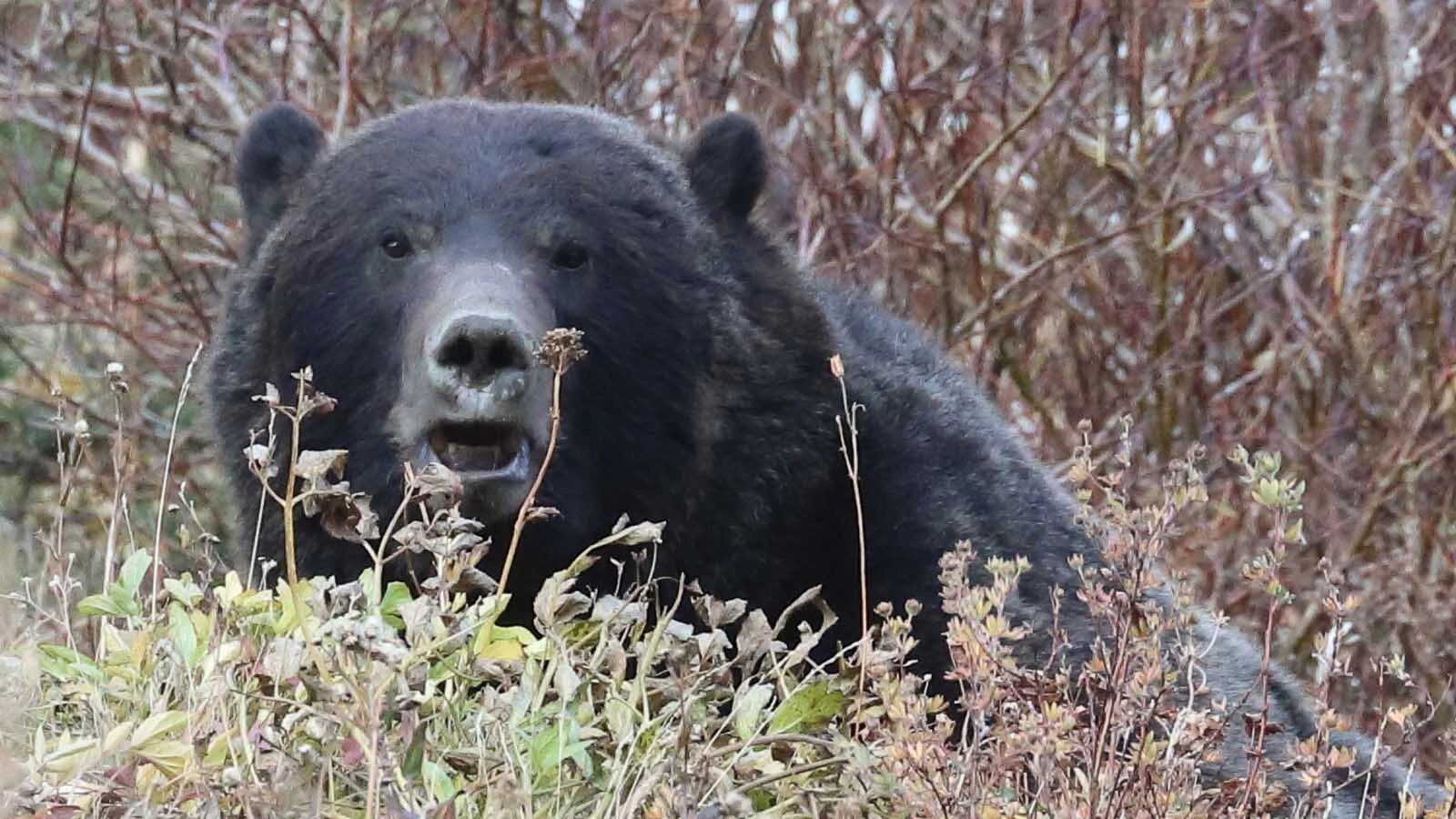
He photographed a grizzly “about 15 miles away, as the crow flies” from the site of the discovery.
It serves as a grim reminder of the dangers of hiking alone in grizzly country, said Hodges, a novelist and internet personality.
He said he frequently hikes solo in bear country, but never during certain times of day when bears are most active.
“You don’t want to be alone on the trail at dawn, bro,” he said.
Montana’s ‘Sixth Season’
Montana’s grizzly population has been growing and expanding its range, making conflicts ever-more common, resident outdoorsman and retired game warden Jeff Darrah told Cowboy State Daily.
“We used to say that Montana has five seasons,” he said, meaning the four usual seasons plus “fire season.”
“Now, we have a sixth season: human-bear conflict season,” he added.
The Glacier park attack reignites the debate among Montanans over whether grizzlies should be delisted from federal protection in the Lower 48 and managed directly by state game agencies in Wyoming, Montana and Idaho.
State management could include a hunting season for grizzlies.
Darrah is executive director of Montana Sportsmen for Fish and Wildlife, which favors delisting grizzlies.
Another Montana resident, grizzly researcher and conservationist Louisa Willcox, told Cowboy State Daily that she opposes delisting grizzlies.
“Delisting will not change a thing” in terms of human safety, she said.
‘Get Off My Trail’
There’s been a perception that grizzlies in Glacier National Park are meaner than Yellowstone’s bears, because attacks are said to be more frequent in Glacier.
However, it’s more likely a matter of conditions rather than geography that makes them ornery, bear biologists say.
Glacier has more trails going through steep, rugged country with thick brush and timber, making it more likely for humans and bears to have surprise encounters at close range.
Hodges said that’s particularly true on the park’s west side, where Pollio was apparently attacked, and where he was photographing moose and bears.
He’s frequently hiked and camped alone in the park’s backcountry. He says that allows him to get wildlife images that others can’t, but he realizes that comes with “an element of risk.”
Being keenly aware is the key, Hodges said.
“I’m incredibly aware all the time. My head is up and forward,” he said.
He always carries bear spray, but has had to use it only once, in 2012.
He was on a steep, narrow trail, running alongside a cliff, when he encountered a grizzly coming the opposite direction on the trail, Hodges said.
“The bear was like, ‘Get off my trail.’ And I was like, ‘If I get off your trail, I’ll die because there’s a cliff there,’” he said.
He said the bear turned and ran when he sprayed it, adding that it helps to stay as calm as possible around bears.
“Bears don’t like nervous energy” coming from people, he said.
He noted that he’s seen instances of people “shrieking ‘Hey bear!’ at a grizzly” instead of using a calm, steady voice.
Hodges said he can’t speculate on what circumstances might have led to Pollio apparently being fatally mauled. Or what, if anything, Pollio might have done wrong, but he considers the incident to be a tragedy.
State Management Would Help
Darrah acknowledges that delisting bears wouldn’t change anything inside Glacier or Yellowstone national parks. Bears will remain fully protected there regardless.
He added that many other Montanans think that delisting them outside national parks could help reduce conflicts.
Whether allowing people to hunt grizzlies would instill bears with greater fear of humans is “definitely a discussion,” he said.
Darrah said that many think Montana Fish Wildlife Parks (FWP) and its sister agencies in Wyoming in Montana could mitigate risks if they have direct management of grizzlies.
“We don’t necessarily need to kill a whole bunch of grizzly bears, but let the states manage them,” he said.
He said that when he was an FWP game warden in the early 2000s, “I had an elk hunter get killed by a grizzly bear.”
The hunter was going back to start packing out the meat from an elk he’d killed, but a grizzly had claimed the carcass, he said.
Predators have had consequences for Montana residents beyond human safety, Darrah said.
“The Bob Marshall Wilderness used to be a mecca for elk hunting,” but the elk herds have all but disappeared from there, and many blame it on “dense populations” of grizzlies and wolves, he said.
“We’re seeing grizzlies in Montana in places where they haven’t been seen in 100 years, and that’s led to more conflicts, as more people are moving to the state as well, he said.
“Everybody wants to have a chicken coop” on their rural property, Darrah added.
If there’s a conflict, “the bear loses, because it killed a chicken,” he said.
No ‘Silver Bullet’
Willcox said that while delisting bears might seem politically expedient, it won’t actually resolve conflicts between people and grizzlies.
Incidents such as Pollio’s death “lead to people hoping something can be done, and it’s an easy thing to seize on delisting as a silver bullet,” she said.
But there’s no simple fix, Willcox said.
“If the goal was to eliminate injuries and potential fatalities, you would have to eliminate all the bears,” and nobody wants that, she said.
Instead, there should be a “gold standard” of preventing human-bear conflicts.
That could include government agencies and local communities continuing to push for such things as bear-resistant garbage containers, she said.
Residents and visitors themselves also need to up their bear safety game, she said.
“It’s not up to the government entirely to fix the human injury and potential fatality problem. It is, in large measure, up to us,” she said.
In places such as Yellowstone and Glacier national parks, that could include avoiding risky behaviors such as hiking alone in grizzly habitat, Willcox said.
“Hike in a group of at least two people, if not three or four,” she said. "Most of the research shows that if you’re in a party of four, you’re not going to have a problem."
Maintain situational awareness, added Willcox, who has been in bear country in the United States, Russia, Europe and Canada.
“If you look up and see ravens circling a spot, as if there might be a carcass there, avoid that area,” she said.
Mark Heinz can be reached at mark@cowboystatedaily.com.