
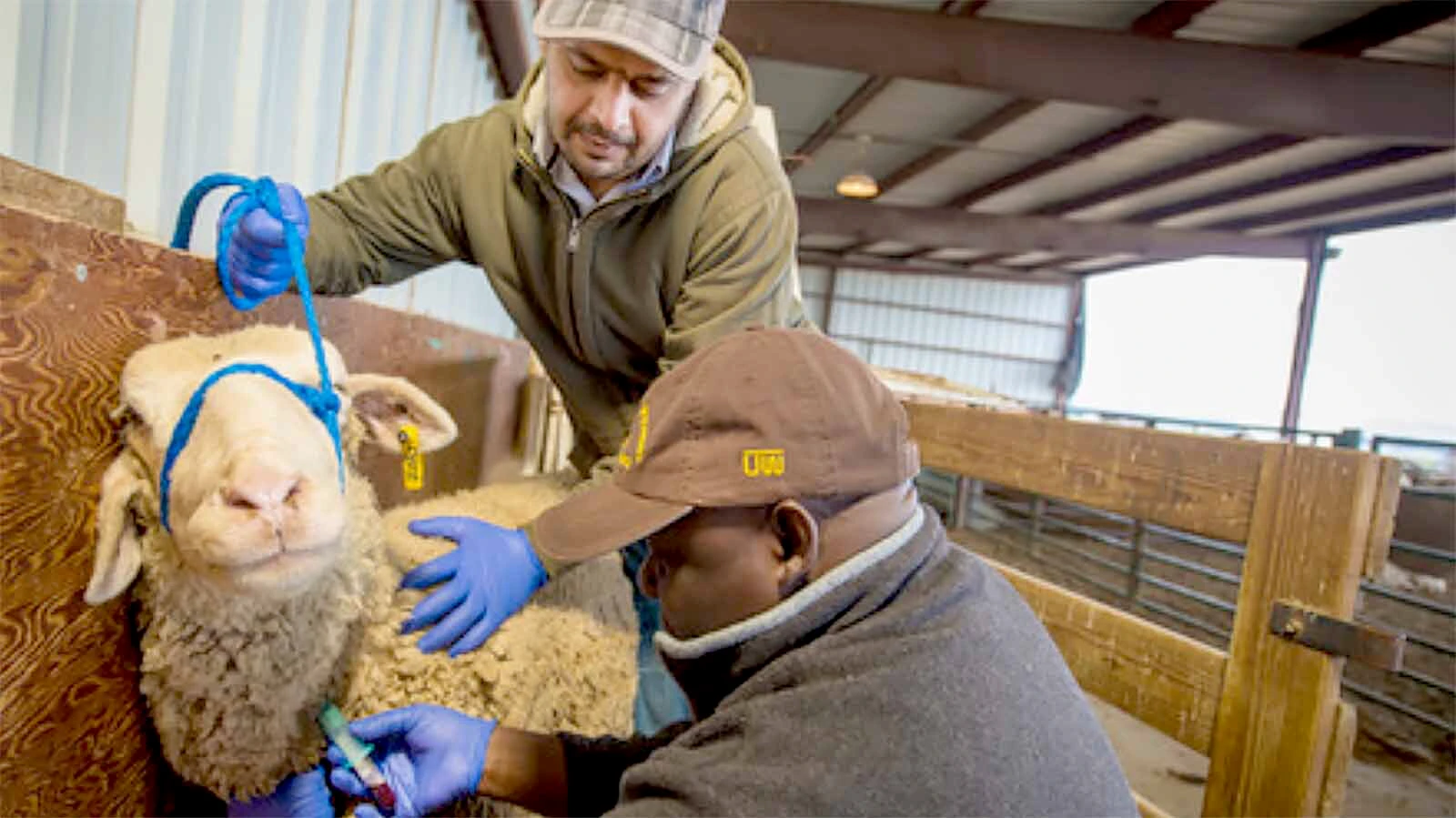
The next time you throw a Wyoming steak on the grill, here’s a piece of gristle to chew on.
In states like Wyoming, the number of veterinarians who are looking after the health of food animals such as cattle and sheep has plunged by almost 90% in the U.S. since World War II, according to a 2023 Johns Hopkins University report.
Meanwhile, just 5% of new veterinarians are choosing large-animal work nationwide, and a retirement cliff is looming in Wyoming.
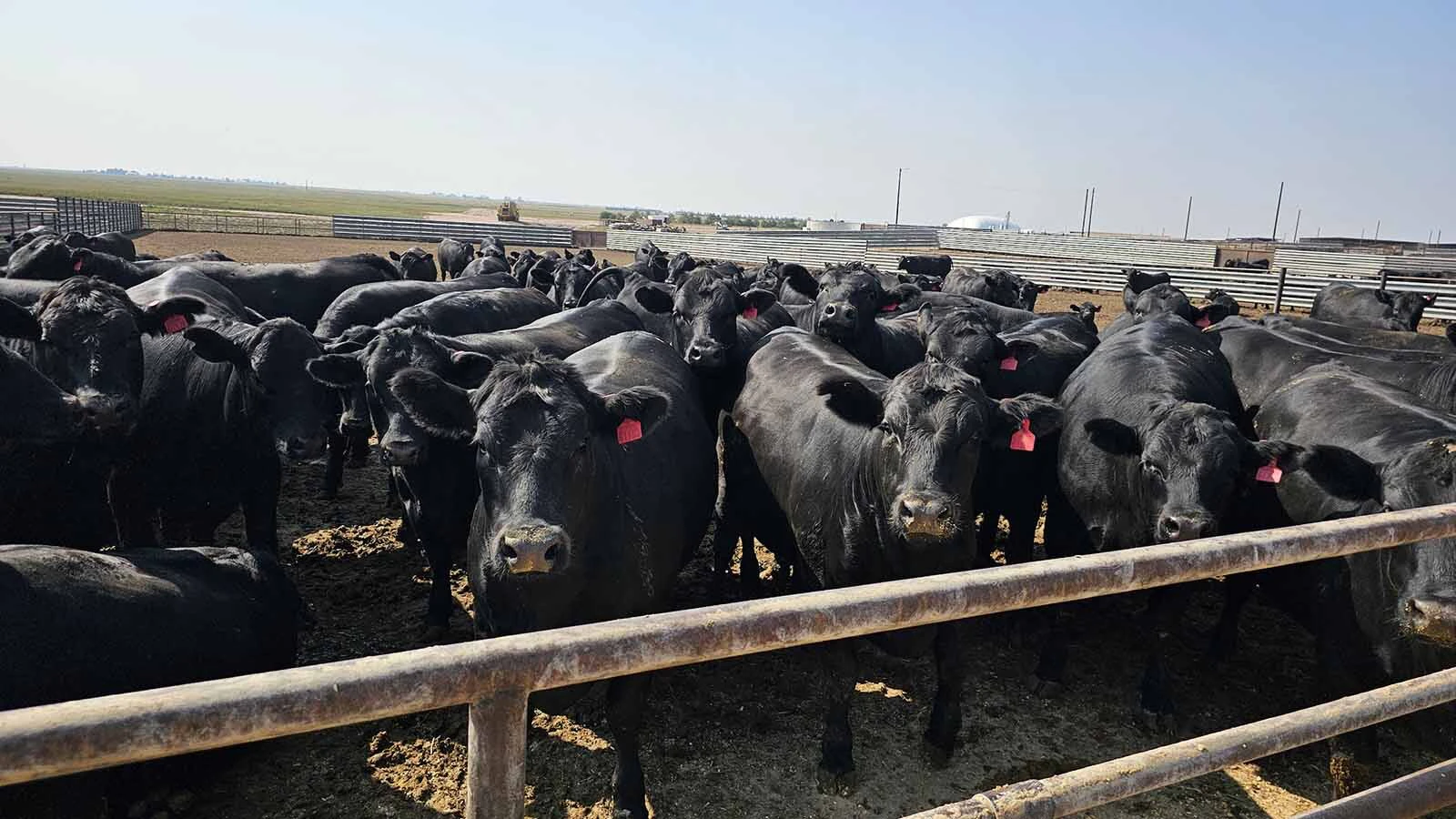
In a state where cattle outnumber people more than 2-to-1, that’s a five-alarm fire for the safety of the nation’s food supply, Wyoming Veterinary Medical Association Executive Director Jenny Bloomquist told Cowboy State Daily.
“If you’re looking at the western part of the state, we’ve got one veterinarian retiring in Big Piney,” she said. “We’ve got, I know, a veterinarian in Thermopolis who is trying to find — he’s not ready to retire yet — but he’s trying to find an associate.
“There are some in the Powell area. Definitely, there are pockets.”
These looming shortages have already prompted the Wyoming Veterinary Medical Association to set up a committee to create a plan of action.
“One component of that is to try to get this data, finding out what the true numbers are,” Bloomquist said. “Because the board of Veterinary Medicine doesn’t collect data like that.”
Desperate Calls From Too Far Away
The lack of comprehensive data means there’s no certainty yet around how big the problem is, or where it’s worst.
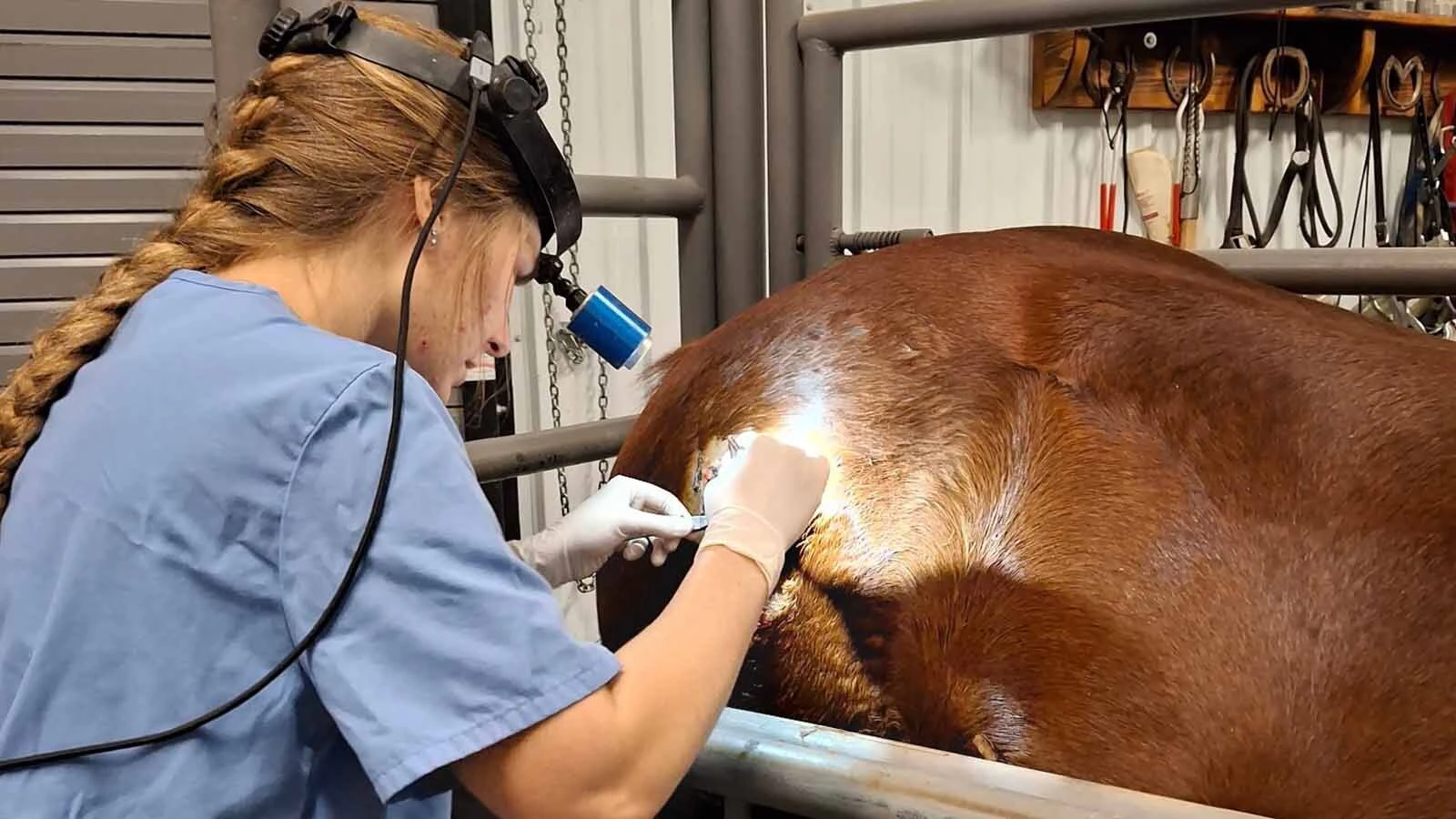
Veterinarian Lance Berry, who operates a robust practice out of Wheatland, knows there is a problem, though, because he’s taking a lot of calls from desperate ranchers who are way too far from his service area.
“They’re begging for a vet to come and do something,” he said. “And I just can’t be that far away. I’ve still got to support and be here for my everyday clients and, I hate saying things like this especially in an interview, but the juice just isn’t worth the squeeze on our end.”
The financials don’t pencil out for long-distance emergency trips — even if Berry could arrive in time for that animal.
“I know it sounds terrible, but it’s just not worth it for me to drive 100 miles to do a C-section or fix a uterine prolapse,” he said. “And some of that stuff is stuff that people can’t safely bring to us. They need somebody in their area.”
The signal though is clear.
While Berry's practice is strong, with five veterinarians in a mixed-animal practice that’s serving Platte, Goshen, and part of Albany counties, there are neighboring communities that already don’t have enough vets of their own.
Otherwise, they would not be calling a vet who is so far away from them.
Berry estimated he gets an out-of-area emergency call at least once or twice every week, a figure that rises during busy times, such as calving season.
That’s been an escalating trend, Berry added.
“We’ve started to soak up some more calls just because there’s some clinics in southeastern Wyoming that have found it’s no longer either financially beneficial for them to take (emergency) calls, or they’re burning their people up,” he said.
“For whatever reason, they’ve slowed down on taking the calls, or they’ll only take calls from established clients. It’s shifting some pressure to us,” he added.
Why Young Vets Don’t Want The Job
Berry is somewhat unusual in that he prefers treating both large animals and being a small-town vet.
That doesn’t mean he isn’t well aware that he’s leaving a lot of money on the table with those choices.
“I talk to a lot of my classmates from Kansas State who stayed in the Kansas City area,” he said. “They work four days a week, they don’t take any calls, and they make twice what I do, if not more.”
That’s not a complaint, Berry added, because he’s happy with his choices. But it’s a dynamic that’s shaping the choices other graduating veterinarians are making.
Another trend Berry has seen is that small-animal vet care is dominating the sector. That’s driven by families seeing their “fur babies” as not just another member of the family, but a human equivalent.
They’re willing to spend a lot of money on medical care for their pets, making small-animal care far more lucrative than the care for livestock.
“I have a couple of very dear friends who, they’re not in Wyoming, but they are in other states, and they have quit practicing any sort of food-animal production medicine just because they can make so much more in the small animal side.”
Berry and Bloomquist see these trends as likely to continue driving new veterinarian’s choices, in part because becoming a veterinarian is an expensive proposition.
The cost of becoming a vet is around $250,000, Bloomquist said. That’s over and above the required undergraduate degree.
“Are you going to choose a position that maybe pays $90,000, or go to rural veterinary medicine that maybe pays $60,000?” Bloomquist said.
“And then on top of that, we have a lot of corporate veterinarians — not as much in Wyoming as other places like Colorado — but a lot of those corporate vets are offering $30,000 bonuses,” she added.
According to the University of Wyoming’s veterinary program, the average salary for a veterinarian in the Cowboy State is a little over $81,000. Nationally, the average is nearly $104,000.
Wyoming Plans to Compete
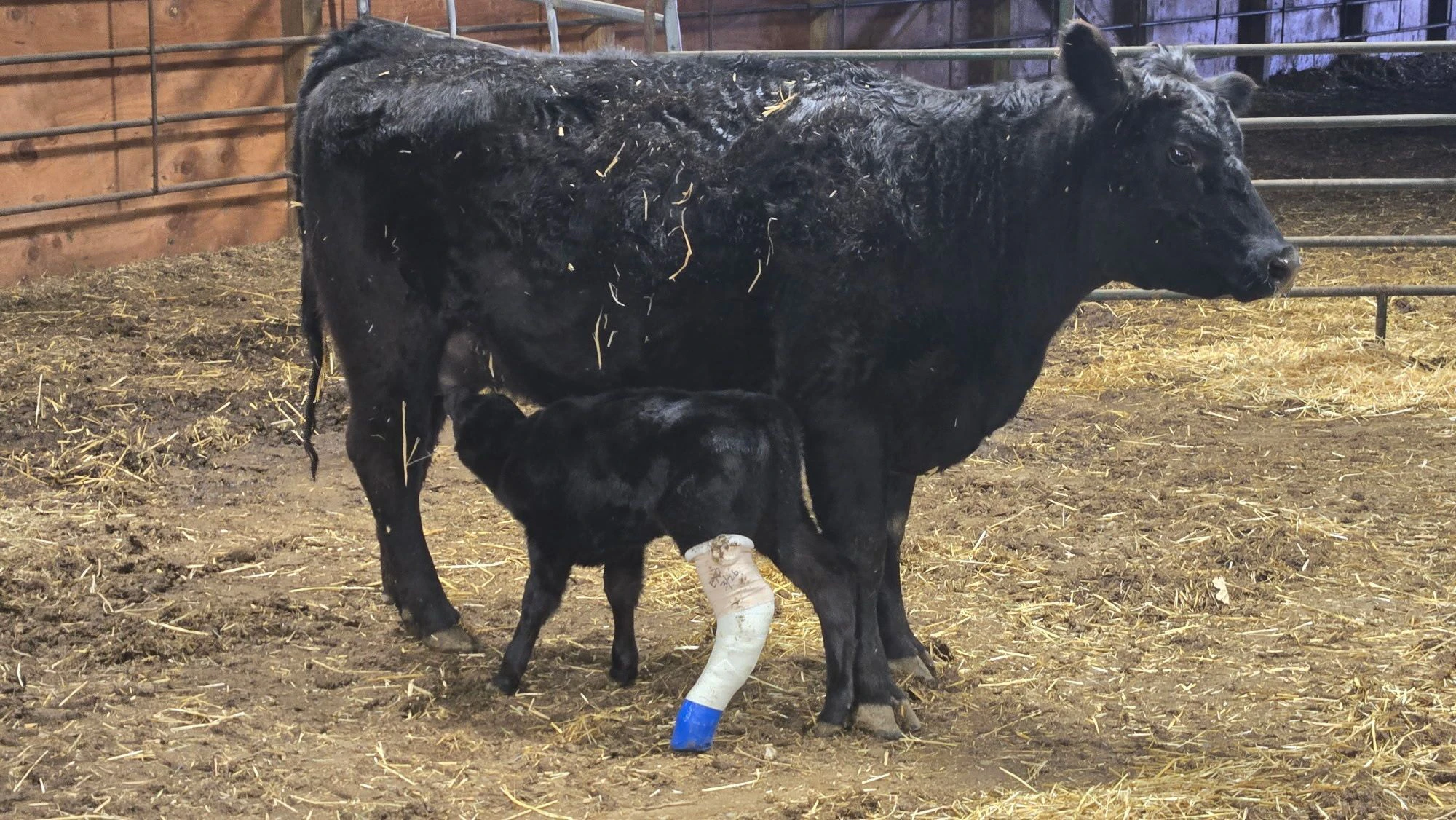
Facing such headwinds, Wyoming is exploring multiple strategies to compete, including state support to send five Wyoming students to Kansas State University’s rural veterinary program.
That will include more than just tuition help, Bloomquist said. The students will have opportunities to work with mixed practices in rural areas, so they can see what it’s like before they graduate.
The hope is that the on-the-ground experiences will spark long-term commitments to underserved areas.
Nationally, meanwhile, there are efforts to create repayment programs for vets who choose to focus on food animals, Merck Animal Health Director of Food Animal Technical Services Justin Welsh told Cowboy State Daily.
“There are a lot of things happening right now to try and remedy this,” he said. “We’re seeing a lot more vet schools come online, so we’ll be able to train more veterinarians.”
There’s also been talk of advancing telehealth options, Welsh added, such as having a veterinary assistant for certain types of procedures, who is being monitored remotely by a veterinarian.
He believes that could make some sense in certain situations, and it’s actually something Colorado has been exploring.
“All of that has to be underneath the umbrella of a veterinarian,” Welsh said. “A veterinarian has to have control or oversight of that. But a lot of the tasks that veterinarians do in rural America, those are manual skills that can be learned and done very safely, and are done by ranchers all over the place.”
What veterinarians are needed for, Welsh believes, are things like prescribing drugs.
“So I think, moving forward, we’ll see more of that,” he said. “Just due to the nature of labor and what we’re talking about.”
Band-Aids Will Backfire
Bloomquist, however, worries about cutting corners.
“It’s a dangerous slope,” she said. “Colorado did develop a kind of mid-level, veterinary practice assistant. It’s an 18-month course online.”
That’s not something the American Veterinary Medical Association supports, Bloomquist said. “That’s not even able to be covered by a veterinarian’s liability insurance.”
What makes more sense to Bloomquist would be a licensed veterinary technician, who would go through more course work, including practical labs.
“That’s a better route, and we’ve tried to get that here,” she said. “We’re one of only eight states in the country that does not have licensed veterinary technicians. We’ve tried to get it through the Legislature several times.”
Licensed veterinary techs take a national exam, Bloomquist added, and get a lot of in-person training as well.
“Having someone who has a master’s online for 18 months and is called a veterinary physician or practice associate or something is not the answer,” she said. “Some solutions are valuable and will help. But some solutions are band-aids that are just going to make things worse.”
That’s the category Bloomquist would put lay people doing pregnancy checks into, a measure she said the Wyoming Legislature’s Agriculture Committee is deliberating during the interim.
“It’s frustrating to us for them to say that’s the No. 1 priority in our state,” she said. “They are kind of using the veterinary shortage as an angle to do that, when, in fact, if you take away that service we will lose more rural veterinarians.”
Pregnancy checks are a vital part of establishing connections between producers and veterinarians, Bloomquist believes.
“It’s how a veterinarian establishes that relationship, gets on the ranch to monitor herd health,” she said. “They can detect diseases. They can detect mineral deficiencies, different things.”
Lay people doing pregnancy checks will not be able to do any of those things, Bloomquist said, and will just be cutting off a vital connection with those who can help prevent small problems from becoming bigger problems.
“That’s dangerous when we’re looking at the food supply,” she said. “People forget that we’re producing food, and the veterinarian has a very important role in keeping our food supply safe, in keeping diseases monitored, and a lot of different things.
"To have someone who doesn’t have the training go in and just undercut them and do this service, in the long run we’re all going to pay for that,” Bloomquist added.
Wyoming Not Alone
Wyoming isn’t alone in facing such challenges, Welsh said. With the number of food-animal vets down roughly 90% since World War II, at least 46 states are facing critical shortages when it comes to veterinarians who care for food animals.
“You’ll find places where vets say, ‘Oh we’ve got plenty of vets around, but then you go talk to the producers and they have a different vision. It’s like, ‘Yeah, I have a hard time finding a vet,” he said. “Forty years ago, if you had 10 vets in an area, there’s now one.”
That’s setting up a fierce battle in the years to come, as more Baby Boomers retire and fewer new veterinarians enter the profession.
It’s a fight that has to get resolved somehow so that the nation has a secure food supply.
Particular solutions might be debated, but the bottom line is no one is debating the idea that solutions of some sort are needed.
“The crux of the matter is No. 1, we have to have this food supply,” Welsh said. “And No. 2, we have to be very efficient with it too … and healthier animals are much more efficient at producing protein.”
Selling Small Towns
Wyoming does face particular headwinds when it comes to competing for the large-animal vets it needs, Welsh said.
It’s a rural state, up against places that can offer new veterinarians high-paying, 9-to-5 jobs that don’t include taking emergency calls.
“These corporate practices can create a really high-quality work-life balance,” Welsh said. “That’s something that doesn’t always happen in a rural practice, work-life balance.
"You are very, very close to your practice, and if there’s not an emergency clinic in say, Wheatland, which I don’t think there is one that opens at 5 p.m. and closes at 7 a.m. the next morning, (the town vet) gets those emergencies,” he added.
That leaves one very tired individual trying to juggle early morning emergencies and a day shift too. Meanwhile, selling the idea that a small-town pace of life is worth that kind of sacrifice, along with less pay, is a tough sell.
“When you’re in a smaller town, you’re very much a part of those communities,” Welsh said. “You’re a big part of the community structure and that gives a lot of folks value, self-worth if you will.
"But it’s also hard to sell that … It’s hard to tell someone from an inner city, ‘Hey, if you go to the middle of nowhere you’re going to be a big part of the community,’" he added.
Figuring out how to keep veterinarians happy in rural towns like those in Wyoming is crucial to keeping people across America well-fed and happy.
That way when that steak lands on a plate, people only notice that it was juicy and delicious, with no gristle to chew on.
Renée Jean can be reached at renee@cowboystatedaily.com.


