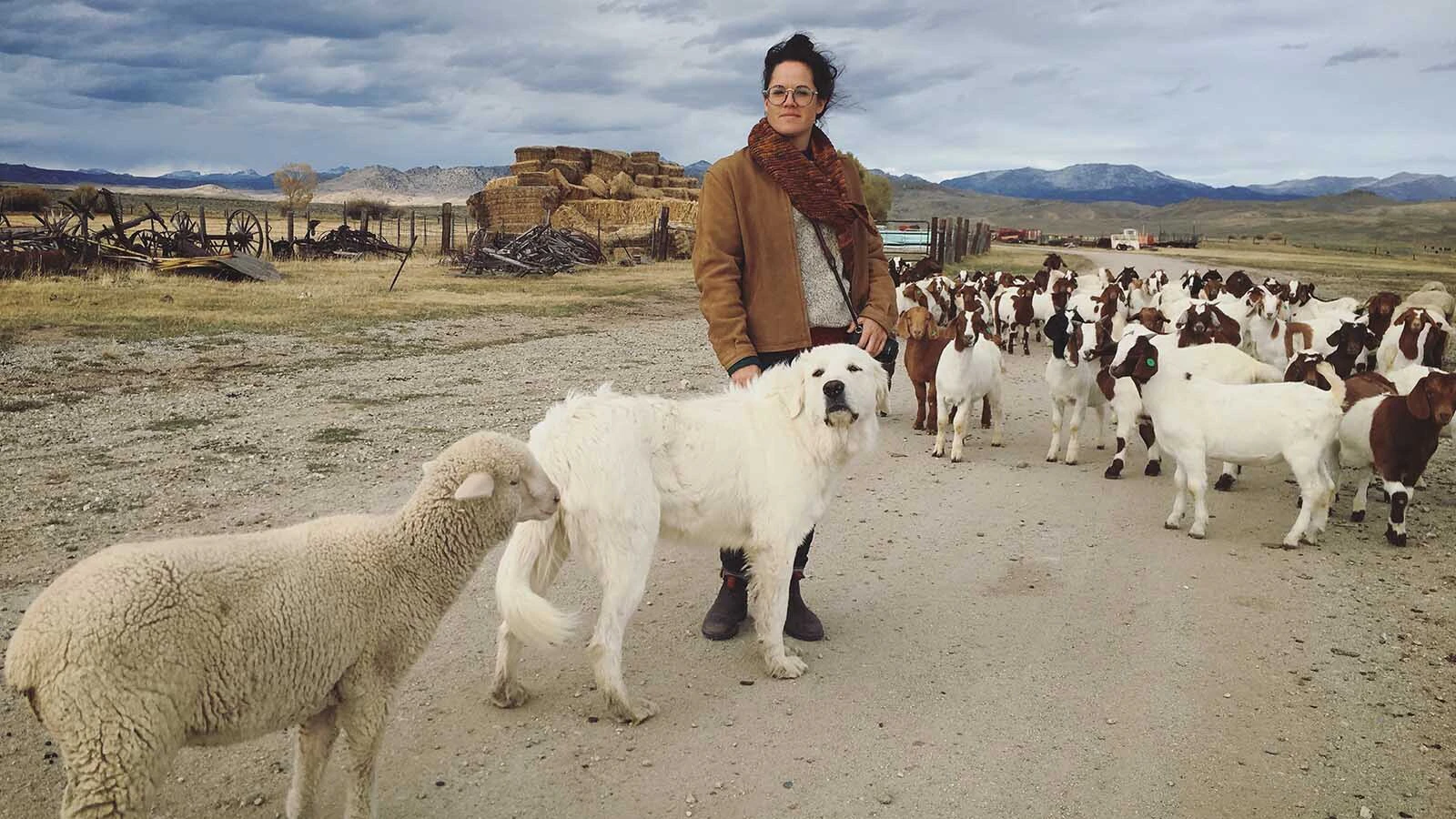
Brittany Cole Bush’s path to an agriculture-based life as a shepherdess isn’t typical.
Growing up in San Diego, California, Bush was more in tune with the surfer culture than leading a next-generation shepherding revolution that has its roots at a Wyoming ranch.
On any given day, the self-proclaimed “modern-day pastoralist” is in sun-faded jeans and a well-worn canvas jacket, a bandana or wide-brim hat pulled low against the California glare.
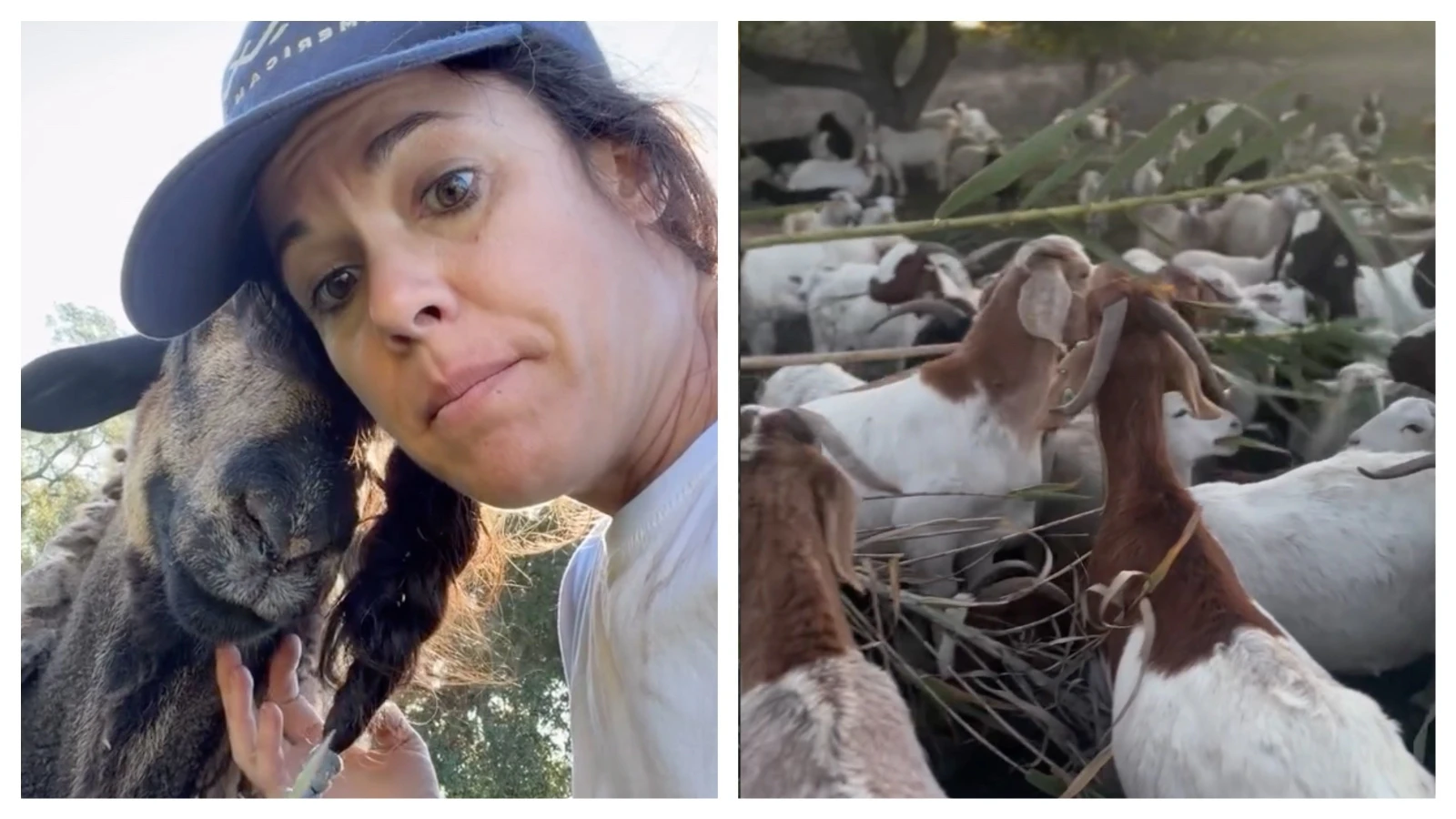
Dust clings to her boots. A crook or a length of electric fencing wire is often in her hand. Her dark hair is often tied back in a practical braid, and her attention is fixed not on people, but on the slow, steady drift of animals across the land.
It’s a far cry from where she started.
Bush grew up near the beaches of San Diego, a place better known for surfboards than sheep. Ranching wasn’t part of her upbringing.
But somewhere along the way while studying ecology and agriculture in college, she realized the work felt familiar in a deeper sense.
“Sheep are in my blood,” Bush said she realized.
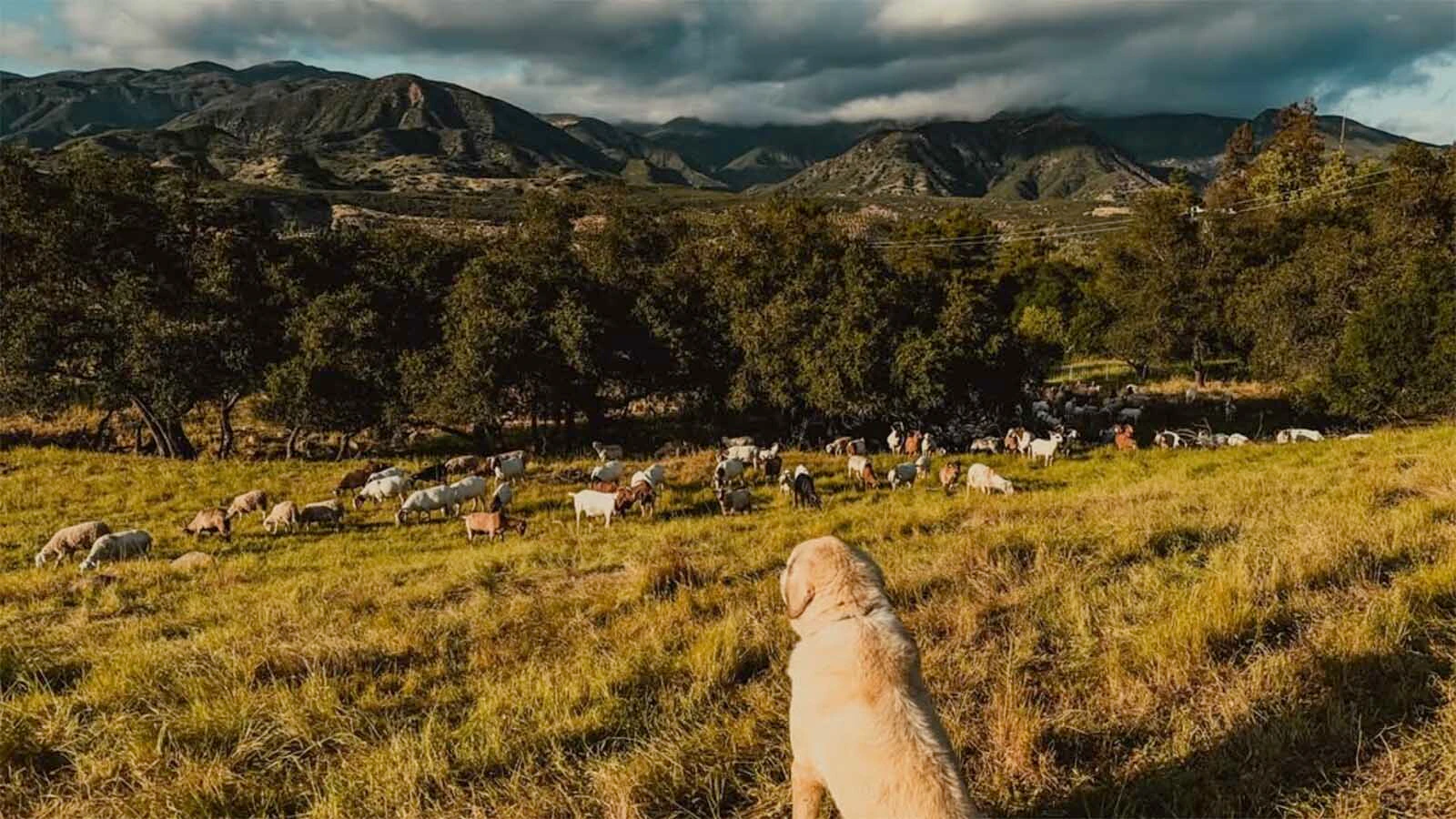
Today, Bush runs Shepherdess Land & Livestock Co., a roaming grazing operation that sends sheep and goats across central California, where they quietly do a job that machines often can’t: eating their way through overgrown, fire-prone vegetation.
Making A Business Out Of Movement
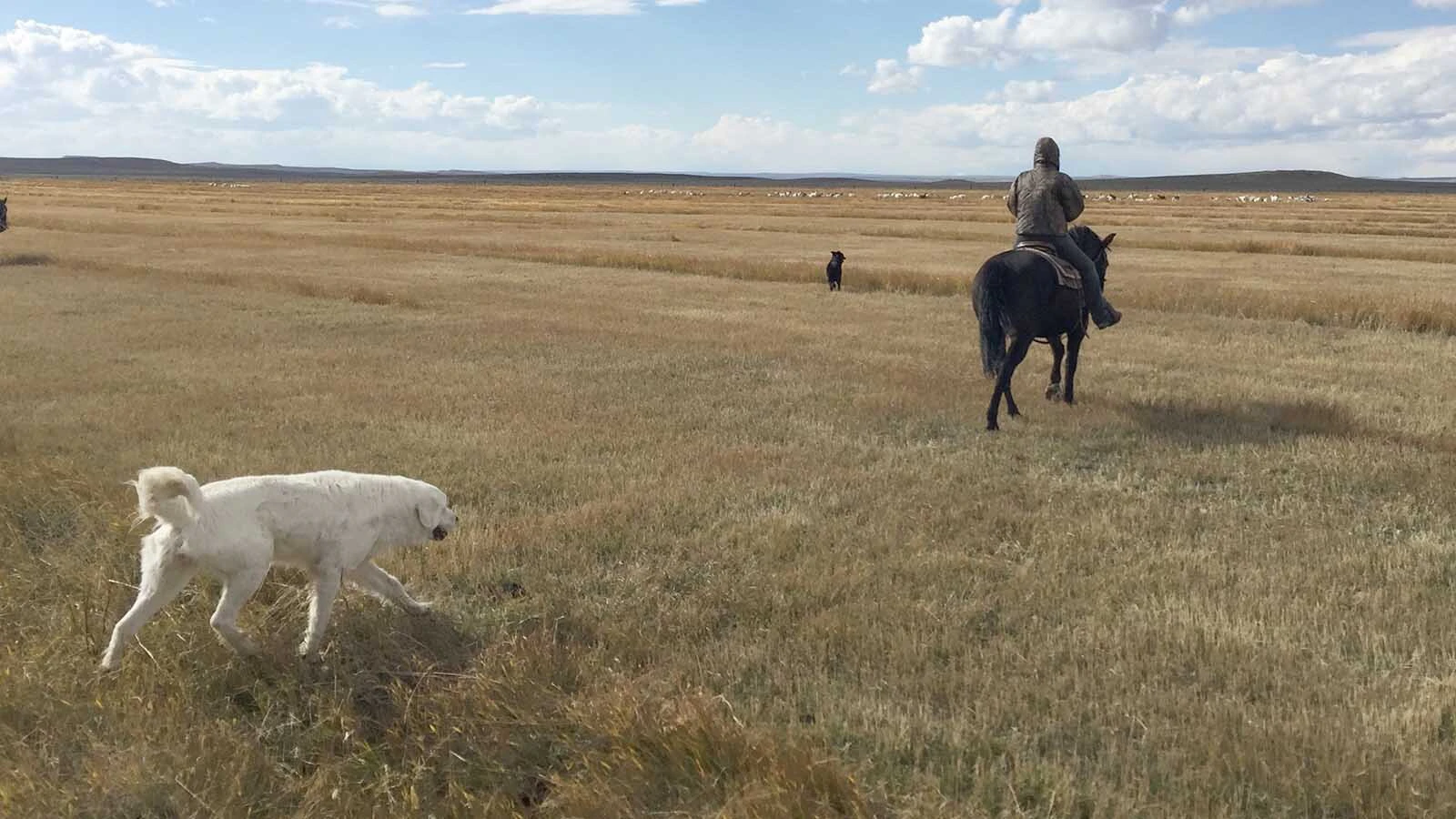
Bush’s work follows an old rhythm.
Her animals move with the seasons, grazing hillsides, parks and open spaces that range from rural rangeland to the edges of subdivisions.
The practice is called prescribed grazing — the intentional use of livestock to manage land for ecological and economic benefit. But the work itself is as ancient as agriculture.
“My operation is not attached to one land base,” Bush said. “We move with the seasons with our animals.”
That means long days and constant attention to her herds. Shepherds rise early to check fences, water, and guard dogs. They scan for predators, watch the health of the herd, and track how the animals move across a landscape.
Then they do it again the next day.
“The shepherds bed down when the animals bed down,” Bush said. “You keep on doing it day after day.”
In urban areas, the work takes on a second purpose. A grazing herd in a neighborhood park tends to draw a crowd.
“People like to see the sheep and goats,” she said.
And once they stop, they start asking questions.
A Basque Shepherd’s Influence
Bush didn’t come into the work through family tradition, but through mentorship.
While working at a ranch during college, she met a Basque shepherd who took her under his wing – part of a long lineage of sheepherders whose influence stretches across the American West.
“He instilled in me the animal husbandry work and showed me the operational side of things,” she said.
Not long after, she learned that a park district in central California was paying grazers to bring in sheep and goats to manage vegetation, a practice that gained traction after devastating fires in the Oakland Hills in the early 1990s.
Bush saw an opportunity.
“I brought the idea back to the ranch owners,” she said. “I said, ‘Hey, we can take this show on the road.’”
The owners were skeptical. But they let her try.
Nine months after submitting a bid, she landed the contract – and stepped into what would become a lifelong path.

Prescribed Grazing, Wyoming-Style
The same approach has taken root across Wyoming, where goats and sheep are increasingly used for weed control, fire mitigation and improving rangeland health.
Cities like Cheyenne have turned to grazing goats for vegetation management. On Thunder Basin National Grassland, targeted grazing helps improve range conditions.
In Rock Springs, goats have been brought into the Bitter Creek area for several years to reduce weeds and help mitigate flooding. The work is effective — but not cheap. Maintaining a herd requires constant human presence, fencing, and care.
Bush understands the cost.
“It’s incredibly labor-intensive,” she said.
But for many communities, the payoff is visible.
Started With Wyoming Goats
Despite her California roots, Bush’s operation has a strong Wyoming connection.
Her first goats came from Midland Ranch, which spans parts of Sublette and Sweetwater counties. She met ranchers Lou and Shelby Arambel at an event that celebrates one of the West’s oldest traditions, trailing sheep.
That event left an impression.
A Festival Built On Hooves And History
Trailing of the Sheep Festival is part parade, part history lesson, part homecoming.
Each fall, thousands of sheep pour down the main street of Ketchum, their hooves clattering against pavement as crowds line the sidewalks several people deep. Children sit on shoulders. Cameras rise in unison. The animals move as one, guided by herders and dogs, as they have for generations.
The festival began modestly in 1996 as a handful of people gathering for coffee before walking with a band of sheep through the Wood River Valley. Today, it draws visitors from across the country and will celebrate its 30th year in October.
At its heart is the tradition of “trailing” – moving sheep from high mountain summer pastures down through the valley to winter grazing and lambing grounds farther south.
It’s working history is still alive.
For Bush, the sheep trailing festival was also a turning point; it was the place where she first connected with the Wyoming ranch that would supply her starter herd.
Bridging Two Worlds
Bush is quick to point out she didn’t inherit her life.
“Nothing was given to me,” she said.
She chose sheep and goats in part because they’re more accessible than cattle – requiring less land and water – but also because they fit the kind of work she wanted to do.
Now, she sees her role as something larger than grazing.
“We are bridging the urban and rural divide,” she said. “We are bridging traditional agriculture with environmentalism. I sit in that space.”
Her animals, quietly chewing through brush and weeds, often do more than clear land. They open doors.
“I’m getting people to start asking questions,” she said. “It brings them closer to understanding what livestock is to our whole ecological system.”
Raising The Next Generation
That sense of calling traces back to something her Basque mentor told her early on:
“You either have sheep in your blood or you don’t.”
Bush didn’t grow up with it, but she found it.
Now she’s working to pass it on.
Through her nonprofit, Grazing School of the West, she trains new shepherds in the craft and business of prescribed grazing. One of her first apprentices has already returned to Montana to launch his own operation.
“We need more people to do this work,” Bush said. “Therefore, we need more people to know about it.”
Out on a hillside, as a band of sheep moves steadily forward, the work doesn’t look flashy. It never has.
But for Bush, it is work and a legacy that endures.
Kate Meadows can be reached at kate@cowboystatedaily.com.