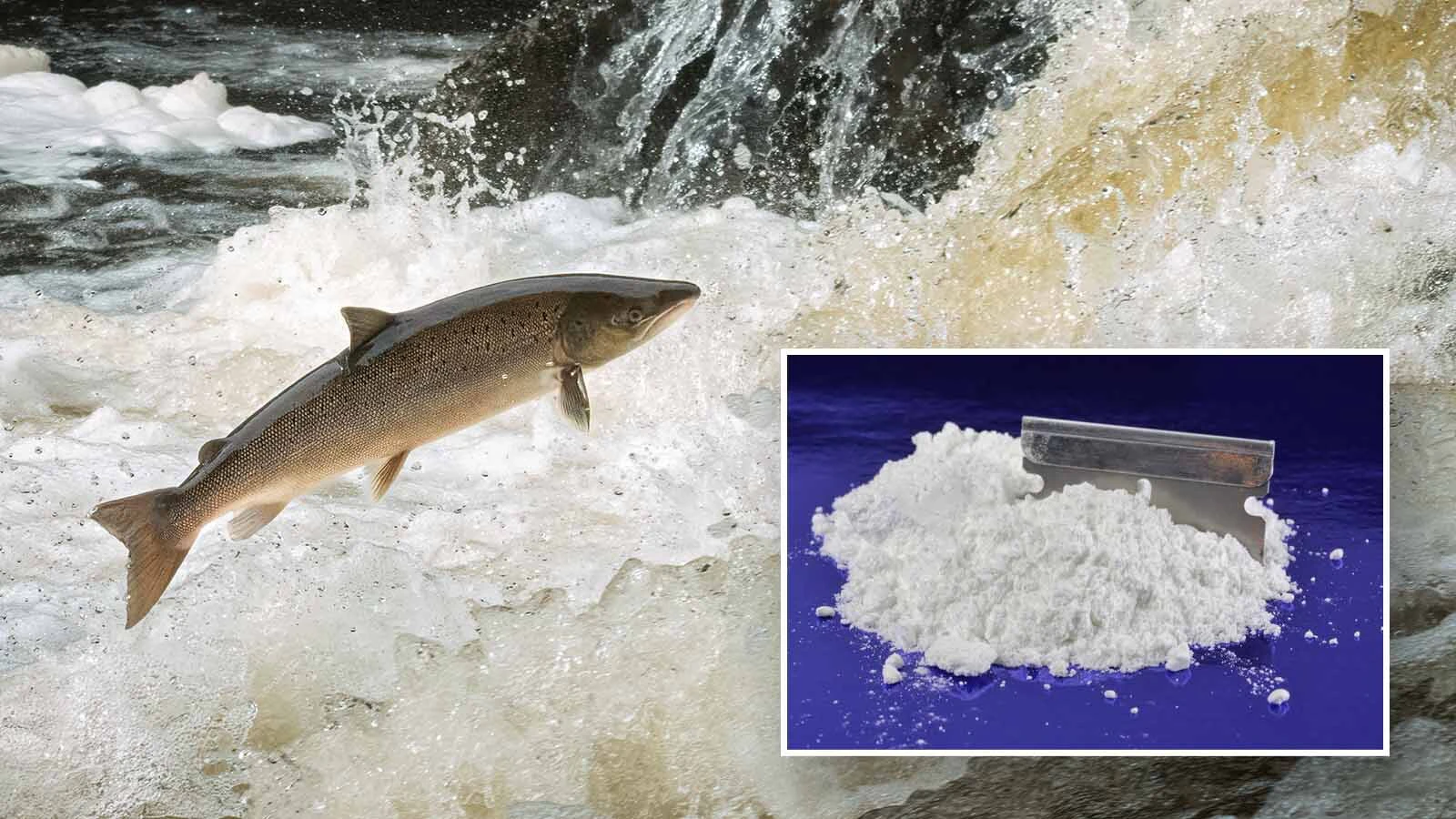
This is your salmon filet. This is your salmon filet on cocaine. Any questions?
New research published by Current Biology sought to determine how cocaine affects the behavior and health of wild Atlantic salmon smolts.
The conclusion is that it does, and quite profoundly. For one thing, coked-up salmon swim faster and farther, the study shows.
For unscientific folk, the first reaction to learning about such a study may prompt a series of questions:
• How the heck do you come up with the idea to give salmon cocaine?
• How does a researcher get someone to pay for getting salmon high in the name of science?
• How do you legally get your hands on cocaine to give to the salmon?
Jack Brand, a professor and biologist with the Swedish University of Agricultural Sciences, was the lead author of the new paper who told Cowboy State Daily that the new study was inspired by a desire to understand how illicit drugs impact natural ecosystems.
“Cocaine and its metabolites are increasingly being detected in aquatic environments around the world, and previous laboratory studies had shown that these compounds can affect brain chemistry and behavior in aquatic organisms,” he said.
This study wasn’t just a laboratory experiment. It was conducted in Lake Vattern, a natural lake in Sweden where the behavior of the affected salmon smolts could be observed in their natural habitat.
Brand hopes the study will awaken the world to the growing impact of illicit drugs on aquatic ecosystems and organisms.
“Our study is one piece of that picture,” he said. “It highlights the need for better wastewater treatment (and) more comprehensive environmental monitoring.”
Fish On Drugs
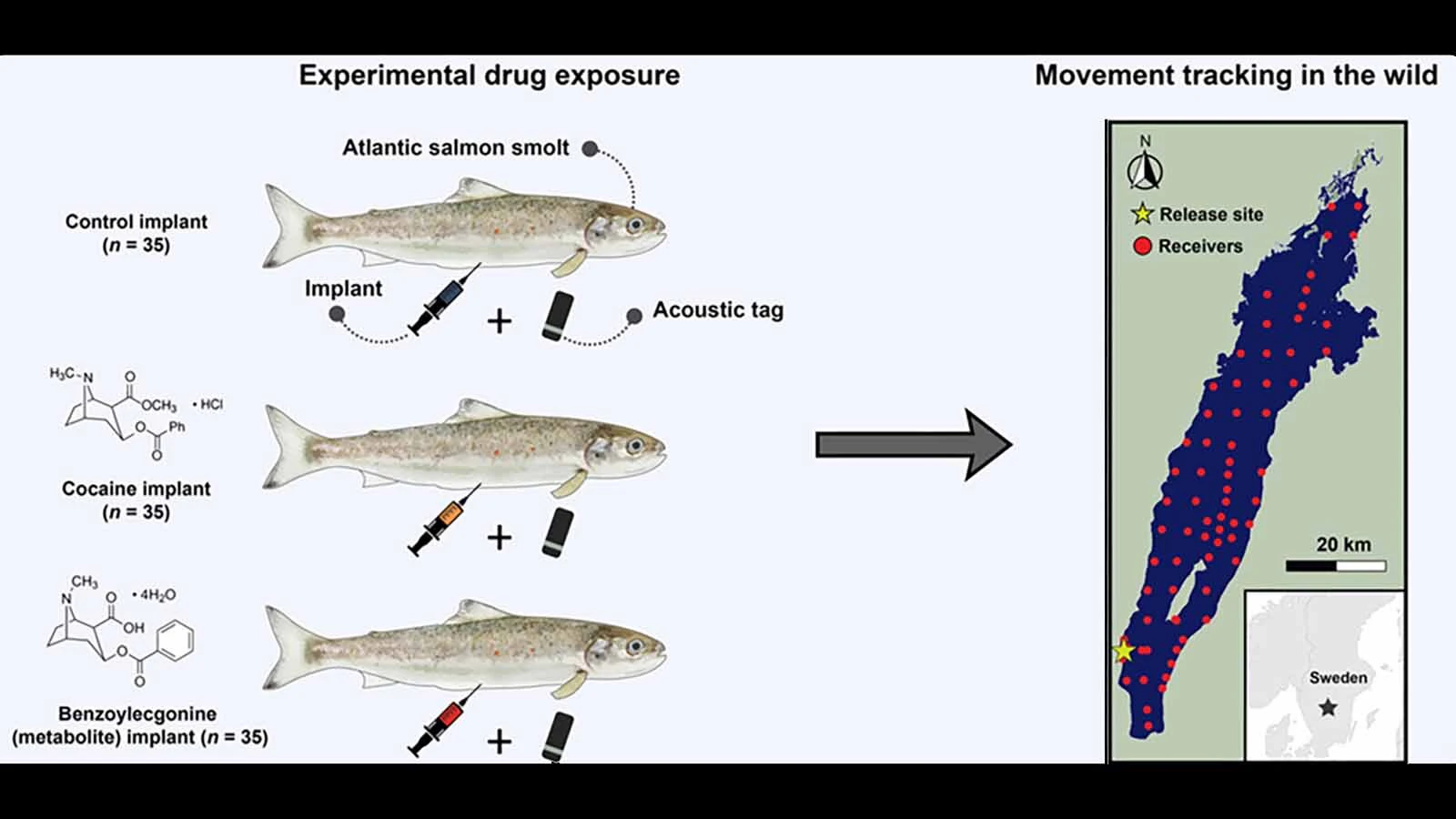
To conduct this study, Brand and his team divided 105 2-year-old juvenile Atlantic salmon smolts into three groups of 35 fish each.
Each fish was anesthetized so it could receive two surgical implants: an acoustic tracking tag and a slow-release implant.
One group had cocaine in their slow-release implants. The second group was implanted with benzoylecgonine, the main metabolite of cocaine that’s excreted through urine, and the third group was completely clean.
“The implant gradually releases the compound over time, mimicking the kind of chronic low-level exposure a fish would experience in polluted waterways,” Brand said.
“After a recovery period, all fish were released simultaneously into Lake Vattern and tracked for eight weeks using a network of 71 large-scale acoustic receivers deployed throughout the lake,” he added.
According to Brand, the study focused on the smolts’ movement. They wanted to see if and how the drug-addled salmon behaved differently. That’s why it was important to work with young fish.
“The smolt stage is a critical developmental window for salmon, during which they undergo major physiological changes to prepare for life in a new environment,” he said. “Disruptions during this period, whether energetic, physiological, or behavioral, could plausibly carry over into later life stages.”
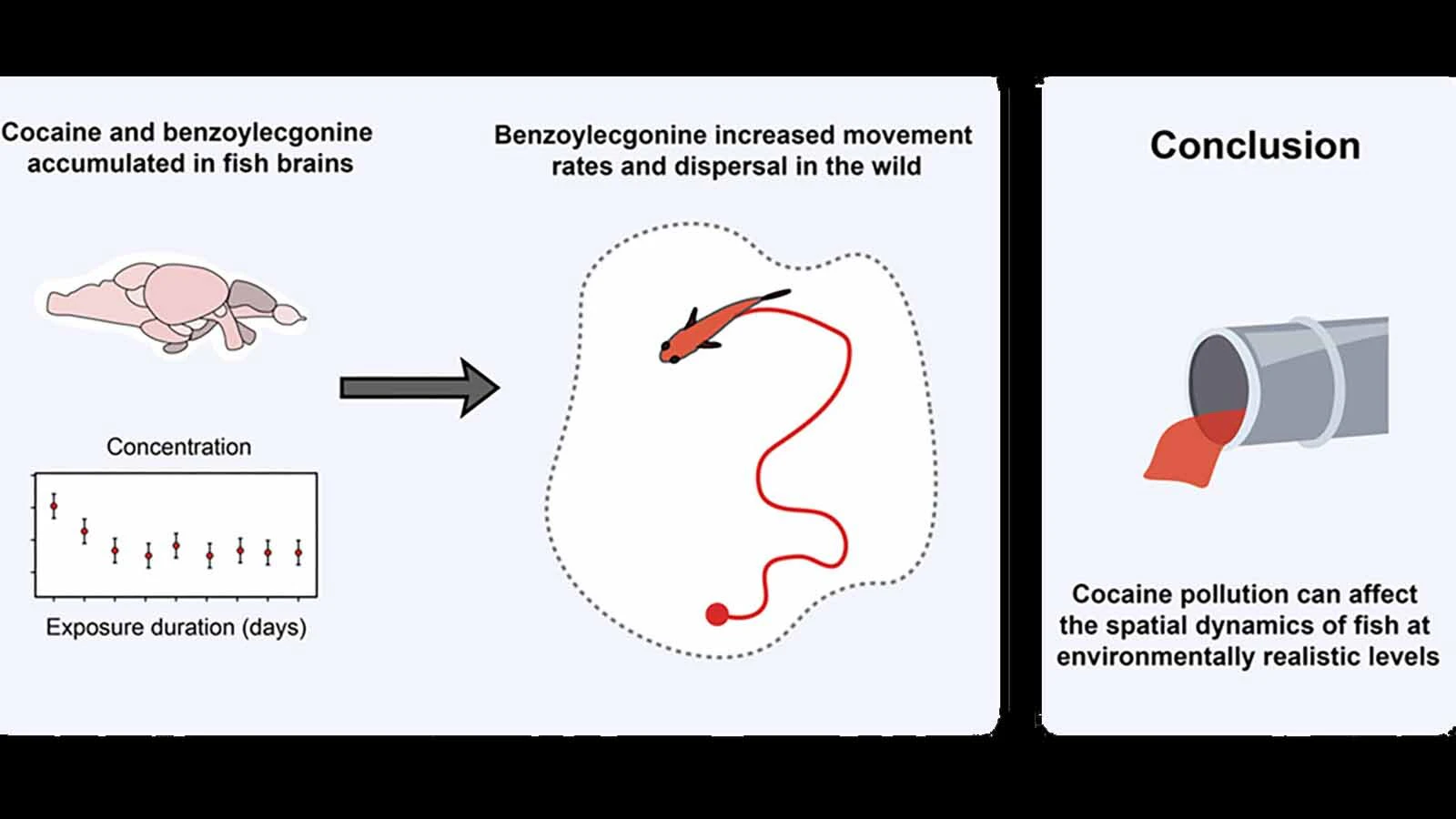
While the fish were monitored in Lake Vattern, a separate group of drug-implanted salmon smolts was studied in a laboratory for 60 days.
Brand said this was done to confirm that the cocaine compounds were “accumulating in the brain tissue at environmentally realistic concentrations.”
“The full study, from planning through to data analysis, spanned several years,” he said.
Blow In The Budget
Brand also explained how a scientist gets money for a cocaine-based study, and the cocaine.
The study was funded by several research grants from Swedish and European foundations, primarily from the Swedish Research Council, which funds environmental and agricultural research, he said.
“The funding applications were assessed through normal peer review processes,” Brand said. “We proposed the research, it was evaluated on its scientific merit, and it was funded accordingly.”
As for the drugs, Brand used pharmaceutical-grade cocaine hydrochloride and benzoylecgonine from certified chemical suppliers.
These companies provide illicit substances for legitimate medical and scientific research conducted by universities, hospitals, and laboratories worldwide.
That’s how scientists can acquire cocaine, methamphetamine, and other drugs so their properties and impacts can be studied.
“In Sweden, working with controlled substances for research purposes requires approval from the relevant authorities, and all our experimental procedures were approved by these authorities,” he said.
Faster And Farther
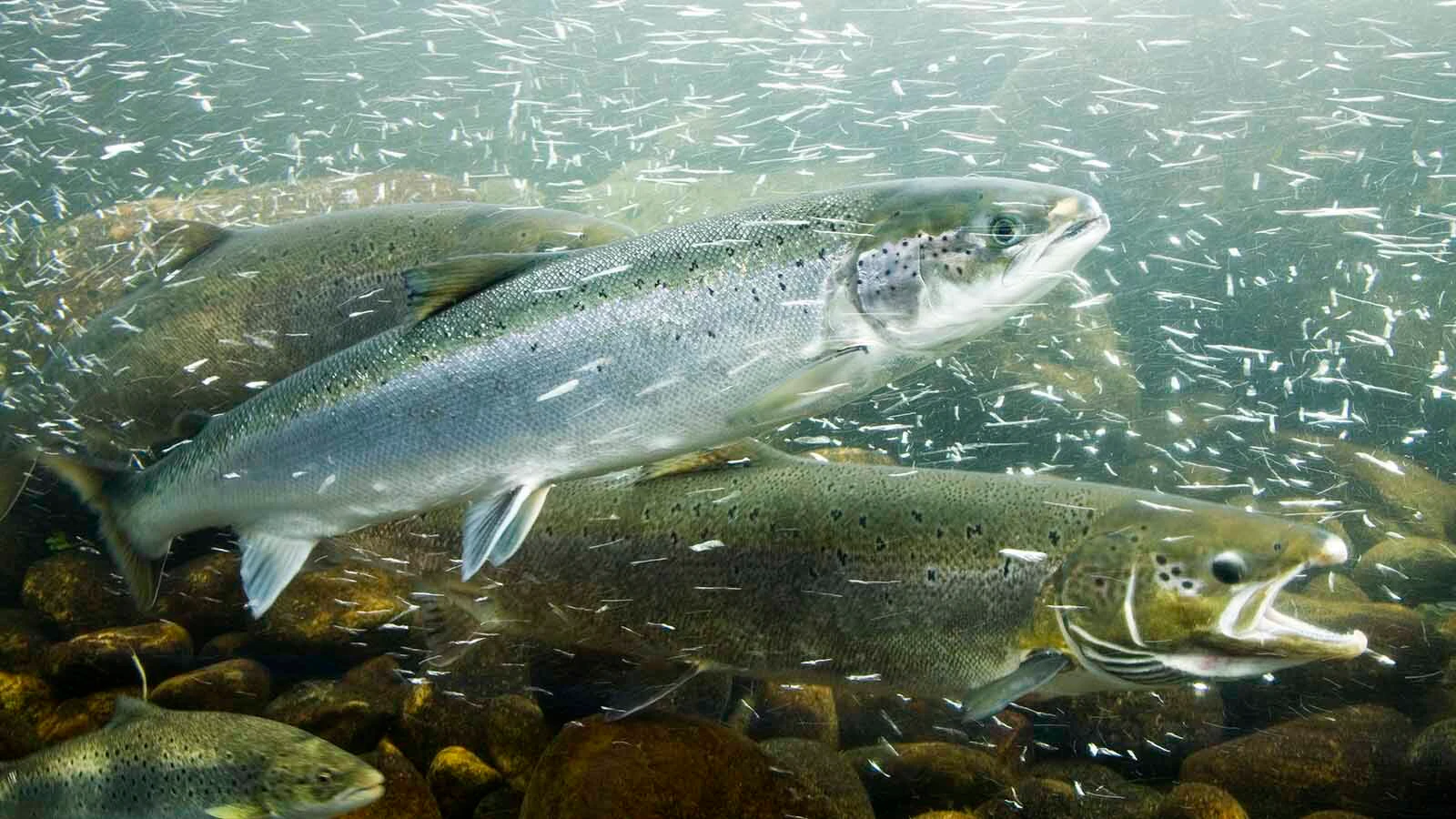
The results of Brand’s experiment were that salmon smolts implanted with cocaine did have significant, measurable changes in their behavior. They swam faster and farther under the influence.
Intriguingly, the biggest changes were in the group implanted with benzoylecgonine, the metabolite of cocaine.
Those fish swam 1.9 miles farther per week than the control group, dispersing roughly 20 miles from the point where they had been placed in Lake Vattern.
Brand said that’s a notable and concerning change in the smolts’ behavior, a direct result of benzoylecgonine in their systems.
“Increased movement comes at an energetic cost,” he said. “For a juvenile salmon, energy budgets are tight. Energy spent on locomotion is energy not available for growth, immune function, or building the reserves needed for later life stages.”
He added that faster, farther dispersal could leave the salmon in suboptimal habitats with less food and more predators.
For a large group of young salmon, being at the wrong place at the wrong time can decimate an entire population.
“It's also worth noting that these fish aren't choosing to move more,” he said. “Their movement is being altered by a chemical contaminant, which is unlikely to be producing an adaptive response.”
The big takeaway is that exposure to benzoylecgonine did more harm than good for the young salmon.
For Brand, the fact that the salmon were more impacted by the metabolite of cocaine is “a concern worth taking seriously.”
“Metabolites matter,” he said. “Benzoylecgonine, the compound cocaine breaks down into in the human body, had a stronger effect on fish than cocaine itself, yet it's often overlooked in environmental risk assessments despite being more abundant in waterways.”
Contact High?
For Brand, it’s clear that salmon are impacted by the human-derived metabolite of cocaine. Could humans get hight by eating fish impacted by the human-derived metabolite of cocaine?
Answering that question was beyond the purview of this study.
The team focused on the movement of young salmon rather than their survival, behavior, and reproduction as adults.
However, Brand doubts that the amount of cocaine and benzoylecgonine in the salmons' systems would be enough to harm a human.
“The amounts involved here are so small as to be largely pharmacologically meaningless for humans,” he said.
According to Brand, the average weight of the 105 salmon smolt was 110 grams. The average amount of cocaine in each smolt was 0.005 mg, about 20,000 times less than a single recreational dose for a human.
“You would need to eat thousands of these fish in one sitting to approach anything resembling a pharmacologically active dose, and these experimental fish were well below the legal catch size in Lake Vattern's recreational fishery.”
The same would apply to the Atlantic salmon’s natural predators. The consumption of a single fish would deliver only a small dose of cocaine relative to the body size of a larger-bodied predator.
Therefore, it’s unlikely anyone would feel the impacts of cocaine after eating one of these salmon smolts, and it’s not something that anyone involved in the study was concerned about.
“There was never any pathway to a human consumer in this study,” he said.
A Problem In Progress
This new research was conducted using highly sophisticated technology, logistics, and observation in a natural environment rather than in laboratory-controlled conditions.
Many people would question why so much time and resources were allocated to implanting salmon with cocaine and seeing what happens.
For Brand and his team, the legitimacy of their research was never in question.
For one, Brand pointed out that his fellow scientists weren’t exploring a hypothetical scenario. They were gathering information on an active and ongoing problem.
“Aquatic environments are increasingly contaminated with complex mixtures of potent human-derived chemicals,” he said. “We are only beginning to understand what they are doing to wildlife.”
Brand said previous research has shown cocaine and benzoylecgonine can alter oxidative stress and energy metabolism in fish, processes that are critical to their development and growth.
Understanding the long-term impact of these compounds on young salmon could be critical to determining whether and how they affect adults.
Furthermore, the study demonstrated that important research can and should be conducted in natural environments impacted by human-derived chemicals.
Brand believes that’s a significant achievement that should lead to better, broader studies in the future.
“Laboratory conditions are highly artificial,” he said. “They strip away all the complexity of the natural world. We wanted to know whether these effects actually materialize in the wild, where fish face real predators, real habitats, and real environmental variability.”
More than anything, this study adds to the growing amount of evidence that cocaine-derived pollutants have a measurable impact on the ecology, behavior, and development of Atlantic salmon smolts.
Atlantic salmon is one of the most nutritious and popular fish for human consumption. The salmon market was worth over €20 billion ($23 billion USD) in 2023.
Today, most Atlantic salmon are farmed rather than caught in the wild.
Still, understanding how wild salmon are affected by cocaine and benzoylecgonine, particularly if it adversely changes their development or increases mortality, would be valuable information to the fishing industry.
There are many more questions to answer and experiments to conduct on the impacts of cocaine-derived pollutants in the world’s waterways and ecosystems.
As far as Brand is concerned, the sooner we understand those effects, the better.
“Illicit drug pollution can measurably alter wildlife behavior under real-world conditions, in a large natural ecosystem,” he said. “Whether smolt-stage exposure produces lasting effects on adult behavior, reproduction, or survival is an important question for future research.”
Andrew Rossi can be reached at arossi@cowboystatedaily.com.