
Before they ever left Earth, all of NASA’s Artemis II astronauts trained with the National Outdoor Leadership School (NOLS) — and for some, that preparation included long days navigating Wyoming’s backcountry.
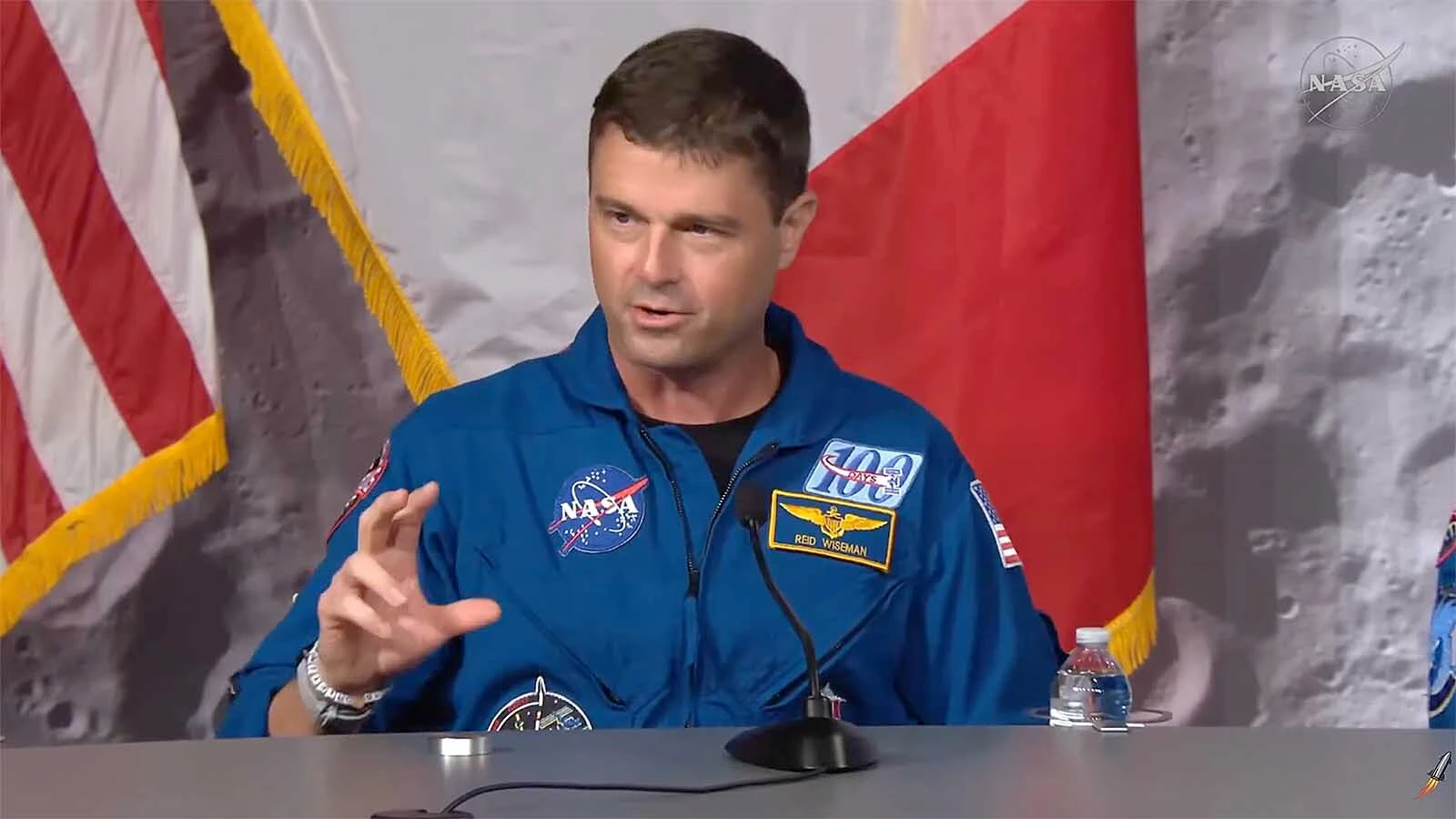
That NOLS training was singled out by Artemis II Commander Reid Wiseman Thursday during the crew’s first group interview from NASA’s Johnson Space Center in Houston, Texas, after returning to Earth on April 10 from it’s 10-day mission to the moon and back.
He reflected on decision-making under pressure and how lessons learned through NOLS resurfaced during moments of stress and distraction.
“There’s a saying that we learned from one of our National Outdoor Leadership School instructors: integrity is not a one or a zero,” Wiseman said. “You can be in integrity, and you can be out of integrity — and I’ll be the first to admit that there were moments when I was out of integrity because sometimes the view or the human experience would just pull me away from the work.”
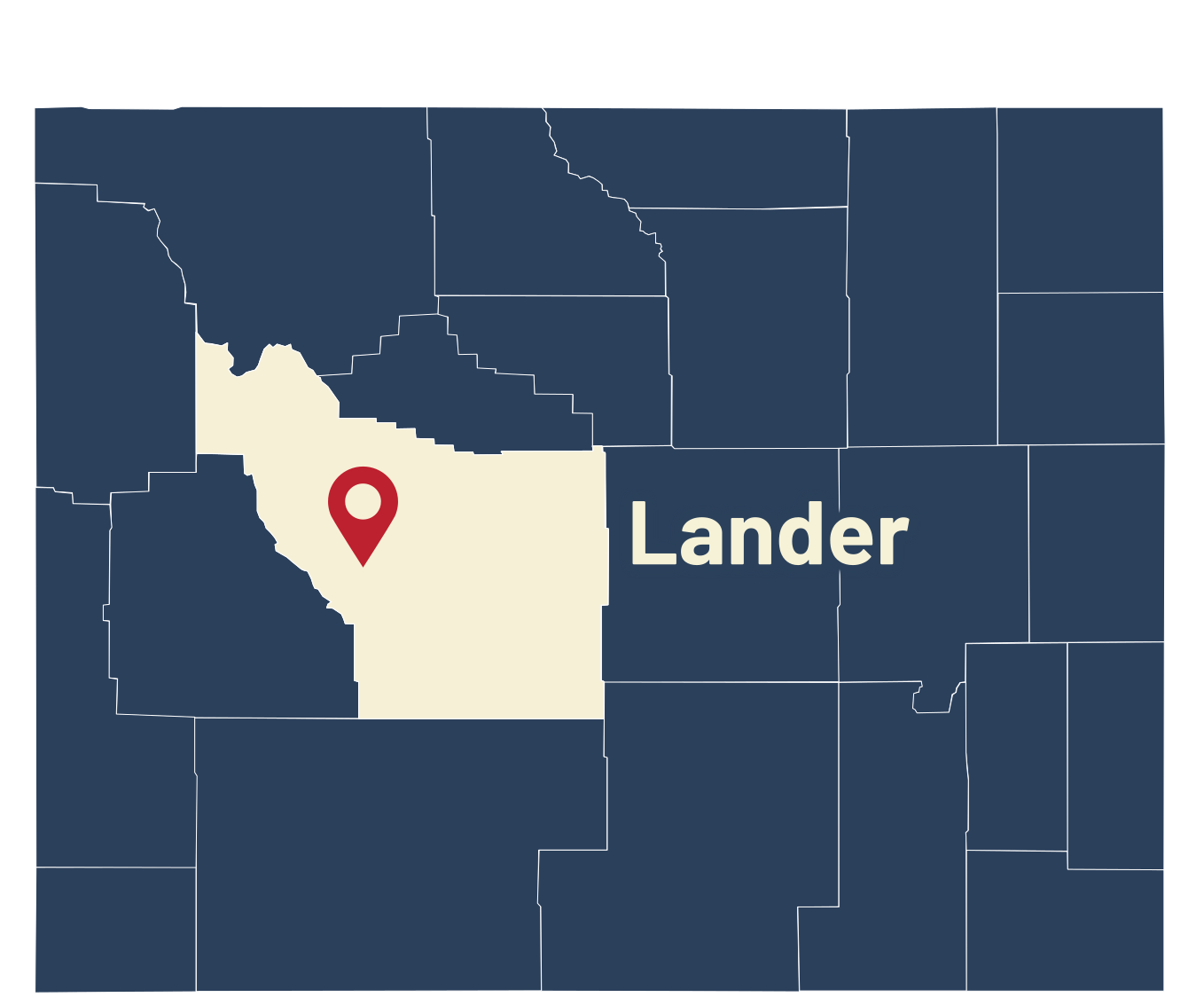
The relationship reflects a longstanding relationship between NOLS and NASA, the United States’ civilian space agency, and the Lander-based outdoor education organization.
Since 1999, NASA has worked with a variety of organizations and contracted NOLS for more than 45 wilderness expeditions designed to help astronauts prepare for the realities of long-duration spaceflight.
Those expeditions place crews in remote, resource-limited environments where communication, leadership and teamwork become essential for safety — conditions that mirror life inside a spacecraft.
In 2023, Cowboy State Daily chronicled the Artemis II astronauts training in the Cowboy State. At the time, the connection between Wyoming’s wind-carved wilderness and the engineered isolation of deep space felt philosophical.
Now, after completing their mission, the astronauts say the lessons they learned in Wyoming followed them all the way to lunar orbit.
From Wyoming Backcountry To The Moon
For NOLS instructors, the connection between wilderness leadership and spaceflight comes down to a single idea, what the school calls “expedition behavior.”
Rick Rochelle, senior faculty and senior instructor at NOLS, told Cowboy State Daily on Friday that the concept explains why NASA continues to work with the organization decades after the relationship began.
“There’s a phrase that NOLS calls 'expedition behavior,' and that is clearly the most important part of why NASA works with us and how it translates,” Rochelle said.
The term was coined by NOLS founder Paul Petzoldt, a mountaineer who set an altitude record on K2 in 1938, served in the 10th Mountain Division during World War II and later built the school around the idea that leadership is defined by responsibility to others.
“He said it’s an awareness of others’ needs and the character to make those needs as important as your own,” Rochelle said. “It’s really about how to be a great team member.”
Lynn Petzold, also senior faculty at NOLS, said astronauts who train with the school are placed in situations where leadership theory becomes practical experience — where decisions must be made under stress, and reflection becomes part of daily operations.
“NOLS provides experience for astronauts to go through leadership theory, work under stress, and reflect and debrief — extracting the learnings from the day and implementing them moving forward,” Petzold said. “That’s how you continue to grow and become a better team.”
The wilderness setting itself plays a critical role.
Long stretches in remote terrain force participants to manage fatigue, communicate clearly and make decisions without outside support. These are conditions that closely resemble life inside a spacecraft.
“This ties to the previous question, which is being in an austere environment for long periods away from distractions,” Rochelle said.
Why Wyoming Keeps Showing Up In Spaceflight
The connection between Wyoming and human spaceflight has grown steadily over the past quarter century, turning Lander into an unlikely but consistent training ground for astronauts preparing to leave Earth.
In the Wyoming backcountry, that might mean navigating a sudden weather shift or managing exhaustion miles from the nearest road.
In space, the same principles scale to orbital mechanics, life-support systems, and the psychological weight of isolation.
For instructors who have watched astronauts move through Wyoming’s mountains and deserts, the pride in the Artemis II mission is personal, Rochelle said.
“These are amazing human beings,” he said. “They love each other. They’re mission-focused, and they clearly want to have a positive impact on all of humanity.”
Petzold agreed.
“These are awesome human beings who were excited to be part of this mission,” she said. “They had a lot to contribute as individuals, and as a group they really brought it together.
"NOLS is just really excited and proud to work with NASA and this crew to pave a new path forward as we return to the moon. We’re proud to have been a small part of it.”
The same training that teaches students to read about weather, manage fatigue and support teammates in the Wind River backcountry is now helping shape how astronauts operate in deep space.
Kolby Fedore can be reached at kolby@cowboystatedaily.com.


