Thanksgiving Days have been a thing in the English-speaking world for more than four centuries.
That’s not surprising in a world where the king is the head of the Church. But that our newly formed Republic re-instituted the custom gives us an occasion to reflect.
The first nationwide Thanksgiving Day after declaring independence was proclaimed by President George Washington on October 3, 1789.
“Whereas it is the duty of all Nations to acknowledge the providence of Almighty God, to obey his will, to be grateful for his benefits, and humbly to implore his protection and favor,” began his proclamation.
The Bill of Rights, forbidding any federal establishment of religion, had been adopted by Congress only a week before he penned these words (September 25, 1989). And they would not be ratified by the states until December 15, 1791.
Nevertheless, Washington boldly acknowledged that even so, every nation has a duty toward God.
Thus, a national Thanksgiving Day does not violate the Establishment Clause.
Piety towards one’s creator and redeemer is not only for individuals. It is also exercised in households and extended families. Joshua declared, “as for me and my house, we will serve the LORD” (Joshua 24:15).
In our hyper-individualized mindset, we have been long tempted to forget that religion is not a private affair.
Humility before God brings blessings to entire nations. Just as hubris toward God destroys them.
And it was not only Washington’s private opinion. “[B]oth Houses of Congress,” he continued, “have by their joint Committee requested me to recommend to the People of the United States a day of public thanksgiving and prayer.”
Note the word “public.” This first Thanksgiving Proclamation was more than a presidential admonition to have thankful hearts.
It was a congressional and presidential request that American churches convene services for the purpose of thanking God for the Constitution that had been ratified on June 21, 1788.
Under this new constitution, elections were held in November of 1788, and the newly elected members of Congress first gathered on March 4, 1789.
They ratified the electoral college votes and swore in our first president on April 30. Thus, a public day of Thanksgiving was no mere ceremonial formality. It was among the new government’s first orders of business.
Because of this congressional request, Washington proclaimed, “Now therefore I do recommend and assign Thursday the 26th day of November next to be devoted by the People of these States to the service of that great and glorious Being, who is the beneficent Author of all the good that was, that is, or that will be.”
Washington then recommended a bullet-point list of things for which we should thank God:
· for his kind care and protection of the People of this Country [before Independence]
· for the signal and manifold mercies, and the favorable interpositions of his Providence which we experienced in the [Revolutionary War]
· for the great degree of tranquility, union, and plenty, which we have since enjoyed
· for the peaceable and rational manner, in which we have been enabled to establish constitutions of government for our safety and happiness, and particularly the national One now lately instituted
· for the civil and religious liberty with which we are blessed; and the means we have of acquiring and diffusing useful knowledge;
· and in general for all the great and various favors which he hath been pleased to confer upon us.
Then, Washington went beyond nostalgia for the past. He implored the churches of the land to “unite in most humbly offering our prayers and supplications to the great Lord and Ruler of Nations and beseech him
· to pardon our national and other transgressions
· to enable us all . . .to perform our several and relative duties properly and punctually
· to render our national government a blessing to all the people, by constantly being a Government of wise, just, and constitutional laws, discreetly and faithfully executed and obeyed
· to protect and guide all Sovereigns and Nations . . . and to bless them with good government, peace, and concord
· To promote the knowledge and practice of true religion and virtue, and the increase of science among them and us
· and generally to grant . . . such a degree of temporal prosperity as he alone knows to be best.
It was with Washington’s request at heart that our churches gathered exactly 237 years later.
We publicly thanked the Triune God, Father, Son and Holy Spirit for “all the good that was, that is, or that will be.” And we asked Him to bless our future efforts to preserve godliness and hinder wickedness.
We prayed that He would give us pious and believing lawmakers, executors and judges that we may remain “one nation under God.”
What an incredible honor to live in a nation that publicly petitions its churches to pray.
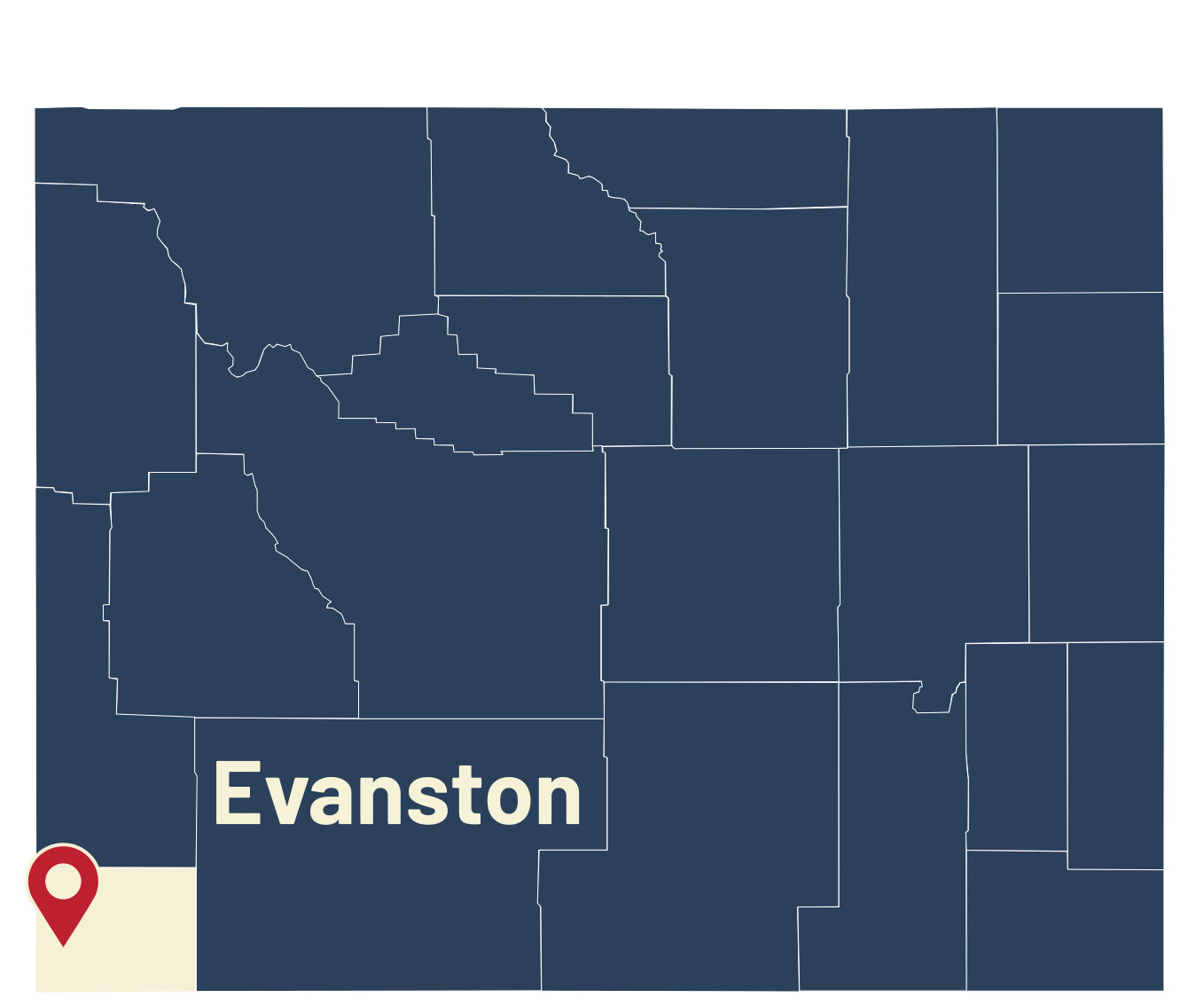
Jonathan Lange is a Lutheran Church—Missouri Synod pastor in Evanston and Kemmerer and serves the Wyoming Pastors Network. Follow his blog at https://jonathanlange.substack.com/ Email: JLange64@protonmail.com