

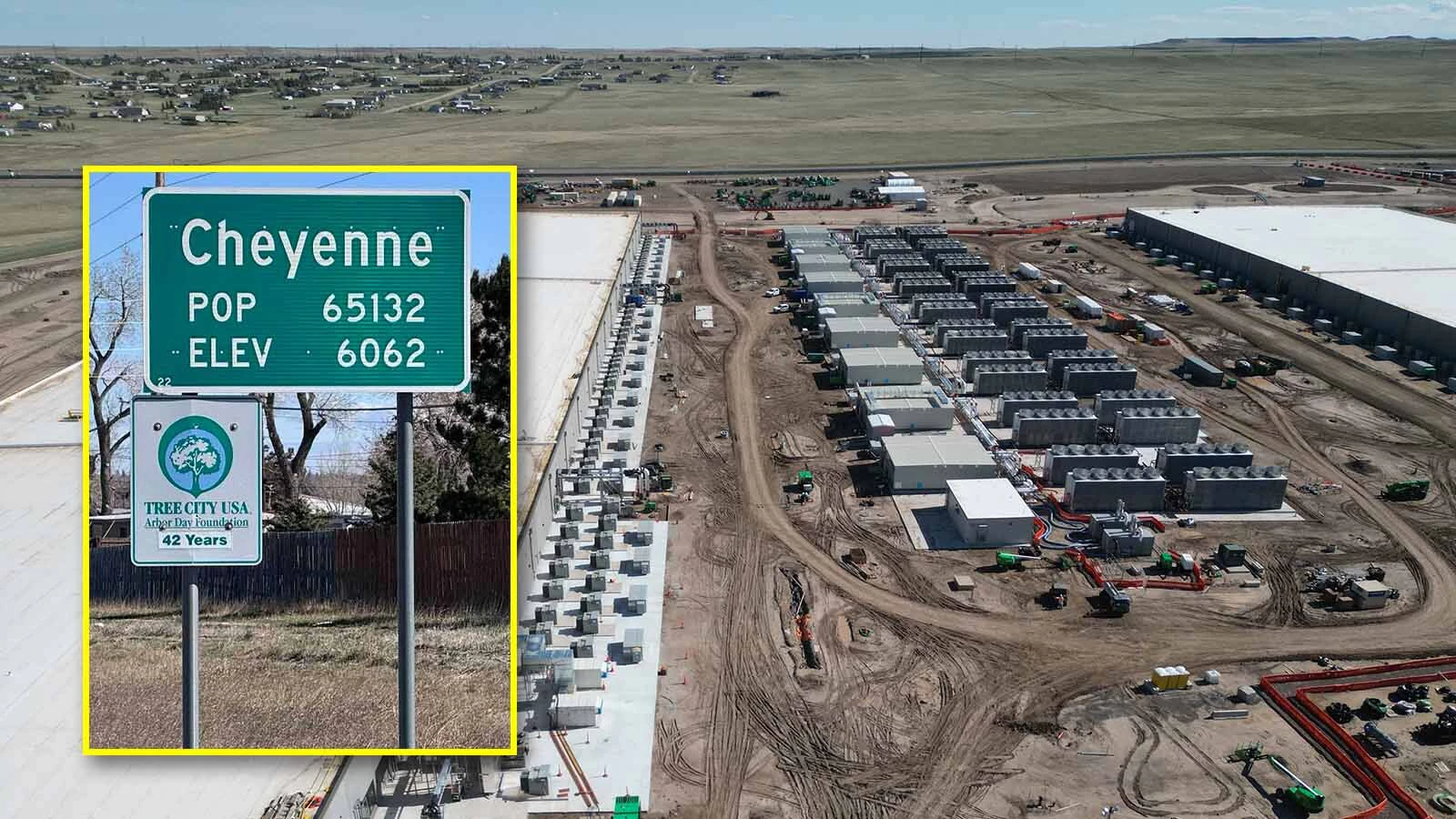
Wall Street’s biggest money managers are split on whether the artificial intelligence boom is a bubble about to burst. In Cheyenne, where data centers are going up at breakneck speed, some local leaders say a bust won’t reach the city, while others say there is no plan in place if it does.
An AI bubble is what happens when companies and investors spend money on a technology faster than it can earn that money back.
Tech giants are pouring hundreds of billions of dollars into data centers, computer chips and power, betting that businesses and consumers will eventually pay enough for AI to cover the bill.
A bubble bursts when investors lose faith that the payoff is coming. They sell, stock prices drop, and the money that was funding new construction gets much harder to find.
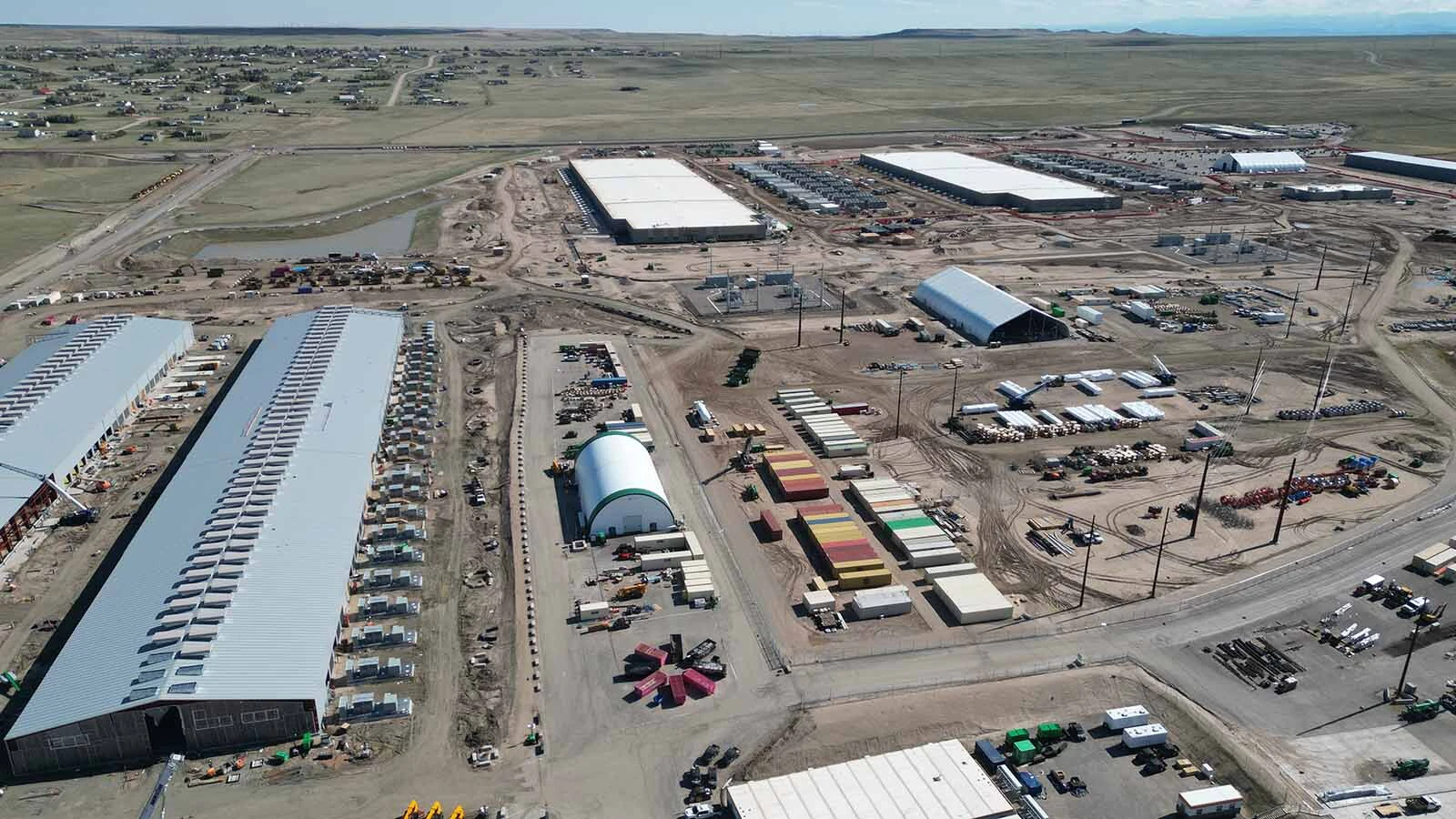
If that happens, projects can be delayed, scaled back or abandoned partway through, leaving communities with huge, half-built data centers, stalled construction jobs and the power and infrastructure plans that were designed around them.
Betsey Hale, CEO of Cheyenne LEADS, the economic development group that recruits businesses to Cheyenne and Laramie County, told Cowboy State Daily she doesn’t see that playing out locally.
“I don’t think we’re going to see a bust,” Hale said. “I’m confident here that we have an ability to be resilient because of the diversity of the companies that are coming here and the strength of the companies.”
‘Only Going To Go Up’
The bubble worry centers on generative AI, the chatbots and image tools that take enormous computing power to build and run, and on the data centers constructed to support those workloads. Hale said that the dozens of new data centers in Cheyenne don’t fall into that category.
“Not all of our data centers, if any, are actually AI-purposed,” Hale said. “The majority of our data centers are actually part of the cloud. Cloud computing is very different from artificial intelligence.”
Cloud computing means storing data and running software on remote servers over the internet instead of on a personal computer or a company’s own equipment, which is how people stream movies, back up photos and use online banking.
Hale said that work supports a wide range of everyday technology that isn’t tied to the AI boom and could continue even if investment in AI slows.
“Probably all of us have been using Google for 12 to 15 years to save us time when we’re trying to find information,” Hale said. “Those things aren’t going to change. That demand, if anything, is only going to go up.”
The company behind that daily habit is now coming to Cheyenne, where a 2.7-gigawatt Google data center campus is planned south of the city. Meta, the company behind Facebook and Instagram, also has a footprint in Cheyenne, with its more than $800 million campus under construction since 2024.
“Those are social media platforms that people’s businesses are dependent upon, that people use to stay in touch with family and friends and use to be part of community activity against data centers,” Hale said. “So these are not data centers that are truly in the artificial intelligence world.”
Hale said she’s familiar with national headlines about the AI bubble bursting. She doesn’t rule out the possibility but said that’s just the nature of the economy with any industry.
“There’s always people making money at the same time as people losing money,” Hale said. “Economic downturns shouldn’t be a surprise at all.”
The reason that fears about a bubble burst are resurfacing now, she said, could have more to do with politics than the stock market.
“I think this stuff that’s being perpetuated right now is strictly driven by the election,” Hale said. “There’s 40 key elections this year in the U.S. where the big issue is data centers.”
‘There is No Plan’
Whether the moment is politically motivated or not, Cheyenne City Council member Larry Wolfe knows firsthand that a tech bubble pop can hit Wyoming hard.
In the late 1990s, companies buried massive networks of high-speed fiber-optic cables across the country, expecting an endless explosion in internet traffic.
When the dot-com crash hit in the early 2000s, that demand evaporated almost overnight, leaving tech companies bankrupt.
Many of those major lines were buried along railroad and highway rights-of-way across Wyoming, and Wolfe’s firm represented several of the companies laying them.
“Almost all those projects, at least the mainline projects, all got finished,” Wolfe told Cowboy State Daily. “Then they lay dormant for years and years.”
During that boom, Wolfe watched as crew after crew tore up the same stretches of roads, installing parallel fiber lines side by side.
“For a period of time, it was a wild undertaking,” he said. “Then the capital markets just said, ‘Man, we've got probably way too much of this stuff going on,’ and pulled the money back, and it all just came to a halt.”
If something similar happens with data center development, Wolfe said the impact would dwarf what happened then.
“This wasn't anywhere near the magnitude of what we have going on now,” he said. “It also wasn't associated with a big stock market play.”
Unlike the telecom rush, which relied mostly on small work crews laying underground cable, today's data center boom involves billions of dollars in borrowed money, massive physical campuses, and extensive power grid overhauls.
Wolfe said the city has no strategy for a market turn.
“There's no plan in place,” Wolfe said.
Manage Boom and Bust
As Cheyenne has annexed thousands of acres to make room for sweeping industrial expansions, including about 3,500 acres south of town for Microsoft's long-term buildout, Wolfe said residents at nearly every public hearing have asked what happens if the AI bubble bursts or the massive facilities eventually become obsolete.
“And everybody just shrugs their shoulders and says, ‘We can't deal with that speculation, so we're going ahead,’” Wolfe said.
That lack of planning leaves Cheyenne vulnerable to the structural leftovers of a market pullback, Wolfe said, particularly when it comes to what happens if tech giants walk away mid-buildout or abandon facilities once server technology evolves.
“Only one or two of us have been in the vanguard saying we need decommissioning rules,” Wolfe said. “We need to know what happens when these do become obsolete, and then the companies just abandon these buildings and probably take the servers with them. Then we've got giant buildings sitting here.”
Fellow Cheyenne City Council member Pete Laybourn shares that concern. Laybourn told Cowboy State Daily that the city’s leadership is focused almost entirely on managing the historic wave of incoming development rather than planning for a potential crash.
“My gut feeling is that every boom has a bust,” Laybourn said. “We’ll have to try to manage that just as we are trying to manage the boom.”
If an AI market bust were to slow down construction in Cheyenne, it likely wouldn't deal a devastating blow to the local permanent workforce.
David Bullard, senior economist with the Wyoming Department of Workforce Services, told Cowboy State Daily that the vast majority of labor tied to data centers right now is in early-stage construction and much of that workforce travels in from out of state.
Bullard said the out-of-state crews aren’t taking jobs from Wyoming workers, because these buildouts need more labor than the state can supply. Relying on temporary workers is nothing new, he said, since Wyoming’s energy and industrial booms have long pulled in outside labor to fill short-term gaps.
“We’re just a very small state with a small labor supply,” Bullard said. “And the labor supply tends to come and go.”
Emma Jane Jackson can be reached at emma@cowboystatedaily.com.


