

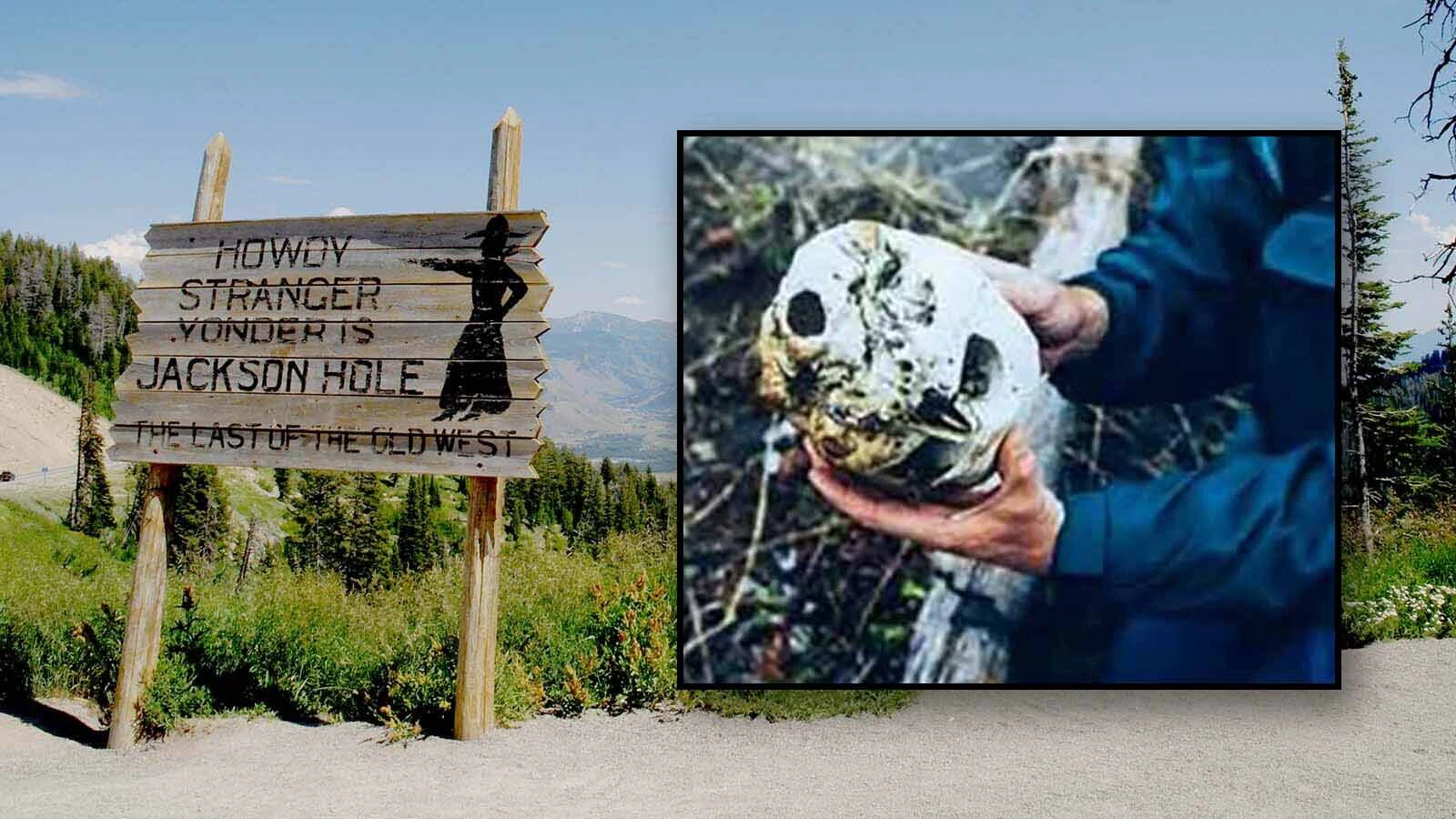
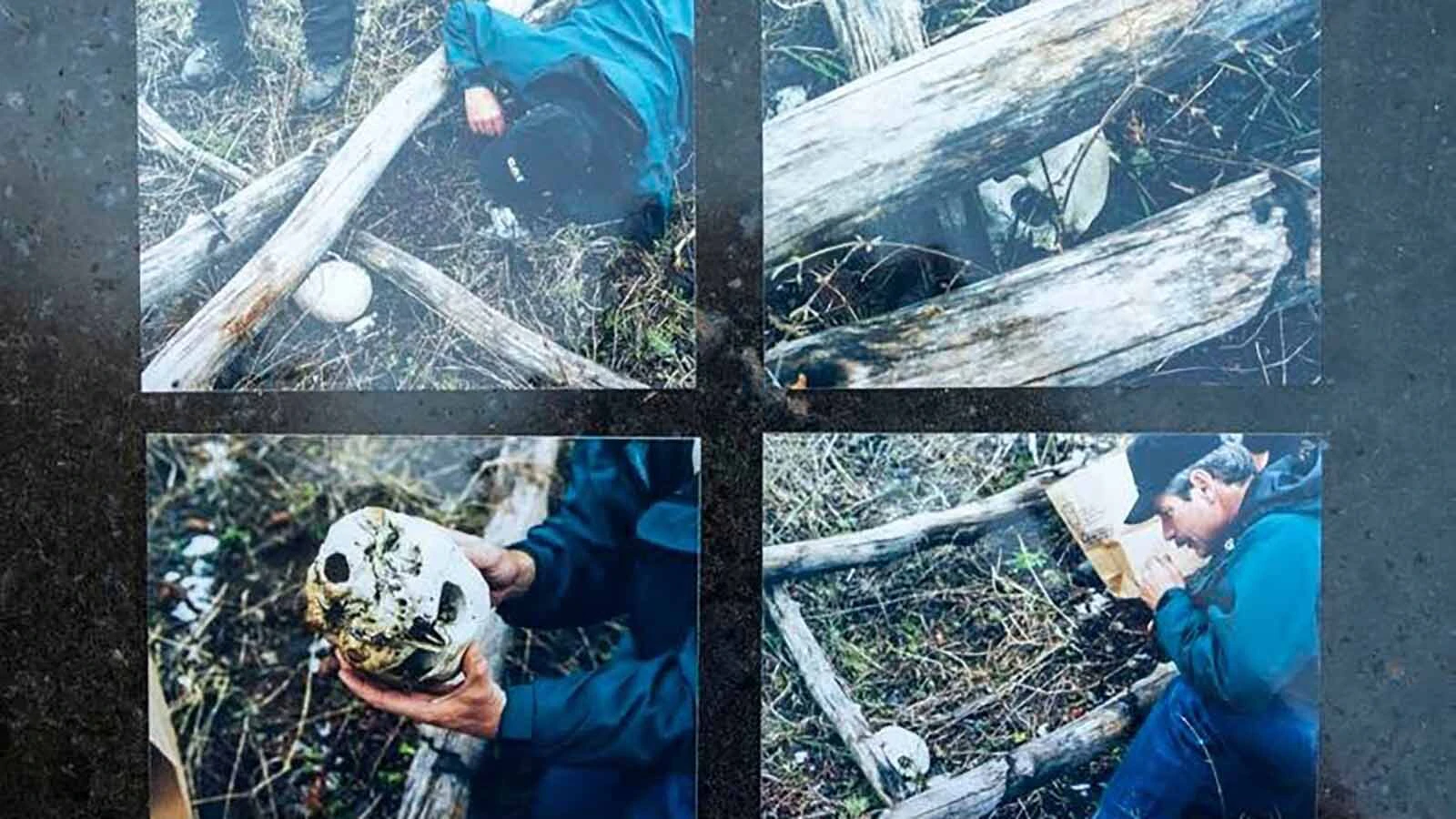
For nearly three decades, the Teton County Sheriff’s Office has worked to identify a man whose bones were discovered scattered in the pines near Cache Creek on the Bridger-Teton National Forest in the summer of 1998.
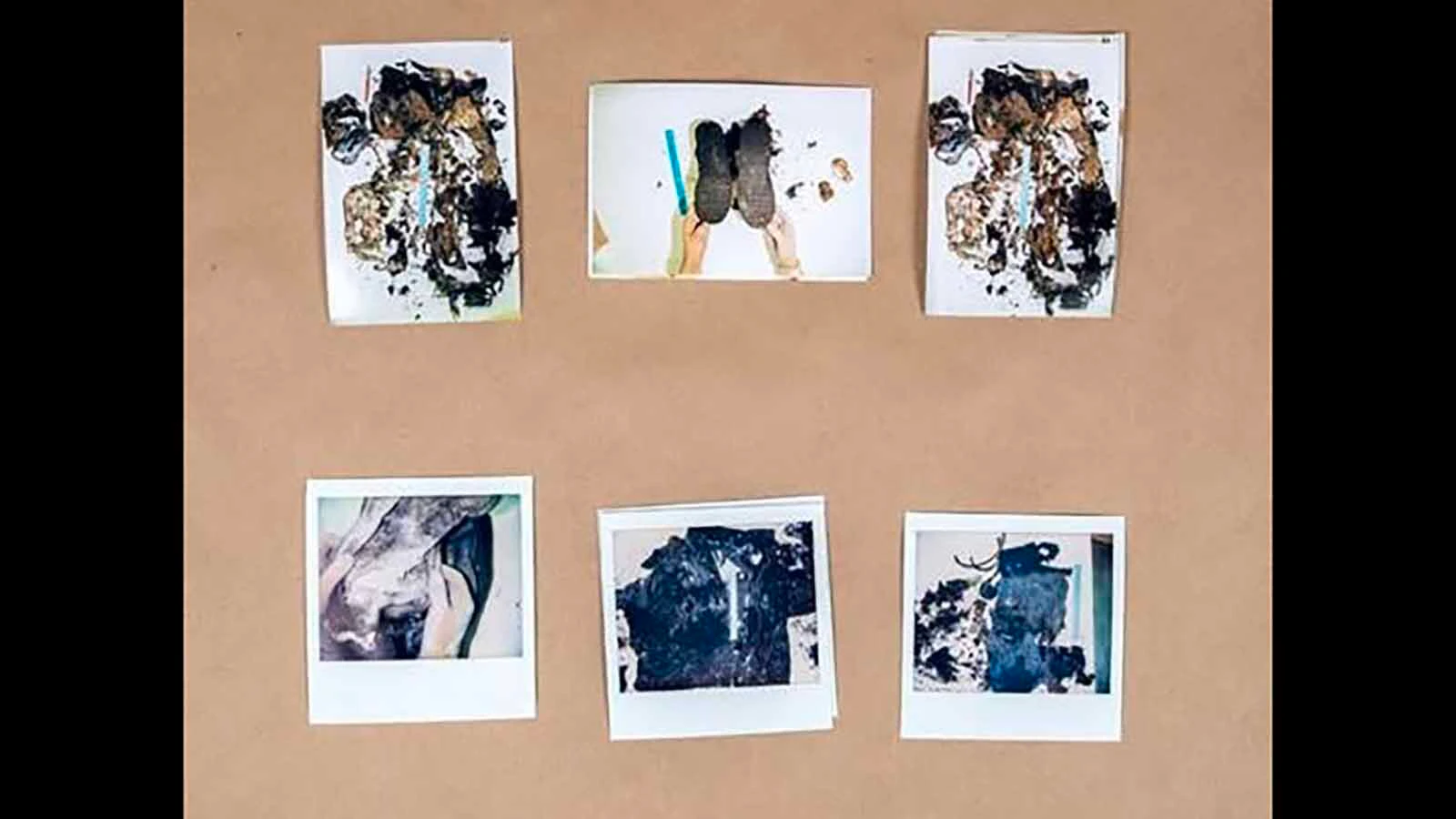
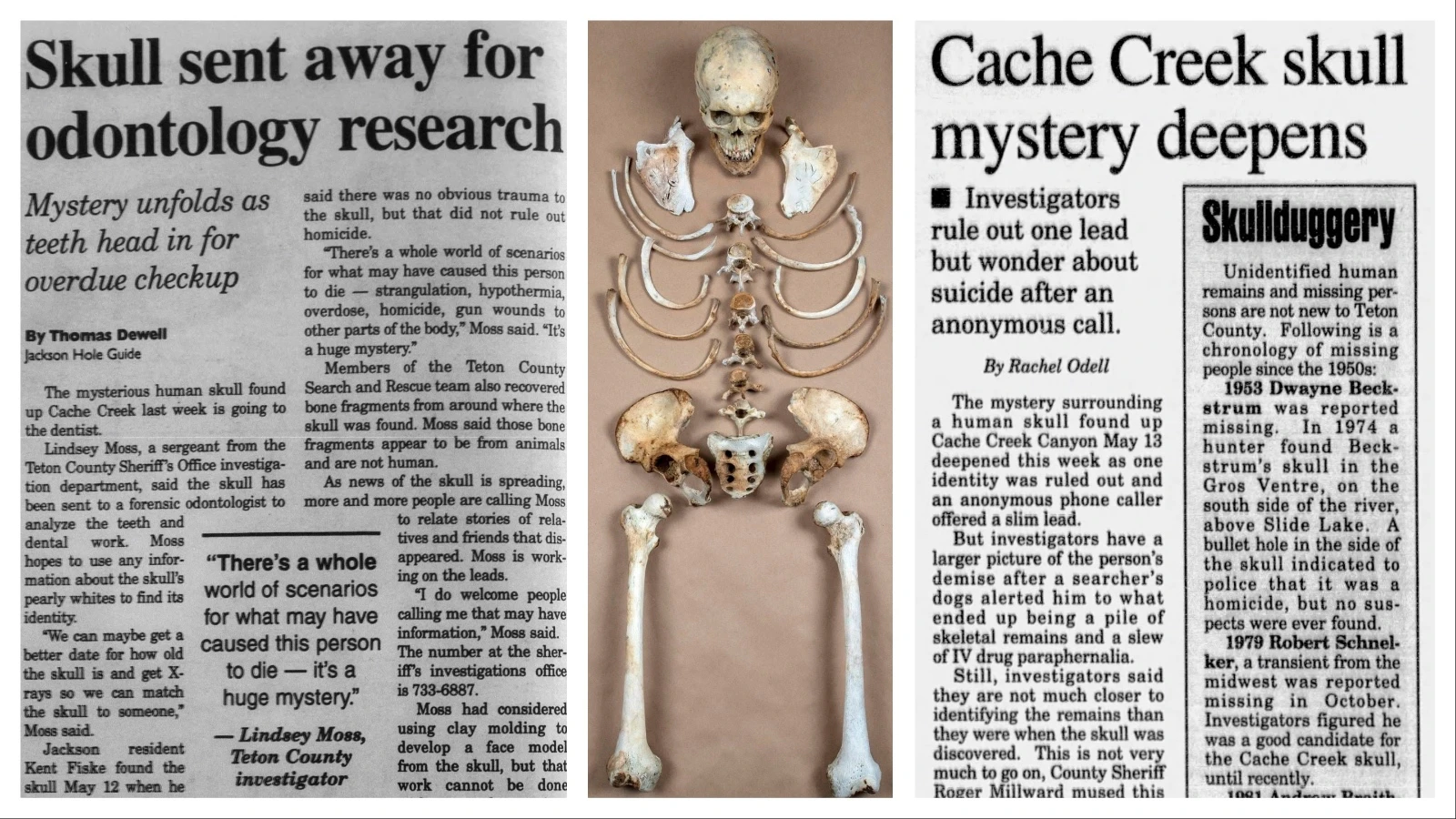
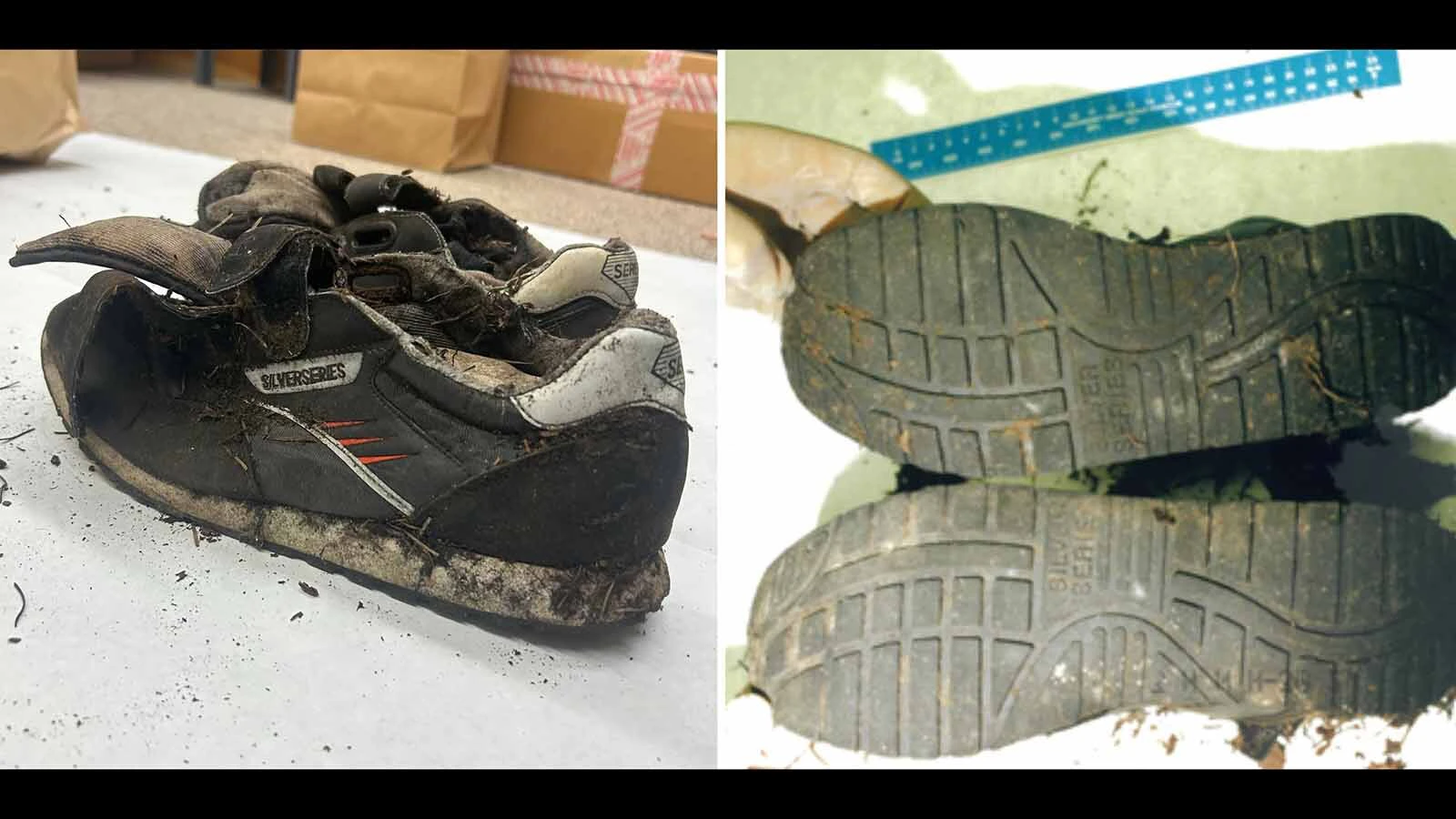
A hiker straying off trail first came upon the skull. Two weeks later, a volunteer with search dogs recovered the rest of the remains some 250 feet downhill, including a foot still encased in a Velcro-strapped tennis shoe.
What baffled investigators most was the IV setup — tube, bag and needle dangling from a tree limb five feet above where the arm would have been — as though he had been mid-transfusion when he died.
The eight or so vials found on the ground yielded no results when tested because they were too degraded.
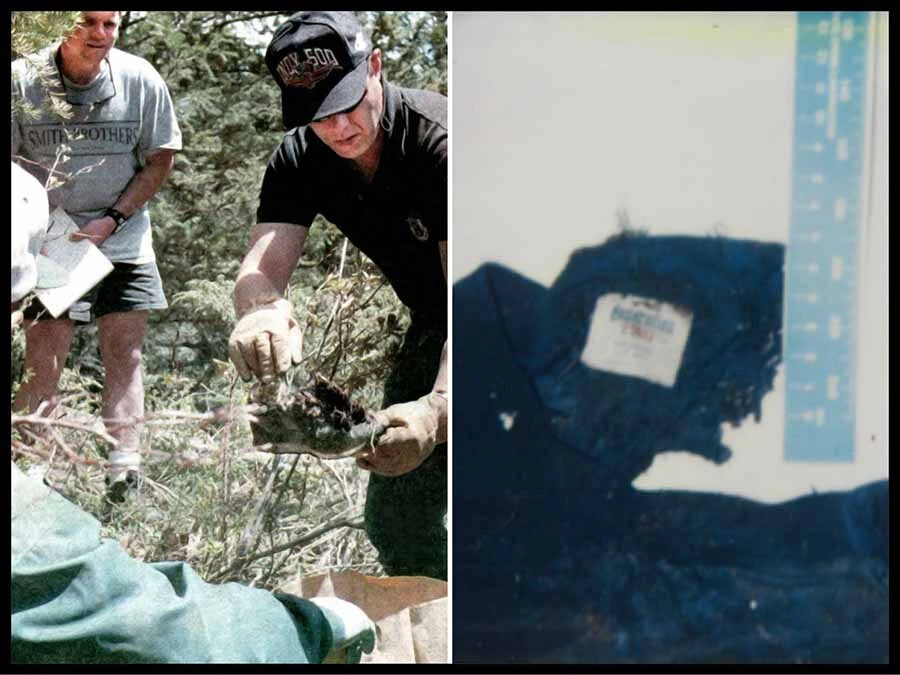
Also among his bones were a backpack, a medium-sized faded blue T-shirt, and a penny dated 1990 among a few other items that offered only the slimmest hint as to his identity.
For years, investigators circled around the same unresolved theories: Was he desperately seeking water, self-medicating for an undisclosed ailment, or had he misjudged an insulin dosage?
The speculation branched into darker territories — a drug user either intentionally or unintentionally overdosing, a man deliberately poisoning himself, or the victim of a homicide.
Forensic Science Helping
Who the man was, and how he came to die, remain unanswered. Still, the investigation inches forward, paced by the evolution of forensic science.
In 2020, applying advanced DNA technology, the sheriff’s office shipped the man’s tibia to the University of North Texas Center for Human Identification. There, technicians managed to pull a viable genetic profile from the bone.
For investigators, this genetic signature felt like the key to finally answering the mystery. However, when the profile was entered into CODIS, the FBI’s criminal DNA database, it provided no results.
Now, six years later, they are trying again.
The bone has been sent to the DNA Doe Project for forensic investigative genealogy (FIG), according to Sgt. Robert Osmond of the Teton County Sheriff’s Office, the current lead on the case.
The hope is to use the genetic material to trace family trees and identify distant relatives who could provide new investigative leads to help track down his immediate family members.
The bone arrived at the Georgia lab on Thursday, Osmond said, and he was told it arrived in good condition for testing.
Beyond scientific answers, Osmond hopes public engagement might also help put a name to this man — that by spreading his story, someone, somewhere, might recognize him.
“This is definitely an odd case that deserves more exposure,” Osmond said.
Reopened Case
In 2020, leadership at the sheriff’s office ordered evidence technicians to reorganize stored materials, which led to the official reopening of the case. Osmond noted that while everyone in the office was familiar with the John Doe investigation, they hadn’t realized how much untested evidence remained — including his skull and bones.
Because the bones had never undergone DNA analysis, this presented a clear opportunity to move the case forward, Osmond said. After sending a bone sample to the lab in Texas, investigators received results within the year.
They thought they may have finally found the answer. But with no match in CODIS, the trail once again went cold — until recent advances in forensic investigative genealogy offered new hope.
This prompted the recent decision to try forensic investigative genealogy.
“It just seemed like a really good fit for this type of testing,” Osmond said.
Still, as they await those results, the department isn’t relying solely on genetic tracing. They’re also appealing to the public for help locating the man’s family or anyone who might have known him.
It’s thought the man died somewhere between 1990 and 1995 and was between the ages of 20 and 65.
He was estimated to be between 5-foot-7 and 5-foot-10 weigh anywhere from 140 to 170 pounds. Genetically,he was a white man of European ancestry. Apart from the faded T-shirt — a brand called TwoGeneration, now defunct—there were no other clues to suggest where he might have come from.
However, his shoes, the black Velcro-strapped SilverSeries, now found only on vintage eBay, might also provide a visual clue that triggers memories, Osmond said.
Maybe Teeth?
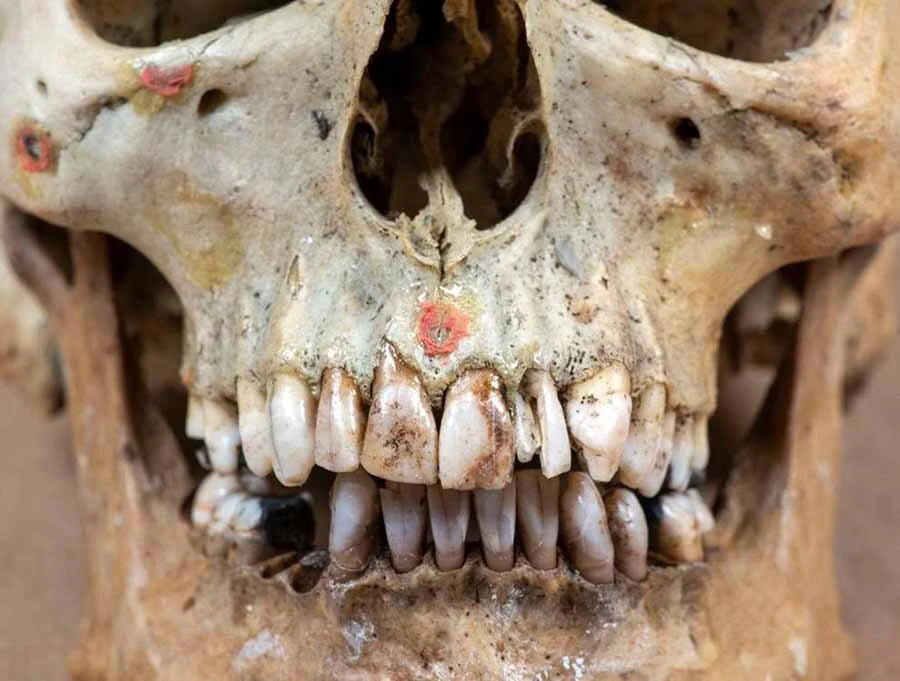
It was initially hoped that forensic odontology might provide another possible path toward identification, thanks to an anomaly in the victim’s wisdom teeth.
As Lindsey Moss, then a detective-sergeant with the sheriff’s office, noted in a 1998 news article, it was unusual for a person to have only one of the four wisdom teeth still remaining when most people had all four extracted.
This detail allowed investigators in the late 1990s to narrow their search from more than 100 individuals listed in the National Crime Information Center database to six potential matches. That effort, however, proved fruitless; none of the six were a match.
The man’s few silver fillings similarly led nowhere, but the former records have since been digitized, and the search continues, Osmond said.
Stranger Yet …
The most perplexing detail, however — one Osmond stated he’s never encountered in more than a decade of law enforcement — is the IV setup. It remains the most compelling element in this confounding investigation, he said.
Perhaps he was skilled in inserting his own IV and might have left camp to die in the outdoors with his supplies, or perhaps it was accidental, Osmond speculated, but there’s no way to be sure what he intended at that point.
The exact nature of the IV setup remains ambiguous, as reporting at the time characterized it alternately as “a bottle hanging in a tree and rubber tubing as if an IV drip may have been set up,” and as “extensive IV paraphernalia,” according to a 1998 article from the Jackson Hole News and Guide.
However, the setup — along with intravenous needles and eight or so glass vials containing a cloudy liquid — was legitimate enough to lead some investigators to theorize that he’d been a diabetic administering insulin who may have overdosed either intentionally or accidentally at the site.
Confused, authorities canvassed local hospitals for any record of a missing patient. Their search, according to local media reports, turned up none.
Too Degraded For Testing Still
There’s no way to know at this point what was inside the vials – whether insulin or another drug – because the contents were too degraded for analysis with the state crime lab’s report coming back as inconclusive because the compounds had broken down over time.
And though standard laboratory equipment has also advanced over time with more modern features and software, these gains represent only modest, incremental progress, said Scott McWilliams, deputy director of the DCI crime lab.
“In practice, I'd speculate that any slight technological advantage is easily wiped out by nearly 30 years of sample evaporation, chemical degradation, and contamination leaching from the deteriorating plastic containers,” McWilliams said in an email in response to Cowboy State Daily’s question about whether the vials could still viably be tested.
It’s also not clear why or how he would have obtained the IV setup because basic IV equipment — poles, tubing, administration sets — could often be purchased over the counter at that time. Availability varied by state and retailer, however, particularly after 1990, when the Safe Medical Devices Act introduced stricter FDA oversight, expanding safety reporting and post-market scrutiny for certain high-risk devices.
Whether he might have been hydrating is also up for debate, though obtaining sterile IV fluids, such as saline solution, would have been difficult because these products were regulated as prescription drugs.
Suicide Note Doubtful
It’s also not clear how he died, Osmond said, with no new tips or information coming in since a tipster called to report finding a suicide note a month after remains were found.
The caller contacted the sheriff’s office claiming to have found a suicide note years earlier in the Cache Creek parking lot — long before the remains were discovered.
He confessed he hadn’t brought it up when it happened, adding that he’d since left Jackson, moved several more times and no longer had the note.
Nonetheless, at the time he called it in, he had described it as “clearly a suicide note,” though it was so badly degraded from rain and vehicle traffic that the words and signature were barely legible, according to local media reports.
Without the note or the tipster's name and number, Osmond said, the clue is not credible to authorities now or back then.
If a person chooses to keep potential evidence, then says he misplaced it while refusing to provide his name or phone number, it is hard to gauge the legitimacy of that information, Osmond noted.
“It definitely raises our suspicion that it’s not a credible report, but it’s definitely possible,” Osmond said. “And if that person would be willing to come forward, we’d love to talk to him.”
No Known Match
In another attempt to identify the man, authorities also did a facial reconstruction.
Working from the skull and jawbone, DCI produced a forensic composite in 2000 that was later published in the media. Despite this public appeal, no one came forward with information about his identity — no tips were generated, and no relatives or acquaintances recognized the reconstructed face, Osmond said.
In the investigation’s early stages, Robert Schnelker’s name emerged as a potential match. He was a Midwestern man who had disappeared in Teton County in 1979. However, he was ultimately ruled out when forensic analysis placed the John Doe’s death between 1990 and 1995, creating an irreconcilable timeline discrepancy.
Schnelker’s fate remains unknown. His name doesn’t appear in NamUs, the national missing and unidentified database overseen by the Department of Justice, nor in DCI’s own Missing Person database or any other major repository.
Others considered in the early stages of the investigation were Amy Wroe Bechtel, who disappeared while running in the Shoshone National Forest near Lander in July 1997, as well as Ivan Schaeffer, a Dubois hunter who disappeared near Pacific Creek, south of Yellowstone, in 1995, according to media reports at the time.
Bechtel is still missing. As for Schaeffer, his status is unknown; a search of media reports and the NamUs and DCI databases turned up no indication that he was ever found.
Likewise, volunteer genealogists Ashley Kroner and Megan McWilliams — sisters from Cheyenne who run the organization Genetics Uncovered that tracks Does and missing people — have been looking into this Doe case as well. So far, their search through databases in surrounding states has yielded no matches.
“The circumstances just don't seem to line up unless we look further back than 1990s,” Kroner said.
This suggests the man might never have been reported missing or perhaps came from outside the region. Still, she added, it seems unlikely someone would travel such a distance with specialized medical equipment solely to end their life.
Efforts Continue
Years after the discovery of his remains, Osmond and the Teton County Sheriff’s Office remain confident they will one day identify the man — and are appealing to the public for help.
They ask anyone with information to contact the Teton County Sheriff’s Office at 307-733-2331 or email Osmond directly at rosmond@tetonsheriff.org.
Tips can also be submitted anonymously on DCI’s website.
Contact Jen Kocher at jen@cowboystatedaily.com

Jen Kocher can be reached at jen@cowboystatedaily.com.


