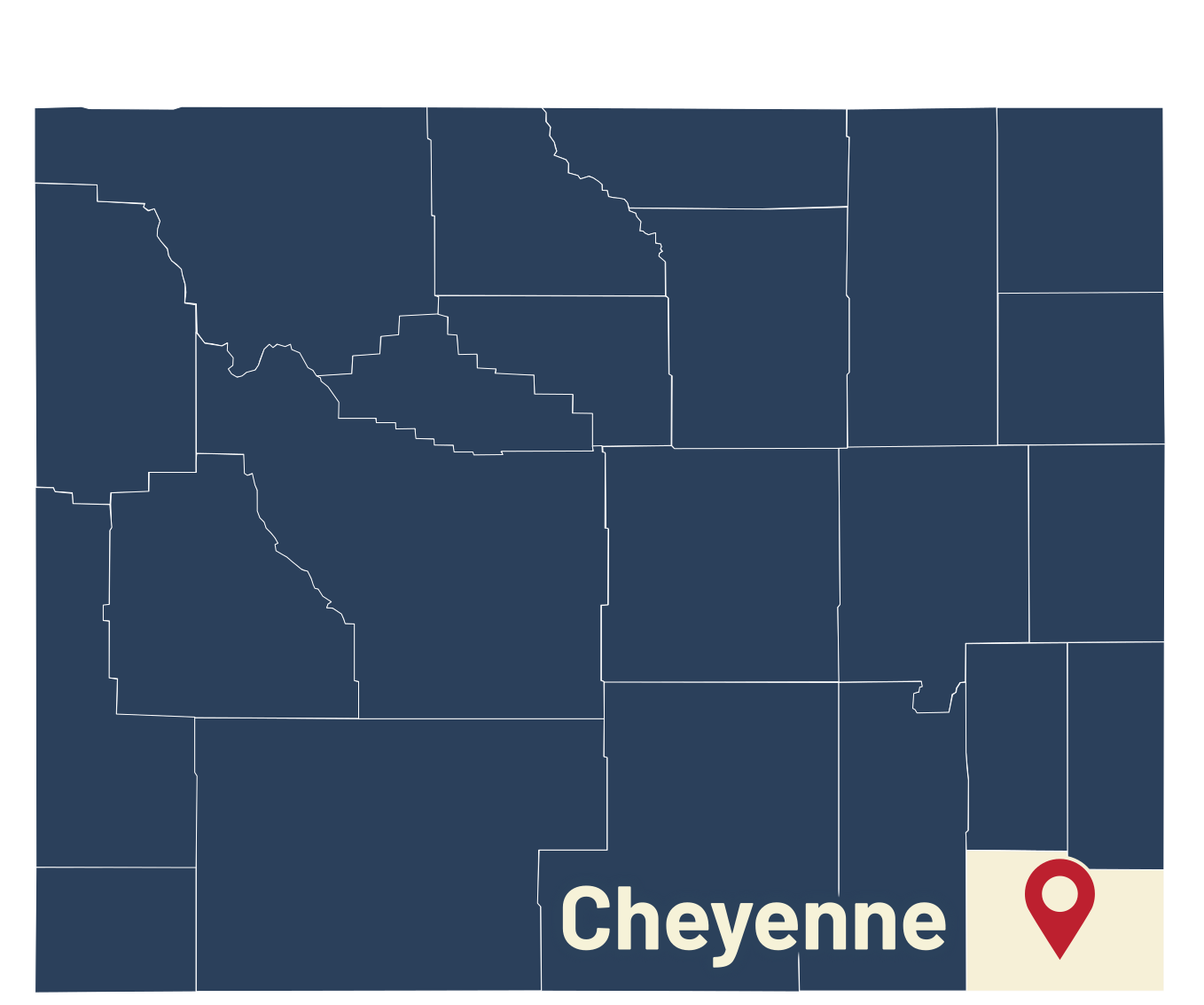
Authorities are working to unravel the mysterious deaths of a man and woman who were found in Laramie County earlier this year within three months of one another in unrelated incidents.
The first, a woman thought to be between 30 and 50 years old, was struck by a vehicle and killed on the side of Interstate 25 outside Cheyenne in late April.
The second is an unknown man found near a commercial building on South Greeley Avenue earlier this month.
Both deaths are under investigation, pending autopsy results from the Laramie County Coroner’s Office.
The fatalities were not publicly announced by authorities, but instead entered into the National Unidentified Persons System — known as NamUs — which is the country’s only centralized database for tracking missing and unidentified persons.
Although anyone with an account can enter missing people into the database, only law enforcement and those with coroners' offices can add unidentified people.
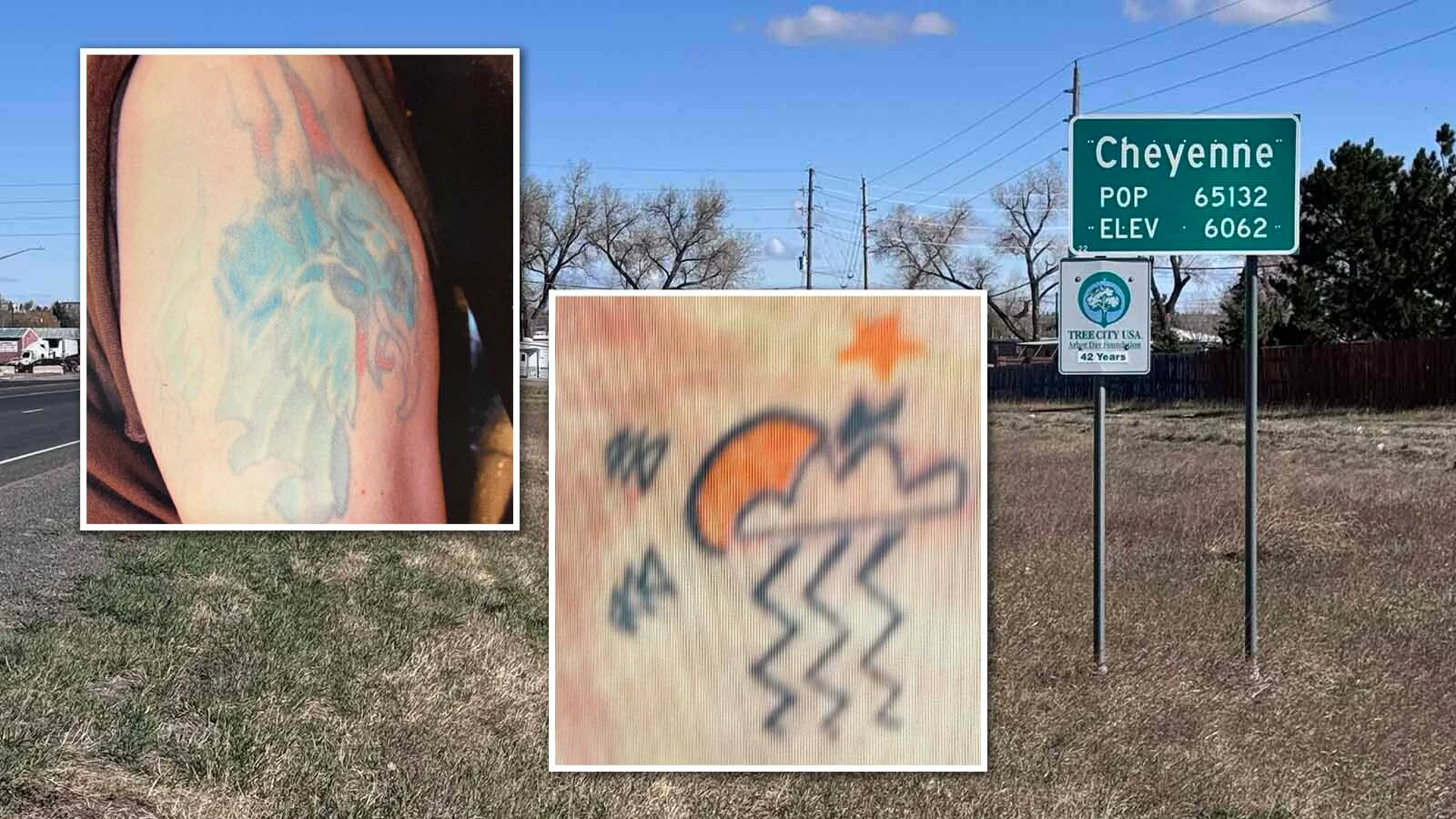
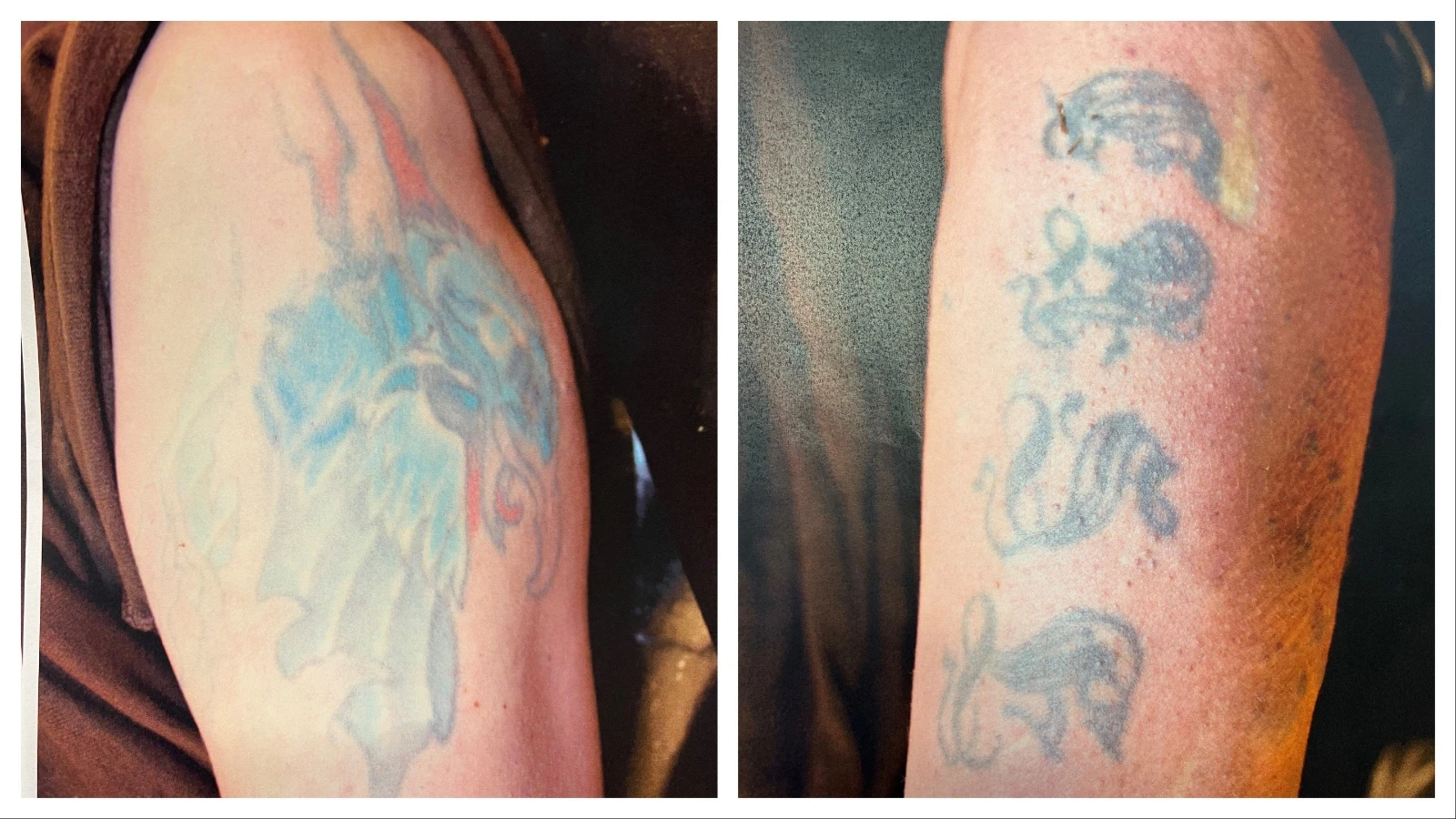
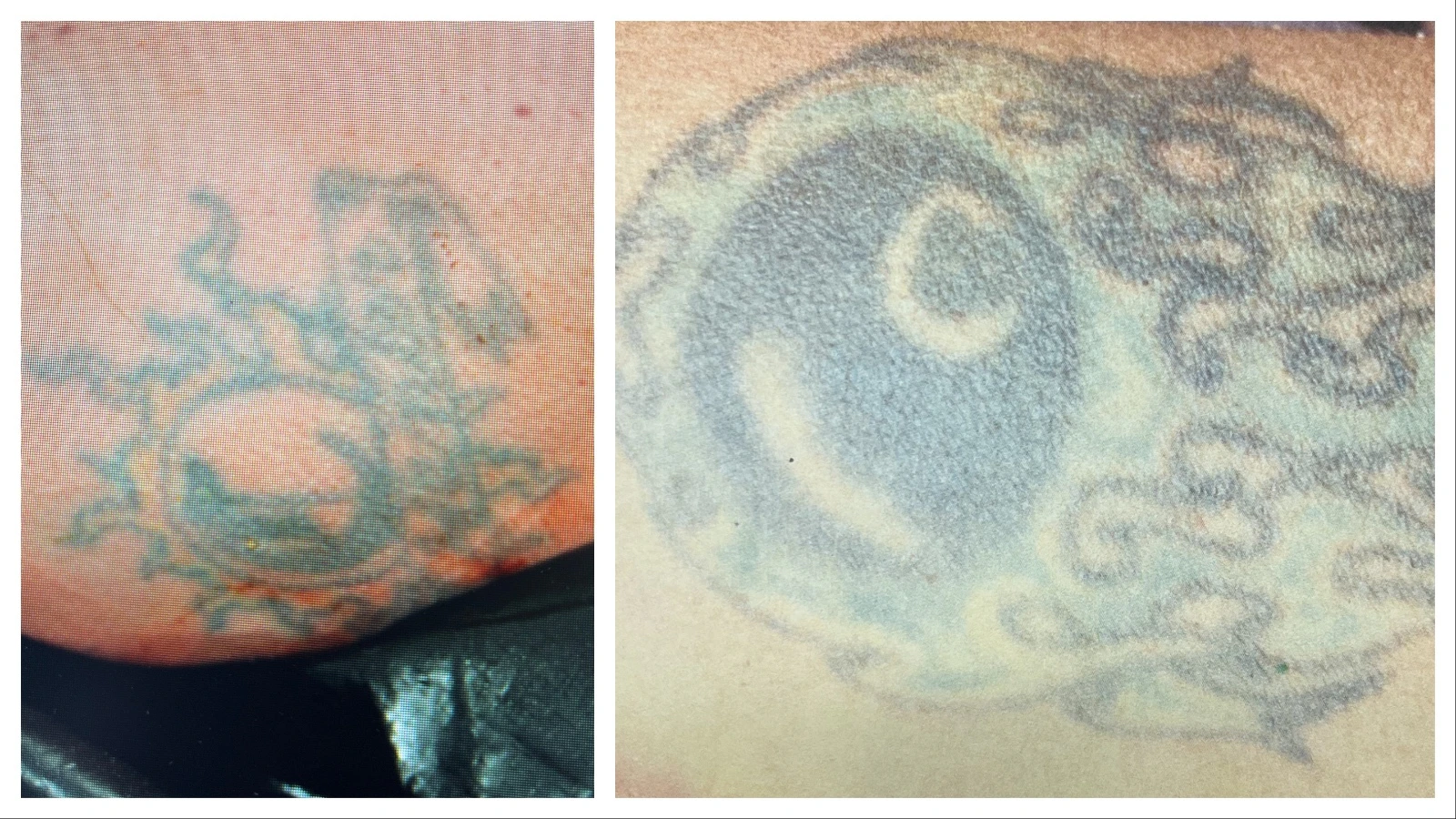
For both, distinctive tattoos could help investigators track down who they are.
Potential Assist
Two NamUs entries for Wyoming in one week are unusual, say two amateur Cheyenne-based genealogists who run a pro bono company focused on reporting missing and unidentified people.
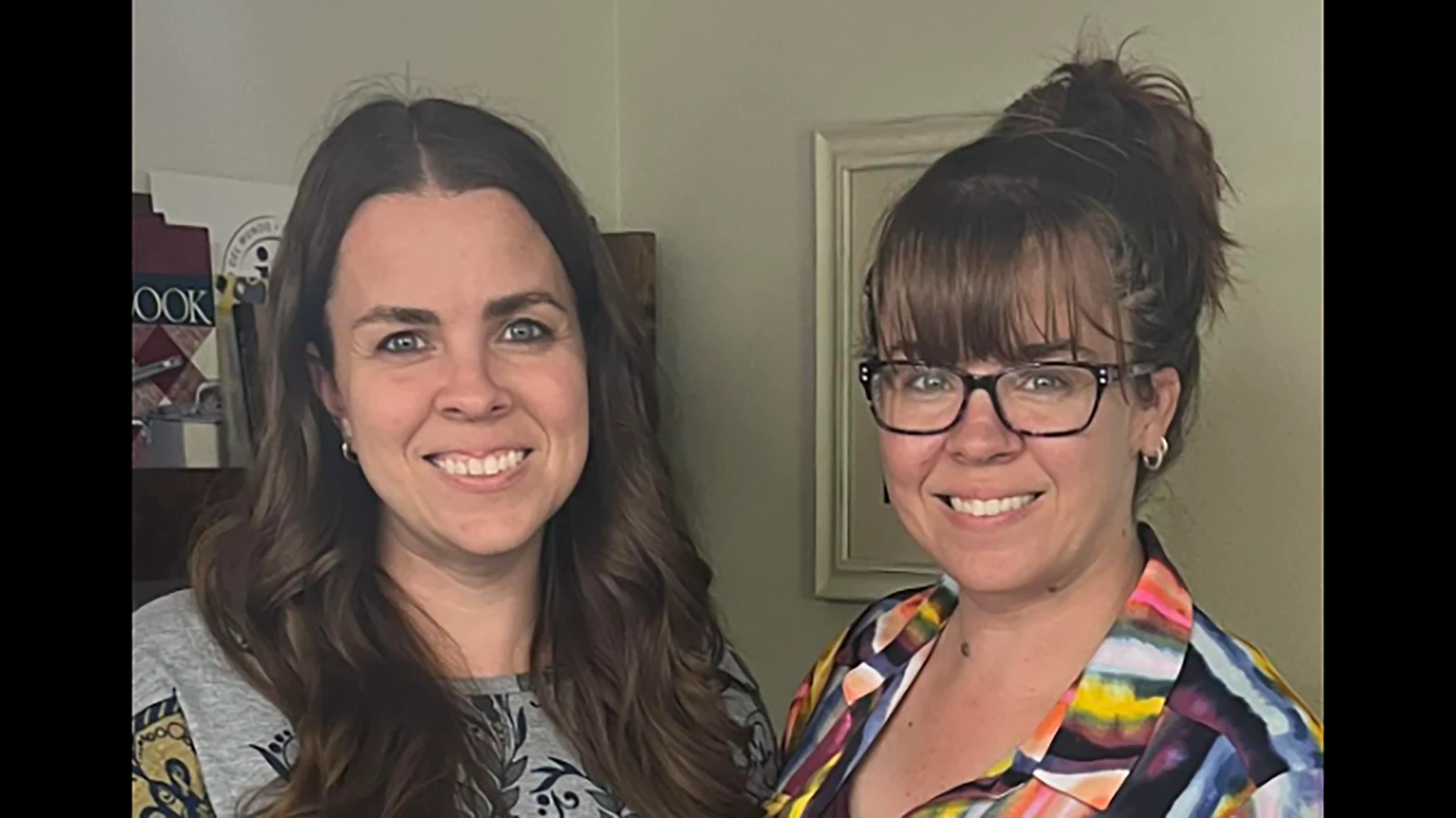
“It definitely caught our attention,” said Ashley Kroner, who along with her twin sister, Megan McWilliams, are cofounders of Genetics Uncovered.
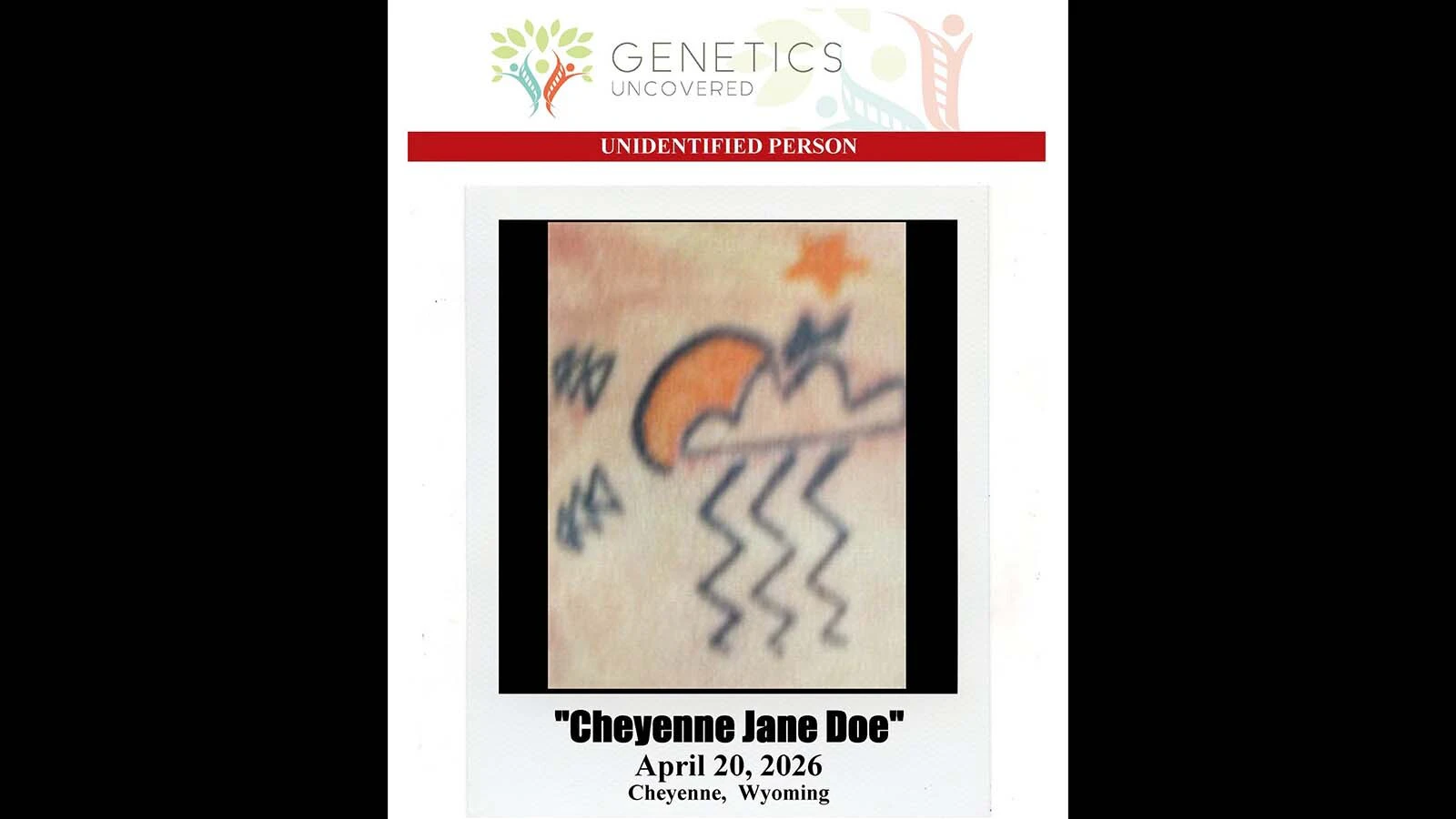
As usual, they made posters for both John and Jane Doe, with photos of identifying tattoos added by the coroner’s office and shared on their Facebook page with more than 9,000 followers.
The posts reached hundreds of people, potentially including members of the John Doe’s family, who contacted Kroner and stated they recognized the tattoos.
Kroner shared their information with Laramie County Coroner Rebecca Reid, who is responsible for making the identification, per state statute.
As of Thursday, John Doe was still listed in NamUs.
Mysterious Circumstances
Little is known about the individuals and the circumstances under which they died.
Jane Doe was struck and killed by a vehicle at the mile marker 11 exit, potentially near the on ramp, between 8 and 9 p.m. on April 20, according to Aaron Brown, public information officer for the Wyoming Highway Patrol.
Brown said troopers rendered aid to no avail, and the woman succumbed to her injuries on the scene.
Her death remains under investigation, Brown said. He declined to share any additional details, citing an active investigation, though he added no charges are pending.
The victim is described as Caucasian with shoulder-length blonde, strawberry hair and unknown eye color. She was about 5-feet-7 and weighed 136 pounds.
She had a distinct tattoo on her right hip: A cloud with three zigzag lines beneath it, a sun emerging from the cloud’s left side and a star above the sun, and two clusters of triangles running along the far left of the lines.
Along with her clothing, a black and white duffle bag was found near her body, according to the NamUs entry.
Also citing an active investigation, Reid likewise could not provide any additional information.
John Doe was found dead June 6 at the 800 block of South Greeley Highway in Cheyenne, slumped in a kneeling position alongside a commercial building, with no cellphone or other identification.
His death remains under investigation, according to Chance Walkama, chief deputy of operations for the Laramie County Sheriff’s Office.
Walkama said his office is awaiting autopsy and toxicology results from Reid’s office. No foul play is currently suspected, but the cause and manner of death have not yet been determined.
Giving Them A Name
McWilliams and Kroner said they were pleased their efforts might have helped lead to the identification of the John Doe and also credited Reid for entering both Does into the national database, where the public – and family members – can see them.
This is why they started Genetics Uncovered in 2021, with the mission of locating missing people and putting names to Jane and John Does.
Both sisters have decades of experience in genealogy. McWilliams, whose husband Scott oversees the Wyoming Division of Criminal Investigation’s crime lab, taught a two-day class in forensic genetic genealogy for DCI agents and assisted the agency with a 1995 cold case in Carbon County.
McWilliams was also just accepted into an investigative genetic genealogy program starting this fall. Kroner, meanwhile, holds down a full-time job while pouring whatever hours remain into tracking down unidentified people and pushing law enforcement and coroners to enter them into NamUs.
Together, the sisters spend long stretches combing through ancestry records, burial registries such as Find A Grave, and newspaper archives, assembling family trees in hopes of giving the unidentified a name.
Success Stories
This is part of their nationwide initiative, “Not Forgotten,” to track down unidentified people and get them entered into NamUs.
Once in the database, not only can law enforcement cross-check for missing people, but it also allows family members to provide DNA for possible identification should remains be found.
Without this database, there’s no central repository for law enforcement and families to find these individuals, many of whom have been reported missing.
They admit it’s an ambitious undertaking, but they have since recruited six volunteers to help tackle the vast territory, which they’ve broken down into geographic areas.
Between the eight of them, they have most of the country covered, but they still need volunteers in two areas: California, which is its own region, and a southern stretch comprising Arkansas, Louisiana, Oklahoma and Texas.
The work is paying off, they say.
To date, they’ve worked with law-enforcement agencies and coroner offices around the country to enter 35 new Does into NamUs.
Of those, at least one has been identified. In January 2026, authorities in Washington state positively identified the remains of a former mayor, Clarence Edwin Asher, who drowned while crabbing in an Oregon bay in 2006, according to People magazine.
The twins successfully added into the database in March 2025, making that identification possible.
Many More
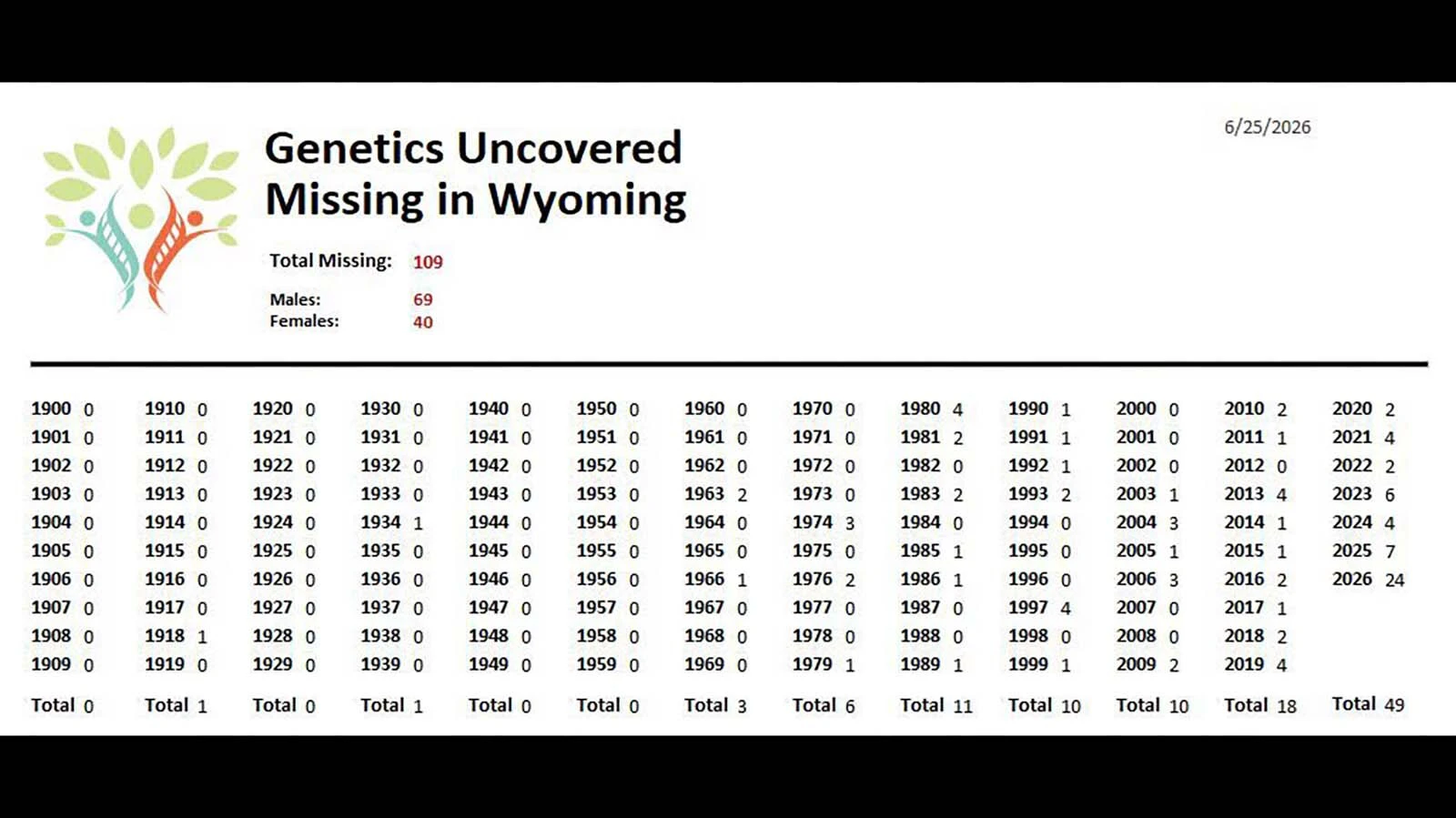
There are hundreds more still to be located in Wyoming and beyond.
More than 15,000 unidentified individuals are listed the NamUs database, Kroner said, but she believes that number is much higher.
Along with the two latest entries, Wyoming has nine unidentified people listed in NamUs dating to 1977, including two of the sisters’ personal favorites, whom they’ve affectionately dubbed “Motel Mike” and “Pine Bluffs Pete.”
“Mike” died of an overdose in a Cheyenne motel in April 1977. “Pete,” a transient, was hit by a train while attempting to cross tracks in 1996.
Both men remain unidentified, but at least they’ve since been listed in the database, McWilliams said.
There are likely several more. To date, the sisters have located four unidentified people in Wyoming dating to the late 1800s.
The challenge lies in determining how far back law enforcement and coroners are willing to go — at what point a case becomes too old to be worth opening. Knowing many agencies are understaffed and overworked, the sisters try to be thoughtful about which cases they bring forward.
Technically, the oldest case in NamUs is from 1915, but they’ve found even older unidentified people in Wyoming.
Their oldest case is a 35-year-old man who died near Cooper Lake in Albany County in March 1899.
A John Doe died in a Laramie railroad yard in 1908 and another was killed in a train accident in Sheridan County in 1910. A John Doe from Natrona County died in 1921.
Trains And Drownings
As the sisters have learned, train deaths were common back in the day. So were drownings.
Many were transients just passing through foreign places where they met their demise – far away from family and friends, who had for whatever reasons lost track of them.
Sometimes they get lucky and find accompanying news articles.
It’s the stories that get you, both sisters agreed. That’s where their hearts catch, in the space between life and data.
They shared a news clip about the last man killed by the train in Natrona County in 1932.
He’d been standing at the west end of the Platte River bridge outside Casper when a Chicago and North Western train out of Lander hit him, hurling him down a 10-foot embankment to his instant death.
He bore no identification except a hat with the initials “J.T.M.”
The train engineer told authorities he had blown the whistle repeatedly. The man never moved.
Boys swimming in the river below likewise had tried to warn him. Again, he kept walking without so much as a glance backward.
Later, authorities concluded that he was likely deaf and never saw it coming.
Worse, those who loved him hadn’t even known he died, and still don’t because he has not yet been entered into NamUs.
It’s stories like these that make this work meaningful for the twins and compels them to continue on behalf of the missing and unidentified, including the two recent Does in Cheyenne.
“They don’t have a voice,” Kroner said. “I want to be that voice.”
Jen Kocher can be reached at jen@cowboystatedaily.com.