

For eight years, Dustin Bruegger’s family has sought answers about his death, a search that runs parallel to their enduring grief.
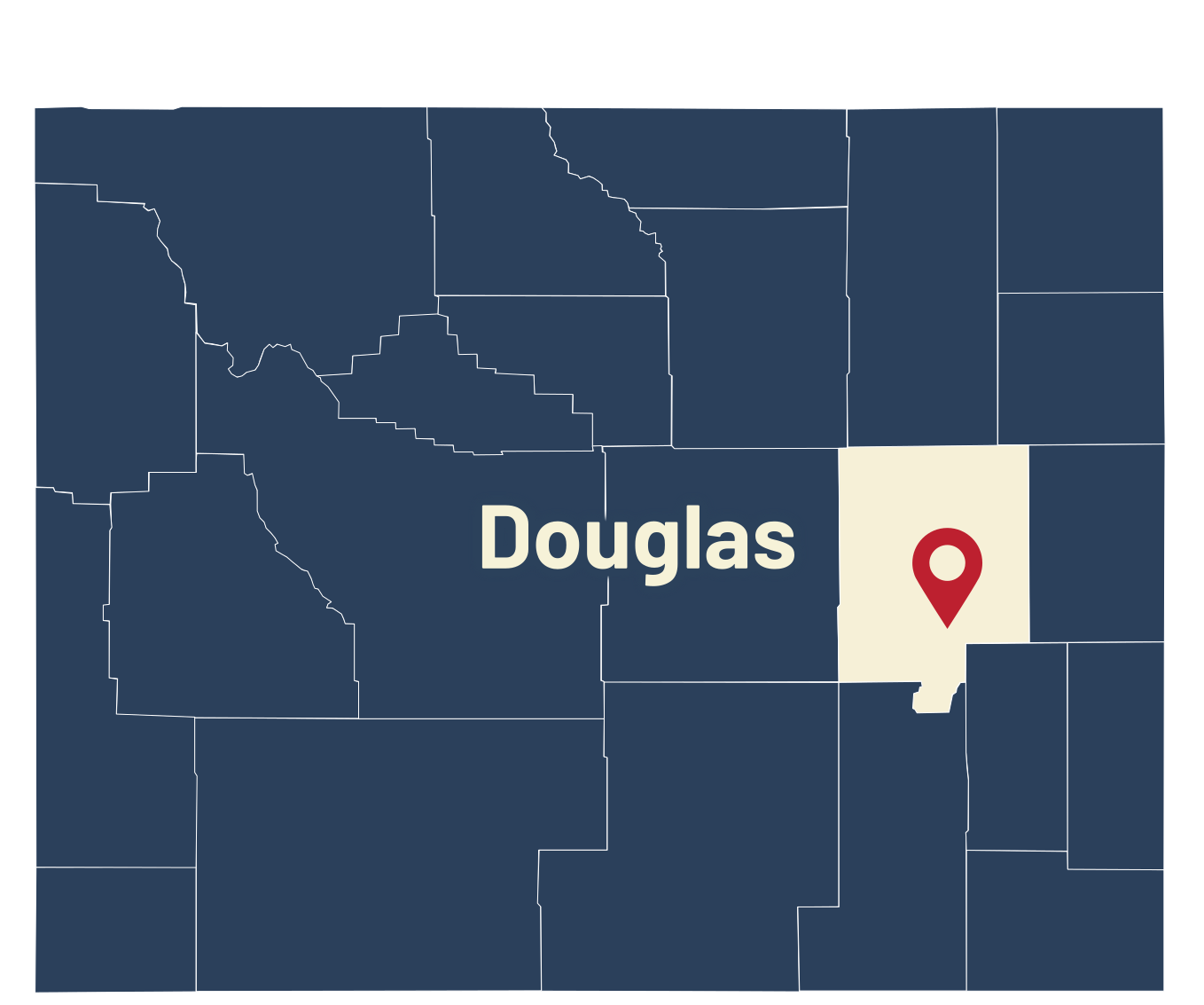
Bruegger was 24 when he was shot and killed on Feb. 3, 2018, inside his apartment in downtown Douglas.
He’d been shot in the chest with a high-powered rifle while sitting in his recliner in his living room and died instantly.
Police ruled his death a homicide. Yet the two friends who were with him that night — cousins Austin Silsby and Zach Edison — maintain that Bruegger took his own life.
Despite pressure from Bruegger’s family and a civil wrongful death suit brought in 2020 — later dropped due to mounting legal expenses — their account has never wavered.
Bruegger’s family is not satisfied with this answer.
His mother, JoAnn O’Brien and his sister, Jennifer Castro, say the facts simply don’t add up based on the evidence. Nor do they believe he would have taken his own life as he actively was making plans for a new one.
“It just doesn’t make sense to us,” O’Brien said. “Nothing fits.”
To date, Silsby and Edison maintain their innocence, and neither they nor anyone else has been charged for any crimes related to Bruegger’s death.
The investigation into the shooting is now with the Wyoming Division of Criminal Investigation (DCI), which took over from Douglas Police Department 48 hours after the incident.
“The Bruegger investigation remains an active investigation,” said Ryan Cox, DCI commander and head of the cold case division. “DCI agents continue to review evidence and pursue all viable tips and leads.”
To this point, Cox urged anyone with any knowledge — regardless of how insignificant it may seem—regarding the events that day, to contact the Wyoming DCI Casper Office.
In the meantime, not a day goes by that she doesn’t think about her son, O’Brien said.
Having answers would allow the family to finally begin to grieve.
Instead, Bruegger’s family finds itself enacting the very advice he once wrote to an underclassman in his high school scrapbook: “Always end on a good note with people because you could lose them in the blink of an eye.”

‘Party Animals’
All these years later, Bruegger’s family is still trying make sense of what they’ve been told happened that day.
In all accounts, it was an ordinary Saturday.
Bruegger had spent the morning in Lost Springs — Pop. 3 — helping his grandmother on his father Tim’s family ranch about 26 miles west of Douglas, along Highway 18/20.
He and his siblings, Justin and Jennifer, were raised there, and Bruegger was making plans to start his own ranching operation on family land next to his brother. Earlier that week, he’d just bought 30 head of cattle. His mother said he was excited about his prospects.
When the chores were done, he drove back to his apartment in Douglas, on North 2nd Street, a two-story tan multiplex wedged among older buildings, around the corner within easy walking distance from the LaBonte Bar.
At some point, he got together with Silsby and Edison at the LaBonte Bar and spent the afternoon drinking. Court documents describe them as best friends known to others as “the three amigos.”
O’Brien and Castro weren’t familiar with Silsby or Edison, though. Their names never came up in conversations among Bruegger’s friends.
But Cody McNare, a close friend of Bruegger’s younger brother Justin, told Cowboy State Daily they all used to spend time together back then, when they were known to drink heavily — often with Silsby and Edison in the mix — and that day was no exception.
Later, the toxicology report would confirm it: Bruegger’s blood alcohol level registered 0.245, more than three times the legal limit.
“I’m not going to lie,” McNare said. “We were freaking party animals in our young lives and were still doing stupid crap.”

Dustin Bruegger was living in an apartment in the 200 block of North 2nd Street in Douglas, where he was fatally shot the night of Feb. 3, 2026. (JoAnn O'Brien) 
Dustin Bruegger's downtown Douglas apartment was a short walk to the LaBonte Hotel and Bar. (JoAnn O'Brien)
10 Minutes Too Late
It’s not clear at what time the trio left the bar to head to Bruegger’s apartment, but at 5:27 p.m. Bruegger was shot at point-blank range.
McNare had been on his way to join them but got there too late. He had just spoken to Bruegger on the phone about 10 minutes earlier but stopped at the LaBonte first for a quick beer.
He didn’t hear a gunshot, but when McNare walked around the corner, he saw Silsby race across the street toward the fire station and beat on the garage bay doors, while Edison walked out of the apartment, shell-shocked and soaked in blood.
McNare ran down the stairs into Bruegger’s garden-level apartment and described seeing him slumped in his recliner with a hole in his chest, drenched in blood.
“There was nothing really to do,” he said. “He was pretty well gone.”
The rest is a blur, he said. He didn’t remember seeing a handgun or a rifle on the floor near Bruegger and couldn’t recall if the cops were on hand yet, though he did recall EMTs rushing into the apartment as he stood there stunned.
His main focus was trying to keep Justin from going inside to see his brother, he said. He knew they had to leave, so he called his older brother to pick them up.
“I said, ‘Come get us — I’m not all right,’” McNare said.

What Was Done?
Later, a detective from the Gillette Police Department phoned and asked McNare to come to the station. Once there, he said investigators never tested his hands for gunshot residue or took his clothes as evidence, even though he felt treated like a suspect.
“They should have been tested, every one of us, including me,” he said.
Cox declined to discuss evidence collection methods, chain-of-custody protocols and what forensic testing may or may not have been, citing DCI’s policy to not discuss an open investigation.
“However, the third-party assertions regarding what tests were or were not performed upon him may be correct, but assertions regarding what tests were or were not performed upon others, or what property was collected, do not accurately reflect the extensive multi-agency forensic and investigative work conducted by the Douglas Police Department, the Converse County Sheriff's Office, the Wyoming State Crime Laboratory, and DCI,” Cox wrote in an emailed statement.

There were at least two weapons in Bruegger's Douglas apartment the night he was shot, including a handgun and automatic rifle pictured in court documents filed in the family's wrongful death civil lawsuit. (JoAnn O'Brien) 
There were at least two weapons in Bruegger's Douglas apartment the night he was shot, including a handgun and automatic rifle pictured in court documents filed in the family's wrongful death civil lawsuit. (JoAnn O'Brien) 
There were at least two weapons in Bruegger's Douglas apartment the night he was shot, including a handgun and automatic rifle pictured in court documents filed in the family's wrongful death civil lawsuit. (JoAnn O'Brien)
Who Fired The Gun?
O’Brien had been out shopping at Home Depot and Menards in Casper with her husband, Mike, that day excited about their plans to remodel their upstairs bathroom.
Bags full of hardware and decorative items were everywhere, she said, when Converse County Coroner Ross Gorman showed up at their door to tell them the bad news.
The ground dropped out from under her and the world went loose at the edges. Her mind raced to try to process this news — who would shoot Dustin?
The idea of suicide never even occurred to her. She felt immediately that someone had shot him.
It would take her filing a civil wrongful-death lawsuit in 2020 against Silsby and Edison to get their side of the story, which is shared in court documents.
At the center of the debate is how Bruegger actually died.

Helpless To Save Him
According to Silsby and Edison, it was suicide.
The medical examiner, however, disagrees.
After a full autopsy and forensic medical examination, Dr. James Wilkerson, medical examiner and pathologist in Loveland, Colorado, determined his death was a homicide.
The wound was characteristic of one caused by a flash suppressor or ported barrel gun muzzle, Wilkerson said in the autopsy report shared with Cowboy State Daily.
DCI has also characterized the death as a homicide in accordance to the autopsy and forensic findings and said it’s being investigated as such. Per policy, DCI refuses to comment on any claims raised in civil wrongful-death cases, Cox said.
Silsby and Edison, however, have held firm: Bruegger shot himself, they clearly state in Silsby’s motion to dismiss the complaint filed in Converse County District Court in response to the wrongful death lawsuit.
In fact, they said they were greatly impacted by the tragedy of being present during the shooting, according to the filing, because they were helpless in saving their friend’s life.

Dustin Bruegger's death was ruled a homicide. (JoAnn O'Brien) 
Dustin Bruegger is buried at the Douglas Park Cemetery in Douglas. (JoAnn O'Brien)
Sticking To Their Truth
Their account of that night has not changed to date*.
It was a suicide and they had no role in Bruegger’s death, Silsby said in response to a question from Cowboy State Daily, echoing statements filed in court documents in the wrongful death suit.
“The simple fact is Bruegger committed suicide that night and they are looking for someone to blame,” Silsby stated over Facebook Messenger.
When confronted with the official homicide ruling from the medical examiner and law enforcement, Silsby did not waver.
“I think the police department should have done a better investigation into all of this,” he said.
Edison did not respond for request for comment.

Events That Night
Three people were in that apartment when it happened. Only two can still talk about it.
That night, law enforcement arrived within minutes of receiving the 911 call, according to court documents.
Before they arrived, Silsby and Edison moved the firearm from the living room into the bedroom.
There were at least two firearms in his apartment that night: A .44 caliber revolver as well as an “assault-style rifle.”
When questioned, both Silsby and Edison admitted to handling one or both of the guns, court documents state.
However, no fingerprints were found on either.
Silby’s lawyer Thomas B. Jubin, of Jubin and Zerga in Cheyenne, addressed this point in response to O’Brien’s complaint. He described this claim and others as “simply not accurate” and “either intentionally or ignorantly misleading,” court documents state.
Chief among those points is the absence of fingerprints on the weapons and blood or tissue on the barrel of the rifle. In a detailed footnote corresponding to that claim, Jubin challenges the assumption: “Contrary to what folks might see on television, any competent expert would acknowledge that fingerprints are a chance occurrence; more often there are none, and their absence is meaningless.”
Likewise, for the absence of blood or tissue on the rifle, given its close proximity to Bruegger’s chest at the time of discharge, “assuming it is correct,” the motion states.
Jubin went on to say that “a competent expert will testify that given the nature of this weapon and a shot through clothing … may or may not result in such residue,” according to the court records.

Alleged Changing Stories
Also in question is what Bruegger’s family highlighted in their filing as alleged inconsistencies in the initial statements given by Edison and Silsby, which law enforcement described as “very brief and contrasting.”
The documents indicate that upon arrival, Edison informed officers that Bruegger had shot himself with a silver revolver.
Silsby, in turn, told police, “I don’t know what happened, it was an accidental thing,” he said.
Then he claimed, according to the court documents, that he “couldn’t remember any of it.”
Later, when reinterviewed, Silsby said that he now remembered that Bruegger shot himself with a black, semi-automatic rifle that looked like an “AR” or “SKS.” He further said that the men had been “bullshitting together” and were all in the living room when the gun went off.
When pressed by responding officers about these inconsistencies, Edison admitted to earlier handling the rifle before the shooting and telling police he heard the gunshot but never saw the gun in Bruegger’s hands, court documents state.
The complaint also alleges that Edison could be heard on the 911 call, sobbing and stating, “I’m sorry.”
Shortly thereafter, Edison asserted his First Amendment right to counsel and was permitted to leave. Both men immediately hired lawyers.
Cox said that both men were thoroughly questioned by police after the shooting.
“Any assertion that these individuals were not questioned on the night of the incident is factually inaccurate,” he said. “Both individuals were separated, secured, and questioned multiple times that evening by responding law enforcement agencies.”

About Those Changing Statements …
As for the inconsistent statements to law enforcement, Silsby blamed the “overwhelming emotions” he felt after the shooting and said he did his best to provide authorities with information and continued to do so “until it appeared that certain officers were focused on targeting a scapegoat,” court documents state.
In a corresponding footnote, the complaint further alleged that “Not all police officers are immune from the adage that ‘if you are holding a hammer, everything looks like a nail.’”
The complaint goes on to say the law enforcement “generated hostility in the community by suggesting to friends and acquaintances of Silsby and Edison that the two young men were responsible for Bruegger’s death and then suggestively soliciting information to confirm their suspicions.”
This, in turn, created “many harmful, devastating and self-perpetuating false rumors in the community” that also fueled the lawsuit, it states.
DCI declined to respond to these specific accusations, repeating its policy to not comment on civil cases. However, Cox noted that law enforcement offices have a duty to conduct criminal investigations thoroughly, professionally and objectively.
“Our agents follow the evidence, examine all potential theories, and interview witnesses to establish the facts,” he said. “Our priority remains conducting a fair, fact-based investigation into Dustin Bruegger's death.”

Didn’t Take His Own Life
One thing is certain as far as his family is concerned: Bruegger was not suicidal.
“I think Dustin was doing great,” O’Brien said, pointing to his plans to start his own ranch near his brother and recent cattle purchase.
His older sister, Jennifer Castro, agreed.
“Dustin had finally gotten to an age where he could start building the life he wanted,” she said.
He was doing well, was responsible and never struggled to keep his life on track, both said. After high school, he had a summer job at a mine before going to Casper College, where he graduated with a degree in diesel engineering.
They described him as a quiet, stoic guy who was slow to warm to strangers but who had a witty charm and a big, kind heart, especially where his family – and niece, Miley – was concerned.
He’d never struggled with depression or suicidal ideations, they say, and genuinely seemed excited about this next chapter in his life.
Likewise, when investigators spoke to Bruegger’s friends and other family members, including people who had interacted with him shortly before the shooting, none believed him to be suicidal or depressed.

Knew How To Handle A Gun
McNare said the same: “No way did he shoot himself.”
He knew Bruegger well at that point and had hunted with the brothers on multiple occasions. Both men were safety-conscious and would never mishandle a firearm.
“I sure never saw him act stupid with a gun,” McNare said.
He’d hunted with both Bruegger brothers for years, and said both knew firearm safety, which is something they all took seriously. This is a big deal to McNare – he’s even refused to hunt with men he thinks don’t know how to handle their firearms properly.
Bruegger didn’t mishandle his firearms, McNare said: He was careful.
McNare also said he wasn’t suicidal leading up to that night or the night itself. He’d just spoken to him, and he sounded completely normal.
He’s also unclear if shooting oneself in the chest would even be possible.
“That would be pretty hard to do with a rifle,” he said.

Safe With Firearms
This comes down to the question at the heart of the debate: Who shot Bruegger that night?
McNare points to the two men in the apartment.
“I think they’re two friends that were scared and trying to save each one or the other – whoever shot him – and didn’t fess up for it,” McNare said.
That said, he acknowledged it was all speculation on his part. He wasn’t there when it happened.
He also said he believes that if either Silsby or Edison did shoot Bruegger, it was accidental and not malicious. He saw them that night, and they were genuinely concerned, he said, and doing everything in their power to help him.
“They looked like distraught friends trying to save their friend,” he said.
Whatever happened, he said he thinks they’re still not telling the truth.
“I told them I don’t believe their bullshit story,” he said to them about two weeks after the shooting. “I told them they should come out clear with whatever the hell happened in there because only you two know and that family deserves justice.”
That was the last time they’ve spoken, nearly eight years ago.
One thing he does know, however, is that Bruegger’s death is seared in his memory and has forever altered him. Like Bruegger’s family, he’d just like the truth to come out.
“Dustin’s family deserves better than that,” he said. “I don’t wish any harm on anybody. I know their brains really have to be messed up, and their hearts have to hurt like nobody can imagine.”
Not Just A Name In The Headlines
Wyoming communities are known for showing up in a crisis, but the support is often matched by the ferocity of onlinedivision as many believed Silsby and Edison were telling the truth.
In this case, friends were pitted against friends with some saying it was murder, while others told O’Brien and her family to get over it and accept that Bruegger took his own life and stop blaming others.
O’Brien blocked numbers on her phone to escape the cruel comments.
She’s not looking forward to the firestorm that new press will bring, but still she and her family press on, driven by a need for the truth as they see it.
Ultimately, they say their family cannot begin to grieve without knowing what truly occurred that night. Like McNare, they seek not money or even justice, but answers — the wrongful death suit was merely a means to that end.
They say they aren’t alleging anything sinister took place, and they aren’t necessarily after retribution. They only want an explanation that holds together.
More than anything, they wish for Bruegger to be remembered for his life, not the tragedy immortalized in headlines.
They want people to remember him how they did: A kind, loving guy who was ranch-raised through and through. A kid who grew up mending fences, stacking bales, and moving cattle, and shared a close bond with his family.
He stood over 6 feet tall, solidly built at more than 200 pounds — the kind of son, O’Brien said, she never had to worry about.
“He was a very quiet and gentle soul,” O’Brien said.

‘Unfinished Project’
In high school, Bruegger was in the Future Farmers of America (FFA) which he documented — along with other important childhood memories — as a big part of his life in his high-school FFA scrapbook.
Other memories include a memorable trip to Texas with his grandfather to pick up his sister, Jennifer, and niece Miley, as well as his favorite dog, Charlie Brown, who died during his sophomore year. He writes about being on the football field making a comeback against Buffalo when he looked up and noticed his mom not in the stands.
When he got home, his mom gave him the bad news. He then buried his beloved pet, “In the headlights, I had to dig the saddest hole in my life,” he wrote.
He lovingly called Miley a “brat” and his “biggest pain,” yet she was his constant shadow, inseparable. Old photos capture them beaming on the four-wheeler, or swimming, her small arms locked around his neck.
Castro, in Washington now, said breaking the news to Miley was probably the most difficult task she’s ever faced. Her voice still wavers recounting it, and the grief still echoes in their lives.
They are desperate for some form of closure.
“It’s like an unfinished project,” O’Brien said. “Like building a wall with a hole that never gets filled. It’s never complete.”
For Castro, her brother’s birthday is the toughest, along with all the milestones he’s missed, like the birth of his brother’s twin boys.
“Dustin would have adored those boys,” she said.
The cruelest comfort comes from Bruegger’s own words, scrawled on the final page of his FFA scrapbook: “One of the hardest lessons is losing family… There’s no easy way to learn it. You just have to because you never stop losing people.”
Bruegger’s case remains open and authorities are asking anyone with tips or information to contact DCI Casper office at 307-777-7181. Tips can also be submittedanonymously onlineat DCI’s webpage.


