


Before pilots could follow a glowing line on their cockpit screen, they followed giant yellow arrows across Wyoming.
Now, a Wyoming aviation group is working to make those long-faded concrete landmarks from the 1920s stand out again.
The Wyoming Aviation Heritage League’s Dean McClain told Cowboy State Daily the group wants to repaint all of the state’s arrows chrome yellow. The bulk of the project is planned for next year, but they’ve already started with the Silver Crown arrow about 20 miles northwest of Cheyenne.
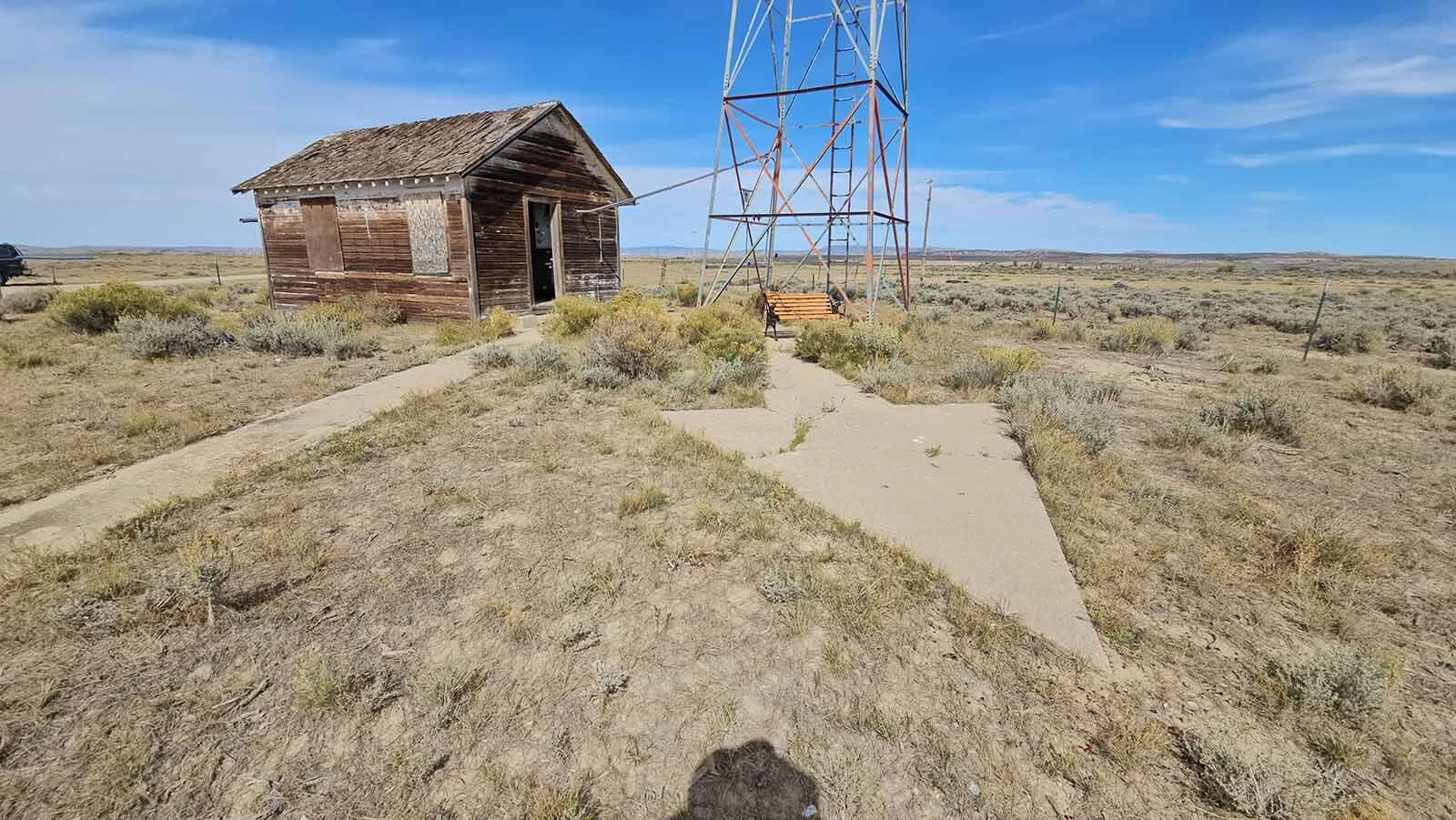
Among the arrows they’ll paint next summer is the one at Medicine Bow’s airport. That will dovetail with a larger effort to restore the historic airmail station as part of a tourism push to attract visitors from the skies.
“For some reason, Wyoming has forgotten its aviation history,” McClain said. “So that’s one thing we can do right now is get those arrows painted and bring some awareness to it.”
McClain is a semi-retired crop duster who lives in Torrington. He said estimates vary as to how many arrows remain across Wyoming. They range from 22 to 30, though the league is still taking inventory to determine how many survived and which can be painted or need extensive repair.
Longer To Find Than Paint
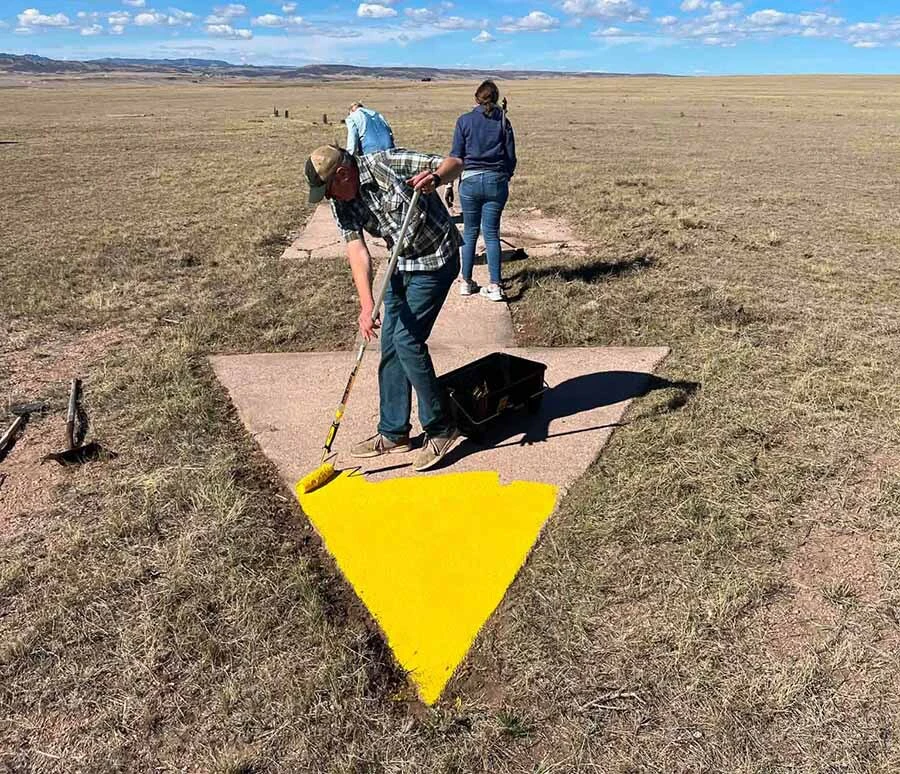
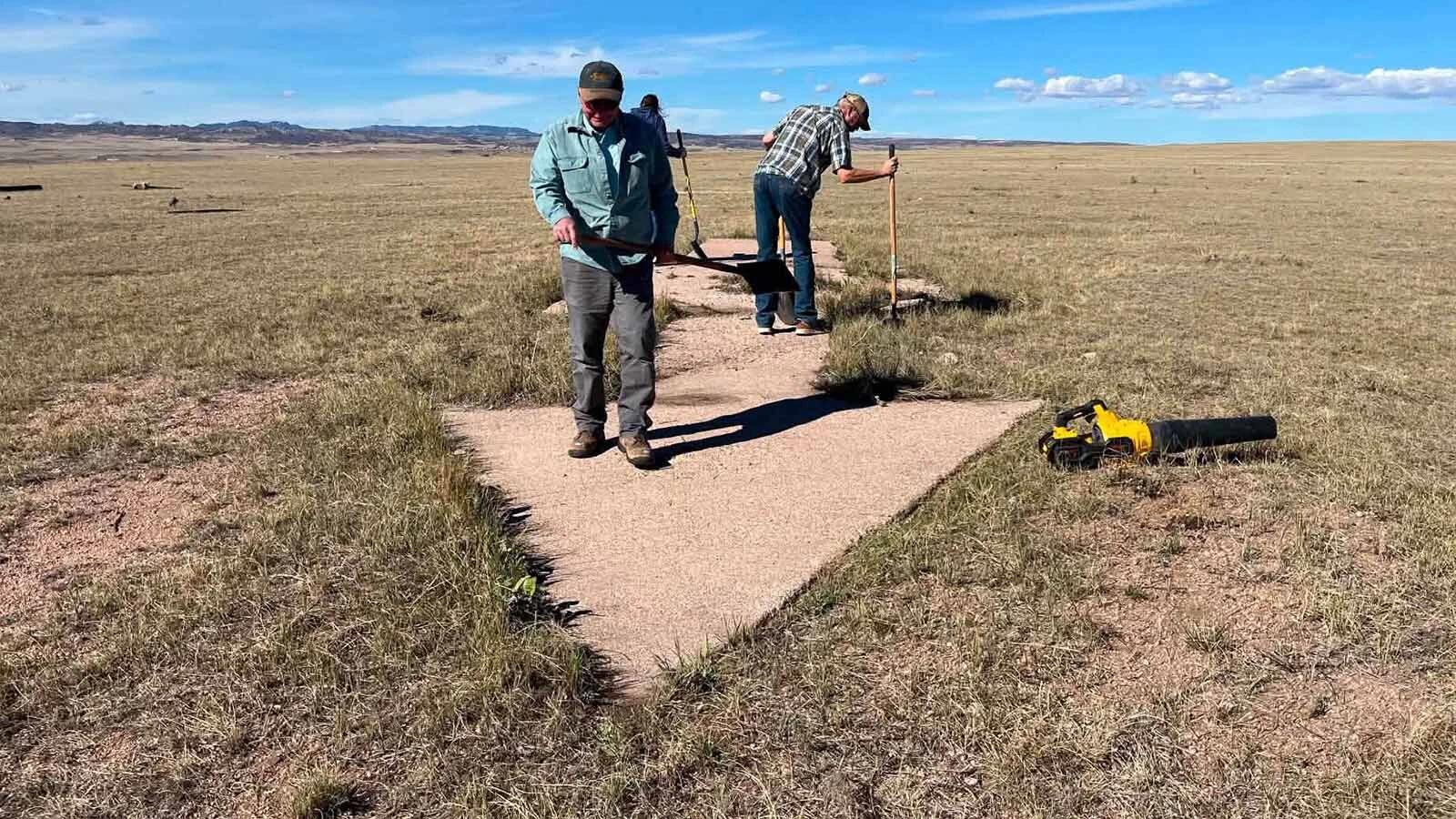
At Silver Crown, four volunteers spent about an hour cleaning the arrow then another hour painting it.
They removed encroaching grass and dirt, swept the concrete and used a leaf blower to clear away dust before applying two coats of yellow exterior marking paint.
The painting itself is relatively simple, McClain added. It’s finding them and securing landowner permission that takes the most time.
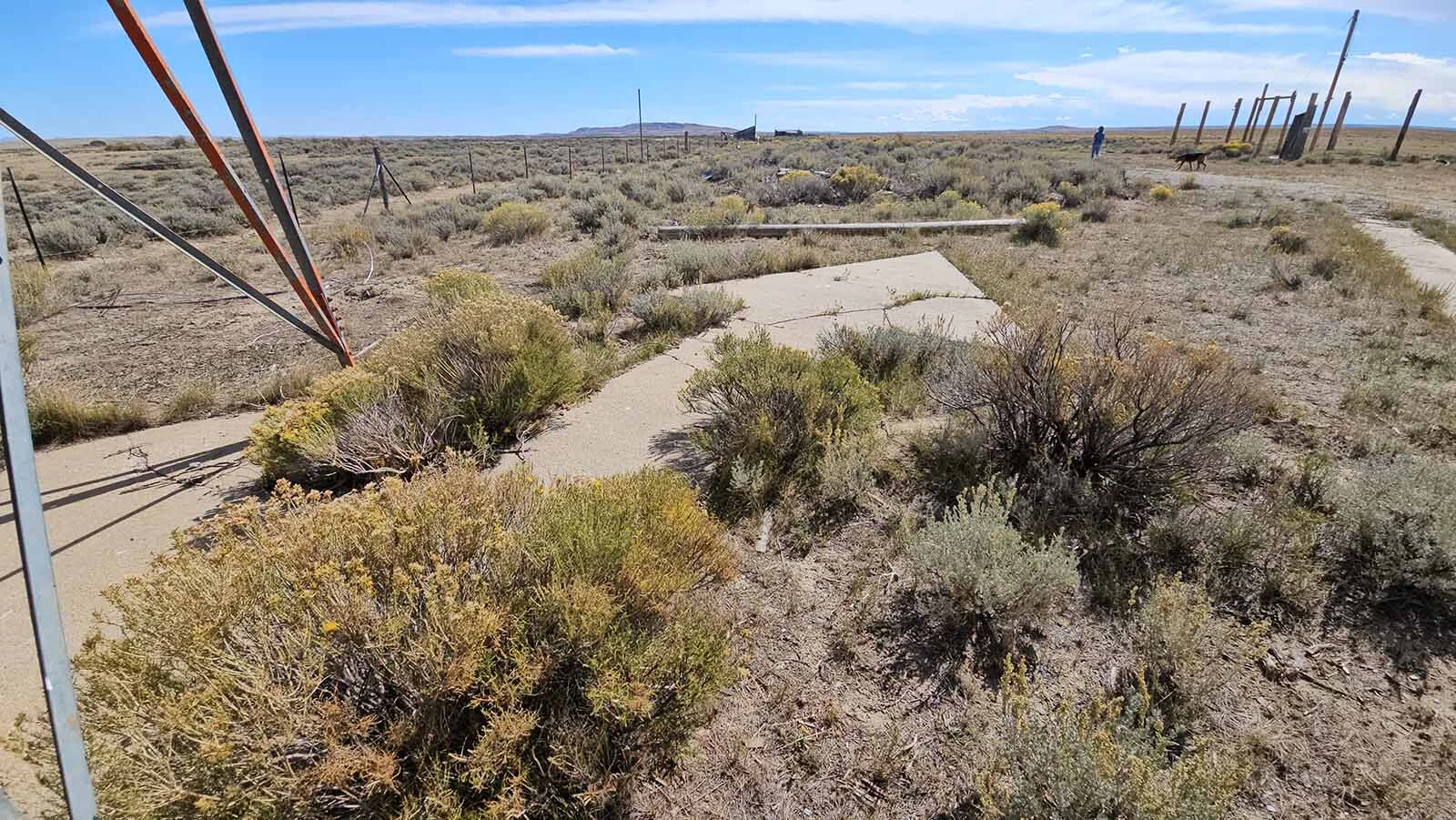
Many of the arrows have survived remarkably well, McClain said. Others are in such bad shape that painting alone won’t save them.
“At this point, our goal is just to find the ones that can be painted and saved right now, and get as many of those painted and saved as we can,” he said.
He hopes the effort, which will resume next spring, will leave most of the arrows painted or accounted for by fall.
Changing The Tourism Flight Plan
For Medicine Bow, a repainted arrow is just one piece of a much larger effort to restore its historic airmail station.
With a population hovering around 250, Medicine Bow struggles to lure motorists off Interstate 80, even with attractions such as the Virginian Hotel and recently relocated Fossil Cabin.
Give travelers wings, however, and the tourism equation changes. For pilots, the airport isn’t a detour off a busy interstate. It’s a straight shot to a unique historic destination.
Mayor Justin George told Cowboy State Daily the airfield is already drawing pilots and aviation history enthusiasts, including members of national organizations. Those visitors have helped organize fly-ins, fundraisers and major cleanup days.
George hopes restoring the airport will attract more of those visitors, making aviation history another draw.
Medicine Bow’s aviation ambitions fit into the broader heritage tourism market, which Fortune Business Insights estimates will reach roughly $668 billion worldwide in 2026. A 2009 national study also found cultural and heritage travelers tend to have higher household incomes than leisure travelers overall.
Fortune Business Insights also reports growing interest in interactive experiences. Medicine Bow hopes its airfield will appeal to that audience, with the town’s other historic attractions giving such visitors reasons to stay longer.
“When we get the Fossil Cabin done and the airport done, we’ll have two of the most historical things in the state in one town,” George said.
The league’s statewide painting campaign is separate from the airport’s preservation work, though both share an interest in saving Medicine Bow’s aviation history.
Golden Spike Of Airmail Era
Medicine Bow’s airport occupies a distinctive place in the development of the nation’s transcontinental air route, Alliance for Historic Wyoming’s Megan Stanfill told Cowboy State Daily.
Stanfill described it as the “golden spike” of the airmail era, the final radio installation needed to complete a safer navigation system for the route.
Before that, airmail pilots essentially flew by the seat of their pants, visually tracking the Union Pacific railroad tracks below — a rudimentary method they affectionately called the “iron compass.”
The yellow arrows and 50-foot beacon towers built by the Postal Service and Bureau of Lighthouses helped airmail pilots navigate, with the lights making night flights more practical. But the markers weren’t always visible in inclement weather — particularly Wyoming's inclement weather.
The vast gap between Cheyenne’s air terminal and Rock Springs, filled with rugged western terrain, remained a hazardous dead zone for pilots. A dense fog or an abrupt blizzard left pilots flying blind for far too long.
That all changed on Feb. 12, 1931.
That was the day engineers flipped the switch on a newly installed, low-frequency radio range beacon at Site 32, as Medicine Bow’s airport was also known. The transmitter bridged the gap between radio signals from Cheyenne and Rock Springs, completing a continuous radio navigation network from New York to San Francisco.
Medicine Bow has two other claims to transportation history fame, Stanfill added.
“It has an intact rail history,” she said. “And it has intact Lincoln Highway, too. So all three of those transportation histories are so well-represented in Medicine Bow.”
Where Amelia Earhart Walked
Medicine Bow’s airport has entertained some of the world’s most famous pilots, too, Stanfill added.
“Amelia Earhart landed there,” she said.
So did Charles Lindbergh and Elrey Jeppesen, who invented the standardized aerial navigation charts used by modern pilots worldwide.
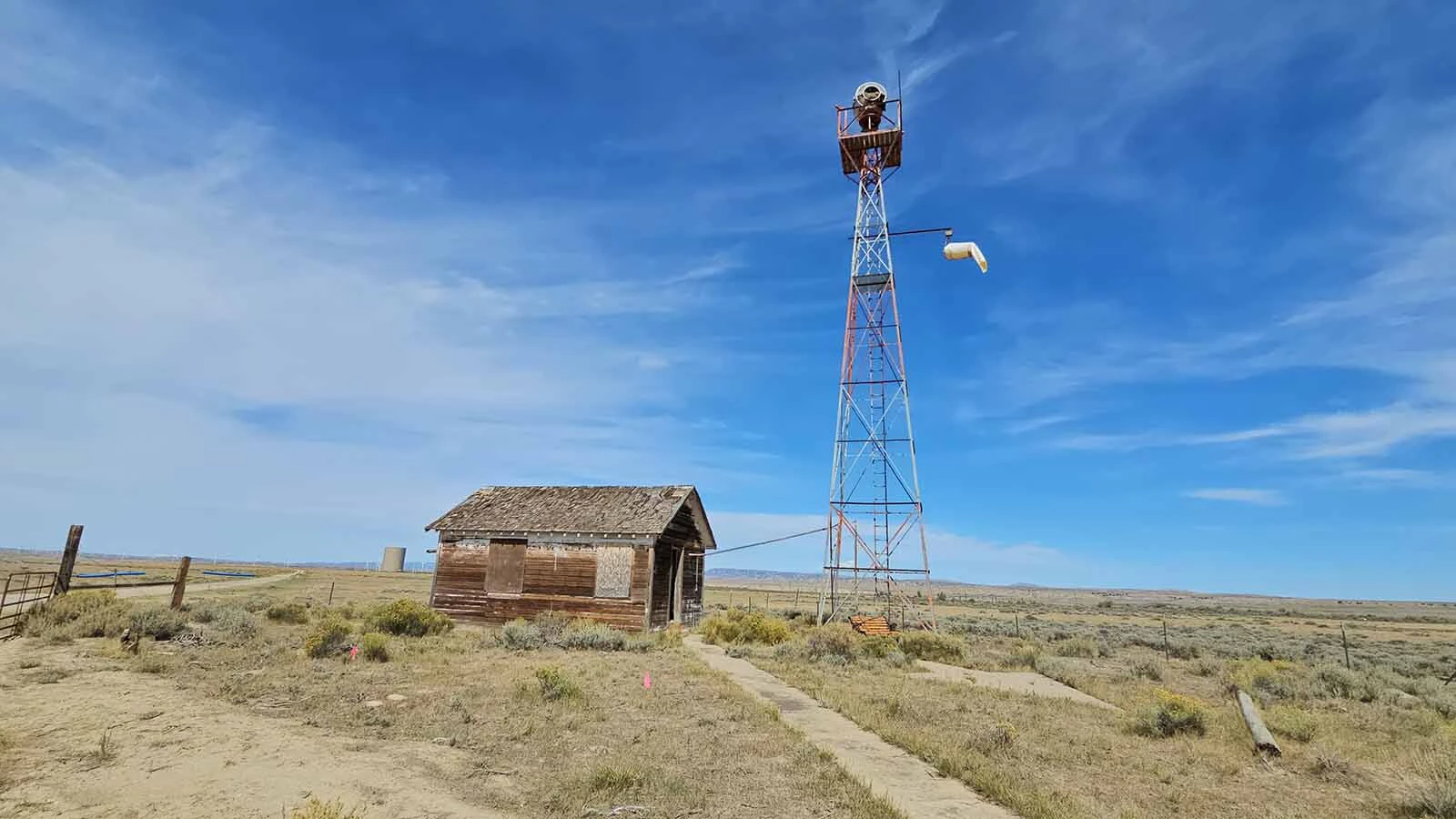
“I think what’s unique for Medicine Bow is you have the teletype office, you have the beacon, you have the arrow, and then you have the foundations of all the original campus that was out there,” she said. “And you usually don’t see that. A lot of these airports have been upgraded over the years, so you lose the original footprint. This airstrip has all of that.”
Right down to the original grass airstrip and the navigation circle, which Stanfill said can still be seen from Google Earth.
“Its biggest asset is that the airport is still intact,” she said. “It’s practically untouched.”
Many airport records have been lost, Stanfill said, making oral histories and photographs important sources for telling the site’s story.
Clearing A Runway To 1931
Medicine Bow has reformed its long-dormant Airport Advisory Board to help steer its airfield’s preservation. A nonprofit branch has also been launched called the Friends of the Medicine Bow Airport.
Last June, the town partnered with the Recreational Aviation Foundation, a national nonprofit dedicated to preserving backcountry and recreational airstrips. Twelve dedicated volunteers flew into Medicine Bow, joining forces with locals for a massive site cleanup, hauling away truckloads of old trash and scrap metal.
The next step will be stabilizing the original 1920s weather station. Donations have already come in for a new roof for the structure, which will follow historical guidelines to ensure the repair mirrors the original architecture.
Environmental cleanup is proceeding more slowly, however.
The board has applied for a brownfields grant to help it examine the soil and clear any problems. Preliminary DEQ feedback suggests a massive, costly soil removal won’t be required to green light the airport for future tourism events and fly-ins.
Much of the restoration lies ahead. But Medicine Bow is betting its runway to a 1931 time capsule can draw a new group of tourists — pilots and aviation history buffs who will not only visit but stay awhile.
Renée Jean can be reached at renee@cowboystatedaily.com.


