
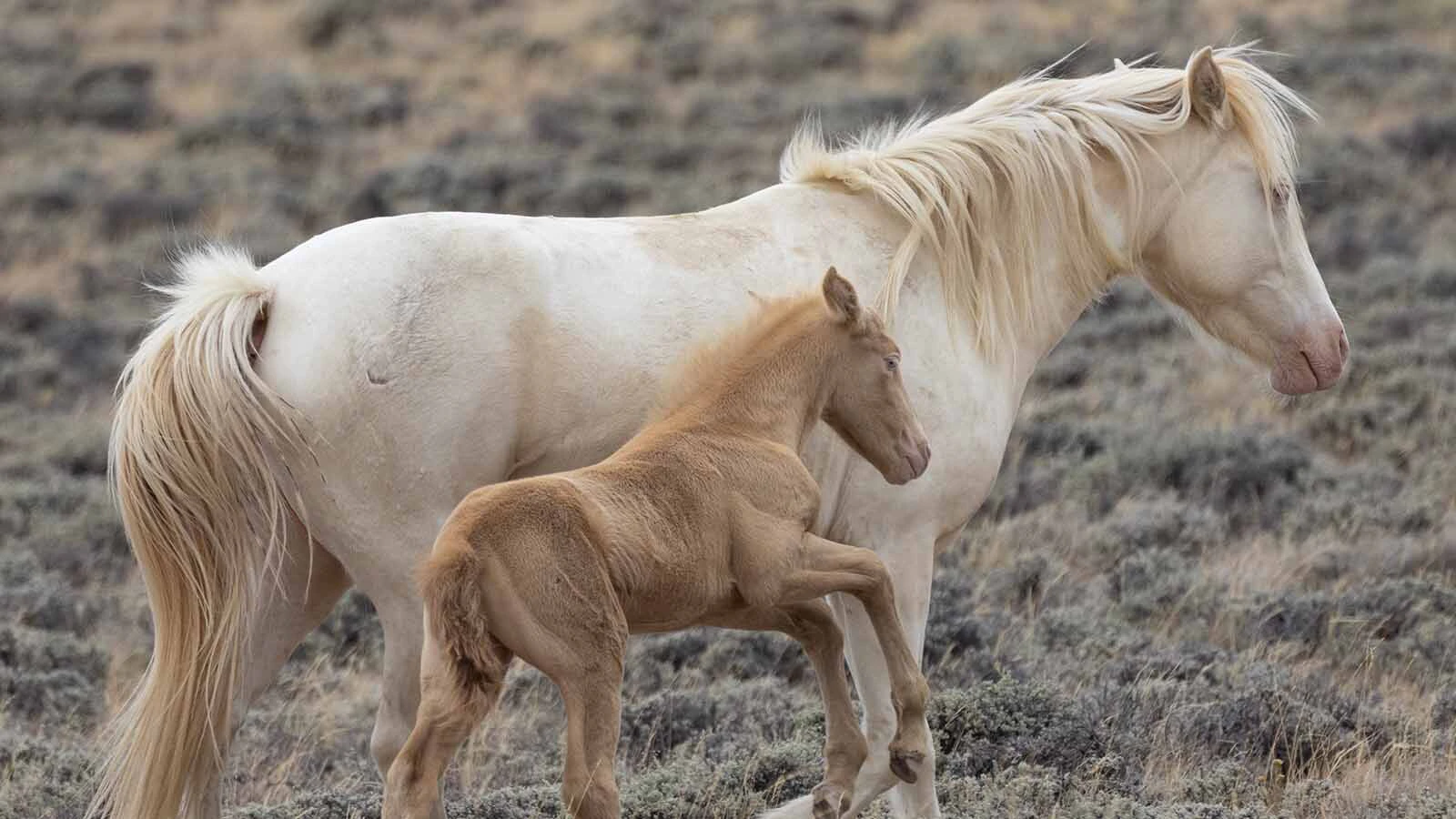
Horse advocates are upset over what they claim was the needless shooting of three rare blue-eyed Wyoming mustangs, including two foals, by the Bureau of Land Management.
The BLM says the horses were euthanized because they were blind.
Wyoming Mustang Institute director Chad Hanson told Cowboy State Daily he thinks it was a snap decision to kill the horses before a veterinarian could make a full assessment.
The BLM says veterinarians are on call during mustang roundups to assist with questionable health assessments.
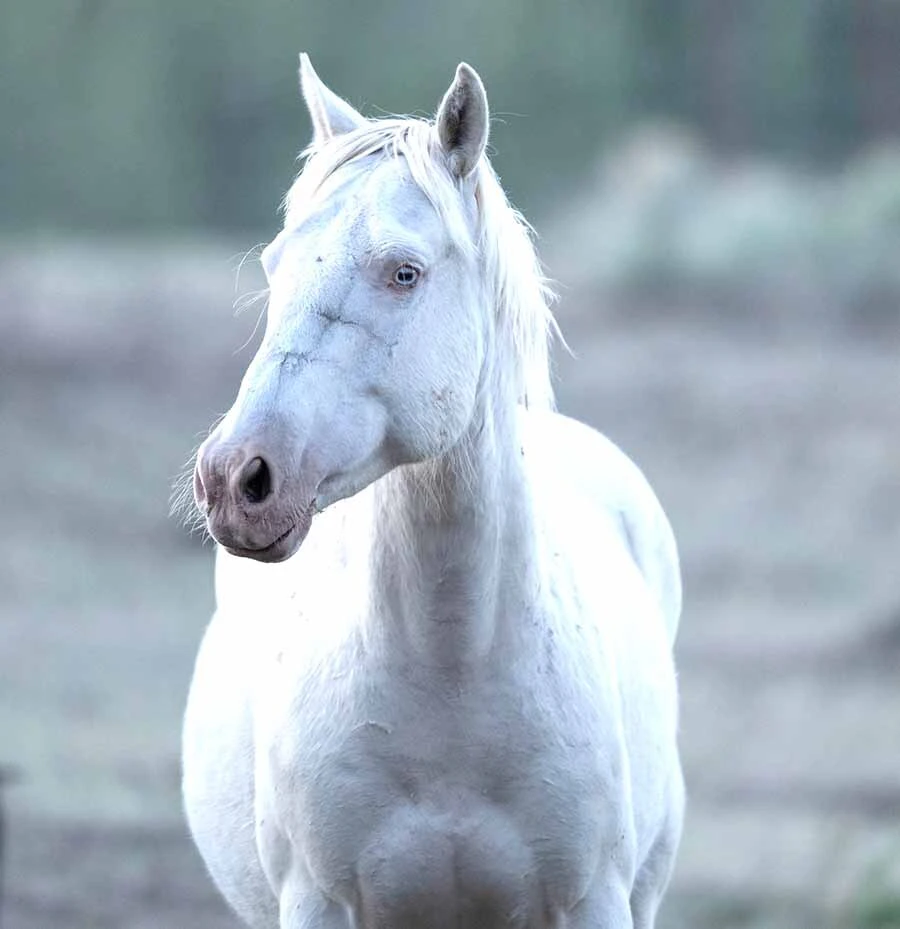
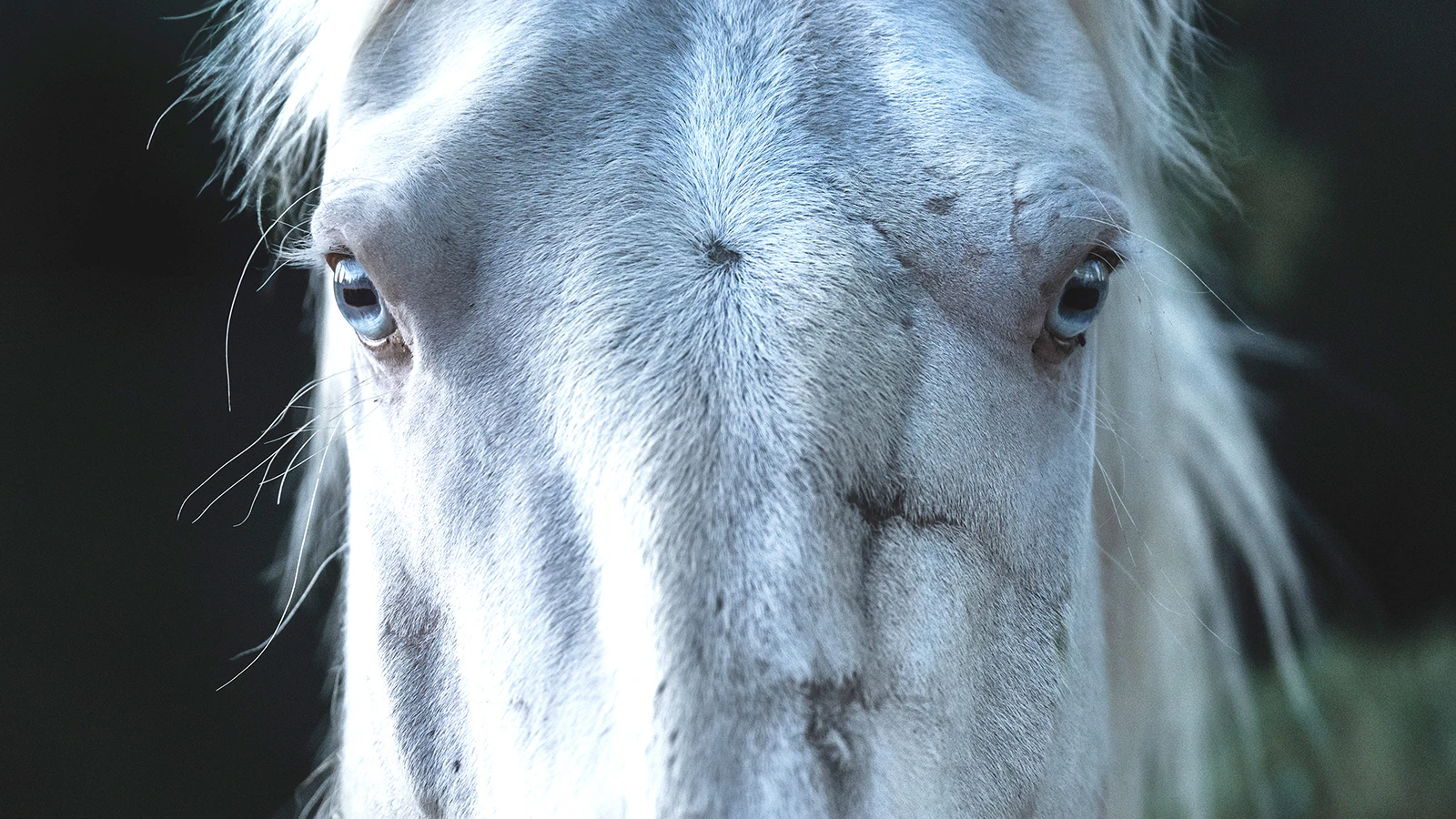
The three horses were cremellos, meaning they had a genetic variation marked by lightly colored coats and skin and striking blue eyes.
The variation can occur in any horse breed. Some say it makes horses more susceptible to vision problems. Others dispute that claim.
Was It the Right Call?
The horses were killed Oct. 19 as part of controversial mustang roundups in the Red Desert Complex.
The BLM plans to round up about 1,800 horses across several herd management areas. That would bring the mustang population there to between 480 and 720 horses, what the BLM says is the appropriate management level for the complex.
In an email to Cowboy State Daily, Hanson said he thinks there should have been a more thorough assessment of the horses’ condition.
“We would like a return to the standard where a vet assesses mustangs with medical concerns or questions about their hearing and vision. If it’s necessary to euthanize an animal, having a vet make the call would increase public confidence in the decision,” he wrote. “We would also like to see the BLM work more closely with wild horse sanctuaries that accept special needs horses as part of their mission. For example, prior to the Red Desert roundup, Skydog Ranch in Oregon had expressed commitment to adopting horses that came in with visual impairments or limited mobility."
Clare Staples, who runs the Skydog Sanctuary for wild horses and burros near Bend, Oregon, confirmed to Cowboy State Daily that she asked the BLM if she could take the horses but was turned down.
She questions the BLM claim that the killed horses had serious vision problems and adds that she already has some cremellos at her sanctuary.
In a statement sent to Cowboy State Daily, the BLM said the three euthanized horses were among a band of five cremellos.
“One cremello in the group appeared to have normal vision, and one appeared to have partly impaired vision; these two were transported to our holding facility at Wheatland,” the BLM stated.
Retired BLM official Jenny Lesieutre told Cowboy State Daily that her experience shows the agency doesn’t arbitrarily kill cremello horses.
"The policy is to kill only blind horses," Lesieutre, who was the BLM’s state lead for the Wyoming wild horse and burro program before becoming the agency’s wild horse and burro public affairs specialist in Nevada, stated in a text message to Cowboy State Daily. “The bottom line is this is a safety issue for horses (all of them) and people.”
Not Given A Chance?
According to a statement from Skydog, the sanctuary sent a formal demand letter to the BLM calling for an investigation into the horse killings.
The horses were shot during a roundup in the Stewart Creek HMA, according to Skydog.
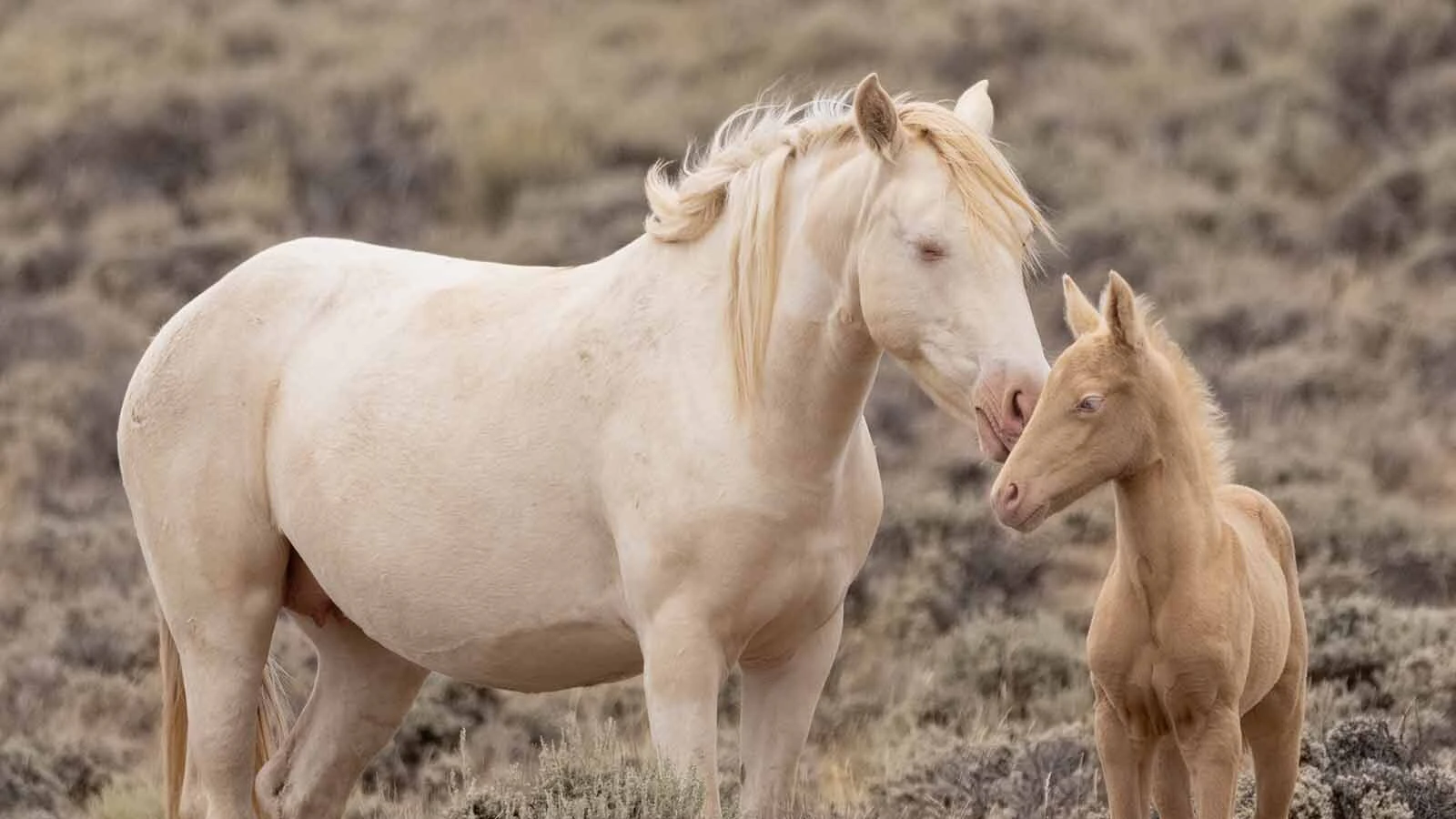
“BLM killed the nursing filly Saffron, her two-year-old sister, and an unnamed cremello colt at the roundup site,” Skydog stated.
Saffron’s mother, Moonflower, was one of the cremellos spared and taken to Wheatland, according to Skydog.
There’s an “old cowboy myth” that cremellos are prone to blindness, but they’re no more likely to suffer vision problems than any other horses, Staples said. “They (the BLM) shot them because they say they were blind. But that’s been an issue between horse advocates and the BLM for years now."
Saffron had previously been observed behaving normally out on the range, Staples said.
“She would look in the same direction her mother was looking. And was seen walking out in front of her mother,” Staples said.
Apparently, the BLM determines vision problems with a simple “reflex test,” she said.
“You just kind of throw your hand toward a horse’s face to see if they react,” she said. “I think it’s rather a crude test in the chaos of a roundup to determine whether a baby is blind or not.”
Staples says that she and others would gladly take in cremello horses, even those with vision problems.
Skydog Sanctuary previously adopted rare Wyoming curly-haired mustangs.
BLM Must Follow Law
The BLM was put in charge of mustangs under the 1971 Wild Horse and Burro Act.
It must still follow the rules of the act, despite pressure from horse advocates, Lesieutre said.
“Clare (and every other activist) demands a bunch, and every time the BLM agrees, they come up with something else,” she wrote. “The BLM’s hands are already tied behind their backs, so when will Congress, who wrote and voted on the law, allow them to finally ‘follow the Act as written?'"
The agency’s horse euthanasia policy was drawn up under the guidance of veterinarians, and blind horses are difficult and dangerous to work with during roundups, she said.
The Red Desert mustangs are overpopulated, making the roundups necessary, Lesieutre added.
If horse advocates want to take in blind horses, they should make arrangements to be at the roundups and take those horses immediately, she said.
BLM: Horses Completely Blind
The BLM stated that all three euthanized horses were completely blind.
“The BLM made this decision (to euthanize the horses) based on their lack of eyesight, not their pigment,” according to the agency.
Veterinarians are on call during roundups, and “policy establishes procedures for euthanasia only when the agency determines an appropriate end-of-life action is needed for mercy, health, or safety,” BLM stated.
Under BLM policy, horses might be euthanized if they are blind in both eyes or blind in one eye “when it involves an injury or condition requiring treatment.”
And also, blindness in one eye “when the horse has not adjusted well to it,” the BLM says.
Mark Heinz can be reached at mark@cowboystatedaily.com.


