
The latest roundup of the world-renowned Pryor Mountain mustangs has horse advocates upset over what they say is a lack of transparency on the part of the Bureau of Land Management.
As usual, the plan is to round up a significant number of horses, about 100 this time, and return some to freedom on the range after they’ve been treated with fertility-control medication.
They also plan to permanently remove others by putting them up for adoption or sale.
The problem is, the BLM isn’t being clear enough about which horses are going and staying, or how much longer the “gather” will continue, Nancy Cerroni, director of operations at the Pryor Mountain Wild Mustang Center, told Cowboy State Daily.
The roundup began Oct. 19 and was initially set to end Sunday, but it remains ongoing with no apparent end in sight, Cerroni said.
And with winter coming on, she and others worry about the stress the gatherers are putting on the horses.

‘Off-Range Facility’
In a statement emailed to Cowboy State Daily, the BLM didn’t give a precise end date.
“The BLM will continue operations until the number of horses on the range is consistent with what the habitat can support. We are currently approaching that objective and expect gather operations to conclude this fall,” according to the agency.
BLM planning documents indicate a Sept. 30, 2027, end date for the Pryor Mountain roundup. That doesn’t mean the gather will go on that long, according to the agency.
That date “reflects the approved operational window for the gather and does not mean gather activities are expected to continue until that date,” BLM stated.
Some of the horses will be taken to an “off-range holding facility,” where they will be prepared for adoption or sale, according to BLM.
The agency didn’t specify which facility or how many horses will be put up for sale/adoption.
Which Ones Are Going?
Captured horses are being kept in corrals at the Britton Springs facility in the southwest corner of the Pryor Mountain Herd Management Area near Lovell.
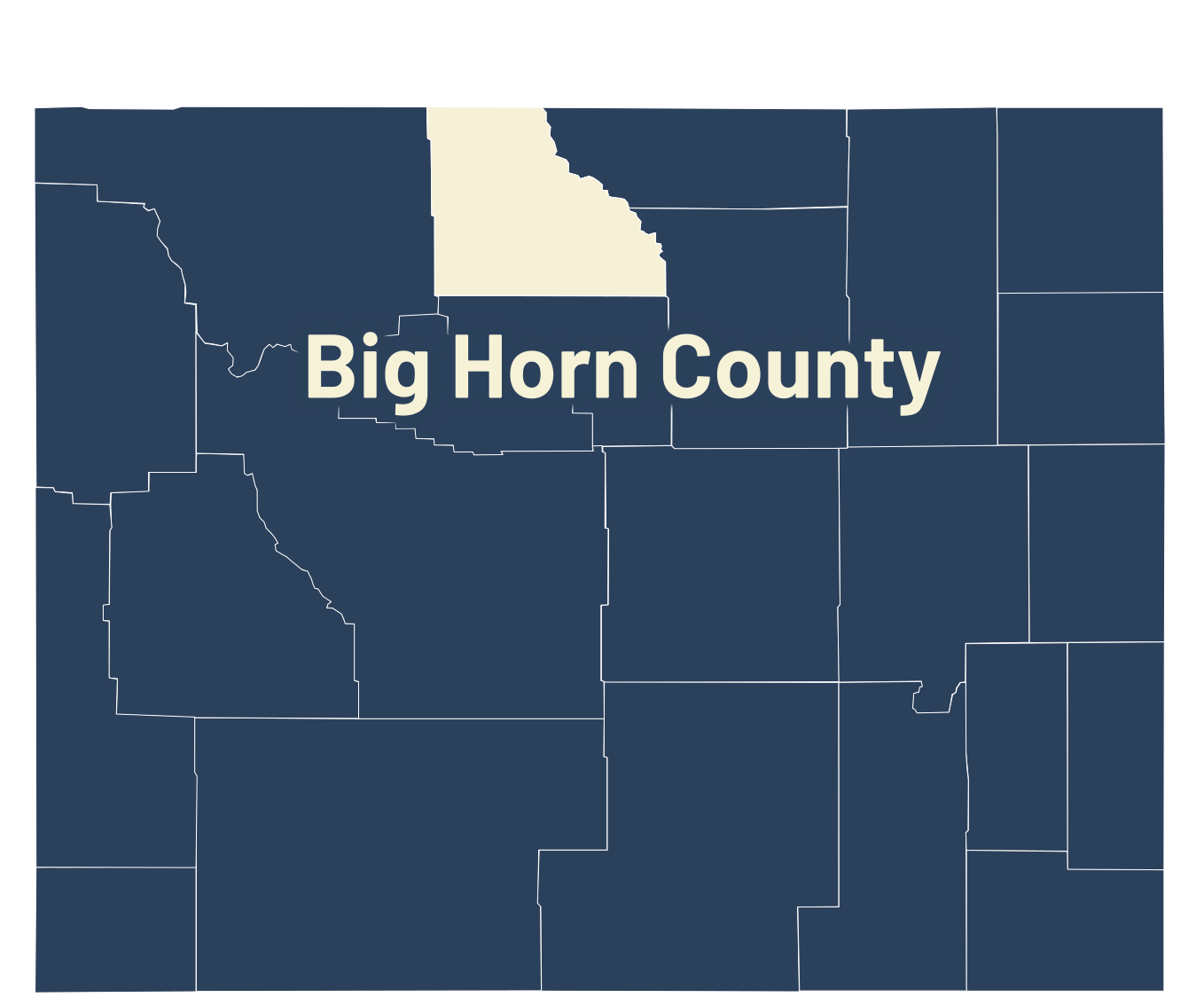
The HMA includes more than 38,000 acres straddling the state line in northern Big Horn County, Wyoming, and southeastern Carbon County, Montana.
The BLM’s current target population for the HMA is 107 to 120 horses.
The herd was estimated at 187 horses when the roundup began, according to BLM.
As of Sunday, 41 horses had been gathered: 10 stallions, 24 mares, and 7 foals, Cerroni said.
She added that according to her understanding, the BLM was planning to gather as many as 100 horses and “permanently remove about 37.”
The roundup and birth control are necessary to ensure the health of the herd and to protect the ecology of the range, according to BLM.
Cerroni said she understands the need for occasional roundups to control the herd size but is frustrated by what she describes as the BLM's lack of transparency.
“A hundred and fifty horses (on the range) isn’t a bad number. However, it’s not so much the number of horses, it’s which horses are supposed to be removed," and BLM hasn’t been forthcoming with that information, she said.
The BLM allowed public viewings of the horses at Britton Springs on Oct. 29 and Nov. 12, and she attended both.
“To my knowledge, they have not scheduled another public viewing,” she said.
She’s concerned about horses being separated from their bands or family groups at Britton Springs and suffering stress.
‘Chunky Bodies’
The Pryor Mountain mustangs are immensely popular, Cerroni said. People from all over the world come to visit the center and take tours to view them.
They’ve been touted as having pure Spanish lineage, but that’s not entirely true, she said.
“There is some mixed ancestry,” she said. “They describe them as horses with mixed ancestry, including colonial Spanish.”
The Pryor Mountain horses are unique, both genetically and by outward appearance, she said.
“They’re chunky. They have thick, chunky bodies,” Cerroni said.
That makes them well-suited for life in the Pryor HMA, which is “incredibly rugged country,” she said.
‘Uniquely Strong’
Angelique Rea of Thermopolis, who has monitored and photographed mustangs for years, told Cowboy State Daily she questions the need for Pryor Mountain roundups.
“It is a small horse herd and a historically important horse herd,” she said.
Fertility control should be enough to keep the herd’s numbers in check, she said.
“This is a herd that was fought for even before the 1971 act,” she added.
She was referencing the 1971 Wild Horse and Burro Act, which placed free-ranging horses and burros on federal public lands under protection and put the BLM and U.S. Forest Service in charge of managing them.
The Pryor Mountain mustangs are “uniquely beautiful and uniquely rugged horses,” Rea said.
Mark Heinz can be reached at mark@cowboystatedaily.com.