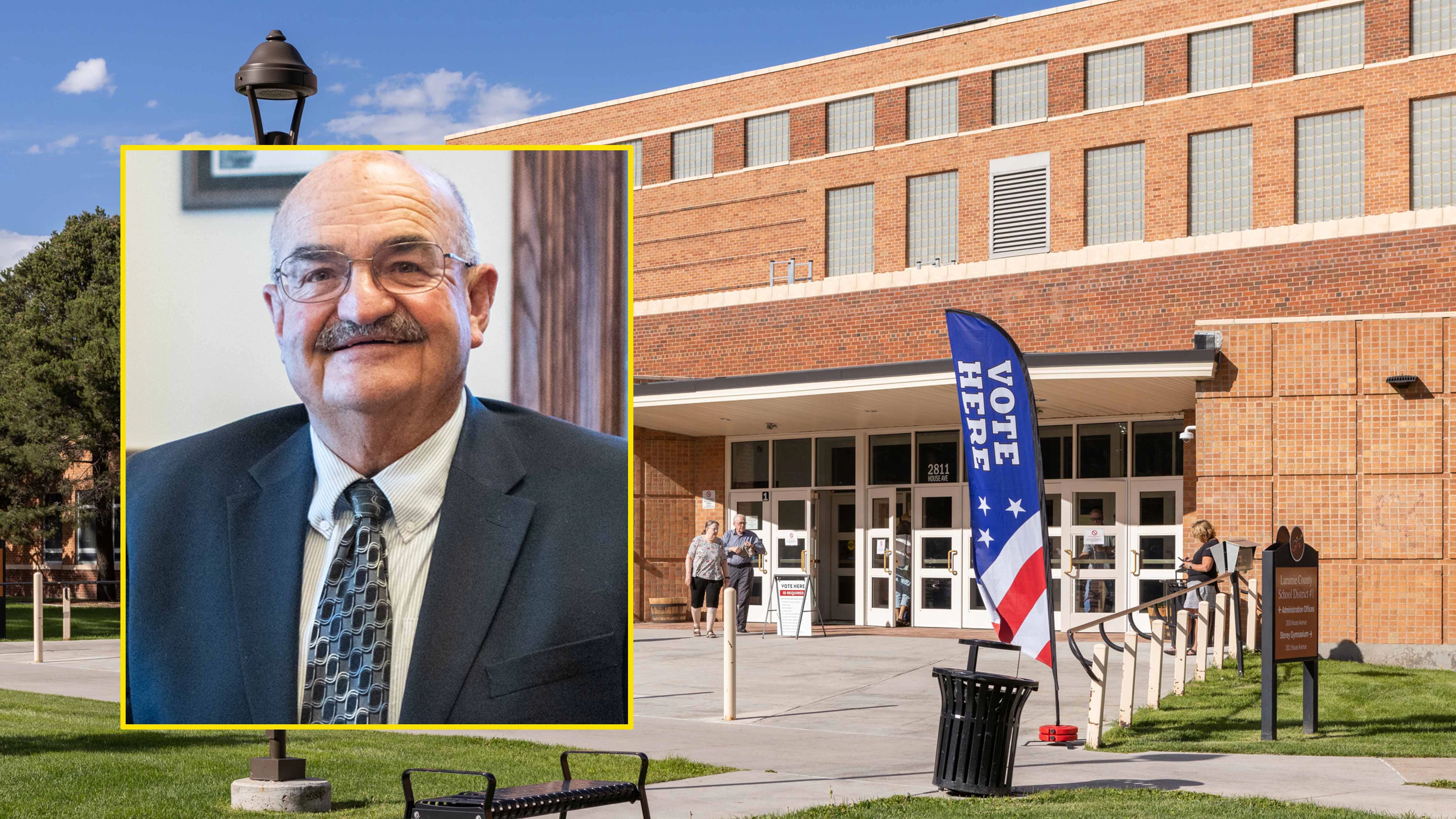
After the Trump administration sent the U.S. Department of Justice (DOJ) what the governor called “aggressive” election monitors to Cheyenne on primary election day, the Wyoming attorney general issued an opinion concluding that state law didn’t authorize them to be in the polling places, and Wyoming authorities can remove them.
Laramie County Clerk Debra Lee’s office said in a Tuesday statement she’s keeping that in mind as she prepares for the Nov. 3 general election, where the DOJ monitors say they'll visit again.
Disturbing a polling place is a criminal misdemeanor in Wyoming, so the sheriff could get involved if merited, says the opinion by Wyoming Attorney General Keith Kautz.
“The DOJ’s general interest in monitoring compliance with federal law does not give it authority to enter a polling place where Wyoming law excludes the general public,” Kautz’s opinion says. “In the absence of a court order, settlement agreement or consent decree, Wyoming County Clerks and their election judges not only have authority to exclude the general public, including DOJ election monitors, from controlled access at polling places, our law requires that they do so.”
According to Lee, the DOJ has agreed to comply with Kautz's opinion and stay 100 yards away from the polling places, and only interview voters who agree to be interviewed.
Second Rodeo
The DOJ Civil Rights Division told Lee on Tuesday that the monitors “will again be deployed to the state’s largest county” on Nov. 3, says the statement by Lee’s office.
This time, she won’t let them into the polling places. They must remain 100 yards from the polls, “in accordance with state law and a recent Wyoming Attorney General’s opinion."
Lee’s office asked Kautz for the opinion after the Aug. 18 election monitor incident.
Gov. Mark Gordon voiced concerns about the incident and opposition to what he called surprising breaches of the state’s elections process.
And Lee described the monitors as both unexpected and disruptive.
Secretary of State Chuck Gray defended the incident, saying election observation is allowed.
Kautz’s opinion disagrees, pointing to only narrow instances where Wyoming law allows election observation.
Gearing Up
DOJ representatives met virtually with Lee and other county officials Monday and said they’d received Kautz’s opinion, and agreed to comply, the statement says.
Lee added that her office appreciates the DOJ’s advance communication this time, and that coordination will help her prepare staff and voters with a “safe and smooth voting experience.”
She also said the monitors dispatched Aug. 18 didn’t find any concerns about her office’s compliance with federal election laws.
“Although DOJ election monitoring for compliance with civil and voting rights laws is common in many parts of the country,” the statement says, “it is a unique experience for Wyoming.”
The statement says Lee talked with former staffers of the Wyoming Secretary of State’s Office and they had no recollection of such an operation in the last 40 years, if ever.
“We have a game plan now. Our office is finalizing preparations for the monitors’ arrival, including briefings for poll workers and election staff, and meetings with the Sheriff’s office and other local and state security partners,” said Lee. “We are committed to following Wyoming law and protecting the rights of our citizens to vote privately, safely, securely, and without disruption or interference.”
What Kautz Wrote
Kautz, who was a Wyoming Supreme Court justice before he became AG, led his analysis by quoting from the 10th Amendment to the U.S. Constitution.
“The powers not delegated to the United States by the Constitution, nor prohibited by it to the States, are reserved to the States respectively, or to the people,” the amendment says.
Still, continued Kautz, the U.S. Constitution and federal statues are the supreme law of the land, so state legislation that contradicts them won’t prevail.
But the Constitution gives a caveat regarding elections. It reserves the authority to set times, places and manner of elections to the state Legislatures, though Congress can alter those regulations “except as to the places of chusing (sic) Senators.”
Wyoming law requires clerks and their election judges to “preserve order at the polls by any necessary and suitable means,” Kautz noted.
The polls are tightly restricted places. The law also requires that voting booths and voting machines be kept clear of everyone except voters marking ballots and election officials discharging their duties.
Wyoming law allows “poll watchers,” to observe the election, but those comprise one poll watcher from each political party.
Poll watchers aren’t allowed to disrupt the polling process, and the chief elections judge can remove them if they do.
Poll watchers have a specific role, Kautz noted: To observe turnout and registration.
“No state law allows members of the general public or any other group of persons, including DOJ officials, to observe or monitor the controlled areas in polling places,” wrote Kautz. “To the contrary, Wyoming law requires exclusion of all but election judges and poll watchers from the polling place.”
That’s for voter privacy and efficiency, the AG added.
The Feds
In announcing its operation on election day, the DOJ invoked six federal laws: The National Voter Registration Act, the Help America Vote Act, the Uniformed and Overseas Citizens Absentee Voting Act, Americans with Disabilities Act, Civil Rights Act, and Voting Rights Act.
None of these directly authorize DOJ election monitoring absent a court order, consent decree, or settlement agreement, “none of which apply in Wyoming at the present time,” wrote Kautz.
Also, Wyoming is exempt from the National Voter Registration Act.
Clair McFarland can be reached at clair@cowboystatedaily.com.