Editor's note: This story contains images of wild game skull cleaning. View at your discression.
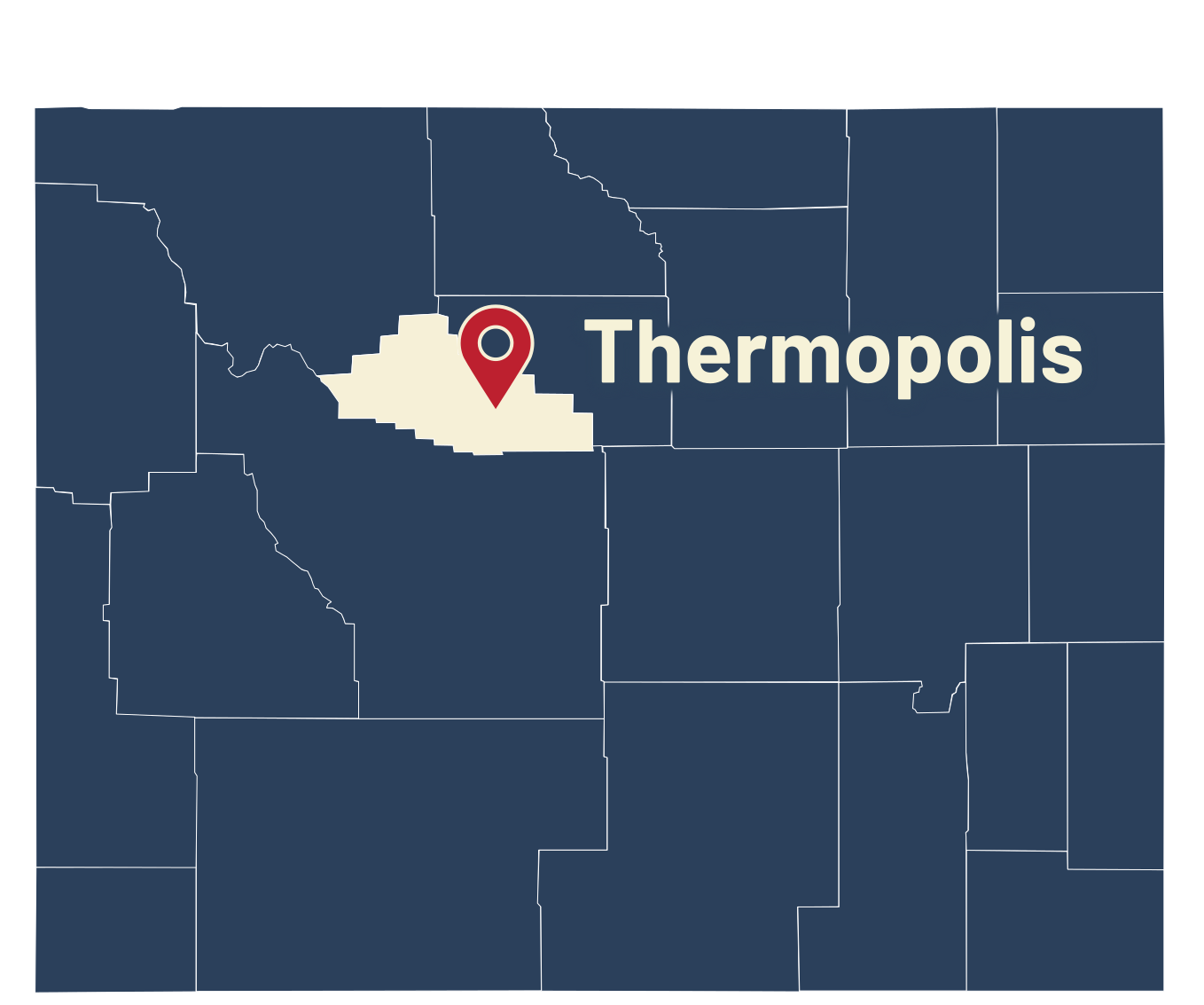
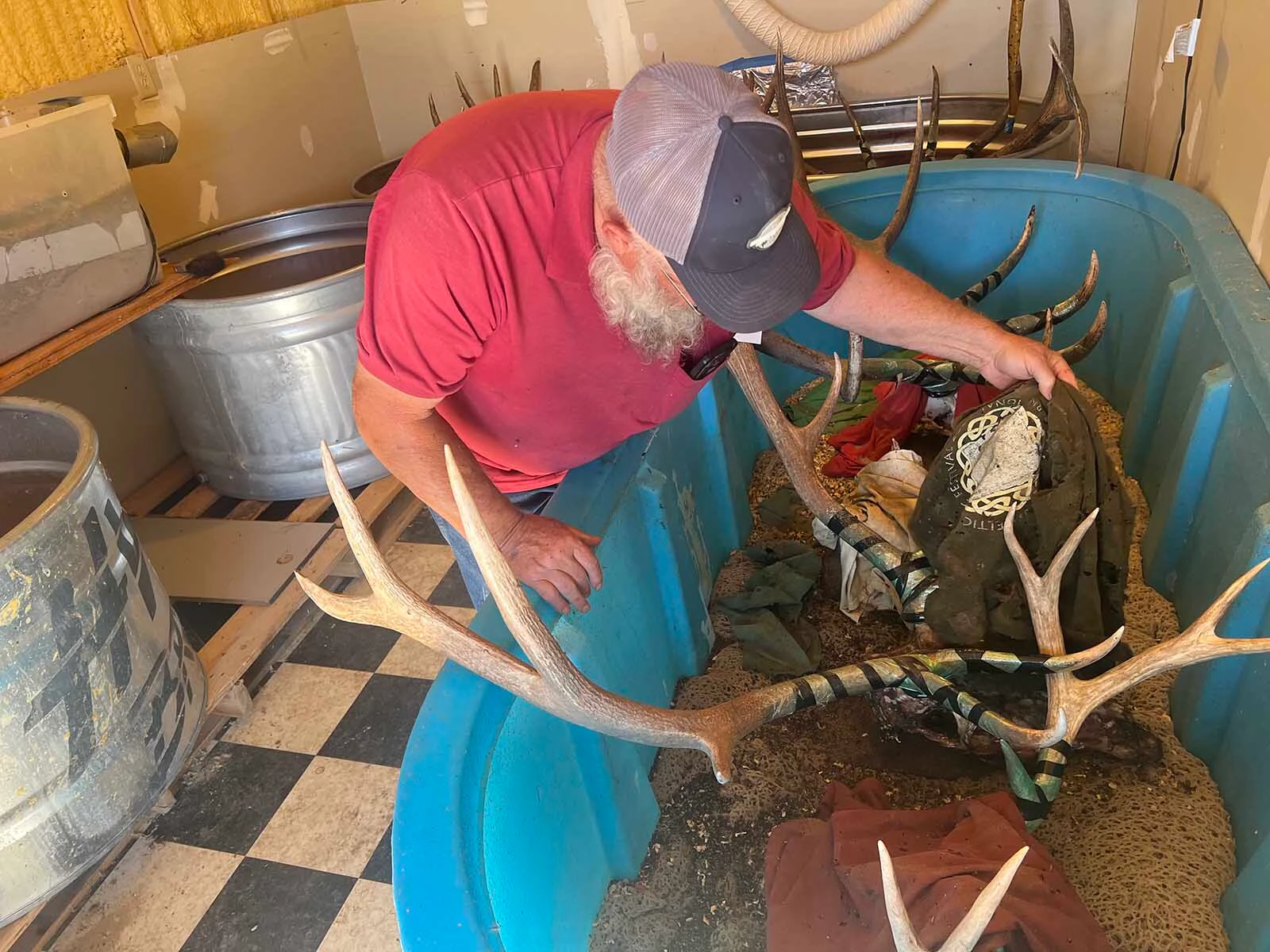
When a hunter dropped an elk skull and antlers off at Charlie Stickney’s business just outside Thermopolis this week, Stickney promptly set about what he calls “the biggest part of the process” of creating European mount hunting trophies: using compressed air to blast the brains out of the skull.
As Stickney set about the task, clots, chunks and droplets of brains flew everywhere, some of them splattering on a nearby Cowboy State Daily reporter.
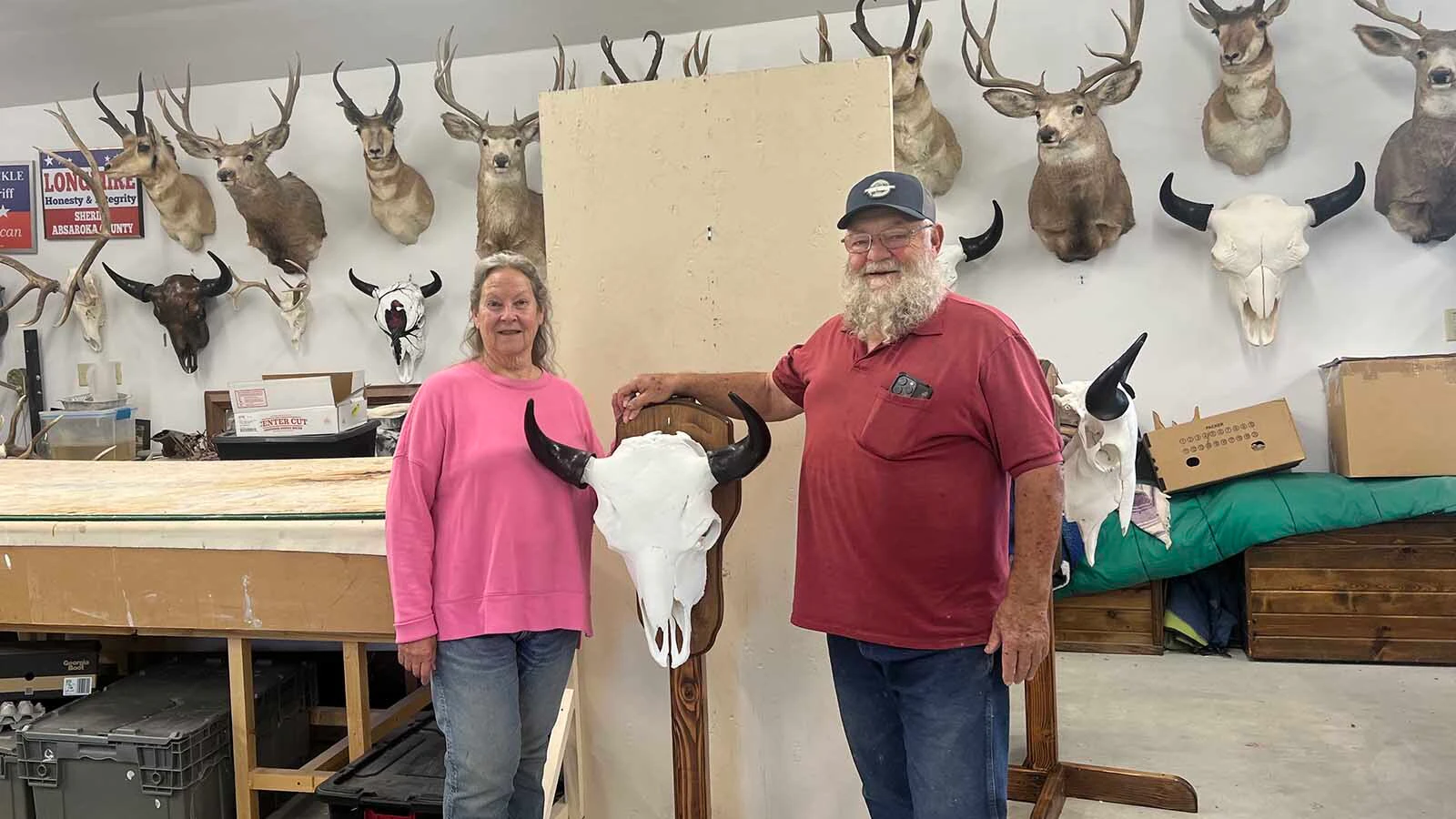
Stickney uses flesh-devouring dermestid beetles to clean skulls at C&J’s Bug Barn, which he and his wife, Jo, have run for several years.
The beetles are somewhat picky eaters. They don’t like eyeballs and brains.
“I got the eyeballs out of this skull but didn’t remove the brains,” the hunter, Mark Walker of Thermopolis, told Cowboy State Daily.
The elk was shot late Sunday afternoon, so there wasn’t time for that. As it was, he and some friends were out until the wee hours of the next morning packing out the elk, he said.
Walker is one of the Stickneys’ loyal customers in central Wyoming and elsewhere in the state.
After years of successful hunting, “I’m about out of room for (traditional taxidermy) mounts,” he said.
European mounts are basic and take up less space, with just the cleaned skull and antlers, which can be hung on a simple wall hook.
And the Stickneys do the job right, Walker said.
“Charlie’s skulls stay bright white. Some European mounts will start to turn yellow after a while, but not Charlie’s,” he said.
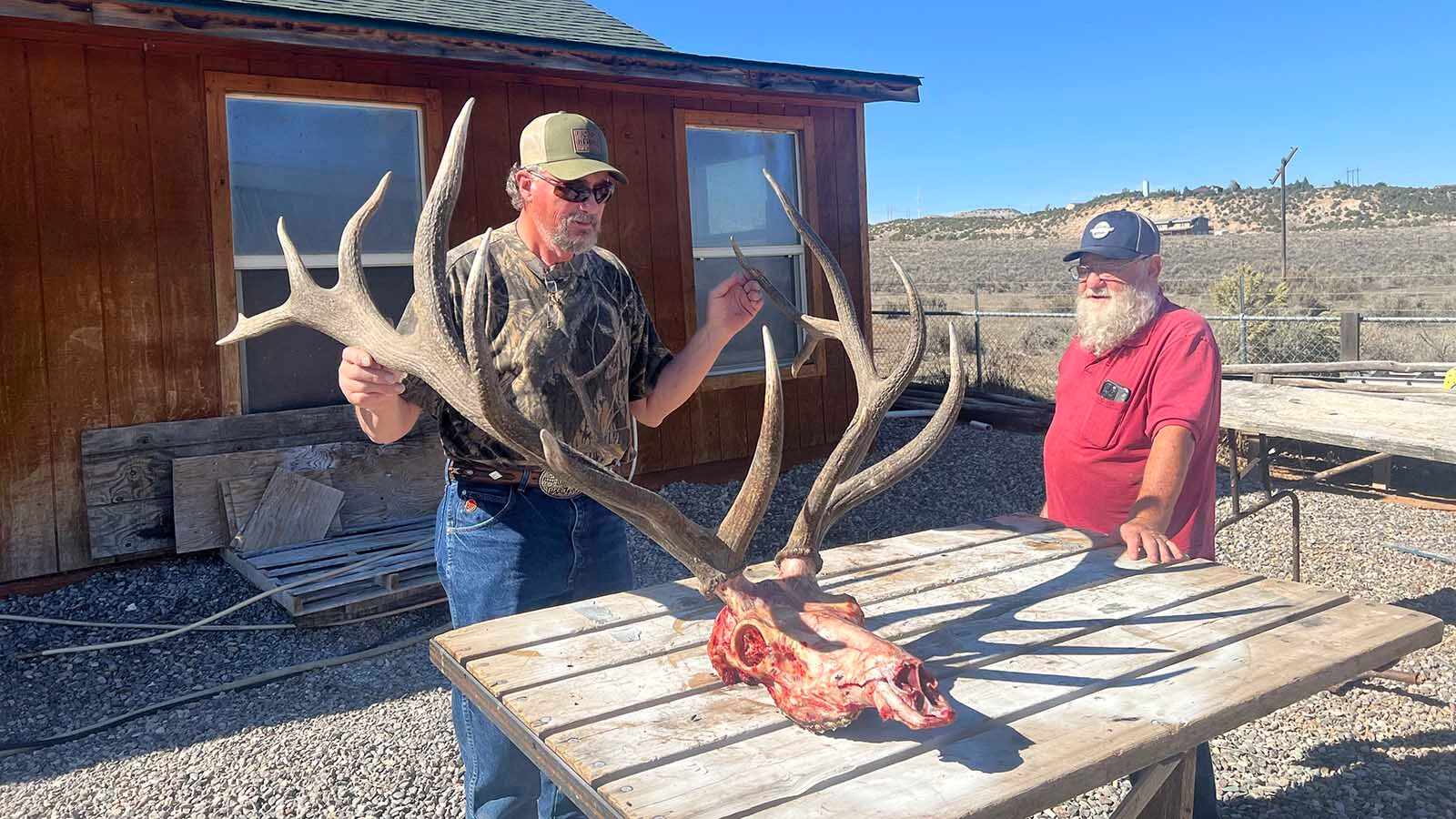
Hunter Mark Walker, left, and Charlie Stickney inspect an elk skull that Walker was dropping off Wednesday to be stripped clean by Stickney’s beetles. (Mark Heinz, Cowboy State Daily) 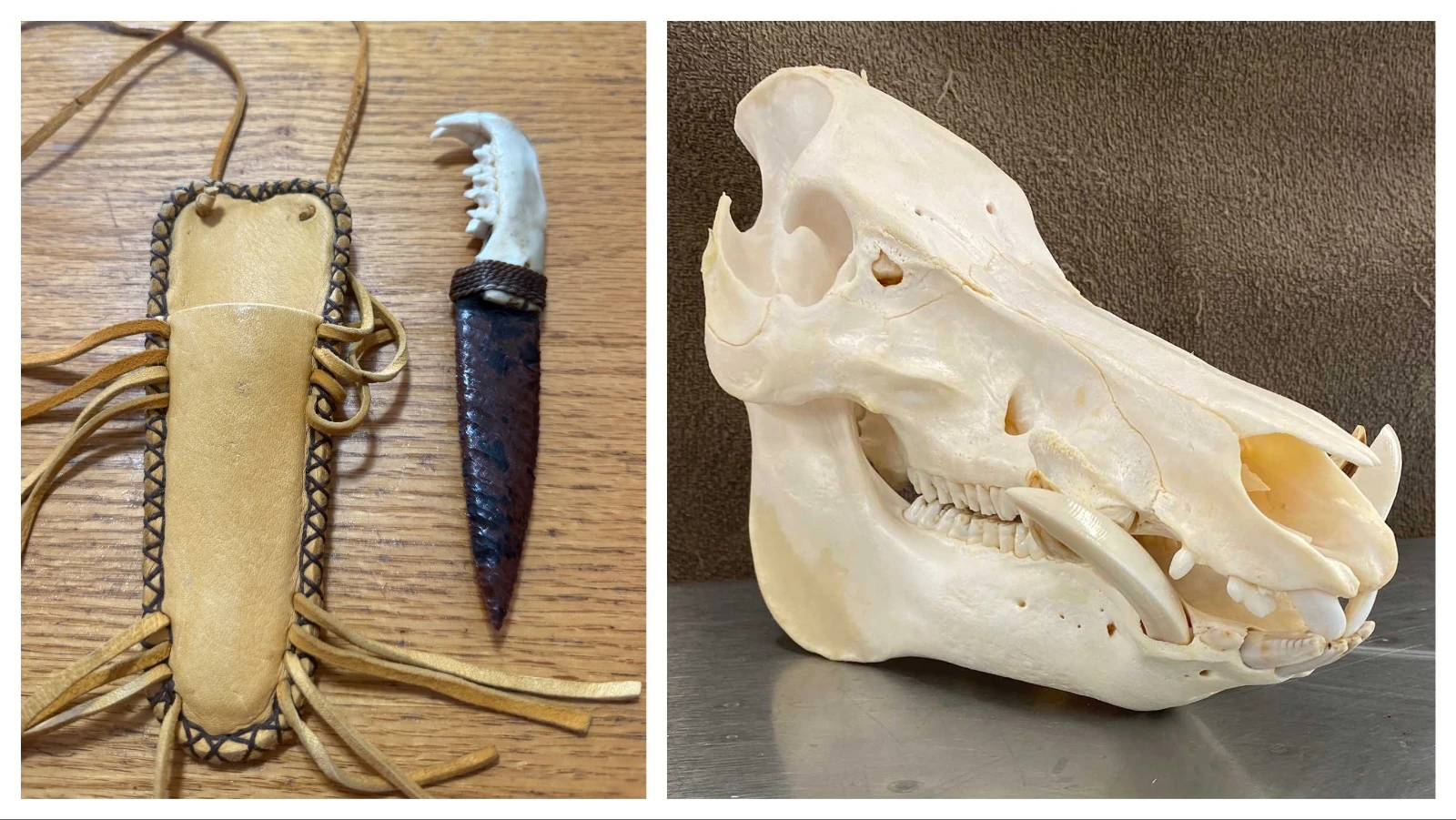
Charlie Stickney makes flint-knapped knives with bobcat jawbone handles at C&J’s Bug Barn in Thermopolis. C&J’s uses flesh-eating beetles to clean all manner of wild game skulls, such as this wild boar. (C&J’s Bug Barn) 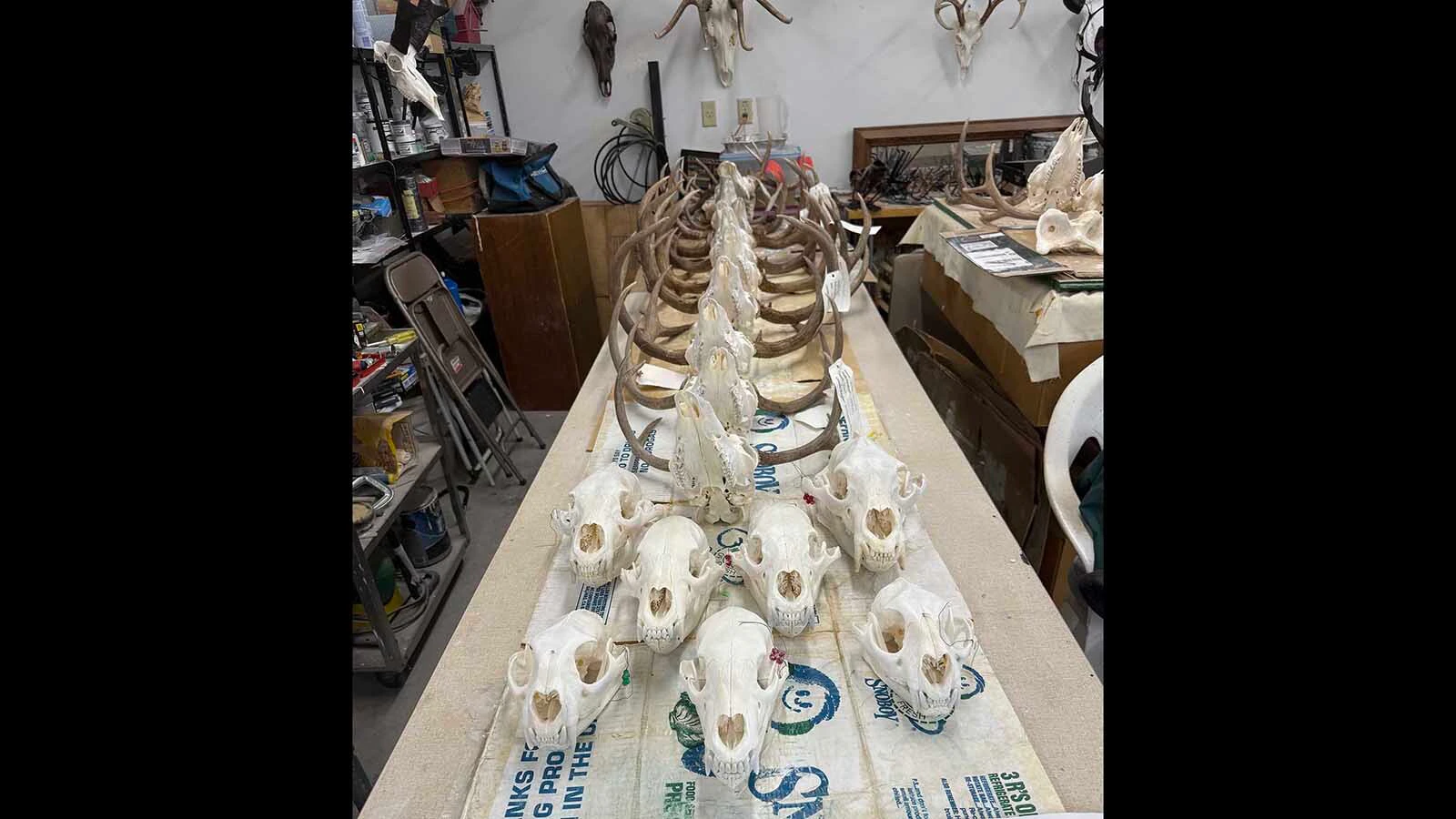
Cleaned and whitened wolf and deer skulls are displayed at C&J’s Bug Barn in Thermopolis. (C&J’s Bug Barn)
Strong Stomach Required
Flesh-eating beetles or boiling are the two main methods of preparing skulls for European mounts.
For boiling, skinned skulls are placed in a boiling vat for hours on end until the remaining flesh falls off or is softened to the point where it can be stripped away by hand.
Charlie doesn’t like the boiling method.
“It can make the bones brittle, and they’ll break easily,” he told Cowboy State Daily.
So, he opted for beetles.
The process is straightforward. If a hunter drops off a head that hasn’t been skinned, he’ll do that, and then set about the gross task of removing eyeballs and brains.
Then, he places the skulls into a deep freeze for several days.
That kills any flies or maggots that might be lingering on or inside the skulls.
“I think my beetles would eat maggots. But maggots aren't good. They stink,” he said.
Then, the skulls are taken into the bug barn, a temperature-controlled place where the beetles hang out in vats.
The skulls are placed in the vats and covered with old sweatshirts and the like. Beetles swarm the skull and set about gorging themselves on whatever chunks of flesh remain until the bone is stripped completely clean, inside and out.
Beetles can strip a skull in about a day, but Charlie leaves skulls in the vat for a few days, just to make sure the job gets done.
The barn is a tight space, pervaded by a sickly sweet smell. It can be a fascinating place or horrifying, depending upon one’s temperament and strength of stomach.
Charlie acknowledges his line of work isn’t for everyone.
“It’s a dirty, filthy process, and not many people can stand the grossness of it,” he said.
While Wyoming big-game animals and predators, such as bobcats and coyotes, are the bulk of his business, Charlie said he’s handled all manner of critters.
“I’ve done sandhill cranes, snakes, wild boar, just about everything,” he said.
“I’ve even done German shepherds” he added, because some people wanted their beloved pets’ skulls as keepsakes.
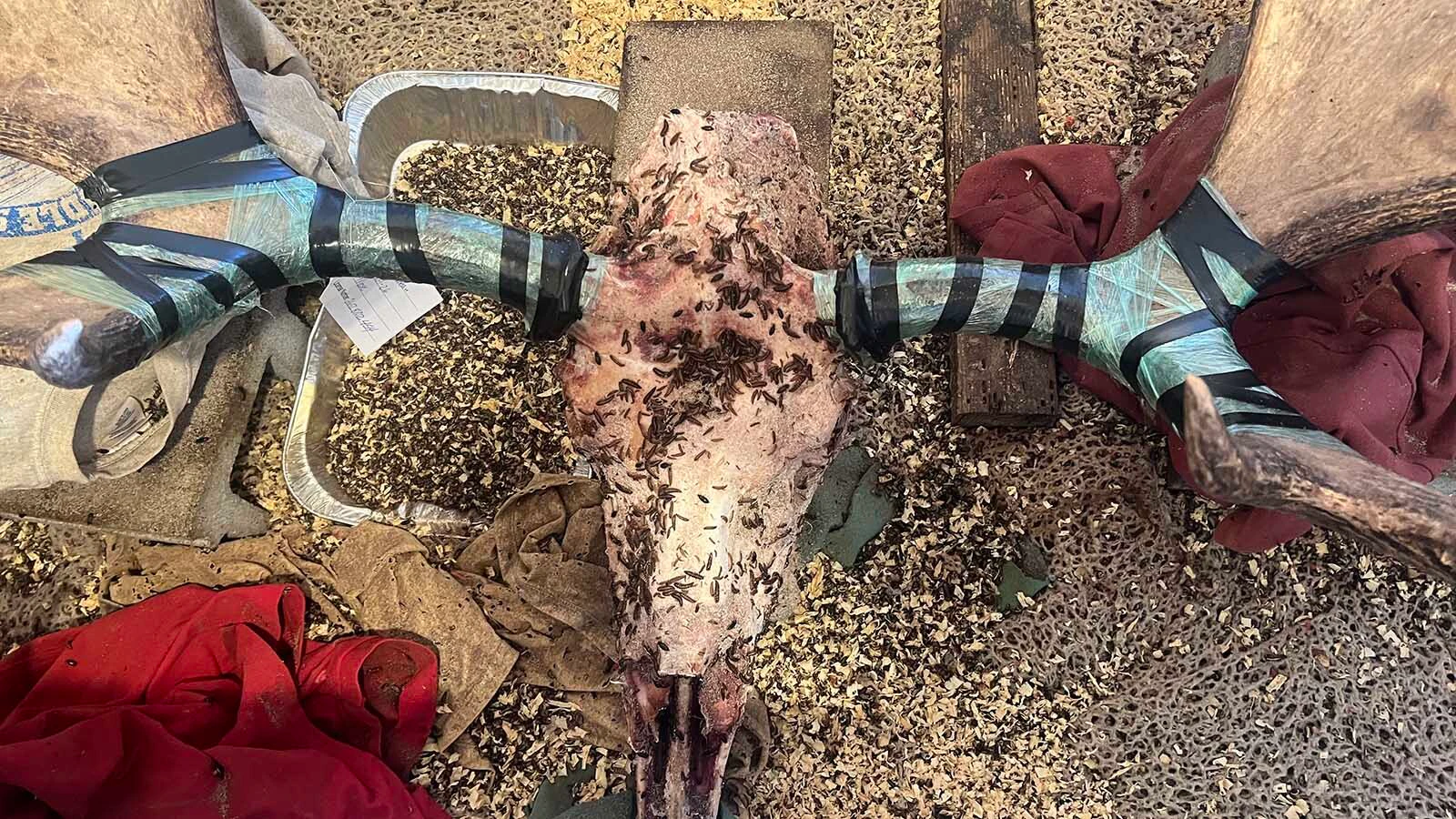
Dermestid beetles swarm a moose skull, devouring the remaining flesh from it, at C&J’s Bug Barn in Thermopolis. (Mark Heinz, Cowboy State Daily) 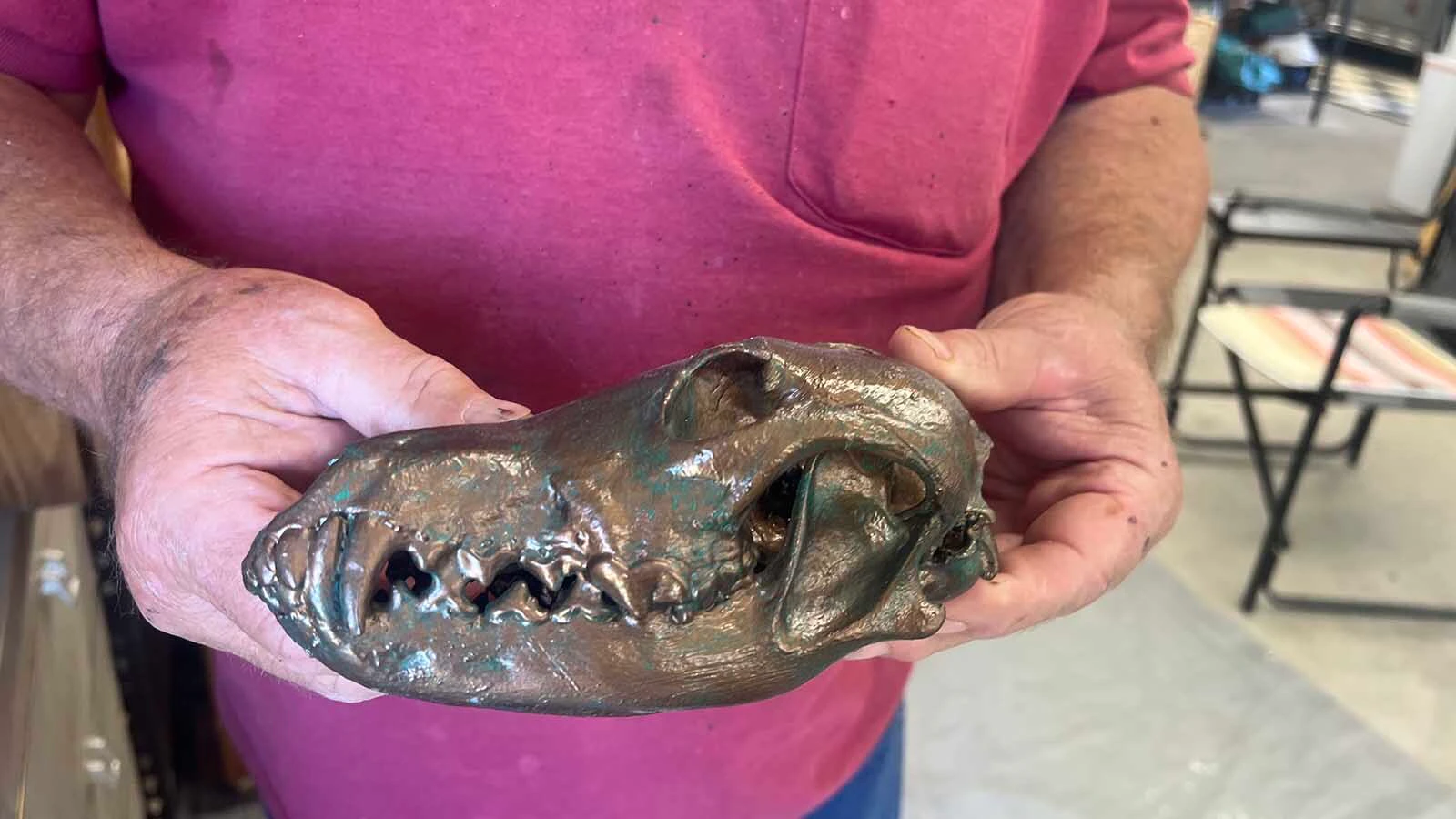
Bronzed big game and trophy game skulls are one of the products offered by C&J’s Bug Barn in Thermopolis. (Mark Heinz, Cowboy State Daily) 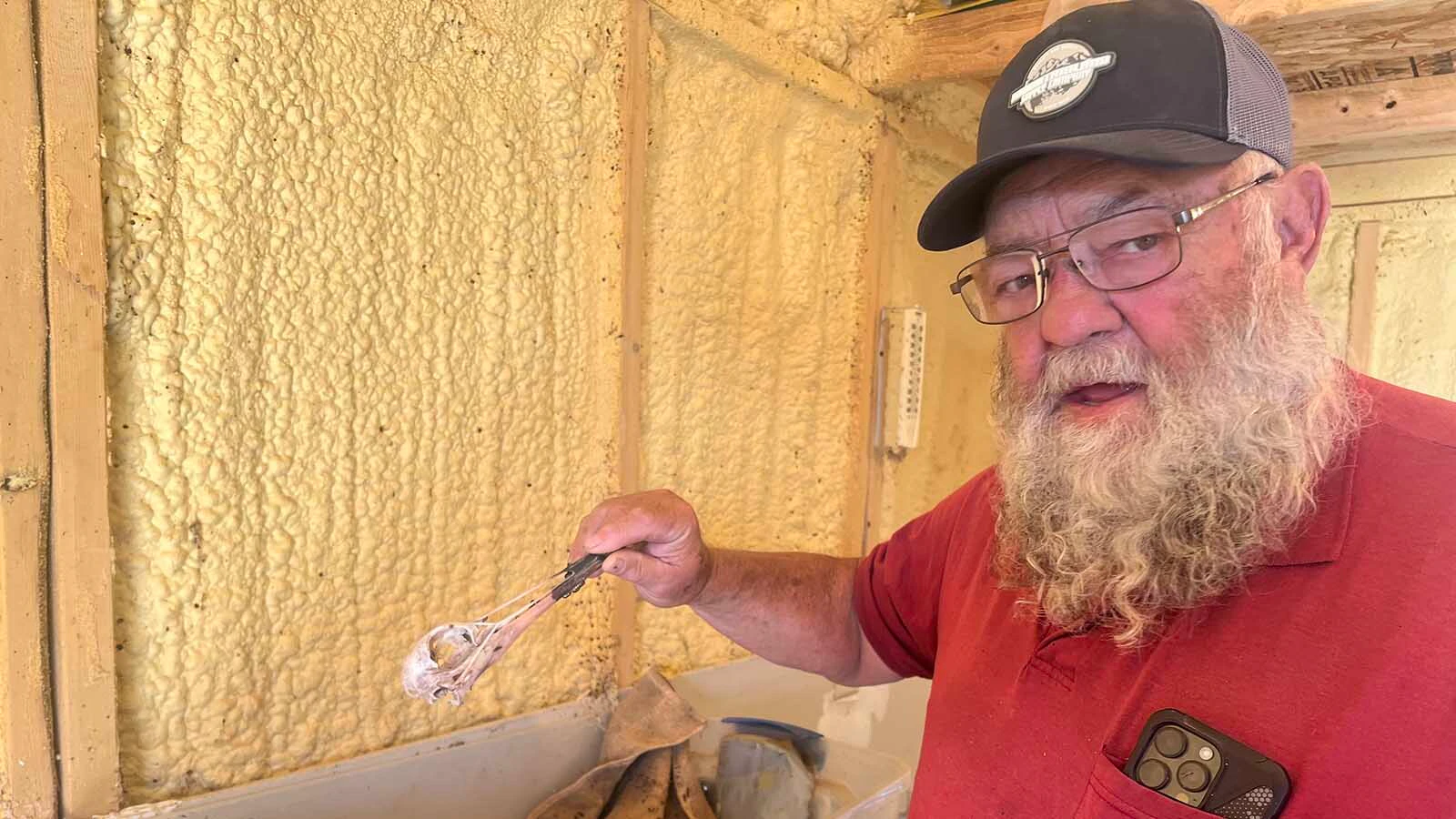
Charlie Stickney holds a sandhill crane skull that was stripped clean of flesh by beetles at C&J’s Bug Barn in Thermopolis. (Mark Heinz, Cowboy State Daily)
Cheaper Than Taxidermy
After the beetles have had their fill, Charlie puts the skulls through a brief boiling, just to “degrease them.”
Then a chemical whitening agent completes the project.
Hunters appreciate European mounts for their simplicity, he said.
And his mounts cost considerably less than traditional taxidermy mounts.
He can do an elk skull for about $200, whereas a taxidermy elk mount might cost $2,000.
Skulls can also be bronzed for an additional $50 to $100, depending upon their size.
For that, Charlie and Jo use a bronze-infused paint-like coating.
Charlie said the business started out small but has been growing steadily, and it keeps him scrambling during hunting season.
“October through January, I’m out here (in his shop) most of the day,” he said.
He has a mobile deep-freeze in the Rock Springs/Green River area, so hunters can drop off their trophy heads there for him to collect, rather than having to drive all the way to Thermopolis.
He also partners with Hunting With Heroes Wyoming, a group that facilitates hunts for disabled veterans, and for which Walker is a guide.
Making Knives And Art
Charlie also makes flintknapped blades for knives, with beetle-cleaned bones for handles.
His favorites are smaller knives, with bobcat jawbones for handles.
“(Flintknapping)” is what I do while I’m waiting for the beetles to clean things,” he said.
Jo said they’ve partnered with a local artist, who paints bison skulls that have been through the cleaning and whitening process.
The bison skulls come from a ranch, where animals are put down with a 12-gauge slug between the eyes.
“It blasts a big old hole right in the middle of the skull, but I can repair that with putty,” Charlie said.
The Gift Of Bugs
The business started when Jo bought Charlie a gift: 1,000 dermestid beetles from a source in Montana.
“I knew he was interested in it (skull cleaning), so I decided to get him a gift, some beetles to get started,” she told Cowboy State Daily.
“Who needs a new TV when you can have 1,000 beetles?” she added.
As Charlie recalls, the beetles cost $50, but Jo is pretty sure it was more like $100.
Asked about the gruesome nature of her husband’s business, Jo said she really doesn’t mind.
“There is the smell,” she noted.
And keeping the beetles supplied with meat is paramount.
“If they run out of food, they’ll start flying around, looking for something else. They’ll come in the house and eat the carpet,” she said.
Contact Mark Heinz at mark@cowboystatedaily.com
Mark Heinz can be reached at mark@cowboystatedaily.com.