
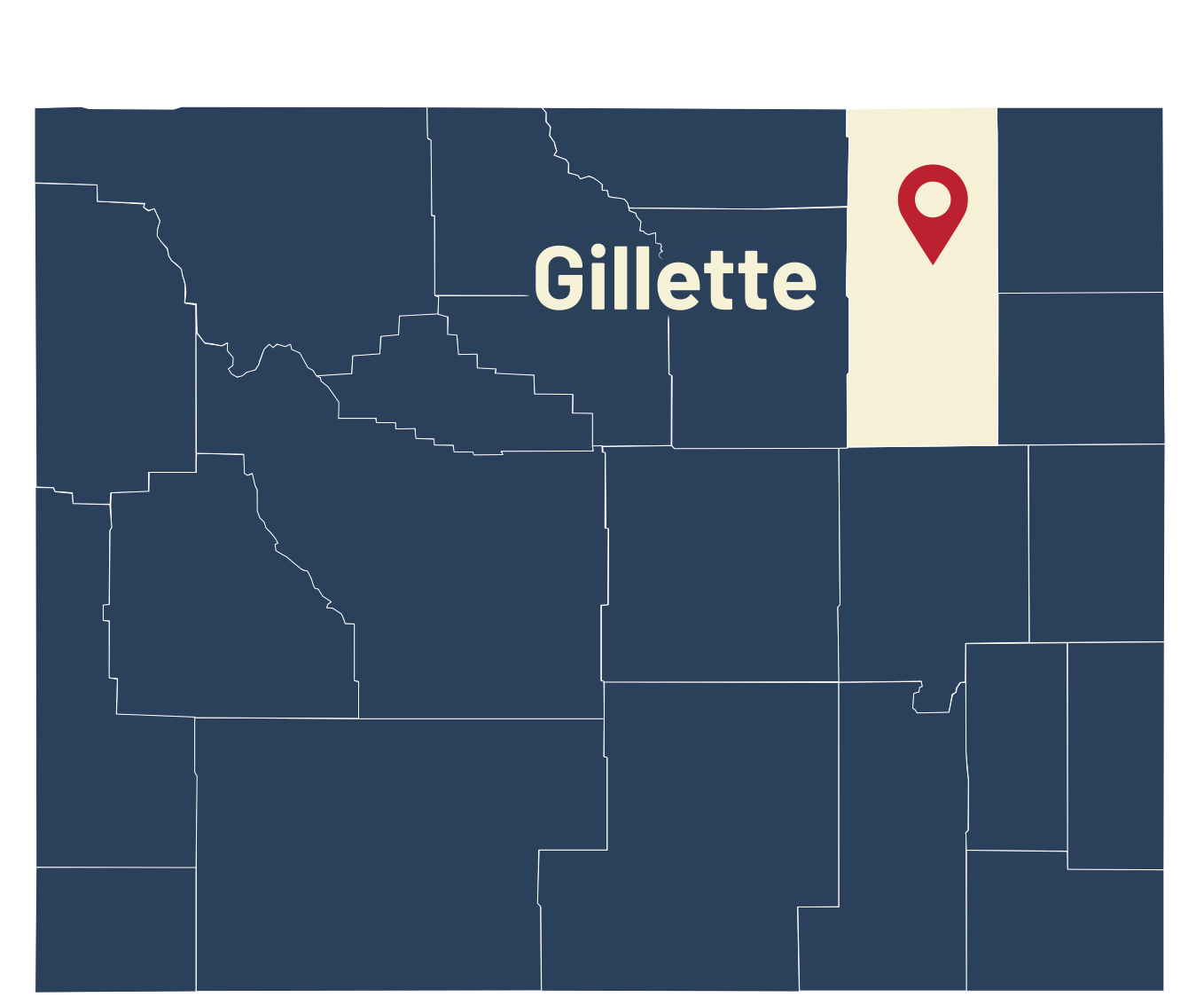

Downtown Gillette’s last neon sign has been taken down to get a second life three blocks away at the Frontier Auto Museum.
This week, museum staff removed the Center Bar’s neon sign from the brick building facing Gillette Avenue. The bar is still open, but the museum will refurbish its old sign and add it to the vast collection of vintage neon signs from across Wyoming.
Jeff Wandler, owner of the Frontier Auto Museum, called it “the end of an era.”
“If you look at old pictures, there were neon signs all up and down the street,” he told Cowboy State Daily. “Most of them got scrapped, or they're lying behind buildings or in somebody’s backyard where nobody knows about them. This was the last one.”

Friendly Favor
Wandler, a self-described “hoarder with style,” doesn’t collect bar signs. He focuses on automobile-oriented neon signs, which is why most of the signs at the museum came from gas stations and motor lodges from the heyday of neon signs between the 1920s and 1950s.
For Wandler, acquiring the Center Bar sign was more about friends than history.
“The McIntoshes have owned the Center Bar since 1971, and they’re like family to me,” he said. “My best friend’s mom and dad owned that bar, so I grew up around it.”
Over the years, the Center Bar sign was starting to fall off the building. As it became clear that the sign was nearing the end of its life, Wandler acquired it to divert it from a landfill.
Using a scissor lift and several people, Wandler removed the sign from the Center Bar's brick front and loaded it onto a trailer for the short trip to the museum.
“It was more of a friend thing,” Wandler said. “They needed to do something about it, and I decided I wanted it. It's the family that’s sentimental to me.”

Signs Of Change
The Center Bar’s sign might be the last of downtown Gillette’s neon signs, but it certainly wasn’t the best or brightest. At one point, it barely stood out along Gillette Avenue, Wandler said.
In the 1950s, Gillette was flooded with neon light. Every bar, café, and drug store had a large sign facing the street, giving Gillette Avenue a wide spectrum of brilliant color.
Center Bar sat between Clyde’s Café and the Montgomery Hotel and Lounge, both with large neon signs. The Fiesta Theatre, two buildings down, had a massive marquee overhanging the sidewalk.
More than half a century later, the neon is no more. The Fiesta Theatre burned down in 1964, Clyde’s Café closed, and the Montgomery Hotel took down its neon signs a long time ago.
Wandler bemoans the loss of these colorful, creative relics of the past. The neon era gave way to the era of “generic, vanilla” marketing, he said.
“It’s technology, right? Everything cool changes into something generic and ugly. Companies don't do artwork and advertise like they used to try to draw crowds. There’s no curb appeal.”
That’s partly what spurred Wandler to collect Wyoming’s neon signs, which were rotting away in fields or barely standing outside their establishments, a feeble glimmer of their former grandeur.
His collection includes the Arrowhead Motel sign from Gillette, the Thunderbird Motel sign from Laramie, and the “Roadrunner” sign from Lander’s Holiday Lodge, along with hundreds of other large and small neon signs.
"It's got to be a couple hundred at this point, Wandler said. "I'd have to count them. Nobody's never thought about that."
For Wandler, it’s about the history and nostalgia of an era when presentation was everything.
“The time when everything looked really cool is gone for whatever reason,” he said. “Now it's just a matter of getting people's money from them.”

For the 1/1000th
Restoring a neon sign can cost tens of thousands of dollars.
“You’re looking at up to $50,000 to restore one of those signs,” museum employee Ryan Swanson told Cowboy State Daily. “We have to decide how much effort we want to put into each sign because we only have so much space and so much money.”
By comparison, restoring the Center Bar sign should be relatively economical and straightforward.
The original sign has neon letters and a “bullnose” -- a strip of neon running around the sign's front or nose. It's nothing as ornate as some of the larger signs Wandler and his team have restored or are restoring.
“You can tell where the neon was from the old photos,” he said. “We'll put that back on and make it look like it did.”
The largest and most unique neon signs are being placed in the Frontier Neon Park, which the museum is building as an outdoor exhibit and one-of-a-kind overnight accommodation, complete with vintage trailers for guests.
“It’s going to be really killer out there,” he said.
Wandler opened the Frontier Vintage Station as an Airbnb last year. The 1,350-square-foot garage, filled with vintage automobile memorabilia and two era-appropriate vehicles, is right across the street from the museum.
“I love it, because it turned out killer,” he said. “It was painful to get this done, cost-wise, but we’ve got to help put Gillette on the tourism map. And we are.”
The Center Bar is getting a new sign for its façade on Gillette Avenue. The old neon sign will be placed somewhere in the museum, even though space is increasingly at a premium.
Wandler knows the Center Bar sign won’t have the same appeal as the others in the museum and Frontier Neon Park, but he’s happy to preserve it for those who care and remember it fondly.
“The small, tiny handful of people who are sentimental about that, maybe 1/1000 of a percent of the population, will be able to come inside the museum and see it,” he said. “It’ll live on in Gillette.”
Andrew Rossi can be reached at arossi@cowboystatedaily.com.


