
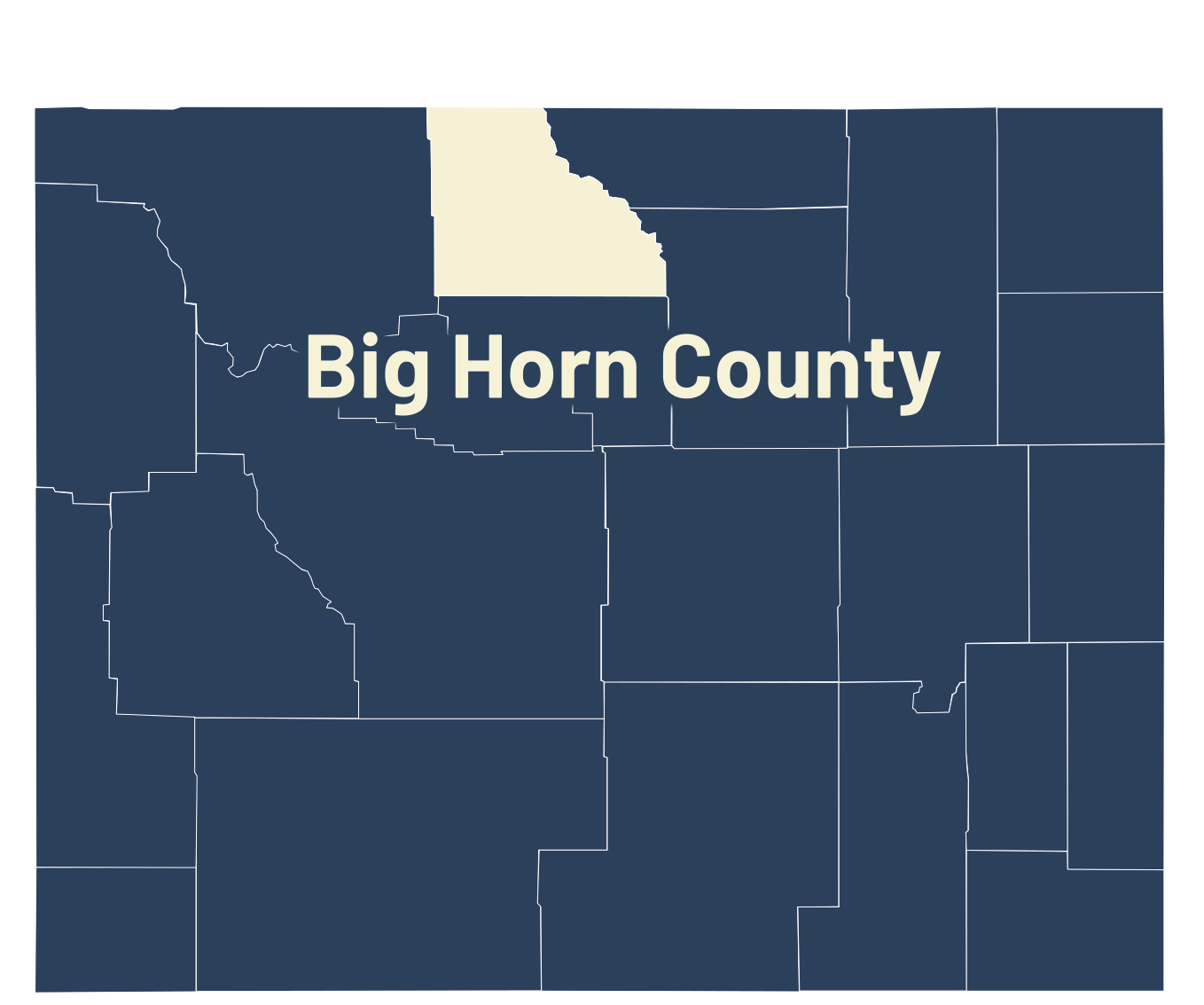
A young man with brown hair, brown eyes and a reddish mustache was found floating in the Greybull River west of Basin in the summer of 1973.
More than 50 years later, investigators still don't know his name — or how he died.
His body was buried under the name John Doe in the Basin Cemetery.
Now the Big Horn County Coroner's Office has reopened the case. The coroner’s office isn’t saying why the case is being reopened now.
According to a study released by the National Institute of Justice, the reasons to reopen a cold case include: Advancements in forensic technology, new leads through fresh case and evidence review, increased public support and interest, and improvements in information management
“This death was certainly suspicious in nature and possibly could be a homicide,” the coroner’s office announced in a public appeal. “Our goal is to identify the decedent and bring justice in his case if it is needed.”
The challenge is that much of the original investigation appears to have vanished.
The coroner’s office said there is “little documented information to go on” and that no law enforcement report from the original investigation could be located.
Only a coroner’s verdict has been discovered.
A Body In The River
What investigators do know begins July 10, 1973.
Someone reported seeing a body floating in the Greybull River about 50 feet north of the highway bridge west of Basin.
Coroner’s officials and sheriff’s deputies responded and recovered a young man believed to have been between 18 and 26 years old.
He stood about 5 feet, 6 inches. His weight was estimated at between 150 and 160 pounds.
The young man apparently had been in the water for several days and nights.
He was wearing blue-and-white striped cutoff pants and possibly a polo shirt.
No wallet, identification or vehicle was found.
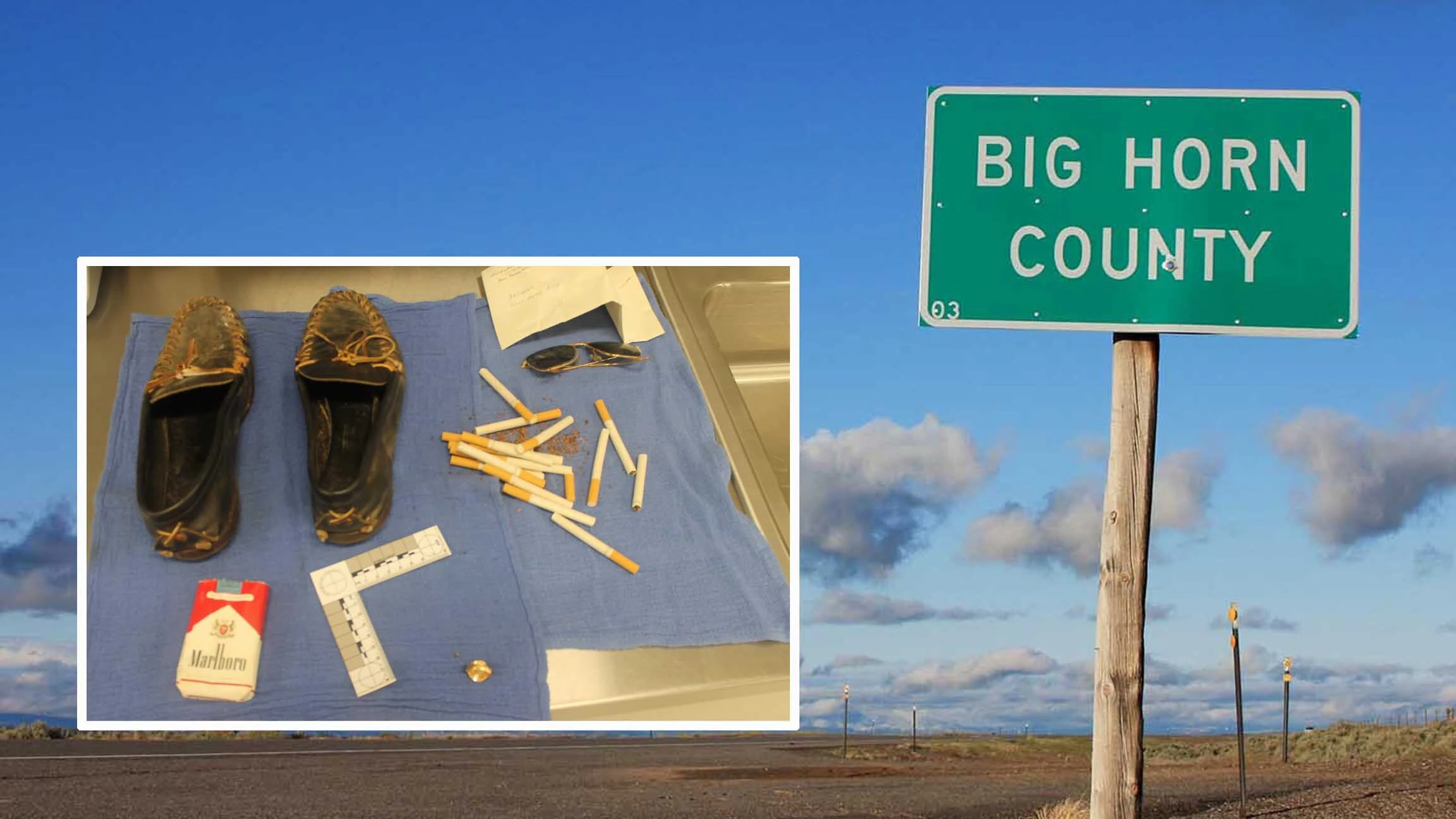
There were, however, several items on the riverbank that might be able to help investigators figure out who he was or where he had come from.
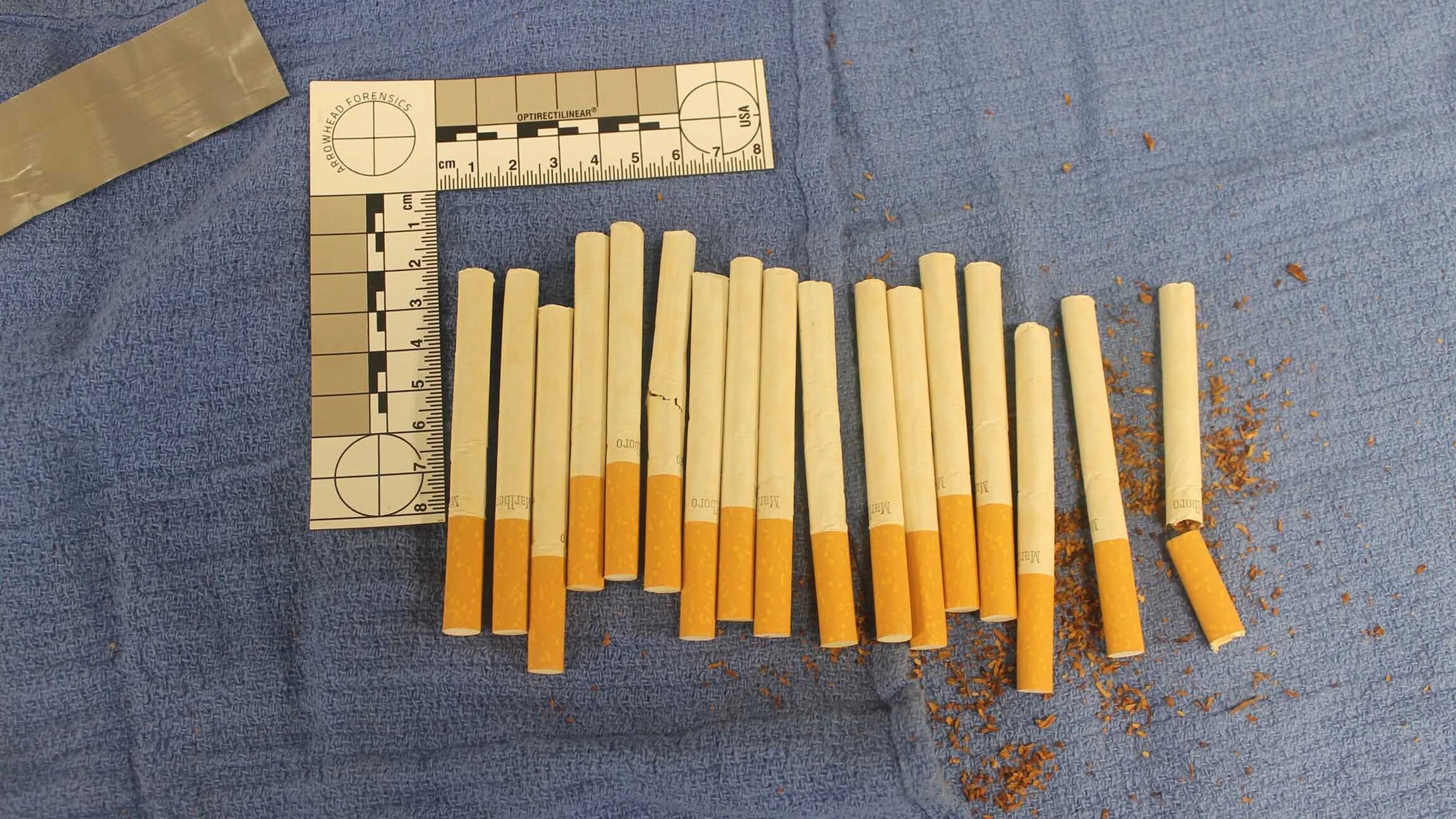
Marlboro cigarettes were among the items found on the bank of the Greybull River near where an unidentified young man's body was discovered in 1973. (Big Horn County Coroner's Office) 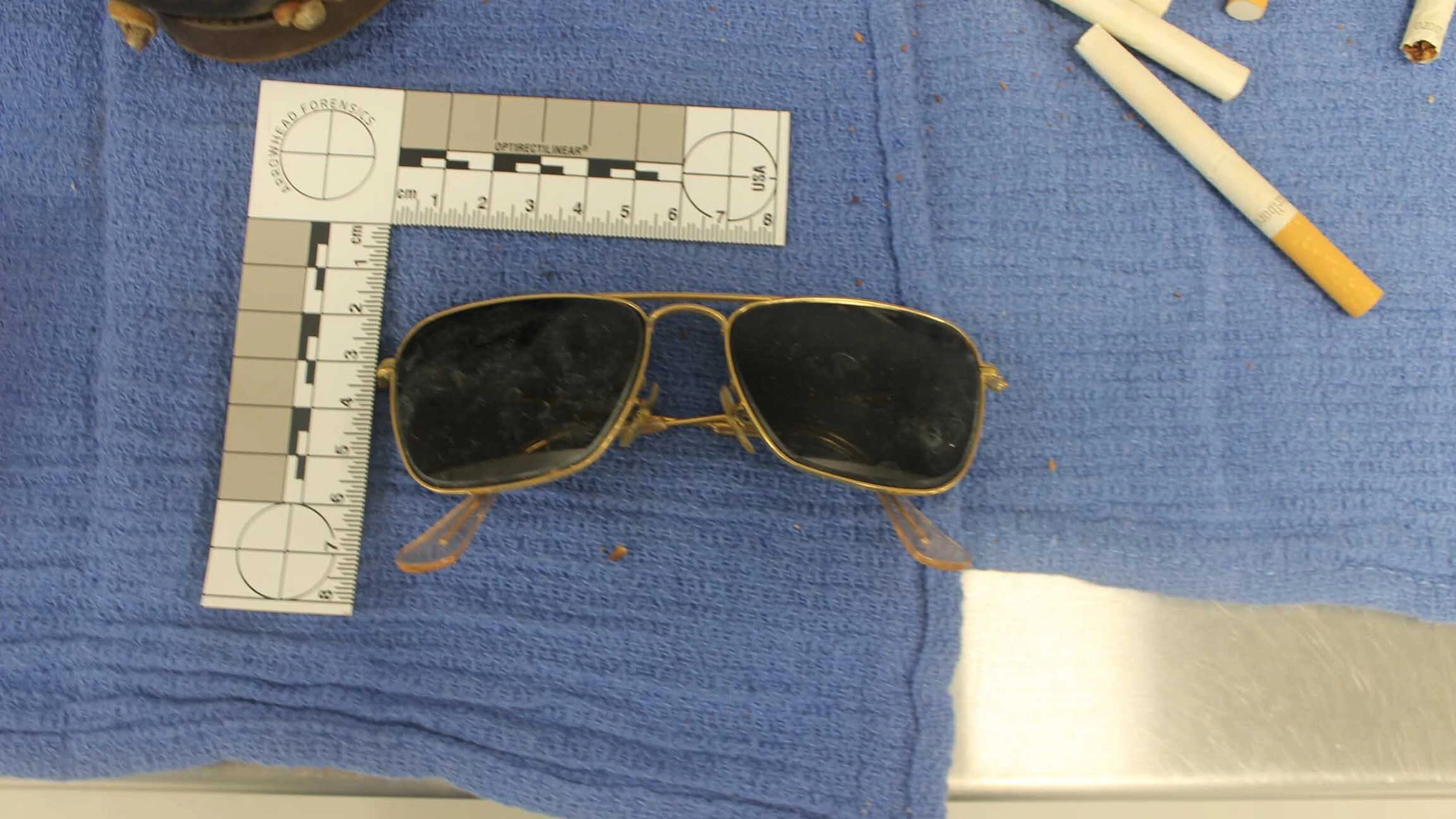
Prescription sunglasses were among the items found on the bank of the Greybull River near where an unidentified young man's body was discovered in 1973. (Big Horn County Coroner's Office) 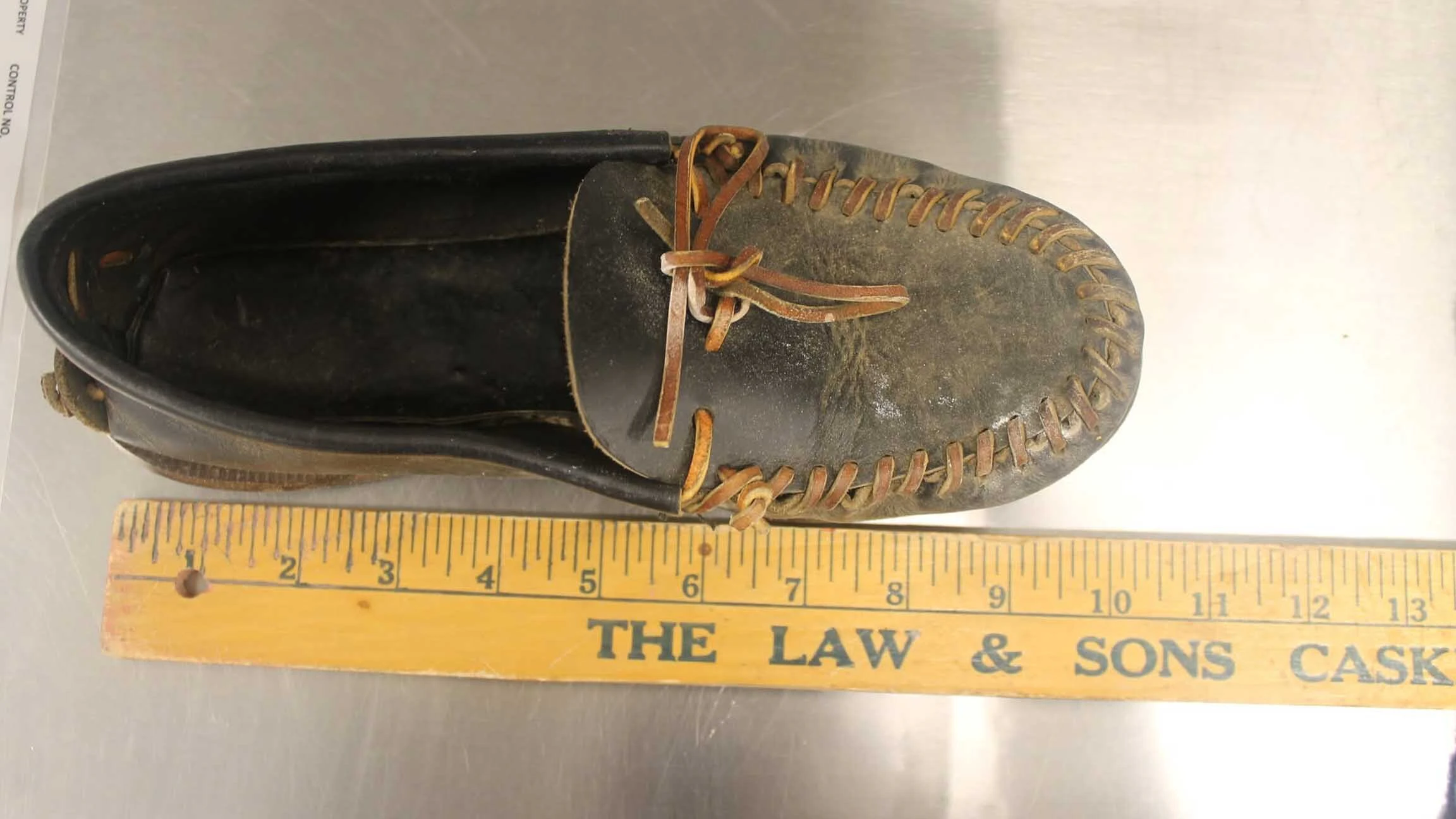
Leather moccasins were among the items found on the bank of the Greybull River near where an unidentified young man's body was discovered in 1973. (Big Horn County Coroner’s Office)
17 Cigarettes
Among them was a distinctive 14-karat gold ring.
The ring features the head of a bird, a diamond and the initials “MK.”
Investigators also documented two leather moccasins with rubber soles, a pair of prescription Ray-Ban sunglasses and a pack of Marlboro cigarettes.
Seventeen cigarettes remained.
The coroner’s office has released photographs of the items in hopes someone might recognize them.
The ring in particular has attracted attention from people following the case online.
A Jen Frederick suggested it might have been custom-made and asked whether a maker's mark could lead investigators to the jeweler who sold it — and potentially old purchase records.
“Unfortunately no stamps,” the coroner’s office responded.
A larger unanswered question: whether all of the belongings on the riverbank actually belonged to the dead man.
The surviving information does not establish that.
Another Clue
A citizen reported seeing several young men swimming in the same area several days before the body was discovered.
Whether investigators ever identified those swimmers, interviewed them or determined whether John Doe was among them is unclear.
The original law enforcement report that might answer those questions has not been located.
That missing paper trail leaves investigators trying to reconstruct events that happened more than five decades ago.
And the river itself provides one surviving record of that week.
The U.S. Geological Survey operated a stream gauge on the Greybull River at essentially the same location where the body was reported.
Federal records describe the Greybull River near Basin gauge as being at the upstream side of the highway bridge, exactly 8 miles west of Basin. The gauge operated from 1930 until it was discontinued in September 1973.
That means measurements survive from the summer John Doe was found.
The USGS records show the river's discharge had fallen substantially during the days leading up to the discovery, dropping from 179 cubic feet per second July 1 to 18 cubic feet per second July 10.
Those numbers measure the volume of water passing the gauge, not the river's depth or speed, and they don't establish where or how the young man entered the water.
DNA Possibility
Modern forensic science might ultimately offer investigators something they didn't have in 1973.
A person responding to the coroner’s office announcement asked whether DNA might be recovered from the sunglasses, moccasins or ring and used to locate relatives through genetic genealogy.
The coroner’s office said decades of people handling the belongings makes recovering useful DNA from the objects unlikely.
“Last option we will perform is an exhumation to obtain DNA to run through several databases such as Ancestry,” the coroner’s office said in response.
For now, the coroner's office said the case has been entered into the National Missing and Unidentified Persons System, better known as NamUs.
That alone is significant.
Cowboy State Daily reported in June that twin Cheyenne genealogists Ashley Kroner and Megan McWilliams have been working to locate unidentified people whose cases were never entered into NamUs.
At the time, Wyoming had nine unidentified people listed in NamUs, with cases dating to 1977.
Does Somebody Remember Him?
The Big Horn County Coroner’s Office had not responded to Cowboy State Daily’s request for additional information by publication time.
For now, the mystery returns to few surviving details.
Somebody might remember a young man who left home in the summer of 1973 and never returned or recognize the ring that was found on a Wyoming riverbank.
The coroner’s office is asking anyone with information about the man, the belongings found at the river or the circumstances surrounding his death to come forward.
For now, the young man remains where he has been for more than half a century, unidentified.
Kolby Fedore can be reached at kolby@cowboystatedaily.com.


