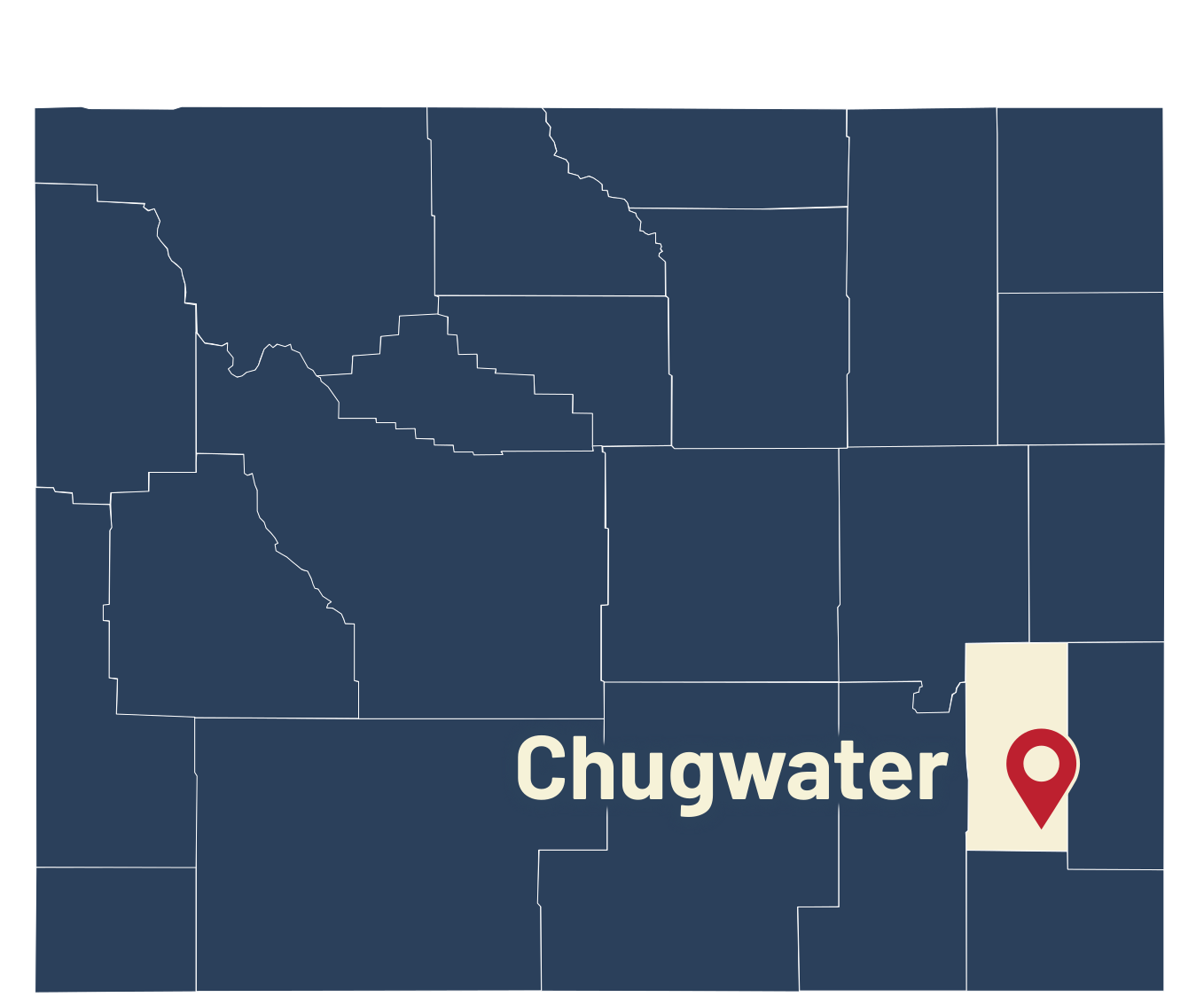
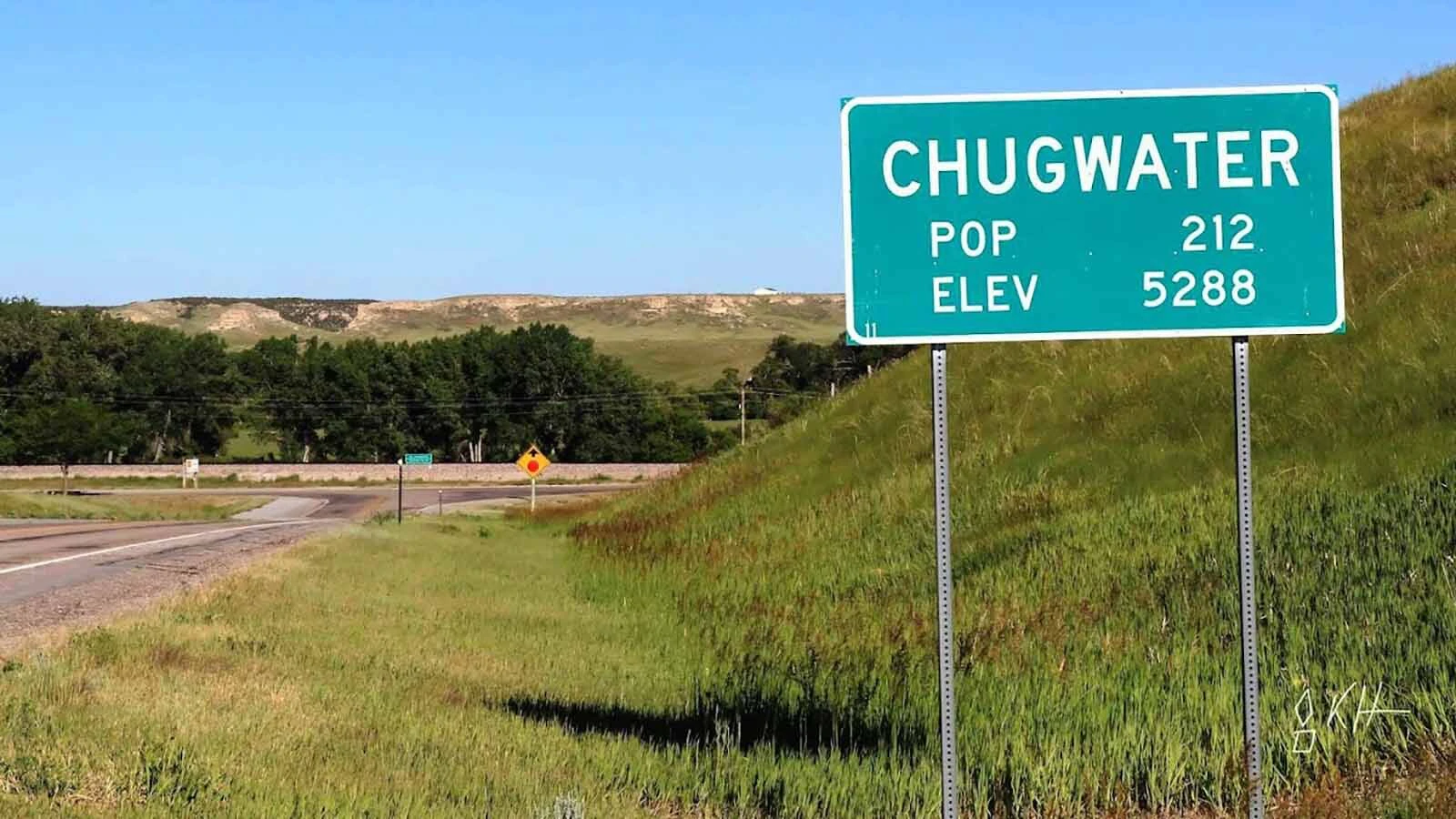
Four decades ago, Chugwater was just one more dot on the map about to be swallowed by the modern economics of ranches consolidating and farms disappearing from “the flats.”
It didn’t help when Interstate 25 came along in 1959 and whisked travelers past Main Street. By 1970, the population had dwindled to 188 residents.
The town didn’t take the trend lying down. They banded together to fight back and some of them did something a little audacious.
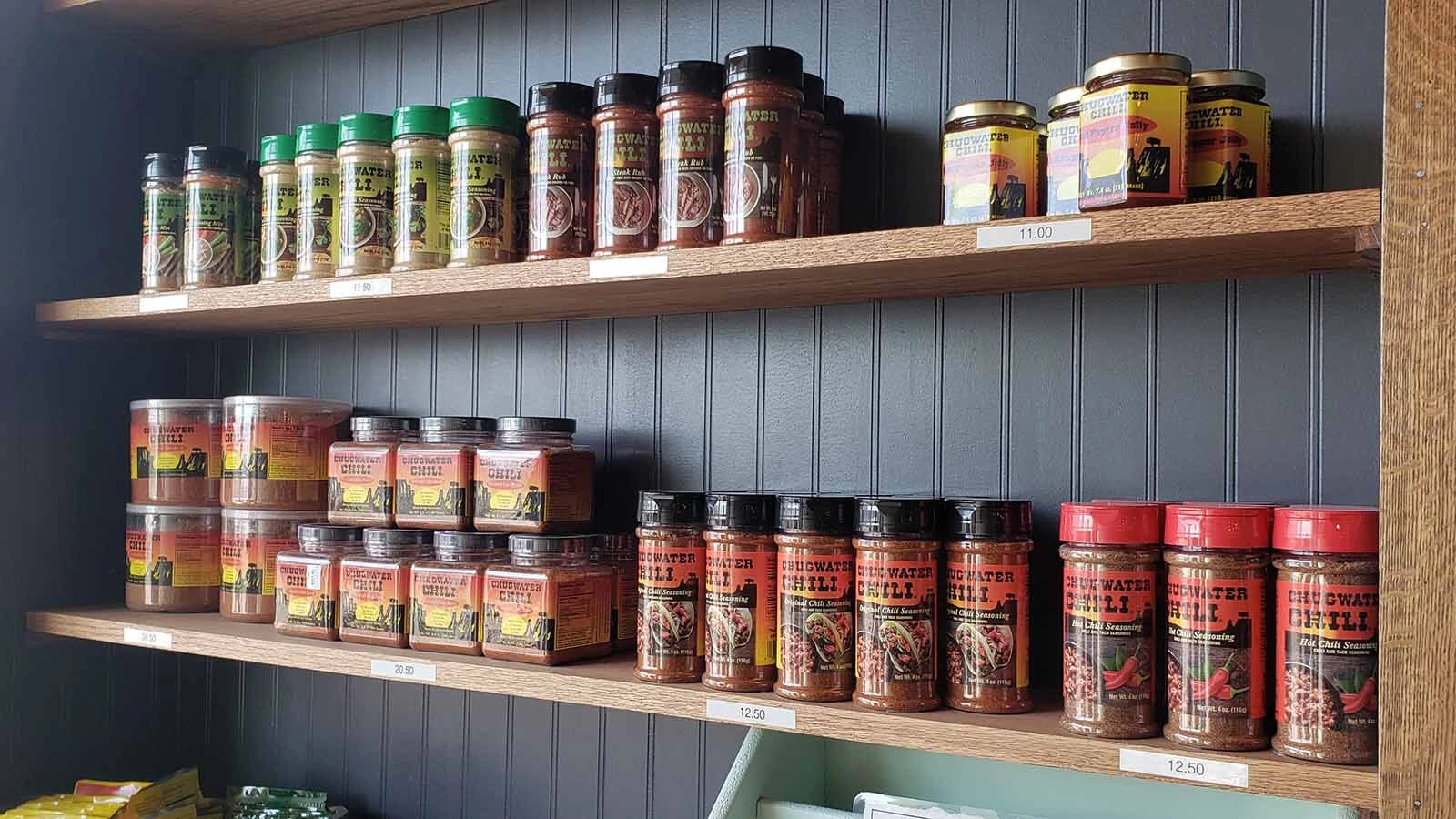
Five ranching families decided to bottle up their town’s identity — grit, wind and all — and plaster it on a jar of Chugwater Chili spices.
“We were just trying to think of any kind of a business just to keep Chugwater alive,” Terry Baker recalled. “We were all farmers and ranchers who had been trying to think of ways we could help our Chugwater community survive. We just wanted to do our part, basically.”
The business those families started turns 40 this year. From its humble beginnings in a tiny, single-wide trailer, it’s now a large warehouse with a separate office/retail store that ships out hundreds of thousands of Chugwater Chili spice mixes and other products to 600 grocery stores across America.
Brainstorming A Better Future
Baker, a member of one of the five original ranching families, recalls a big brainstorming session that broke into groups at the school gymnasium to wrestle with ideas to help the town avoid vanishing.
Some of the ideas included a historical group, an economic development group and a beautification committee.
“So, like out of that, there’s little 'Welcome to Chugwater' signs that have planters around them now,” Baker said with a chuckle. “And the History Club is the best group and going still. It’s called Chugwater Historical Unity Group, or CHUG.”
Baker’s idea was for a mill that would turn the area’s hard red winter wheat into flour. But she and the other five ranchers were swayed by a completely different pitch, one that came not from Chugwater but from Cheyenne. An agricultural agent told them about a man named Dave Cameron who was a chili wizard, winning award after award at cook-offs.
For reasons known only to Cameron, he had branded his prizewinning recipe “Chugwater Chili” even though he lived in Cheyenne and had no formal tie to Chugwater.
“I don’t remember all the ideas we took down,” Baker said. “But that particular one was not our idea at all.”
It was a compelling idea, though, and the ranchers embraced it — not least because Cameron had named his chili “Chugwater Chili.”
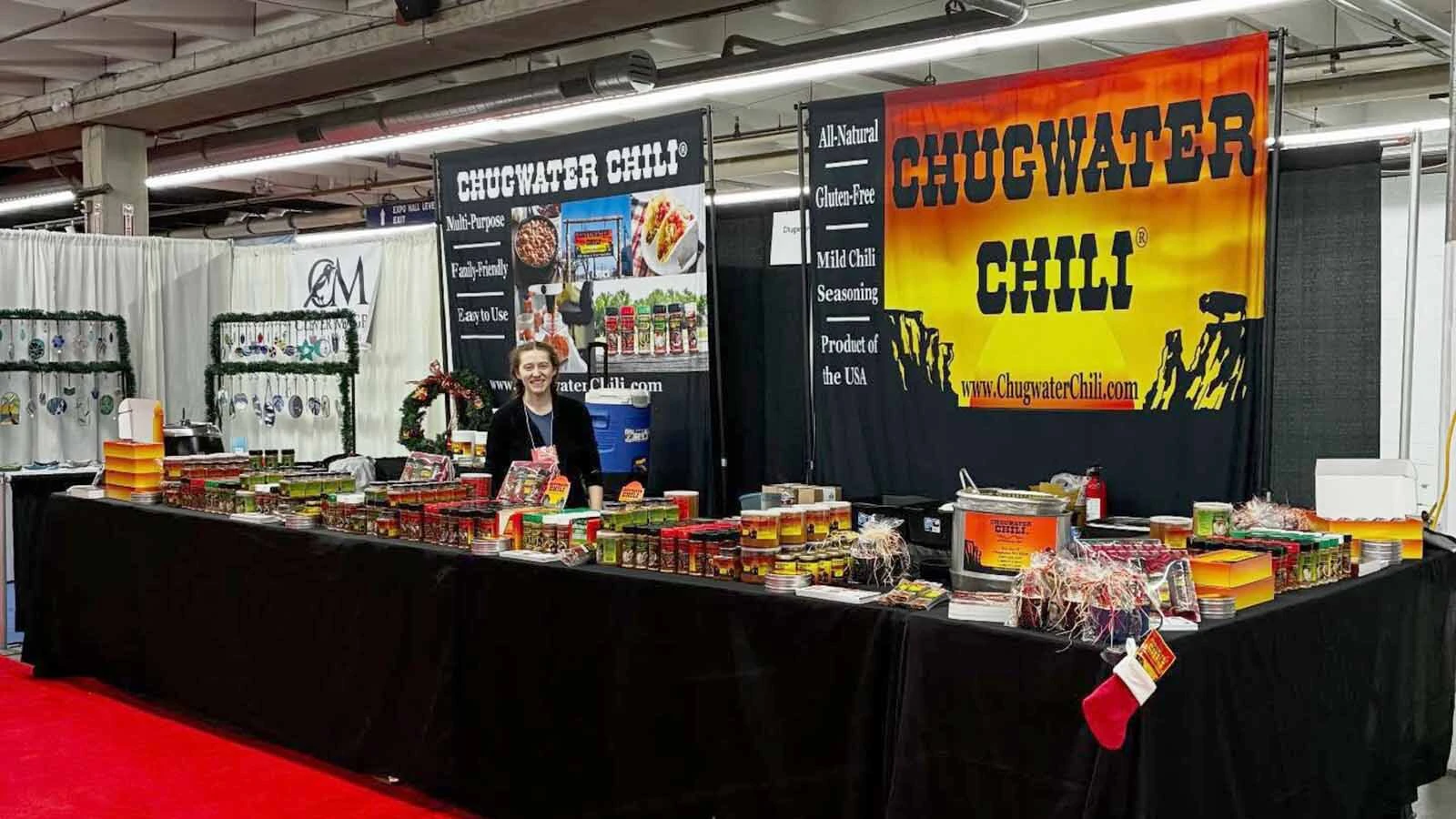
Chili Cook-off Brings World To Town
Baker doesn’t remember whether Cameron ever made them a pot of his award-winning chili to sell them on the idea of buying his recipe, but she does remember the very first championship cook-off.
“We had thousands of people come out there to the Diamond Guest Ranch,” she said. “It was amazing.”
The festival was all part of an overall strategy to promote Chugwater’s newest business, and build a brand that would one day have national recognition.
Forty years later, the competition continues to be a magnet for the chili world. Many of the best chili cooks in the world call it a “bucket list” competition and make pilgrimages from as far away as Texas and Florida, just so they can say they have been there.
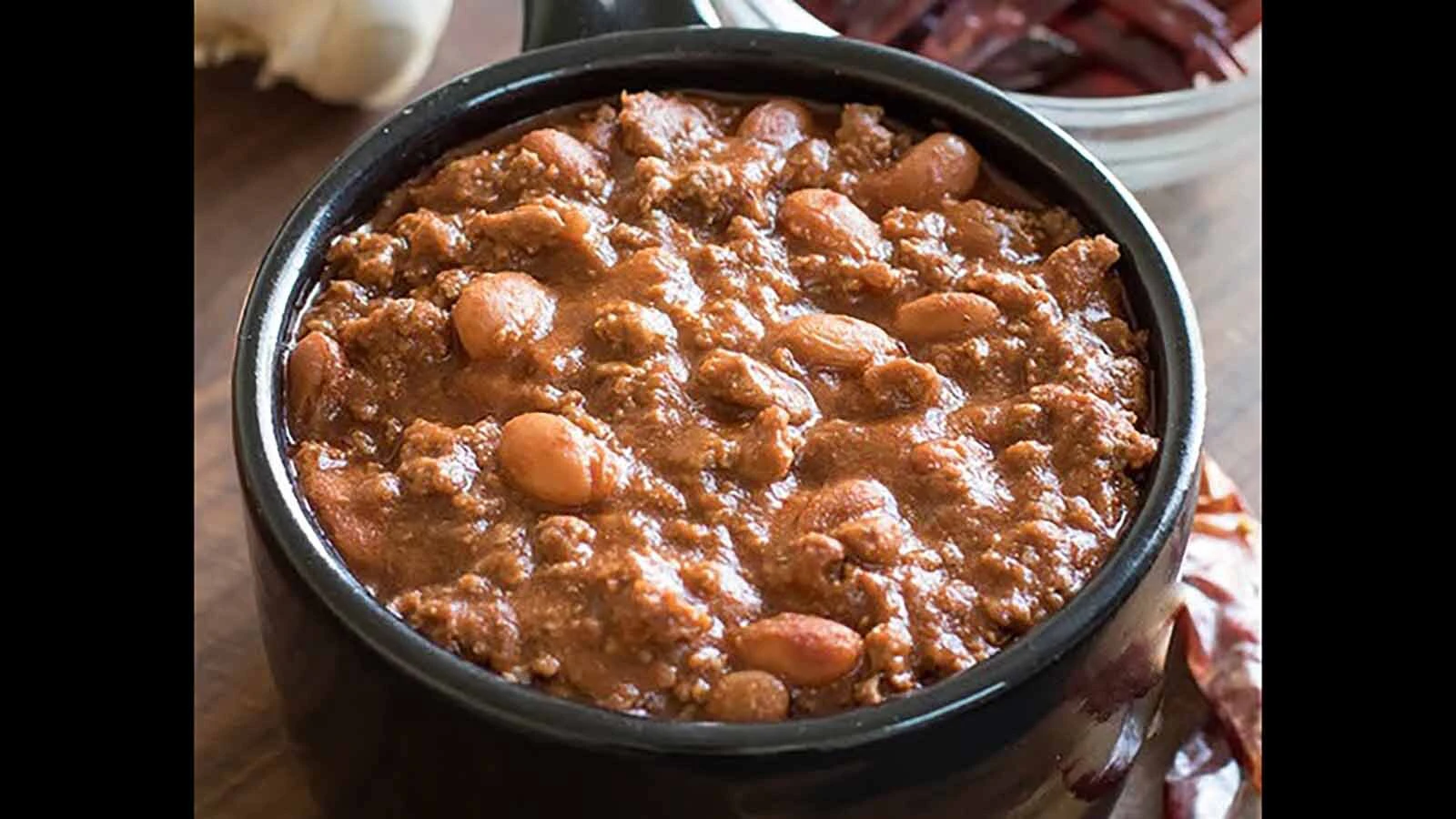
From Bunkhouses To Regional Brand
After the Diamond Guest Ranch kids were grown, the event continued to grow but was moved into town, where it was placed at Staats City Park.
Proceeds from the town’s signature event are donated each year to nonprofit organizations in town, from its volunteer fire department and community center to its FFA and FBLA youths. This year’s competition raised $17,000.
The business, meanwhile, managed to ink several deals with restaurants that would exclusively serve Chugwater Chili.
“We made them sign an agreement that they wouldn’t add anything except our spices,” Baker said. “Because people so wanted to add I don’t know chili beans instead of pinto beans, which changes the flavor. You need to do just exactly what it says on the side of the container.”
That was another key piece in the strategy to build a business brand with longevity.
Guidice Takes Over Stewardship
The company, formed by Jim and Marcelyn Brown, Lewis and Viola Voight, Dennis and Terry Baker, Jan and Carl Wilkerson, and Mark and Ginny Kaufman, was about as homegrown as it gets.
“They started packaging in bunkhouses on a ranch and also in basements,” Chugwater Chili’s present owner Karen Guidice told Cowboy State Daily.
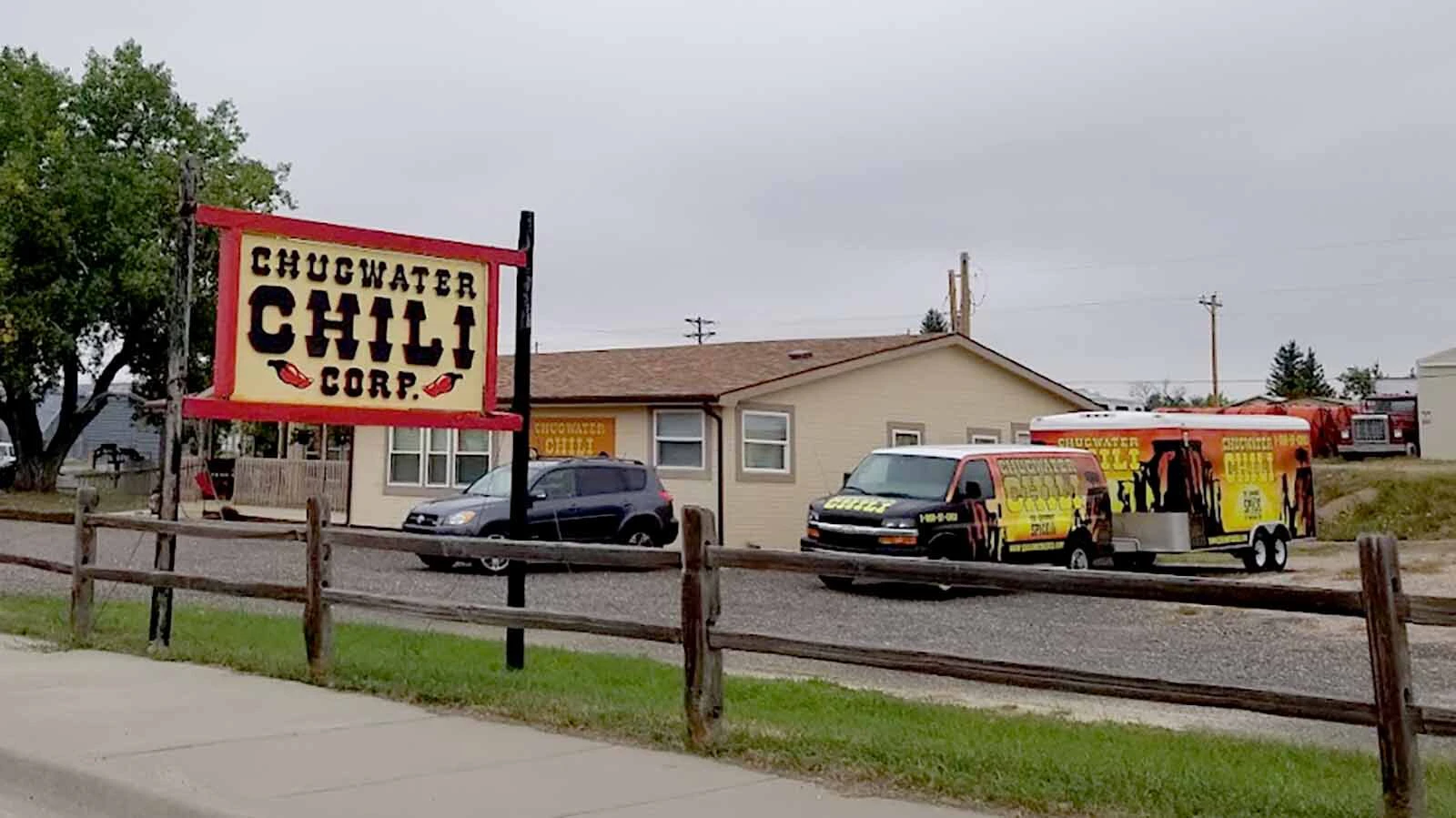
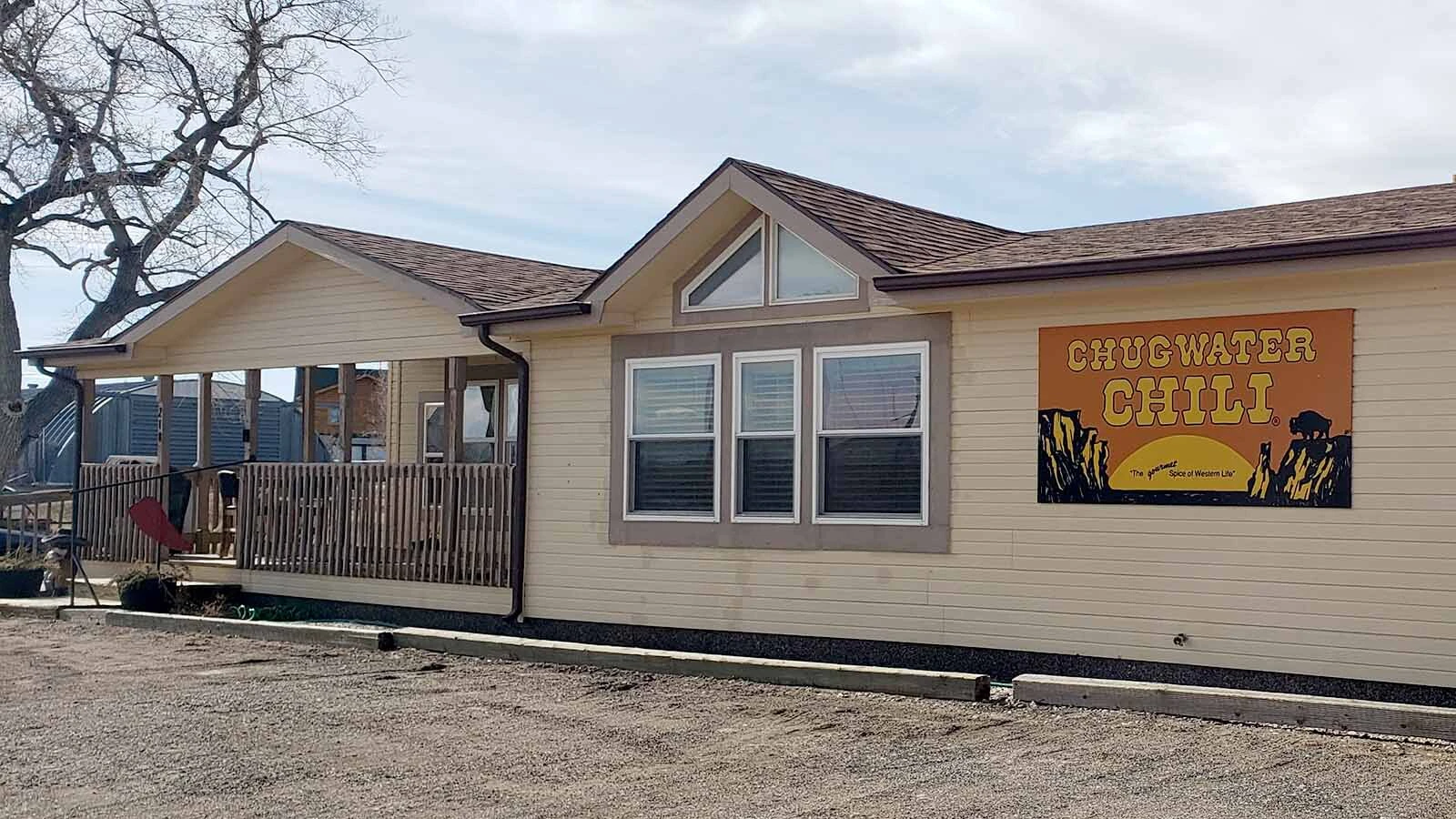
Eventually, they could afford a used mobile home for an office on Main Street.
The ranching families took turns staffing their new office and pitching in to help package bags and jars of chili spice for sale. Eventually, roughly 20 years ago, the business outgrew its single-wide and a modular home was purchased.
Guidice purchased the company 12 years ago after falling in love with the product.
She had been going to trade shows for the business to help promote the product. The word she heard most often was “Wow,” followed by “This is the best chili I’ve ever tasted.”
The product practically sold itself with a single sample.
The Smell Of Christmas
When she learned the owners were thinking about selling the company, she decided she wanted to be its new steward. That would be the best way to ensure the town’s namesake would go on helping Chugwater.
Under Guidice’s leadership, the company has grown an average of 25% each year, she told Cowboy State Daily, and it continues to add employees to handle the increased volume.
In 2026, Guidice built a new warehouse and dedicated manufacturing area beside the original building, creating a footprint about six times the original mobile-home office.
Each jar of spice is still packed in Chugwater and the business now has at least four full-time positions and several part-time as well as seasonal Christmas positions.
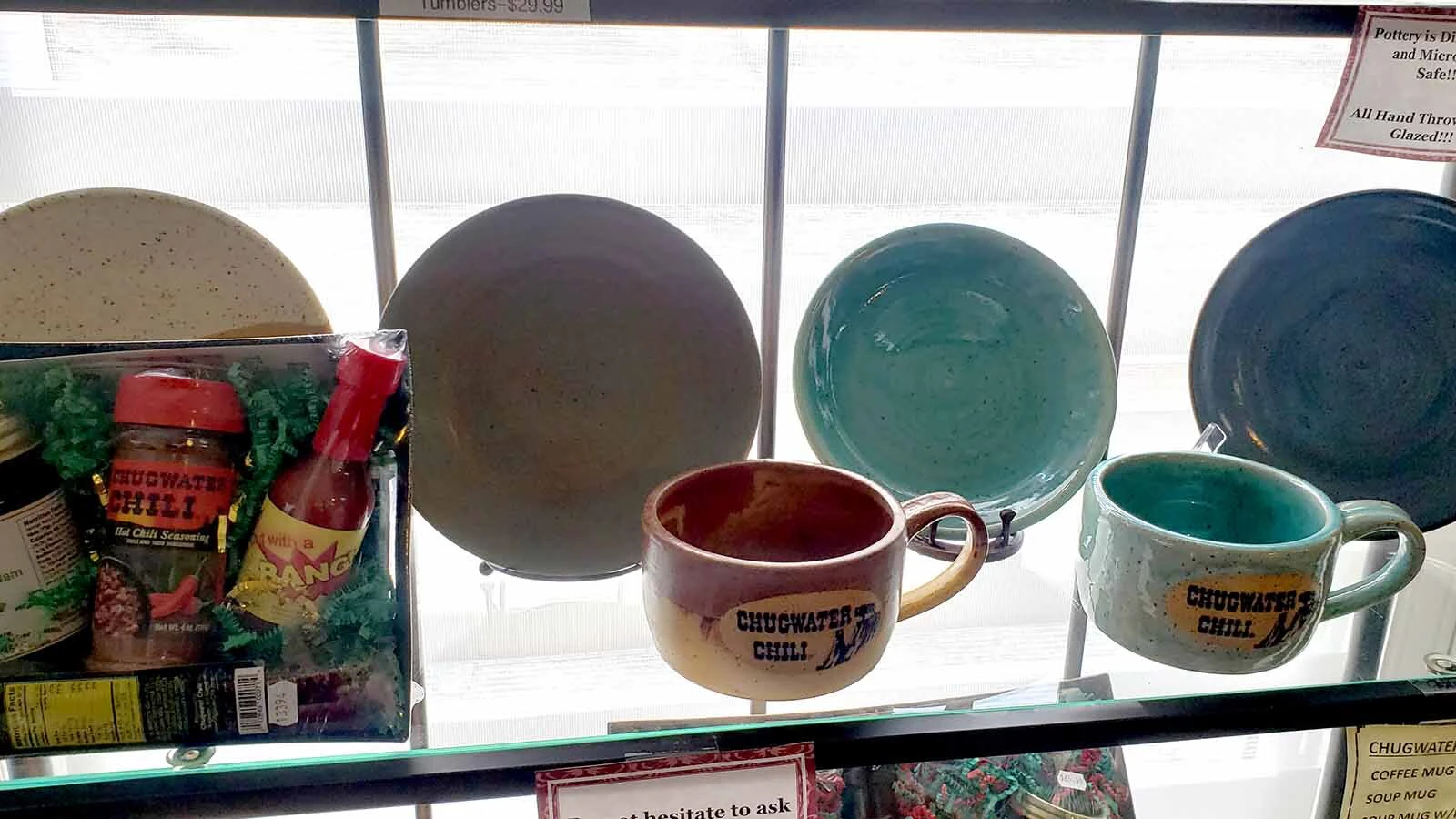
The smell of Christmas for Guidice and her employees is chili, because that’s their busiest time. Orders pour in from all over the country for gifts of Chugwater Chili and other products, like its salsa or its dip and dressing mix.
The store, meanwhile, has a fresh pot of chili going every day. That way any customers can taste-test on the spot.
National Shoutouts For Small-Town Spice
Chugwater Chili has had many national shoutouts. Perhaps the best-known of these is in New York times bestselling author Craig Johnson’s first “Longmire” novel, “Cold Dish,” where it’s spotlighted as a favorite of a certain sheriff named Walt Longmire. Johnson has told Chugwater Chili that Walt would “definitely” be a Chugwater Chili fan in one of the company’s blogs, and that he’d eat it with a “healthy dollop of sour cream, cheese and green onions.”
But that’s not the only time Chugwater Chili has been recognized nationally. The Food Network spotlighted it in a feature showcasing the 50 States of Nachos, where it praised the ground beef nachos served at the Chugwater Soda Fountain, which are infused with the company’s award-winning secret seasoning recipe.
The Scovie Awards has also recognized the brand numerous times, most recently giving it second place in the stews/chili con carne category and third place for all-purpose dry rub/seasoning.
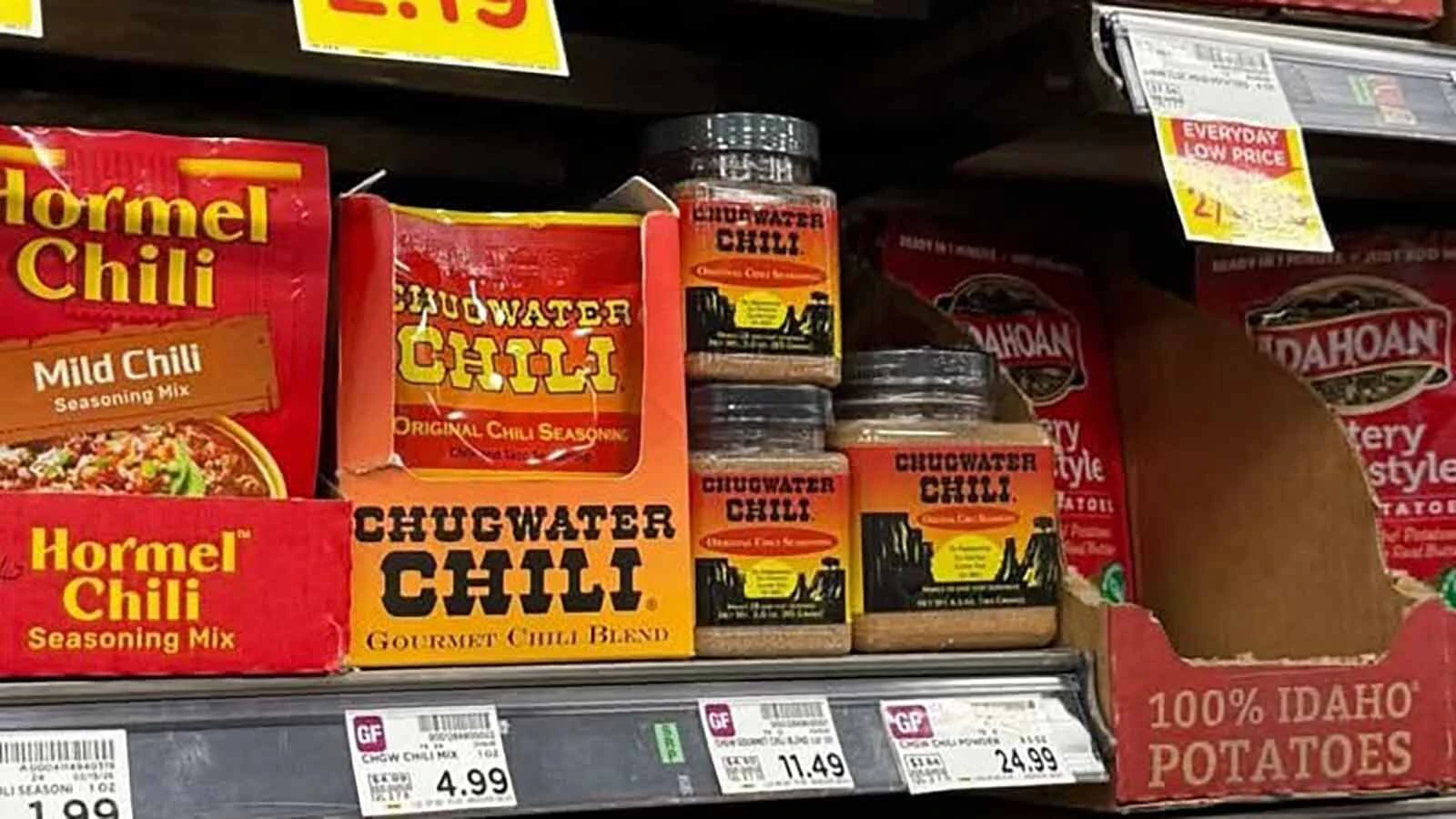
Several national grocers also carry the brand, including Safeway, Albertsons, King Soopers, and Smith’s Food and Drug.
And then there’s all the status brought by the nationally recognized Chugwater Chili Cookoff qualifier through the Chili Appreciation Society’s International. From there, winners can leapfrog straight into the national championship in Terlingua, Texas.
A Recipe For The Future
Chugwater Chili is one of a handful of businesses in Chugwater that have helped keep the town from disappearing.
A small local economy has even been taking shape of late. There’s a food-hospitality cluster that includes the Chugwater Soda Fountain, which is Wyoming’s oldest working soda fountain with old-fashioned malts and ranch burgers, The Stampede Eatery with live music every Friday and Saturday night, and the Buffalo Lodge near the interstate.
There are also core services now, including the state’s first authorized charter school, a Wyoming Department of Transportation facility with a sizable staff, Chugwater Fuels, the Tri-County Mercantile with community essentials, and a fashion store called B & B Vintage that recently opened.
Some businesses, such as Tri-County Mercantile and the restored Soda Fountain, came about from much the same sentiment as Chugwater Chili. They’re owned by people who were newer to town, but loved the community and wanted to give back and see it grow stronger.
Their efforts at revival seem to be working, slowly but surely. The 2020 census estimated a population of 175, but more recent estimates put the number at 228. That compares to a peak of 287 in the 1960 Census.
Looking out at the next 40 years for Chugwater Chili, Guidice is pragmatic — apropos for a business that sells a practical and easy recipe for a quick and tasty meal.
“We’re going to continue growing, and offering a great product to a lot of people in the United States,” she said. “The more we grow, the more we can offer.”
That’s a recipe for the future that is still continuing to serve in a tiny, windswept town along I-25 that refuses to quietly disappear.
Renée Jean can be reached at renee@cowboystatedaily.com.