If you find a giant puffball mushroom in Wyoming, you can slice and spice it up for a fungi feast. It's like a slice of bread, two feet across.
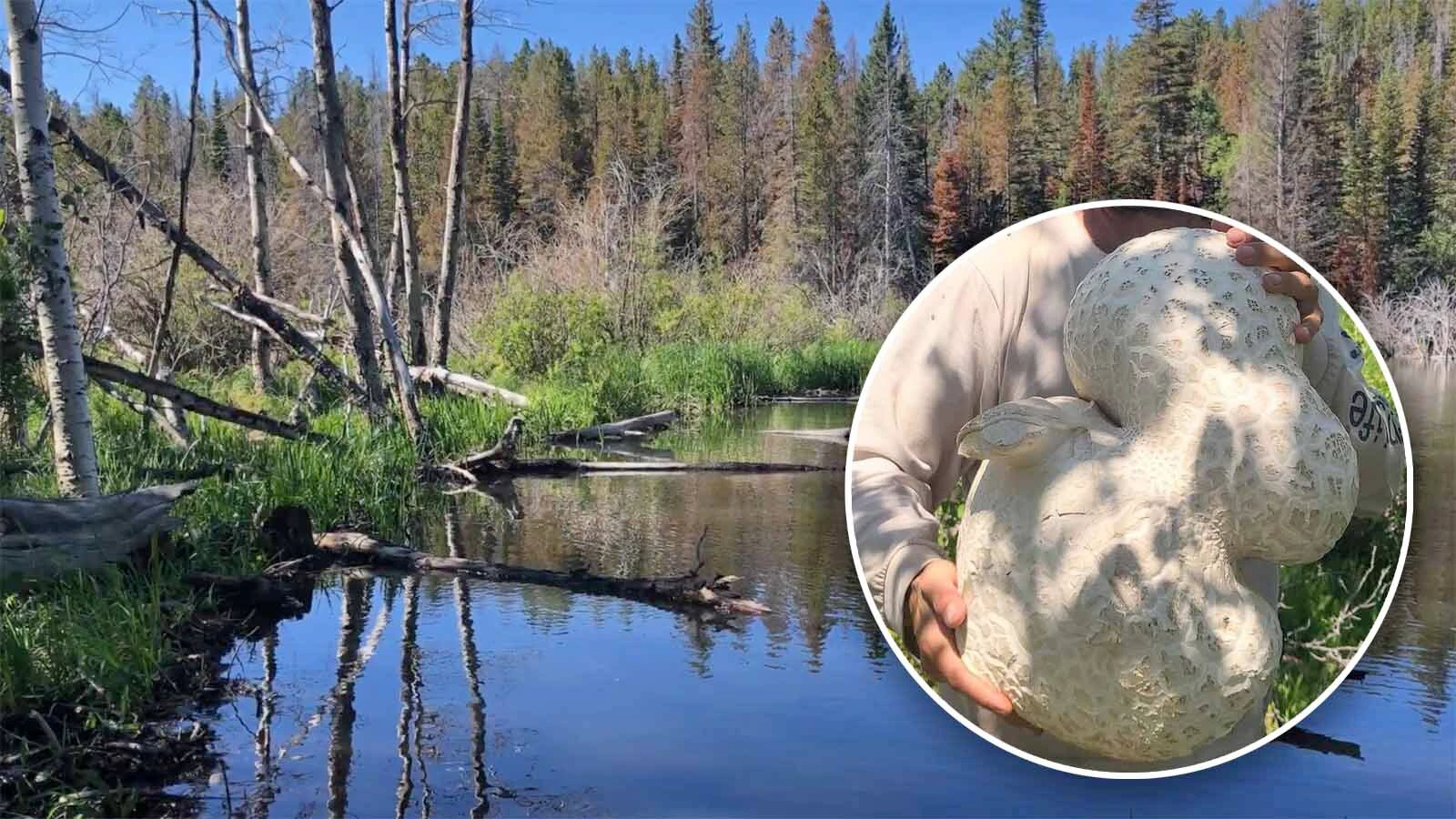
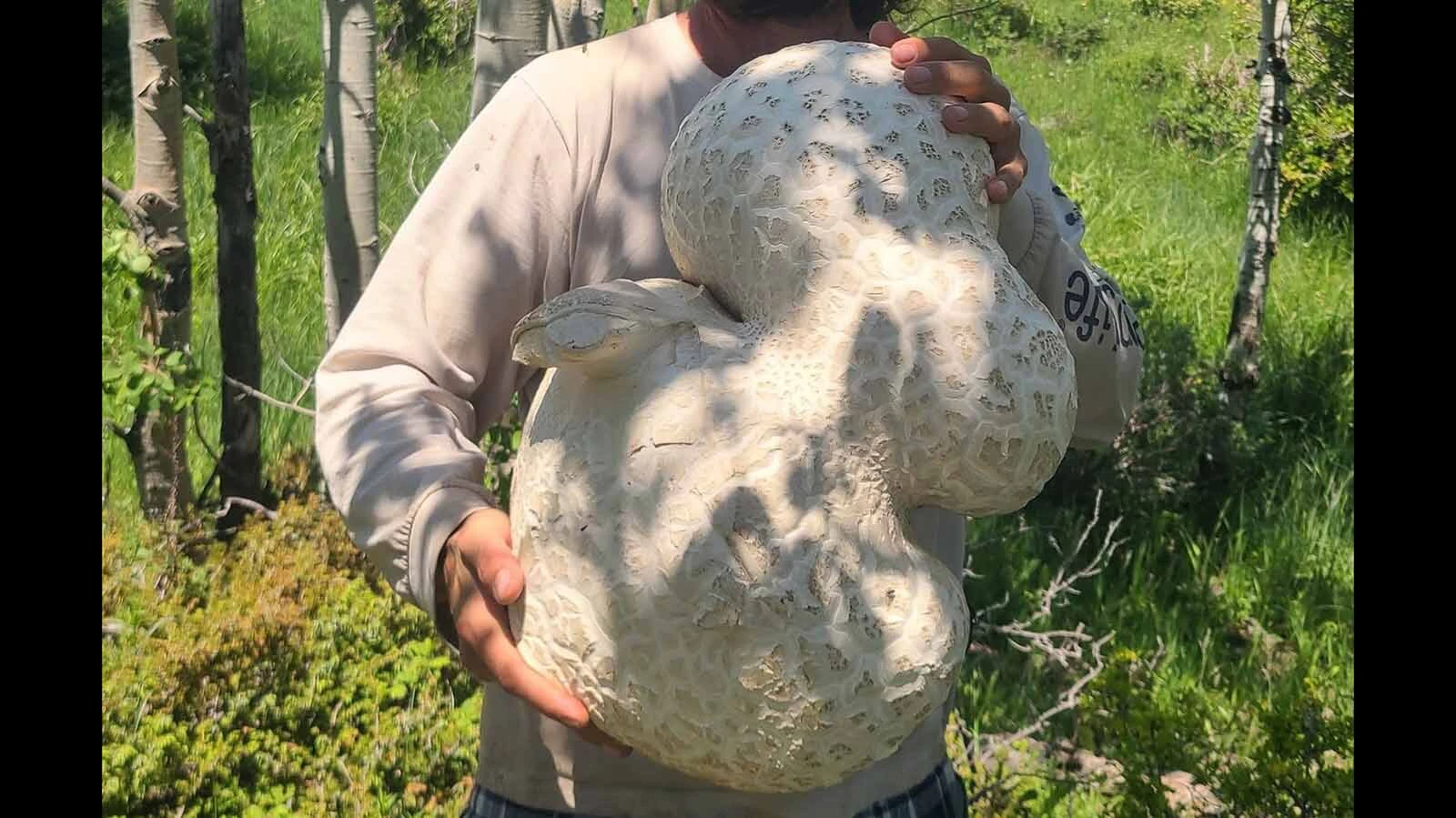
Tyler Sease was foraging near the Happy Jack Recreation Area near Laramie when he found the mother of all mushrooms. It was a western giant puffball about as big as two basketballs put together.
Sease could have made a great meal with that massive mushroom, but he probably needed to spice it up a bit. Puffballs cook nicely, but the flavor can leave something to be desired.
“They are edible, but I find them pretty bland,” said Jake States, a retired professor, Lander resident, and mushroom expert. “I sauté them with garlic.”
Western giant puffballs are one of the more common edible mushrooms in Wyoming. Anyone fancying a fungi feast can go out and find one – it might even be as big as Sease’s.
Western Flair
Calvatia booniana, the western giant puffball, is common throughout the fields and forests of Wyoming. According to States, the shape and size of Sease’s mushroom is enough to identify it.
“Although the puffballs in general have a rounded shape, these large ones are really unique,” he said. “The western giant puffball is irregularly shaped, whereas the eastern giant puffball is almost perfectly round.”
Based on the photo, States believed the mushroom Sease found might have been two fruiting bodies, called gastrocarps or “stomach bodies,” that grew together.
That’s not uncommon for puffballs.
“The gastrocarps can fuse together, but on the other hand, it is characteristically irregularly rounded or blobby-shaped, and so it could be a single fruit body.”
Fairy Rings
States said the best places to find western giant puffballs are low-elevation grasslands or subalpine meadows. He’s found they’re common in sagebrush communities, growing together in what’s called a fairy ring.
“Fairy rings are a circle of fruiting bodies,” he said. “They’re formed by underground mycelium, the feeding vegetative bodies of the fungus, that kill off the surface vegetation and produce reproductive structures in those circles. There are quite a number of mushrooms that form these rings.”
“Fairy ring” comes from European folklore.
Many western European traditions ascribed the circular rings of mushrooms to the dancing of fairies, pixies, elves, or witches. The Dutch believe the rings marked the spot where the Devil placed his milk churn.
While that’s been debunked by science, there is something supernaturally frustrating about giant puffballs. According to States, they defy modernity.
“We have been unable to produce large puffballs in culture,” he said. “All these mushroom cultivators would dearly love to do so, but we haven't done it yet.”
Puffballs have historically been used to dress wounds, either sliced or powdered, by cultures around the world. They contain a styptic, a substance that stops bleeding and seals injured blood vessels.
“The genus Calvasia has a chemical compound called calvacin, a natural anti-tumor mucoprotein,” said States. “They’re trying to isolate that and get into the pharmaceutical entourage.”
Many scientists would love to further explore and reap the benefits of giant puffballs, but that has yet to be accomplished in a laboratory setting. It is stated that they have mycorrhiza, which means fungus-root associations, that aren’t fully understood.
Bioprospecting is the concept of developing new chemicals, inventions, and technologies by studying the natural adaptations of flora and fauna. It’s something States knows all about.
“I discovered the mold form of a mushroom called Aspergillus laporus,” he said. “That’s the one being studied so much now for its production of natural lysergic acid diethylamine, or LSD. Who knew?”
Death Or Delicacy?
Giant puffballs, including the western giant puffball, are edible. However, nobody should take a bite without dissecting it first.
Giant puffballs can look similar to poisonous earthballs. Many species of the mushroom genus Amanita, including the deadly destroying angel, don’t grow as large as puffballs but can resemble them in their immature growth stages.
States said the easiest way to determine if your two-foot-wide mushroom is edible is to carve it up, which you’d probably do anyway.
“The tissues will be perfectly white as you cut through them,” he said. “As long as that tissue is white, it's edible.”
One group of puffballs has toxic spores, but they’re easy to identify by their purple color.
A safe, savory slice of western puffball mushroom will look like a slice of white bread, except that it’s two feet across. From there, it can be served however one would like.
Regardless, nobody who finds a western giant puffball should immediately pop a piece into their mouths. It’s always best to check and cook before consuming.
Common Craving
If anyone wants a taste of western giant puffball, or maybe serve one for Thanksgiving in lieu of turkey, they’re not hard to find in Wyoming. States encounters them frequently while exploring Lander.
“I'm here in Sinks Canyon, in the transition zone of the sagebrush foothills into the conifer forest, so I find them regularly every season,” he said.
There’s another thing to be wary of when eating giant puffballs.
Some people have reported the mushroom as having a laxative effect. Giant puffballs aren’t closely related to Asia’s shiitake mushrooms, but the end result might have a gastrointestinal impact worthy of the name.
Giant puffballs are edible, but there are tastier fungi to forage in Wyoming. That’s why States doesn’t have them on his menu.
“It has a mushroom-type flavor, but I find them bland,” States said. “Some people like anything that tastes fungusy, but I think there are so many more mushrooms that are much better, so I don't mess with (puffballs) at all.”
Andrew Rossi can be reached at arossi@cowboystatedaily.com.