
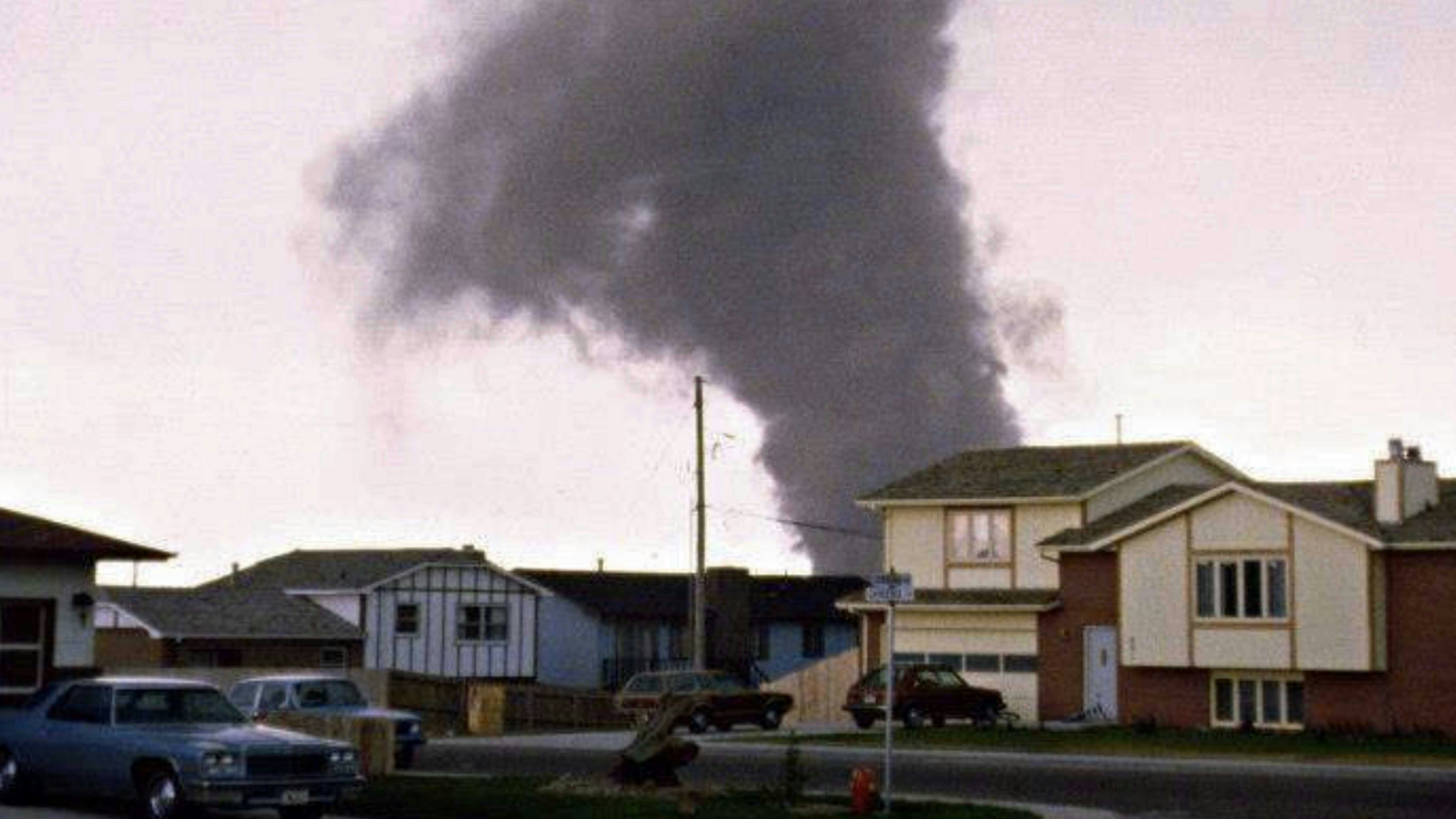
CHEYENNE — The day after Gene Holthus’ home in Cheyenne’s Buffalo Ridge subdivision was gutted on July 16, 1979, he stood outside taking photos of the destruction.
His three sons were busy trying to salvage anything they could from the house as Wyoming National Guard helicopters flew overhead to protect the neighborhood from looting.
Holthus told the Wyoming State Tribune that he was at work at the Wyoming Highway Department when he saw the huge twister rip past the Game and Fish Commission.
“I immediately called my wife, Alta, and told her to get in the basement,” Holthus said. “She didn’t know a thing about it.”
He said the next few minutes were terrifying as he waited for a chance to get home. Holthus learned that a gas main had broken in his basement.
“Somebody called the fire department and within about five minutes they came and dug my wife out of the basement,” he recalled. “Thank God she only had a few scratches.”
As Holthus continued talking to the reporter, one of his sons came running up and handed him an envelope he’d found several blocks away. It contained vivid color photographs of the family’s garden, which was now buried under rubble.
Holthus looked at every one of the photos.
“I just can’t believe that something this small could remain intact while bigger things were totally destroyed,” he said.
The reporter told him he was sorry about everything his family lost. Holthus turned around and pointed at the house.
“This can all be replaced,” he said. “We survived. And I’ll treasure these photos and all the memories.”
Holthus died in 2015, but he and his family had survived what 47 years later is still the most destructive tornado ever recorded in Wyoming.
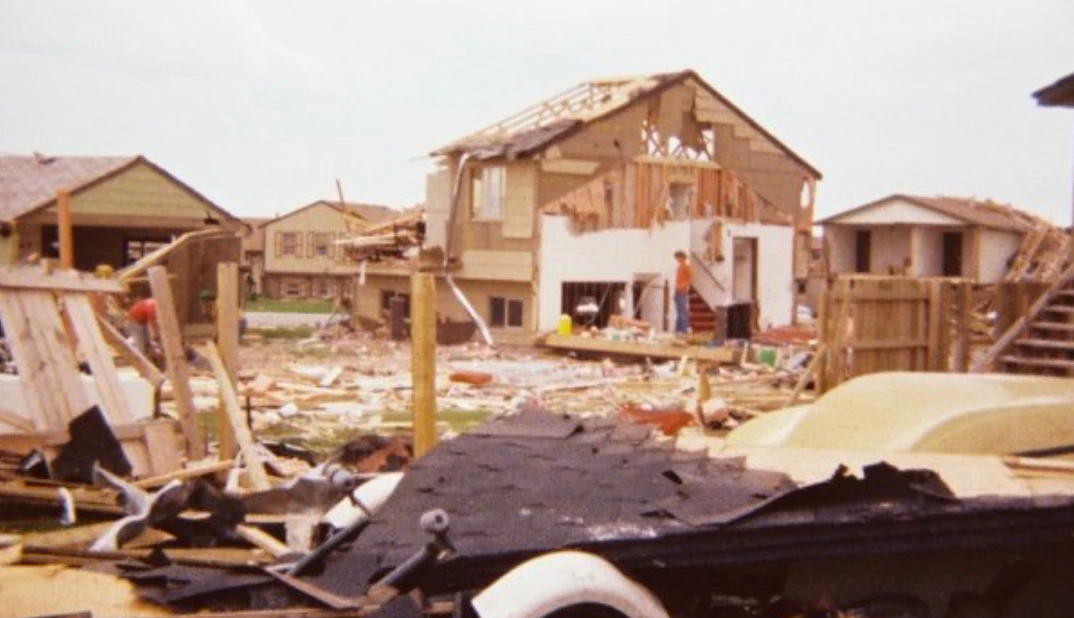
Damage from Cheyenne tornado. July 16, 1979 (Courtesy, Tom Reed) 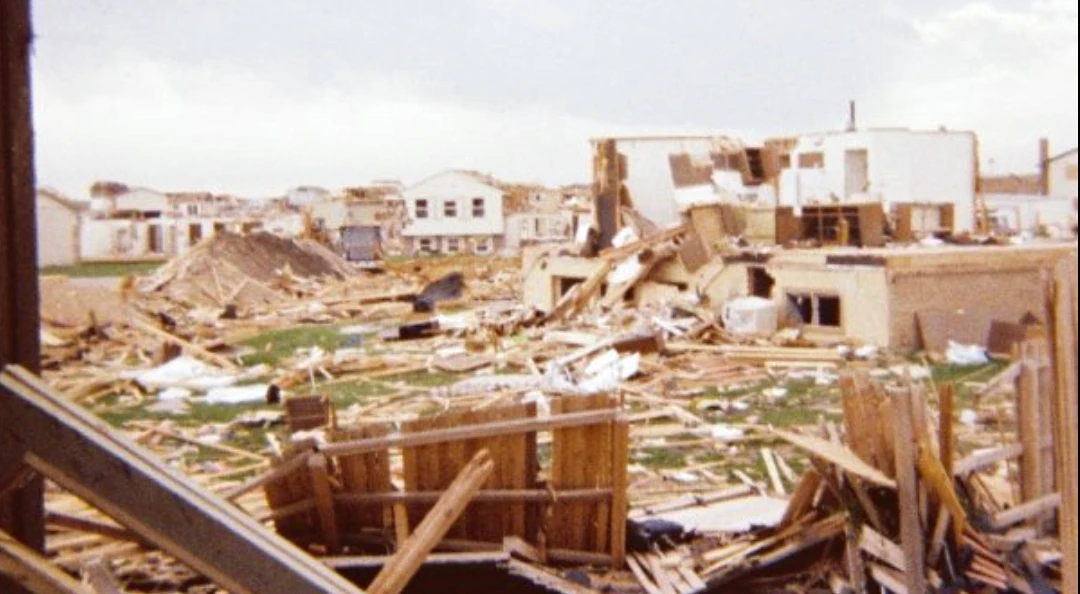
Damage from Cheyenne tornado. (Courtesy, Tom Reed) 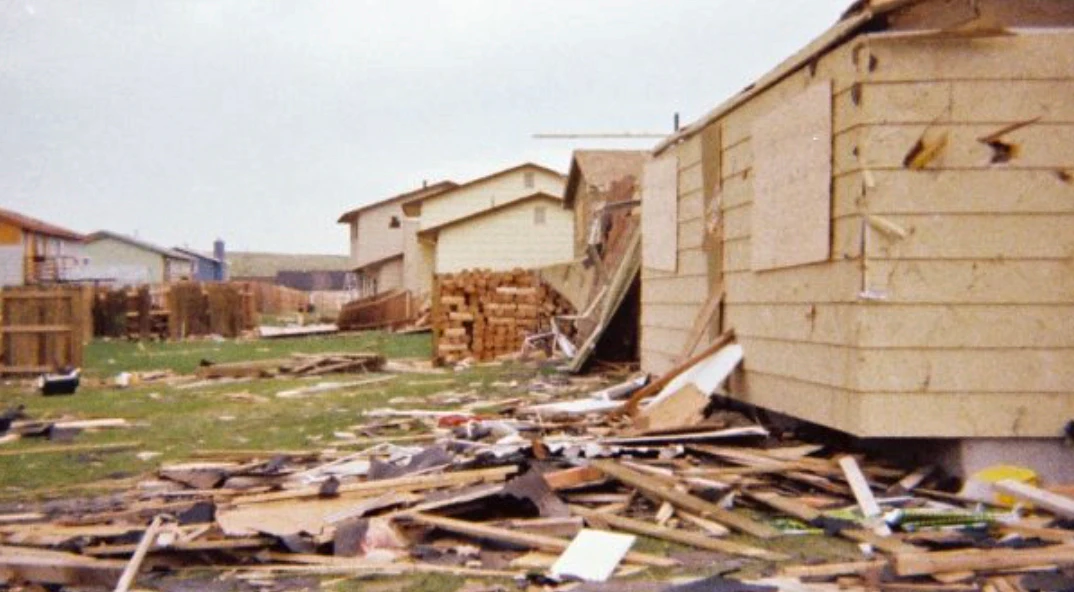
Damage from Cheyenne tornado. July 16, 1979 (Courtesy, Tom Reed) 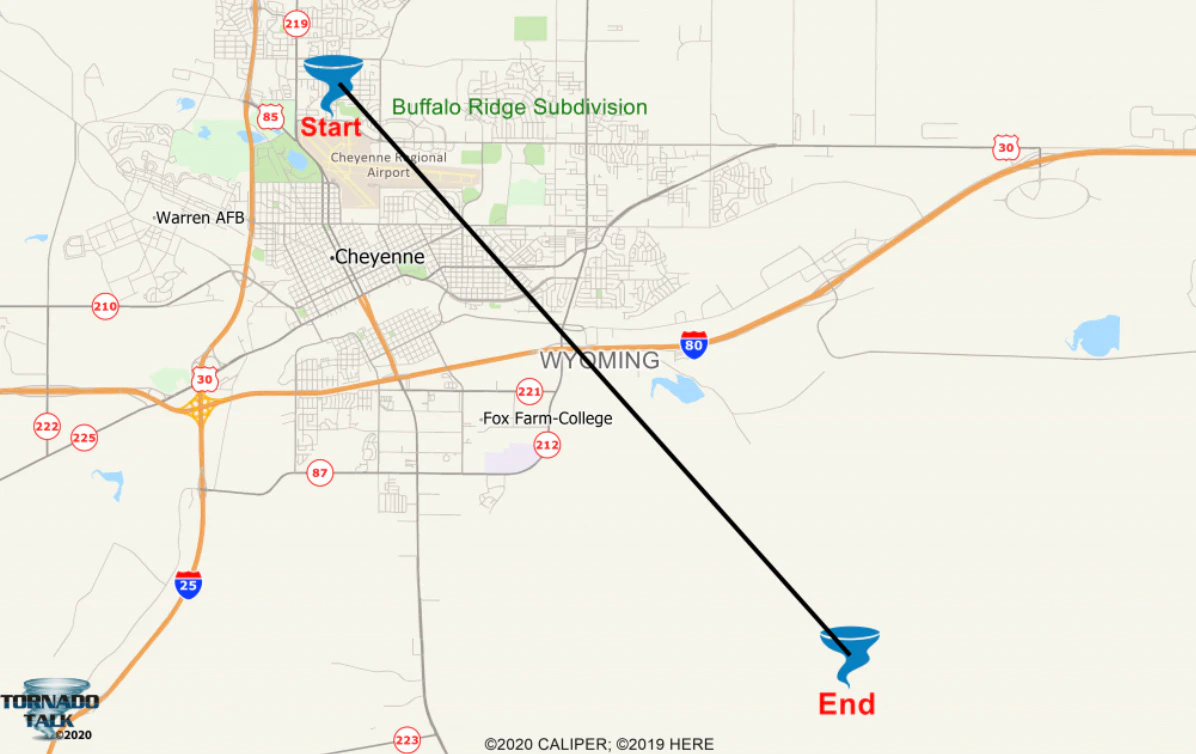
Map of the path of the Cheyenne tornado. July 16, 1979 (Weather Talk)
9-Mile Path Of Destruction
The tornado that touched down was not only rare for the capital city, Cheyenne had never had one within city limits prior to July 16, 1979.
The tornado was officially an F-3, using the EF scale that ranks tornados by damage intensity. But some scientists believe it was even more fierce, an F-4, based on the intensity of destruction it left behind.
The tornado first formed around 3:10 p.m. near the intersection of Vandehei Avenue and Valley View Road. Peak winds were estimated between 136-165 mph.
Its path through the city was 8.8 miles, which it traveled in about 30 minutes.
The massive twister was 80 yards wide, or four-fifths as long as a football field.
It was the most destructive tornado in Wyoming’s history, and it caused one death: 14-month-old David McKinnon, who the Laramie County coroner at the time said died instantly from head injuries when his family’s trailer was ripped apart by the black funnel cloud.
Damaging about 400 homes, including 140 that were destroyed, the total property damage was estimated at $25 million, which is the equivalent to nearly $120 million today.
As people dug through the rubble, called insurance adjusters, and talked to friends and family about their ordeal, one thing about the natural disaster seemed universally described by survivors as miraculous.
How could such an enormous tornado wreaking havoc for such a long time have not killed more people?
‘The Devastation Was Amazing'
“This was my first major crisis,” Don Erickson, Cheyenne’s mayor from 1977-1989, told Cowboy State Daily on Wednesday as he recalled the challenges he faced when the tornado hit the northern part of the city.
“We had to show the community a lot of confidence, that we were doing the best we can,” he said. "And we did. We had a great team.”
Erickson, 89, can vividly describe everything he saw happen the day the tornado hit.
“I was sitting in my office with my risk manager looking through this great big window,” he said. “I thought, ‘My God, it looked kind of weird out there.’ Big black clouds coming around, and I said, ‘Let’s go up on the roof and see what’s going on.’”
Within 10 seconds of arriving on the rooftop, Erickson said that, “There was a big blast north of City Hall. Later on, we found that a transformer over by the governor’s mansion had been struck by lightning.”
Dave Guille, the head of civil defense for the city, called to tell the mayor that a tornado had hit the north side of Cheyenne.
Erickson, who had just dealt with one shock, called Cheyenne Police Chief Byron Rookstool, and together they made a hurried trip to the scene.
“The rescue effort was underway, and the devastation was amazing,” Erickson said. “We were so lucky that people were working and the kids weren’t quite home yet.”
He flew in a National Guard helicopter to see the path of destruction.
“We’re fortunate that the Frontier Mall wasn’t built yet on Dell Range. It would have had a tremendous amount of damage,” he said.
Erickson said Gov. Ed Herschler immediately declared Cheyenne a disaster area.
Erickson said the entire city rallied to help take care of anyone impacted by the disaster. Scores of people opened up their homes to those who had lost theirs.
Esther Howard formed the Interfaith Task Force, which brought local organizations together to coordinate how they could help anyone who needed it.
Erickson resurrected the group when had his next big crisis, which also involved disastrous weather that Cheyenne had never seen before: the Aug. 1, 1985, flood, which killed a dozen people and caused more than $51 million in damage.
He said he took what he learned from the tornado tragedy, and that it helped prepare him for the even bigger disaster.
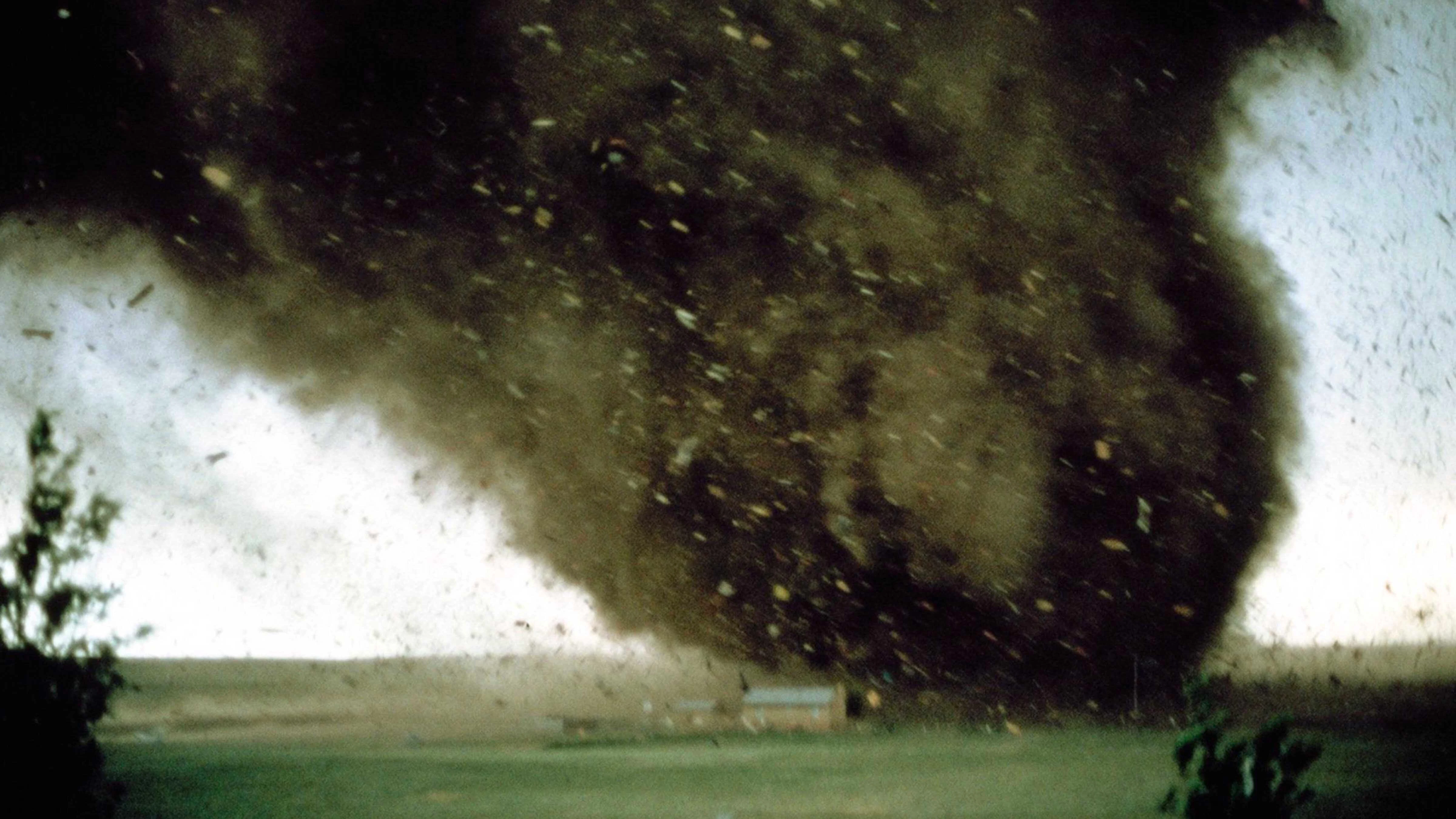
Cheyenne tornado. July 16, 1979 (KYCU-TV, Cheyenne.) 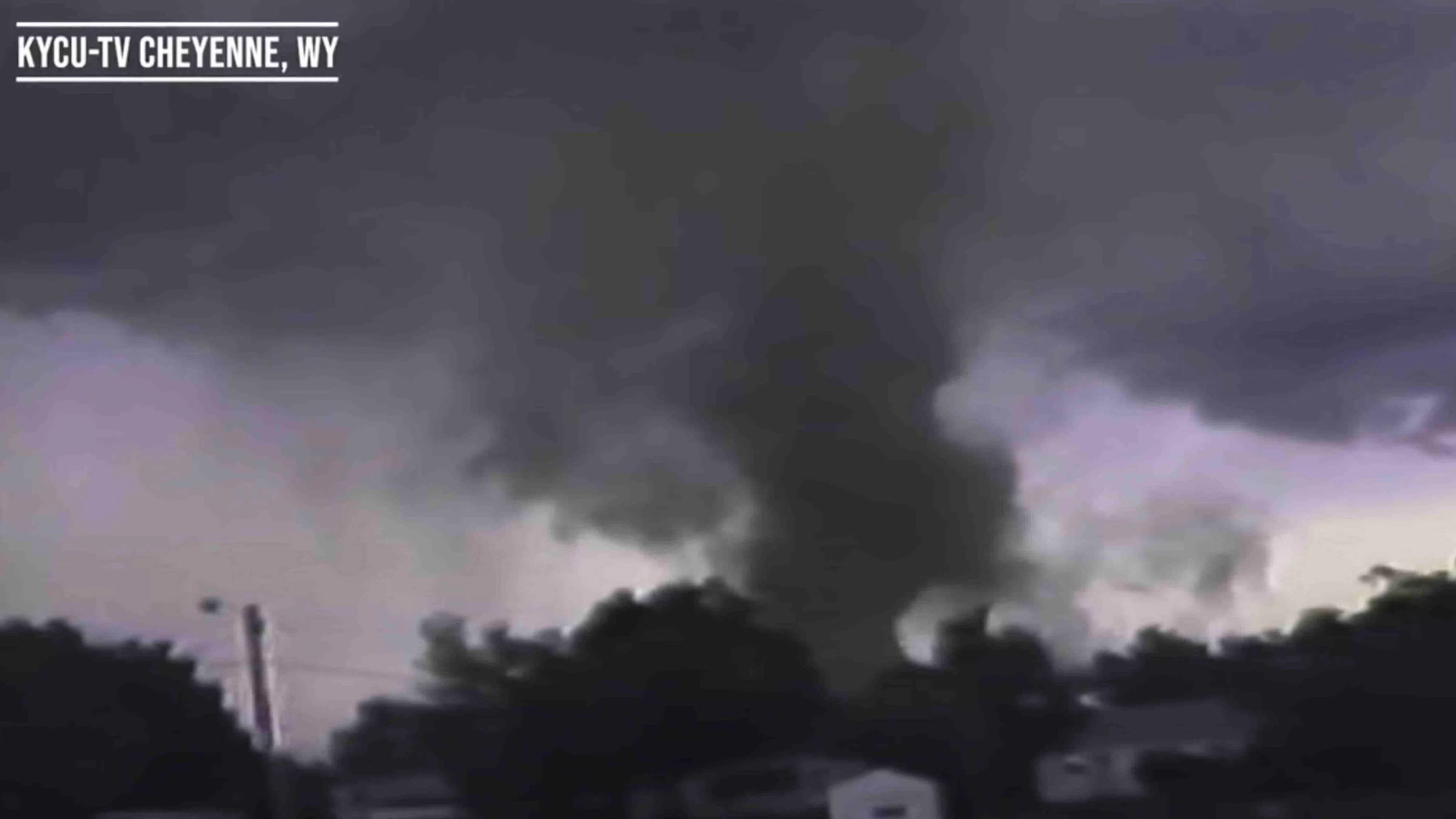
(Cowboy State Daily Staff) 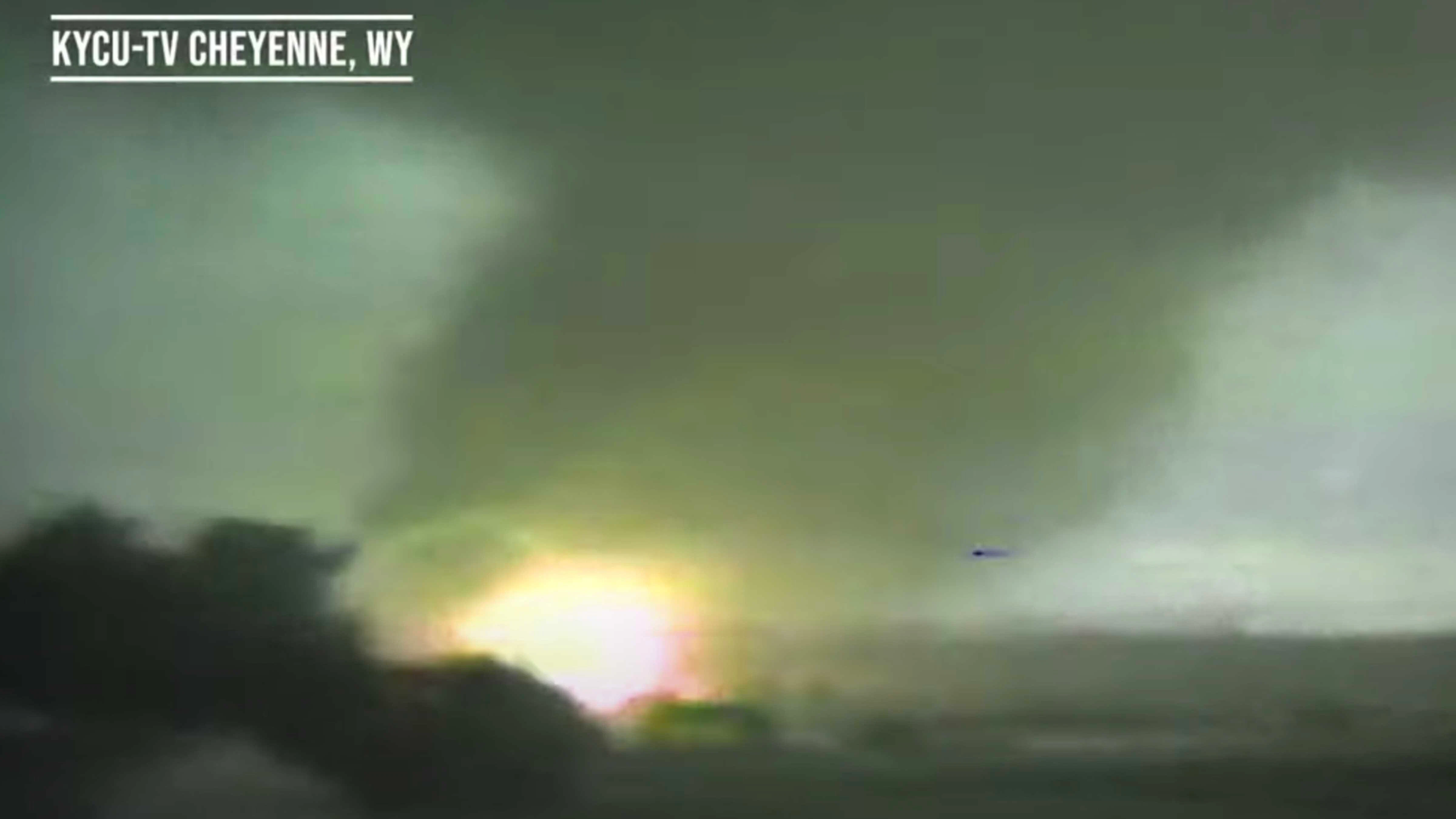
Cheyenne Tornado July 16, 1979 (KYCU-TV, Cheyenne)
Lucky For Him
Tom Reed was a high school junior spending the summer of 1979 working for a construction company that was putting the finishing touches on a new house in his Buffalo Ridge neighborhood.
On the afternoon of July 16, he was the last person at the site, cleaning it up so the house would be ready for the family that would move in soon.
He went across town to do the same thing at a house on the south side. That’s when he looked north and spotted the tornado.
“We were up pretty high so we could see it across town,” Reed said. “At first I thought it was a fire, but then I saw it move and realized what it was.”
He made another stop at the construction company, where someone told him that a twister had been heading right through his neighborhood. He raced home, but had to walk part of the way because of all the debris covering Roundtop Drive.
He said he spotted his mother, Becky Reed, outside their now heavily damaged ranch-style home doing what everyone else in the neighborhood was doing: trying to assess the damage and figure out what in the world to do next.
Some people were looking for their pets, but his family dog was inside, unharmed.
Reed said that unlike some of their neighbors whose two-story and multi-level homes were severely damaged, with roofs blown completely off, the Reeds’ single-level house was still standing.
“The roof was kind of peeled back from where it met the west wall,” he said. “If you looked up in the family room you could look straight up to the sky.”
Reed said a lot of windows were broken, and the strong winds blew open the refrigerator door and the contents were tossed all over the house. The hallway walls were covered with ketchup and mustard.

‘The House Was Just Gone’
But unlike about 1,000 other Cheyenne residents, the Reeds weren’t homeless that night.
In fact, they never left. He said he and his father, Tom Reed Sr., who also worked for the same construction company, fixed everything themselves over time.
Reed, who has spent the last 30 years working for ESPN and living in Connecticut, talked to Cowboy State Daily on Wednesday from Dallas, where he’s on vacation. He’s headed to Cheyenne for Frontier Days.
Once he found that his mother was shaken but not hurt, Reed walked to the construction site he had left only an hour before.
“The house was just gone,” he said. “There was nothing left but the foundation, and the furnace and a few other mechanicals in the basement. Not a stick of the house was left.”
Reed said it took him a while to process the scene. Talking about it 47 years later leaves him amazed and grateful that he got out of the area in time.
“If I’d stayed a little longer, I would have been hiding in that basement,” he said.
Reed’s mother had been home alone working on her sewing machine when she heard the wind and realized some of the windows were open. When she looked out, she was staring at the tornado headed straight for her.
Becky Reed and the dog made it to the basement, where they went to her son’s room and pulled the mattress over them. She heard the sounds of destruction all around her as the twister plowed into homes.
“When she thought it was over, she went upstairs and out to the porch, only to see the tornado roaring past her,” Reed said. “She told us later she thought, ‘I might have jumped the gun a little bit.’”
Reed said he’s still bewildered by what transpired that day, seeing some houses look untouched while their next-door neighbors’ homes were reduced to piles of rubble.
Then he remembered something he said he hadn’t thought about for a long time.
“We had a coffee maker on the kitchen counter, with a pitcher and a panhandle with a metal ring around it,” Reed said. “The coffee maker was gone, but we found the handle out in the front yard. Sitting right next to it was a little dish that had $50 under it. That was just bizarre.”
Kerry Drake can be reached at: Kerry@CowboyStateDaily.com


