
There’s cause for Wyoming wildlife advocates to celebrate — and be frustrated — as one major wildlife crossing project is running ahead of schedule, while another remains stalled by a lack of federal money.
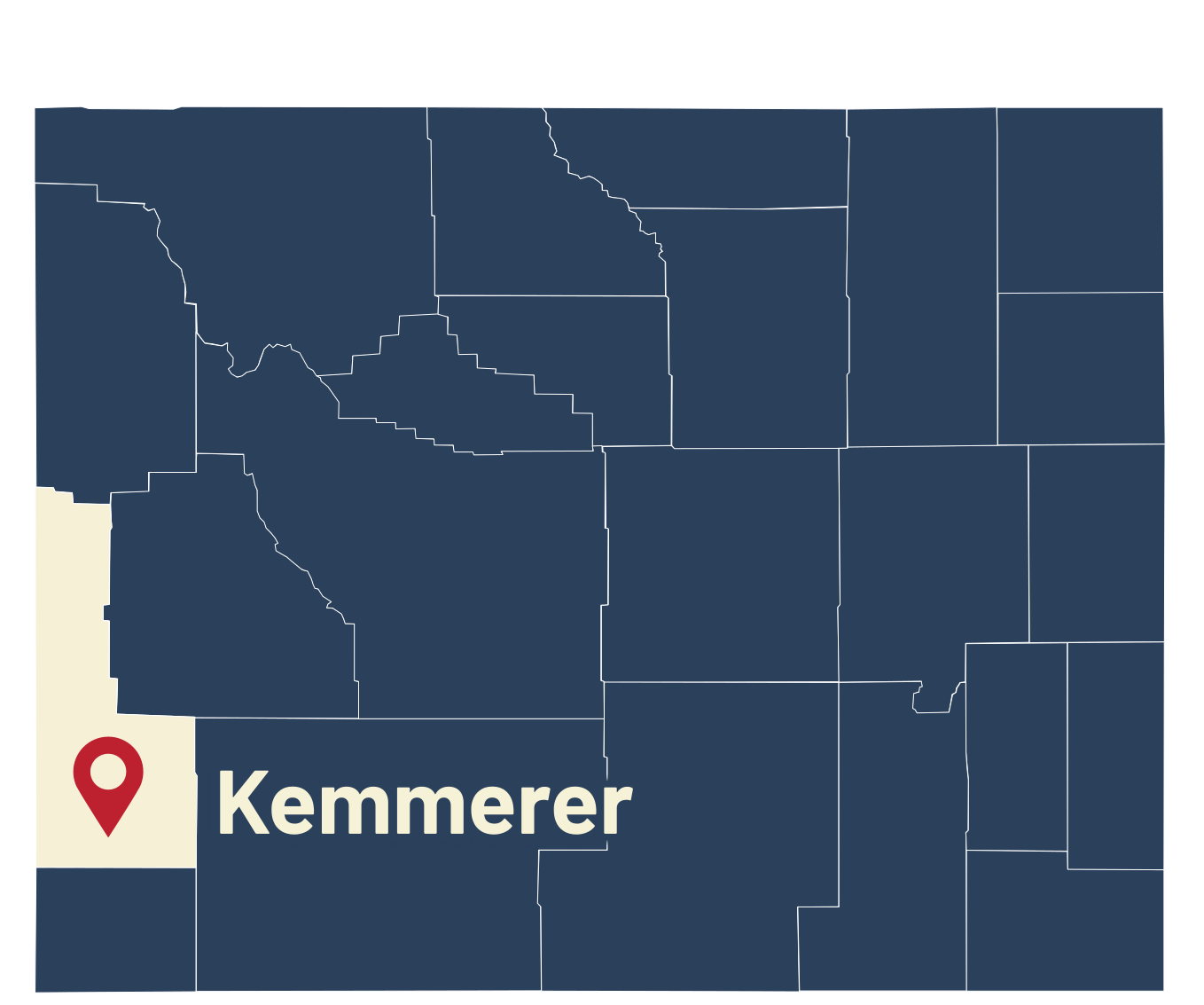
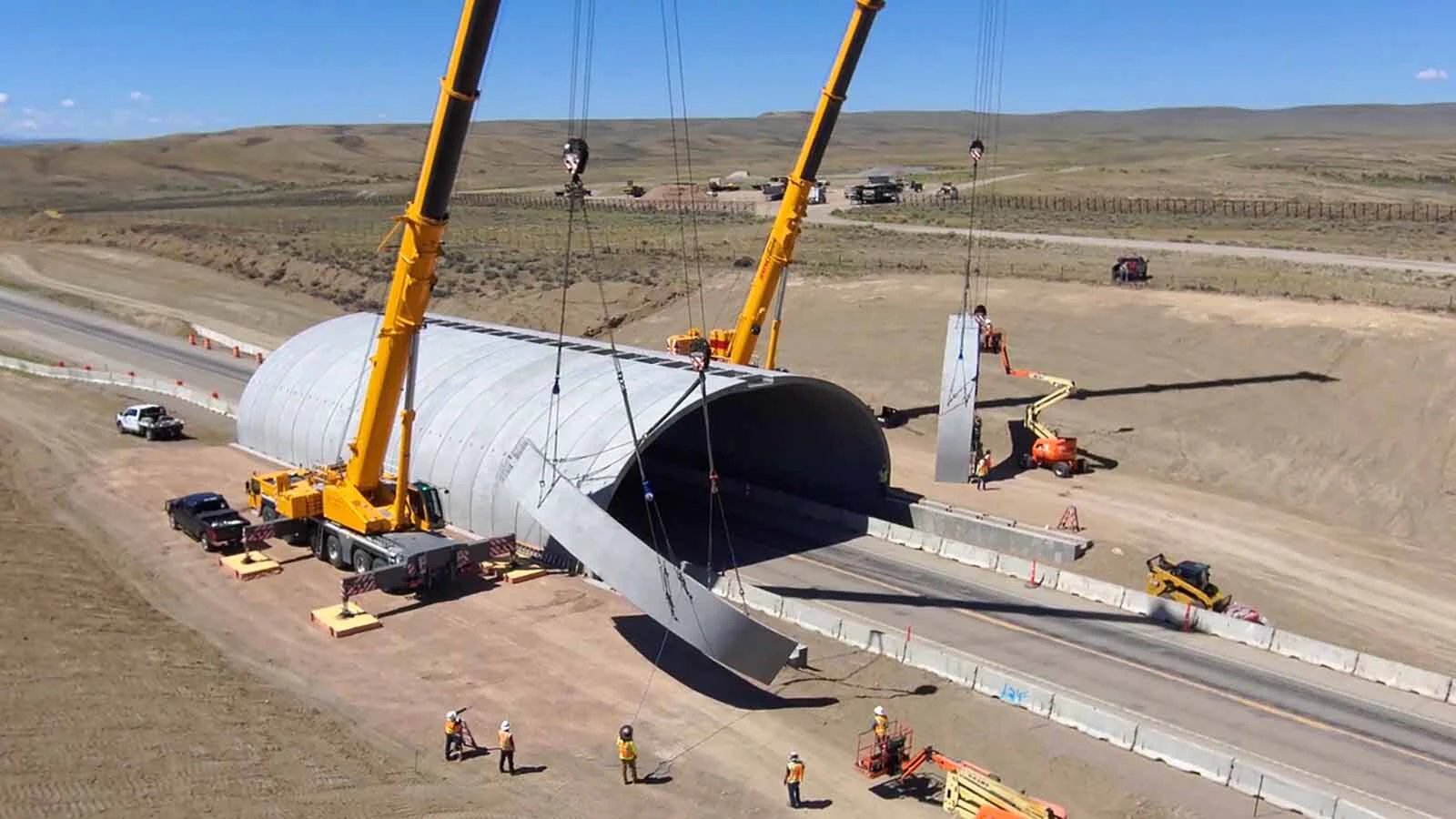
Work began this spring on a roughly $30 million wildlife crossing project that will go over U.S. Highway 189 near Kemmerer in what’s been called a “messy death zone” for mule deer and other animals.
That project was initially expected to be finished in late 2028. Now, the completion date is Oct. 31, 2027, about a year ahead of schedule.
Meanwhile, what conservationists say is an equally urgent crossing project along U.S. Highway 26/287 near Dubois remains on indefinite hold after failed efforts to snag federal funding.
About $2.6 million in private donations have been raised for that project, and some state money might also be available.
However, an estimated $16 million in federal grant money is needed to meet the roughly $28 million budget.
The plan is to build three wildlife underpasses and an overpass along a 25-mile stretch of Highway 26/287, where hundreds of mule deer are killed every year.
It was hoped that construction could begin there in 2027, but with funding still not secured, that might not be possible.
WYldlife Fund Vice President Breanna Ball told Cowboy State Daily that her group and others are determined to see the project through.
But it’s in a crowded field of requests for federal money.
“There are needs for wildlife crossings all over the West, and even across the country, so there is lots of competition (for grants),” she said.
Saving Wildlife Near Kemmerer
The project on Highway 189 involves a 30-mile stretch between Evanston and Kemmerer, where traffic has taken a heavy toll on mule deer, elk and pronghorn.
It will include seven wildlife underpasses, an overpass and 63 miles of 8-foot-tall deer fence to help guide wildlife to the safe crossings, according to the Wyoming Department of Transportation.
The highway there cuts through a vital migration route for the Wyoming Range mule deer herd, considered by hunters to be among the most prized of Wyoming’s wildlife.
The herd typically spends the summer and fall in the Wyoming Range mountains, and then winters on the vast flats between the Wyoming Range and Wind River mountains.
Along U.S. 189, state Game and Fish officials say an average of 80 deer-vehicle collisions are reported there annually, although that number is likely underreported.
Holding Out Hope For Dubois
The Dubois project would help secure a vital migration route for mule deer between summer range in the Grand Teton area, and winter range on the Wind River Indian Reservation.
“WYDOT did submit for a federal BUILD grant for the Dubois wildlife crossing project design work, and while the agency was awarded two BUILD grants in this cycle, the Dubois project was unfortunately not one of the winning awards,” agency spokeswoman Jordan Young stated in an email to Cowboy State Daily.
“WYDOT's grant writers will continue to submit the project for any eligible federal grants. Since we are pursuing grants for design work, we have no expected date for construction,” she added.
Ball said that the WYldlife Fund will keep trying to raise private donations to go toward engineering costs for the Dubois crossing project.
If detailed engineering plans for the project were available, it could greatly increase the chances of landing a federal grant for construction costs, she said.
‘Blinding Flash Of The Obvious’
Retired Game and Fish habitat manager and wildlife biologist Walt Gasson told Cowboy State Daily that seeking federal grants can be frustrating.
“It’s hard to convince some people, and sometimes those people hold purse strings,” he said.
There should be no doubt that the Dubois wildlife crossings are needed, Gasson said — not only to spare wildlife, but also for human safety.
“I can’t count the number of times I’ve had near-misses with deer between Dubois and Burris, especially at night,” he said.
Protecting wildlife also protects Wyoming’s economy, Gasson added.
“This is most assuredly not just a ‘feel good’ project,” he said. "This is about what Wyoming’s people bring to the table for the country, and that’s free-ranging wildlife."
“The easiest thing to see is dead critters. What you don’t see is loss of revenue to communities like Dubois. What is Dubois’ claim to fame? Wild things in wild places.”
The key will be getting federal grant managers to see things that way, he said.
“It’s hard to convince somebody who doesn’t understand Wyoming and our reliance on the tourism economy,” he said.
Given the factors of economy, wildlife protection and public safety, the need for the Dubois crossings should be “a blinding flash of the obvious,” he said.
Mark Heinz can be reached at mark@cowboystatedaily.com.


