
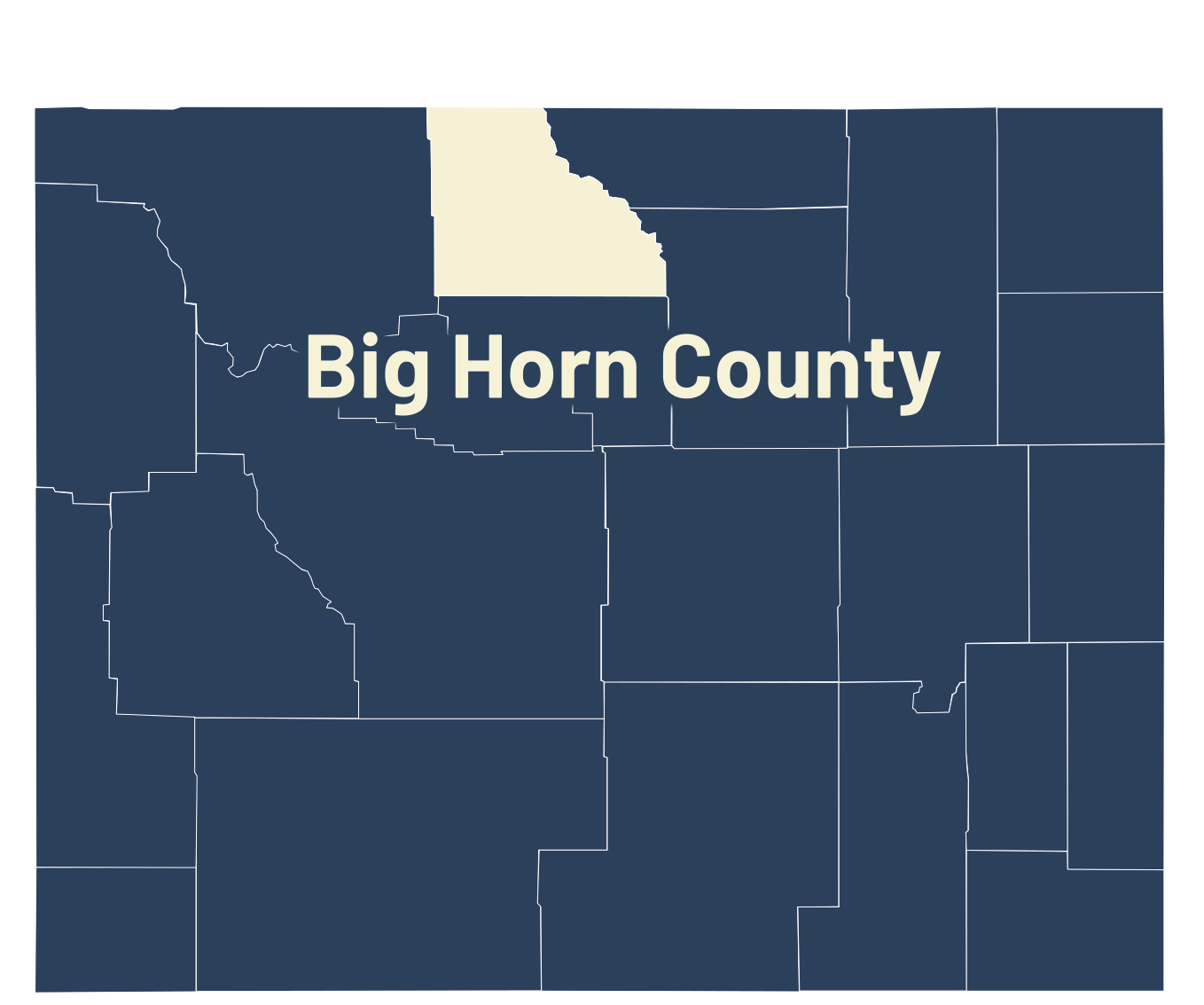
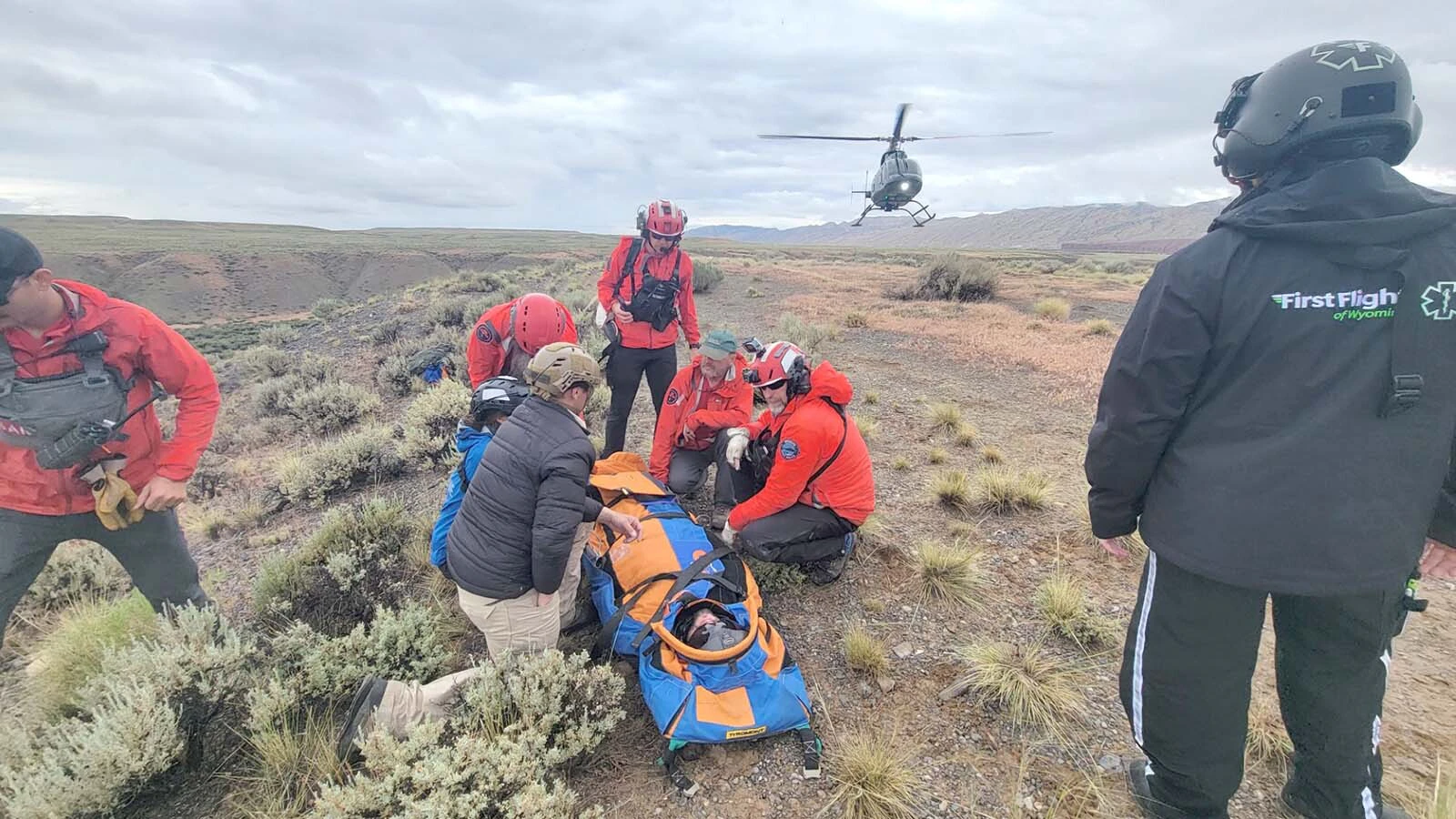
Big Horn County Search & Rescue has become one of Wyoming's busiest volunteer emergency organizations at the same time its funding has been cut nearly in half.
Last year, the team responded to 55 rescue calls – almost four times its historical average of about 15 – making it second only to Teton County in call volume. This year, volunteers have already answered 40 calls and are on pace to surpass last year's record.
Yet the organization's county funding dropped from about $106,000 to $50,000 after property-tax reductions squeezed county budgets.
"We lost a lot of money," Big Horn County Search & Rescue Coordinator Jeff Schmidt told Cowboy State Daily from Colorado, where he was helping fight a wildfire.
Additional property-tax reductions being debated by Wyoming lawmakers could tighten those finances even further, he said.
"As call volume goes up, we just have to have more people doing these things," Schmidt said.
Big Horn County Sheriff Jason Beal said county leaders are doing what they can despite increasingly difficult financial realities.
"We're navigating a very tight, very critical budget," Beal said.
A Small County With Big Demands
The challenge facing Big Horn County is unique.
Although only about 12,000 people live in the county – which ranks among Wyoming's lowest for median family income – nearly 1 million visitors travel to or through it each year.
Search and rescue volunteers cover more than 3,100 square miles that range from desert badlands to towering alpine peaks, caves and swift mountain rivers.
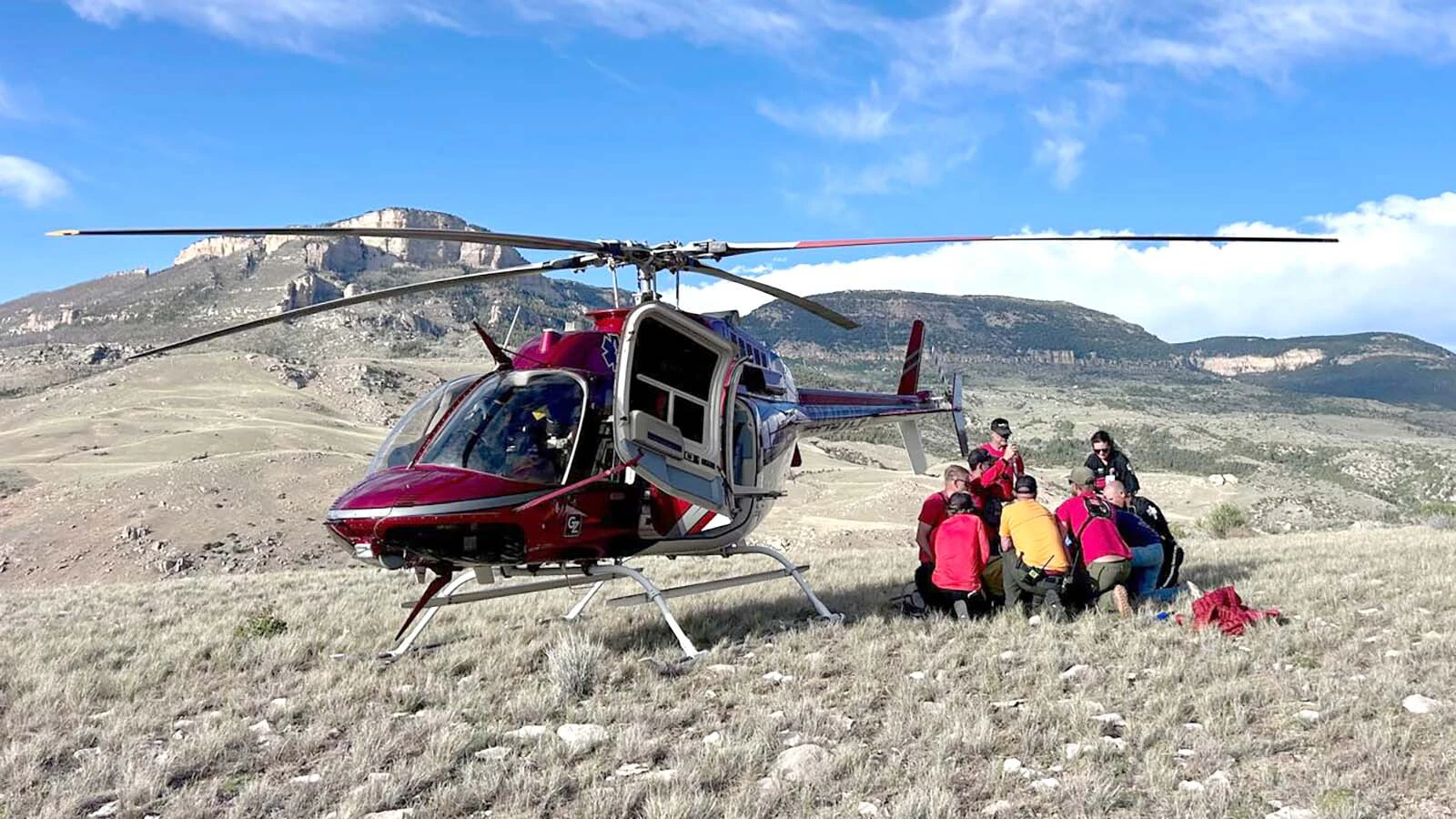
Three major highways – U.S. Highways 14, 14A and 16 – cross the Big Horn Mountains, carrying thousands of tourists to and from Yellowstone National Park each summer, Beal said.
That variety means volunteers never know what type of rescue they'll face.
One call might involve recovering an injured horseback rider deep in the wilderness. Another could require rescuing stranded climbers from vertical cliffs, navigating caves or performing swift-water rescues during spring runoff.
"We run high-risk missions all the time," Schmidt said. "We have to have tons of training."
Training Comes At A Price
Preparing volunteers for those rescues isn't cheap.
Big Horn County certifies volunteers in high-angle rope rescue, swift-water rescue, cave rescue and other specialized disciplines.
The foundational wilderness rescue course alone requires about 80 hours of training on volunteers' own time and costs roughly $2,000 per person.
Ideally, Schmidt said, the organization would spend $30,000 to $40,000 annually on training alone.
Instead, it has to fund its training from the $50,000 yearly operating budget.
The county also contains more than 200 known caves, adding another layer of technical expertise many search-and-rescue teams elsewhere never need.
Tourism Changes The Mountains
Schmidt said he has watched the backcountry transform over the past several years.
Before the COVID-19 pandemic, he said it was unusual to encounter more than a couple dozen people above 11,000 feet in the Big Horn Mountains.
Now, he routinely sees hundreds.
He attributes much of that increase to outdoor recreation becoming more popular during the pandemic, combined with social media showcasing spectacular mountain scenery.
"People post all these beautiful pictures on social media," he said. "But they don't say, 'Be careful. The mountain really doesn't care what happens to you.'"

A Search Unlike Any Other
The team's growing workload reached its peak almost exactly one year ago.
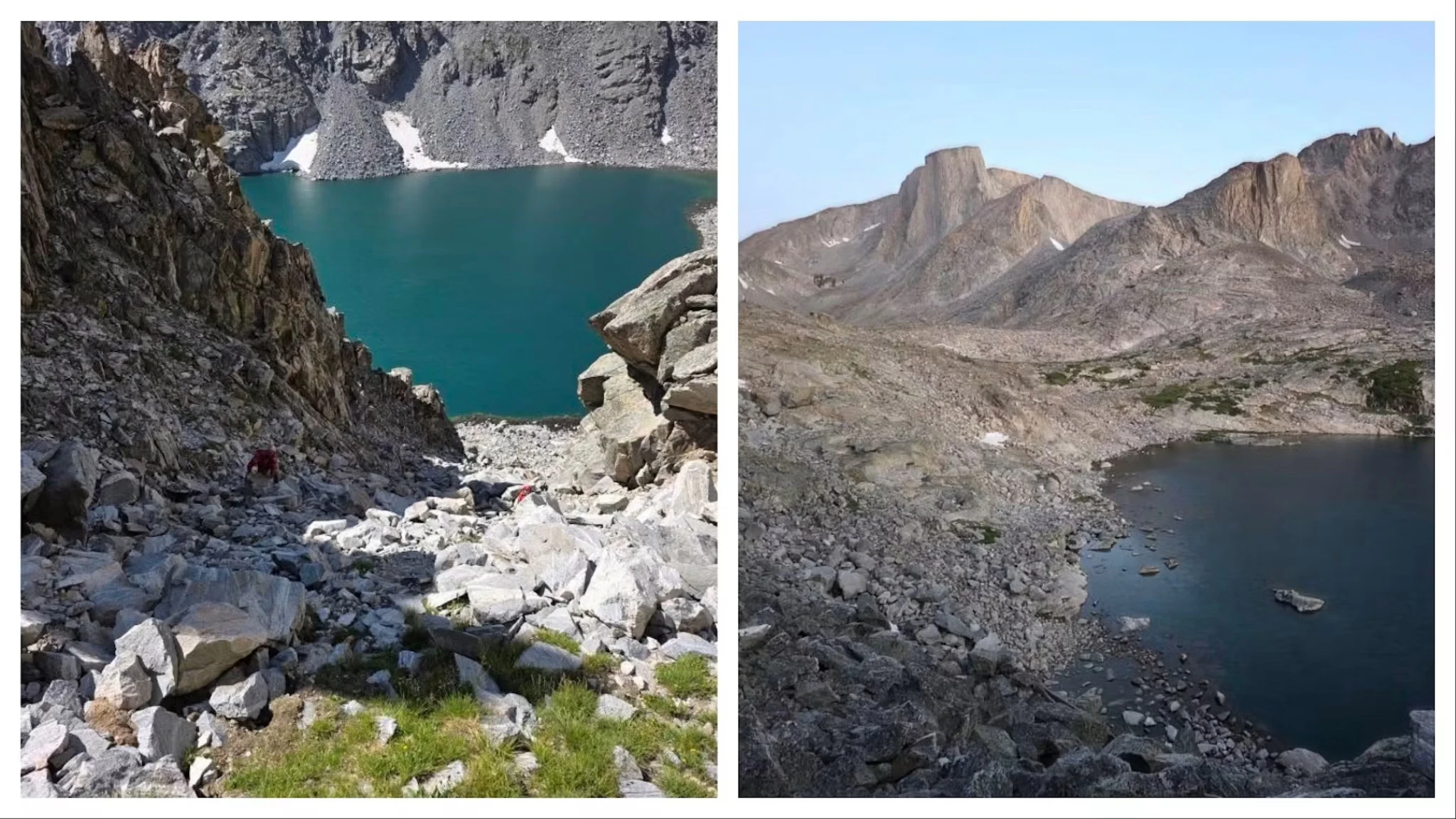
In August 2025, Big Horn County Search & Rescue launched what Schmidt believes might have been the largest operation in the organization's history after 38-year-old Minnesota hiker Grant Gardner disappeared after summiting Cloud Peak alone.
The call came in Aug. 1 — already the team's 31st rescue of the year — but Gardner likely had disappeared several days earlier.
At first, rescuers knew only that he had climbed Cloud Peak.
Finding him meant searching miles of rugged alpine terrain, including enormous boulder fields riddled with countless crevices where a person could disappear.
"There are literally hundreds of thousands of holes you could drop into," Schmidt said.
The mountain's steep terrain complicated every aspect of the operation.
Much of Cloud Peak is bordered by sheer cliffs, making it impossible for search teams to simply hike the 11 to 15 miles in and out.
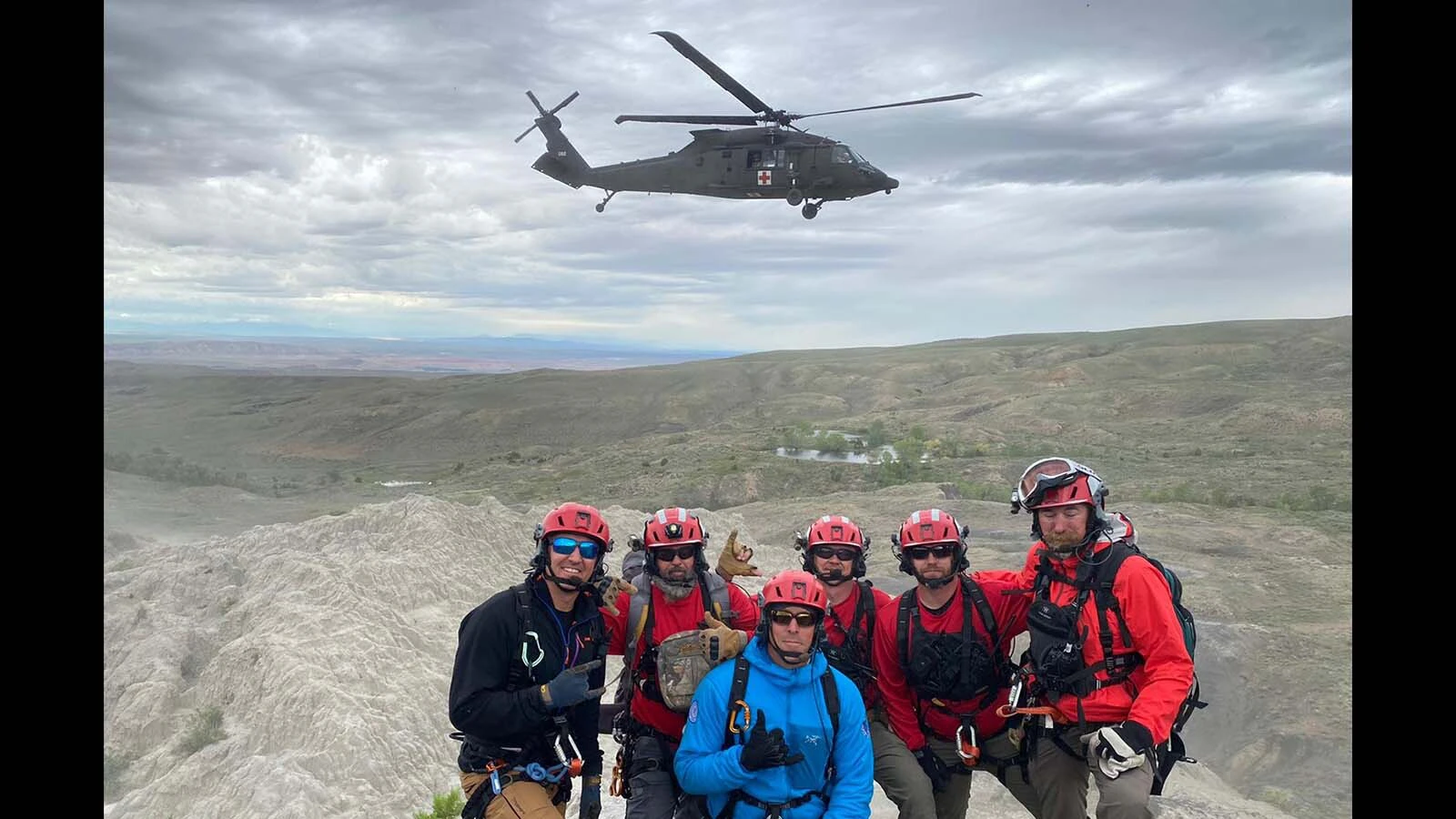
Helicopters frequently inserted exhausted crews onto the mountain and later flew them back after long days covering terrain.
Grant’s remains were found Aug. 27.
The 29-day search involved more than 220 helicopter flights, five aviation companies, specialized dog teams and assistance from Teton County Search & Rescue.
Volunteers logged more than 1,300 hours.
Even with a volunteer team, the mission cost Big Horn County about $60,000 – more than the organization's entire current annual budget.
Officials estimated replacing the donated volunteer labor and partner agency assistance with paid resources would have cost roughly $1.7 million.
"There was just a huge amount of resources used on that mission," Schmidt said.
Searching For Help
Despite the financial strain, Schmidt said volunteer morale remains strong.
"We've been very fortunate to have a group of young, strong people fit for backcountry hiking," he said. "Some run their own businesses and sacrifice the time."
Volunteer Morgan Dufort has increasingly shifted into fundraising as equipment needs continue to grow.
The organization needs additional rescue gear, technical equipment, training money and vehicles, Dufort said.
"Our south location has one working truck," Dufort said.
That truck carries nearly all of the specialized equipment needed for rope, cave and swift-water rescues.
"If four volunteers respond and rescue two people, they can't fit everyone and all the gear in the truck," Schmidt said. "It would be much better if we were able to split that gear to more than one vehicle."
Those needs helped earn Big Horn County Search & Rescue a spot as one of five finalists nationwide in the 2026 Land Rover Defender Service Awards.
The winning organization will receive a customized Land Rover Defender 130 SUV along with a $30,000 cash award.
The vehicle seats eight people, can tow up to 9,000 pounds and would allow rescuers to carry both additional personnel and specialized equipment deeper into the backcountry.
"It'll just go more places," Schmidt said. "Everywhere we go with our side-by-side, we could just take the Defender."
Competing For New Vehicle
Public voting for the award continues through Aug. 14. Big Horn County Search and Rescue is contending with Custer County Search & Rescue in Custer, South Dakota, along with search-and-rescue organizations in Tampa, Florida, McLouth, Kansas and Rancho Cucamonga, California.
At the Old Shell Store in Shell, Emily Clark taped a flyer announcing the competition on the counter next to the cash register.
“I’m telling everyone they’ll get a free cookie if they vote,” Clark told Dufort.
Dufort said she hopes the competition also brings to light that one of Wyoming's busiest search-and-rescue organizations is operating with fewer resources than ever.
"Ninety-nine percent of the time, the people we talk to in our communities don't know that the organization is under-funded," she said. "If they don't know, they can't help us."
Still, she said, the volunteers never hesitate when the pager goes off.
"The calls don't stop because the budget gets smaller," she said. "We still have a job to do."
Kate Meadows can be reached at kate@cowboystatedaily.com.


