
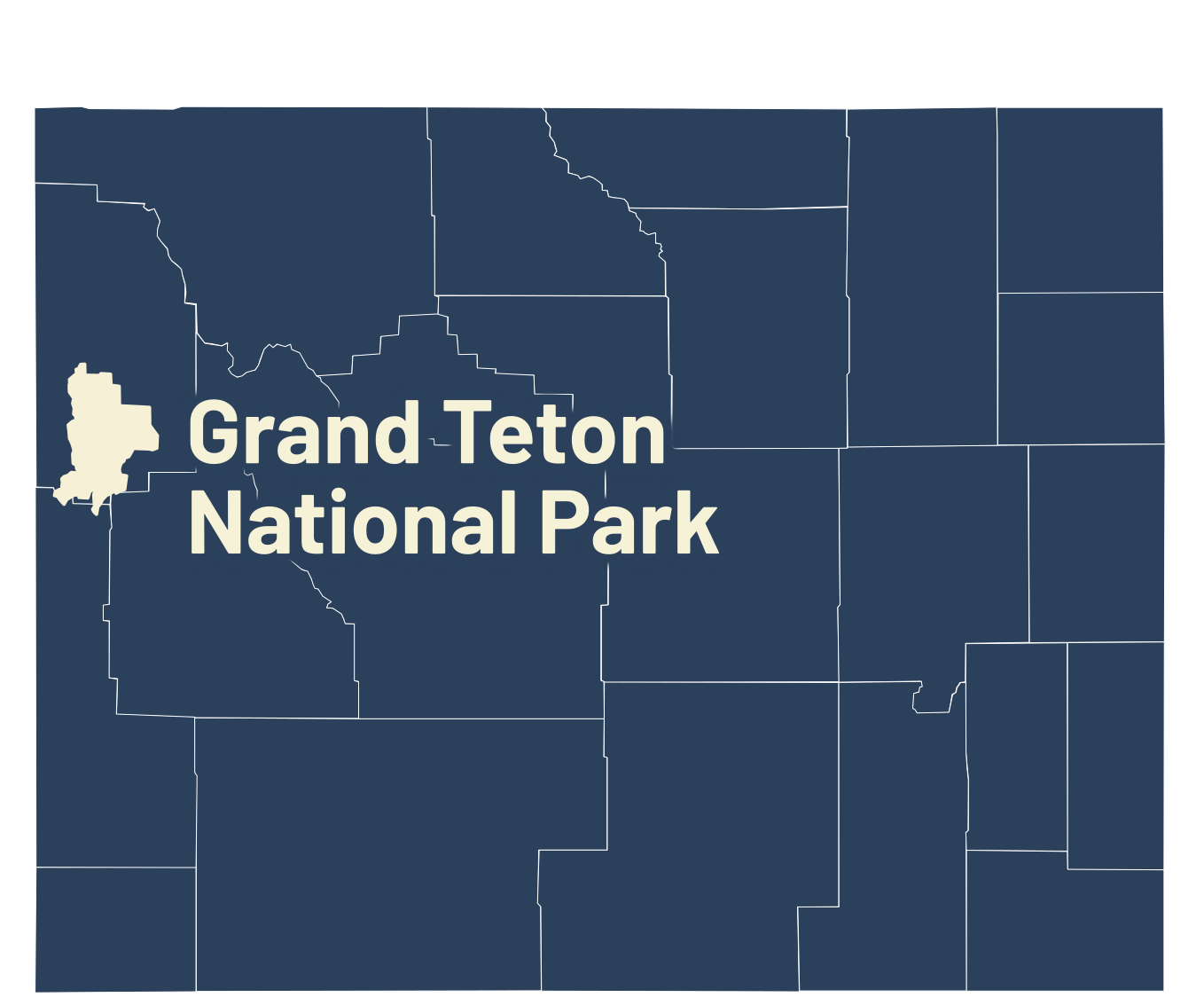
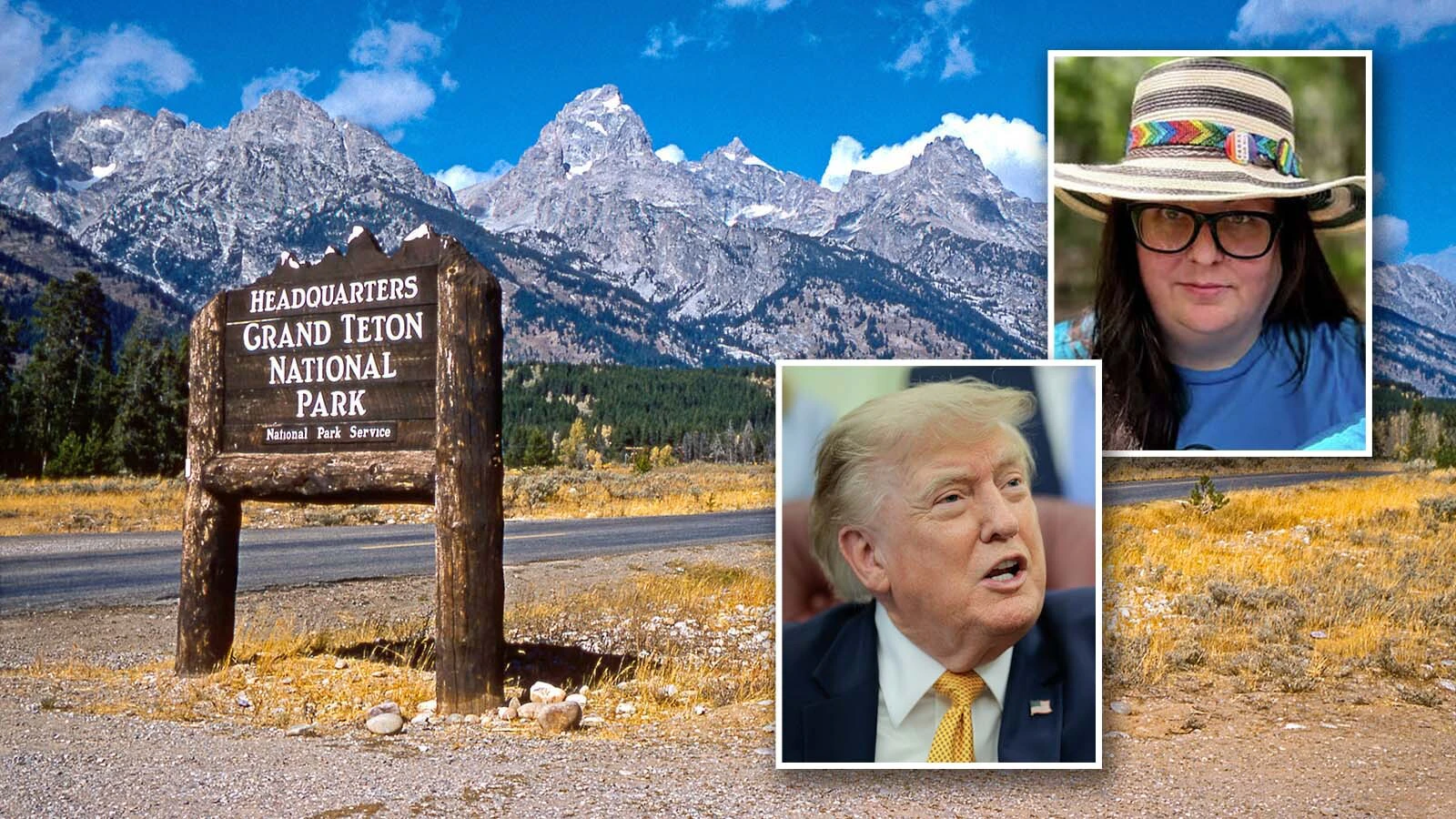
The removal of a placard mentioning a massacre of Native Americans from the Grand Teton National Park's Craig Thomas Discovery and Visitor Center is an example of censorship by the Trump administration, says a former Park Service ranger who quit in protest over similar decisions across the country.
In April, Melissa Dalley left her job at the Martin Van Buren National Historic Site in New York and joined the Resistance Rangers, a group of current and former Park Service personnel opposed to Trump’s policies related to sites managed by the Park Service.
She also helped form America 443+, an anti-censorship group named in reference to the Park Service's 433 sites around the country.
She was in Yellowstone and Grand Teton national parks July 21-27 on a family vacation but also to spread her message.
“We’re not advocating for any action or any political candidate; we’re saying (to park visitors), ‘You deserve to have the whole story,’” including parts that the Trump administration apparently doesn’t like, she said.
Richard Jones, a rural Park County resident and retired Forest Service and Park Service ranger, has a different view of the administration’s actions.
He said he thinks Trump and U.S. Interior Secretary Doug Burgum are trying to set right the Park Service’s historical mission after years of “woke” misguidance.
“I’m certainly happy to see the Trump administration ask for these things in parks, look at them with another eye, and maybe get rid of things that aren’t really part of the story,” Jones told Cowboy State Daily.
Controversial Order
The controversy traces back to Trump’s March 2025 executive order titled “Restoring Truth and Sanity to American History.”
It called upon the Park Service to remove or revise exhibits, signs and educational materials that the administration deemed negative toward the United States by promoting “false revision of history.”
Burgum followed up in May 2025, directing implementation of the policy. That included reviews and QR codes calling for public complaints about “negative” material.
On June 12, U.S. District Judge Angel Kelley blocked the administration’s policy and ordered the restoration of dismantled signs and exhibits within 21 days.
The administration filed an appeal shortly after the ruling to block the mandated restoration.
Chilling Effect
Dalley said that while she was still working for the Park Service, personnel were ordered to document displays or signs that might be deemed inappropriate under the executive order and send that information up the Interior Department chain of command.
She said that was mostly done quietly until somebody leaked the database of inappropriate material.
Dalley said she started tracking the censorship herself and noticed a chilling effect among Park Service employees.
She said when it got to where she felt she was being asked to lie to the public, she quit in protest.
“I do hope to go back, and plan to go back to the Park Service after this administration,” she said.
She said current employees have reached out to her and reported terrible morale in the Park Service.
She added that when she was in Yellowstone and Grand Teton, she didn’t pry into park employees’ feelings and opinions because she didn’t want to put them in an “uncomfortable position.”
‘Ghost Of The Sign’
Dalley said that, to her knowledge, when the call went out to the Park Service for an inventory of problematic material, Yellowstone “had nothing to report.”
However, the placard in the Grand Teton visitor center was deemed inappropriate and removed, she said.
It mentioned 19th-century explorer and U.S. Army officer Gustavus Cheyney Doane.
Doane was remembered for the 1870 Washburn-Langford-Doane expedition to the Yellowstone region, which helped lay the groundwork for the national parks.
The placard also mentioned Doane’s involvement in the massacre of Piegan Blackfeet people near the Marias River in Montana on Jan. 23, 1870. Soldiers killed 173 to 200 Native Americans.
Doane is said to have bragged about his involvement in the massacre.
“In the visitor center, you can still see the ghost of the sign,” or the place on the wall where the placard was mounted, Dalley said.
During her visit, Dalley said she handed out printouts depicting the placard before it was removed and invited people to have conversations about it.
“The Blackfeet are still around, they are active and they are American citizens, they deserve to have their story told along with everyone else,” she said.
She hopes that her actions can “inspire other people” to start pushing back against censorship.
‘Minor, Irrelevant And Derogatory’
Jones said he doesn’t consider actions such as removing the Doane placard to be censorship.
Rather, the Trump administration is trying to restore the Park Service’s mission of preserving history directly relevant to national parks and other sites.
“The Park Service was always one of the best agencies for interpreting the history of each area,” he said.
However, he said he thinks that over the past decade or so, other material has been added to historical accounts to push a “woke” narrative.
Materials such as the Doane placard added details that were “minor, irrelevant and derogatory to the story that was being told,” he said.
Mark Heinz can be reached at mark@cowboystatedaily.com.


