
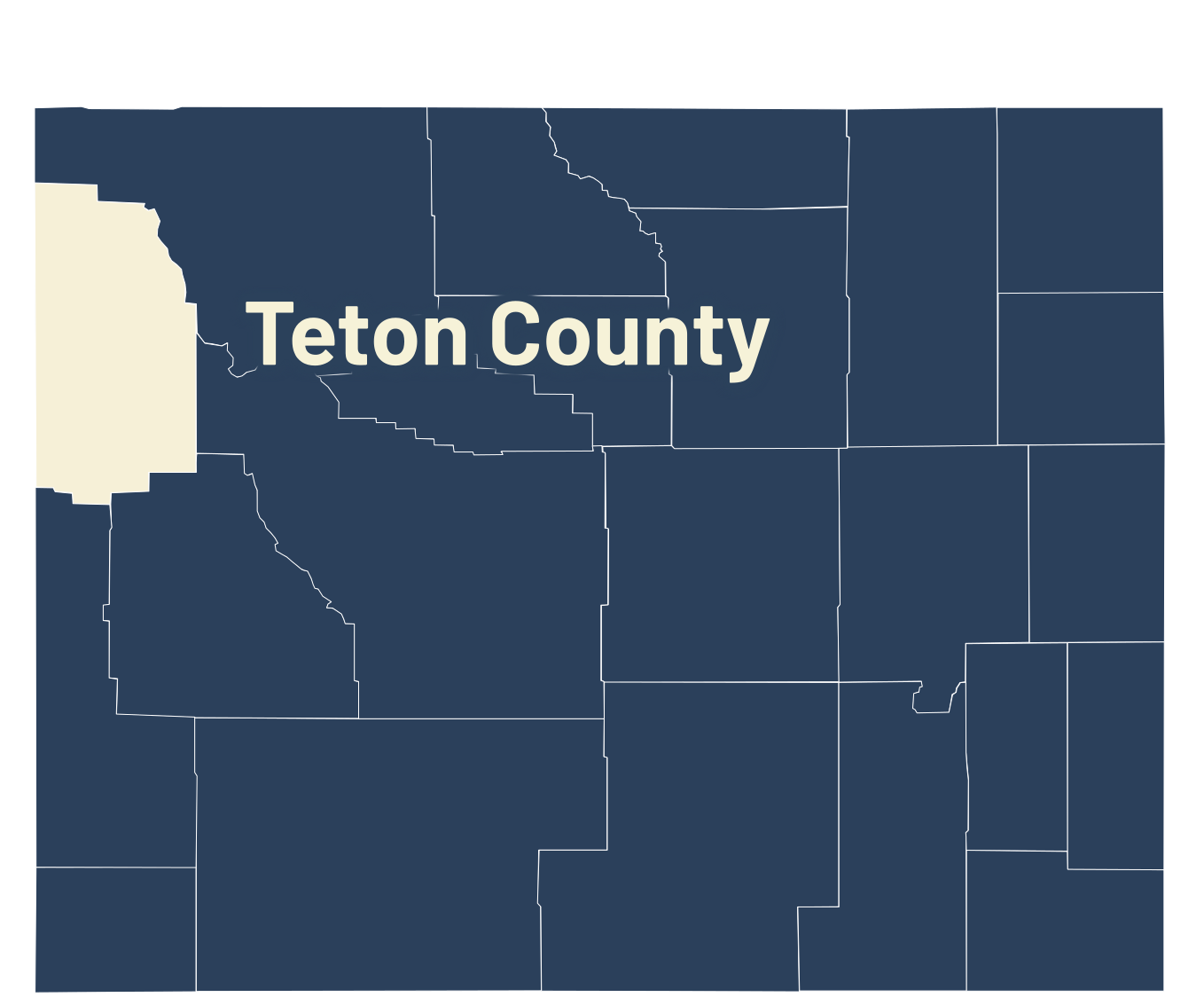

Jackson Hole isn’t the first place most people think of for a wrestling match, but that’s what is about to quietly unfold in Teton County over the next few weeks.
Two events, one week apart, will place opposing visions of money within the same valley.
While the two opponents won't share the same stage, they will feature opposing visions of money within the same valley. And each will host different sets of financial titans — neither of which are likely to pull any punches.
First up is the Wyoming Blockchain Symposium, Aug. 17-20, an invitation-only, three-day gathering in Teton Village that will draw 500 billionaire founders, institutional investors and top-tier policymakers for what amounts to a digital-asset Davos.
The guest list includes top-level regulators such asSEC Chair Paul Atkins and billionaire CEOs such as Ripple CEO Brad Garlinghouse, Galaxy’s Mike Novogratz and BitGo’s Mike Belshe. Venture capital titans such as Morgan Stanley head of Emerging Markets Amy Oldenburg, Nasdaq senior executive Kevin Kennedy, and Skybridge Capital Managing Partner Anthony Scaramucci are also attending.
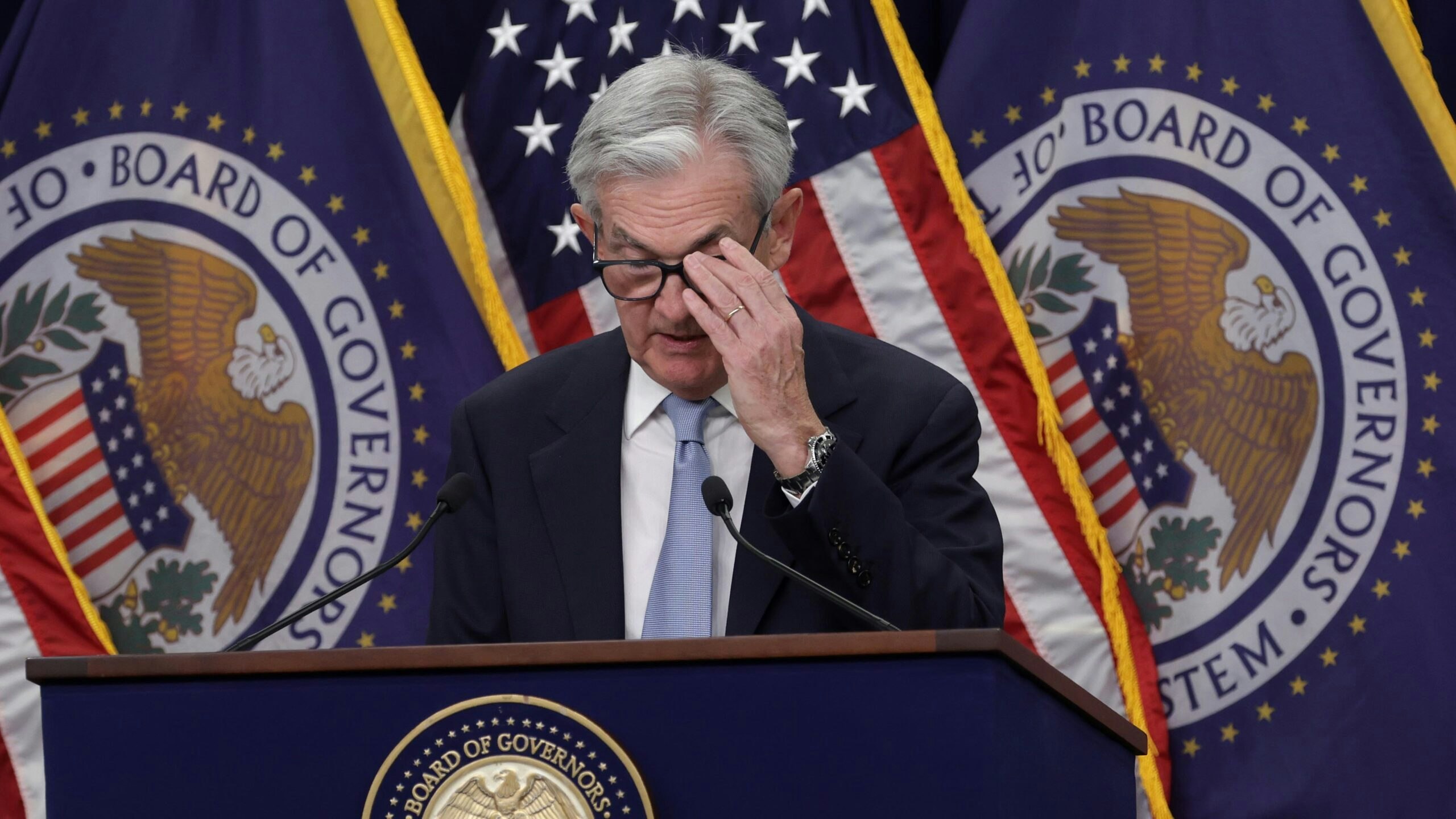
Then, seven days later, after the crypto and fintech crowd clears out, a considerably smaller group of 120 traditional gatekeepers of legacy finance will arrive at Jackson Lake Lodge for the Federal Reserve’s annual economic retreat — led by new Federal Reserve Chairman Kevin Warsh.
His banner for the equally closed-door event Aug. 27-29, is “Financial Innovation: Implications for Payments and Policy.”
If all this sounds like it’s just coincidence, it’s one that mirrors events of the past 17 years, ever since Satoshi Nakamoto published his Bitcoin white paper amid the 2008 global financial crisis — just two weeks after the government announced a $2 trillion bailout for banks deemed “too big to fail.”
The argument between the two camps boils down to one core question: Who will control the future of money, and what shape should that future take?
As crypto advocates see it, government should not be trusted with this power. Exhibit A in their book is the continual printing of money, devaluing everyone’s savings. Computer code can be programmed to limit the money supply automatically, without fear or favor.
The Federal Reserve, on the other hand, is angling for more central control. They believe a group of human experts should control the money supply, to print or restrict money in ways that steer the economy, prevent crashes and manage inflation.
Wyoming’s Digital Asset Bet
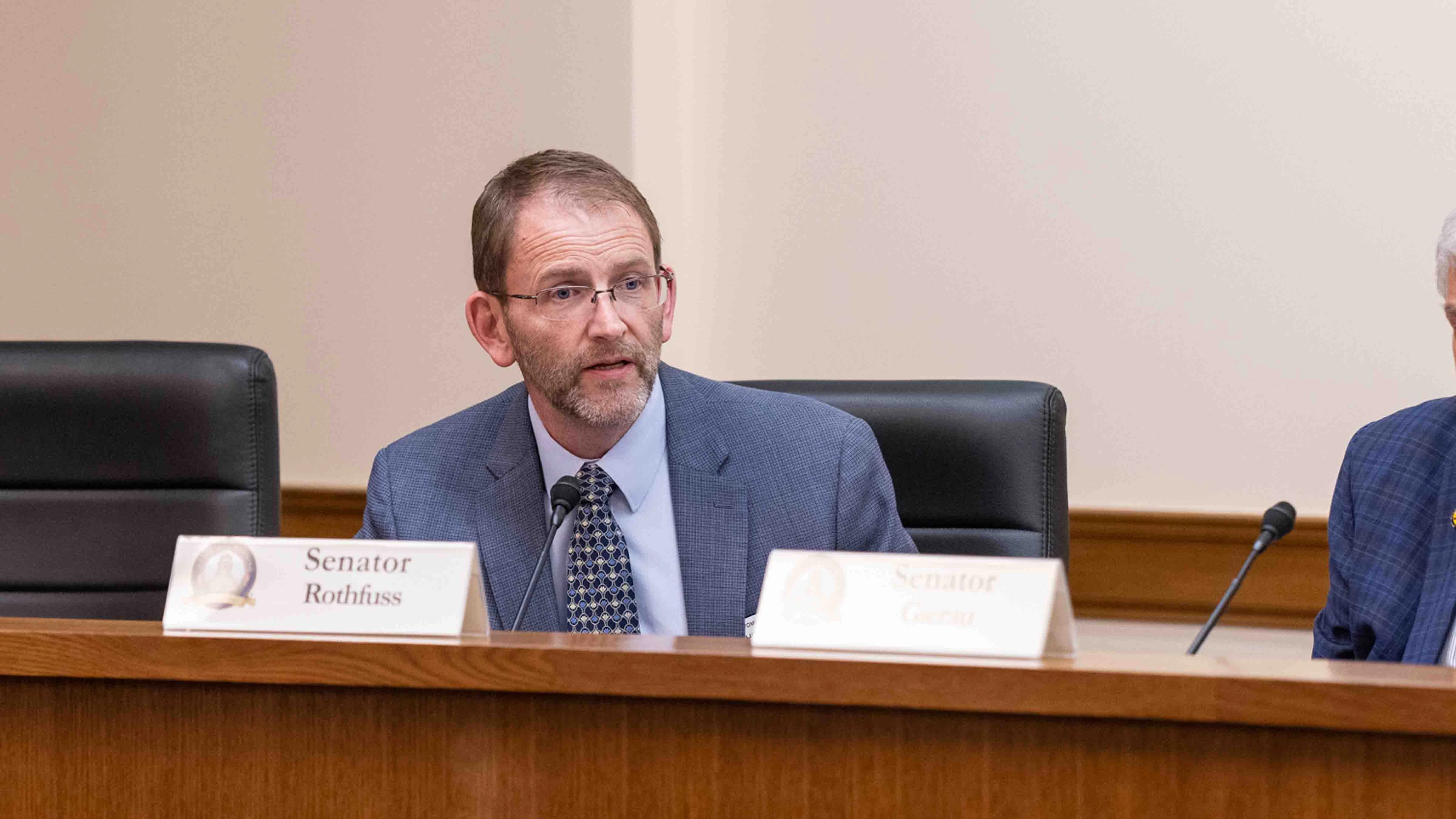
Sen. Chris Rothfuss, D-Laramie, one of the architects of Wyoming’s digital asset framework, is among those in the Cowboy State watching all of this unfold.
“It’s an interesting little battle,” he said. “Those traditional financial institutions obviously want to win and want to be in control of financial systems, regardless of the financial system type. So it’s going to be a continued battle.”
Rothfuss hopes that despite the federal battles Wyoming has had to fight for its regulatory framework, that some of the financial institutions are finally coming around.
“I’m hopeful that the hard work we’ve invested in will pay off,” he said. “I think we are still better positioned than any of the alternative solutions — really any of the federal solutions, when it gets right down to it. Because the federal regulatory structure is very subject to political will and the politics of Washington, D.C.”
Keeping More Wyoming Youth?
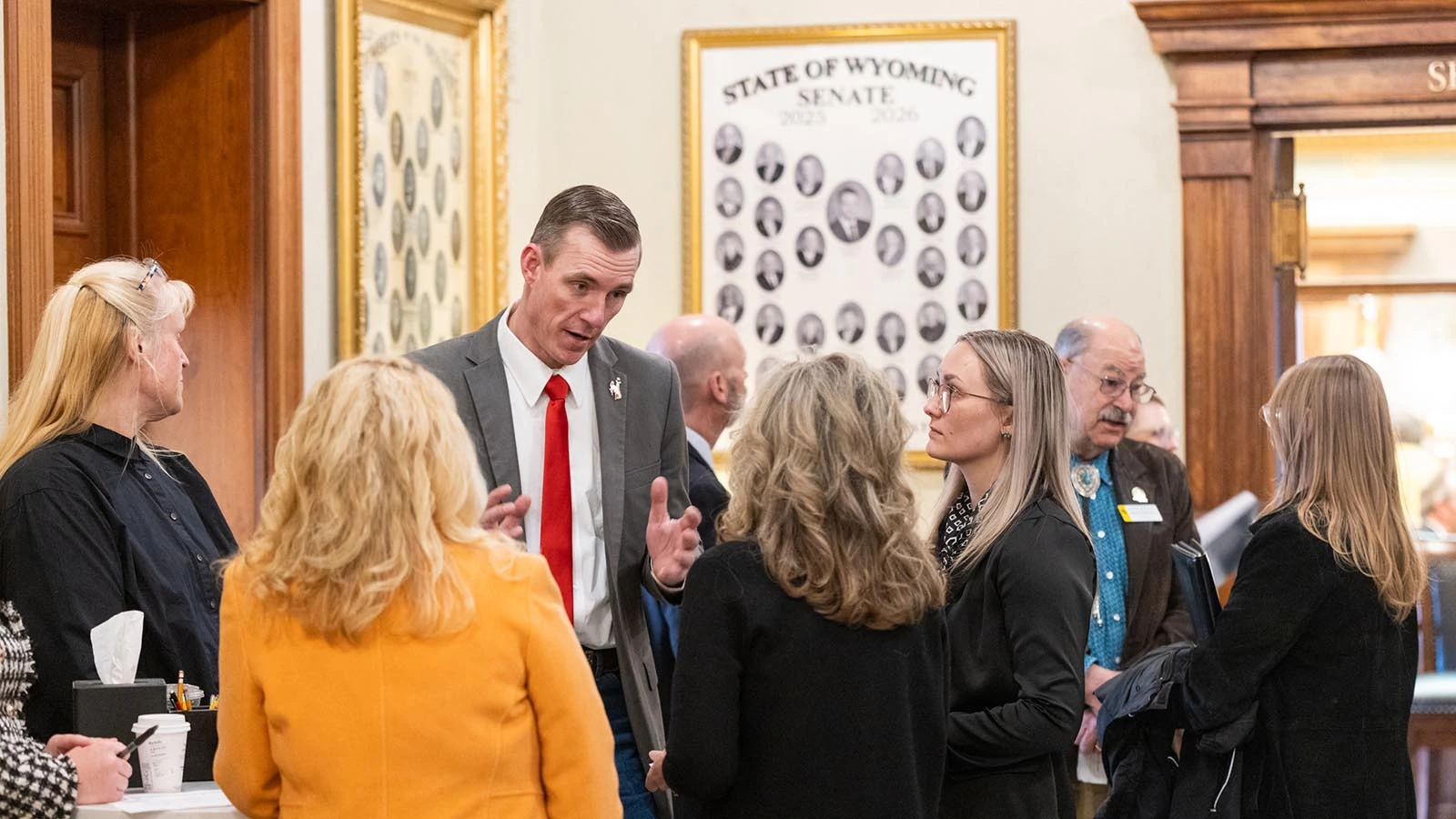
Former state legislator and Crook County rancher Tyler Lindholm also helped pioneer the state’s digital asset laws. He sees the digital asset sector as a chance at economic diversification that might help retain more of the state's youth.
“The reality is not everybody wants to grow up to be a cowboy or a coal miner,” Lindholm said. "So, what are we going to do to provide that opportunity for those homegrown Wyoming kids who do want to chase self-actualization and become their best selves and work in the trade they want to work in? Wyoming needs to find a way. We have to find a way to be attractive to different types of industries, because if we keep going down the path we’re going down, Wyoming is going to continue to just look like a retirement state.”
Rep. Daniel Singh, R-Cheyenne, has also been active in digital asset legislation. He is optimistic about the future — and proud of how Wyoming has handled the digital asset space.
“We didn’t have to give any special tax breaks or handouts to these industries to make them think Wyoming is attractive,” he said. “All we had to do was lean into our strengths, which was recognizing the rights of the people, that coming in the form of recognizing property rights in the digital age. We were the first state to go forward and do that, and because we were the first ones to create that legal clarity, so many entities are coming into the state of Wyoming now.”
Some of those entities are already stepping up to give back, Singh added.
“The largest single entity in Wyoming is Kraken, and they are the ones who have pledged to fund the Trump accounts for our next generation,” he said. “That’s creating a whole other opportunity for the next generation of kids who are going to be here, and they did that voluntarily.”
Others in the space are less optimistic, pointing to the “leap-frogging” the Fed’s delay has made possible by banks in financial centers like New York..
“As a result of that, the big financial institutions have stayed mostly in New York,” Custodia Bank’s Caitlin Long told Cowboy State Daily. “Because the powers that be were able to block Wyoming as an upstart … So Kraken is the only big company that has not just registered in Wyoming, but has relocated to Wyoming and has jobs on the ground.
”It’s not going to be what we had at one time hoped it would be. And there’s one simple reason for that. It’s the Federal Reserve.”
An Annual Wyoming Fixture
The fact that a digital asset conference with so much global heft is happening in Jackson Hole is not an accident, even if its timing with the Federal Reserve’s annual symposium might be coincidental.
Wyoming has spent the better part of a decade quietly rewriting its laws to court this kind of moment.
Starting in 2018, lawmakers passed a series of first-in-the-nation statutes to define digital assets clearly and to recognize them as a form of personal property. That legal clarity came with special charters for things like digital asset “SPDI” or speedy banks, to securely hold digital assets and cash them out, and DUNAs, which allow Decentralized Autonomous Organizations (DAOs) to enter into contracts, hold assets, hire contributors and pay taxes.
The latter Wyoming model has since been copied by other states such as Alabama and West Virginia.
SPDIs, however, were choked out at the federal level by regulators — despite lawmakers engaging in at least 100 meetings with the Kansas City Federal Reserve to hammer out a SPDI law that would be pleasing to the Fed.
The state has also backed its own government-issued stable token, the Frontier token, pitched as a way to modernize public finance, while helping the state bolster its education system and its property tax base.
The strategy, Rothfuss and other lawmakers have said, was taking a page from another lightly populated state's playbook. Decades ago, South Dakota successfully diversified its economy by embracing a nascent credit card industry, collaring several companies that still have significant operations there today, among them Citibank and Wells Fargo.
That’s had mixed success, with the Biden Administration’s Federal Reserve blocking Wyoming’s SPDI banks, but Rothfuss does see notable successes, like Kraken’s decision to plant not only its incorporation papers but its headquarters in Wyoming.
Founded in 2011, the cryptocurrency exchange and fintech platform serves more than 15 million users in 190 countries, facilitating billions in trading volume and posting $2.2 billion in annual revenue.
It’s No. 3 on the inaugural Fortune Crypto 100 list, tracking the most influential infrastructure builders in the digital asset world.
“A big part of the reason we have SALT is Kraken and their recognition of (Wyoming’s) framework,” Rothfuss said. “And then we have other entities coming to Wyoming, utilizing our DUNA Act and utilizing other resources like the speedy that we have. We’re trying to get traction with our Frontier Stable tokens, so I think we’ve got all the right tools in place.”
In Global Company
That backstory explains how and why the Wyoming Blockchain Symposium, whose sister SALT Conference is held in places like Abu Dhabi, Hong Kong, Singapore, Tokyo, New York, and London, has kept the Cowboy State on its short list for three years running.
“Wyoming, in particular, has shown leadership within that (digital) asset class,” SALT CEO John Darsie told Cowboy State Daily. “So this event is built around being an annual fixture in Wyoming.”
It does bring a large economic impact to Teton County and by extension Wyoming.
Darsie will secure as large a hotel room block as possible in Teton Village, which essentially means the Four Seasons Teton Mountain Lodge, Faraway Jackson, Gravity House, and Hotel Terra.
“All told, the event is meant to be a 500-person event and is supposed to be somewhat exclusive in nature — by application or invitation only,” he said.
SALT will spend thousands on catering for those 500 out-of-state guests as well as different types of events meant to be a crash course in the Wyoming experience.
“Each year we’ve done a reception at Snake River Ranch at the gray Barn facility in Teton Village,” Darsie said. “We’re doing a big reception at the Mangy Moose in Teton Village this yea, and, then, for the third straight year, we’re doing a concert at the Million Dollar Cowboy Bar in downtown Jackson.”
The event has sometimes been closed to media, but not this year.
“In year one, we did take more of a Chatham House rule approach,” Darsie said. “But we’ve decided that we want to open it up. There’s nothing that’s going on that we don’t want to share with the world. So we’ve opened it up to media in subsequent years.”
Wyoming Positioned Well
Darsie is a believer that Wyoming stands to gain, long-term, from the digital asset industry, which he sees as a natural when dovetailing with Artificial Intelligence.
“Wyoming’s leadership in sort of financial innovation is going to dovetail into its leadership in energy and AI leadership,” he said. “Wyoming is a very resource-rich state, a lot of which is untapped. Energy, if it’s consumed closer to where it’s produced, is much more efficient.”
Historically, Wyoming has exported 12 to 15 times the amount of energy it uses, according to various media estimates.
“I know data center is a dirty word,” Darsie said. “But if you can have data centers built in a place like Wyoming …” it flips the script on both jobs and tax revenues.
“They are positive for the locations in which they operate,” he said. “They are job creators, as long as they’re not putting an onerous strain on an energy grid or a water source or poisoning a water source. And I think as these data centers go on, they will get better at making sure those two things aren’t the case. Then it’s up to local and state leaders to make sure the data centers are built in the right place and operate the right way.”
The vision of Wyoming ripping a page from South Dakota’s playbook is “absolutely” possible, Darsie added.
“This is a growth industry,” he said. “And Wyoming has very effectively staked out its place as the leader in this asset class and in this industry that I think, long-term, will cause it to have more of a moat around it in terms of regulatory innovation.”
Darsie added that he “yearns” for the West every time he’s in Wyoming — if he could just one day convince his wife to relocate.
“I’m really excited for the future in Wyoming,” he said. “And I’m excited to have our long-term home there for this event.”
Renée Jean can be reached at renee@cowboystatedaily.com.


