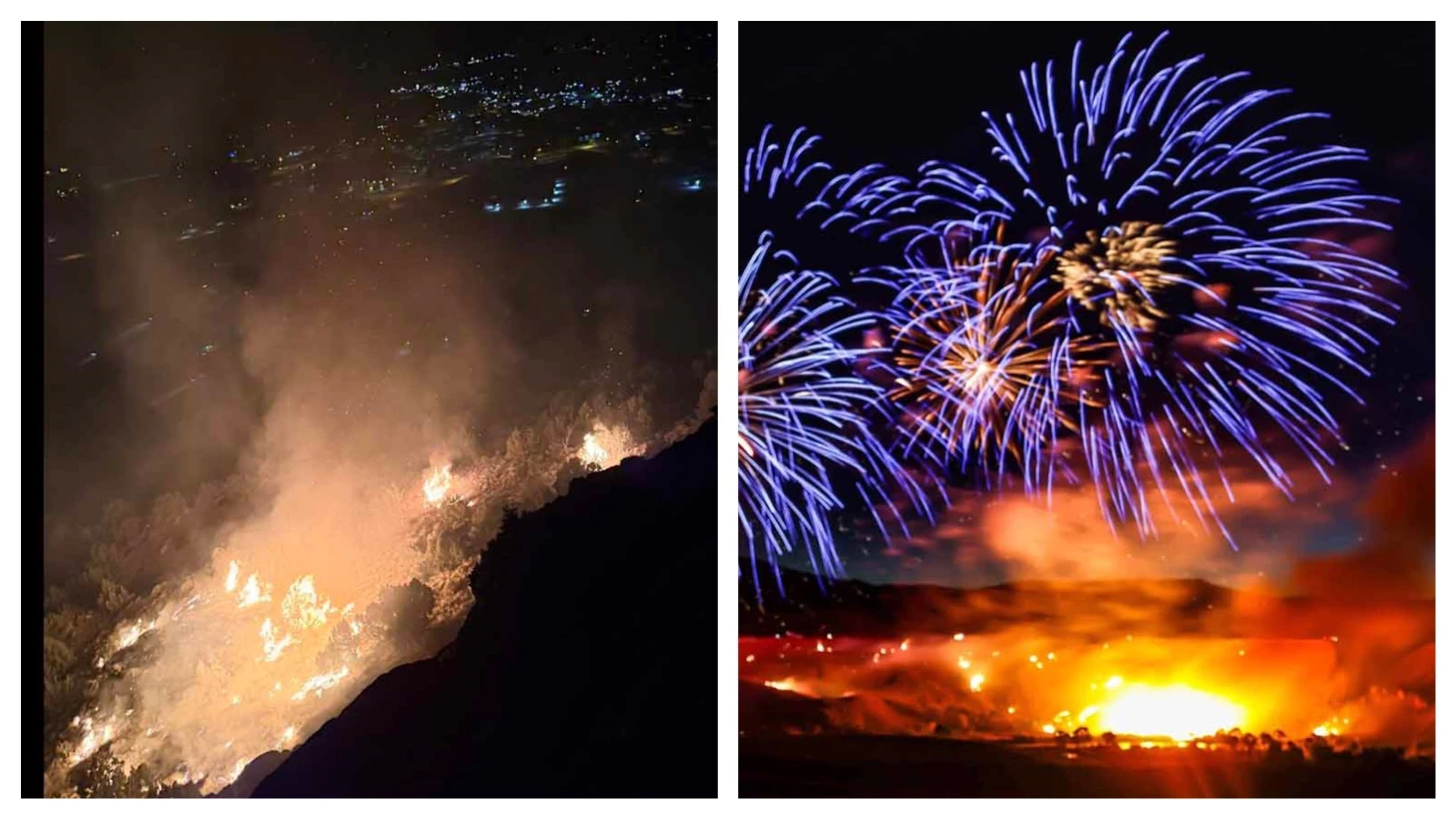
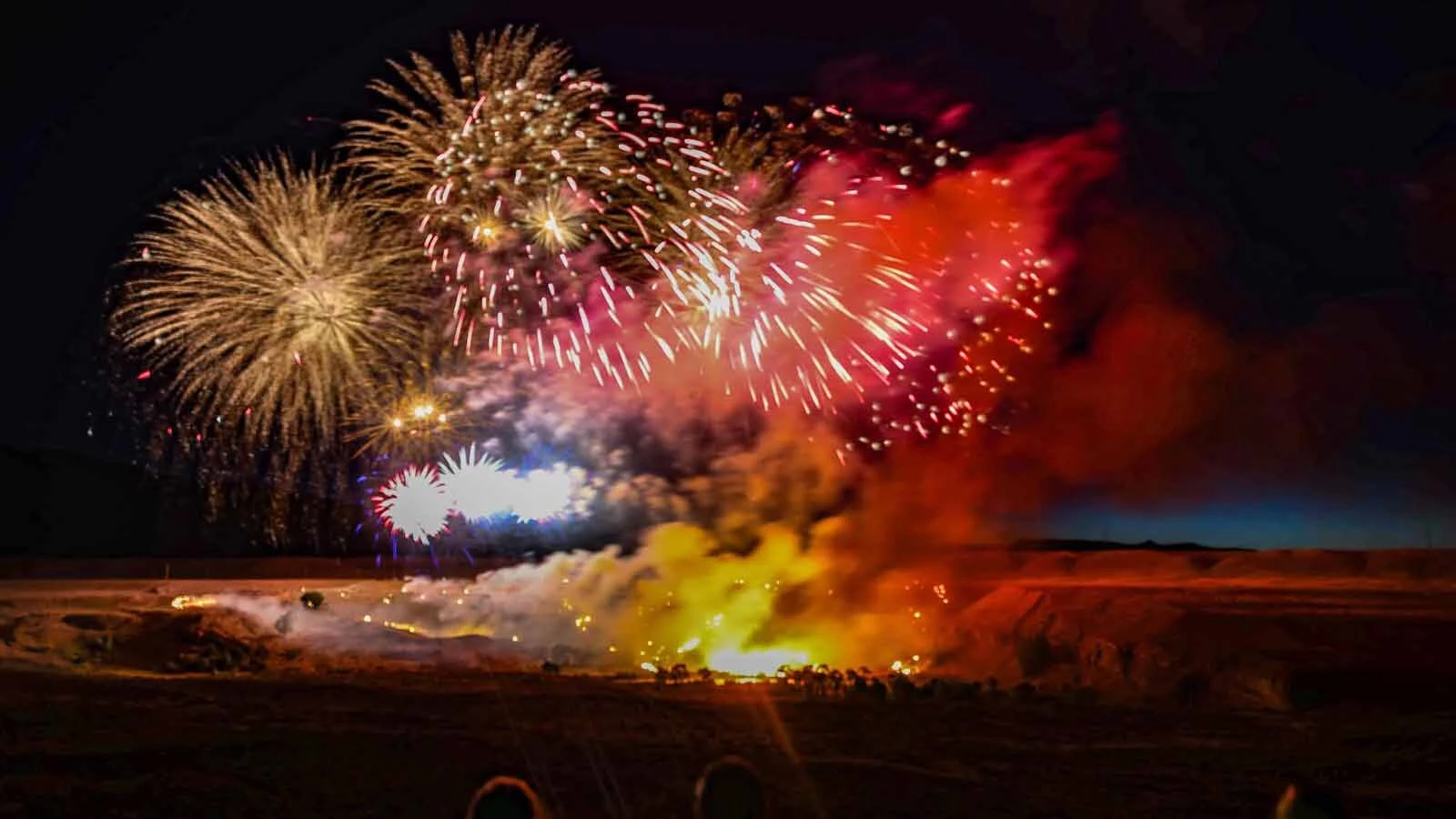
Cody resident and photographer Laura Redmond had her camera ready for the 2026 Cody Fireworks show. It didn’t disappoint.
A fast-spreading fire that burned throughout the fireworks show proved just as entertaining.
“I was near “The Scout” statue behind the Buffalo Bill Center of the West,” Redmond said. “As soon as the fireworks started, tiny spots immediately started, then more started, and they all merged together.”
The fire sparked by the first fireworks grew throughout the show. By the end, the rockets’ red glare was replaced by an eerie orange glow on the overhanging clouds of smoke.
Redmond and other locals weren’t concerned. International visitors who came to see the fireworks were deeply concerned, she said.
“We all assured them that it happens every year,” Redmond said. “Everybody settled down and watched the firemen do their work. Some people were there watching the firefighters longer for that than they were for watching the fireworks.”
The entire fire was extinguished that night by the Cody Volunteer Fire Department.
There was only one downside for Redmond.
“The flames blew out all my photos,” she said.
American As Apple Pie
Cody wasn’t the only Wyoming community to set itself on fire with fireworks.
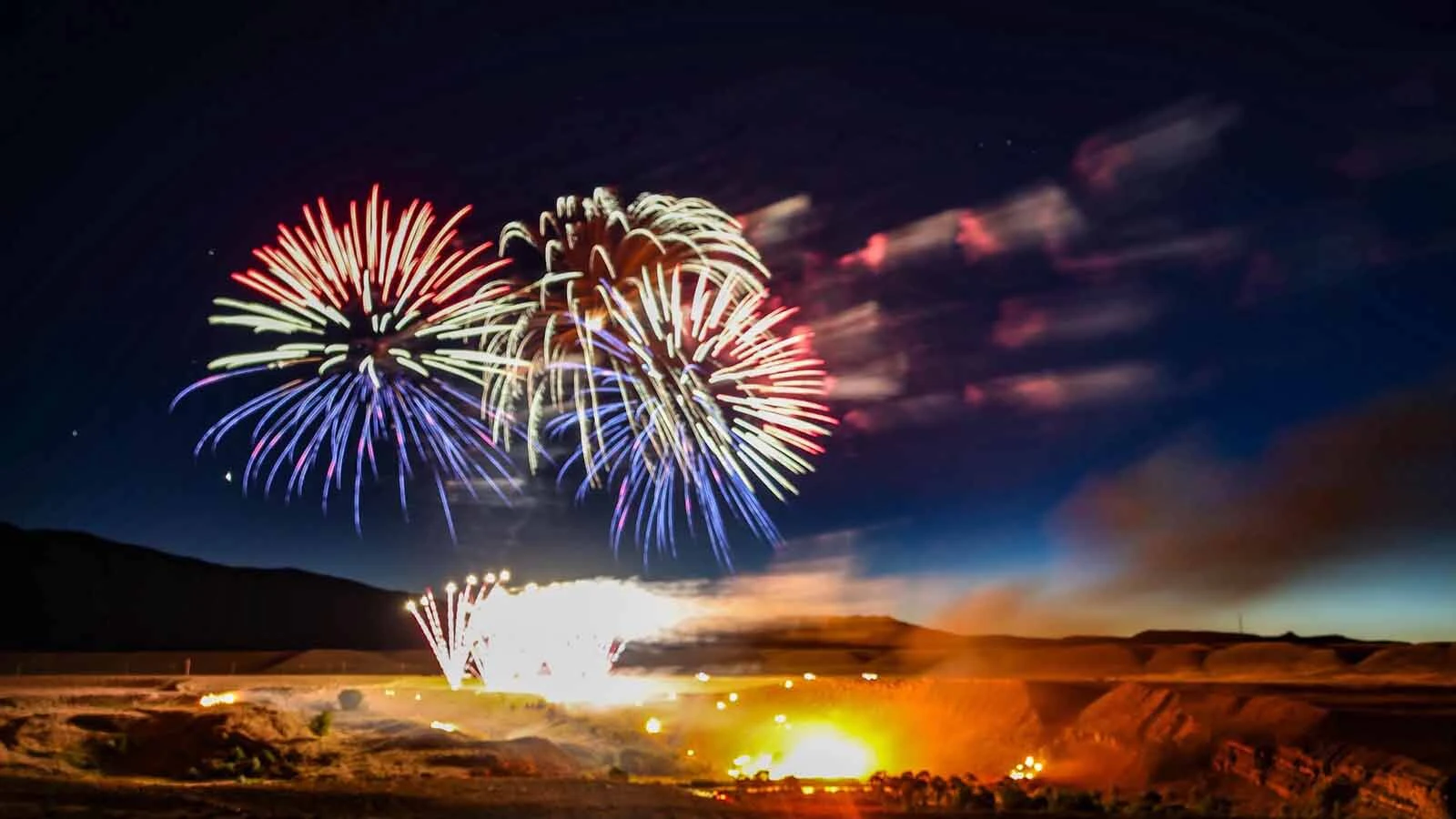
Thermopolis’ show also started a small blaze near the fireworks launch site on top of T-Hill, visible to everyone watching the show in the town and parks below.
The Thermopolis Volunteer Fire Department assured residents they had the situation under control after "a fire started by some of the best fireworks (they'd) ever seen." Cowboy State Daily was unable to reach the department for comment by the time of publication.
Thermopolis Fire Chief Dale Andreen said that it’s “pretty common to get a fire from fireworks. That’s a big reason fireworks are banned everywhere and are outlawed the rest of the year, too.”
He said the fire that started near the town’s launch site Friday wasn’t much at all.
“Just a small patch, just six or eight juniper trees and some sagebrush,” he told Cowboy State Daily on Monday. “Wouldn’t have been about a 10th of an acre, I would say."
Thermopolis resident Debra Davenport was watching the fireworks show from her driveway. She was getting ready to call it a night when the grand finale sparked the fire around 11 p.m.
“They set off a really big sequence that set off the fire right below where they were launched,” Davenport said. “I know they had a lot more fireworks than they usually do.”
Davenport said the fireworks were more widespread across the top of T-Hill, clearly for a larger-than-average show to celebrate the 250th anniversary of the United States.
“It was a lot more than normal,” she said.
Banned Or Burned
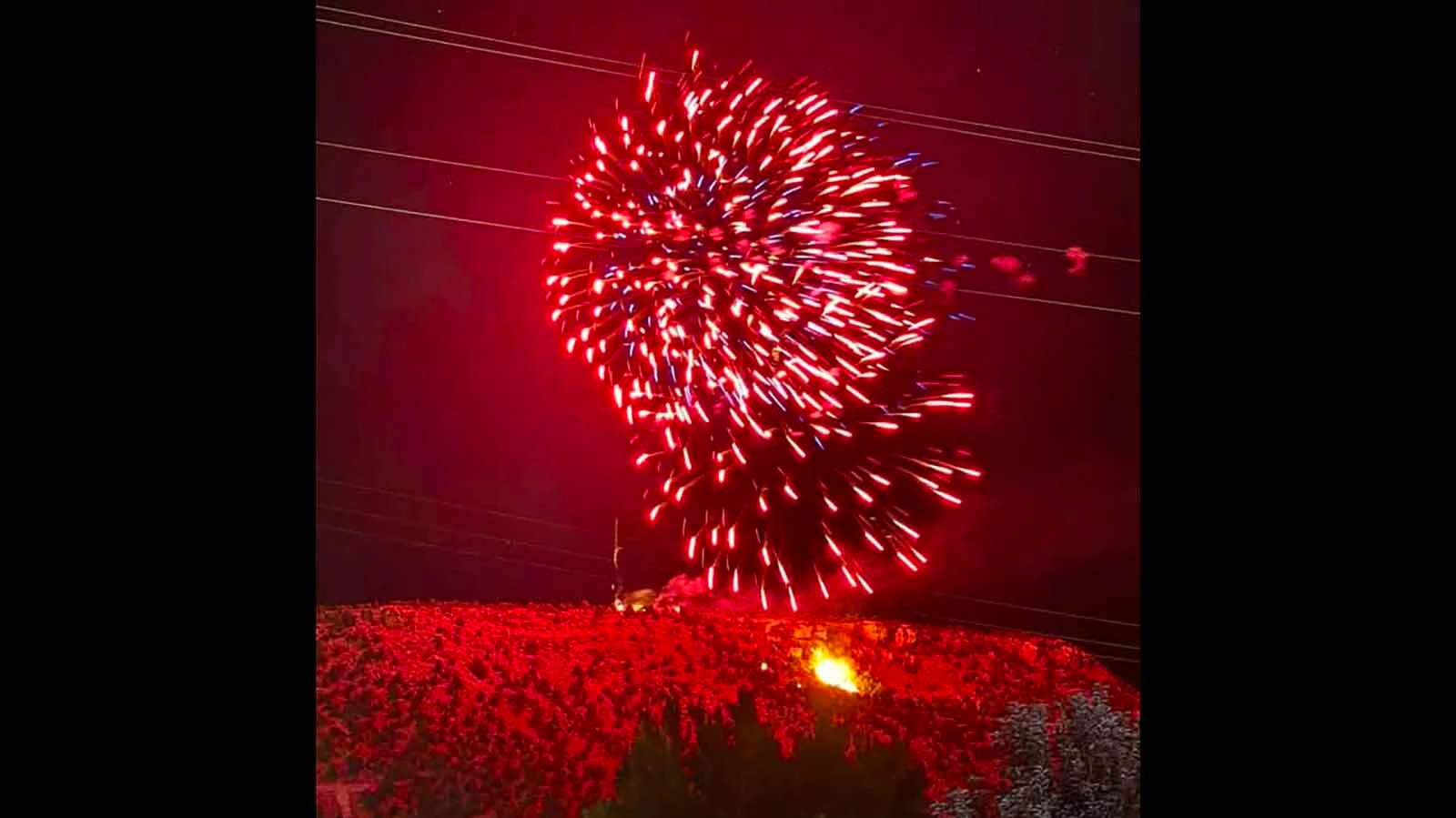
Douglas, Gillette, Riverton and other communities took proactive measures to prevent fireworks fires. They banned private fireworks and/or canceled their annual shows due to excessively dry landscapes and extreme fire danger.
Meanwhile, small fires were spotted throughout Wyoming leading up to Independence Day and were still burning when the fireworks started.
A section of Pine Bluffs was set on fire before any fireworks started. Meanwhile, a grassfire quickly engulfed a hillside behind the Studio City Mesa movie theater in Casper, threatening several homes.
“Quite frankly, I was surprised there weren't more bans over this holiday weekend,” Cowboy State Daily meteorologist Don Day said. “For as dry as it’s been since last fall, there was a very high chance that any fireworks were going to set something off.”
However, Day is never surprised to hear about fireworks fires around Independence Day. By this point in the summer, it’s usually dry enough for a small thing to spark a potential inferno.
“Fireworks burn so hot that there's always that concern,” he said. “The last time I wasn’t concerned about the fire risk was in 2023. I know it seems like that never happened, but that was one of the wettest years on record.”
Redmond was expecting some flames from Cody’s fireworks. The Cody Volunteer Fire Department expected the same.
“It happens almost every year,” she said. “I feel like the Cody Fire Department is one of the best out there. They had spotters on both sides of the Shoshone River and plenty of personnel in place to make sure everyone stayed safe. They know what they're doing, and they were very prepared for it.”
Davenport, however, had a different view of the spectacle and the fireworks fire in Thermopolis.
“Everyone was concerned about starting a fire before the show, and after so many people in Colorado and Utah have lost everything because of fires, I felt sad and a little disrespectful.”
More than 55 fireworks shows in Colorado were canceled due to fire danger. Utah governor Spencer Cox issued an executive order temporarily banning fireworks statewide in late June, calling it “a matter of life and death.”
Worse Before It Gets Better
Now that bombs aren’t bursting in air, one might think the worst fire danger of the season has come and gone. They’d be wrong.
Day and other meteorologists are monitoring “an interesting paradox” that could make July a dynamic month across the western U.S.
“We're going to have really big heat waves, especially in the eastern and northeastern parts of the state, starting this weekend,” Day said. “We're going to be seeing triple digits in the Bighorn Basin, northeastern plains, and out near the Nebraska border.”
It might seem counterintuitive to think triple-digit temperatures could bring a windfall of rain to Wyoming and many other western states. That’s what seems poised to happen, at least potentially, in the latter half of July, Day said.
“This is the paradox,” he said. “The heat wave that's going to develop may ultimately be the kicker, the thing that tips the scale to finally get some subtropical moisture back into the western United States.”
Day said the heat wave will result from a high-pressure ridge moving into the central U.S. That could increase the chances of precipitation across all of Wyoming and beyond.
According to Day, nothing’s guaranteed, but extremely high temperatures in Wyoming could create the exact conditions needed for more moisture.
“When you build the heat in the plains, you pump subtropical moisture out of Mexico and Central America farther north and into the west,” he said. “We may have to go through four or five days of really hot temperatures and very little rain before the better rain chances come in.”
While the heatwave is coming, it’s too distant to say whether it’ll be enough to pump moisture to Wyoming. Regardless, one will only follow the other.
“It's going to get worse before it gets better, but part of it getting worse is going to help initiate the type of pattern we've been waiting for,” Day said.
The Simple Sparks
One reason Redmond wasn’t concerned about a serious fireworks fire was the staging area. Cody launches its fireworks on the north bank of the Shoshone River, opposite the Cody Stampede Rodeo grounds, in a spot that naturally stops any spread.
“The river is their break on one side, and a road is the break on the other side,” she said. “They only have to watch it from two sides. It was just a very pleasant evening, and they did a good job putting the fireworks on the fires out.”
July and August are usually the worst of Wyoming’s fire season. The real hazards are everyday occurrences, not a weekend of intense pyrotechnics.
“In these circumstances, simple things start fires,” Day said. “It’s a hot muffler on a four-wheeler off-roading for the weekend. It’s a chainsaw cutting firewood. It’s dragging chains behind a trailer and throwing a cigarette butt out the window. Things get started so easily.”
Day didn’t want to “jinx anything,” but his outlook on wetter weather in the second half of July was “more optimistic than I have been this summer, so far.”
“The pattern shows the potential for more frequent chances of thunderstorms that produce that rain that we want,” he said. “That could really help us in the second half of July into the month of August. We might finally see something go our way for a change.”
Andrew Rossi can be reached at arossi@cowboystatedaily.com.