
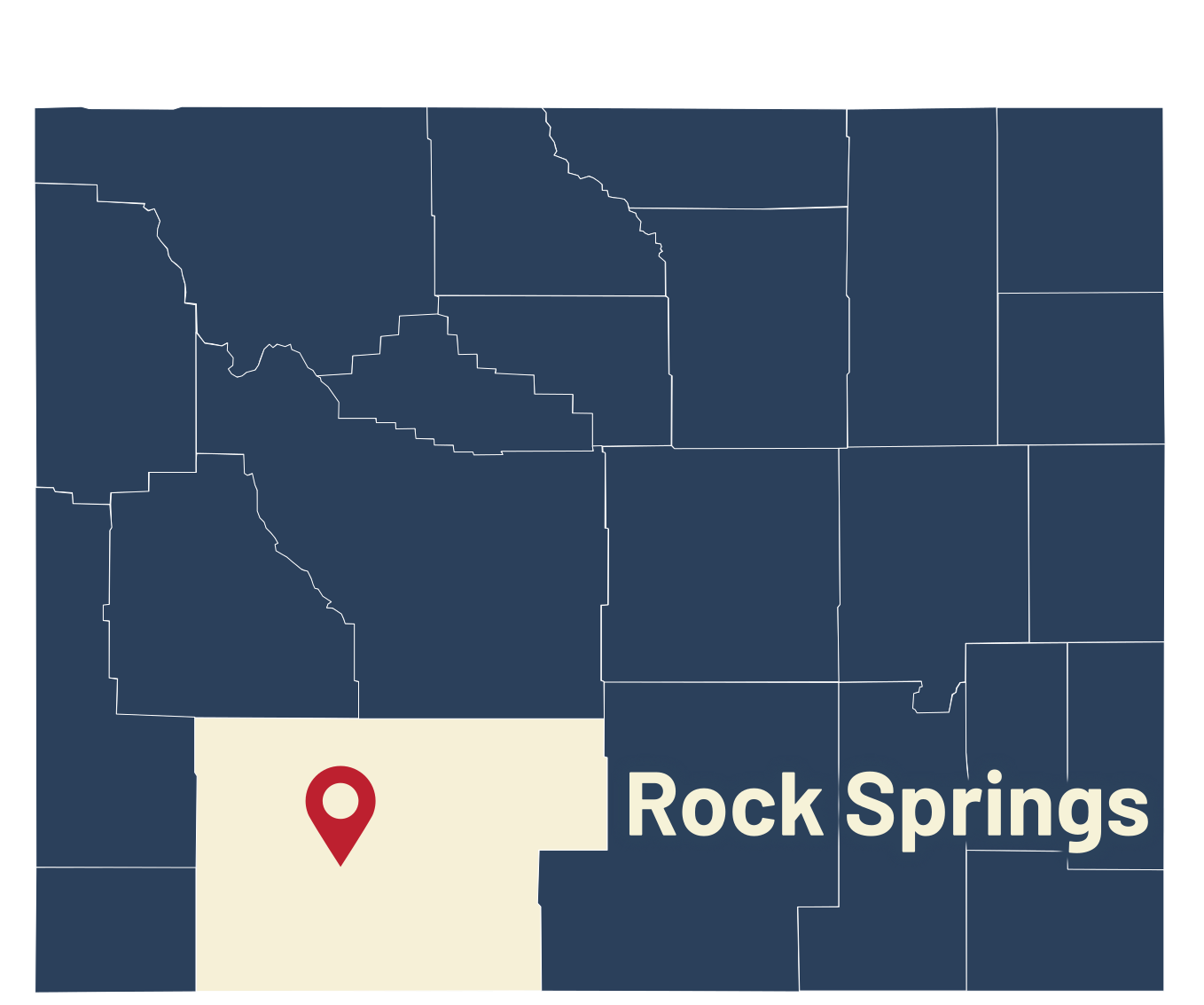
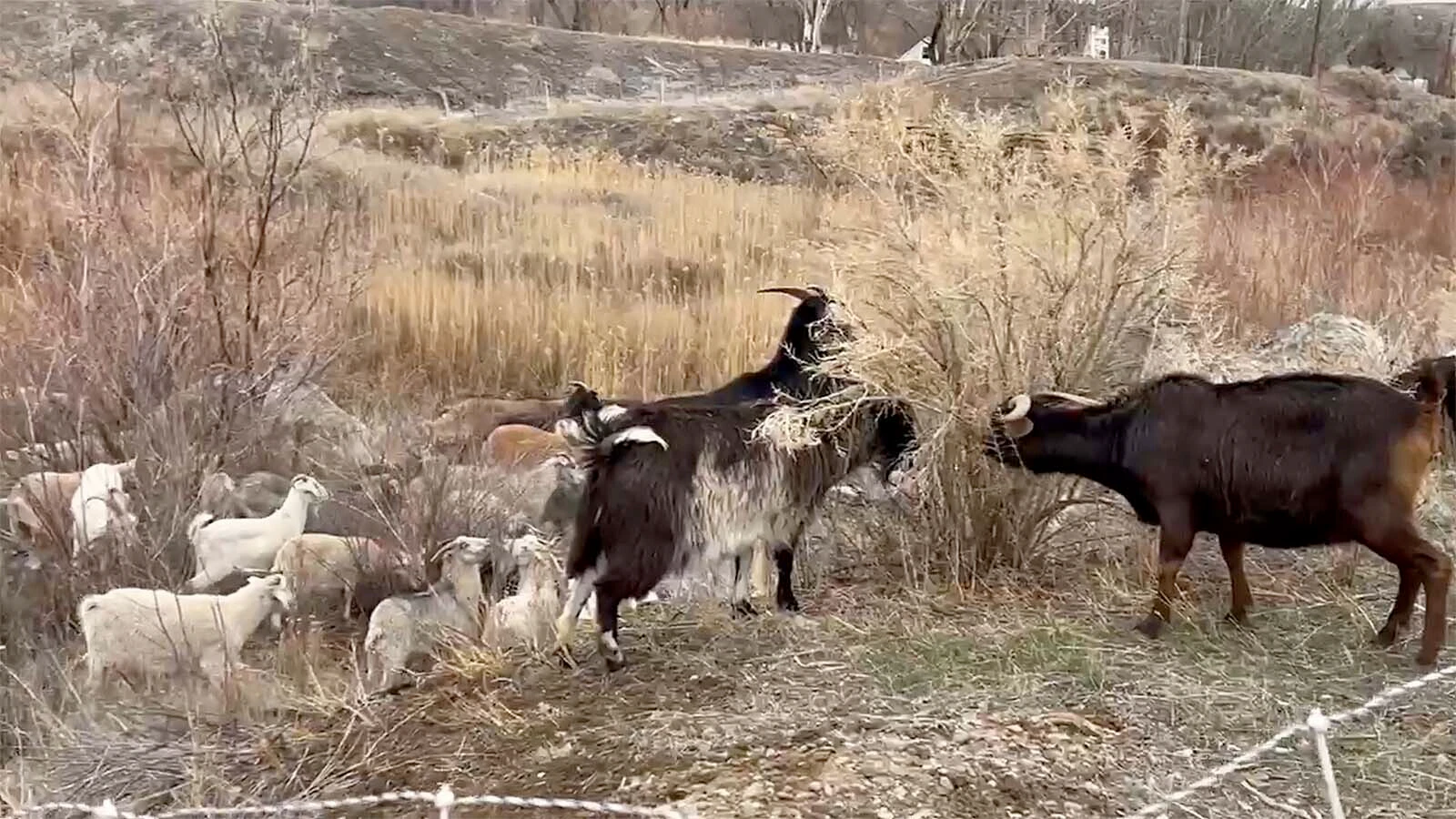
A controversial flood mitigation effort that brought 150-200 goats to graze along Bitter Creek in Rock Springs is on hold, at least for now.
After spending about $200,000 over three grazing sessions since the spring of 2025, the Rock Springs City Council chose not to budget additional money for the project in the coming fiscal year, instead directing funding toward cemetery lighting.
"This will be the last we see goats, at least for the next fiscal year of operations," Councilman Dan Pedri told Cowboy State Daily.
The decision at least temporarily halts a program that has generated equal parts criticism and curiosity.
Some residents questioned whether taxpayers should spend tens of thousands of dollars to have goats eat weeds. Others regularly stopped to watch the herd quietly graze along Bitter Creek.
"It's a little source of entertainment," Pedri said.
During the latest grazing session, which began April 1 and ended June 30, the goats removed roughly 35 tons of vegetation, according to mayor Max Mickelson.
“This does not meet the creeks are ‘fixed',” he said. “It means one more piece of the long-term flood mitigation work was completed.”
A Different Approach
Rock Springs has struggled with periodic flooding for decades, Mickelson said, dating to alterations made to the creek channel by the former Union Pacific Coal Company.
"The goal was simple," Mickelson said of the Bitter Creek project. "Reduce noxious weeds, brush and fuel load along the creek corridors so water can flow more freely, fire risk is reduced, and our intermittent creek system is in better condition before the next major storm event.
"Our broader work is about protecting homes, businesses, infrastructure and development opportunities from recurring floodplain impacts."
The city brought in goats in the spring of 2025 on a trial basis, paying a Cheyenne operation $50,000. Mickelson said the goats “performed better than expected.”
Council member Randy Hanson had asked the council to look into goats, pointing to other Wyoming communities such as Cheyenne and Gillette that were using them successfully for targeted grazing.
“We aren’t pioneers of this process by any means,” Pedri said.
Farson land and livestock owner Josh Skorcz caught wind of the project “through the Rock Springs grapevine” and pitched himself as a local solution to the flood-risk problem.
Skorcz was the only person who bid.
“I provide a service,” he told Cowboy State Daily. “I saw an opportunity where we could supply a service to a local entity that needed it.”
In the fall of 2025, the city paid $58,000 to Skorcz’s LS 5 Livestock for eight weeks.
Then, in April, the Rock Springs City Council voted 6-2 to use goats for a third year for $92,000 – a 59% cost increase.
The increase was largely due to more acreage and longer duration, Skorcz said.
"The city did not pay $34,000 more for the same amount of work," Mickelson said. "The scope, timing, staffing and logistical burden increased in relation to the scope of the project."

Why Goats?
Skorcz said goats can reach steep, brush-choked areas where heavy equipment struggles to operate, reducing vegetation that can create debris dams during high-water events.
The work, however, is labor intensive.
Under the city's contract, the herd had to be supervised around the clock. Workers also installed and repeatedly moved roughly 10,000 feet of portable electric fencing by hand.
"We're trying to see that incremental decrease over time of the amount of noxious weeds and thick vegetation," Skorcz said. "You're always going to have vegetation, but the type is what's important."
Mickelson said alternatives such as mechanical removal, herbicides, prescribed burning or major construction each come with significant limitations, permitting requirements or environmental restrictions.
Despite reaching stated goals, the project’s growing price tag remained a sticking point.
Pedri and Councilman Rick Milonas – a vocal critic of Mickelson and a contender for this year’s mayoral seat – voted against approving this year's $92,000 contract, saying many constituents questioned the expense.
"That's why I opted not to do it," Pedri said. "My vote was based on the constituents that reached out to me and my promise to be the voice of the majority."
The cumulative cost — roughly $200,000 over three projects — has also become an issue in the mayoral race.
Candidate Katherine Phelps has repeatedly criticized the program on social media. She did not respond to Cowboy State Daily's request for comment.
Pedri said the debate ultimately came down to competing priorities.
Like many cities, Rock Springs faces a limited budget while weighing other costly needs, including long-term repairs to its civic center.
Could The Goats Return?
Although the goats won't return next year, Mickelson said the city is awaiting a vegetation study from LS 5 Livestock evaluating the project's effectiveness.
That report will help determine whether targeted grazing is included in future budgets after the 2027 fiscal year.
"We intend to make it an annual tool," Mickelson said, "based on council deciding to allocate funds for it."
He acknowledged the program's cost can be difficult to justify.
"Nobody likes spending $92,000," he said.
But he said he believes prevention is ultimately less expensive than recovering from flood damage.
"A community pays one way or another," Mickelson said. "We can pay in steady, boring maintenance before the storm, or we can pay in emergency response, damaged property and regret after it.
"I would much rather answer hard questions about prevention today than stand in front of flooded homes and explain why we didn't use a cost-effective tool we had available."
For now, the city will continue monitoring the Bitter Creek corridor. If conditions create an immediate flood or fire risk, Mickelson said, the council could consider a future budget amendment.
Kate Meadows can be reached at kate@cowboystatedaily.com.


