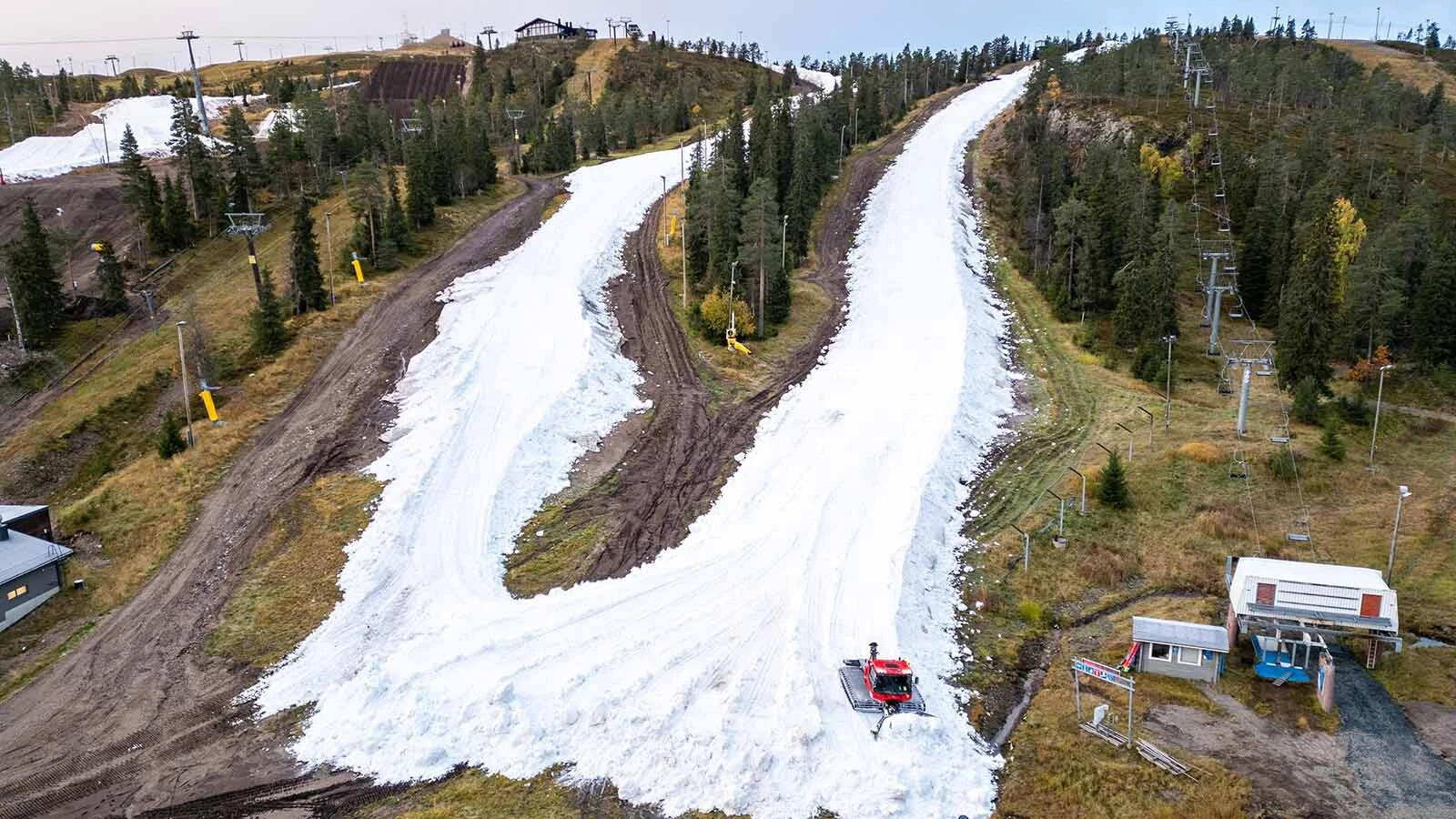
Looking up at Colorado's Aspen Snowmass Ski Resort, you'll see large, white tarps covering a mysterious mass two to three stories high. No, the circus isn't in town — it's a matter of snow security.
As unusually warm, long fall seasons become more frequent — like last winter's historically dry one — ski areas across the West and around the world are seeking new ways to guarantee they can open on time.
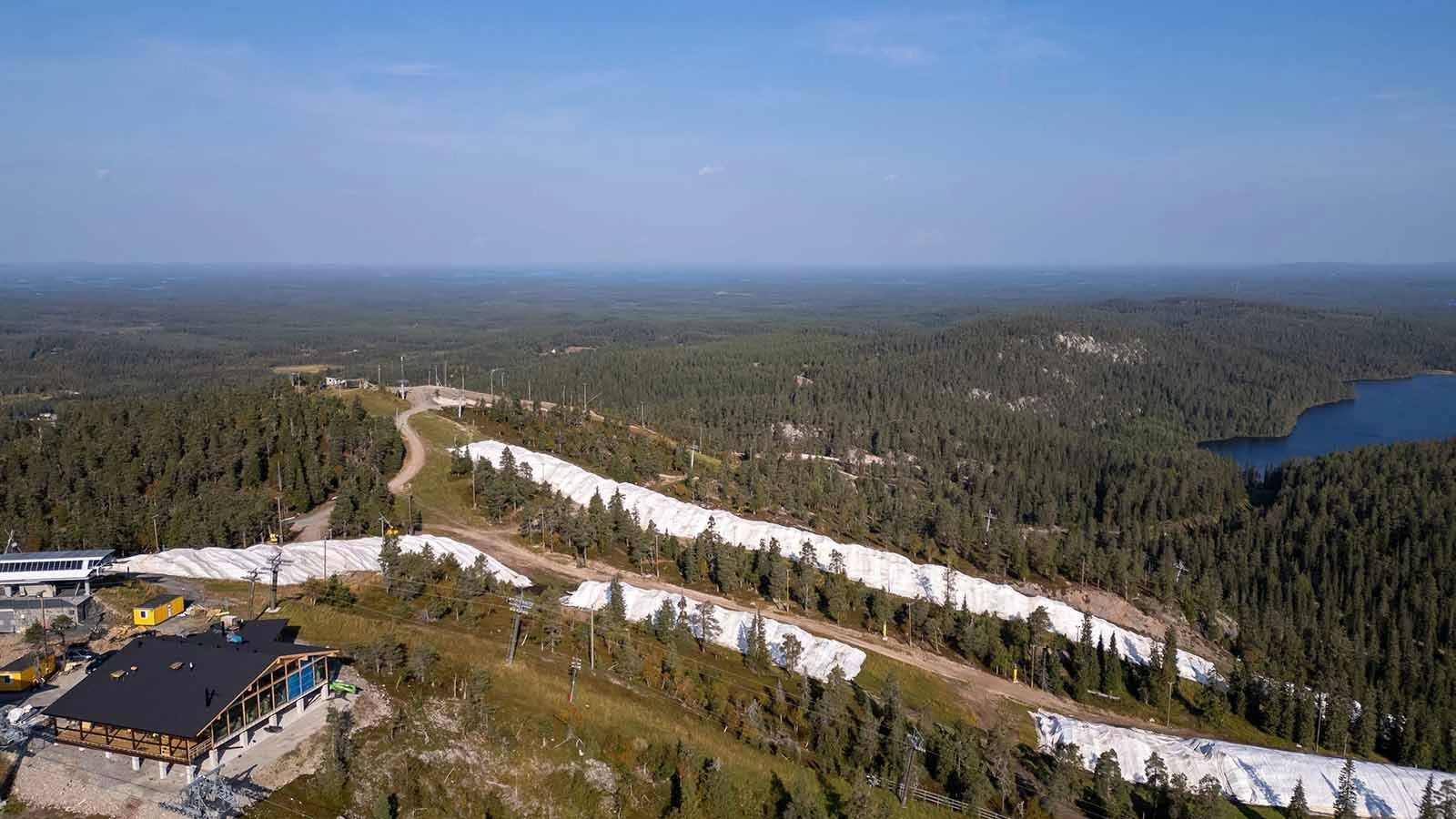
One solution is pushing together snow left over from the previous winter, storing it in enormous piles, and reusing it the following season.
Harvesting the Snow
Known as "snow harvesting" or "snow farming," the practice is now catching on at resorts across Idaho, Montana, Utah and Colorado.
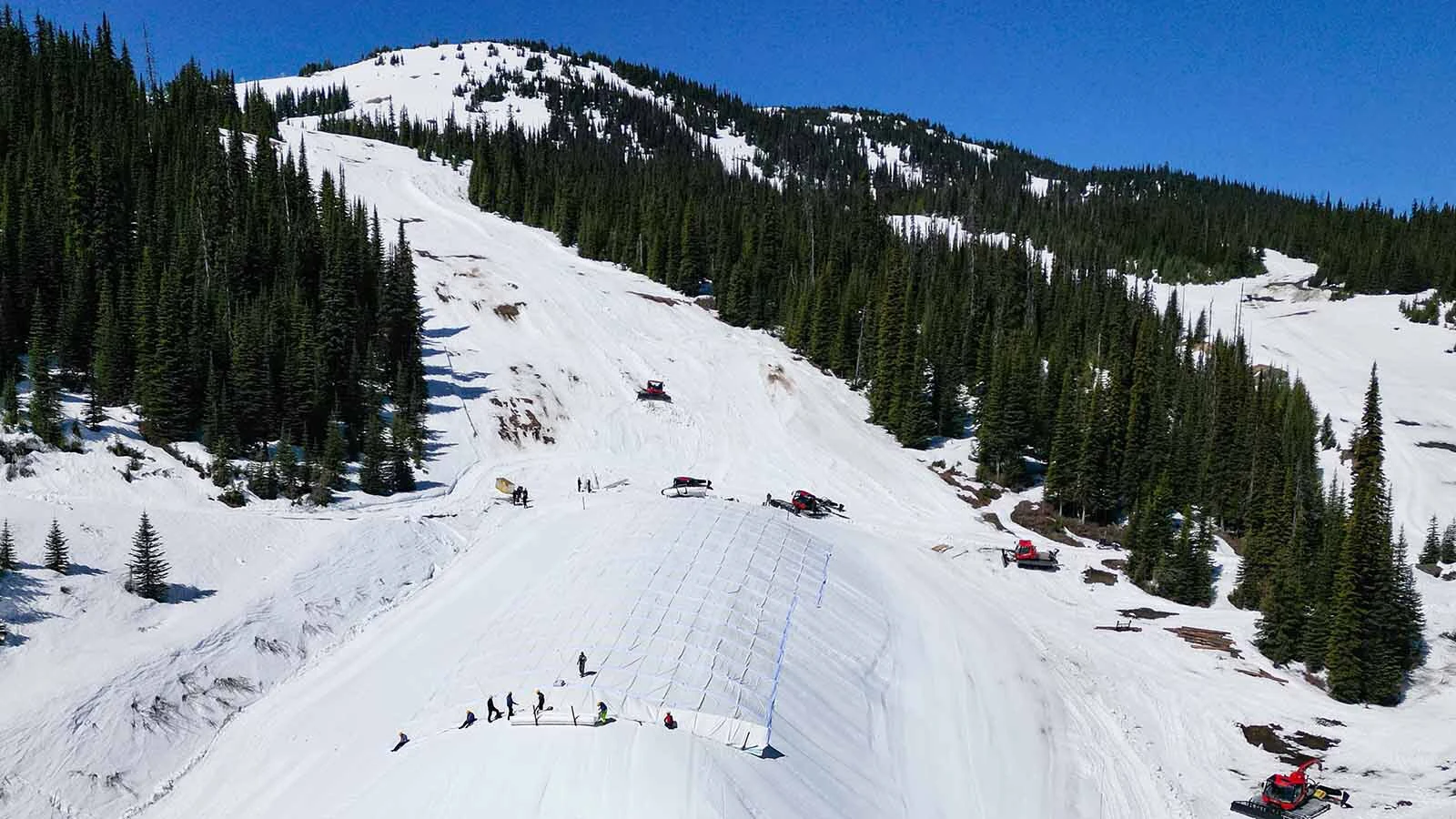
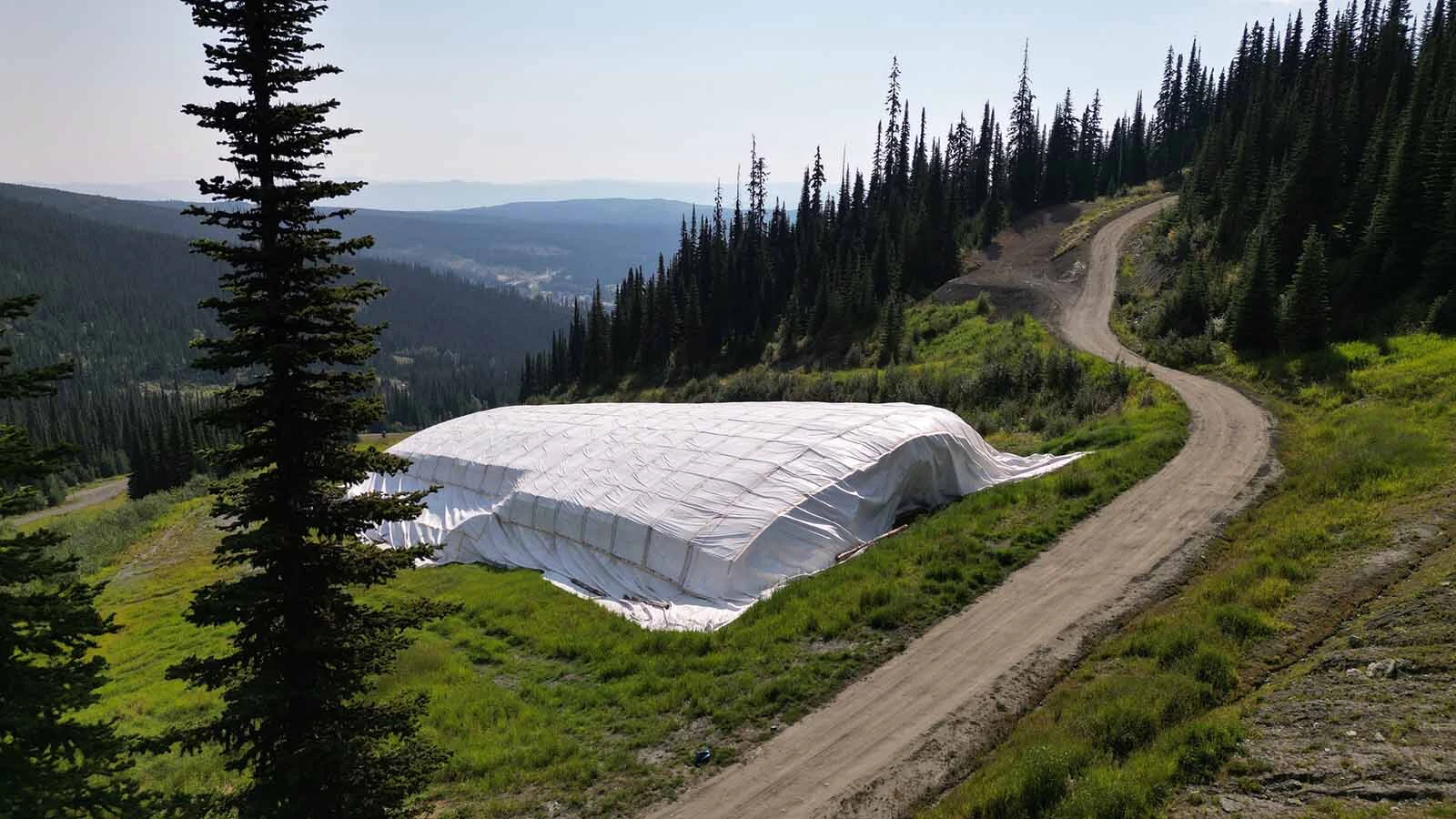
By securing snow piles under thermal mats, blankets, tarps or even hay bales, resorts keep their snow in a giant cooler of sorts, shielded from the heat, sun and rain.
That means they no longer have to anxiously watch the thermometer for temperatures cold enough to make snow, or wait on natural flakes from the sky.
Antti Lauslahti, CEO of the snow-storage company Snow Secure, believes these efforts will follow the same path as snowmaking equipment did in the 1970s. Most mountains were impressed by the technology at the time, he said, but skeptical that anyone actually needed to make snow.
"Then they started to do it for just the early season, and little by little it just took off," he said.
Lauslahti said Big Sky Resort in Montana — a favorite of many northern Wyoming residents — is running a small-scale test of Snow Secure technology to use on its slopes next season.
Snow Secure makes white polystyrene thermal mats that fold out like an accordion and can stretch as long as a football field while keeping snow insulated, much like the insulation in a house, at near freezing temperatures.
The New Snowmaking
In recent years, warm weather has repeatedly kept ski areas from meeting their traditional opening dates, sometimes pushing openings past Christmas or forcing seasons to be canceled altogether.
Early season skiing is one of the industry's most profitable stretches, when public enthusiasm runs highest — especially among casual skiers. The Christmas holidays alone can account for 20% of a mountain's annual revenue, Lauslahti said.
"The beginning of the season is becoming more unpredictable," he said. "A bad start means you lose season-pass sales. If there's at least a minimum amount open in the early season, people accept it better."
Bogus Basin in Idaho and Aspen Snowmass have both recently invested in Snow Secure's mats to guarantee a solid snow base for next season.
In Aspen, the mats now cover piles on Buttermilk and Snowmass mountains — the equivalent of 3.5 million gallons of water, mostly man-made snow left over from the previous season.
Beyond saving the snow itself, the practice preserves the money already spent making it and can cut the cost of snowmaking for the season ahead.
Having snow ready to go also gives mountains flexibility to time their snowmaking for the most efficient conditions.
Snowmaking machines work better the colder it gets, so instead of blowing snow in marginal early-season conditions out of desperation, resorts can draw on their stored supply for a usable base.
Others are preemptively making a deep base of snow during winter's coldest stretches, either to extend their seasons into May or to save it for the next one.
"It's economically really, really viable," Lauslahti said. "It's really fast, really cost efficient. You need snowmaking, you need groomers, but the point is, you have a new tool."
Lauslahti noted that Levi, a Finnish mountain that traditionally hosts the season's first FIS World Cup race each November, relied entirely on snow stored inside the Snow Secure mats to host the event this past season.
The mountain itself opened a few years back on Oct. 6 thanks to their snow-storage efforts.
Another Tool in the Toolbox
Chris Miller, senior vice president of sustainability at Aspen Snowmass, told the Aspen Times saving snow expands the resort's climate-resilient toolbox for navigating volatile weather.
Snowmass Mountain's relatively low base elevation of 7,870 feet leaves it especially vulnerable to warm, dry early-season spells.
As host of the Winter X Games, Snowmass produces enormous amounts of snow each fall to build the massive terrain-park features the globally televised event requires. By piling up and covering the leftover snow for the following year, the mountain saves significant money.
Soldier Hollow Nordic Center in Utah has joined the trend too, preserving a 15,000-square-foot mound under the Snow Secure mats.
At just 5,600 feet of elevation, the venue is slated to host cross-country events for the 2034 Winter Olympics, though that may not happen naturally if Utah sees another winter as poor as this past one.
Luke Bodensteiner, Soldier Hollow's general manager, told NBC News he views the effort as a contingency plan, and hopes that snow farming plus new snowmakers could make Soldier Hollow the first Nordic venue in the country to open this coming fall.
"If we get the results that we think … in the summer of 2033, we'll probably have three to four of these piles going around the venue," he told NBC.
Heat Resilient
Back in Aspen when interviewed last month, Miller said temperatures beneath the Snow Secure blankets were registering at 32.6 degrees.
Even when outdoor temperatures top 100 degrees, the insulated barriers keep the snow between 35 and 37, Lauslahti said, and can limit melting to about 20% of the original mass over an entire summer.
The mats were put to the test last summer at Bogus Basin, a mid-sized ski area outside Boise, where temperatures outside the piles hit 119 degrees. The snow held up fine, and despite recording its warmest November on record, the resort still managed to open that month.
Snow Secure isn't just for the biggest resorts with the biggest budgets. Lauslahti argues the tarps offer even more value at smaller areas with shorter runs, where every saved inch counts — pointing to a small Wisconsin resort that’s invested in the product. "The first chairlift isn't so long, so you don't need so much material," he said.
Other Snow-Storage Efforts
Copper Mountain in Colorado stores snow for its summertime private Woodward camps and public hike park. At each season's end, the mountain pushes thousands of cubic yards of leftover snow from its runs, terrain parks and superpipe into huge piles; months later, it spreads the snow back out into a short run with a roughly 25-foot base, letting the public ski all summer.
Trollhaugen in Wisconsin insulates its snow with hay bales and a large tarp weighed down by car tires for a terrain-park event it hosts each fall.