A slew of fantastic fossils from Earth’s earliest primates have been discovered in southwestern Wyoming, offering new insights into the evolution of humanity’s tiny, sap-sucking great-uncles and aunts.
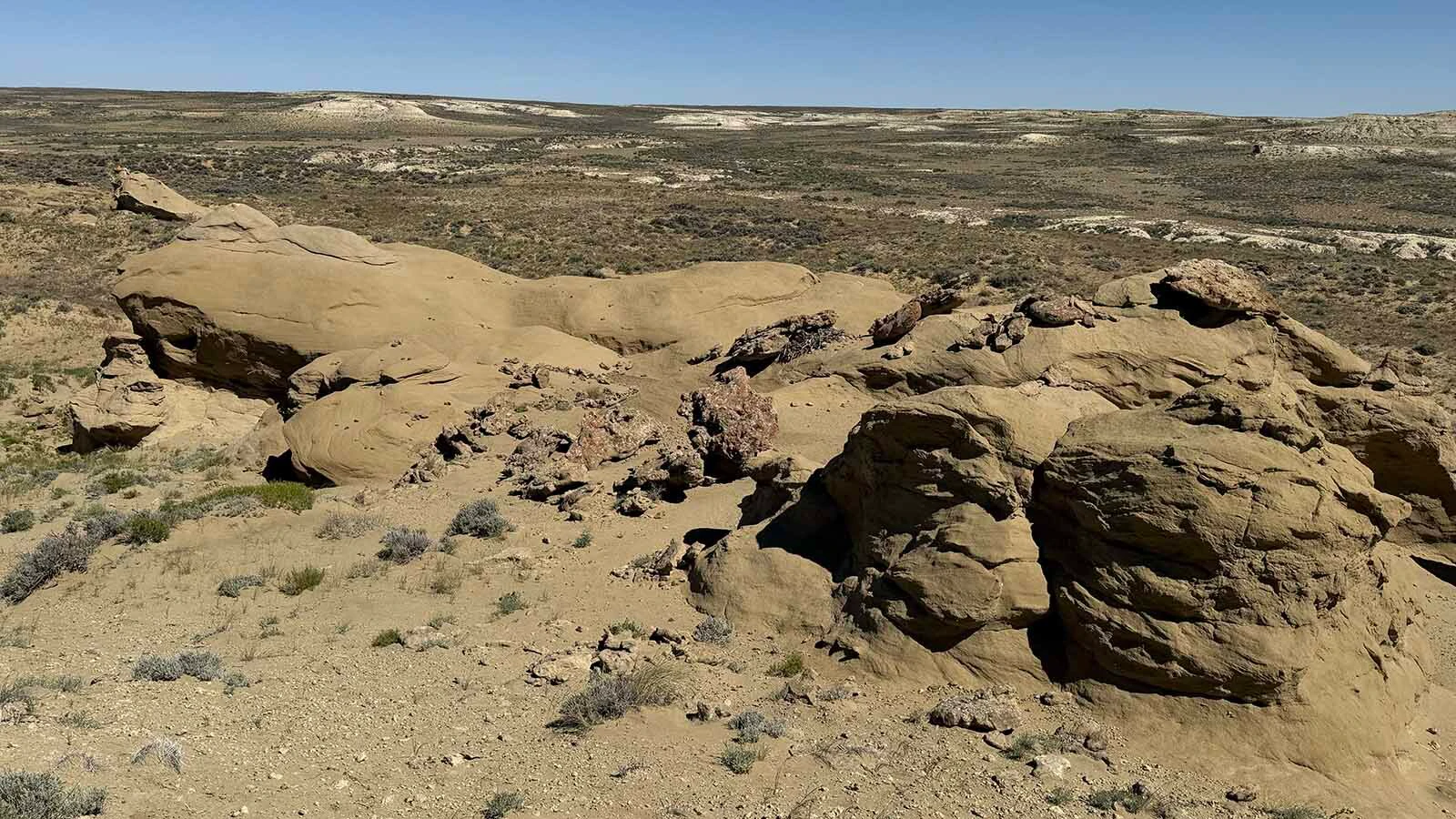
A new study published in the Journal of Human Evolution reports on the tiny fossils of three prehistoric primates excavated at Smiley Draw, a sandstone site in the Wasatch Formation of the Eocene Period.
Among paleontologists, Wyoming is well known as one of the best places in the world to find fossils of the earliest primates. These discoveries add to that reputation while also showing how much remains to be found.
“We've made the picture of the early Eocene more complicated than what we once thought,” said Chris Beard, a Foundation Distinguished Professor at the University of Kansas in Lawrence. “There will be much more to learn about these fossils, especially from southern Wyoming. There's a reason we're working down there.”
Fascinating And Frustrating
Wyoming has been a hub of primitive primate paleontology since the 1880s. The first fossils of lemur-like primates, dating to around 55 million years ago, were discovered in the Bighorn Basin around that time.
“A whole lot of work happened in the late 20th Century in the Bighorn Basin, especially with respect to this animal called Tetonius,” Beard said.
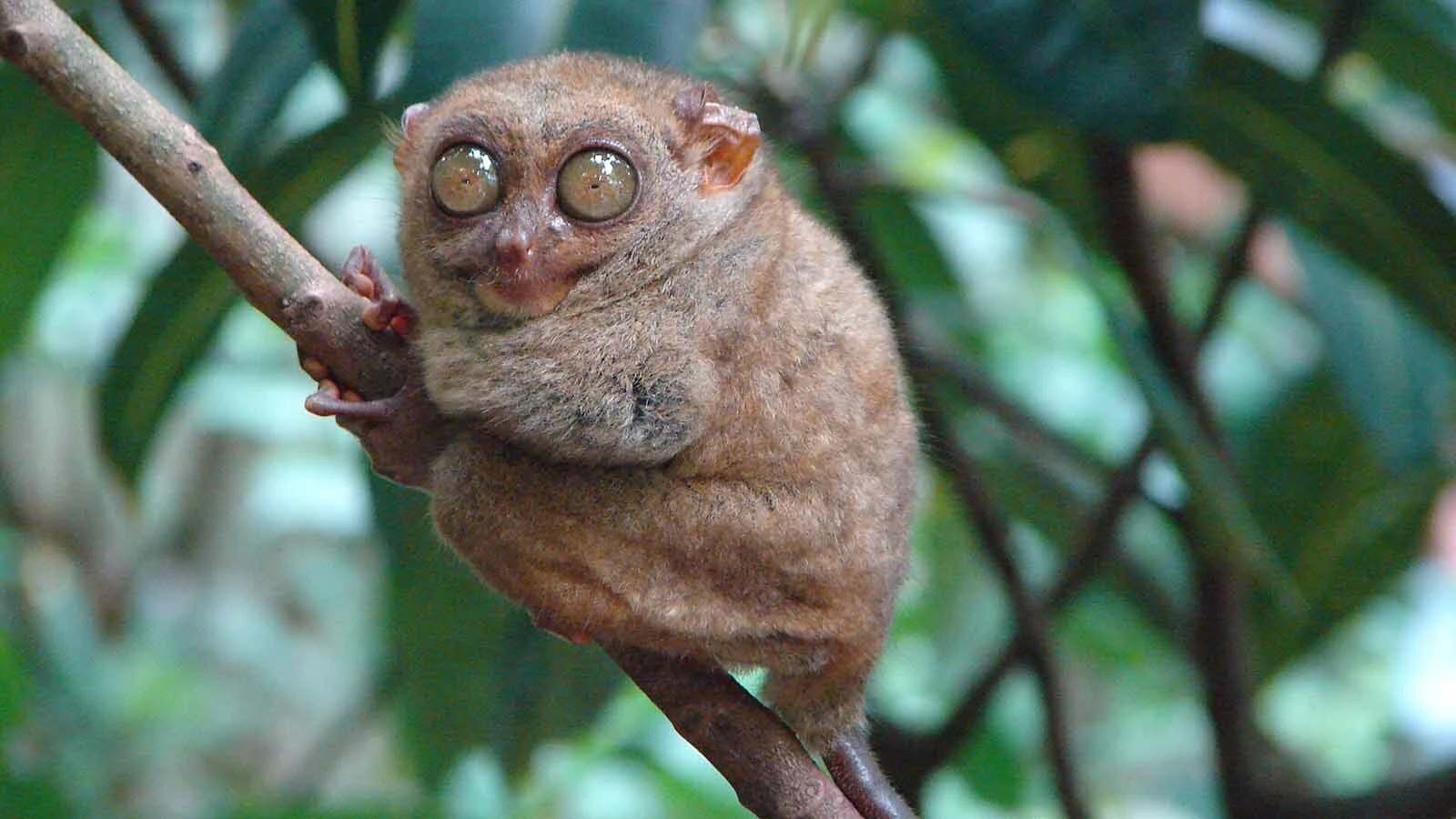
Tetonius, named after the Tetons, is a “vaguely tarsier-like creature,” as Beard described it. It was around the size of a modern-day mouse lemur, less than a foot long and under 2.5 ounces, but its closest living relatives are modern tarsiers.
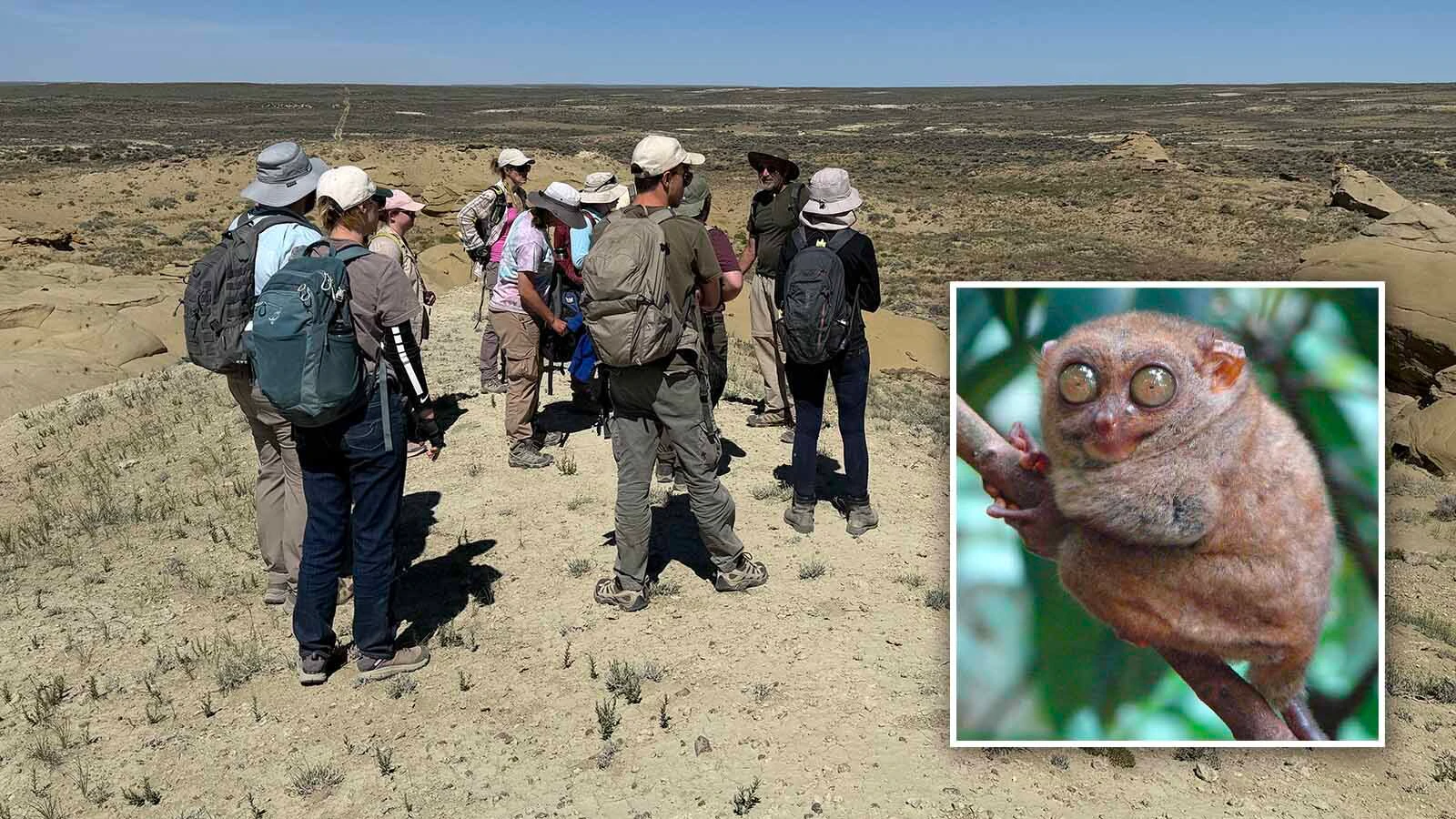
Tarsiers are tiny, tree-dwelling animals known as “dry-nosed” primates. Endangered populations of these tiny primates still exist in the rainforests of Southeast Asia.
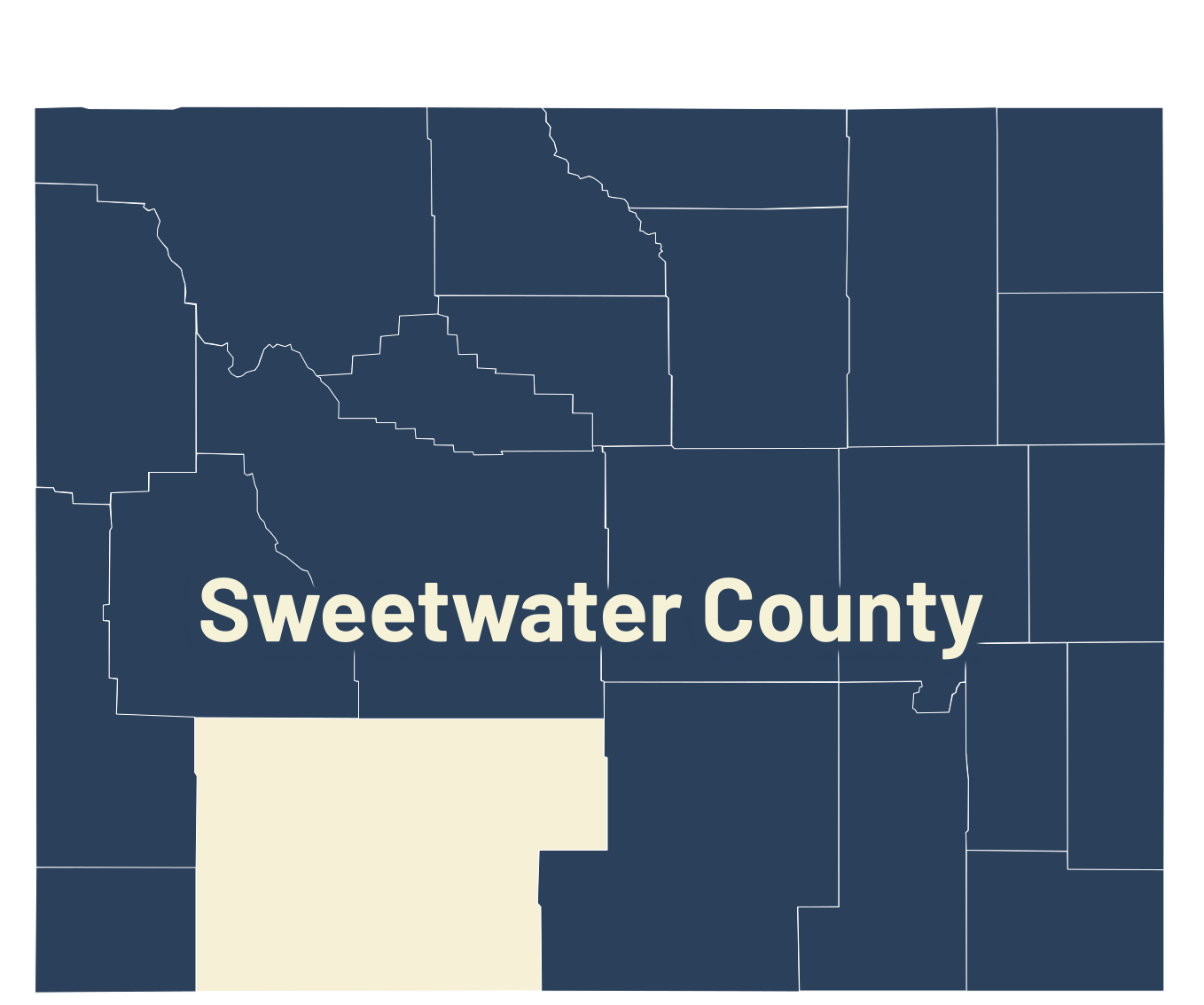
In their study, Beard and his colleagues described a new species of Tetonius, T. varleyorum, from Smiley Draw, an Eocene site in the Great Divide Basin in Sweetwater County.
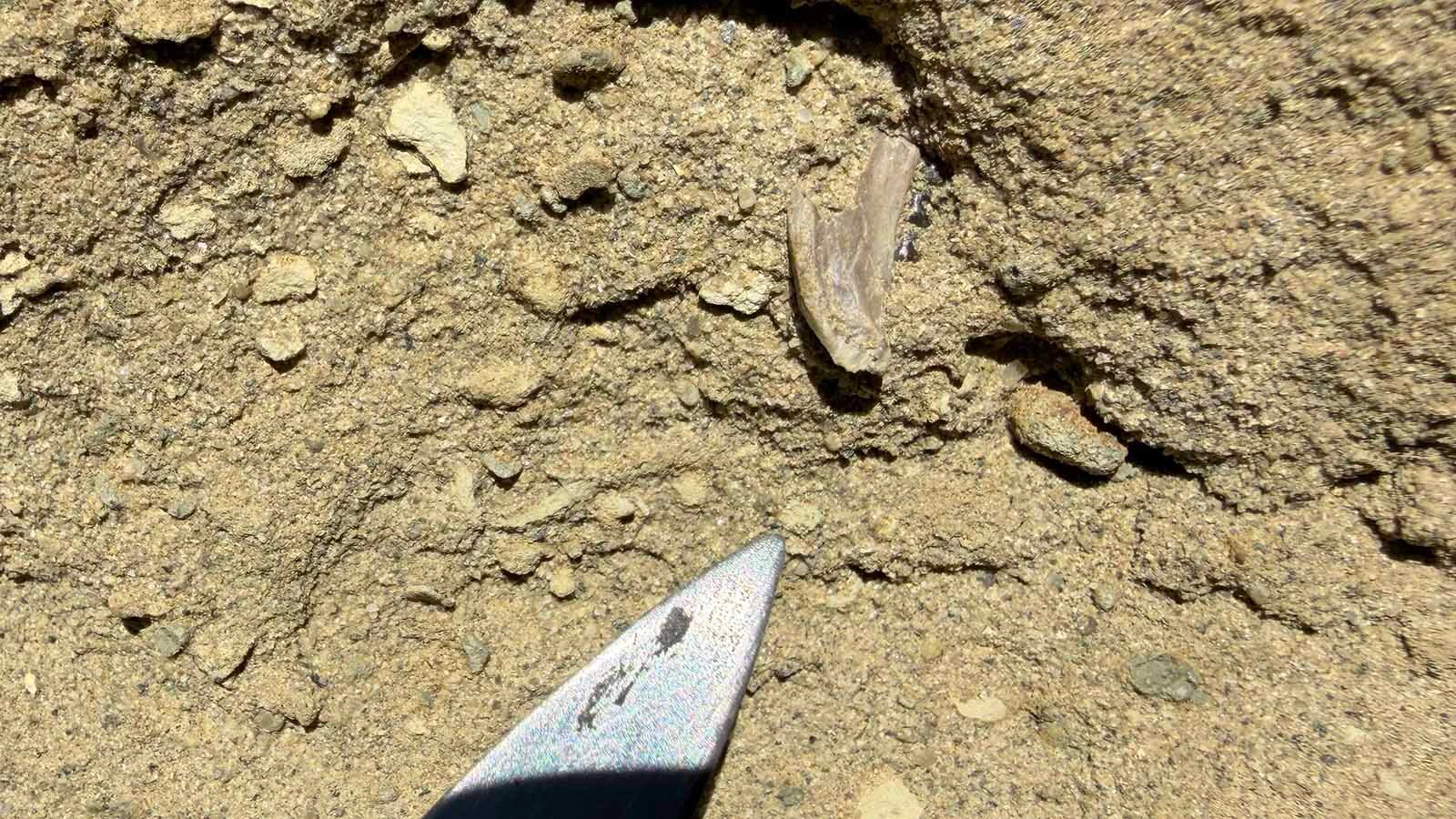
“In Wyoming, you typically find Eocene-aged fossils in mudstone that erodes very easily,” Beard said. “This particular site is very unusual, if not unique, as it’s a layer of sandstone chock full of fossils. It’s rare to find Eocene fossils in sandstone, so Smiley Draw is exactly the opposite of what we normally expect.”
According to Beard, the discovery of a new species of Tetonius, based on its age and anatomy, is highly significant.
“It’s obviously a different species because it’s younger than the Tetonius and its younger descendant, Pseudotetonius, from the Bighorn Basin,” he said. “The fossils we found in Sweetwater County occur after that whole lineage has gone extinct in the Bighorn Basin.”
The study also describes fossils of two rarely found anaptomorphines, another group of prehistoric primates. Arapahovius gazini and Anemorhysis savage have never been found in the Great Divide Basin, and only a handful of other specimens have been found.
What’s significant is that the fossils of these three primates were found at the same site, which means they coexisted at the same time and place. That just raises further questions about life in the early Eocene.
“We’re finding animals that lived together at Smiley Draw that never ever cohabitated in the Bighorn Basin,” Beard said. “Tetonius, Arapahovius, and Anemorhysis don’t coexist there, but we find them together here.”
That’s why Beard said it’s “frustrating,” from a paleontological perspective, to compare Smiley Draw with the well-researched discoveries in the Bighorn Basin.
“We have an idea that animals evolve, they go extinct, and other animals replace them,” he said. “What we're finding at Smiley Draw is the animals that we think are going extinct at a certain time in the Bighorn Basin probably aren't going extinct elsewhere.”
Gradual And Parallel
Tetonius, Arapahovius, and Anemorhysis are all omomyids, a family of early tarsier-like primates known from several Eocene sites worldwide.
Beard said Wyoming’s omomyids are excellent examples of gradual evolution, which is what Charles Darwin proposed in his landmark 1859 book “On the Origin of Species.”
“There was a huge debate in paleontology about how evolution proceeded,” he said. “Did it occur gradually, the way that Charles Darwin predicted, or did it conform more to a punctuated equilibrium model, which was made famous by Stephen Jay Gould and his collaborators?”
The fossils of Tetonius and Pseudotetonius from the Bighorn Basin are a textbook example of gradual evolution. While they are distinctly different animals, Beard said the fossil record shows “no break in the single lineage chain from primitive to advanced.”
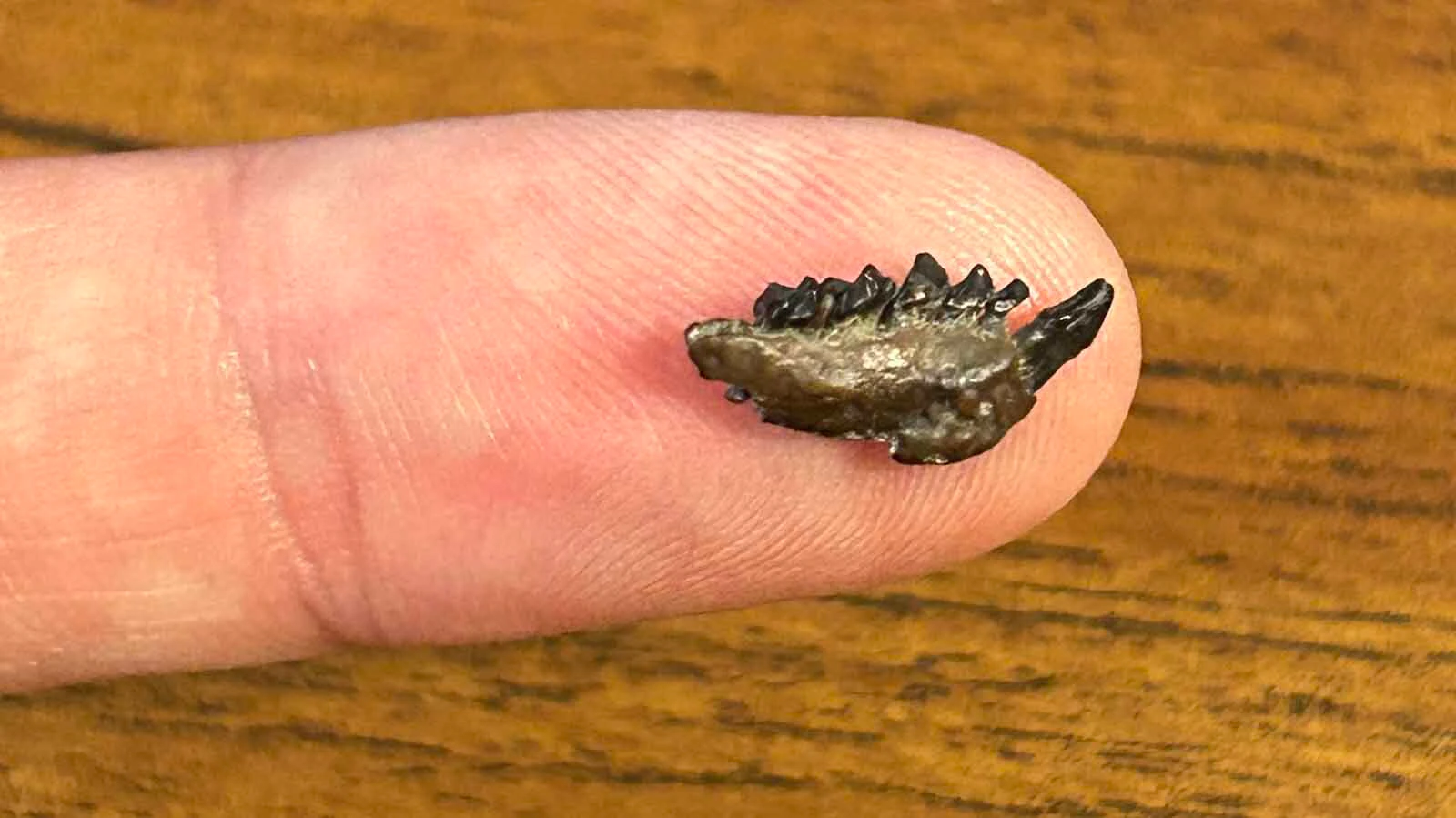
The key observation is the significant changes in the lower jaws of these primates, which Beard and his colleagues observed in fossils from the Bighorn Basin and the Great Basin Divide.
“These animals start out with fairly long lower jaws and lots of teeth in between their back teeth, the molars, and their front teeth, the incisors,” he said. “Through time, their lower jaws get compacted from front to back. They lose some teeth and develop a rodent-like incisor that sticks out of the front of their jaw, getting bigger and stouter over time.”
The purpose of this overly large incisor remains a mystery. Beard said that if you asked three different paleontologists, you’d get three different answers.
“In my opinion, they're using that big front incisor to gouge the bark of trees,” he said. “A lot of modern animals do this to stimulate sap or gum or resin to come out of the tree.”
Tree sap contains a lot of sugar. For a tiny primate with a high metabolism, that sap would be a valuable source of energy and nutrition.
Is this change in jaw and dental anatomy driven by a change in diet, or were the omomyids perfecting the tools needed for millennia of the same diet? That’s another debated question, but Beard said the latter is the most likely answer.
These questions are significant to the new discoveries from Smiley Draw because they show the same thing happening – the shortening of the jaw, loss of teeth, and larger incisor – in Tetonius, but not exactly the same as in the Tetonius from the Bighorn Basin.
“The T. varleyorum from Smiley Draw has shorter haws and fewer teeth, so it’s similar but not exactly the same as what we see in the Bighorn Basin,” Beard said. “These are two different lineages evolving in parallel to achieve the same result.”
Parallel evolution is a well-documented phenomenon in nature. The legendary finches Darwin collected in the Galápagos Islands are an excellent example, as the different but related birds had beaks shaped to suit their diets on their isolated islands.
It’s more evidence that something strange was going on in Sweetwater County 55 million years ago.
Hyperthermal Events
Beard and his colleagues are studying all the mammal fossils recovered from Smiley Draw to see if they have the same story as the recently described omomyids. If they do, it would be further proof that different things were happening in different parts of Wyoming.
“It’s an interesting phenomenon,” he said. “We find animals living side-by-side at Smiley Draw that were already extinct or never lived side-by-side in the Bighorn Basin. They were only going extinct locally in the Bighorn Basin.”
Climate change might explain this discrepancy. The Eocene was a roller coaster of climate, which usually leads to extinction or adaptation for flora and fauna.
“We've got lots of iterations of what we call hyperthermal events in the Eocene, where the world warms up very rapidly and cools down again,” Beard said. “When the world warmed up, animals that were more tropically adapted spread northward, from Sweetwater County to Park County. When it cooled down, and they were no longer happy, the animals went back down. It's a very dynamic thing, and we're picking up a lot of these oscillations by looking at Smiley Draw.
Our Great Uncles
This new study on prehistoric primates raised more questions than it answered. That’s not a bad thing, as it gives Beard and his colleagues more reasons to return to Smiley Draw.
Beard said his team was at the site collecting fossils in June. Some of those specimens are already being studied using a micro-CT scanner in North Carolina.
“I can tell you that we found additional fossils of early primates and primate-like creatures that are totally new just two months ago,” he said. “We’ll have a lot more to reveal from Smiley Draw.”
They’re not the only ones looking at overlooked spots in southern Wyoming. Paleontologists with the Duke Lemur Center Museum of Natural History at Duke University have been finding phenomenal Eocene fossils in Bridger Basin, including the best specimens of the earliest known primate-like mammal in the fossil record, Plesiadapis.
“The Bridger Basin is the Madagascar of the Eocene,” curator Matthew Borths told Cowboy State Daily in December 2024. “We transition from a few primates on the landscape to a lot of diversity, hopping around in the rainforests of Wyoming.”
Borths’s dream was to find an omomyid in the Bridger Basin, as they’re humanity’s closest Eocene ancestor. There’s no shortage of omomyids in Smiley Draw, which is less than 200 miles northeast.
Beard said Wyoming is “better than any other single place in the world, including Europe, Asia, and Africa” for paleontologists studying the origins and evolution of the earliest primates. That’s just from what’s been discovered, let alone what’s still out there, waiting to be found.
“Wyoming is incredibly fundamental to understanding the deep origins of humans,” he said. “None of these animals are the direct ancestors of humans. They're probably great-uncles and great-aunts, but that doesn't make them any less important. In fact, in my opinion, it probably makes them more important.”
That’ll keep Beard and his colleagues busy for decades. There’s a lot more to find, study, and understand – if that’s an excuse to get dirty in Wyoming, all the better.
“I love Wyoming, personally and scientifically,” Beard said. “We wish that we had a perfect fossil record, but we don’t.
"What we have are snippets and glimpses; we try to piece together what it means. Wyoming has been overlooked for a while, to be honest, and we’re very fortunate to have such an amazing fossil record there.”
Andrew Rossi can be reached at arossi@cowboystatedaily.com.