
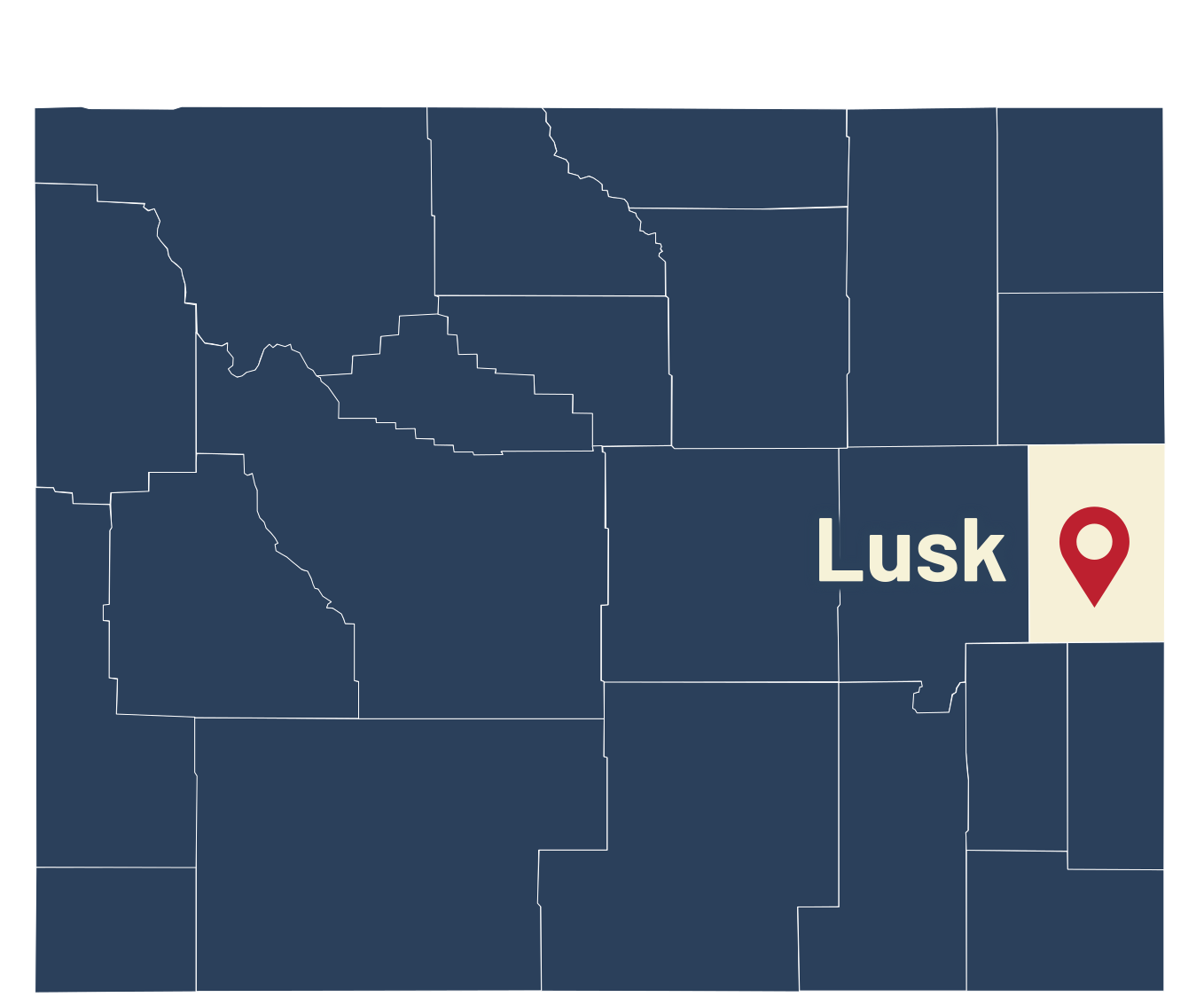
Many relics from the age of the steam engine in Wyoming remain. Some are grandiose, like the Cheyenne Depot Museum, while others are slowly decaying after years of neglect.
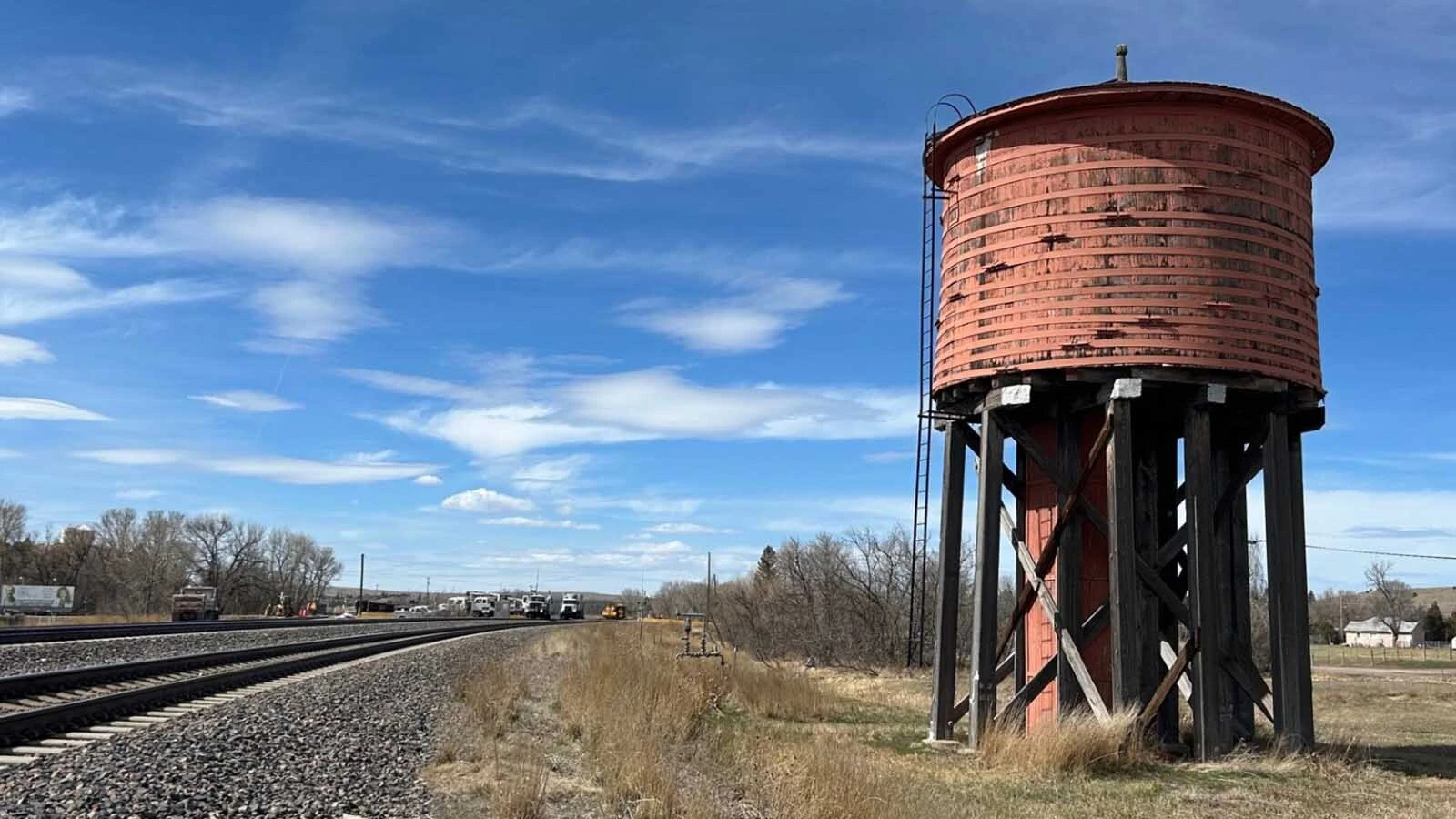
One of these relics is the Lusk Water Tower, a point of pride in eastern Wyoming. It’s one of the few structures of its kind remaining in the United States, still standing strong 140 years after it was built.
“It's pretty important and iconic to the community,” said Leslie Stewart, a volunteer at the Stagecoach Museum in Lusk. “I think there would be a drive to save it again if we needed to.”
It's also significant as one of only six surviving redwood water towers in the United States, according to the Niobrara County Historical Society.
Built Better
In 1886, the Fremont, Elkhorn and Missouri Railway was establishing a line to connect Douglas and Chadron, South Dakota. This necessitated new depots and water towers along the route to ensure the steam engines kept running.
Lusk was chosen because it had, at the time, the only post office along the intended route.
Stewart, who’s also a commissioner for Wyoming State Parks and Cultural Resources, said the establishment of this railway was an important development for the newly incorporated town.
“The railroads were coming this way to transport livestock, grain, mining equipment, and coal, but they also provided ready access for ranchers, farmers, and homesteaders coming to settle this area,” he said.
Water towers were essential for steam engines, but the Lusk Water Tower was built to be better. That’s reflected in the specifics of its design.
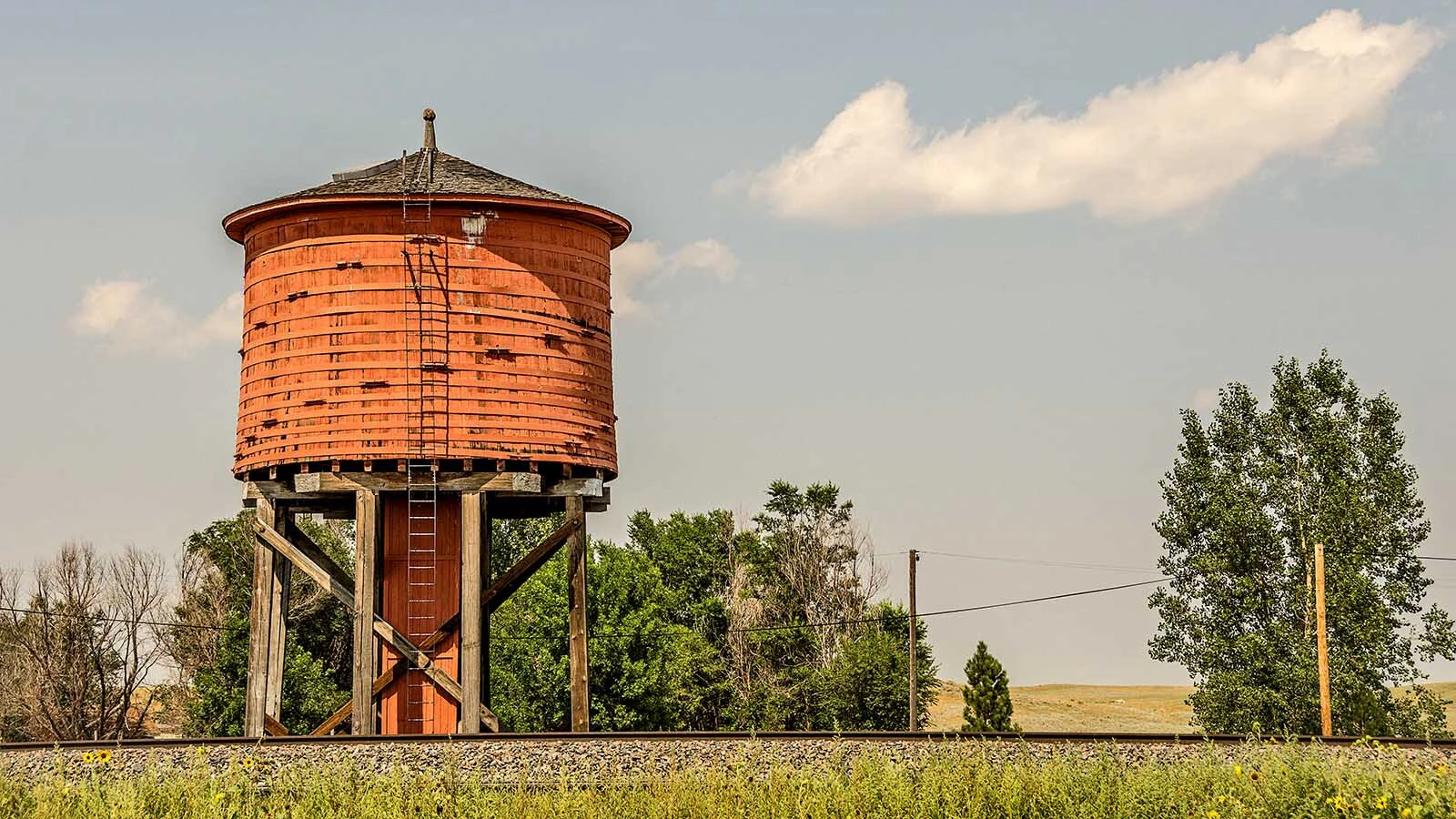
“It’s mostly made of Douglas fir, but the tank is four-inch planks of redwood,” Stewart said. “It wasn’t an aesthetic choice. They wanted something that would expand with water and hold the thing together tightly when it was wet.”
According to Stewart, adjustability was essential. The circular tank is 25 feet in diameter and equally as tall, but the redwood allowed it to expand and contract as needed.
“It was built like a barrel with metal bands around the outside,” she said. “When the tank was empty, they could tighten the bands. When it was full, they could loosen them up and expand the tank while keeping a tight fit.”
A windmill was used to move water 25 feet up into the tank. At full capacity, it could hold around 44,000 gallons of water.
In a certain sense, the Lusk Water Tower was ahead of its time in design and construction.
The tower and the railway were built by the Wyoming Central Railway, a subsidiary of the Fremont, Elkhorn and Missouri Railway. The director of the subsidiary was Frank Lusk, for whom the town is named.
The Wyoming Central Railway was established specifically to ensure that a Wyoming company would build the line and all its infrastructure.
“That was one of the requirements for the railway,” Stewart said. “They had to have a Wyoming company do the construction.”
There’s another way the Lusk Water Tower happened to be ahead of its time: It was deemed worth saving before it was too late.
Standing Strong
When the original Lusk train depot was destroyed by fire, the water tower was moved from the center of town to the eastern edge, where it stands today. The tower continued to service steam locomotives until diesels took over.
The railway, which is still in service, changed hands multiple times over the next several decades. However, there were concerns that the Lusk Water Tower might be destroyed by the very railway it had been built to service.
“The Chicago and North Western Transportation Company was moving a lot of heavy coal traffic past the tower,” Stewart said. “The Niobrara County Historical Society was concerned that the vibrations from the trains would destroy the tower.”
In 1971, the Niobrara County Historical Society purchased the Lusk Water Tower. A campaign was immediately started to raise money to restore and repair it.
By 1982, enough was raised for Gillette LNT Fabrication and Construction to do a thorough restoration.
“A lot of different organizations helped fund that restoration, including the Wyoming Legislature and the Chicago and North Western Transportation Company,” Stewart said. “I don't think the railroad had any interest in saving it, although they did help in the end.”
Lusk’s Own
In 1991, the Lusk Water Tower was placed on the National Register of Historic Places. Rheba Massey, the historian who submitted the form for its consideration, said the tower was “one small part of that great expansion” that had “a major effect on the settlement history of the area.”
“The Lusk Water Tower represents this early development of rail transportation, including steam locomotion from the period of 1886 to World War II,” she wrote. “Massive water towers and windmills were regular features of station sites during the age of steam, (and) the Lusk Water Tower is Wyoming's only surviving railroad structure of its type.”
The railway is currently owned by Union Pacific, which still sends plenty of freight past the iconic tower.
As of 2026, the only other tower of its type that’s easy to track down is the Gerlach Water Tower, built in 1909 in Gerlach, Nevada.
Stewart wasn’t sure how many redwood water towers were built or how many remain. She’s content that the Lusk Water Tower isn’t going anywhere.
“We still get people asking about the tower,” she said. “Alumni come home and say they had to swing by the tower to make sure it was still there.”
She also applauded everyone who recognized the tower’s historic significance and organized the successful effort to save it, at a time when historical preservation wasn’t as popular as it would become.
“If those historically astute people hadn’t recognized that, I’m not sure it would have been saved,” she said.
Andrew Rossi can be reached at arossi@cowboystatedaily.com.


