After 152 million years, Big Al is back.
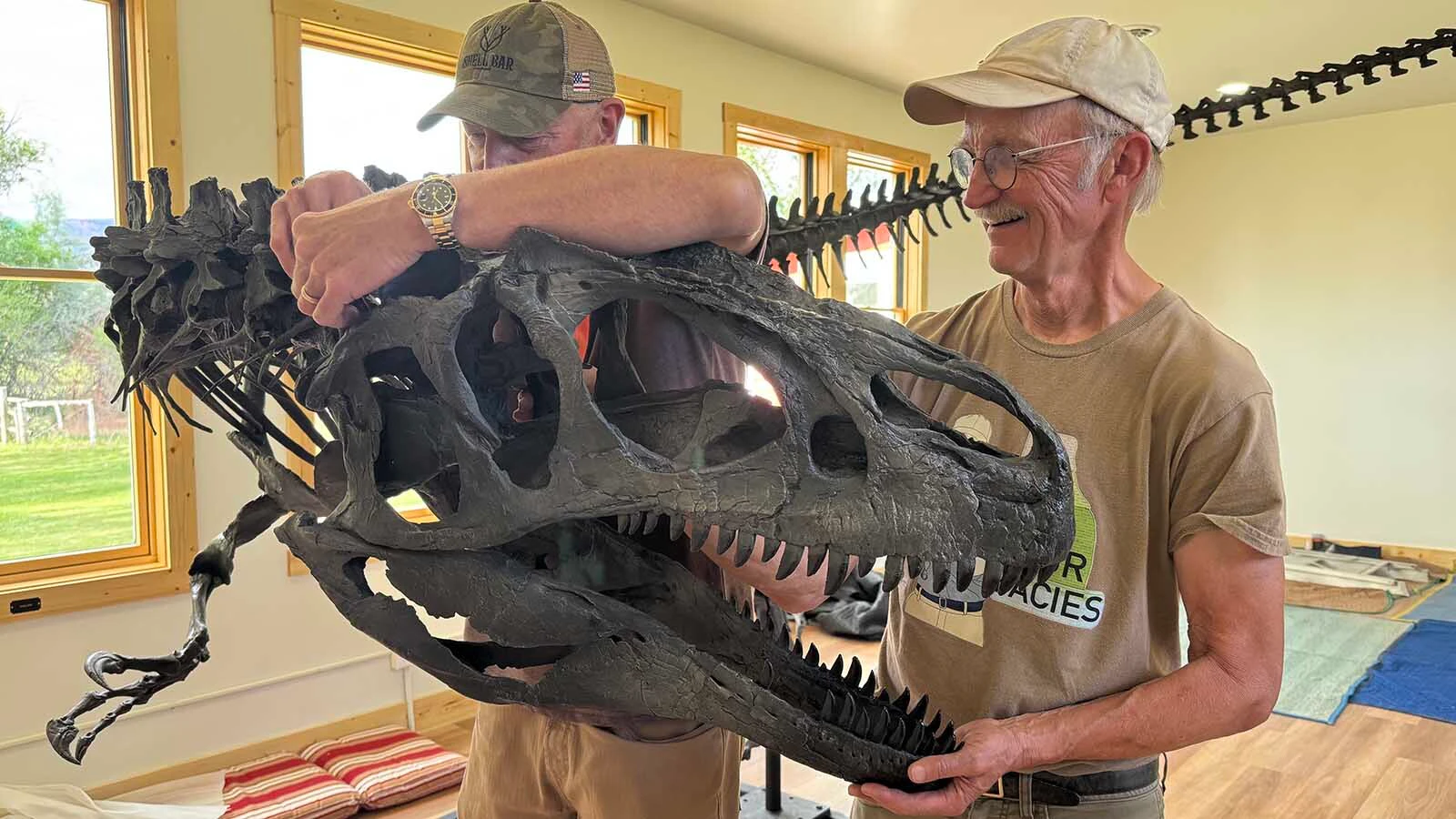
The Wild West Dino Den will officially open in the Historic Red Shell Schoolhouse in Shell on July 27. The centerpiece exhibit is an exact skeletal replica of “Big Al,” a local icon and one of the most famous dinosaurs ever found.
Big Al is a 95% complete Allosaurus specimen found near Shell in 1991. Now, 35 years after its discovery, the Wild West Dino Den has brought the famous dinosaur back to its old stomping grounds.
“Big Al’s a big deal for us,” said Erik Kvale, president of the Wild West Dino Den. “Bringing this particular dinosaur back is going to put us on a lot of people’s radars before too long.”
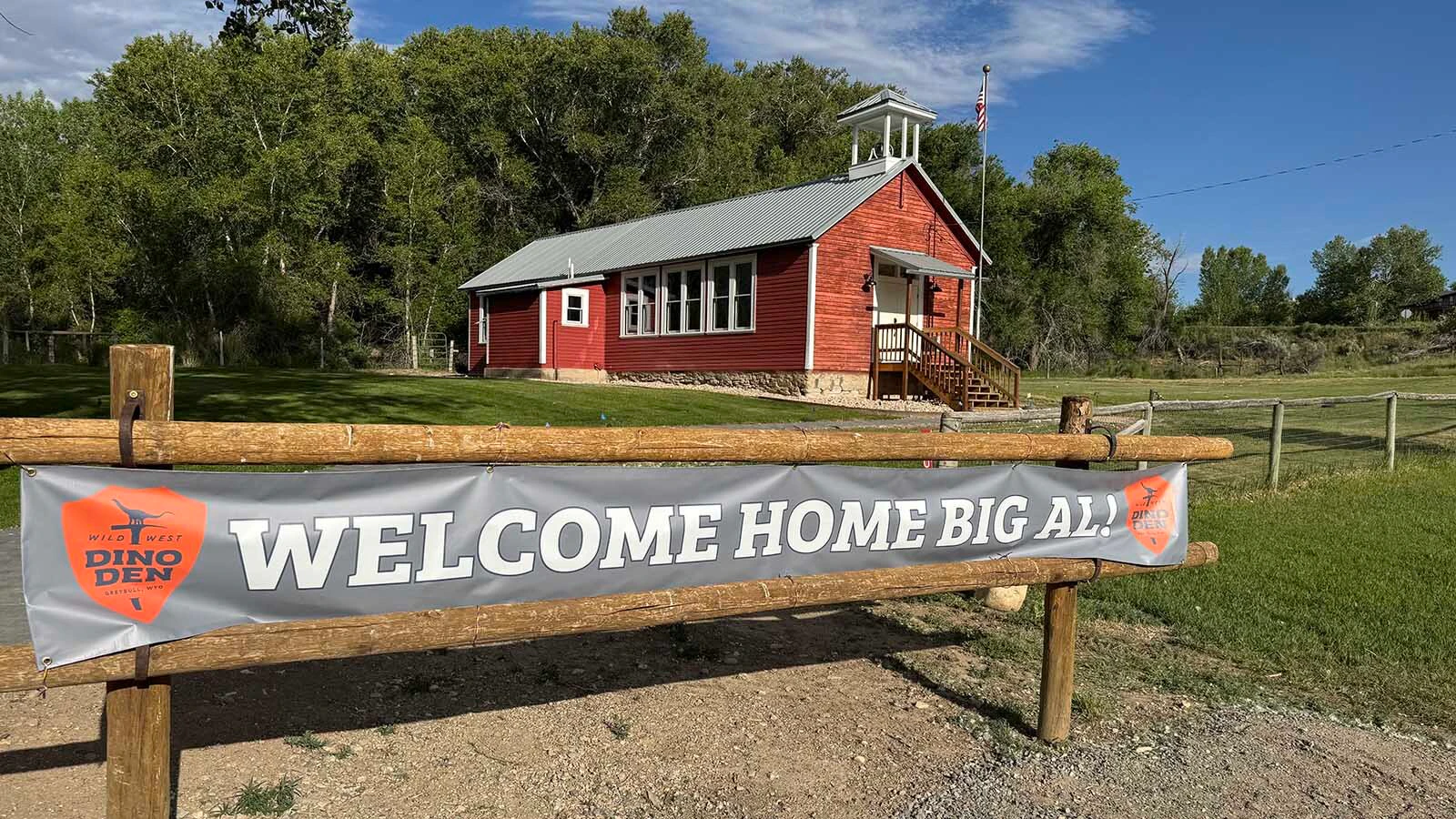
Best Of The Best
While countless children and dinosaur enthusiasts know dinosaurs by their scientific names, many people know Big Al on a first-name basis. That’s because this dinosaur’s story is one of the most famous in paleontological history.
The fossilized skeleton of Big Al was found by Swiss paleontologist Kirby Siber in 1991. Because it was on federal land, the specimen was excavated by paleontologists from the Museum of the Rockies in Bozeman, Montana, the University of Wyoming Geological Museum, and the Royal Tyrrell Museum of Paleontology in Alberta, Canada.
Big Al’s skeleton was 95% complete, making it one of the most complete dinosaur specimens ever found.
The specimen became even more notable when a 2002 paper revealed 19 distinct skeletal injuries and diseases preserved in Big Al’s fossils. Those afflictions include several fractured ribs, a torn-up hand, and a massive bone infection on the right middle toe.
Big Al was 17 years old when he died and still wasn’t a fully-grown adult. The still-unprecedented number of injuries revealed that this dinosaur was a survivor, despite the pain and debilitating life it would inevitably have endured before its demise.
“Big Al (is famous) because of the record of its life and times in its bones,” John Scannella, the John R. Horner curator of paleontology at the Museum of the Rockies, told Cowboy State Daily in 2023. “The more studies we can apply to this particular dinosaur, applying different techniques and analyses, the more we can learn about that animal’s life and the world around it.”
Big Al’s story was so compelling that it was featured in the 2000 BBC documentary, “Walking with Dinosaurs: The Ballad of Big Al.” The half-hour special, narrated by legendary Shakespearean actor Kenneth Branagh, won two Emmy Awards and made Big Al an international celebrity.
“It is the most famous dinosaur from our area,” Kvale said. “Now, he’s back on his home turf for the first time in 150 million years.”
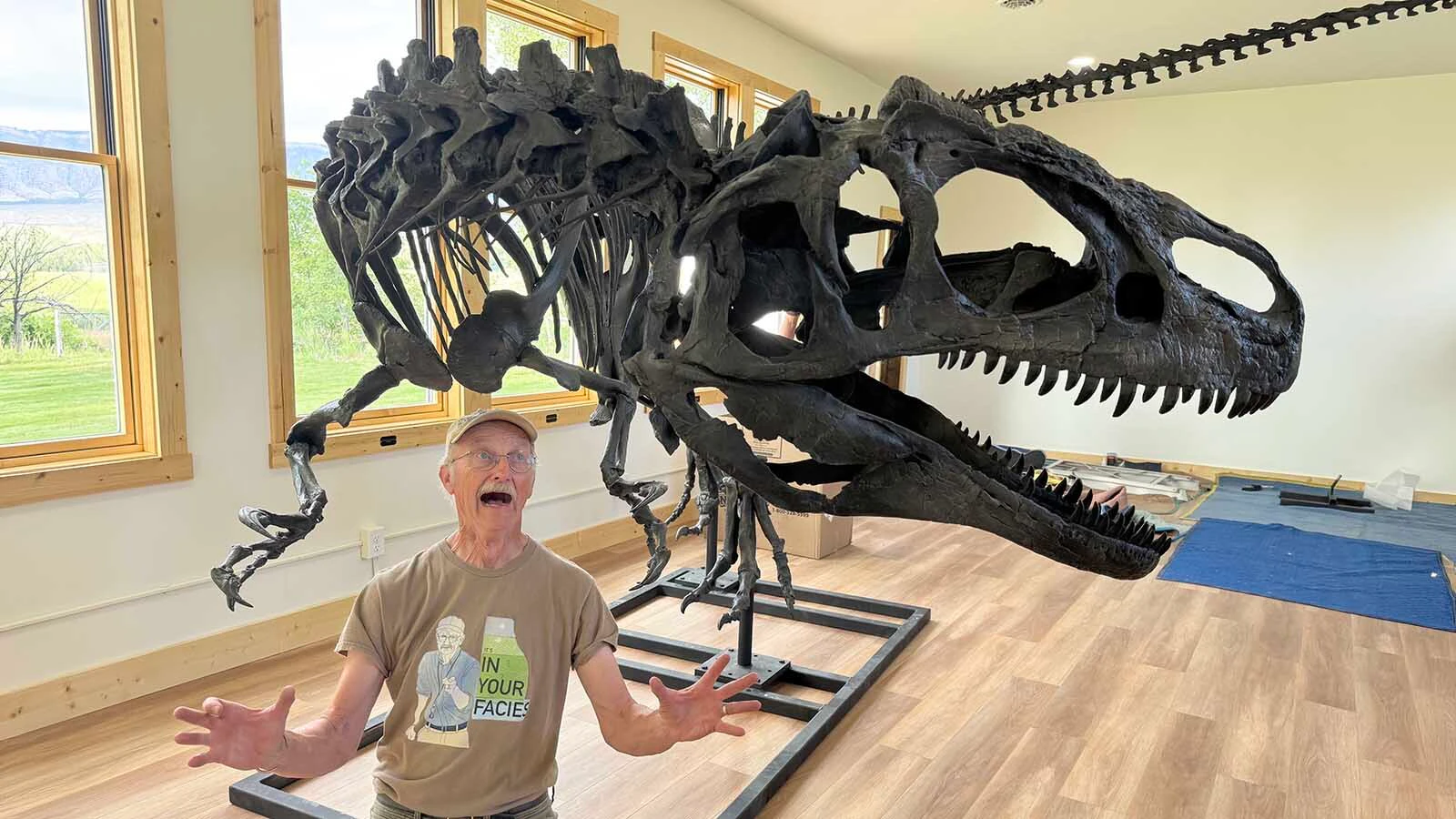
Bring ‘Em Home
The actual fossils of Big Al are in the permanent collections at the Museum of the Rockies, which is a repository for fossils from federal lands. A replica of the finished specimen still stands at the UW Geological Museum.
Big Al returned to Shell in a massive shipping crate last week. It will be officially unveiled to the public when the Wild West Dino Den officially opens Saturday.
“Our non-profit is registered as the Big Horn Basin Dinosaur and Geoscience Center, but we found that name was way too cumbersome,” Kvale said. “The world will know us as The Wild West Dino Den.”
Big Al will hang out in the Shell Schoolhouse for the discernible future, but not forever. Kvale’s goal is to open a permanent 4,000-square-foot museum in Greybull, where Big Al will be joined by replicas of other famous dinosaur specimens from the area.
“This is a big deal for us, but what people will see in Shell is a postage-stamp view of what we hope our larger museum will be like,” he said.
When the Wild West Dino Den opens June 27, people will get to see replicas of two other significant fossil finds from the area.
“Baby Toni” was acquired with a grant from the Big Horn Rural Electric Company. The 5-foot-long baby sauropod was found in the famous Howe-Stephens Quarry, a stone’s throw away from Big Al’s final resting place.
“It’s the world's most complete baby sauropod,” Kvale said.
The other display is a nest of Allosaurus eggs. The only Allosaurus nest ever found was excavated by the Smithsonian Institution between Greybull and Shell.
“We have casts of 24 reconstructed Allosaurus eggs,” Kvale said. “The other 24 are on display in the Smithsonian’s dinosaur hall.”
Kvale said the museum already has the funds to acquire a replica of another exceptional dinosaur found near Shell. “Sophie,” the world’s most complete Stegosaurus, is on display in the Natural History Museum of London.
“We don’t have room to fit another dinosaur in the Shell Schoolhouse,” Kvale said. “Once we get a bigger museum, Sophie will be right down the pike.”
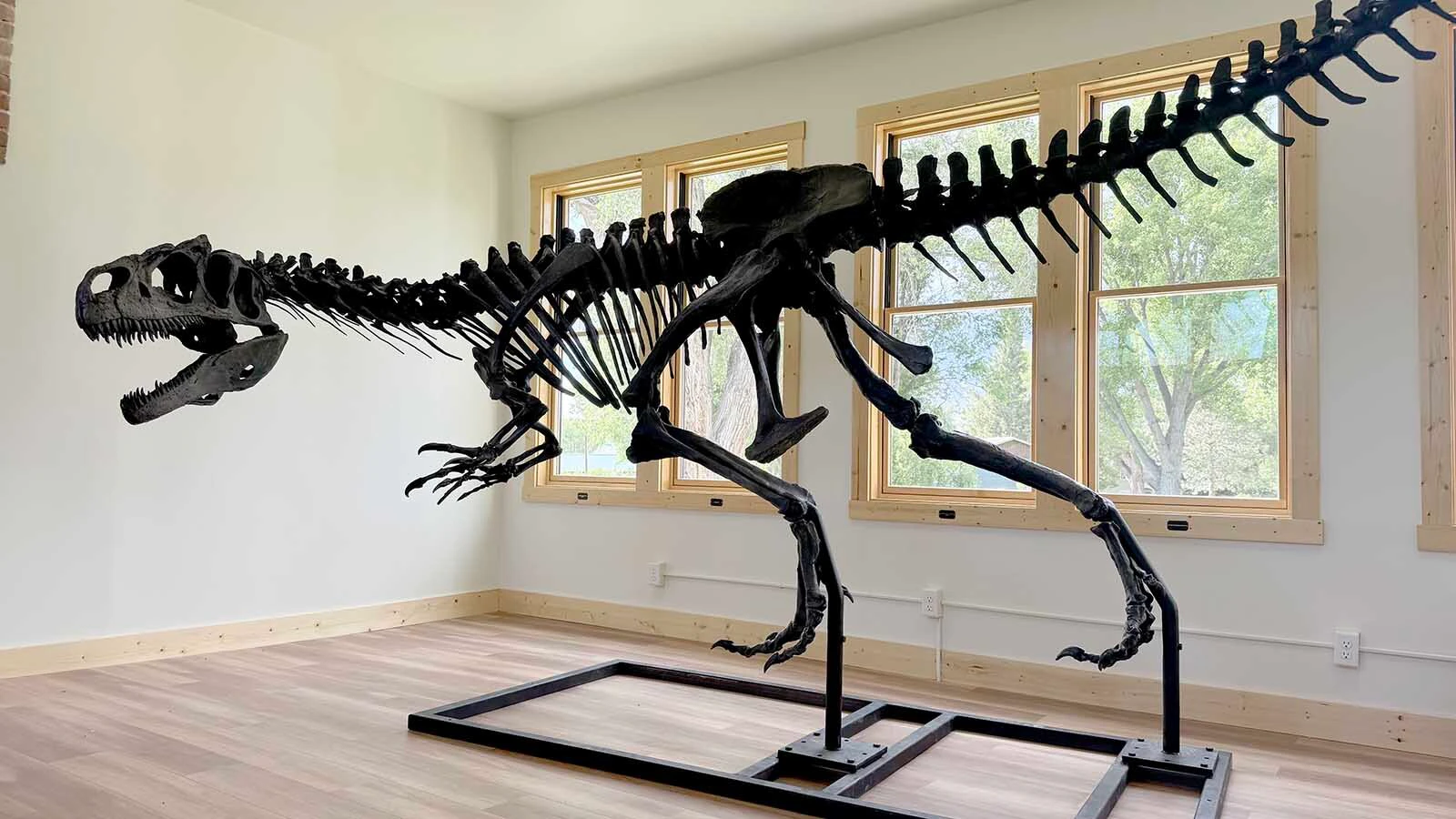
Hometown Hero
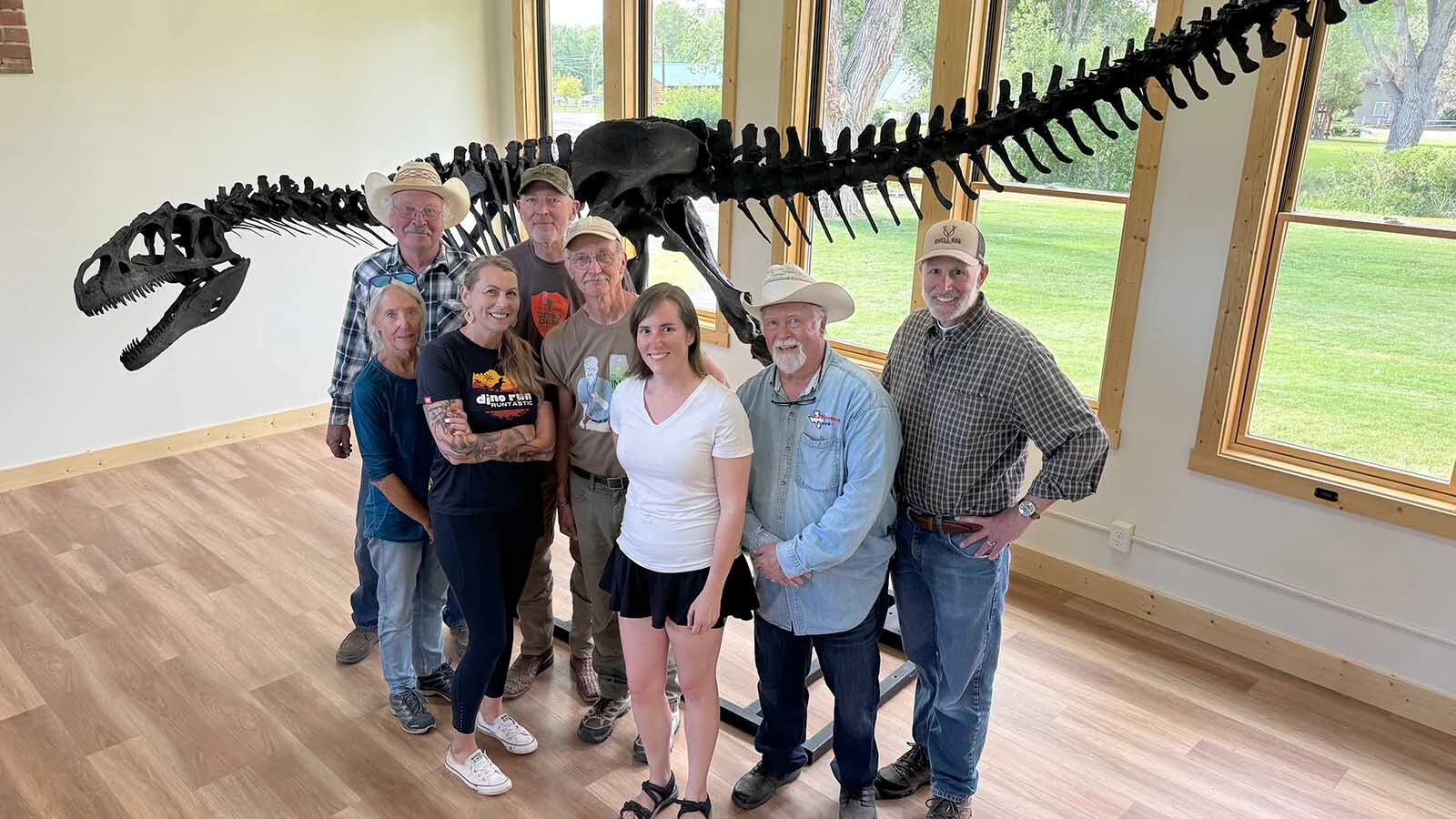
On Friday, Kvale and several Wild West Dino Den board members gathered in Shell to assemble Big Al’s skeleton.
The 1:1 replica was purchased from Research Casting International in Ontario, Canada. It’s one of the most renowned companies in the world for skeletal replicas of dinosaurs and other prehistoric animals.
“They were very excited about Big Al coming home,” Kvale said. “They said they’d share the link to our museum on their website, so they’ll be giving us international attention.”
Everyone who helped assemble Big Al felt that they were participating in a historic moment.
“It felt like an honor,” said paleontologist Jessica Lippincott, author of “Wyoming’s Dinosaur Discoveries. “It felt historic. We were able to bring Big Al back to the place where he lived, died, and was discovered. It was awesome.”
Meanwhile, news of Big Al’s return has already gotten locals excited. Many remember the international media frenzy that descended on Shell surrounding the dinosaur's excavation.
“I spoke to someone who remembered going out to see Big Al being excavated when he was a kid,” Kvale said. “He’s in his 40s now, and he’s thrilled that Big Al is back.”
Kirby Siber, the man who discovered Big Al, went on to build the Sauriermuseum in Aathal, Switzerland. One of Europe's largest dinosaur museum, Sieber filled it with dozens of spectacularly well-preserved dinosaurs from Shell, including Baby Toni and “Big Al 2,” a similarly injured Allosaurus.
Kvale got an email from Siber, who said he was proud to call the Wild West Dino Den “our sister museum.”
The Wild West Dino Den will officially open to the public between 10 a.m. and 2 p.m. June 27. From there, Kvale hopes they’ll have the schoolhouse open to the public “most days of the week” this summer.
Meanwhile, the museum’s board is working with the town of Greybull to pursue funding for Big Al’s permanent home.
“At the rate we’re progressing, that’ll be three to four years down the road,” he said. “The agreement we have is that the town of Greybull will pursue the funding for the building, and we’ll acquire the dinosaurs to put inside.”
Big Al isn’t the largest dinosaur intended for the museum, but it carries the most significance for Kvale and his board. It’s like an international celebrity making a triumphant homecoming after 152 million years.
“I feel like we’re getting the ball rolling,” Kvale said. “The world knows Big Al, and locals know Big Al. It’s a famous fossil and a very big deal for us.”
Contact Andrew Rossi at andrew@cowboystatedaily.com
Andrew Rossi can be reached at arossi@cowboystatedaily.com.